Industrial Home Office Ideas: Raw Materials Done Right

By Tereza Hower | Published May 9, 2026 | Updated May 14, 2026
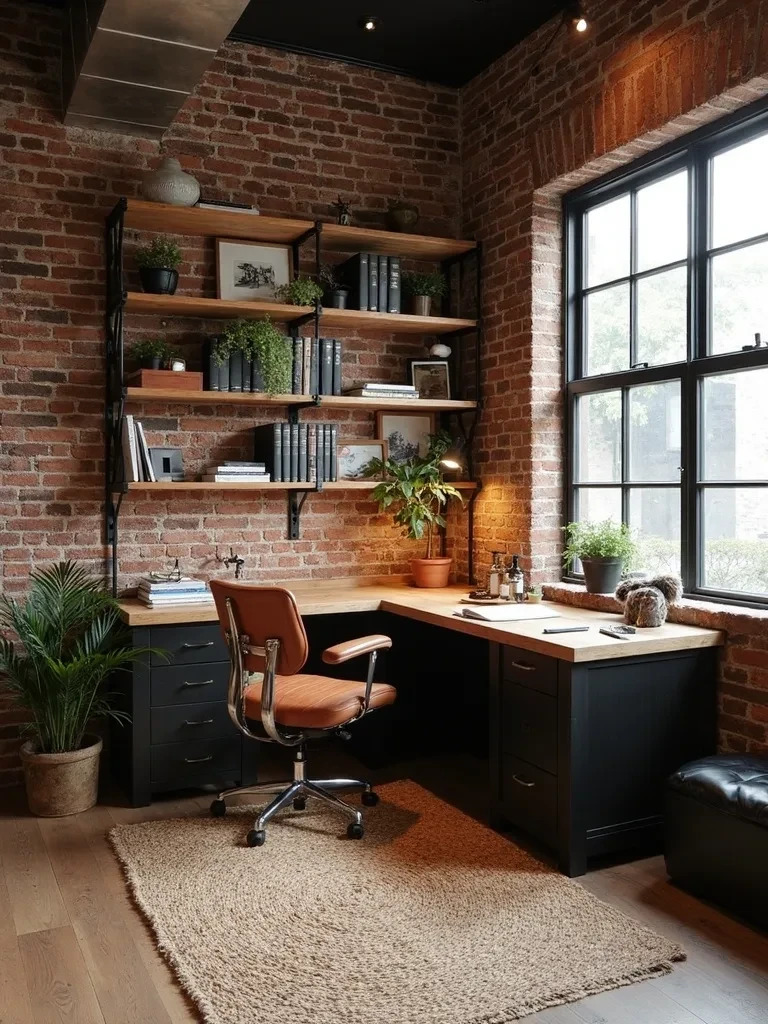
An industrial home office can be one of the most visually compelling rooms in a house, or one of the worst. The difference is restraint. Done well, the style reads like a converted warehouse, an architect’s drawing studio, or a loft someone actually lives in. Done badly, it reads like every coffee shop in 2014, with rusty pipe shelves, an Edison bulb at every fixture, and a chalkboard somewhere insisting on cursive.
The version of the style worth committing to is the modern industrial direction. Steel and warm wood, blackened metals, leather, considered lighting, and almost no exposed ductwork unless you have actual exposed ductwork. This guide covers what that looks like in practice and the specific decisions that separate a sophisticated industrial workspace from a themed one.
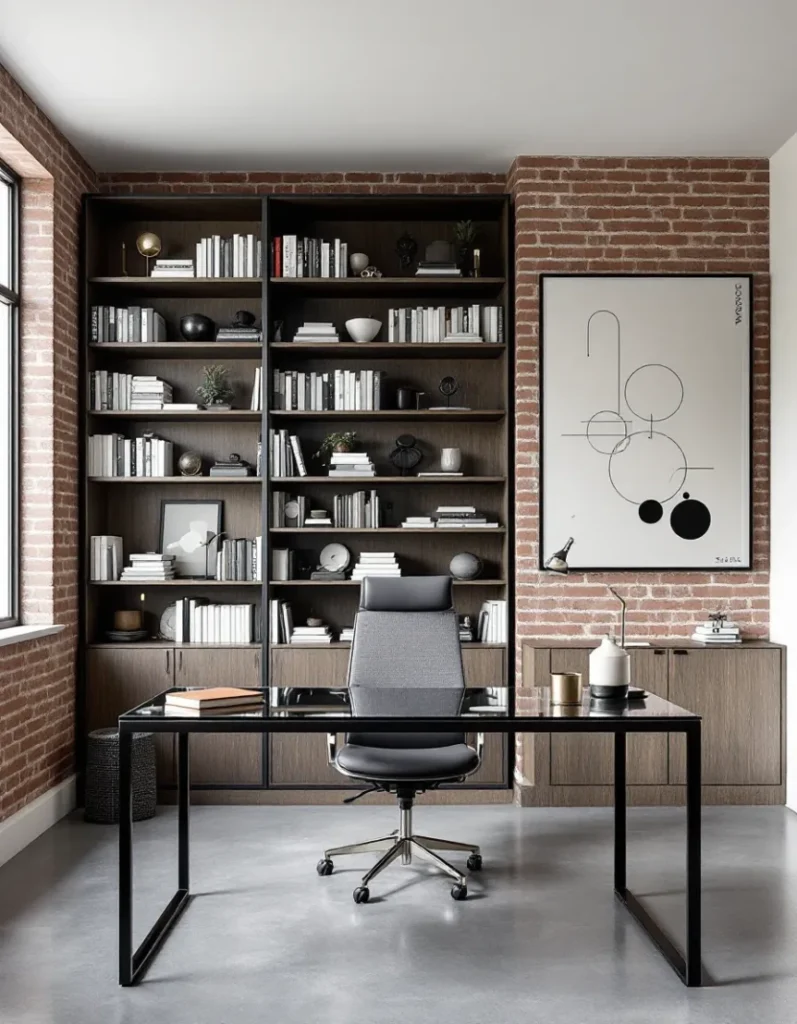
What Defines an Industrial Home Office
An industrial home office uses raw or honest materials like steel, blackened iron, brick, leather, and warm wood. The palette runs in a tight range of black, charcoal, warm wood tones, and one or two restrained accent colors. The lighting is usually a strong feature: articulating arms, exposed but considered fixtures, and warm bulbs that create real shadow and depth.
The distinction worth making is between modern industrial and rustic industrial. Modern industrial is restrained, contemporary, and reads architectural. Rustic industrial leans into reclaimed wood, visible pipe joinery, and a more salvaged aesthetic. Both can work, but in a home office, modern industrial almost always reads cleaner and more livable. The modern industrial versus rustic industrial piece covers the difference in detail. For broader principles, the complete guide to industrial interior design is worth reading first.
The Palette: Black, Warm Wood, One Color
The industrial palette is tight. Black, charcoal, warm wood, and concrete grey form the foundation. The accent color, if you commit to one, should be deep and earthy: oxblood, forest green, navy, or a deep mustard. Avoid bright saturated colors, which fight the raw material logic.
For walls, the cleanest direction is a warm white or a soft charcoal grey. Benjamin Moore’s Wrought Iron, Farrow and Ball’s Down Pipe, and Sherwin Williams’s Iron Ore all work as moody accent walls. For lighter foundations, Benjamin Moore’s Edgecomb Gray or Farrow and Ball’s Cornforth White read warm without going beige. If you have real exposed brick or concrete, treat the masonry as the dominant color and keep painted walls neutral.
The industrial color palettes and materials guide covers the broader palette logic across rooms.
The Desk: Solid Wood, Black Steel, No Pretense
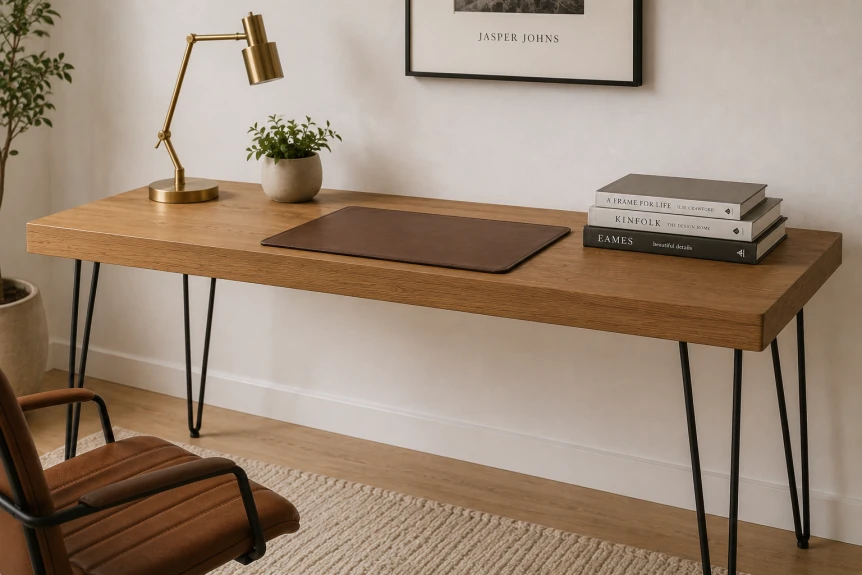
The industrial desk is almost always a solid wood top on a black steel base. Walnut, oak, or ash all work. The base can be hairpin legs, an A frame, a trestle, or a clean rectangular frame. Avoid anything that reads as visibly reclaimed or distressed beyond what real age would produce. A perfectly distressed top with fake nail holes is not industrial. It is theatrical.
The wood should look honest. Visible grain, real edges, and the kind of finish that lets you see the material rather than hiding it. A live edge slab works in an industrial office if the rest of the room is restrained, though it pulls the room slightly toward rustic. A straight edge solid wood top reads more modern industrial.
For the steel base, choose powder coated matte black over glossy or chrome. Hairpin legs read more mid century industrial. A rectangular steel frame or trestle reads more architectural and contemporary. The industrial furniture guide covers the broader material logic.
The Chair: Leather, Steel, and Real Ergonomics
This is one of the few styles where the aesthetic chair and the ergonomic chair overlap. A tan or oxblood leather task chair with a steel frame, like a vintage Eames soft pad or one of the contemporary leather task chairs from Steelcase or Herman Miller, can deliver both real ergonomics and industrial style.
The chairs to avoid are the dining height leather and steel chairs that pretend to be task chairs but lack the adjustability. They look correct in photos and ruin your back in a month. The chairs to look at are the Eames soft pad executive in tan or black, the Steelcase Leap in leather, and any of the Knoll task chairs with leather upholstery.
If your budget does not stretch to those, choose a modern ergonomic chair in a neutral grey or black, and let the rest of the room carry the industrial weight. A chair that prioritizes back support over aesthetic is always the right move for full time work.
Lighting: The Industrial Signature
Lighting is where industrial style earns its character. The three layer principle applies, but the fixtures themselves can be much more visible and architectural than in other styles. Black articulating wall lamps, factory style pendants with metal shades, and arc floor lamps in brass or matte black all work.
The Edison bulb is the most overused signal of the style. Use them sparingly, if at all. A single visible filament bulb in one statement fixture is enough. Five Edison bulbs in a row across the desk reads as a coffee shop, not a workspace. Modern alternatives include exposed LED filaments in similar shapes, which give you the visual character without the heat or the energy cost.
For the desk, an articulating black task lamp with a metal shade is the canonical move. For ambient lighting, a factory style pendant or a track of small recessed lights both work. For the third layer, an arc floor lamp behind the chair or a wall sconce above a shelf completes the room. The industrial lighting ideas guide covers the canonical fixtures, and the modern home office lighting guide in this series covers the layering principle in workspace context.
Storage: Metal, Wood, and Honest Joinery
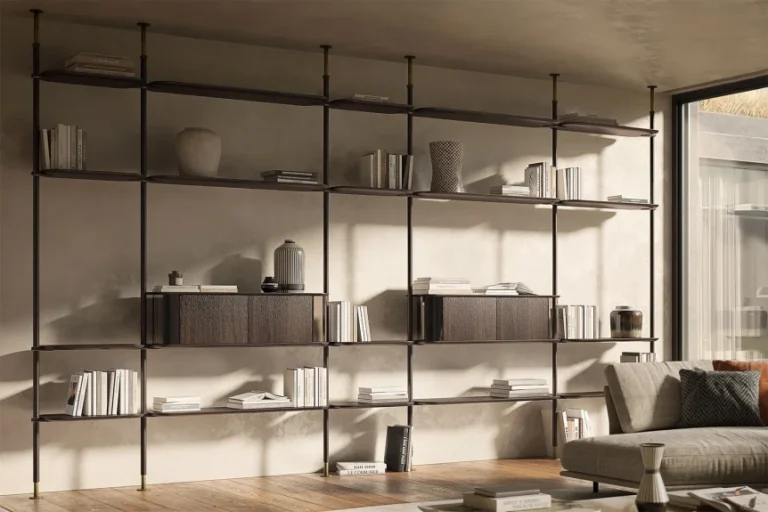
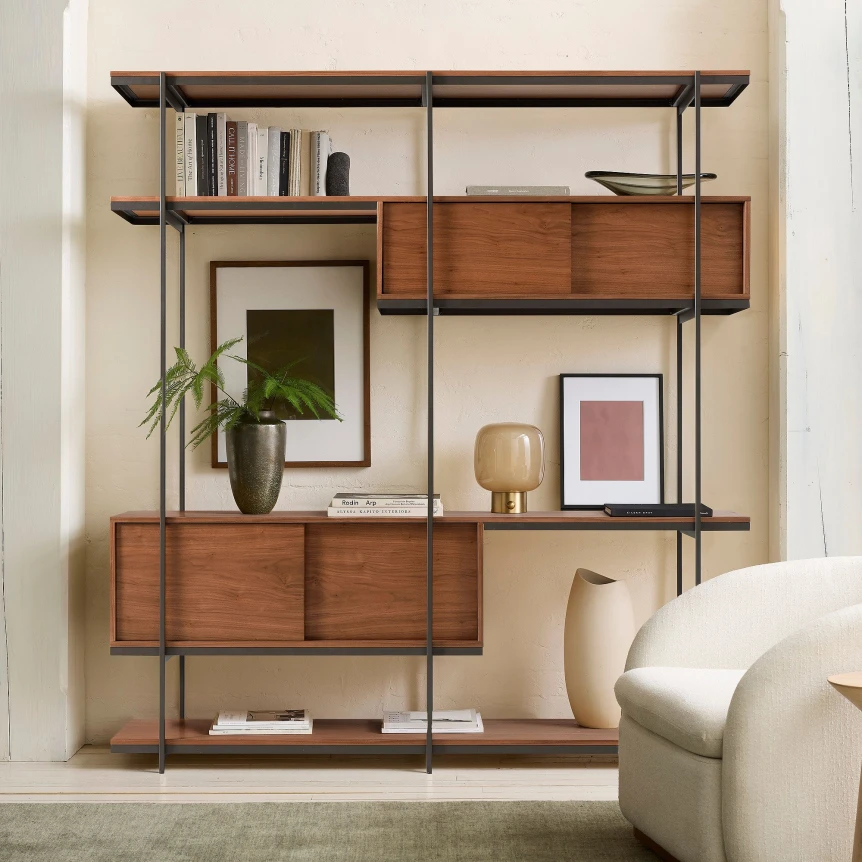
Industrial storage leans on metal and wood. A steel and wood credenza, an open shelving unit with thin black metal supports, or a glass and steel cabinet all work. Avoid laminate, MDF, and anything that hides its joinery. The point of the style is honest materials, and storage furniture is the place where that honesty is most visible.
Open shelving suits industrial style better than most styles because the structure itself is part of the aesthetic. A black metal frame with solid wood shelves can hold books, file boxes, and a few objects without needing closed storage to hide them. The discipline is to keep the shelves looking deliberate rather than packed. Two to four objects per shelf, with empty space between groupings.
Textures and Texture: Where Warmth Comes From
Industrial rooms can easily tip toward cold. The fix is layered texture. A flat weave or vintage style rug in a muted geometric pattern, a leather desk pad, a wool throw, and one or two textile cushions if you have a secondary chair all build warmth without breaking the material logic.
For art, industrial rooms benefit from large scale work. Black and white photography, architectural drawings, framed vintage technical prints, or a single large abstract piece all work. Avoid anything pastel or floral. The art should feel like it belongs in the same room as the steel and the leather.
Common Mistakes in Industrial Home Offices
- Treating it as a costume. Pipe shelves, Edison bulbs, chalkboard signs, and reclaimed everything together is a theme. Restraint is the difference.
- Overusing Edison bulbs. One is a moment. Five is a cliche. Modern LED filament alternatives give you the look without the heat.
- Skipping textile warmth. An all hard surface room sounds tinny on calls and feels cold to be in. A wool rug and a throw are not optional.
- Choosing fake distressed wood. Real industrial uses honest materials. Manufactured distress reads as theater.
- Cool white bulbs. Warm always. The whole palette depends on warm light.
Industrial Versus Mid Century Modern
Both styles use warm wood, leather, and a sense of character. The differences:
- Metal tone. Industrial leans black, blackened iron, and oxidized steel. Mid century leans brass and warm chrome.
- Lines. Industrial is straight, structural, and architectural. Mid century is curved, tapered, and sculpted.
- Palette. Industrial stays in a tighter range with deeper accents. Mid century allows brighter saturated colors.
For the mid century direction applied to a workspace, see mid century modern home office. For comparison with quieter styles, Japandi home office ideas and minimalist home office ideas are the natural counter directions.
Putting an Industrial Home Office Together
The order I would recommend: desk first, lighting second, chair third, storage fourth, textiles and art last. Industrial style rewards strong foundational pieces. A real solid wood desk on a clean steel base, paired with one or two strong lighting fixtures, can carry the rest of the room even if the supporting pieces are quieter. The chair should be ergonomic before it is aesthetic. The textiles soften what would otherwise be a cold material palette.
For broader context, return to the complete guide to modern home office design or compare with the other style directions in this series.
FAQ
Frequently Asked Questions
Can industrial style work without exposed brick or pipes?
Yes. Real architectural features are a bonus, not a requirement. The style is carried by materials, palette, and lighting more than by structural elements. A standard drywall room with a solid wood desk on a steel base, a black articulating wall lamp, a leather chair, and a charcoal grey accent wall reads as industrial without any exposed brick or visible ductwork.
How do I keep an industrial office from feeling cold?
Three things. First, warm bulbs in the 2700 to 3000 Kelvin range across all light sources. Second, layered textiles: a wool rug, a leather desk pad or chair, and a wool throw. Third, one warm wood element that occupies real visual mass, usually the desk top. Together they prevent the room from reading like a workshop and let the steel and the leather feel residential.
Hairpin legs or rectangular steel frame for an industrial desk?
Hairpin legs read slightly more mid century industrial and keep the floor visible underneath, which works better in smaller rooms. A rectangular steel frame or trestle reads more architectural and modern industrial, and works better in larger rooms with stronger ceiling heights. Both are correct. Choose based on the proportions of your room and how much visual weight you want the desk to carry.
What about Edison bulbs, are they really out of style?
Not out of style, but heavily overused. The reason they feel dated is because they appeared in every cafe and brewery for a decade. Used sparingly, in one or two fixtures, they still read correct in an industrial room. Used everywhere, they read as 2014. Modern LED filament bulbs in similar shapes give you the visual character without the heat or the energy cost, and are the right choice for new fixtures.
Can industrial style work in a small home office?
Yes, but choose lighter rather than darker furniture and avoid bulky storage. A small industrial office benefits from a wall mounted desk, a single black articulating wall lamp, open shelving instead of closed storage, and a lighter accent wall rather than a charcoal one. The dark heavy version of industrial works best in rooms over 120 square feet. Below that, lean toward the lighter end of the palette.
Where to Read Next
For broader industrial context, the industrial living room ideas and industrial bedroom design ideas are useful if your office is adjacent to those rooms. The industrial kitchen ideas guide is worth a read if you want a coherent industrial language across your whole home.