Best Coffee Tables Under $500: A Buyer’s Guide

By Tereza Hower | Published February 20, 2026 | Updated September 16, 2026
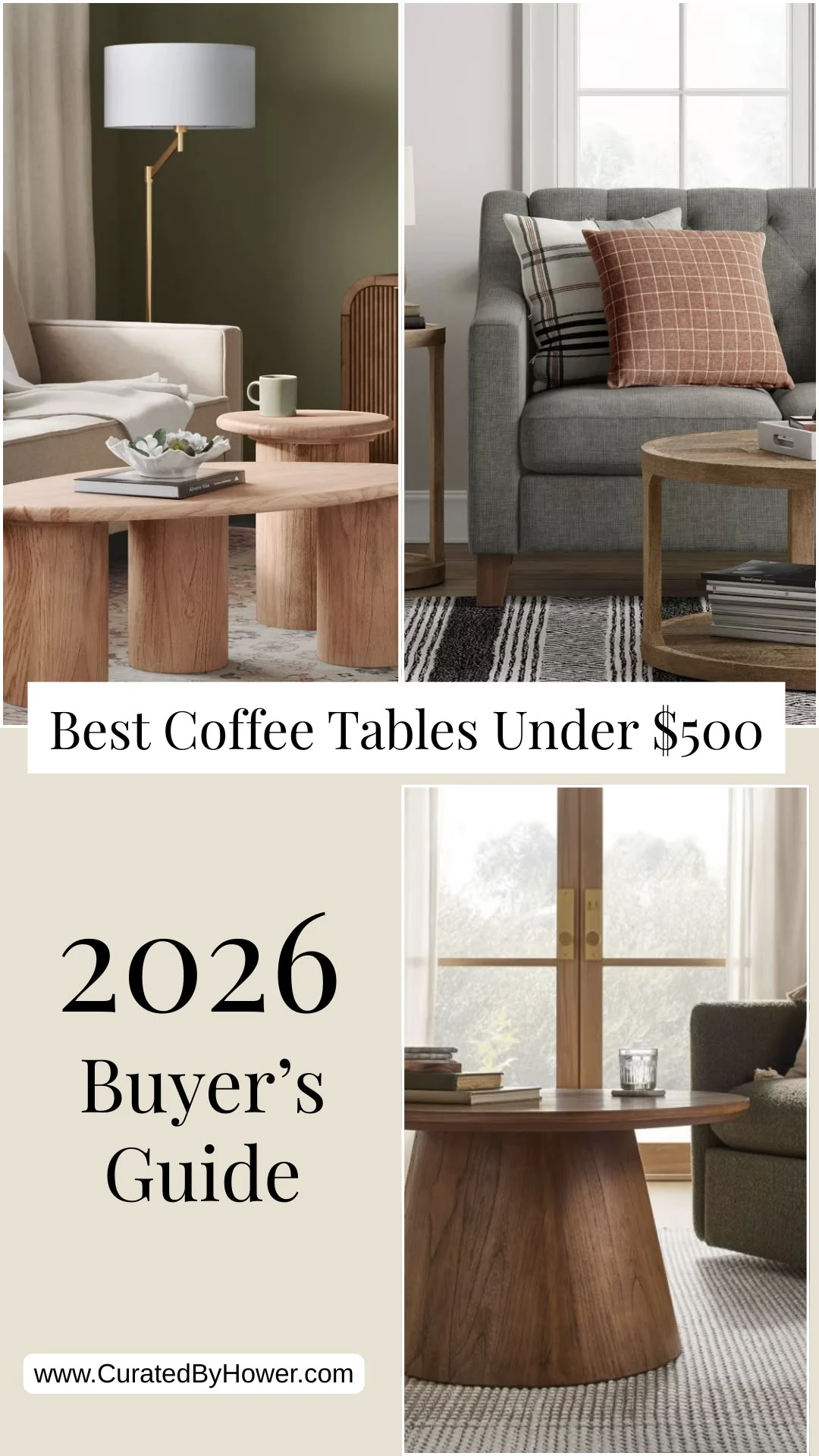
The coffee table is the most physically abused piece of furniture in the house and the one customers spent the longest deciding on at Hower Furniture. Feet up, drinks down, kids climbing, dogs sleeping under it, holiday cheese boards, board game nights. After ten years of selling them, the pattern was clear: the coffee tables that came back as returns failed the same handful of tests, and the ones customers kept for a decade shared a few quiet, unglamorous traits.
The good news is that you don’t need to spend $1,200 on a designer table to get something that lasts. The sweet spot for genuinely good coffee tables is $200 to $450. Below that, you’re usually buying engineered wood that won’t survive being moved twice. Above that, you’re paying for a brand name. This guide covers what to look for, how to size it, and the trade offs between the main shapes and materials, all within a realistic under $500 budget.
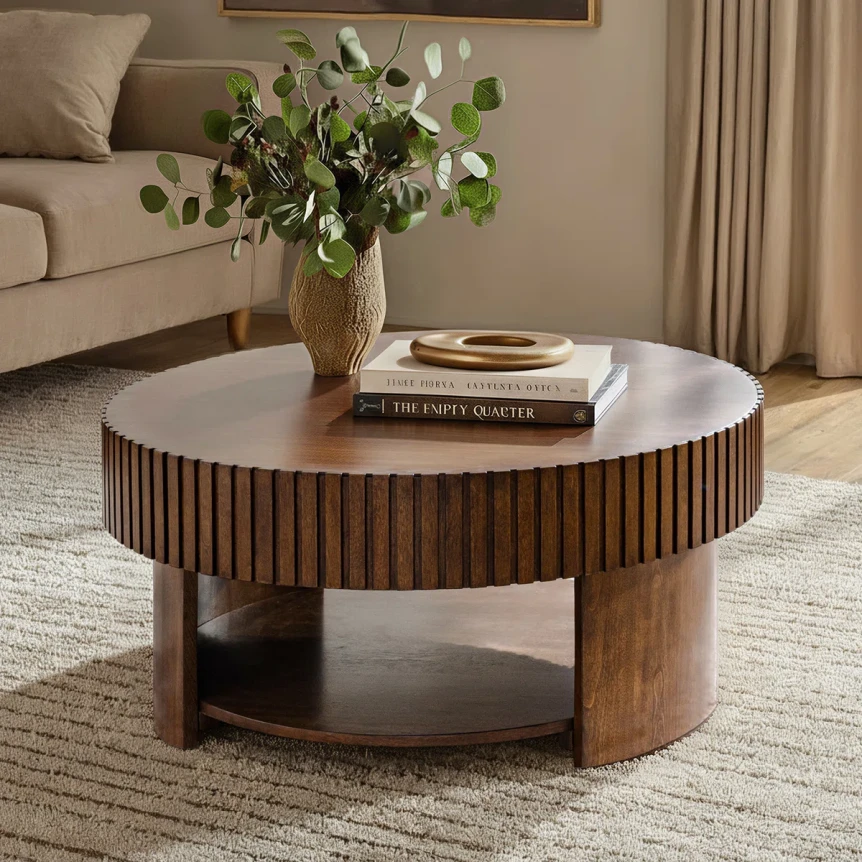
Coffee Table Budget Tiers at a Glance
Three tiers cover almost every living room under $500. The jump from $250 to $400 is the most worthwhile upgrade in the range; the jump from $400 to $1,500 is mostly brand premium.
| Budget | Best for | What you get | Realistic lifespan |
|---|---|---|---|
| $50 to $150 | Starter or temporary | Engineered wood, veneer, laminate, basic metal frames | Two to three years before visible wear |
| $150 to $300 | The sweet spot for most living rooms | Solid mango, acacia or rubberwood; quality veneer over plywood | Five to ten years |
| $300 to $500 | Best value if you plan to keep it | Solid oak, walnut or quality acacia; longer warranties | Ten years plus |
How to Tell a Quality Coffee Table From a Cheap One
This is the section that mattered most on the showroom floor. Customers would walk in clutching a printout of a $1,400 designer table and walk out with a $400 piece that was structurally identical. The price tag is one of the least reliable signals in furniture. Here’s what to actually check.
Tap the top with a knuckle. Solid wood gives a low, dense thunk. Veneer or laminate over particleboard gives a higher, hollower sound. The top is the surface that takes 90 percent of the abuse, so this matters more than anywhere else on the piece.
Lift one end. A 48 inch solid oak coffee table should weigh 60 to 90 pounds. A solid walnut or acacia table at the same size, similar. If you can lift one end with two fingers like a pizza box, the case is mostly hollow particleboard with a wood print on top. It will dent at the edges within a year.
Look at the joinery. Quality coffee tables show how they’re put together. You should be able to see mortise and tenon joints, dovetails, or visible wood screws into a hardwood frame. If the legs attach with thin metal brackets and machine screws into particleboard, the legs will loosen within a couple of years.
Push down hard on a corner. The whole table should feel rigid. If the corner gives or the table racks (twists slightly), the case construction is too thin. A well built coffee table at any price should feel immovable when you press on it.
Check the underside. Flip a floor model if the showroom allows. Quality tables show finished or sealed wood underneath, with visible bracing or corner blocks reinforcing the joints. Cheap tables show raw particleboard, exposed staples, or thin glued seams.
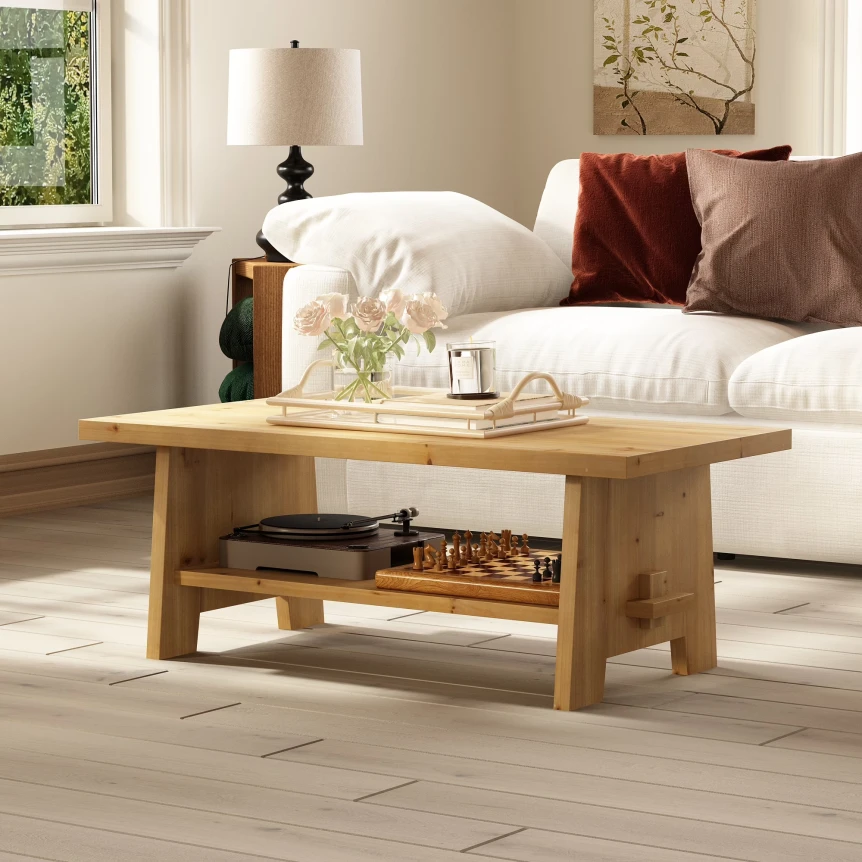
Sizing: The Numbers That Actually Matter
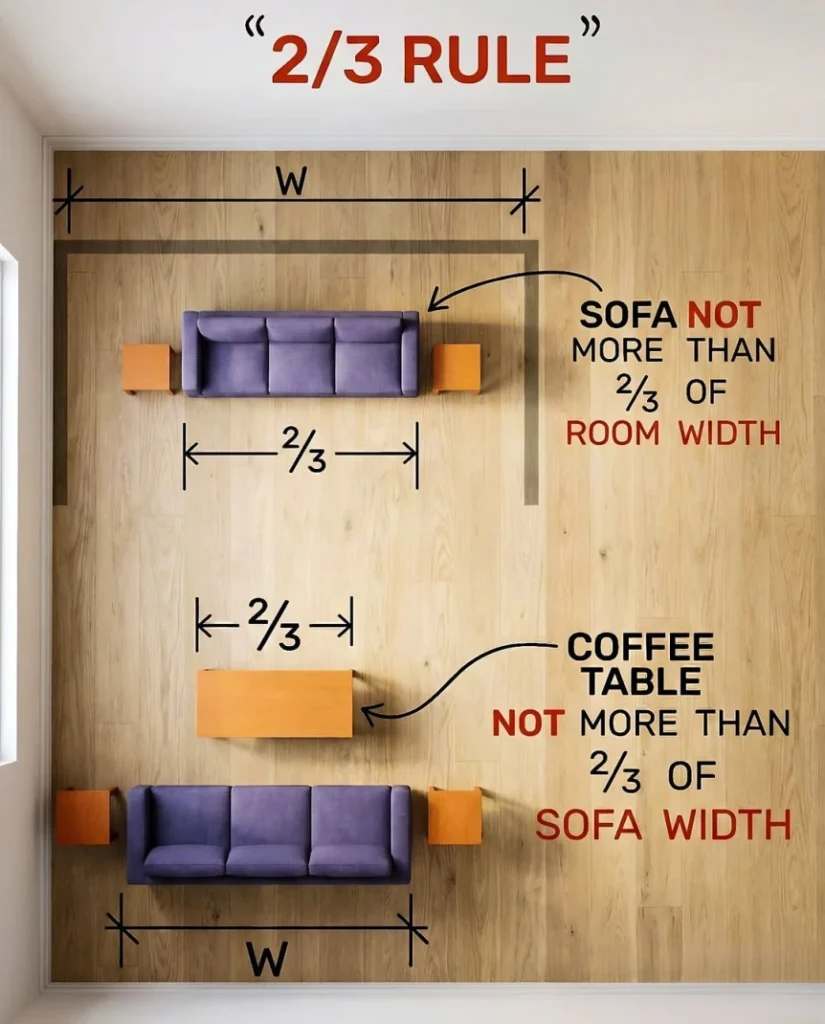
Size is where most coffee table purchases go wrong. Customers either bought one too small (the table floats awkwardly in front of an 84 inch sofa) or too large (the room can’t fit anything else). The math is simple.
- Length: coffee table length should be roughly two thirds the length of your sofa. An 84 inch sofa wants a 50 to 56 inch table. A 96 inch sofa wants a 60 to 64 inch table. A sectional changes the math; for sectionals, square or round tables sized to the inside angle work better than long rectangles.
- Height: the tabletop should sit within 2 inches of the sofa seat height, ideally 1 to 2 inches lower. Most sofas have 17 to 19 inch seats; most coffee tables run 16 to 18 inches tall. If your sofa is unusually low (some modern designs sit at 14 inches), find a lower coffee table to match.
- Distance from sofa: 14 to 18 inches between the front edge of the sofa and the coffee table. Closer than 14 and reaching past the table to sit becomes awkward; farther than 18 and you’ll strain to reach a drink.
- Depth: 18 to 24 inches is the standard range. Tables narrower than 18 feel apologetic. Tables deeper than 24 start to dominate the room.
For more on how the coffee table fits along
side other living room pieces, our accent furniture guide covers the supporting cast.
Materials: What Survives Daily Use
Solid wood
The safest investment under $500 is solid hardwood: oak, walnut, acacia, or mango. Each has its own character, but all four will outlast any veneered or engineered alternative. Solid white oak is the most forgiving (dents less, takes both light and dark stains, ages well across most decor styles). Walnut is the more refined choice but softer, so expect visible wear within a few years. Acacia and mango are the value picks at this price point, with bold grain patterns and good durability for the cost.
Watch out for “wood look” labels. Solid wood is solid throughout. Anything labeled “wood veneer,” “engineered wood,” or “wood composite” is not the same thing, regardless of how the marketing copy reads.
Wood veneer over plywood
The honest middle ground. A real wood face (1/16 to 1/8 inch thick) laminated onto a plywood substrate. You get the look of solid wood at half the price, and the plywood substrate is more dimensionally stable than solid wood (it won’t warp in humidity swings). The catch: veneer over plywood cannot be sanded or refinished if the surface gets damaged. If you scratch through the veneer to the substrate, the table is permanently scarred.
This is the right material for someone who wants the look of solid wood, doesn’t expect to keep the piece for 20 years, and treats it carefully.
Wood veneer over MDF or particleboard
This is what most coffee tables under $200 actually are. The veneer can look fine for a few years, but the MDF substrate swells if exposed to even mild humidity, the edges chip, and any structural stress will warp the case. Avoid for any piece you plan to keep more than three years.
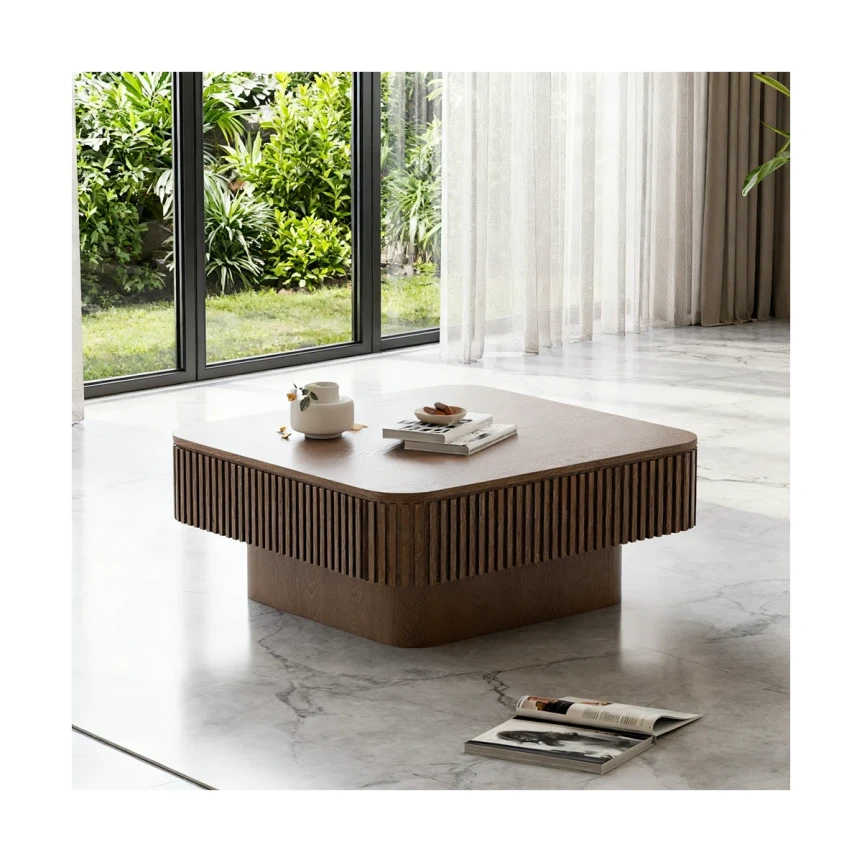
Vinyl or paper print laminate
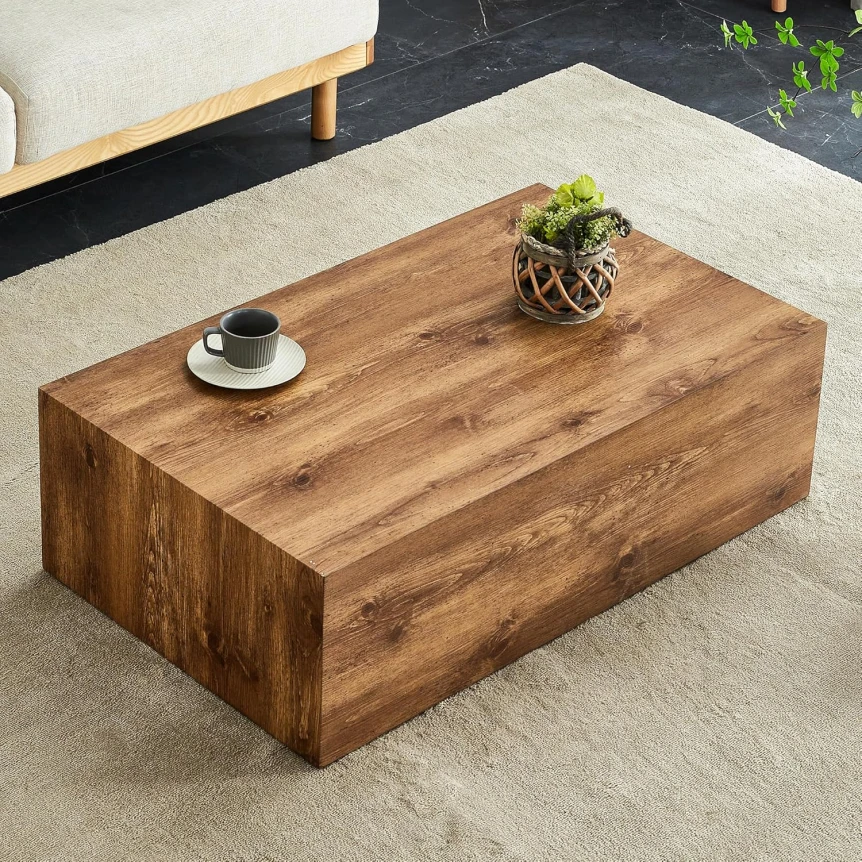
The wood is fake. The “wood grain” is a printed image laminated onto particleboard. These tables photograph well in catalogs and survive a year or two of careful use, but the print pattern repeats visibly under good lighting and the edges peel within 18 months. Fine for a starter apartment, not worth keeping.
Glass
Glass tops show every fingerprint, water ring, and dust particle. They look stunning when freshly cleaned and chaotic three hours into a Saturday afternoon. Tempered glass (10mm thick or more) is genuinely durable and shatters into small dull pieces rather than shards if it ever fails, but the daily maintenance is the trade off most customers underestimate.
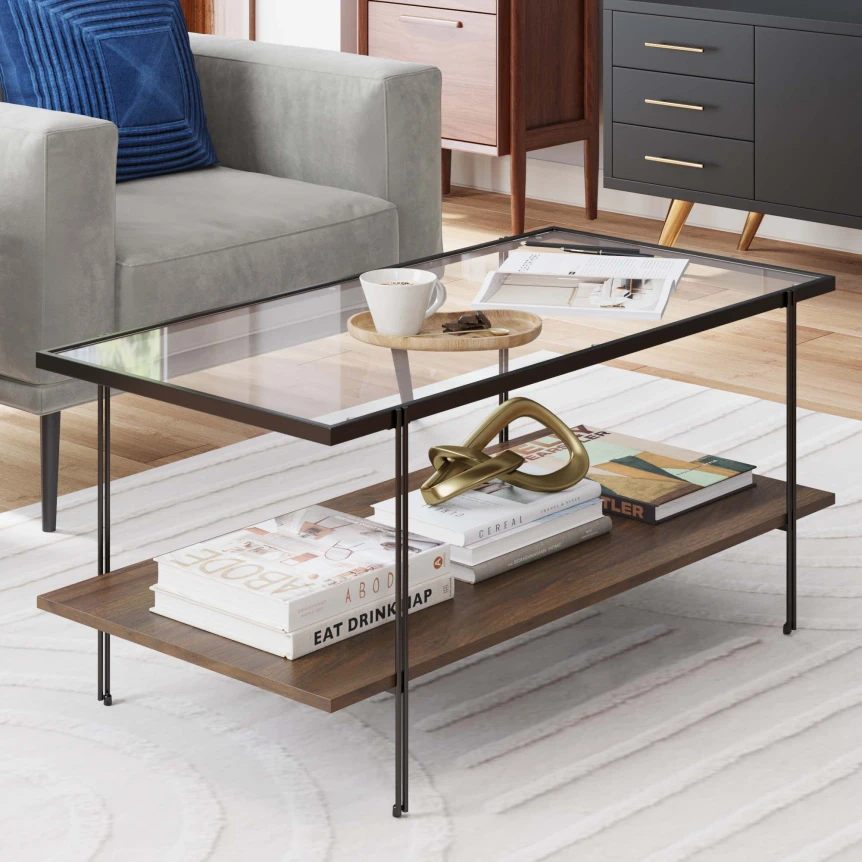
Glass works in modern, minimalist rooms where the visual lightness is the point. It’s a poor choice in homes with kids, pets, or anyone who eats on the couch.
Metal frame with wood or stone top
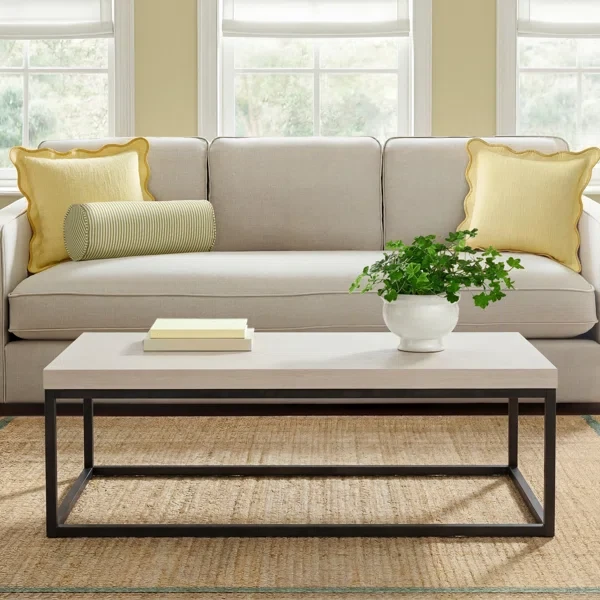
Metal bases are durable and can support more weight than wood frames. Look for powder coated steel, not hollow tubing. Tap the metal: solid steel feels dense and dull; thin tube steel rings hollow. The trade off is style. Metal frames lock the piece into industrial or modern aesthetics, which works in some rooms and clashes badly in others.
Choosing the Right Shape
The shape decision matters more than people realize. It’s not just aesthetic. Each shape solves different problems.
Rectangular
The default and the right choice for most living rooms. Pairs naturally with a standard sofa, gives you the most usable surface area, and works in nearly any decor style. The only living rooms where I’d steer away from rectangular are very small spaces (under 150 square feet) and rooms with sectionals.
Round and oval
The right answer for small rooms, family homes with young kids (no sharp corners), and any space where traffic flow matters. Round tables also work well at the inside curve of a sectional. The trade off: less usable surface area, harder to style with matching side tables.
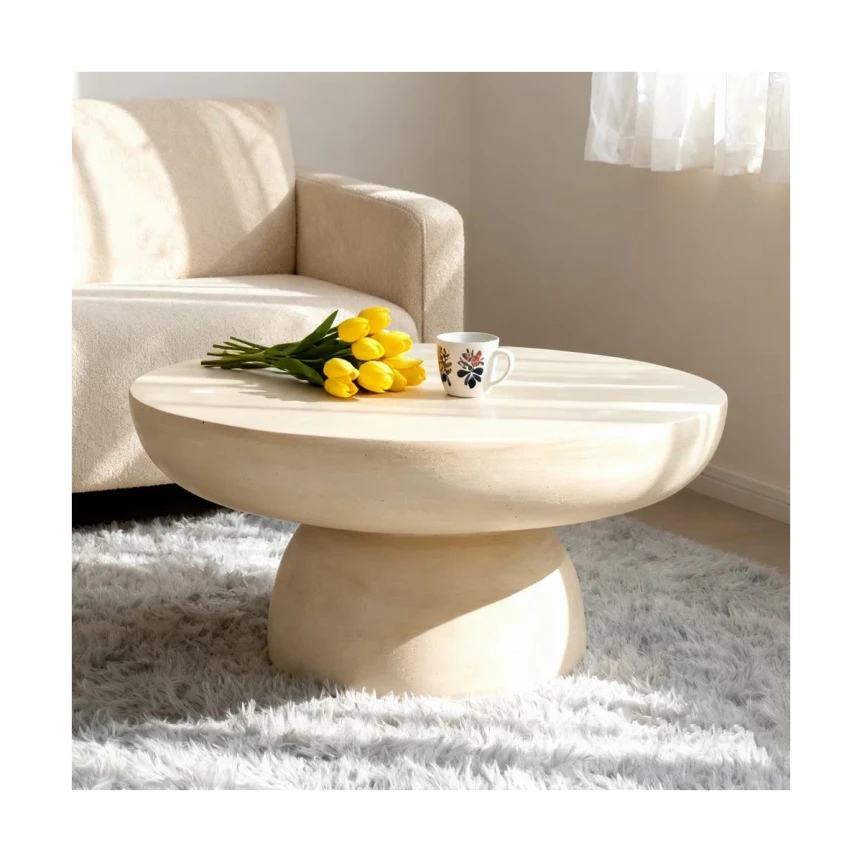
A round pedestal coffee table specifically (one chunky center column instead of four legs) gives you bonus floor visibility and is the most family friendly option. No legs to bump into, plenty of room to tuck feet under, and easier to pull chairs up close.
Square
Best paired with sectionals or symmetrical seating arrangements with two facing sofas. A square table 36 to 48 inches across reads as a deliberate visual anchor in a way a small rectangle can’t.
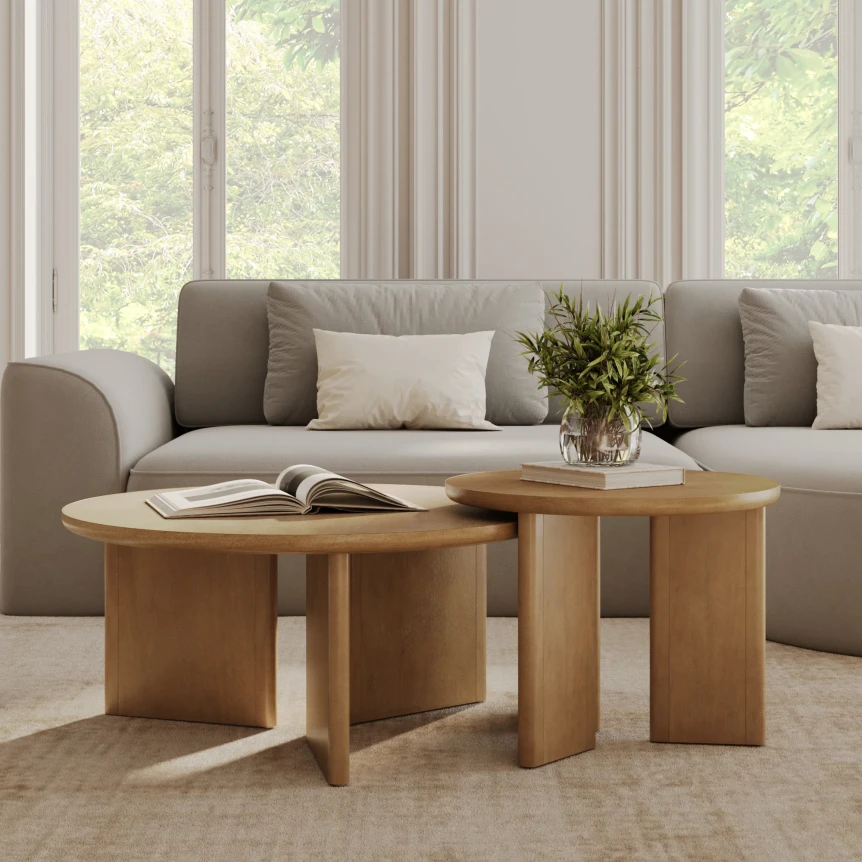
Nesting tables (set of two)
The honest pick for studios and small apartments. Two tables that tuck together when you need one and pull apart when guests come over. Trade off: each individual table is smaller and lighter than a single piece would be, so the combined surface is less useful than a single 48 inch table would be in the same footprint. Choose nesting only if flexibility is genuinely the priority.
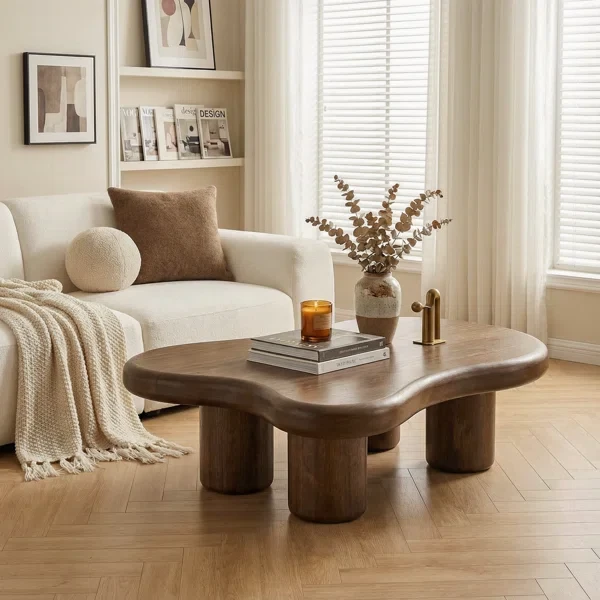
Organic and irregular shapes
The kidney bean and pebble shaped coffee tables that have been everywhere for the last few years. They photograph beautifully and read as sculptural in modern minimalist rooms. The trade off, which most customers didn’t think about until after delivery, is that irregular shapes are harder to style and don’t pair cleanly with rectangular sofas. There’s always overhang or gaps. Choose this only if the visual statement is worth more to you than the styling flexibility.
Storage Options Compared
Open base
No storage. Cleanest visual, easiest to vacuum under, usually the least expensive. The right choice for minimalists or formal living rooms where the table doesn’t need to hide anything.
Lower shelf
The most useful storage option for most living rooms. A lower shelf adds 50 percent more surface area for books, baskets, or magazines without adding visual weight. Items are visible, which means you have to keep the shelf reasonably tidy, but the trade off is worth it for the flexibility.
Drawers
Hidden storage for remotes, coasters, charging cables, and other small clutter. Trade offs: drawers add cost, the drawer slides eventually wear out (faster than hinges on cabinet doors), and the drawer mechanism takes up internal space, so total storage volume is less than a lower shelf would offer.
Lift top
The seat lifts to reveal a hidden compartment, often combined with a working surface that raises to laptop or eating height. The most multi functional option, especially for studio apartments where the coffee table doubles as a desk or dining surface. Verify the lift mechanism before buying: gas piston is best, friction stay second best, basic spring hinges fail within a year of regular use.
Style Pairing
The right coffee table style depends on what’s already in the room. A few pairings that consistently work.
Modern and minimalist rooms are flattered by clean lined wood pieces with hairpin or tapered legs, low profile silhouettes, and natural finishes. Skip ornate detail. Skip dark stained wood unless the rest of the room can absorb it.
Mid century rooms want walnut or teak with tapered legs, rectangular or boat shaped tops, and minimal hardware. The legs should be visible and slim.
Farmhouse and rustic rooms work well with thick top plank tables, X frame bases, and distressed natural finishes. Round pedestal tables in natural wood are particularly strong here.
Industrial and loft spaces can absorb metal frame tables with reclaimed wood or dark stained tops. Black metal with walnut or dark oak is the safe pairing.
Traditional and transitional rooms want pedestal bases, turned legs, and warm wood finishes. Avoid anything too sculptural or angular.
Wood tone rule: don’t match the coffee table to your floor. Walnut on walnut blurs the room into one wash of brown. Contrast is what makes wood furniture look intentional. Pair light floors with darker tables, dark floors with warmer or lighter wood.
What Most People Get Wrong
Three patterns I watched repeat at the showroom.
They buy the wrong size by going too small. A 36 inch table in front of a 90 inch sofa looks stranded. The fix is going larger than feels comfortable. A coffee table that looks “just slightly too big” when you first place it almost always settles into looking exactly right within a week, once you’ve added a tray, books, and a candle to ground it.
They prioritize style over construction. The customers who came back unhappy were almost always the ones who chose a table because of how it looked in renderings, not because of how it felt in person. A particleboard table with a beautiful finish will start chipping at the corners within a year, and no amount of styling can hide that. Quality construction is what makes a piece still look beautiful in five years.
They overstyle the surface. The “designer” coffee table style with seven objects, a candle, three books, a bowl, a sculptural piece, and a vase is fighting the table itself for attention. The simplest formula always wins: a tray, two or three horizontal books, and one organic element (a candle, a small plant, or a single sculptural object). Half the surface should stay clear so you can actually use the table. For more on this, our cozy living room styling guide works through the rule of three in detail.
Realistic Budget Tiers Under $500
$50 to $150: engineered wood with veneer or laminate, basic metal frame tables, simple nesting sets. Honest expectations: these tables work for a starter apartment or a temporary living situation but will show wear within two to three years. Fine for the moment, not worth keeping.
$150 to $300: the sweet spot for most living rooms. You can find solid wood tables (especially in mango, acacia, or rubberwood) or quality wood veneer over plywood pieces. Lift top tables in this range tend to use better mechanisms than the budget tier. This is where I’d spend if you want a coffee table that lasts five to ten years without overspending.
$300 to $500: solid hardwood tables in oak, walnut, or quality acacia, often from manufacturers with longer warranties and better construction. The best value tier for someone willing to spend a little more for a table they plan to keep for 10 plus years. The marginal jump from $250 to $400 is the most worthwhile upgrade in the entire price range; the jump from $400 to $1,500 is mostly brand premium.
Frequently Asked Questions
What's a realistic budget for a quality coffee table?
For a coffee table that will last five to ten years, expect to spend $250 to $450. Below that, you’re usually buying engineered wood with vinyl print laminate, which won’t survive being moved twice. Above that, you’re paying for a brand name. The sweet spot is the upper end of the mid range: $300 to $400 gets you solid hardwood from manufacturers that have been making case goods for decades, with construction that genuinely lasts.
What size coffee table do I need for a 90 inch sofa?
Aim for a table around 60 inches long, which is roughly two thirds the length of the sofa. Anything significantly shorter than 50 inches will look stranded; anything longer than 65 inches starts to crowd the room. Place it 14 to 18 inches from the front edge of the sofa for comfortable reach. The height should sit within 2 inches of the sofa seat height, ideally 1 to 2 inches lower.
Should I get a round or rectangular coffee table?
Rectangular works for most living rooms and is the safer default. Round is the better answer in three situations: small rooms where traffic flow matters, family homes with young kids (no sharp corners), and at the inside curve of a sectional. A round pedestal table specifically (one chunky center column rather than four legs) is the most family friendly option because there are no legs to bump into and plenty of room to tuck feet under.
Is solid wood always better than engineered wood?
Solid wood lasts longer and can be sanded or refinished if it gets damaged, but it’s also more expensive and slightly less stable in humidity swings. Wood veneer over plywood (not MDF or particleboard) is the honest middle ground: real wood face, stable substrate, fraction of the price of solid hardwood. Avoid wood veneer over MDF or vinyl print over particleboard. Those are not the same thing as real wood, regardless of how the marketing reads.
How do I know if a coffee table is solid wood?
Three quick tests. Tap the top with a knuckle: solid wood gives a low, dense thunk; engineered wood sounds higher and hollower. Lift one end: a 48 inch solid oak table should weigh 60 to 90 pounds. Look at the edges and the underside: solid wood shows continuous grain across the entire surface and finished or sealed wood underneath; veneer shows a repeating pattern or visible seams at the edges, and raw substrate underneath.
Are lift top coffee tables worth it?
Yes, if you live in a small space and would actually use the dual function. The hidden storage genuinely holds blankets, board games, or laptops, and the working surface that raises to laptop height is useful for anyone who eats on the couch or works from the living room. The catch is the lift mechanism: gas piston hinges are best and last 10 plus years, friction stays are acceptable, and basic spring hinges fail within a year. Verify the mechanism type before buying.
The Bottom Line
The right coffee table under $500 is the one with solid construction in the right size for your sofa, in a wood tone that contrasts with your floor, and with a shape that suits your traffic patterns. Spend in the $250 to $400 range, prioritize solid hardwood or quality plywood veneer, and skip anything that fails the knuckle tap or the lift test. The styling on top is the easy part.
For the larger living room conversation around the coffee table, our complete guide to modern living room design covers how it fits alongside the sofa, lighting, and rug. The timeless living room staples guide covers the five anchor pieces every living room needs, with the coffee table as one of them. And if you’re working through case goods more broadly, our sideboard buying guide applies similar quality logic to the larger storage pieces.