Sideboard Buying Guide: How to Choose the Right One

By Tereza Hower | Published February 25, 2026 | Updated August 15, 2026
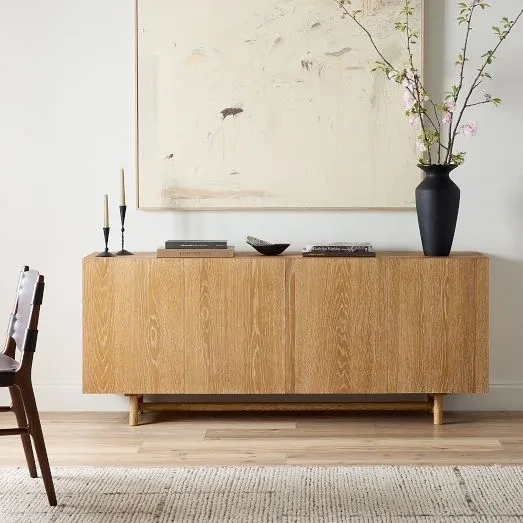
When I was running Hower Furniture, sideboards were the piece I watched customers struggle with most. They would come in knowing they wanted “something for the dining room,” walk past three perfectly good options, and end up choosing the one that looked best in the showroom but didn’t fit the wall they had in mind. The sideboards that came back as returns almost always failed the same handful of tests, and the ones customers loved a decade later shared a few quiet, unglamorous traits.
This guide condenses that into the decisions that matter. It will help you tell a quality piece from a cheap one, size it correctly, and choose between a sideboard, a buffet, or a media console without overthinking it.
Sideboard, Buffet, or Media Console: The Real Difference
The terms get used interchangeably in catalogs, which makes shopping confusing. The actual differences come down to height, intended room, and how the interior is divided.
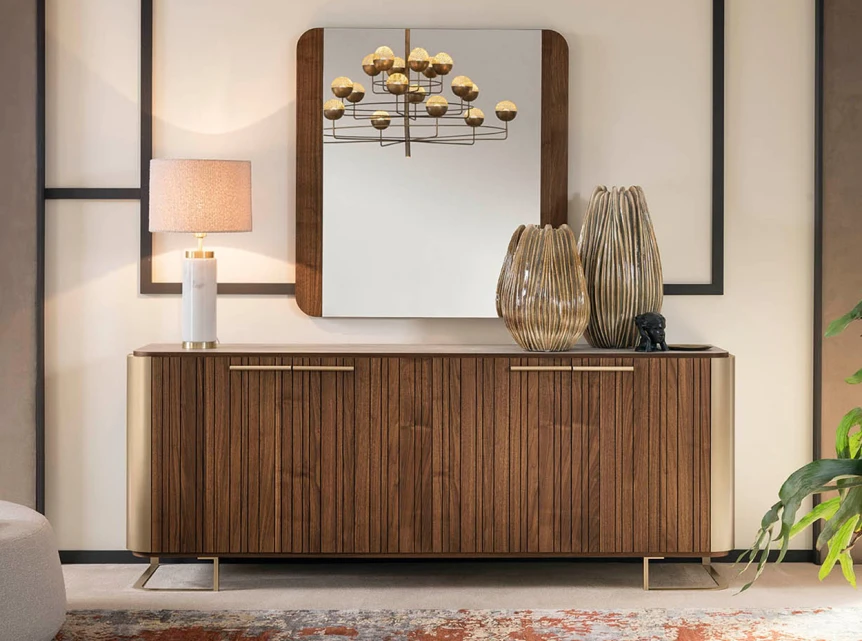
What is a sideboard?
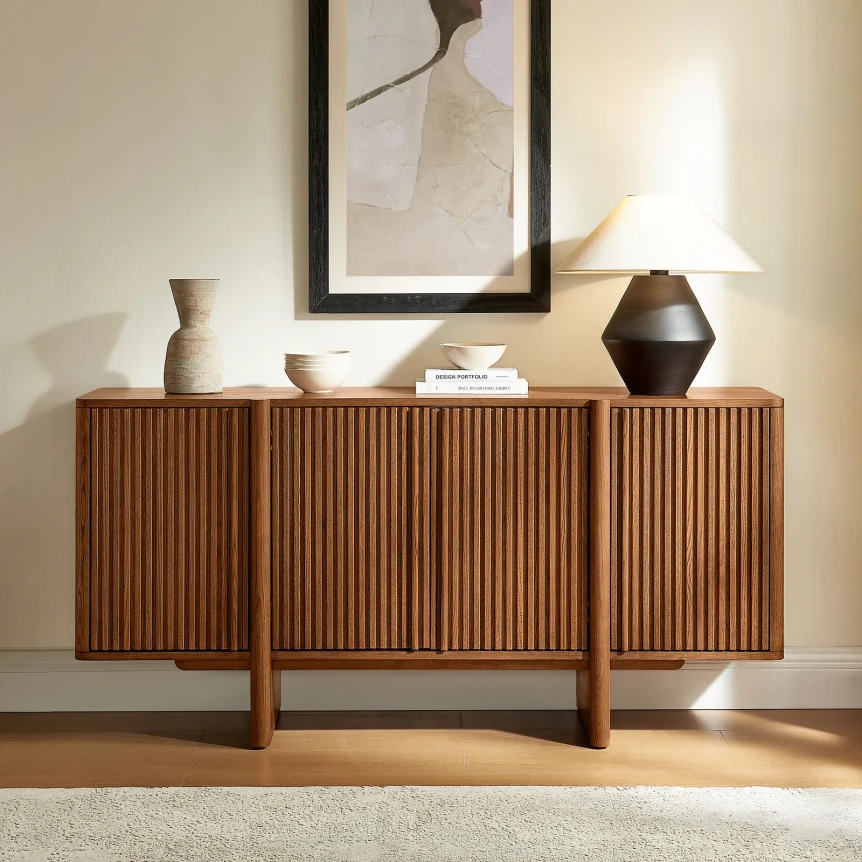
A sideboard is a long, low storage cabinet, usually between 30 and 36 inches tall, designed to sit against a wall in a dining or living room. It almost always has cabinet doors, sometimes a row of drawers across the top, and a generous flat surface meant for lamps, art, or serving.
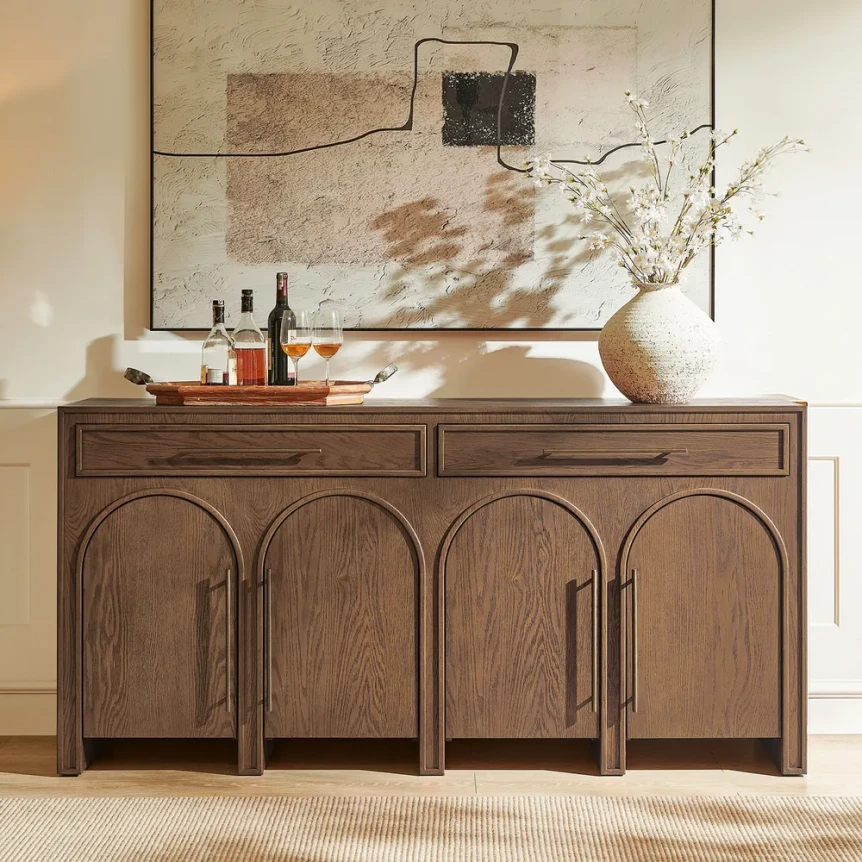
What is a buffet?
A buffet is a sideboard built specifically for the dining room. It usually sits a few inches taller, around 36 to 40 inches, which is comfortable counter height for plating food during a meal. Most buffets include a row of shallow top drawers for flatware and table linens, with deeper cabinets below for serving platters.
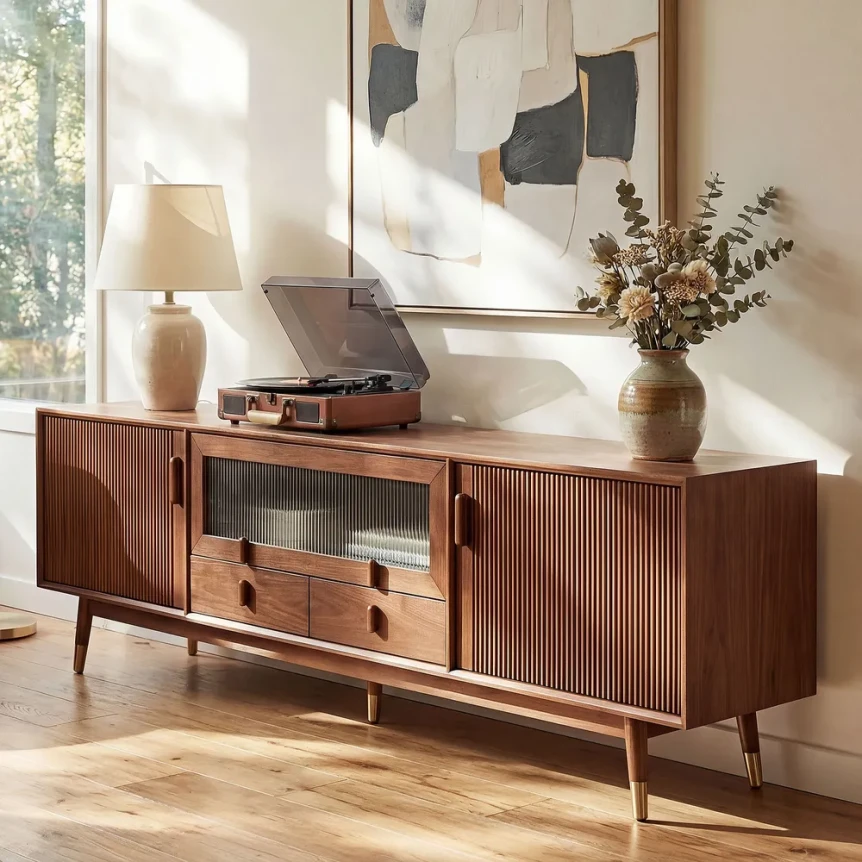
What is a media console?
A media console is a sideboard engineered for electronics. The giveaways are wire passthrough holes in the back panel, ventilation cutouts, and at least one section of open shelving sized to fit a soundbar or cable box. If you want a deeper look at this category, our guide to modern TV stands and entertainment centers walks through the layout decisions in more detail.
| Feature | Sideboard | Buffet | Media Console |
| Typical height | 30 to 36 inches | 36 to 40 inches | 24 to 32 inches |
| Best room | Living or dining | Dining | Living or bedroom |
| Interior | Mostly cabinets | Drawers over cabinets | Open shelves with cabinets |
| Built for | General storage and display | Dishware and serving | Electronics and media |
How to Tell a Quality Sideboard From a Cheap One
This is the section I wish every customer had read before walking into the showroom. The price tag is not the most reliable signal. A $1,200 sideboard from a flashy direct to consumer brand can be flimsier than a $600 piece from a manufacturer that has been making case goods for forty years. Here is what to actually check.
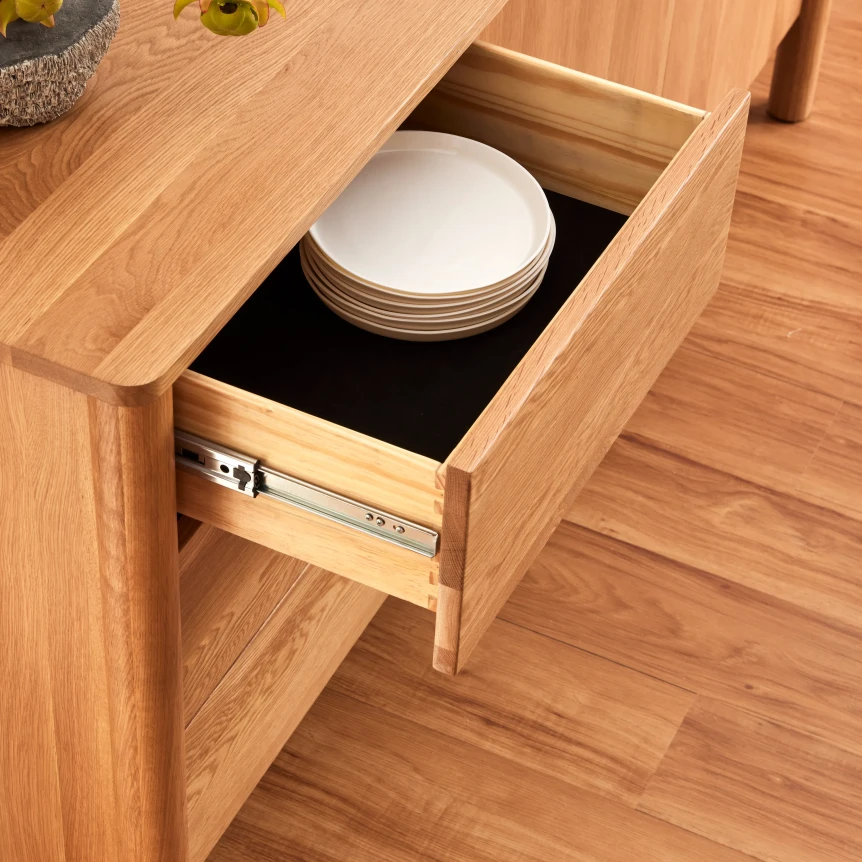
Pull every drawer all the way out. A quality drawer rides on full extension metal glides, opens smoothly with one hand, and has a wood bottom (often plywood) joined to the sides, not stapled or glued onto the underside. Drawers that bind, sag, or have particleboard bottoms held on with industrial staples are the first thing to fail.
Tap the back panel. A solid wood or thick plywood back tells you the manufacturer is willing to spend money where customers will rarely look. A thin, hollow sounding back panel made of stapled hardboard is the single most reliable predictor of a piece that will rack and twist within a few years.
Lift one corner. A sideboard worth keeping is heavy. A 60 inch piece in solid oak or walnut should be genuinely difficult to move on your own. If you can lift one end with two fingers, the case is mostly hollow particleboard and a thin veneer.
Look at the door alignment. On the showroom floor, doors should sit flush with each other and with the case. A 1/16 inch gap is normal. A visibly uneven gap means the doors will only get worse once the piece has been moved into your home and lived with.
Sizing: The Numbers That Matter
Most sideboard regret traces back to size. Either the piece is too short and looks like it is floating awkwardly under a 70 inch TV, or it is too long and crowds the dining table. A few rules I leaned on when fitting customers:
- For a media console: the console should be at least 6 inches wider than the TV total, with 3 inches of breathing room on each side. A 65 inch TV sits comfortably on a 71 to 78 inch console.
- For a dining room buffet: leave at least 36 inches of clearance between the buffet and the dining table so chairs can pull out and people can walk behind seated guests.
- For a sideboard against a long wall: aim for the piece to occupy roughly two thirds of the wall length. Anything shorter looks lost. Anything longer makes the wall feel cramped.
- For depth: 16 to 20 inches is the sweet spot. Deeper than that and the piece starts to eat the room.
The 60 inch buffet was the size we sold the most of, by a wide margin. It fits an eight foot dining wall, holds a complete set of serving dishes for ten people, and gives you about 30 inches of usable display surface on top once you account for a lamp on each end. That is the size I would default to if you are unsure.
Matching Style to the Room
Sideboards anchor a room the way a coffee table anchors a seating arrangement, which means the wood tone and silhouette matter more than the styling on top. A few guidelines that hold up across most homes:
Mid century and modern interiors are flattered by walnut, low slung silhouettes, tapered legs, and minimal hardware. Brass pulls or recessed finger pulls read more sophisticated than chunky metal handles. For broader living room pairings, see how a sideboard sits alongside other anchor pieces in our guide to timeless living room staples.
Japandi and minimalist rooms want oak or ash in a natural matte finish, flat front cabinet doors, and almost no visible hardware. The piece should feel quiet. If it has any kind of decorative trim or molding, it is probably not the right fit.
Bohemian and warm modern rooms are the only place for a cane or rattan front sideboard. The texture is the whole point, and it pairs well with woven rugs and unbleached linen. Just understand the trade off: cane fronts dent if a vacuum crashes into them and they yellow with sun exposure over time.
Industrial and traditional rooms can absorb darker, heavier pieces. Black stained oak, distressed pine, or solid walnut with iron pulls all work. Avoid laminate finishes that try to mimic wood grain because under the warmer lighting these rooms usually have, the print pattern becomes obvious.
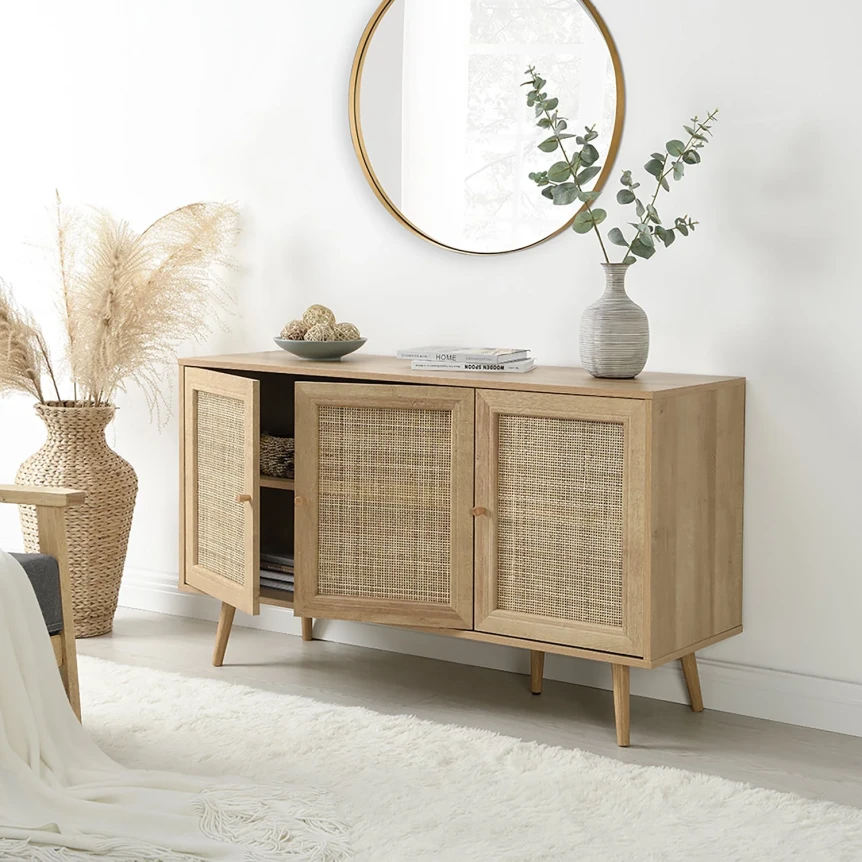
Storage Furniture for Small Spaces
If you are working with an apartment under 800 square feet, a full size sideboard will likely overpower the room. A few alternatives worth considering:
- A 36 to 48 inch console against the back of a sofa, doubling as a sideboard in a combined living and dining space.
- A pair of two door cabinets placed side by side, which can be split apart later if you move into a bigger space.
- A wall mounted floating console, which keeps the floor visible and makes the room read larger. This works especially well for media consoles in small living rooms.
- A storage bench in the dining nook, which doubles as seating. Our storage bench guide covers the dimensions and styles that work best.
What Most People Get Wrong
Three patterns I saw on the showroom floor over and over.
They buy for the empty room, not the lived in one. A sideboard that looks elegant in a staged photograph will look entirely different once you have a lamp, a tray, a stack of books, and a bowl of keys on top. Pick a piece that holds its line when it is being used, not just when it is being photographed. Pieces with a generous, uncluttered top surface (at least 14 inches deep) absorb daily life better than narrow ones.
They underestimate how much they need to store. Customers always bought one size smaller than they needed. If you are choosing between a 48 inch and a 60 inch and the room can hold either, pick the 60. Empty space inside a sideboard is fine. Stuffing a too small one is what makes the piece look messy six months later.
They match the wood tone to the floor. This is the single most common styling mistake. A walnut sideboard on a walnut floor blurs into the background and the room loses depth. Contrast is what makes wood furniture look intentional. If your floors are warm oak, a darker walnut or even painted black sideboard will read as a deliberate choice. If your floors are cool gray or whitewashed, a warm wood tone will ground the room.
Materials That Are Worth Paying For
Three materials are worth the upcharge in my experience: solid oak, solid walnut, and proper plywood (sometimes called “Baltic birch”) for case construction. Anything labeled “engineered wood” or “wood composite” is a polite term for high density particleboard with a paper or vinyl print laminated on top. It can look fine for a few years in a room without humidity swings, but it does not survive being moved twice and it cannot be refinished.
If you are working with a tight budget, prioritize spending on the case (the box itself) and accept particleboard backing or drawer bottoms. A solid wood case with engineered drawer interiors will outlast a fully engineered piece by a factor of three or four. The reverse, an engineered case with solid wood drawers, is mostly a marketing trick.
For the dining room version of this conversation, our dining table buying guide covers similar quality cues that apply to most case goods.
Frequently Asked Questions
Can I use a sideboard as a TV stand?
Yes, as long as the height works for your viewing angle and the back has either an opening or enough space behind it for cables to route. The standard sofa eye line for a seated adult is about 42 inches, so you want the center of the TV to land near that height. A 30 to 32 inch sideboard works for most 55 to 65 inch TVs. The main downside is heat: closed cabinets without ventilation can shorten the lifespan of a cable box or gaming console.
How wide should a sideboard be in a dining room?
Aim for a sideboard that is roughly the same length as your dining table or slightly shorter. A 72 inch table pairs well with a 60 to 72 inch sideboard. Anything significantly wider than the table looks unbalanced, and anything significantly narrower disappears against the wall.
Is a sideboard the same as a credenza?
Almost. A credenza is technically a low office or dining cabinet, often with sliding doors rather than swinging ones, and it is usually a few inches lower than a sideboard. The terms have blurred so much in retail that they are now used interchangeably. If you see a piece labeled either, judge it by the dimensions and the construction, not the name.
How do I hide cables in a sideboard used as a media console?
Look for two things: a wire passthrough cutout in the back panel, and at least one cabinet section without a fixed shelf, so a power strip can sit on the floor of the cabinet. Velcro cable ties bundled along the back edge of each shelf keep things tidy. If the piece you love does not have factory passthroughs, a 1.5 inch hole saw and a rubber grommet take about ten minutes to install.
What is the best wood for a sideboard?
Solid white oak is the most forgiving across styles and the most durable for daily use. It takes both light and dark stains well, dents less than walnut, and ages without looking dated. Walnut is the better choice for a more refined or mid century look, but it is softer and shows wear faster. Avoid pine for a primary sideboard. It is too soft for the surface to stay smooth.
The Bottom Line
The right sideboard is the one that does its quiet work for fifteen years and never asks for attention. Solid case construction, the right size for the wall, and a wood tone that contrasts with your floor will get you most of the way there. The styling on top is the easy part, and you can change that as often as you like.
If you are still working through the larger room around it, our complete guide to modern living room design covers how a sideboard fits alongside seating, lighting, and the rest of the anchor pieces. For styling ideas across different room sizes, the cozy living room styling guide is a good next read, and our accent furniture guide covers the supporting pieces that pull the room together.