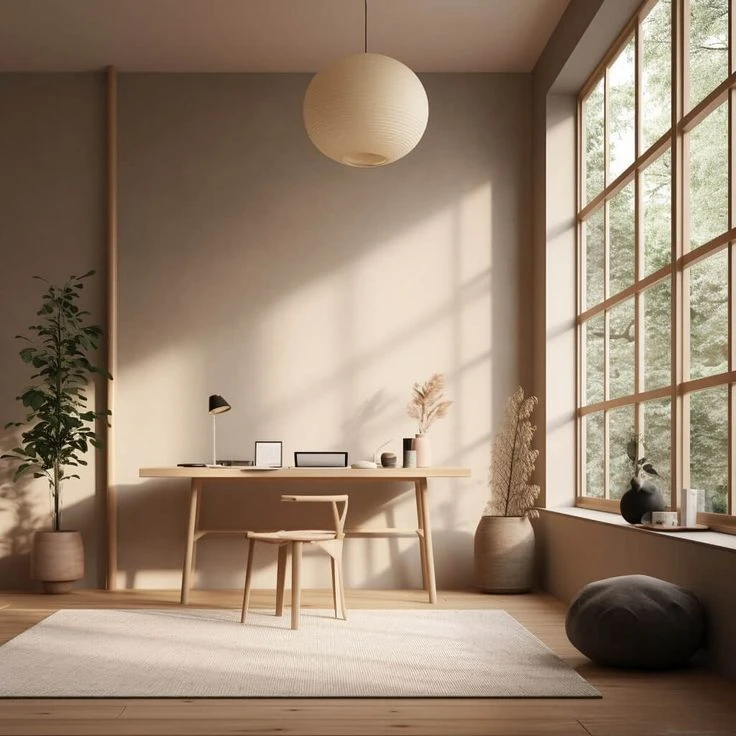
Japandi Home Office Ideas for Focused, Calm Work

By Tereza Hower | Published May 6, 2026 | Updated October 13, 2026
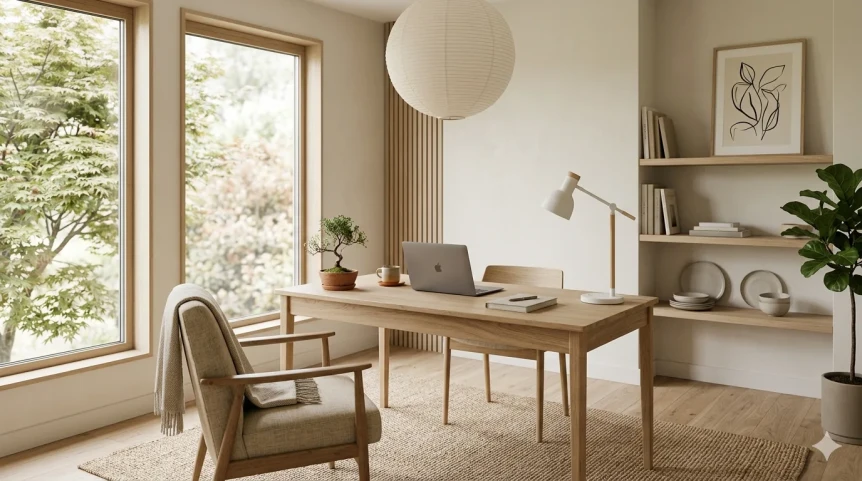
The difference a Japandi home office makes tends to show up first on a video call, when someone says the background looks unusually quiet. Warm white walls, one piece of dark wood furniture in the frame, a linen curtain softening the light from the side, and nothing in the room asking for attention. That calm is the whole point of the style, and it comes from a handful of specific choices about the desk, the chair, the palette, and the light.
Japandi blends the restraint of Japanese interiors with the warmth and practicality of Scandinavian design. In an office, that makes a room built for thinking rather than for show, which suits anyone who works on a screen for most of the day.
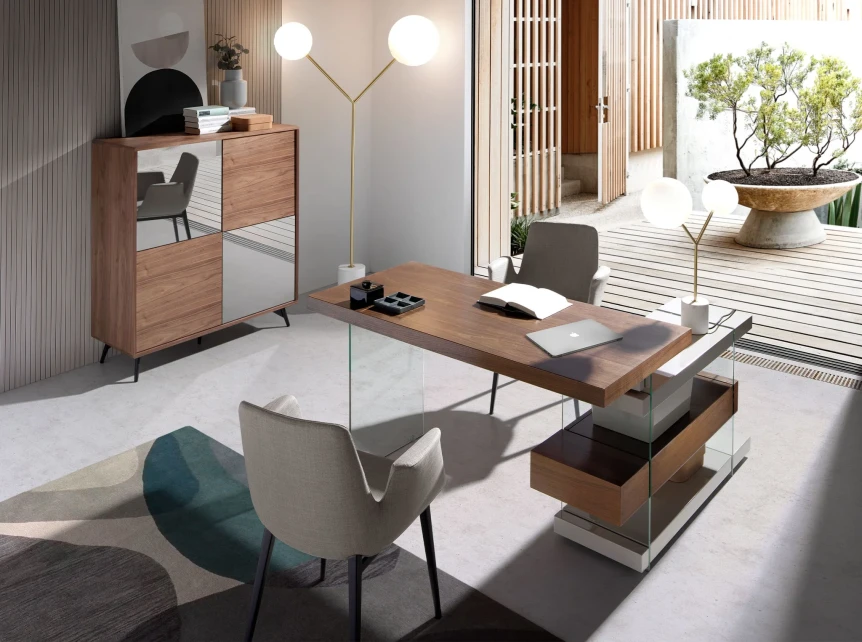
Key Takeaways
- Paint the walls a warm neutral and let one dark element, often the chair or a walnut credenza, anchor the room.
- Choose a solid wood desk with a slim base, about 29 to 30 inches high and at least 24 inches deep.
- Sit on a real task chair in a warm colorway; keep the sculptural wooden chair as a second seat.
- Light the room from three sources with bulbs between 2700K and 3000K.
- Hide cables, files, and the printer behind closed doors, and keep open shelves to two or three objects.
What Makes a Japandi Home Office Work?
A Japandi home office is a workspace built on warm wood, a muted natural palette, low and simple furniture, and visible craft and texture. It removes visual noise without removing warmth, so the room reads calm rather than cold.
The test is timelessness. The best Japandi offices could be twenty years old or twenty months old, because they rest on materials and proportion rather than trend pieces. For the principles behind the style, see the complete guide to Japandi interior design.
How to Lay Out a Japandi Office
Place the desk at a right angle to the window where possible. Light from the side is the most comfortable to work by, avoids glare on the screen, and keeps a window from blowing out the background on calls. Facing a blank wall is the second best option; sitting with the window behind you is the worst.
Leave about 36 inches behind the chair so it can roll back without hitting a wall or shelf. Set the top of the monitor at or slightly below eye level, roughly an arm’s length away, and keep the desk surface itself nearly bare. Whatever sits behind you shows on camera, so give that wall one quiet element: a plain shelf, a single framed print, or a textured paint finish.
Which Colors Suit a Japandi Office?
The palette runs on warm neutrals: bone, ecru, clay, soft greige, and warm white. Avoid a brilliant pure white, which reads cold and corporate under daylight bulbs and makes faces look gray on camera. Alabaster SW 7008, Swiss Coffee OC-45, and Slipper Satin from Farrow and Ball all work as the main wall color.
Then add one dark anchor: black, deep walnut, charred wood, or charcoal linen. One is enough and two starts to feel heavy. Often the anchor is the chair or a low credenza, with everything else held within three or four warm neutrals. The Japandi color palettes guide covers more combinations.
How to Choose a Japandi Desk
Choose solid wood: white oak, light walnut, or ash. Veneer tends to chip at the edges, which works against the material honesty the style depends on. A standard height of 29 to 30 inches suits most people; aim for at least 24 inches of depth so a monitor sits at a comfortable distance, and 48 to 60 inches of width.
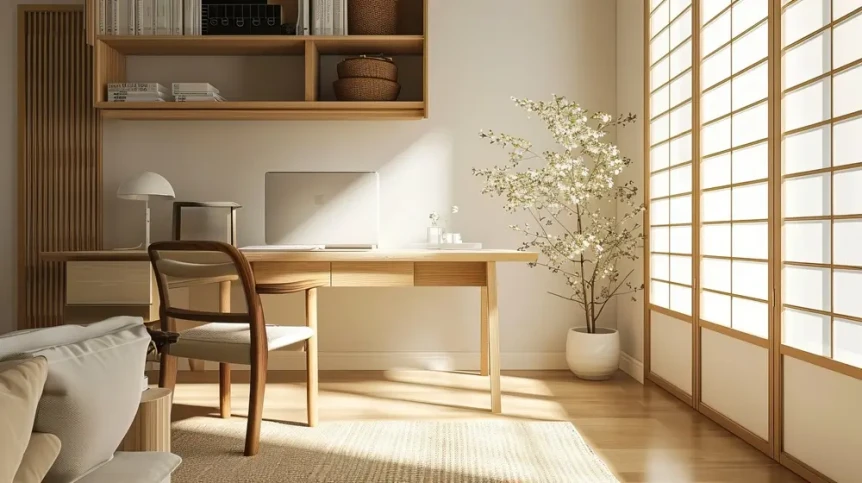
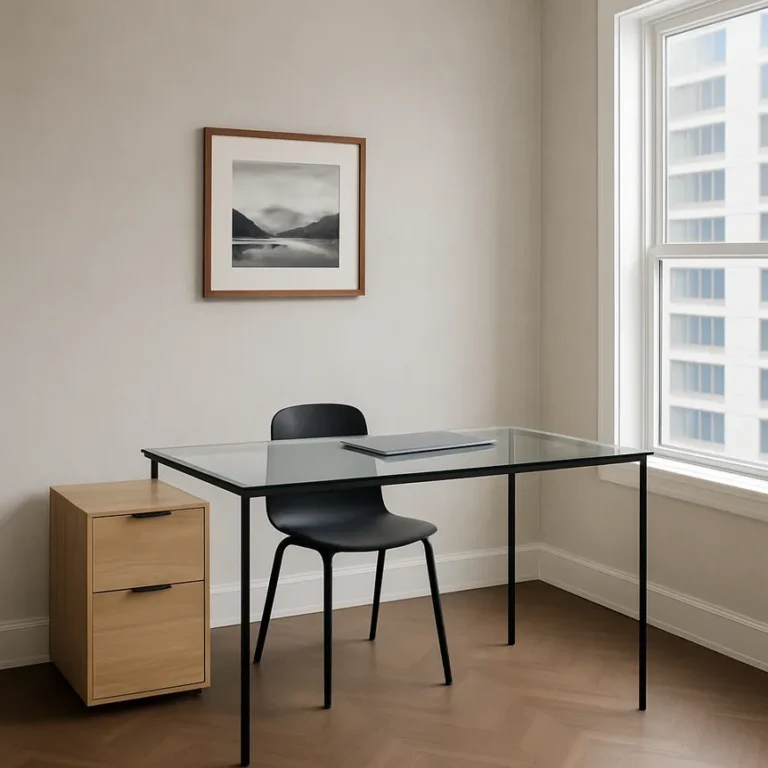
Keep the base slim. Tapered legs, a thin trestle, or a clean steel frame in matte black all work, while heavy panel sides and bulky pedestals weigh the room down. A desk with one shallow drawer keeps pens and chargers off the top without adding bulk. A matte oiled finish suits the style better than a glossy lacquer and can be touched up when the top scratches.
A small independent woodworker often beats a mainstream brand at the same price: better proportions, thicker tops, and imperfections that read as craft rather than defects. For more on materials and joinery, see the Japandi furniture guide, and for specific pieces, Japandi office furniture.
Which Chair Should You Work In?
This is where many Japandi offices go wrong. A sculpted wooden chair looks right on a mood board and is not a chair to sit in for eight hours. Choose a real task chair with adjustable seat height, lumbar support, and arms, and bring it into the palette with a warm neutral or wood toned colorway.
Ergonomic chairs from established office manufacturers, such as the Herman Miller Sayl or the Steelcase Series 1, come in light and warm finishes that sit comfortably in the room. Keep the wooden chair as a second seat by a window or a side table for reading breaks. Before buying, check that the chair’s arms slide under the desk and that the seat drops low enough for your feet to rest flat on the floor with your thighs level.
Lighting: Warm Bulbs, Three Sources, Paper Shades
Use at least three sources: overhead light for the room, a desk lamp, and a third lamp, sconce, or floor lamp to soften shadows. Choose bulbs between 2700K and 3000K; anything above 3500K reads clinical.
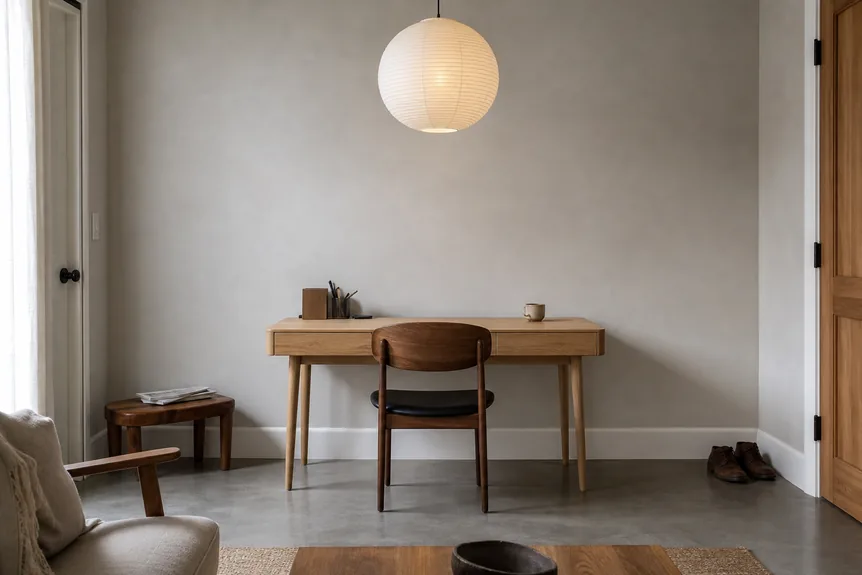
Paper shades earn their place. Paper lanterns and washi pendants diffuse light more softly than fabric or metal, so if the budget allows one statement light, make it a paper pendant or a sculptural floor lamp. For video calls, put the main light in front of the desk rather than behind it. The home office lighting guide covers desk lamp placement and glare.
Lined linen curtains help twice. They soften daylight, and they absorb sound, so calls sound less echoey in a room with hard floors and bare walls.
How Should Storage Work in a Japandi Office?
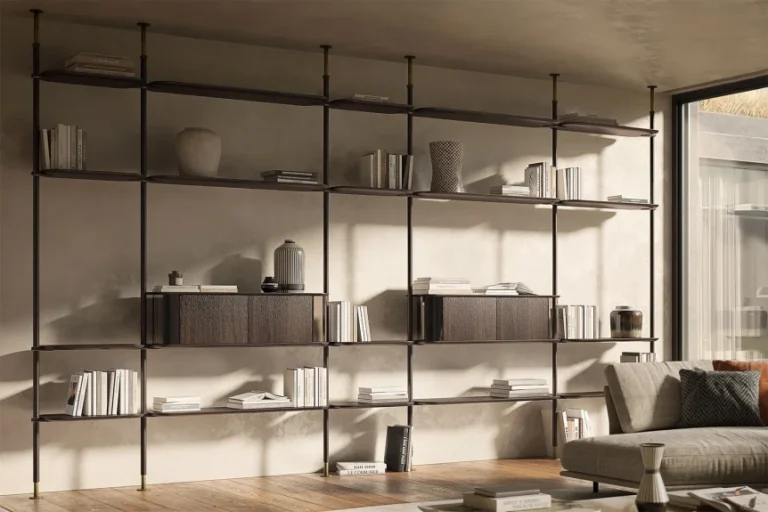
Mostly closed. Files, cables, chargers, and the printer go behind doors, and open shelves hold two or three chosen objects rather than a full row of books. The balance should lean heavily toward closed storage.
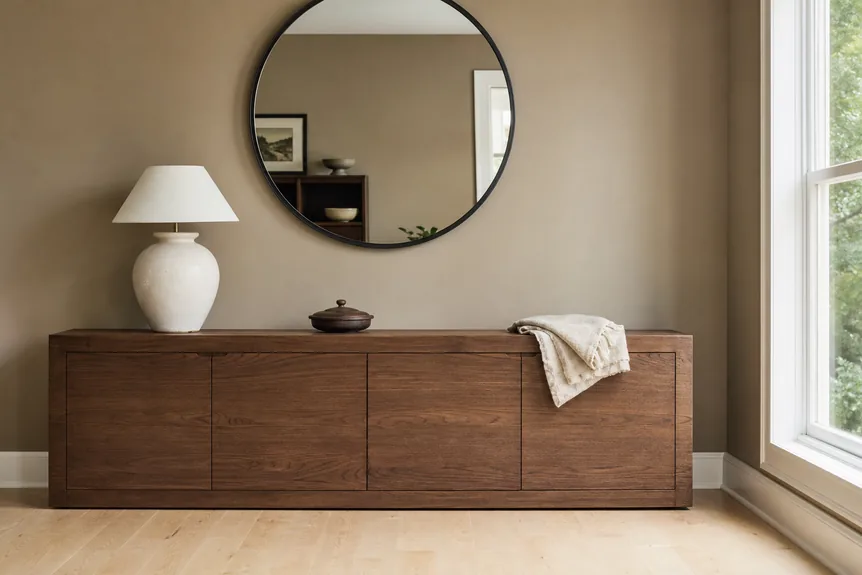
A low credenza, around 30 inches high, works better than a tall bookcase. It keeps the eye line low, gives a surface for one lamp and one object, and hides what the room needs to hide. Add a cable tray under the desk so no wires show from the doorway. The sideboard buying guide covers depth, doors, and construction.
Texture and Plants
A room this restrained needs texture or it slips toward cold. The reliable layers are a jute or wool rug, lined linen curtains, a wool throw on the reading chair, and one or two ceramics with a visible glaze.
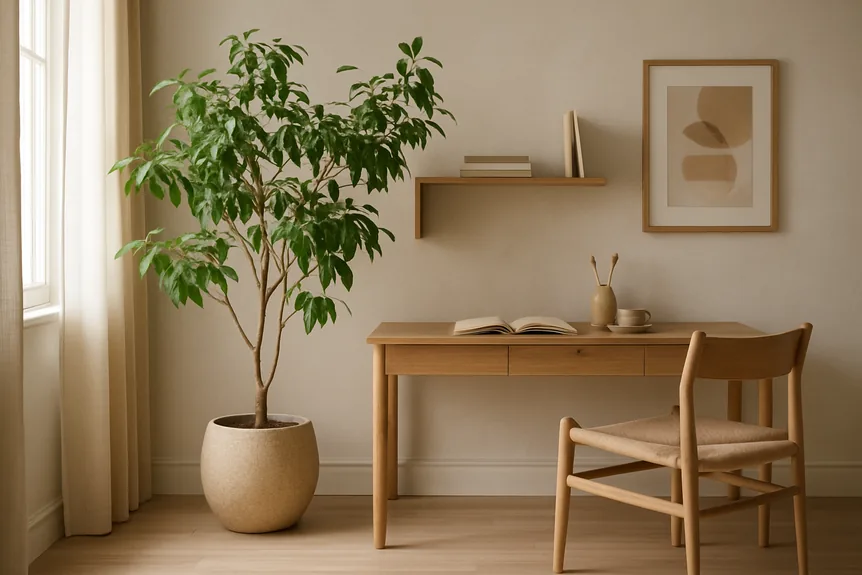
Add one plant, not several. A small olive tree, a snake plant, or a bonsai brings the room to life without crowding it; two or three plants start to look like a nursery. The snake plant is the easiest to keep, and the bonsai is the clearest nod to the Japanese side of the style.
Japandi Office Ideas for Small Rooms
The style suits small rooms and corners well, because it already asks for few pieces. In a space under about 80 square feet, choose a desk 40 to 48 inches wide, swap the credenza for a wall mounted cabinet, and use a wall shelf instead of a bookcase. A folding shoji style screen can close off a corner office in a living room or bedroom when the workday ends.
Keep the palette light and consistent, and let the chair be the only dark piece. One plant, one lamp, and one object on the shelf are enough; in a small room every extra item counts double.
What Does a Japandi Home Office Cost?
The look can be built at most budgets, but the desk and chair deserve the money. The ranges below are typical retail prices for new pieces and are meant as a guide to where spending makes a visible difference.
| Piece | Tight budget | Mid range | Where the money shows |
|---|---|---|---|
| Desk | $250 to $500, solid pine or rubberwood | $800 to $1,800, solid oak or walnut | Thicker top, cleaner joinery, better edges |
| Task chair | $200 to $400 | $500 to $1,000 | Adjustability and support over long days |
| Credenza | $300 to $600, veneer | $900 to $2,000, solid wood | Doors that close square, drawers that run smoothly |
| Rug, 5 by 8 feet | $120 to $250, jute | $400 to $900, wool | Softness and how it wears |
| Lighting | $40 to $120, paper lantern and lamp | $250 to $600, designer pendant or floor lamp | Quality of the shade and the light it gives |
On a tight budget, spend on the chair first, then the desk, and save on the rug and accessories. A plain solid pine desk oiled in a warm finish reads more Japandi than an expensive veneer one. For desk options at different prices, see best minimalist desks.
Common Mistakes in Japandi Home Offices
- Treating it as black and beige. Japandi runs on warm neutrals plus one anchor. Pure black against pure beige reads stark and unfinished.
- Working in the wooden chair. It will not survive a full workday. Use it as a second seat.
- Filling open shelves. Two or three objects per shelf, with empty space left on purpose.
- Skipping plants entirely. Restrained does not mean lifeless; one mature plant is enough.
- Cool white bulbs. Anything above 3500K reads clinical. Stay between 2700K and 3000K.
- Visible cables. A cable tray and one closed cabinet do more for calm than any decor.
How Is Japandi Different from Minimalist or Scandinavian?
Japandi accepts texture, warmth, and imperfection; minimalism tends toward smoother surfaces and stricter order. A Japandi shelf holds a hand thrown vase, a minimalist one a precise white one. Scandinavian design runs lighter, brighter, and a little more colorful, while Japandi pulls darker and quieter.
For the full comparison, see Japandi vs minimalist vs Scandinavian design. For the neighboring directions in an office, read minimalist home office ideas and modern minimalist office design.
Putting It Together
Choose the desk and the rug first, since they set the warmth of the room. Add the chair, then one statement light, then closed storage, and only then the few objects for the shelves and the desk. Live in the room for a few weeks before adding more; the style rewards patience.
For the practical side of any home office, from layout to ergonomics, read the complete guide to modern home office design, and for furniture without the style focus, home office furniture essentials.
Frequently Asked Questions
What makes a Japandi office style?
Warm neutral walls, solid wood furniture with slim lines, one dark anchor such as walnut or black, layered warm lighting, closed storage, and a few textured pieces such as a jute rug, linen curtains, and one plant.
Can I do a Japandi home office on a tight budget?
Yes. Spend on the chair first, then a solid pine or rubberwood desk oiled in a warm finish. Save on the rug, a paper lantern, and accessories, and keep the room sparse rather than filling it with cheap pieces.
What wood tone is most Japandi: light or dark?
Both. Light oak or ash usually sets the base, and one darker wood such as walnut or charred timber acts as the anchor. Keep to two wood tones so the room stays calm.
How do I make a Japandi office not feel sterile?
Add texture and warmth rather than objects: a wool or jute rug, lined linen curtains, a ceramic with a visible glaze, one mature plant, and warm bulbs between 2700K and 3000K.
Does Japandi work in a small home office?
Yes. A desk 48 inches wide, a wall shelf instead of a bookcase, closed storage under the desk, and a light palette suit a small room. Keep to one plant and one lamp so the space does not crowd.