
Industrial Bedroom Design Ideas: Bold, Grounded, and Comfortable

By Tereza Hower | Published April 10, 2026 | Updated October 12, 2026
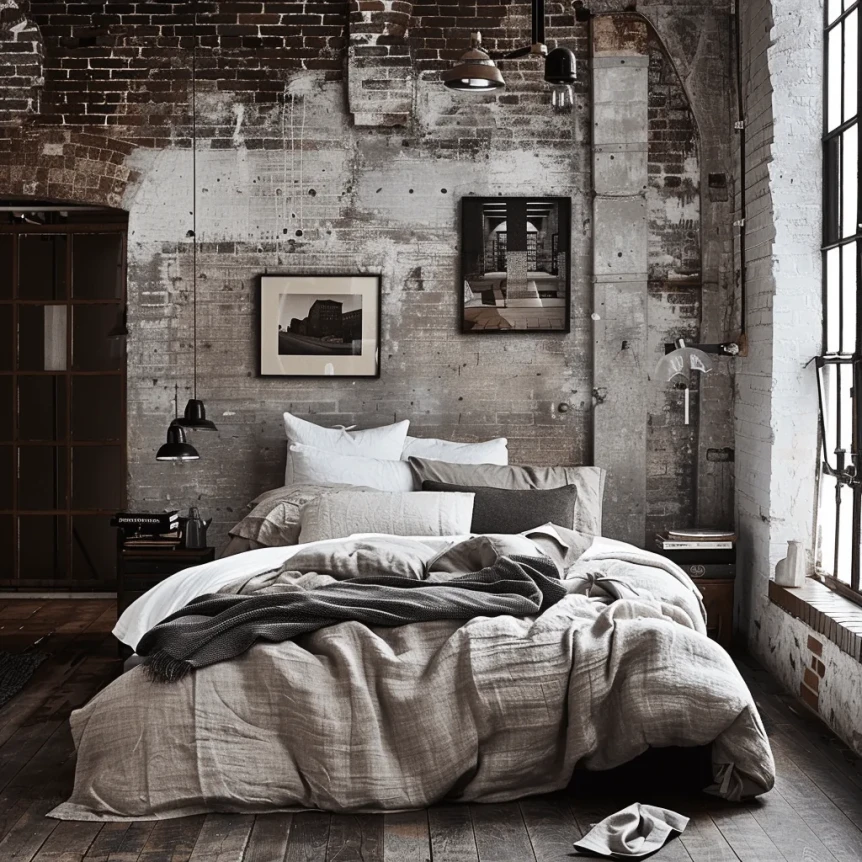
The industrial bedroom that photographs well and the one that sleeps well are not the same room. A black steel frame against raw brick, one Edison bulb on a cord, and a bare concrete floor make a striking picture and a cold place to wake up. The version worth building keeps the metal, the brick, and the hard light, then buries them in linen, wool, and warm wood until the room is as comfortable as it is bold.
This guide walks through every element in the order it should be decided: the bed frame, the bedding that softens it, the walls and architecture, storage, lighting, the palette and floor, and the objects that make the room personal. It ends with how to make the style work in a small room and the mistakes that turn an industrial bedroom into a loft showroom.

Key Takeaways
- Start with a black iron or steel bed frame with clean lines, and skip anything with scrollwork.
- Balance every hard surface with a soft one: linen bedding, a wool throw, and a large rug under the bed.
- Brick, concrete, or dark paint behind the bed gives the room its anchor; light bedding keeps it from closing in.
- Light in layers at 2700K, with articulated sconces at the bedside and one statement pendant, never a single overhead bulb.
- Keep the palette to grays, blacks, warm browns, and off whites, with at most one accent color.
What Makes an Industrial Bedroom Work?
An industrial bedroom is a sleeping space built from the vocabulary of factories and warehouses: a metal or reclaimed wood bed, exposed brick or concrete, visible hardware, and lighting with an engineered look, warmed by layered textiles in a palette of grays, blacks, and warm wood. It borrows the materials of a loft and none of its coldness. Comfort comes from what is layered on top of the hard surfaces, not from removing them.
A successful industrial bedroom is not a copy of a loft living room. It softens the harder edges of the style without losing its identity, so the metal, brick, and concrete are all present and all balanced by warm bedding, layered light, and tactile fabric. For the principles that hold across every room, the complete guide to industrial interior design covers the foundations; this post applies them to the one room where rest matters more than drama.
Which Bed Frame Suits an Industrial Bedroom?
The bed is the largest object in the room and the first purchase, because the wall treatment, the lighting height, and the rug size all follow from it. Four directions work, and the table gives the short version.
| Frame | Look | Pair with | Watch for |
|---|---|---|---|
| Black iron or steel | The purest industrial signal: visible welds, exposed bolts, pipe fittings | Linen bedding, a wool throw, a large rug | Scrollwork tips it toward Victorian; thin tube frames rattle |
| Reclaimed wood platform | Warm and weathered, with knots and saw marks | Metal sconces and black hardware for contrast | Ornate carving; “reclaimed look” veneer over particleboard |
| Mixed metal and wood | Steel frame with a reclaimed wood headboard | A single material family for nightstands | Too many metals in one frame |
| Wall mounted headboard alternative | A wood slab, corrugated panel, or pipe frame on the wall | A low platform or a simple metal frame below | Rough edges at pillow height |
Metal frames
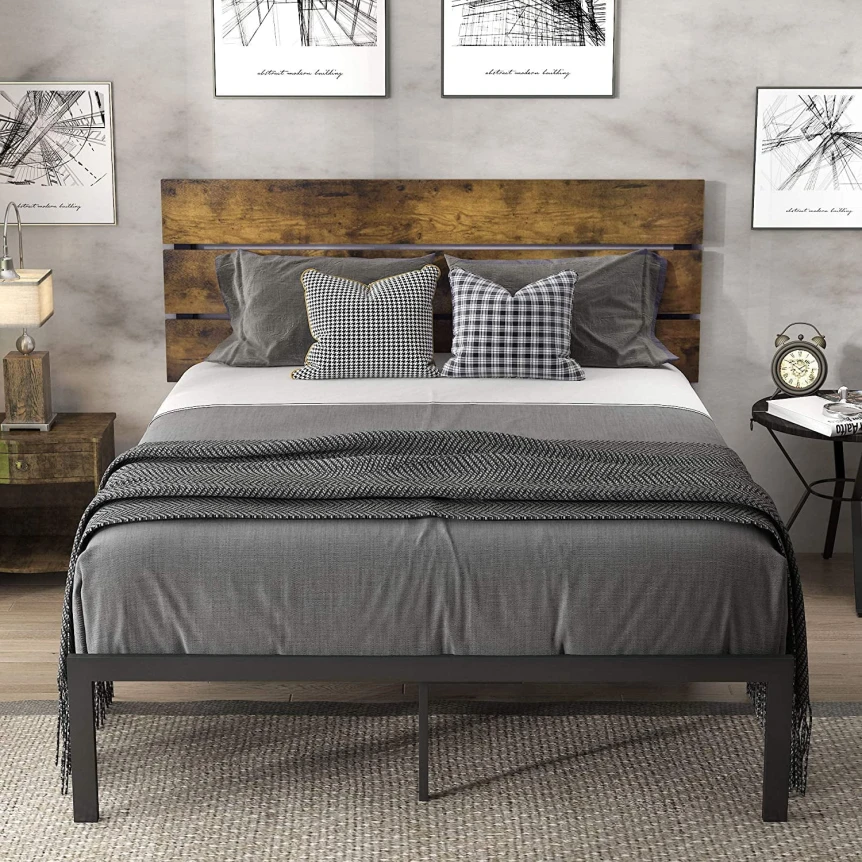
A black iron or steel frame with simple, clean lines is the most natural choice. Look for visible welds, exposed bolts, or pipe fitting details that reinforce the character, and avoid decorative scrollwork, which tips the room toward Victorian or country. A frame in solid bar or heavy gauge tube stays silent; thin tube frames flex and squeak within a year.
Reclaimed wood frames
A reclaimed wood bed, especially with metal accents, brings warmth alongside character. Look for real knots, saw marks, and variation in tone; a printed “reclaimed” veneer reads as fake within arm’s reach. A simple platform or panel design works better than anything carved.
Mixed material frames and headboard alternatives
Some of the best industrial beds pair a steel frame with a reclaimed wood headboard, which captures the hard against warm contrast that defines the style. For something less conventional, mount a slab of reclaimed wood, a piece of corrugated metal, or a simple iron pipe frame to the wall behind a low platform. Sand and seal any edge that sits at pillow height.
Bedding That Softens the Room
Color choices
Bedding should ground the room without disappearing into it. Charcoal, warm white, soft beige, deep navy, and rust are the reliable bases. Bright or pastel tones fight the rest of the room and read as an afterthought.
Materials and texture
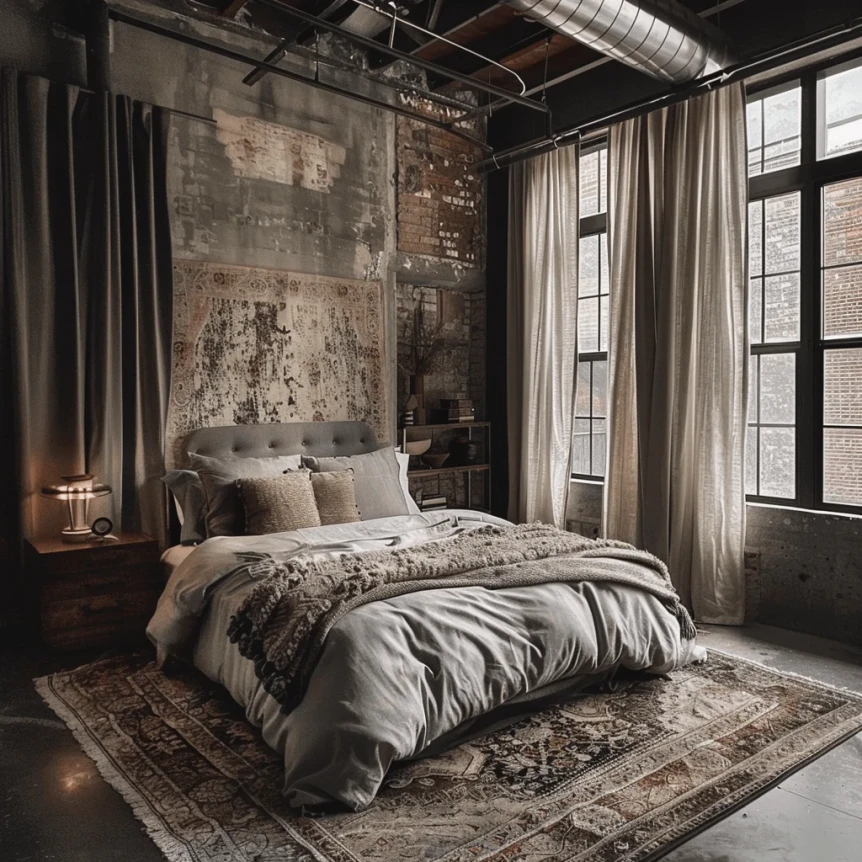
Linen is the industrial bedding fabric. Its texture and slightly rumpled finish suit the lived in quality of the style, and it gets softer with every wash. Cotton percale or jersey also work; layer a quilted coverlet or a chunky wool throw at the foot of the bed for the warmth the hard surfaces take away.
Pillows
Two or three throw pillows in mixed textures add interest without crowding the bed. A leather accent pillow, a linen lumbar, and a plain cotton sham is a combination that works in almost every industrial bedroom. Six pillows on a metal bed reads as a hotel, not a home.
Walls and Architectural Elements
Exposed brick or concrete
Original brick or concrete should be the star of the room. A brick wall behind the bed is the strongest focal point the style offers, and a concrete or microcement wall gives a similar anchor with a smoother finish. Seal brick with a matte masonry sealer so it stops shedding dust onto the pillows.
Paint options
On drywall, charcoal gray, warm greige, deep navy, or black all work. Dark walls make a bedroom feel enclosed and cozier, which is exactly what sleep wants, as long as the bedding stays lighter to hold the balance. In a north facing room with one small window, stop at charcoal; true black needs daylight to read as a color rather than a hole.
Windows, beams, and pipes
Exposed beams, ductwork, and pipes left visible add immediate character. Black steel window frames, or black painted trim on ordinary frames, do the same job for far less. Without any of these, iron pipe shelving above the bed or along an empty wall introduces the look honestly.
Storage
Vintage industrial pieces
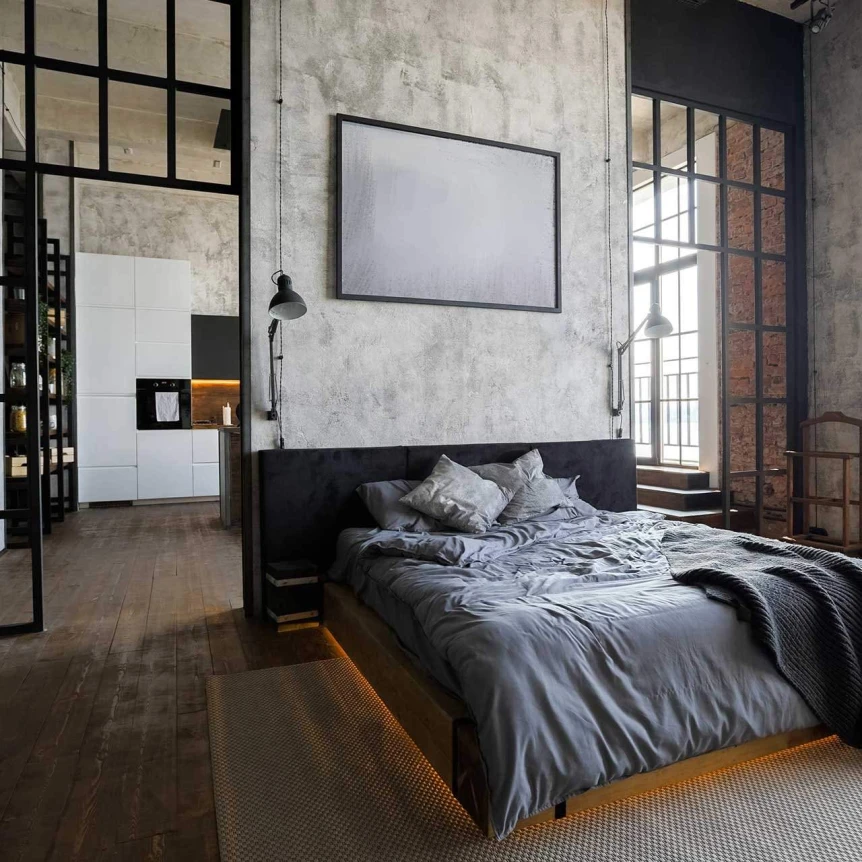
A vintage metal locker, an old factory cart, or a reclaimed industrial cabinet adds authentic character and real storage. These pieces become focal points in their own right and can stand in for a dresser. Check that drawers and doors still run; a seized locker is sculpture, not storage.
Dressers and wardrobes
For conventional storage, look for dressers in reclaimed wood with metal hardware, or metal frames with wood drawer fronts. Black hardware, exposed bolts, and visible joinery all reinforce the style. Choose solid wood over veneer for the dresser: it takes daily use, and veneer chips at exactly the drawer edges that an industrial room leaves on show.
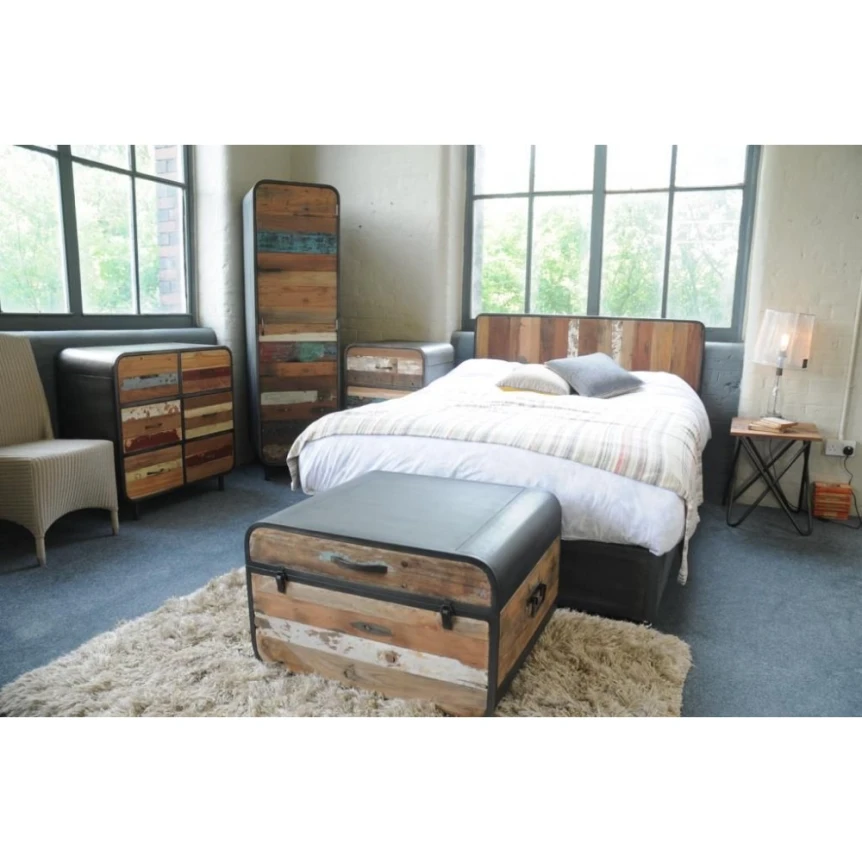
Open storage
Pipe shelving, metal garment racks, and open cubbies suit industrial bedrooms only when what they hold is edited. A leather strapped rack with eight good pieces on it looks composed; the same rack carrying a whole wardrobe looks like a laundry room. If the closet is small, keep the rack for the pieces worth seeing and put everything else behind a door.
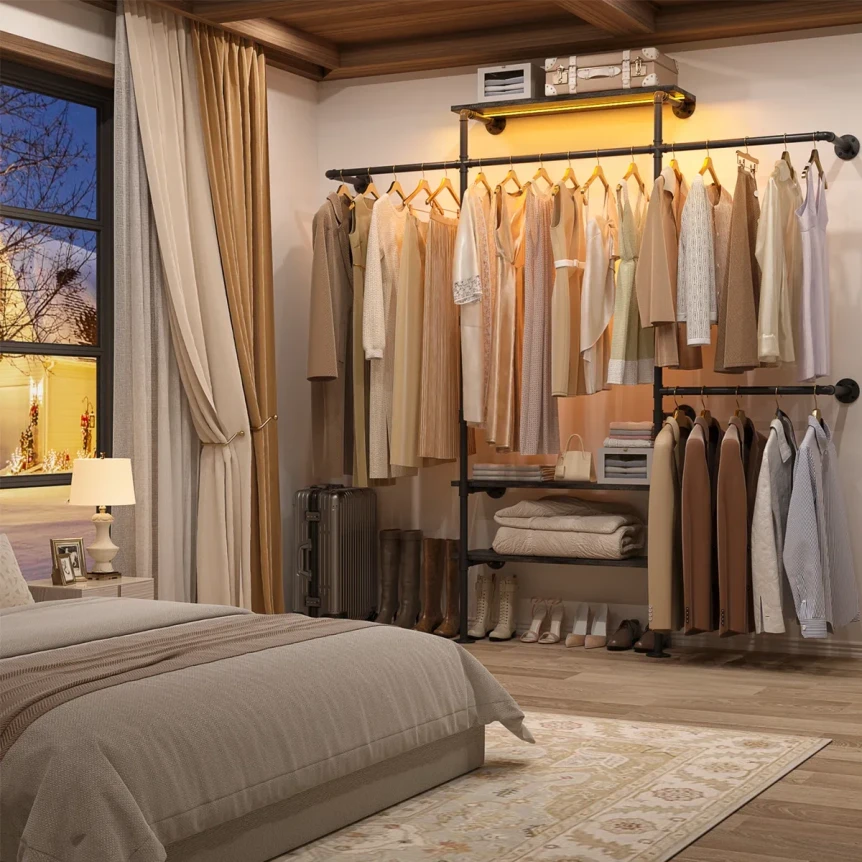
For judging metal gauge, wood species, and leather grade before buying any of these pieces, the industrial furniture guide covers what lasts. The broader best modern bedroom furniture roundup covers the dresser and nightstand proportions that apply whatever the style.
How Do You Light an Industrial Bedroom?
Bedside lighting
Articulated arm wall sconces are the industrial bedroom signature. They clear the nightstand and add a factory note that nothing else does. Mount one each side with the shade center around 30 to 36 inches above the mattress, so the light reaches a book without glaring into the pillow. If you prefer table lamps, look for metal bases with exposed bulbs or pipe fittings.
Overhead lighting
One statement pendant or a small cluster of Edison bulbs above the foot of the bed gives the room its focal light. Keep every bulb warm, at 2700K, and put the pendant on a dimmer. Cage lights and plain metal pendants both work; three bare filament bulbs at full brightness do not, in a room meant for sleep.
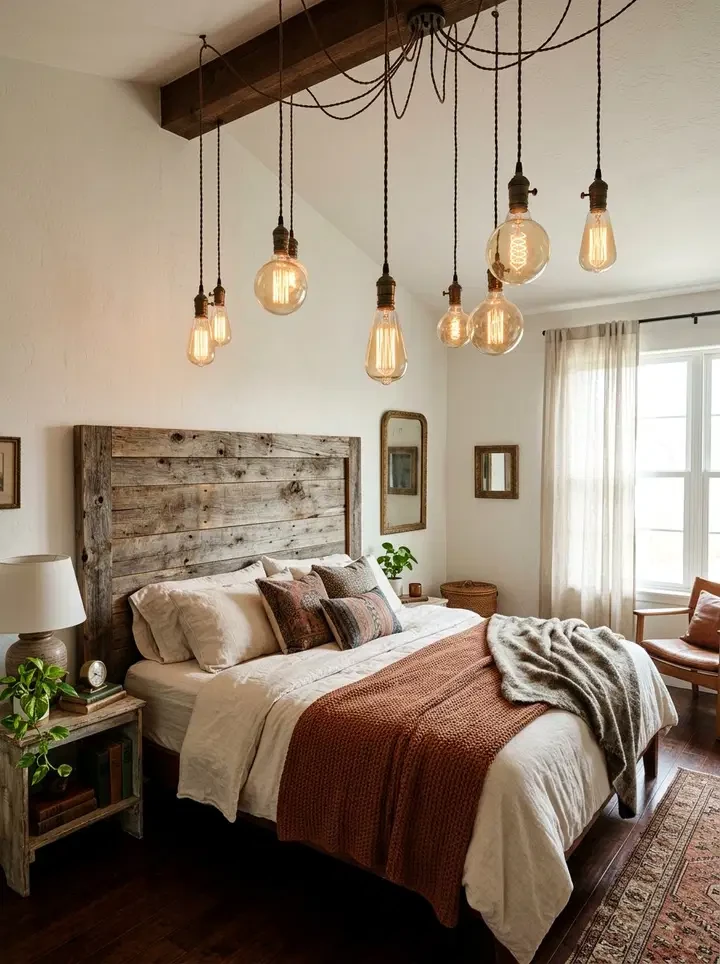
Layered light
Industrial bedrooms need several sources at different heights: sconces at the bed, a pendant overhead, and a floor lamp in a corner. The layers let you set the mood and stop the room from ever feeling harsh. For fixture ideas by style, modern bedroom lighting ideas covers the sconce and pendant pairings that suit a dark palette.
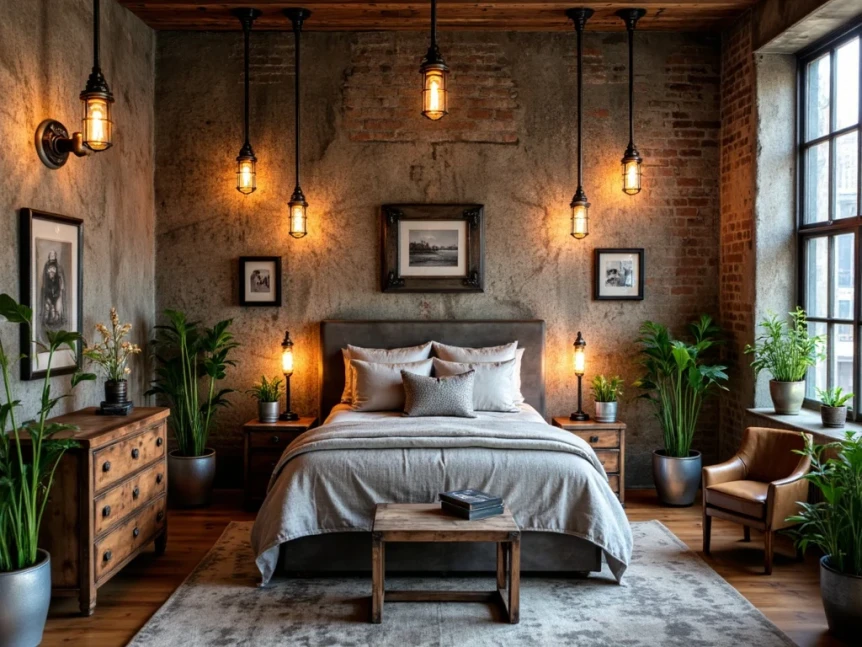
Color, Flooring, and Rugs
The palette
Industrial bedrooms run on grays, blacks, warm browns, and off whites, with warm wood from the frame, nightstands, or floor supplying the warmth. The room should feel grounded and quiet rather than cold. If you want color, use one: a rust pillow, a forest green throw, or a navy canvas, never all three. The industrial color palettes and materials guide pairs specific paint tones with the metals and woods they flatter.
Floors and rugs
Polished concrete or wide plank reclaimed wood is the ideal floor. Over carpet or an ordinary wood floor, a large rug under the bed anchors the room and matters more here than anywhere, because bare feet meet it first thing in the morning. Jute or wool in a neutral, a vintage Persian in muted tones, or a flat weave kilim all suit the style.
Size the rug so it runs at least 18 inches past both sides of the bed and the foot. For a queen, an 8 by 10 foot rug placed under the lower two thirds of the bed is the safe default; a 5 by 8 disappears under the frame and does nothing for the room.
Decor and Personal Touches
Wall art
Black and white photography, vintage maps, industrial prints, and large abstract canvases all suit the room. One oversized piece above the bed works better than a gallery wall, which fights the texture of brick or concrete. Frames should be plain: black metal, dark wood, or none.
Plants and objects
One or two plants soften the hard edges: a snake plant on the dresser, a fiddle leaf fig in a corner, a trailing pothos on a high shelf. More than that and the room stops being industrial. Vintage cameras, old books, a brass instrument, or a few real tools displayed as objects add the story that keeps the room from reading as a showroom.

Can Industrial Style Work in a Small Bedroom?
Yes, with restraint. Choose a low profile metal frame to keep sight lines open, use wall mounted sconces instead of lamps, and put shelving on the wall to free the floor. Hold to a tight palette and commit to one or two strong industrial elements, a brick wall and a steel bed, rather than trying to fit the whole vocabulary into 120 square feet.
Dark paint is not the enemy of a small room; clutter is. A charcoal wall behind a low bed with one large piece of art reads bigger than a white room with six small objects on every surface. For how the bedroom relates to the rest of an industrial home, see industrial living room ideas, and for deciding how raw or how polished to go, the comparison of modern industrial versus rustic industrial design settles it.
What Most People Get Wrong
- Copying the loft. A living room can be all hard surfaces. A bedroom without linen, wool, and a rug is a place to store a bed, not to sleep in one.
- Faux brick panels. Printed or thin veneer brick reads as fake from the doorway. A dark painted wall is more honest than imitation masonry.
- Too many bare bulbs. Edison filaments are a texture, not a light source. Three at full brightness over a bed is a workshop; one on a dimmer is atmosphere.
- Mixing metals. Black steel, brass, chrome, and copper in one small room read as accumulated. Pick black and allow one warm metal as an accent.
- Scrollwork iron beds. Curled iron says farmhouse or Victorian. Industrial frames are straight, welded, and bolted.
- Black walls without daylight. In a north facing room with one window, black paint swallows the room. Charcoal or deep greige holds the mood and keeps the walls.
Where to Go Next
An industrial bedroom proves that bold and restful are not opposites. The raw materials and statement lighting give the room its character and weight; the bedding, the rug, and the warm wood give it the comfort sleep needs. Start with a strong frame, build the atmosphere around it with linen and layered light, and let the materials speak.
For the layout, circulation, and storage rules that hold for any bedroom regardless of style, the complete guide to modern bedroom design is the next read. For industrial style across the whole house, return to the industrial interior design guide.
Frequently Asked Questions
What is an industrial bedroom?
An industrial bedroom is a sleeping space that borrows the materials of factories and warehouses: a metal or reclaimed wood bed frame, exposed brick or concrete or dark painted walls, visible hardware, and fixtures such as Edison bulb pendants or articulated wall sconces. The palette runs to grays, blacks, and warm wood, and the comfort comes from layered linen bedding, a wool throw, and a large rug.
What color should an industrial bedroom be?
Charcoal gray, warm greige, deep navy, or black on the walls, with lighter bedding to hold the balance. Dark walls make the room feel enclosed and restful, and warm wood from the bed frame and floor stops it feeling cold. In a room with little daylight, stop at charcoal rather than true black.
How do I make an industrial bedroom feel cozy?
Layer soft over hard. Use linen bedding in warm tones, add a chunky wool throw, and put a rug under the bed that extends at least 18 inches past its sides. Keep every bulb at 2700K on a dimmer, light from several heights rather than one overhead fixture, and add one or two plants and a few personal objects so the room reads as lived in.
Can industrial style work in a small bedroom?
Yes. Choose a low profile metal frame, use wall mounted sconces instead of lamps, and mount shelving to free the floor. Commit to one or two strong elements, such as a dark wall and a steel bed, rather than the whole vocabulary. Clutter shrinks a small room far more than dark paint does.
What is the difference between a modern industrial and a rustic industrial bedroom?
Modern industrial leans on clean steel, concrete, smooth dark paint, and restrained decor; rustic industrial adds reclaimed timber, weathered finishes, leather, and vintage factory pieces. Both share metal frames, exposed structure, and a dark neutral palette. The choice comes down to how raw the room should feel: polished and spare, or warm and worn.