Minimalist Home Office Ideas for a Calm Workspace

By Tereza Hower | Published May 7, 2026 | Updated October 13, 2026
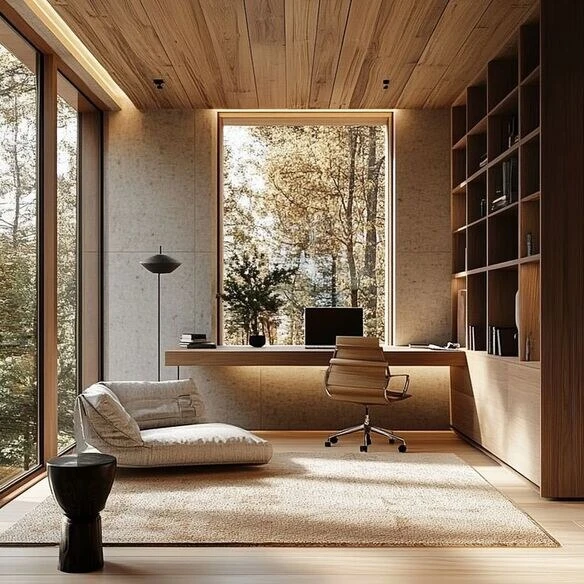
A minimalist home office is harder to do well than people think. The instinct is to remove things, and the instinct is half right. The other half is choosing the few things that remain with enough care that the room feels deliberate rather than unfinished. A bad minimalist office reads like the previous tenant just moved out. A good one reads like an architect has been here.
Moving from a dining room corner setup to a real office, the instinct is to buy less, not more. That part is correct. The mistake is skipping the second lamp. With one overhead light, faces look exhausted on video by mid afternoon. A minimalist room punishes a missing element more than a maximalist room does, because there is nowhere for the eye to compensate. Every piece has to earn its place.
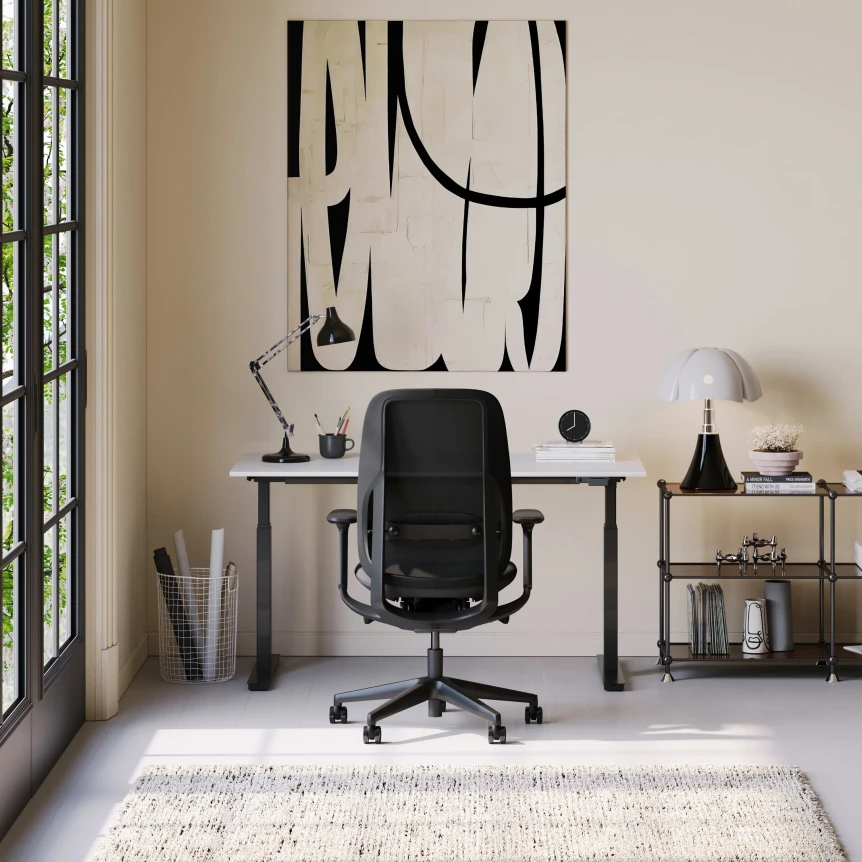
Minimalist Home Office: What to Buy
A minimalist office is four decisions. Each piece has to earn its place, because a spare room punishes a missing element far more than a full one does: there is nothing else for the eye to compensate with.
| Piece | What to look for | What to avoid | Typical spend |
|---|---|---|---|
| Desk | Thin profile, hidden drawer, at least 28 in deep, roughly 60% of wall width | Visible drawer pulls, bulky panel sides | $300 to $900 |
| Chair | A real task chair in white, soft grey or warm beige | Sculptural chairs you cannot sit in all day | $250 to $800 |
| Lighting | Three sources: overhead, adjustable desk lamp, one atmospheric | Bare bulbs; anything undiffused | $150 to $500 total |
| Storage | One piece of closed storage, low credenza matching the desk wood | Open shelving unless you keep it to two to four objects | $300 to $800 |
What Minimalist Home Office Design Actually Means
A minimalist home office is a workspace pared down to its essential elements, where each piece is chosen for both function and aesthetic and where empty space is treated as a design element rather than an oversight. The goal is calm focus, not asceticism.
The distinction that matters is between minimalist and bare. A bare room has fewer things because the budget ran out or the owner hasn’t decided yet. A minimalist room has fewer things because someone made specific choices and stood by them. The two look superficially similar in photos. They feel very different in person. For the broader philosophy, the complete guide to minimalist interior design covers the principles in depth.
The Palette: Warm Whites, Soft Greys, One Accent
Minimalist offices live or die on the wall color. Pure cool white reads sterile and shows every smudge. The right direction is a warm white or a soft greige that carries enough warmth to flatter daylight and a video camera without going yellow. Benjamin Moore’s Chantilly Lace, Sherwin Williams’s Snowbound, and Farrow and Ball’s Wevet are all reliable starting points. If you want a touch more depth, Backdrop’s Mannequin reads soft and architectural.
The accent should be a single color in small dose. Black on a chair frame and a desk lamp. A deep forest green on a single ceramic vessel. A clay terracotta on one art piece. The rule is one accent across the entire room. Two starts to look styled. Three looks like a showroom.
The warm minimalist direction, sometimes called midimalism, is where the style has been moving for the last two years. It softens the strict white box look without abandoning the underlying logic. The warm minimalism versus modern minimalism piece covers the difference if you are choosing between them.
The Desk: Thin Profile, No Visible Hardware
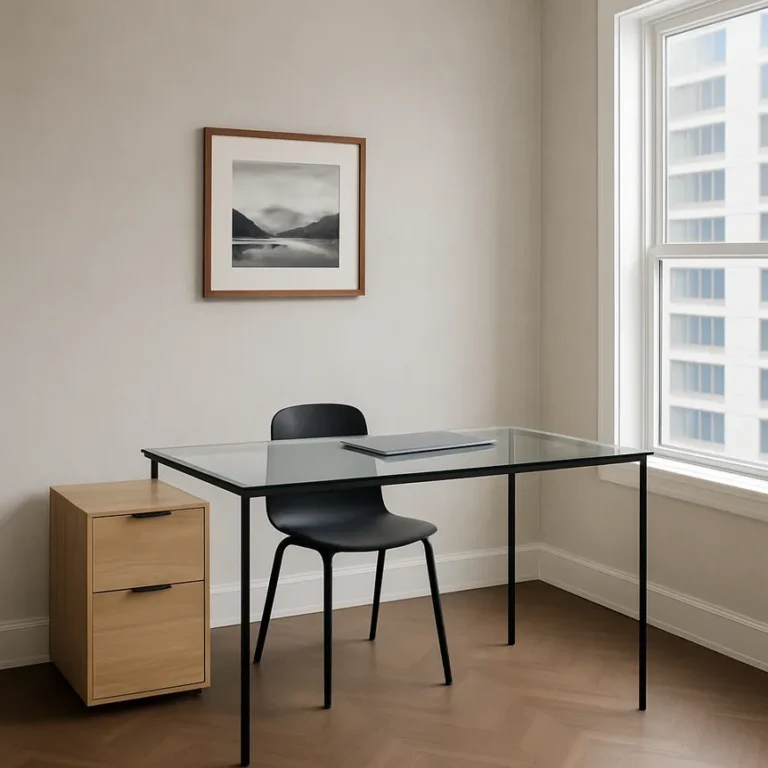
The minimalist desk is thin, clean, and almost devoid of visible hardware. A solid wood top in pale oak or matte lacquered surface, a thin profile base in matte black or brushed steel, and ideally one shallow drawer that disappears into the front of the desk. Avoid visible drawer pulls, cable trays that read as furniture, and bulky panel sides.
Width should fit the wall. A desk that floats in the middle of a wall too wide for it reads as undersized. Aim for at least sixty percent of the wall width if the desk is against a wall. Depth should be at least 28 inches for any serious work setup. Less than that and the room reads tight the moment you put a laptop and a coffee cup on the surface.
For more on the minimalist furniture logic that applies to other rooms, the minimalist furniture guide is the natural companion.
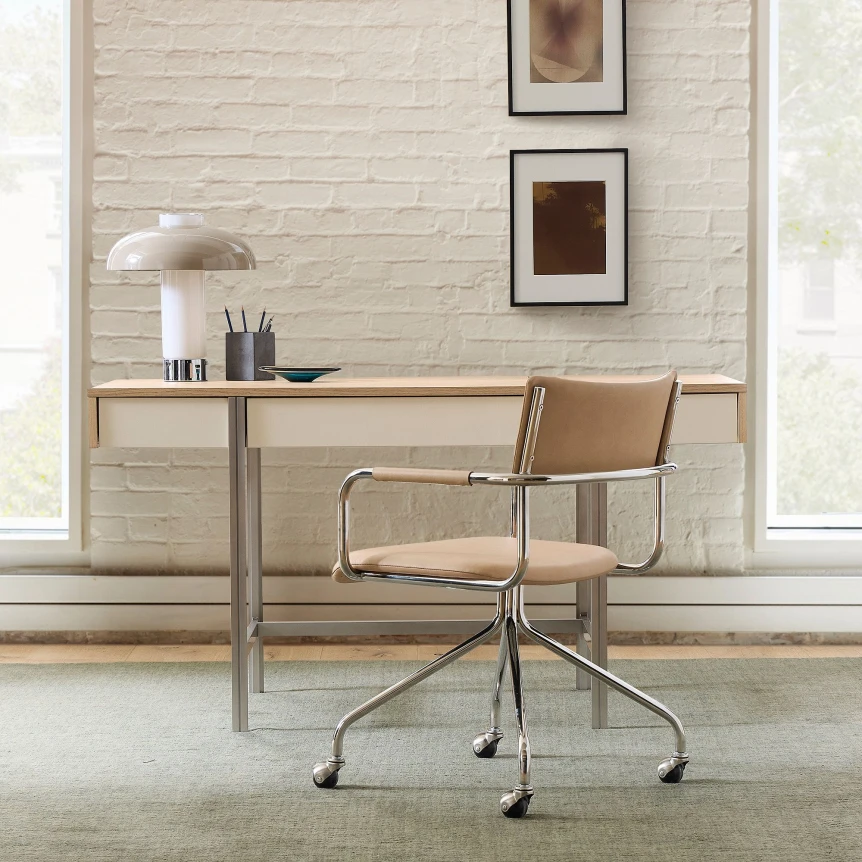
The Chair: Architectural But Comfortable
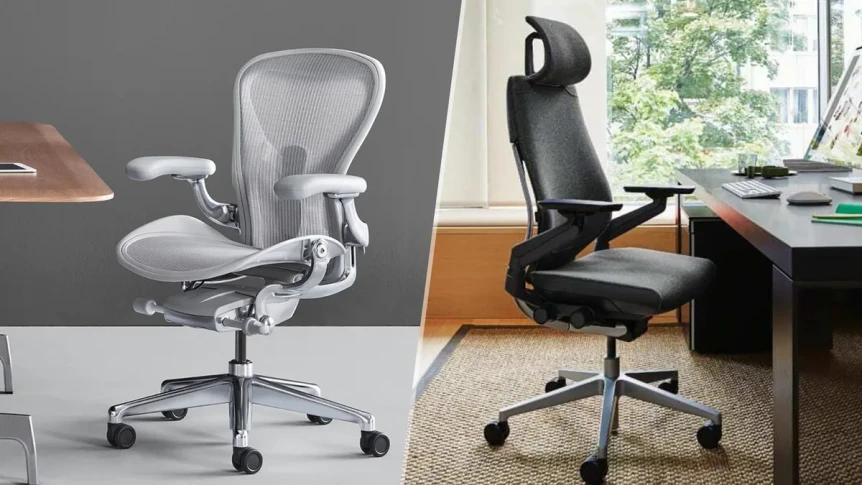
The minimalist office chair is the hardest piece to get right. The aesthetic asks for a chair with clean architectural lines, and most chairs that match that description are not chairs you can work in all day. The honest path is to choose a real task chair in a soft neutral color and accept that it will not be the most beautiful piece in the room.
The two options worth knowing: a modern ergonomic chair in white, soft grey, or warm beige, or a vintage Eames style task chair if you are willing to retrofit ergonomic cushioning. The vintage route is better looking. The modern route is better for your spine. For a full time worker, choose the modern route.
Lighting: Three Sources, No Visible Bulbs
Minimalist lighting works on the same three layer principle as every other style, with one additional rule: keep bulbs hidden. Shades, diffusers, and indirect light read more architectural than bare bulbs.
The three sources for a minimalist office are typically a recessed overhead or a flush mount, a desk lamp with an arm that adjusts and a shade that hides the bulb, and a third source that handles atmosphere. The third source is where you can spend on something sculptural: a slim floor lamp behind the chair, a wall sconce above the desk, or a small table lamp on a shelf. For the underlying principle, the complete lighting guide covers it in detail.
Storage: Concealment Is Non Negotiable
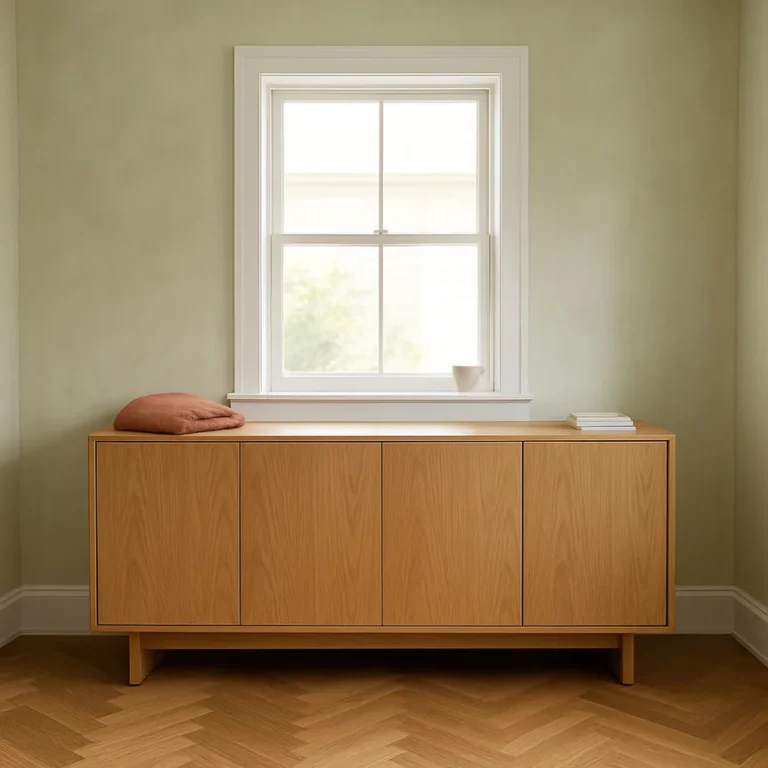
A minimalist office cannot afford visible clutter. Cables, chargers, paper, books in poor condition, and the printer all need a place to go that is not your desk surface. The right move is one piece of closed storage, ideally a low credenza in the same wood as the desk or a matte lacquered cabinet that disappears against the wall.
Open shelving works in a minimalist office only if you treat it with discipline. Two to four objects per shelf, with deliberate negative space between them. Books are not decoration in a minimalist room unless they are styled with restraint. A row of paperbacks fights the entire logic. A small stack of three or four design monographs in matching cloth bindings works.
The One Mistake That Ruins a Minimalist Office
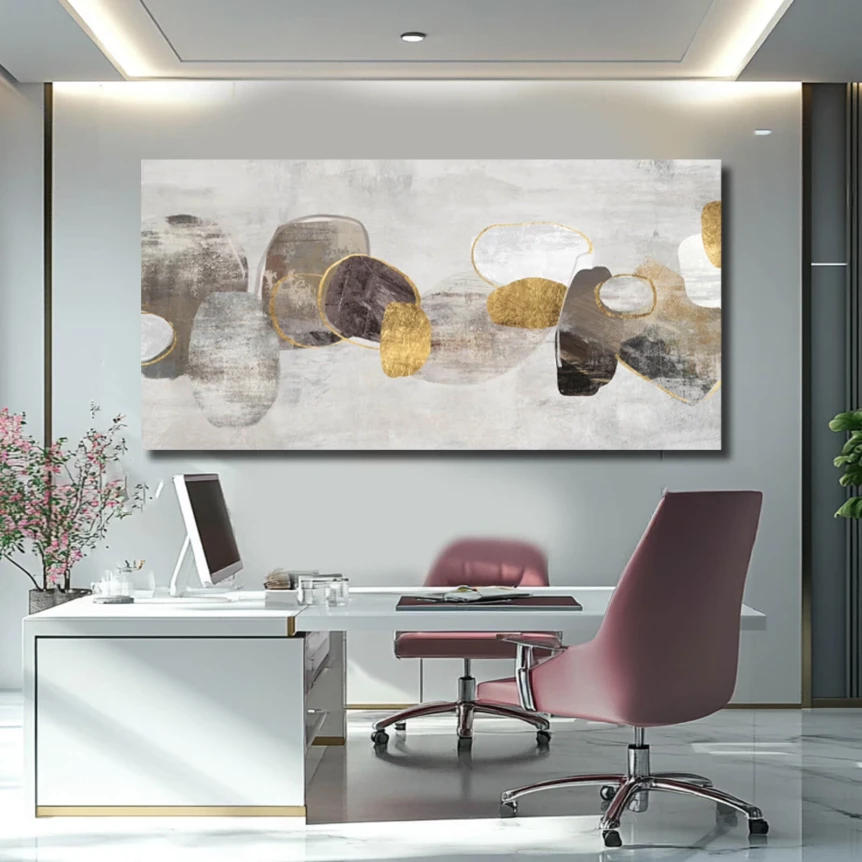
A common failure: a well designed minimalist office with one wall left blank. Not deliberately blank as a design choice, but blank because the homeowner did not know what to put there and was afraid to commit. The eye reads it immediately. The room looks unfinished, not minimal.
The fix is one piece of art at scale. A single large work, sized to two thirds of the wall width and hung with its center at 58 inches from the floor. The piece can be black and white photography, a single colored canvas, a textile, or even a beautifully framed page from a vintage book. The point is commitment. A small piece on a large wall is worse than nothing. For specific pieces worth buying, see best minimalist desks.
Common Mistakes in Minimalist Home Offices
- Confusing empty with minimal. An empty room is not minimal. It is empty. Minimal rooms have fewer pieces, each chosen with care.
- Choosing pure cold white walls. Reads sterile under daylight and worse under video lighting. Stay warm.
- Skipping texture entirely. A minimalist office still needs a rug, a soft seat or throw, and one or two pieces with visible material character. Otherwise it reads like a hotel lobby.
- Hanging small art on large walls. The proportion has to be right. Commit to scale.
- Believing one lamp is enough. Three sources is the minimum, including for minimalist rooms.
Minimalist Versus Japandi Versus Scandinavian
The three styles overlap, and the lines between them are real. Minimalist is the most disciplined and the most monochrome. Japandi adds wood, texture, and one anchor of darkness. Scandinavian is the lightest, brightest, and the most forgiving with color. If your house already reads minimalist elsewhere, follow that thread into the office. If it reads warmer, choose Japandi or Scandinavian instead.
Putting a Minimalist Home Office Together
Work in this order: desk, chair, lighting, art, then storage and accessories. Most people reverse this and end up with a beautifully styled room that does not function. The desk and chair carry the weight of the workday. The lighting determines how the room feels at three in the afternoon. The art commits the wall. Storage and accessories are the final layer that makes the room feel personal rather than catalog. The placement of the desk and the wall you face are the first decisions, and modern minimalist office design explains why this order shapes the entire room.
For broader context, return to the complete guide to modern home office design. For more on the minimalist palette, minimalist color palettes covers the underlying logic.
Frequently Asked Questions
How do I keep a minimalist home office from feeling cold?
The fix is texture and one warm element. A natural fiber rug, lined linen or wool curtains, an upholstered chair seat, and a single warm wood piece together prevent the room from reading clinical. The accent color also matters: a warm white wall paired with one terracotta or olive green object adds depth without breaking the minimalist logic.
Can I have books in a minimalist home office?
Yes, but with restraint. A row of mass market paperbacks fights the style. Two to four design monographs in matching cloth bindings, or a small stack of art books on a shelf, work. The trick is treating books as objects rather than as content storage. If you have a working library, store it elsewhere or behind closed cabinet doors.
What is the minimum number of pieces a minimalist home office needs?
The functional minimum is a desk, a chair, three light sources, one piece of closed storage, one rug, and one piece of art. That is seven pieces. Anything less is bare rather than minimal. Anything more should be added one at a time, with weeks in between, so you can see whether each addition earns its place.
Does minimalist work in a small office?
Better than most styles, because the discipline scales down. A 70 square foot room with one desk, one task chair, two lights, and one piece of art reads as a deliberate choice rather than a compromise. The key is choosing furniture with thin profiles and keeping at least one full wall free of furniture.
What is midimalism and is it minimalist?
Midimalism is a softer, warmer version of minimalism that has been replacing strict white box minimalism over the last few years. It keeps the restraint and the focus on quality over quantity but allows more texture, warmer palettes, and a few more personal objects. It is minimalist in spirit, more livable in practice, and the direction I would recommend to most people building a first minimalist office.
Where to Read Next
If you have decided minimalist is the direction for your office, the natural next reads are the complete guide to minimalist interior design for the broader principles and the how to design a minimalist bedroom guide to keep adjacent rooms reading consistently. The decluttering for a minimalist home guide also covers the discipline that sustains the look over time.