Industrial Color Palette Guide: 4 Combinations That Work

By Tereza Hower | Published April 10, 2026 | Updated October 12, 2026
Color in industrial design is never the star of the show. The materials are. Brick, concrete, steel, leather, and reclaimed wood all bring their own colors and textures, and the role of the paint palette is to support and frame those materials rather than compete with them. Get the color and material balance right, and the rest of your industrial interior falls into place naturally.
This guide breaks down the most effective industrial color palettes, explains how to combine materials successfully, and gives practical advice on warming up cooler combinations and avoiding common mistakes.
How Industrial Color Works
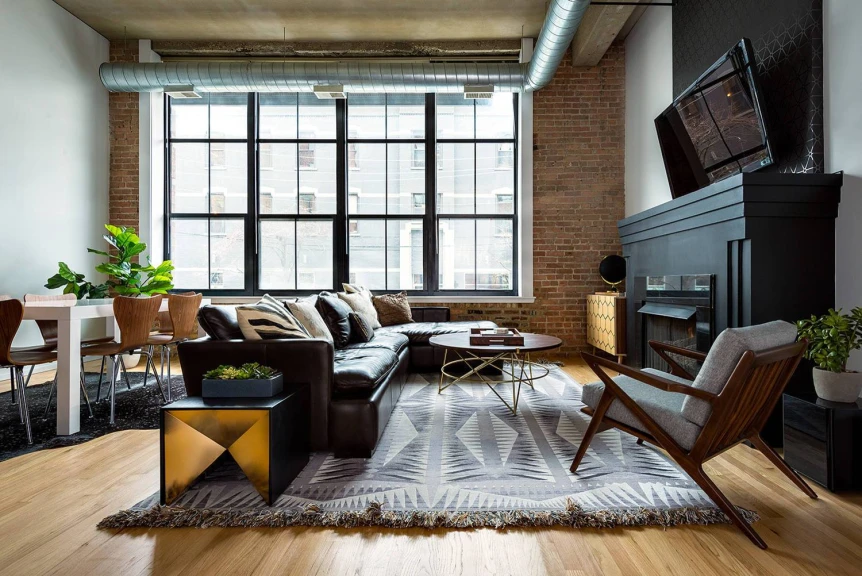
Most industrial palettes follow a simple structure: a dominant neutral covers the largest surfaces (walls, floors, larger furniture), warm wood tones balance the cooler neutrals, and one or two accent colors appear sparingly through textiles, art, or a single piece of furniture. The point isn’t to use less color for the sake of restraint. It’s to let the materials speak.
For the broader principles of the style, see our complete guide to industrial interior design.
The Classic Neutral Palette
Core Colors
Charcoal gray, warm gray, off white, black, and warm wood brown. This is the foundation of most industrial interiors. It’s grounded, masculine, and provides a strong backdrop for the materials and lighting that define the style.
How to Apply It
Use warm gray or off white on the walls. Dark wood floors or concrete in a medium tone underfoot. Black or dark gray for major furniture pieces and metal accents. Warm brown wood through reclaimed pieces, shelving, and accent furniture. The contrast between the cooler grays and the warm wood is what gives the palette its life.
Where It Works
This palette suits any industrial room, from living rooms and kitchens to bedrooms and offices. It’s the most versatile and forgiving of the industrial palettes. For room specific applications, see our guides to industrial living room ideas and industrial bedroom design ideas.This palette suits any industrial room, from living rooms and kitchens to bedrooms and offices. It’s the most versatile and forgiving of the industrial palettes. For room specific applications, see our guides to industrial living room ideas and industrial bedroom design ideas.
The Warm Industrial Palette
Core Colors
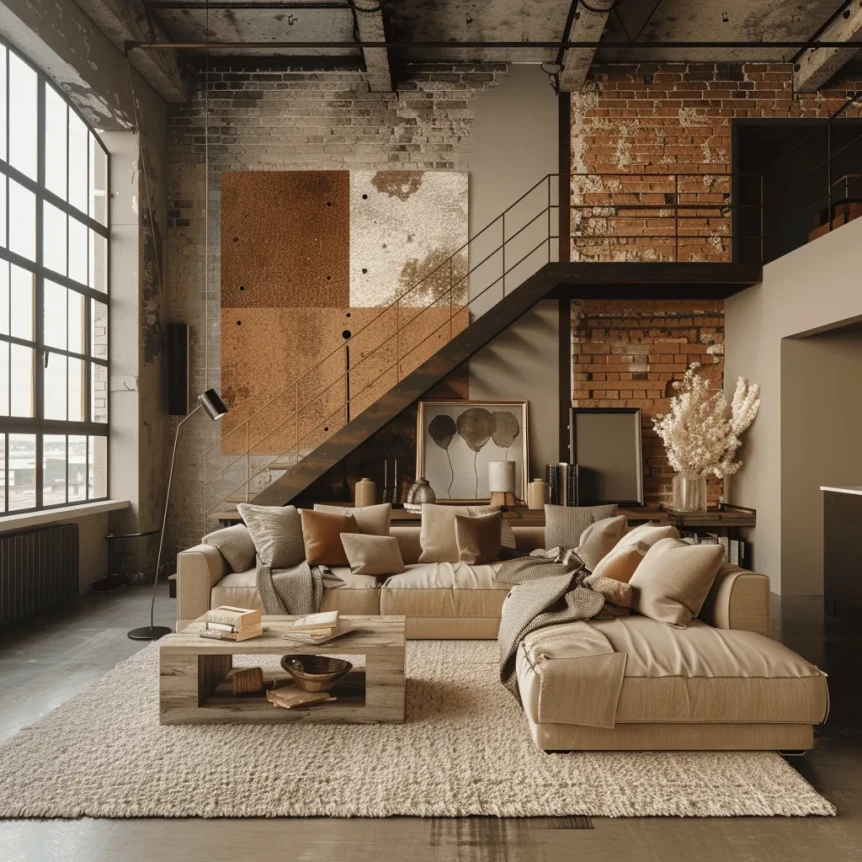
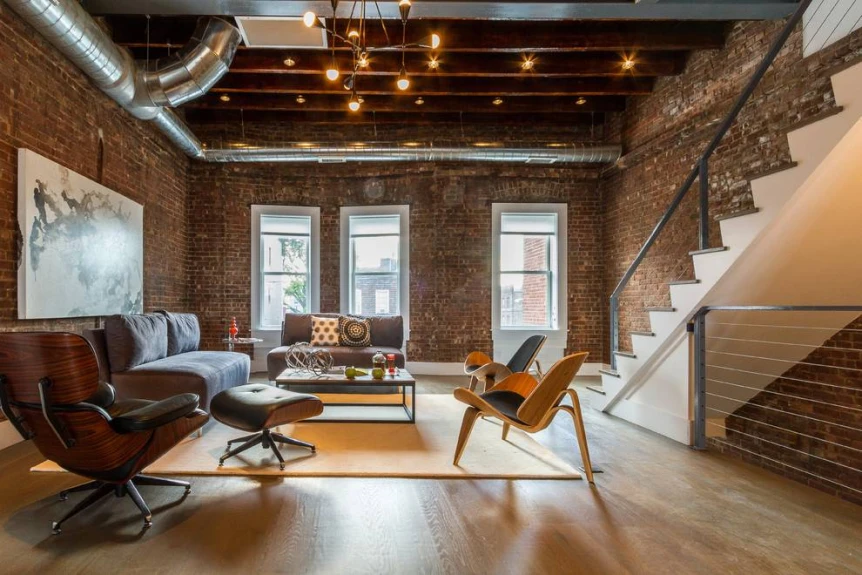
Warm beige, weathered brown, brass, deep rust, and cream. This palette leans into the wood, leather, and brass elements of industrial style and pulls back on the cooler grays. It feels softer and more lived in than the classic palette.
How to Apply It
Use cream or warm beige on the walls. Choose furniture in distressed brown leather and warm wood. Add brass through hardware, lighting, and accent pieces instead of black metal. Introduce deep rust as an accent color through cushions, art, or a single piece of furniture.
Best Rooms for This Palette
This palette works beautifully in living rooms, dining areas, and bedrooms where you want a softer, more inviting industrial feel. It’s also a natural fit for spaces that get less natural light, where the warmer tones compensate for the lack of brightness.
The Moody Industrial Palette
Core Colors
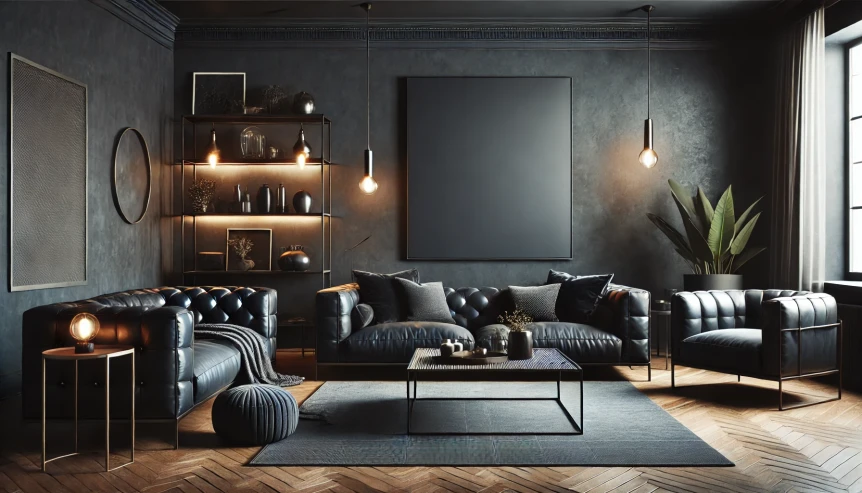
Deep charcoal, matte black, dark navy, weathered leather, and gunmetal. This is the most dramatic industrial palette, leaning heavily into dark tones. It creates rooms that feel grounded, intimate, and slightly masculine.
How to Apply It
Paint walls in deep charcoal or matte black. Use dark navy as a secondary color through textiles or accent furniture. Wood elements should be on the darker side (walnut, dark oak, ebonized wood). Lighting becomes especially important in this palette, since the dark walls absorb light. Use multiple sources at varied heights with warm bulbs.
When to Use This Palette
This palette is perfect for home offices, libraries, dens, and bedrooms. It also works well in basement conversions and lofts with high ceilings, where the dark colors create an enveloping rather than oppressive atmosphere.
The Modern Industrial Palette
Core Colors
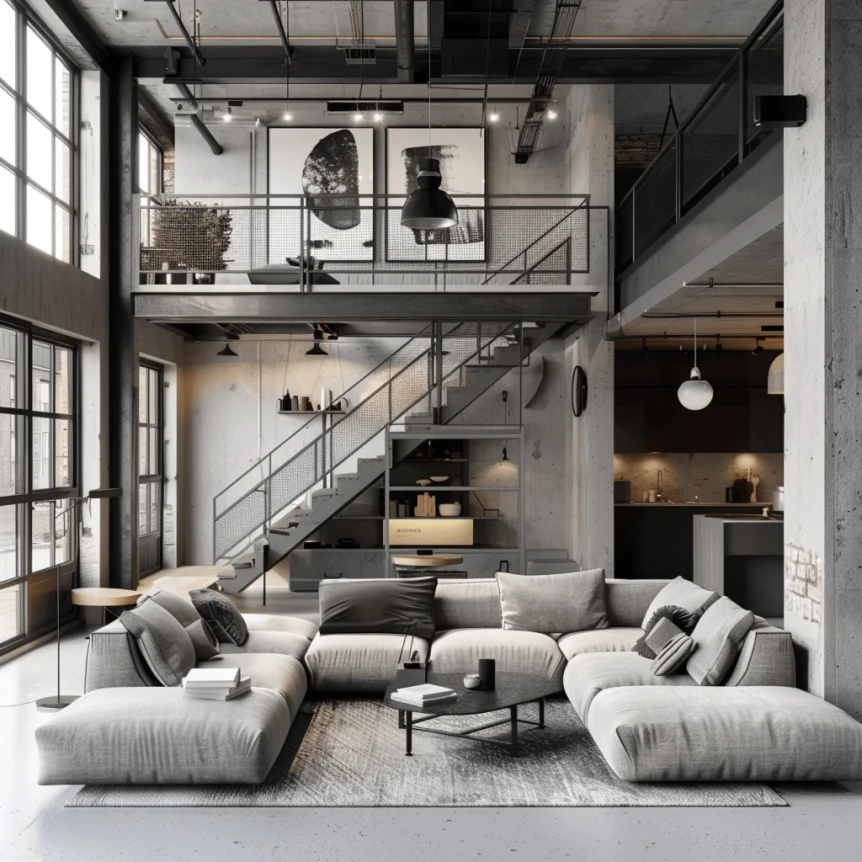
Light gray, white, polished concrete, light wood, and black accents. This is industrial design simplified and lightened. It maintains the metal, concrete, and wood vocabulary of the style but uses a brighter, cleaner palette that suits contemporary apartments and modern lofts.
How to Apply It
Walls in white or very light gray. Polished concrete or light wood floors. Furniture in lighter wood tones with black metal frames. Use black sparingly for definition rather than dominance. The result is industrial style adapted for spaces that need to feel bright and open.
Best Applications
Modern industrial works in smaller apartments, contemporary lofts, and any space where a darker industrial palette would feel oppressive. For more on this variation, see our guide to modern industrial vs. rustic industrial design.
Material Pairings That Work
Brick and Wood
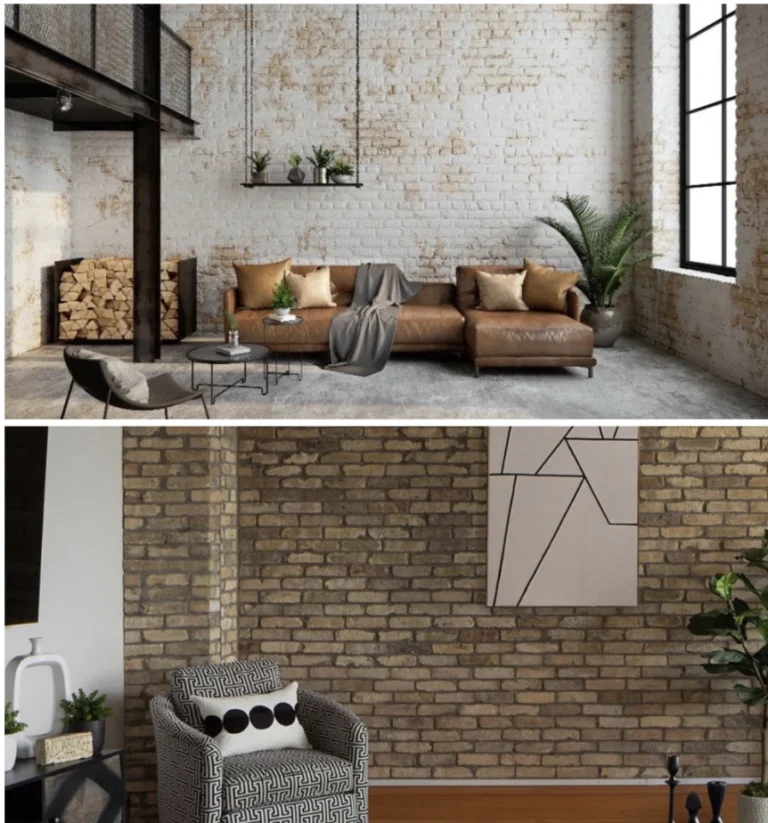
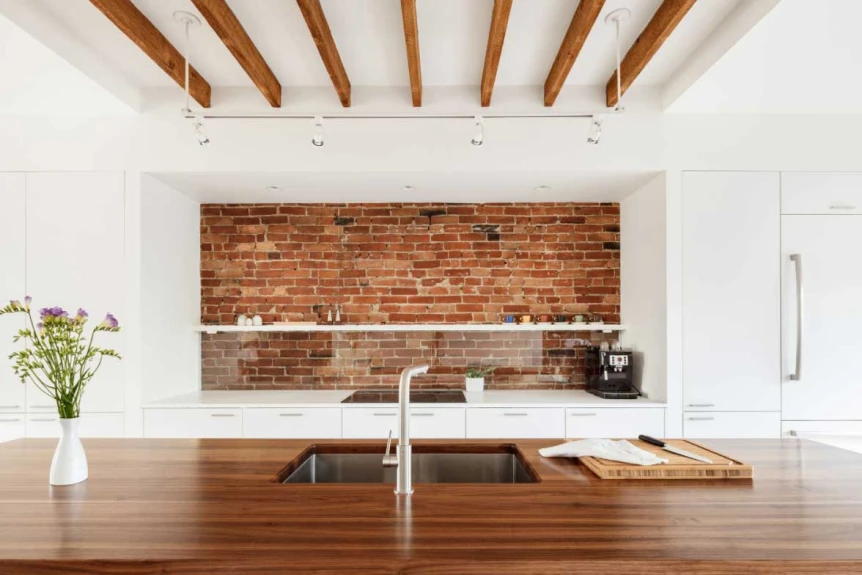
Exposed brick paired with reclaimed wood is the most classic industrial combination. The warmth of both materials creates a grounded, lived in atmosphere. Use brick on a feature wall and wood for furniture, shelving, or accent ceiling beams.
Concrete and Metal
Concrete floors or walls combined with steel furniture and lighting fixtures create a more modern, refined industrial look. Add wood and leather to keep the combination from feeling too cold.
Leather and Iron
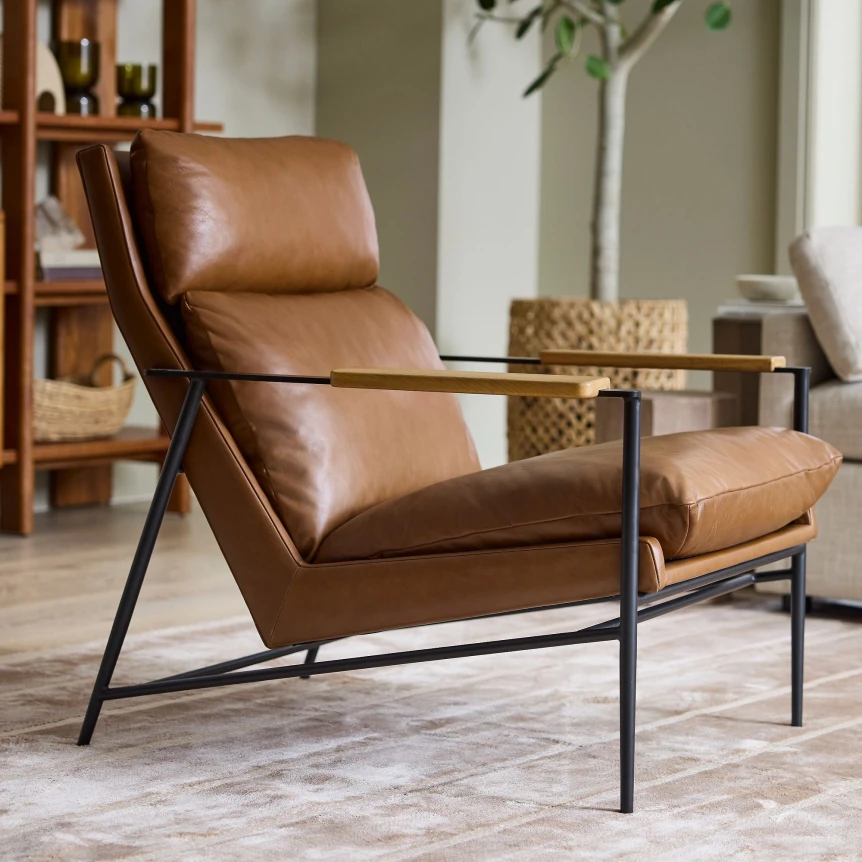
Leather furniture with black iron accents is a near foolproof industrial combination. The leather softens the harder iron, while the iron grounds the warmer leather. This pairing works in living rooms, bedrooms, and offices.
Stainless Steel and Wood
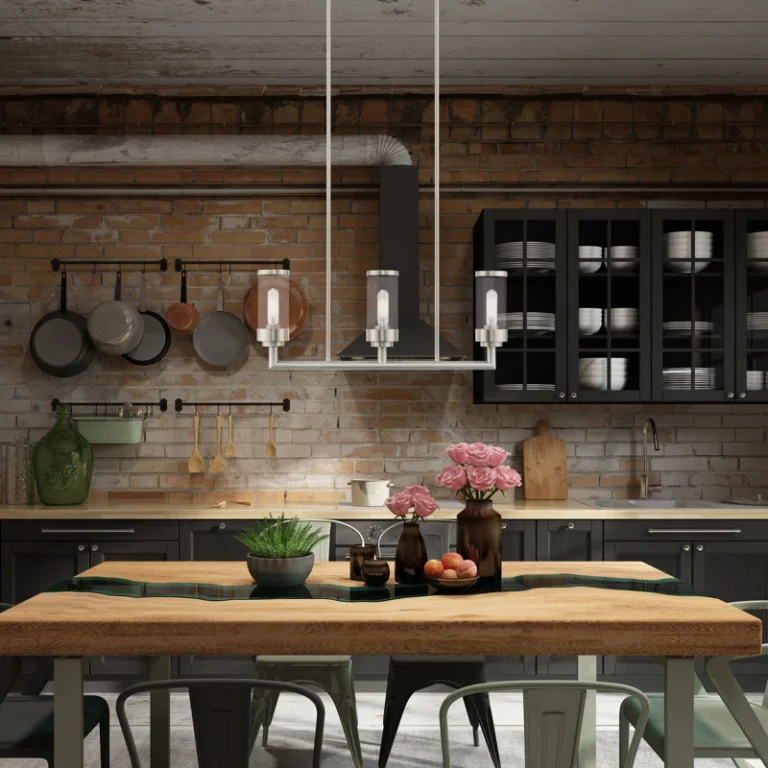
The combination of polished stainless steel and warm reclaimed wood is most often seen in industrial kitchens but works beautifully in any space where you want that contrast between cool and warm. For kitchen specific ideas, see our industrial kitchen ideas guide.
Adding Accent Color
When industrial spaces use accent color, it’s typically a single saturated but slightly muted tone that grounds the room rather than energizing it. Deep rust, forest green, mustard yellow, burnt orange, and oxblood red are all popular industrial accent colors.
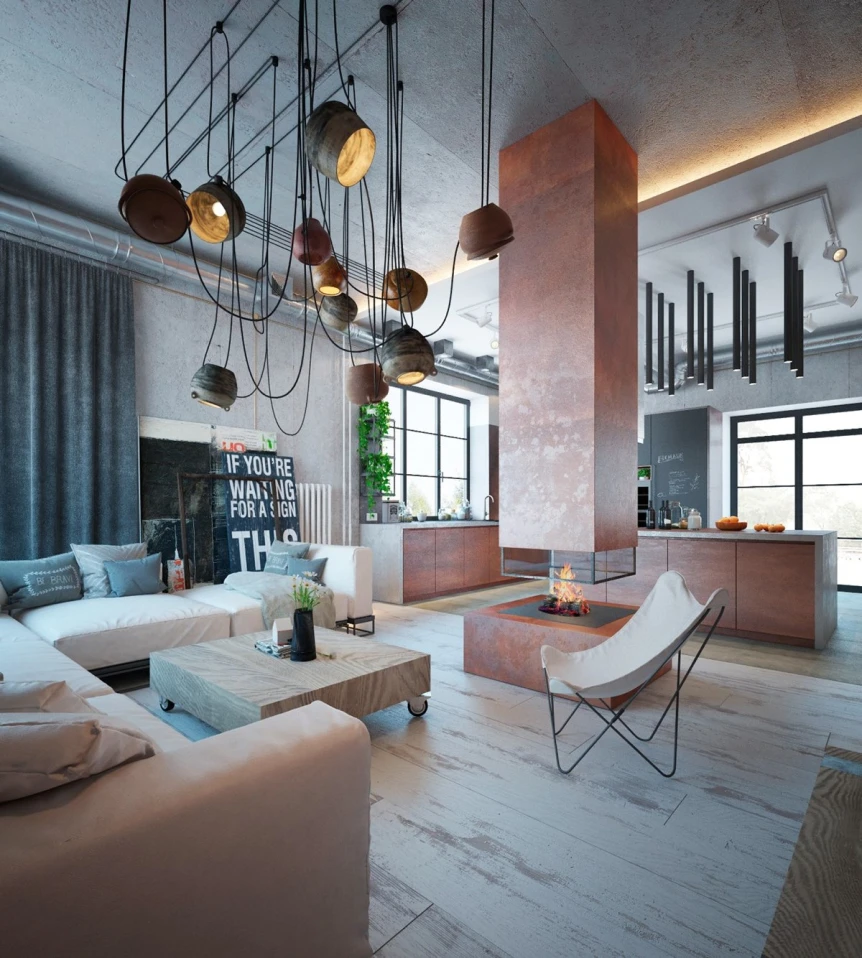
Use the accent through one or two elements: a single piece of art, a cushion or two, a throw blanket, or a single statement piece of furniture. The accent should feel like an exclamation mark, not a sentence.
Warming Up an Industrial Room
The most common complaint about industrial spaces is that they feel cold. Here are the most effective ways to add warmth:
- Wood: Add warm wood through furniture, shelving, beams, or accent walls
- Leather: A leather sofa or armchair instantly warms an industrial space
- Textiles: Layer wool, linen, and canvas through rugs, throws, and cushions
- Lighting: Use warm white bulbs (2700K) and multiple light sources
- Plants: A few well placed plants soften hard materials
- Books and personal objects: Real lived in details warm any room
Common Color and Material Mistakes
All Cool Tones
A room that’s entirely gray, black, and white without any wood, leather, or textiles will feel cold. Always include warm materials in the mix.
Too Many Bold Accents
One accent color is enough. Adding rust, mustard, navy, and forest green to the same room creates visual confusion. Pick one and use it consistently.
Too Polished
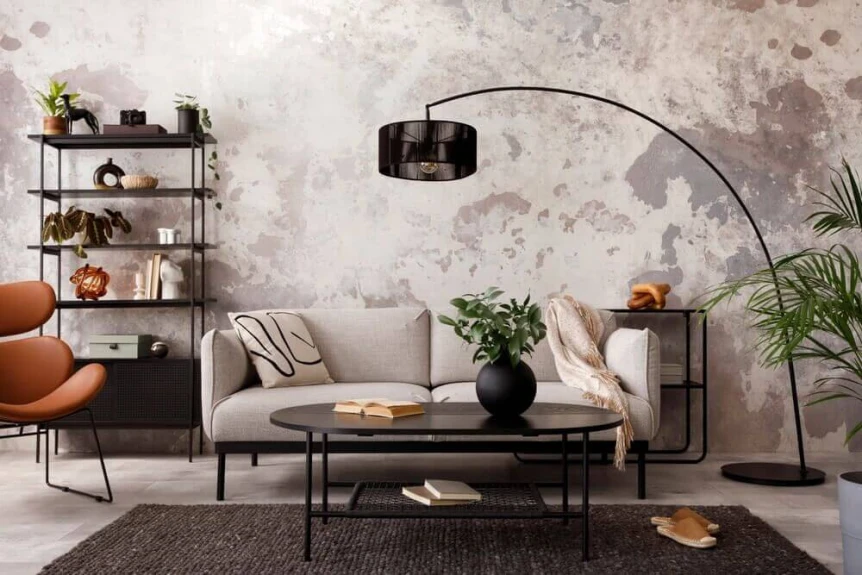
Glossy finishes, perfectly clean materials, and surfaces without any wear or character defeat the purpose of the style. Industrial design embraces patina and imperfection. Look for matte finishes, natural variation, and materials that age well.
Forgetting Texture
A flat, smooth room with no textural variation feels lifeless regardless of the colors used. Mix rough with smooth, hard with soft, and matte with subtle sheen. The textural contrast is what makes industrial rooms feel rich.
Conclusion
Color and materials in industrial design are inseparable. The palette exists to highlight the materials, and the materials bring the colors to life. Choose a palette that fits the mood you want, lean on warm wood and leather to balance cooler elements, and let your accent color appear sparingly but with purpose.
For the complete framework of industrial design, from furniture and lighting to room by room strategies, visit our complete guide to industrial interior design.
Frequently Asked Questions
What colors are used in industrial design?
Charcoal gray, warm gray, black, off white, and warm wood browns form the foundation of most industrial palettes. Accent colors are used sparingly and tend toward saturated but slightly muted tones like deep rust, forest green, mustard yellow, or burnt orange. The point is to let the materials carry most of the visual weight.
What materials are essential to industrial design?
Exposed brick, concrete, metal (especially black iron, steel, and brass), reclaimed wood, and leather are the core industrial materials. Glass, particularly in steel framed windows, also plays a role. The combination of harder materials (brick, concrete, metal) with warmer ones (wood, leather, textiles) creates the balance that defines the style.
How do I make an industrial room feel warmer?
Add warm wood through furniture and shelving, include leather in a sofa or armchair, layer wool and linen textiles through rugs and throws, use warm white bulbs (2700K) in multiple light sources, and add a few plants. Personal objects and books also bring warmth and character to industrial spaces.
Can I use color in an industrial room?
Yes, but use it sparingly. One accent color in a saturated, slightly muted tone works best. Deep rust, forest green, burnt orange, mustard yellow, or oxblood red are classic industrial accent choices. Apply the color through one or two elements like a piece of art, cushions, or a single piece of furniture.