Furniture Ideas for Living Room: Layouts, Pieces and Materials

By Tereza Hower | Published September 23, 2026
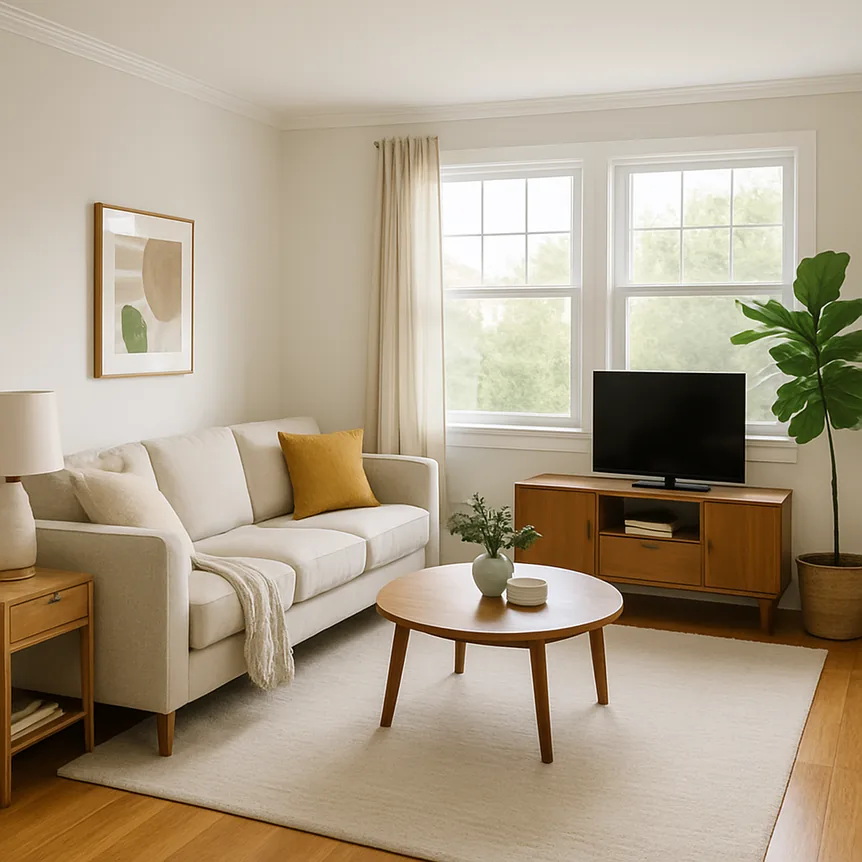
The chair nobody sits in is the most common piece of furniture in a living room. It was bought to fill a corner, faces nothing, and holds a throw. Better furniture ideas for living room layouts start from the opposite end: what each piece will do and who will use it, decided before what it looks like.
The ideas below run layout by layout and then piece by piece, with materials, colors, and price bands named. The site’s buying guides are linked where a piece deserves its own page, and the complete guide to modern living room design covers the principles behind the choices.
Key Takeaways
- Decide what each piece will do before choosing how it looks; a chair that faces nothing will not be sat in.
- A sofa with two chairs across from it seats the same number as a matched set and looks far less like a showroom.
- Round coffee tables suit rooms under 200 square feet; a rectangular oak or travertine table suits a sofa over 84 inches.
- One closed storage piece, a credenza or a low cabinet, does more for a room than open shelves and baskets.
- Kiln dried hardwood frames, dovetailed drawers, and top grain leather separate furniture worth keeping from furniture that only photographs well.
What Furniture Does a Living Room Actually Need?
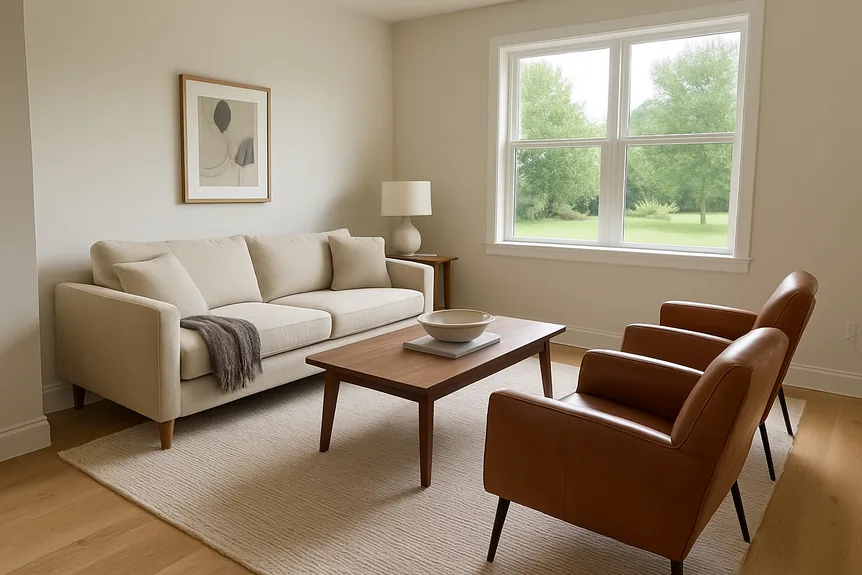
A living room needs four kinds of furniture: primary seating for the people who live there, a surface within reach of every seat, one piece of closed storage, and a place for the screen if there is one. Everything else is optional and should be added only when a specific use for it exists. A room that covers those four with five pieces looks larger and costs less than a room that covers them with nine.
One of the questions I always asked customers was “where will this live, and what will it do?” If the answer was vague, the piece probably didn’t belong in their home. The same test applies to every idea below: a second sofa earns its place when more than three people are regularly in the room, and a bar cart when drinks are made there more than once a month.
Furniture Ideas for Living Room Layouts
The four layouts below cover most American living rooms, from a 12 by 14 foot apartment room to an open plan great room. The table after them puts the pieces, materials, and price bands side by side.
The Sofa and Two Chairs
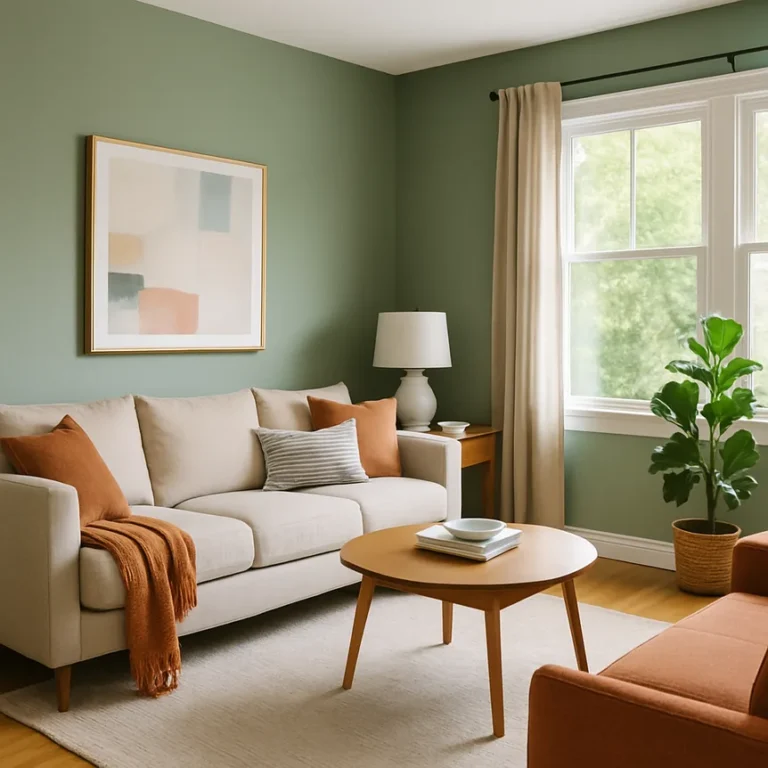
An 84 to 90 inch sofa on the long wall with two armchairs across the coffee table from it serves the widest range of rooms. The chairs should differ from the sofa in material: an oatmeal linen sofa with cognac leather chairs, or a charcoal wool sofa with cream bouclé chairs. Leave 18 inches between the chairs and 14 to 18 inches between every seat and the table.
Choose this over the matched three piece set: a sofa plus two chairs bought a month apart costs about the same and gives the room two materials instead of one. The sofa buying guide covers frames, seat depth, and cushion fills before the fabric decision.
Two Sofas Facing Each Other
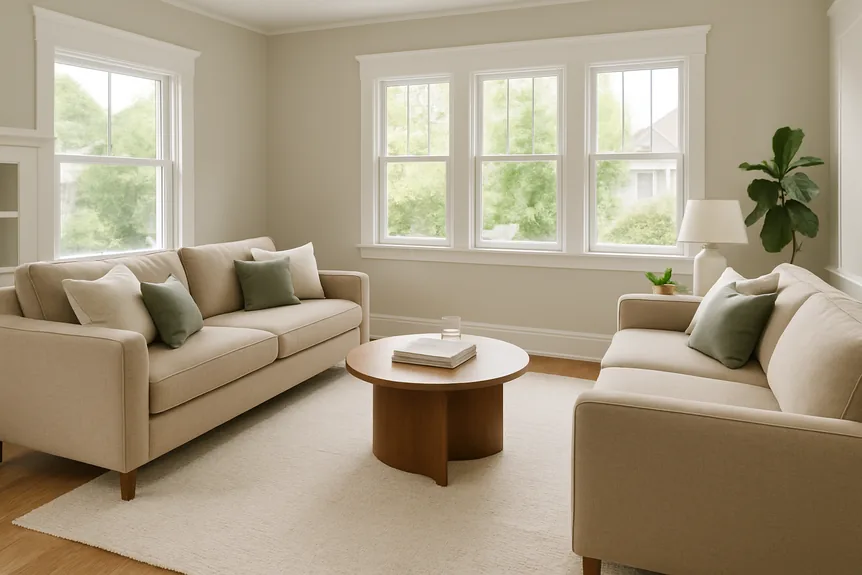
Two 72 to 78 inch sofas facing across a rectangular coffee table make a room built for conversation, and the symmetry suits a fireplace at one end. Match the sofas in size and leg style but not in fabric, and allow a room at least 14 feet across so that 36 inches of walking space remains at each end.
The Sectional in a Corner
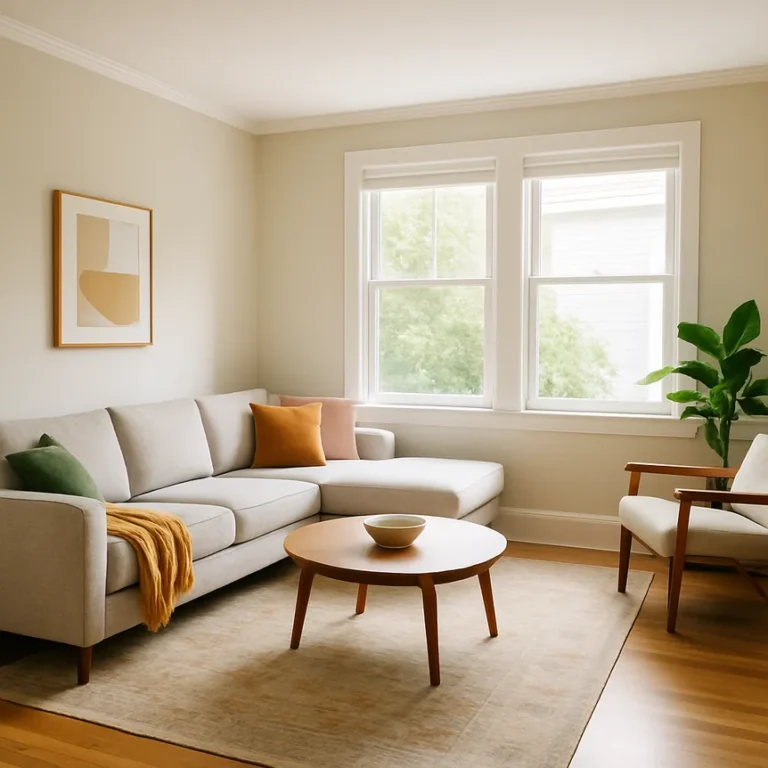
A sectional suits a family that watches together and a room where a long wall meets a window wall. Choose an L shape with the chaise on the side away from the door, 100 to 110 inches on the long side, and keep the back at 32 inches or under so it does not wall off the room. One swivel chair opposite the chaise faces both the sectional and the door.
The Floated Sofa With a Console Behind It
In a room over 16 feet long, pull the sofa 12 to 24 inches off the wall and put a console table behind it, 2 to 4 inches lower than the sofa back. The console holds a pair of lamps, which solves lighting where there is no ceiling fixture, and the gap makes the room read as two zones. A 60 to 72 inch console in white oak or blackened steel with a stone top suits most sofa lengths.
| Layout | Pieces | Materials and colors | Price band for the seating |
|---|---|---|---|
| Sofa and two chairs | 84 to 90 inch sofa, two 30 to 34 inch armchairs | Oatmeal linen sofa with cognac leather or cream bouclé chairs | $2,000 to $4,500 |
| Two sofas facing | Two 72 to 78 inch sofas, one rectangular coffee table | Sand linen or moss velvet over a white oak table | $2,400 to $5,000 |
| Sectional in a corner | 100 to 110 inch L sectional, one swivel chair | Performance wool blend in charcoal or stone, walnut legs | $2,200 to $5,500 |
| Floated sofa with console | 84 inch sofa, 60 to 72 inch console, two lamps | Gray wool sofa, oak or steel console with a travertine top | $2,500 to $5,000 |
| Small room pair | 72 inch sofa, one armless chair, round table | Light gray linen, ash or cane chair, oak or marble drum table | $1,400 to $3,000 |
Which Seating Works Beyond the Standard Sofa?
Not every living room wants a sofa as its main piece, and not every room has the wall for one. Each alternative below solves a specific problem: a narrow room, a room used for reading more than television, or a room that doubles as a guest space.
A Pair of Armchairs Instead of a Loveseat
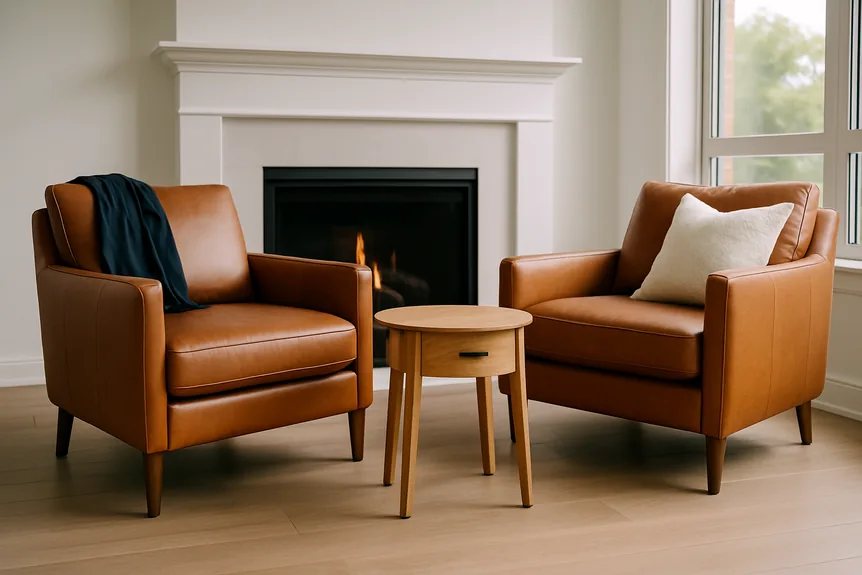
A loveseat seats two people who would rather not touch elbows, so it usually seats one. Two armchairs in the same footprint, 30 to 34 inches wide with a 20 inch table between them, seat two comfortably and can be turned toward the window, the fire, or the conversation. Exposed wood arms in walnut or ash keep the room from reading as a block of fabric.
A Daybed Under the Window, or Swivel Chairs
A daybed, 75 to 80 inches long, sits under a window where a sofa would block the light and doubles as a guest bed; a cane frame with a tufted linen mattress suits a bright room, a walnut frame with bolsters a tailored one. Where a television sits on one wall and a fireplace or a view on another, two swivel chairs on brushed brass bases let a person face either.
A Bench in Place of the Second Chair
A 48 to 60 inch upholstered bench opposite the sofa adds two seats that disappear when nobody is on them, which suits a narrow room. Leather over a solid oak or steel base holds up to being sat on from any direction, and the roundup of modern storage benches covers the sizes that work in a living room.
Coffee Table and Side Table Ideas by Shape
The coffee table decides how the seating group moves. A rectangle suits a sofa over 84 inches facing two chairs; a round or oval table suits a sectional and any room under 200 square feet, because there are no corners to walk around. The top should sit within 2 inches of the sofa’s seat cushion, usually 16 to 18 inches.
Materials worth naming: a solid white oak slab with a matte oil finish, a honed travertine drum 36 inches across, or a blackened steel base under a 10 mm glass top. Nesting tables, one 36 inches and one 24 inches, are the answer for a room that hosts. The guide to the best coffee tables under $500 covers what those materials cost at the affordable end.
Side tables sit level with the sofa arm, 22 to 26 inches tall, one within reach of every seat, and mixed rather than matched: marble on a brass tripod beside the sofa, a square oak table between the chairs. The guide to modern side tables and accent furniture covers the drum, C shaped, and nesting versions and where each fits.
Storage Furniture That Earns Its Place
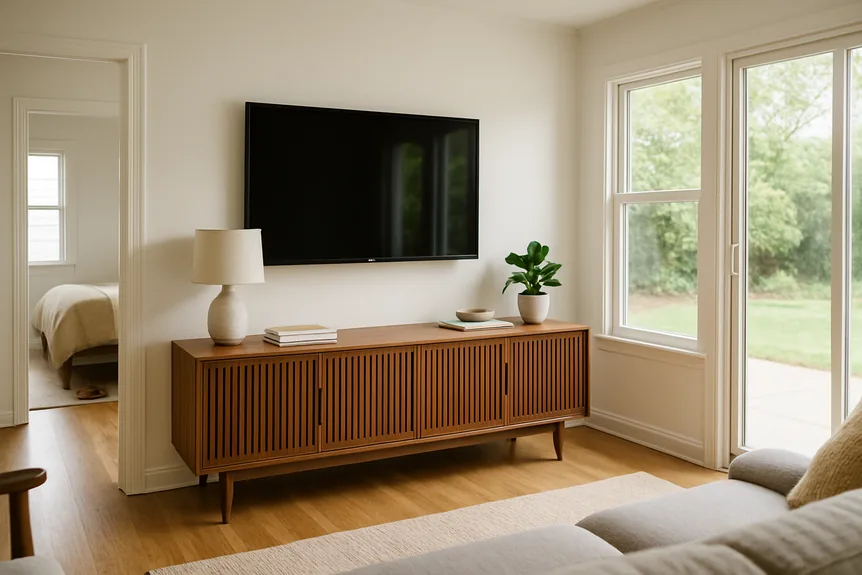
Closed storage is what keeps a living room looking like the photograph. A credenza 60 to 72 inches wide and 28 to 32 inches tall, in solid walnut or white oak, holds the games, chargers, and remotes that otherwise end up in baskets, and under a mounted television it replaces the media console. The sideboard buying guide covers depths, door types, and the veneer question.
A television stand should be 12 to 20 inches wider than the screen, with the screen’s center at seated eye level, about 42 inches from the floor. The modern TV stand guide sizes them by screen and covers cable management.
Bookcases belong in a living room when the books are read, not when the shelves need filling. A 30 to 36 inch wide bookcase in solid oak, 72 to 84 inches tall, holds about 150 books and looks best two thirds full. Whether to arrange them by color is its own decision; the post on color coding a bookshelf sets out when it works and when it makes the books harder to find.
What Is Modern Contemporary Furniture?
Modern furniture refers to a specific period and set of principles, roughly the middle of the twentieth century, with clean lines, tapered legs, and honest materials such as walnut, molded plywood, and leather. Contemporary furniture means what is being made now, which borrows from modern design but adds softer curves, bouclé and performance fabrics, and deeper seats. A listing labeled modern contemporary usually means the second: current pieces in a clean lined style.
In a living room the distinction shows most in the sofa. A modern sofa has a tight back, a 21 to 22 inch seat, and a visible frame, and suits a room used for conversation; a contemporary one has loose cushions, a 24 to 26 inch seat, and often a plinth base, and suits a room used for lying down. The roundup of the best modern sofas shows both at the same price points.
Furniture Ideas for Small Living Rooms
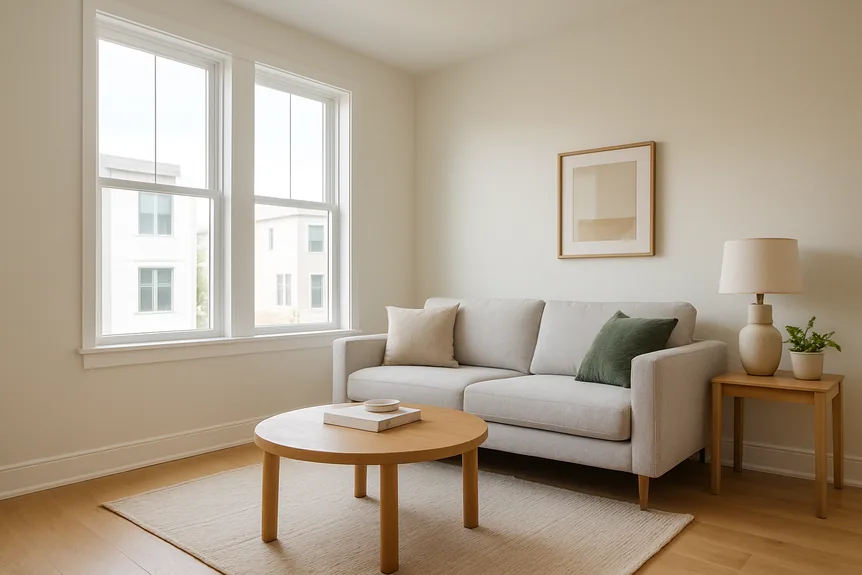
Under 180 square feet, every piece should show floor beneath it. A 72 to 78 inch sofa on tapered legs, an armless chair 26 to 28 inches wide, and a round coffee table 30 to 34 inches across leave the room walkable and make it read larger than the same room with a skirted sofa. Glass and cane add a piece without adding visual weight; the oversized sectional is the piece to skip, since it removes every path through the room.
Furniture that does two jobs earns its footprint: a storage ottoman in place of a coffee table, a console 12 inches deep behind the sofa that serves as a desk, a bench under the window that opens for blankets. The living room ideas guide covers the rug, paint, and lighting that finish the room once the furniture is right, and the cozy living room guide handles the textiles.
How to Tell Quality Furniture From Cheap
Quality shows in the parts that are not photographed. On a sofa, lift one end; a kiln dried hardwood frame is heavy and does not flex, and the label should say hardwood, not engineered wood, which is particleboard renamed. On a credenza, open a drawer and look at the corner: dovetail joints in solid wood hold, and stapled joints in fiberboard let go within a few years.
Veneer is not the enemy, but the thickness is. A proper veneer over a plywood core is a legitimate credenza top; a paper thin veneer over particleboard chips at the door edges and cannot be sanded. Run a fingernail along an edge, and if it catches on a seam, walk away.
Upholstery fabric carries a rub count, and a living room sofa wants at least 30,000 double rubs. Leather should be top grain or full grain, never bonded, which is leather dust glued to a backing and peels within two years. These checks take five minutes in a showroom and matter more than the name on the tag.
What About a Home Office Corner in the Living Room?
Many living rooms now hold a desk, and the furniture has to look like it belongs. A writing desk 42 to 48 inches wide and 20 to 24 inches deep, in the same wood as the coffee table, reads as a console when the laptop is closed, and a chair upholstered in the sofa’s fabric family does the work of a task chair without the mesh.
The order I would recommend: desk first, chair second, credenza third, lighting fourth, rug fifth, and everything else after. In a shared living room the credenza is usually already there. The guide to modern home office furniture essentials covers the best furniture for a home office in detail, and the modern bedroom furniture guide applies the same quality checks to the bed, nightstands, and dresser.
Common Mistakes With Living Room Furniture
The first mistake is buying the matched set. The second is furniture pushed against every wall in a room large enough to float the sofa. The third is a coffee table too tall or too small: over 20 inches it blocks the view across the room, and under two thirds of the sofa’s length it looks lost.
The fourth is seating for a party rather than for the household, which leaves a loveseat and two extra chairs holding coats most of the year. The fifth is ignoring the doorway, since a 90 inch sofa with fixed legs will not turn into a 30 inch hallway. The last is the accent chair bought for the corner; if nobody can sit in it and see another person or a window, it is a sculpture. The list of living room staples that last is the one to buy from when the budget only covers a few pieces.
Where to Go Next
Write down what each seat and surface will do, pick the layout that fits the room’s long wall and door, and buy the sofa first. For how the same pieces shift across Japandi, Scandinavian, mid century, and industrial rooms, the complete guide to modern living room design is the longer read.
Frequently Asked Questions
Which furniture is best for a living room?
A sofa sized to the household, two chairs in a different material, a coffee table within 2 inches of seat height, one closed storage piece, and a side table within reach of every seat. Kiln dried hardwood frames, solid wood or plywood cored tops, and top grain leather or fabric rated over 30,000 double rubs are the versions worth paying for.
What is the difference between modern and contemporary furniture?
Modern furniture follows the mid twentieth century principles of clean lines, tapered legs, and walnut, plywood, and leather. Contemporary furniture is what is made now: rounder, softer, and deeper, in boucle and performance fabrics. Most listings labeled modern contemporary are current pieces in a clean lined style.
How many pieces of furniture should a living room have?
Five to seven for most rooms: a sofa, two chairs or a second sofa, a coffee table, one or two side tables, and one storage piece. Rooms under 180 square feet do better with four or five, and a room over 300 square feet can hold a second seating group of two chairs and a small table.
Should living room furniture match?
No. Match the scale and the leg style, then vary the materials: a fabric sofa with leather or wood framed chairs, and tables in two finishes such as oak and stone. A matched set costs about the same as separate pieces and reads as a showroom floor.
What furniture ideas work for a small living room?
A 72 to 78 inch sofa on exposed legs, an armless chair, a round coffee table 30 to 34 inches across, and one piece that does two jobs, such as a storage ottoman or a narrow console behind the sofa that serves as a desk. Glass and cane add pieces without adding visual weight.