Best Modern Bedroom Furniture for 2026

By Tereza Hower | Published March 12, 2026 | Updated September 15, 2026
The best modern bedroom furniture comes down to five pieces: a low platform bed frame, a pair of nightstands at mattress height, a dresser or wardrobe for the bulk of the storage, and one piece of seating. Buy them in that order and a bedroom resolves itself. Buy them in the wrong order and you spend the budget on the pieces that matter least.
The table below is the short version: what to check on each piece, which material to favor, what it usually costs, and where it falls in the buying order. The rest of the guide explains the reasoning, including the sizing mistakes that are expensive to undo.
| Piece | What to look for | Material to favor | Typical spend | Buy priority |
|---|---|---|---|---|
| Bed frame | Low profile, solid headboard, sturdy slats | Oak, walnut, or upholstered linen | $400 to $1,500 | First |
| Nightstands | Top near mattress height, soft-close drawer | Same family as the bed frame | $150 to $500 each | First |
| Dresser or chest | Full-extension, soft-close slides | Flat-panel, matte finish | $500 to $1,500 | Second |
| Wardrobe | Flush fronts, minimal hardware | Built-in if possible, otherwise flat-panel | $600 to $2,000 | Second |
| Seating | Low profile, ties to bedding or headboard | Linen, boucle, or leather | $200 to $800 | Last |
As an Amazon Associate, Curated by Hower earns from qualifying purchases. Pieces are selected on construction, proportion and value, not on commission.
Key Takeaways
- Start with the bed frame and nightstands, since they set the room’s proportions and get used every day.
- Low platform frames keep a modern bedroom feeling calm and grounded.
- A nightstand should sit near the top of the mattress, usually 24 to 30 inches high.
- Work within one or two materials rather than buying a matching set.
- Leave breathing room. Fewer, better pieces read as more considered than a fully packed room.
Start With the Bed Frame
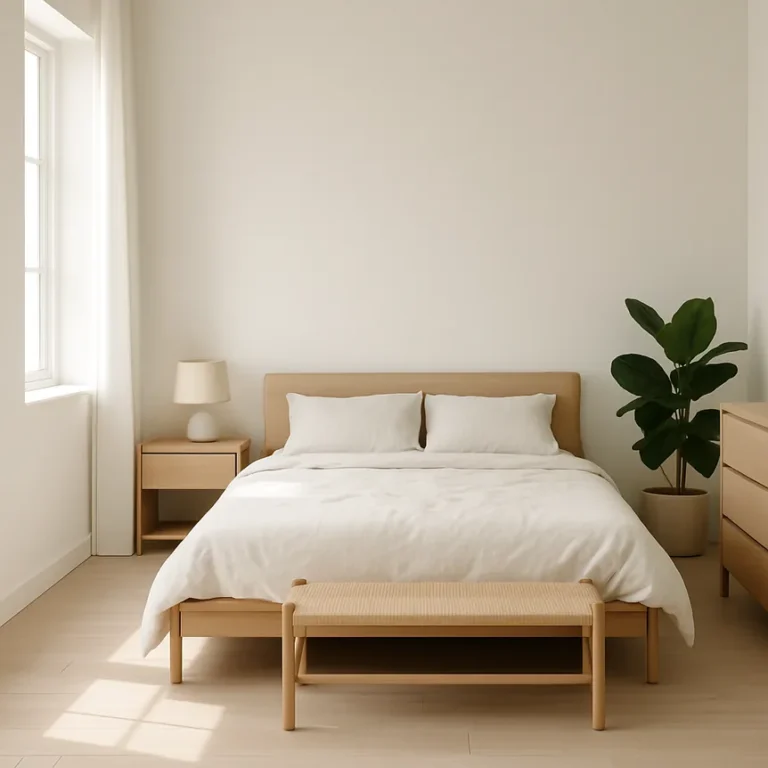
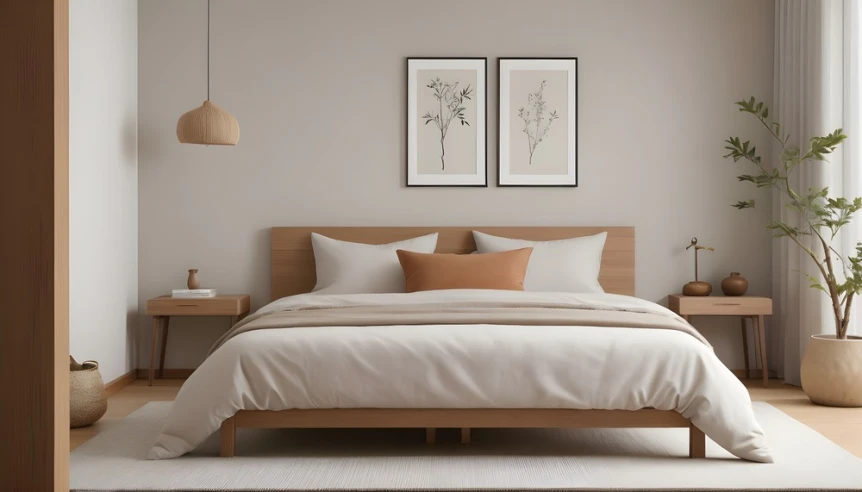
The bed frame sets the tone for everything else in the room. In a modern bedroom, the most enduring choice is a low platform frame with a clean silhouette. Low frames keep the visual center of gravity close to the floor, which makes rooms feel calmer and more grounded. They also tend to look proportionally better in rooms with standard ceiling heights than the tall, imposing frames that were popular in earlier decades.
For materials, there are two directions worth considering. Upholstered frames in linen, boucle, velvet, or performance fabric add softness and warmth to a bedroom that might otherwise lean cold. They are especially effective in rooms where the other furniture is hard edged or made from dark materials. A wood platform frame in oak, walnut, or ash brings natural texture and a sense of permanence. Wood tends to age well and works across a wider range of color schemes than upholstered options. Between the two, solid wood is the one worth stretching for: it is the piece where veneer shows its limits soonest, and the difference is visible at the edges within a couple of years. A frame is one of the larger pieces in the room, so it is worth ordering early and building the rest of the set around it.
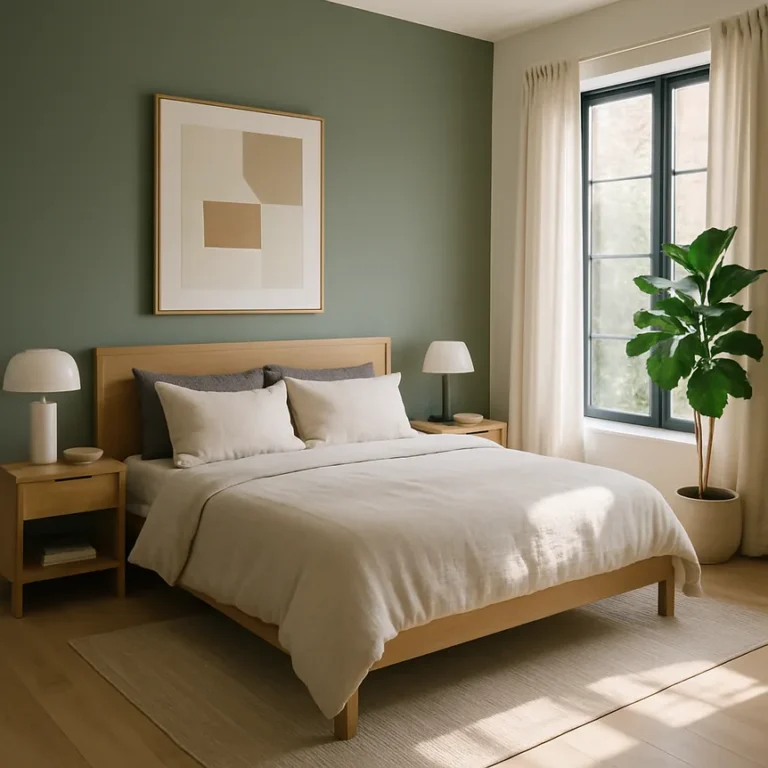
Pay attention to the headboard. It is the part of the bed that reads most strongly from across the room, and it is worth investing in something you genuinely like. A padded headboard in a neutral fabric is the most versatile choice and one of the easiest ways to make a bedroom feel considered. Keep the height in proportion with the room: a very tall headboard can feel dramatic in a high-ceilinged space but oppressive in a standard room.
Storage beds are worth considering in almost any bedroom. A platform base with integrated drawers provides a meaningful amount of additional storage without taking up any extra floor space, which is particularly valuable in smaller rooms. The drawers are typically accessed from the side or the foot of the bed and are well suited to bedding, seasonal clothing, or anything you need occasional access to but not every day. For a closer look at the options here, see our guide to the best storage beds that maximize space.
Nightstands: Proportional and Purposeful
A nightstand is a small piece of furniture but it has a lot of work to do. It holds a lamp, a book, a glass of water, a phone, and often serves as a landing zone for whatever comes out of your pockets at night. Getting the scale and function right matters more than most people realize.
The top of the nightstand should sit roughly level with the top of the mattress, give or take a few inches. Too low and reaching for things becomes awkward. Too high and it starts to dominate the bed visually. Most standard nightstands fall between 24 and 30 inches in height, which works well with the majority of bed and mattress combinations.
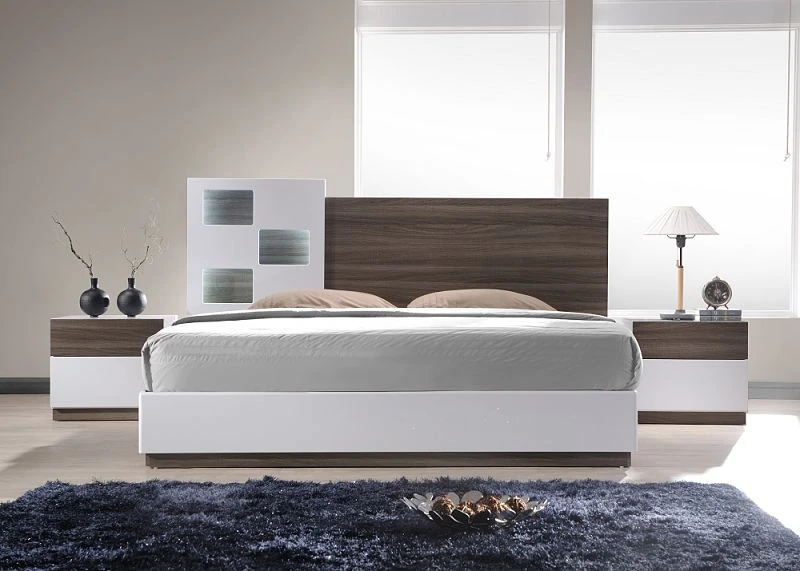
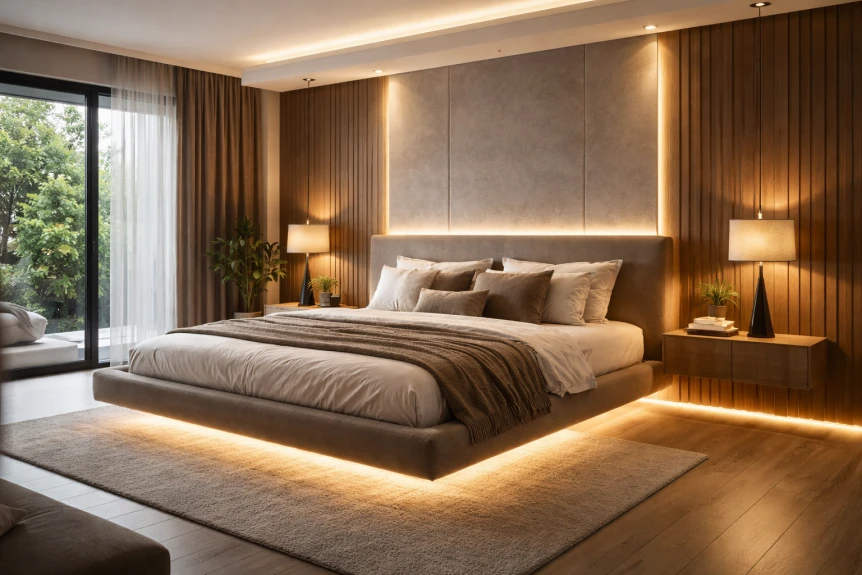
In modern bedroom design, the two most popular nightstand approaches are the floating wall-mounted shelf and the simple freestanding cabinet. A floating wall-mounted nightstand clears the floor entirely, which makes the room easier to clean and contributes to that airy, uncluttered feel. It works especially well in smaller bedrooms or in rooms where the floor is a beautiful material you want to show off. A freestanding nightstand with a drawer or two offers more storage and tends to feel a little warmer and more substantial. Either one is small enough to buy in a pair without a long wait.
If you want your bedroom to feel cohesive, try to keep the nightstand material within the same family as the bed frame. It does not have to match exactly, but a walnut bed frame paired with pale oak nightstands can feel slightly disjointed in a way that an all-oak or all-walnut approach would not.
Wardrobes and Dressers: The Storage Backbone
Storage furniture is where bedroom design budgets often run out, partly because people have already spent heavily on the bed and nightstands. This is a mistake worth avoiding. Inadequate storage leads directly to clutter, and clutter undermines the restful quality that good bedroom design is working to create.
Built-in wardrobes remain the gold standard in modern bedrooms. A run of floor-to-ceiling joinery with flush fronts, integrated handles or push-to-open mechanisms, and a thoughtful internal layout changes a bedroom more than any freestanding piece can. The clean, unbroken lines disappear into the room in a way that freestanding wardrobes never quite achieve. If a full built-in project is not feasible right now, it is worth leaving a wall clear in anticipation of one rather than filling it with furniture you will eventually need to move.
For freestanding options, look for pieces with simple fronts and minimal visible hardware. A freestanding wardrobe with flat-panel doors, routed handle recesses, and a matte or satin finish reads as modern without requiring a complete replacement every few years as trends shift. Avoid overly decorative hardware or busy grain patterns in wood veneer, both of which tend to date quickly.
A chest of drawers or dresser is a useful complement to a wardrobe, particularly if the wardrobe is primarily hanging space. Look for a dresser with smooth-running, full-extension drawer slides, which make accessing items at the back much easier. Soft-close mechanisms are worth the small additional cost for the way they slow the drawers down and prevent the gradual damage that comes from repeated hard closing.
Seating: The Often-Overlooked Element
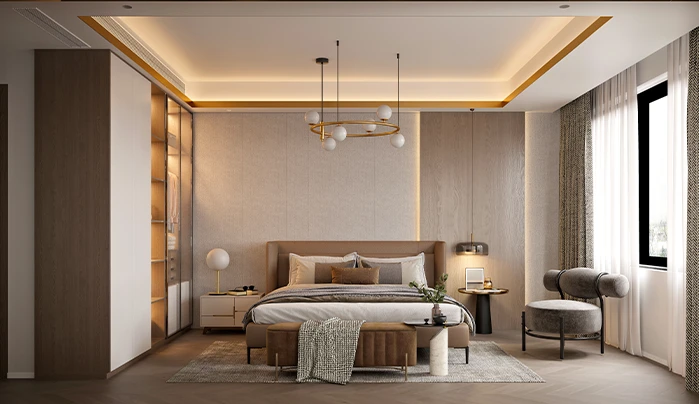
A bedroom without any seating can feel oddly incomplete, even in rooms where you know you will not spend much time sitting down. A bench at the foot of the bed, a low chair in a corner, or even a pair of simple stools serves both practical and aesthetic purposes.
Practically, a seat at the foot of the bed gives you somewhere to put on shoes, lay out clothes for the next day, or rest a bag when you come in. Aesthetically, it grounds the bed and gives the room a sense of layered purpose that stops it from feeling purely functional.
In a modern bedroom, the most versatile seating options tend to be low and upholstered in a fabric that ties to the bedding or the headboard. A simple linen ottoman or foot-of-bed bench, a boucle accent chair, or a leather bench all work well depending on the overall direction of the room. These smaller pieces are also among the quickest to arrive, so they are an easy place to begin. Avoid seating that competes too strongly with the bed for visual attention: it should complement the space, not shout for focus.
Where to Spend and Where to Save
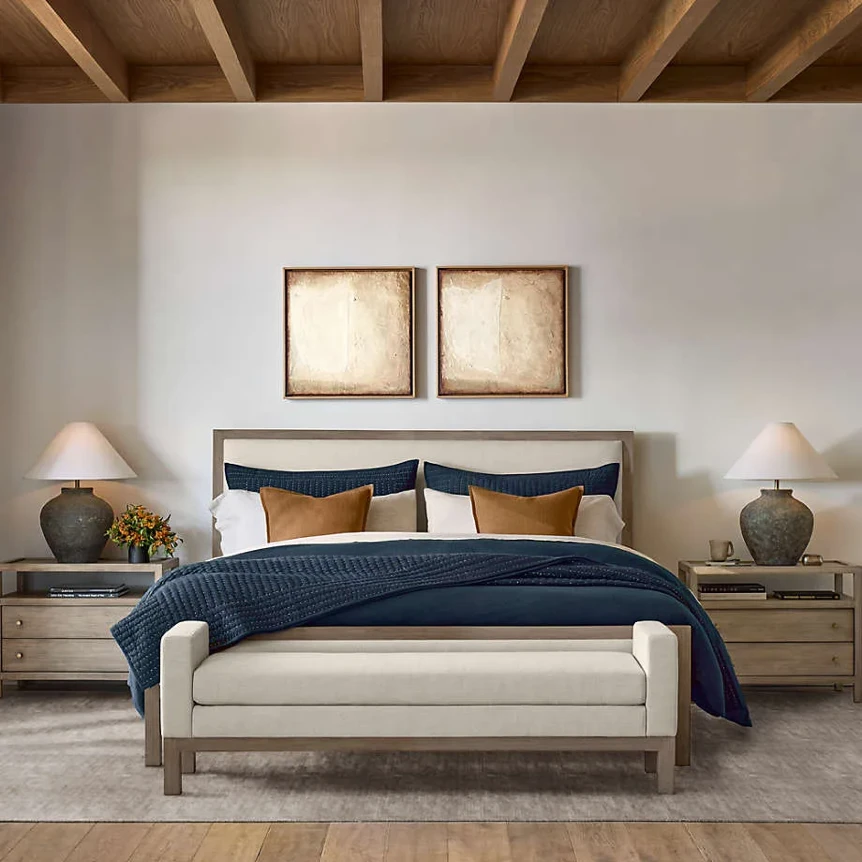
Spend on the bed frame and on the dresser’s hardware. The frame is the piece where veneer shows its limits soonest, and a solid wood or properly built upholstered frame in the $700 to $1,500 range will outlast two mattresses. On the dresser, full extension soft close slides are the difference between a piece that still works in ten years and one that sticks in two.
Save on the nightstands and the seating. A pair of simple freestanding nightstands under $200 each does the job as long as the height is right, and a linen bench at the foot of the bed is the last piece to buy and the easiest to upgrade later. The bottom of every price band is where the compromises live; the middle is where the value is.
What Modern Bedroom Furniture Should You Buy First?
When you are choosing modern bedroom furniture, it helps to buy in order of impact. The bed frame and nightstands come first, since they anchor the room and get used daily. Storage comes next, because it does the quiet work of keeping the room calm. Seating comes last, as the layer that finishes the space. The table at the top of this guide summarizes what to look for in each piece, what it costs, and where it falls in that order. For more ideas in the same spirit, see industrial bedroom design ideas. For more ideas in the same spirit, see modern master bedroom ideas.
Should You Buy a Bedroom Furniture Set?
A bedroom furniture set is a bed frame, two nightstands, and a dresser sold together in a single finish, sometimes with a chest or mirror added. Sets are usually priced below the same pieces bought separately, and they remove every matching decision at once. That is their entire appeal, and for a furnished rental, a staging job, or a room that has to be finished by a deadline, it is a real one.
For a home you plan to stay in, the set is usually the weaker buy. The pieces are built to a shared price point, which means the dresser, the item that takes the most daily abuse, is where the manufacturer cuts cost. Drawer slides, back panels, and drawer bottoms are the first things to check on any set, and they are rarely as good as a dresser bought on its own.
If a set is the right call, buy the smallest one: bed frame and nightstands. Add the dresser or wardrobe separately in a related but not identical material, so the room reads as assembled rather than delivered. Skip five and six piece sets, high gloss finishes, and any set where the nightstands are noticeably taller than the mattress.
How Do You Build a Cohesive Furniture Set?
You do not need to buy matching furniture to make a bedroom feel cohesive. Matching sets can actually work against you by making the room feel too coordinated, too showroom-like, and not personal enough. What you are aiming for is harmony, not uniformity.
The most reliable approach is to work within a consistent material palette. Choose one or two primary materials, say oak and linen, or walnut and velvet, and let those anchor all the main pieces. Secondary pieces like a reading chair or a small side table can introduce a third material without disrupting the overall feel, as long as the proportions and finish stay within the same general family.
Scale consistency matters too. A low, horizontal bed frame looks odd paired with a very tall, narrow wardrobe. Keeping the furniture within a broadly similar height range and visual weight gives the room a sense of intentionality that is easy to feel but harder to articulate.
Finally, leave breathing room. One of the most common mistakes in bedroom furniture selection is buying too much. A room with fewer, better pieces almost always feels more considered than one that is fully furnished but overcrowded. If in doubt, wait before adding the next piece.
Once you’ve sorted your furniture, the next step is pulling the whole room together with color. Check out these related guides: For the full picture, see the complete guide to modern kitchen design.
- Modern Bedroom Color Schemes That Actually Work
- Modern Bedroom Lighting Ideas for Every Style
- Best Modern Storage Benches: A Room by Room Guide
- Minimalist Bedroom Design Ideas for a Calm, Restful Space
- How to Design a Minimalist Bedroom You’ll Love
Want the full picture? Read The Complete Guide to Modern Bedroom Design for a step-by-step walkthrough of every element of a well designed modern bedroom.
Frequently Asked Questions
How tall should a nightstand be?
Aim for the top of the nightstand to sit roughly level with the top of the mattress, give or take a few inches. Most standard nightstands fall between 24 and 30 inches, which suits the majority of bed and mattress combinations.
Should bedroom furniture match?
No. Matching sets tend to feel showroom-like and impersonal. Work within one or two primary materials instead, so the pieces share a family without being identical.
Is a storage bed worth it?
In most bedrooms, yes, and especially in smaller rooms. A platform base with integrated drawers adds real storage without using any extra floor space, which makes it one of the more practical upgrades you can make.
What bedroom furniture should you buy first?
Start with the bed frame and nightstands, then add storage like a dresser or wardrobe, and finish with seating. Buying in that order keeps the room functional at every stage and prevents overspending on finishing pieces too early.