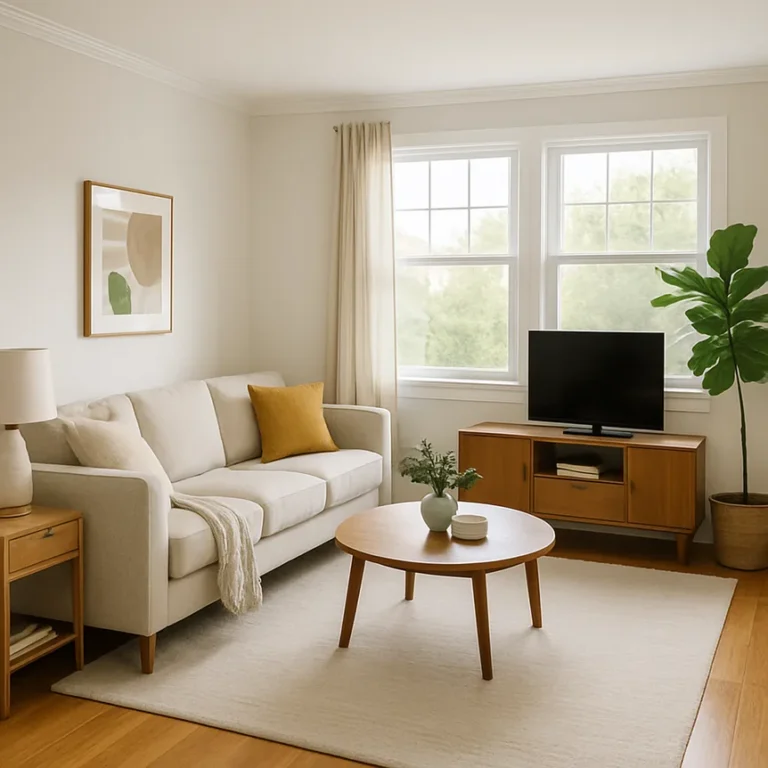
Best Modern Sofas: Comfort Meets Clean Design

By Tereza Hower | Published March 9, 2026 | Updated September 7, 2026

The sofa is the most expensive piece of furniture most people buy for a living room, and it is the one most likely to be wrong for the next decade. Get it right and the room around it has space to evolve; get it wrong and every other piece is fighting it.
A good modern sofa earns its keep with proportion before pattern, frame before fabric, and seat depth before color. The picks below are organized by price tier rather than by retailer, with the form factors that consistently outperform the alternatives at each level.
A modern sofa is a low-profile upholstered piece with clean lines, minimal ornamentation, and either tapered or block legs. Standard widths run 72, 84, or 96 inches; standard seat depths run 18 to 22 inches. The form is built to be the visual anchor of the room without demanding attention.
Modern Sofas Compared
The fundamentals are the same at every price: solid frame, decent suspension, decent foam, decent fabric. What changes is how long each holds up under daily use. Skip any budget sofa without visible legs, which almost always hides a stapled particleboard frame.
| Tier | Form to look for | Frame and suspension | Cushions | What to expect |
|---|---|---|---|---|
| Budget | 84-inch square-arm, visible wood legs | Hardwood and engineered wood, sinuous springs | Linen blend, removable covers | Cushions compress in two to three years |
| Mid-range | Lower arms (8 to 10 in), tapered solid wood legs | Solid hardwood, 8-way hand-tied on better picks | High-density foam wrapped in down | Five to eight years; six to ten week lead time |
| Premium | Deep-seated sectional with chaise (24 in plus) | Solid hardwood, hand-tied suspension | Down or down-alternative over high-density foam | Built for lounging rather than upright seating |
What Makes a Sofa Modern
A modern sofa earns the label by what it leaves out as much as by what it includes. The form is honest about its materials, restrained in its silhouette, and proportioned to the room rather than to a catalog photograph.
- Clean lines with minimal ornamentation: no carved arms, no skirted bases, no tufted scrollbacks
- Straight or slightly tapered arms: typically 4 to 8 inches wide; rolled-arm silhouettes belong to traditional sofas, not modern
- Honest materials: solid hardwood frames (kiln-dried beech, oak, or maple), 8-way hand-tied or sinuous-spring suspension, high-density foam over down-wrap cushions
- Neutral or considered color: gray, ivory, oat, walnut leather; bold colors are a styling decision, not a default
- Comfortable seat depth: 18 to 22 inches for everyday seating; 24 inches and up reads as a “lounge” sofa for sprawling and napping
- Block or tapered wood legs: visible legs read more modern than fully skirted bases; a 4-inch minimum height keeps the silhouette light
Modern Sofas by Price Tier
Sofas at every price tier share the same fundamentals: solid frame, decent suspension, decent foam, decent fabric. What changes with price is how long each of those holds up under daily use, and how customizable the result can be. The three tiers below cover almost every modern living room a household might be furnishing.
Budget: Square-Arm Sofa in Linen-Blend
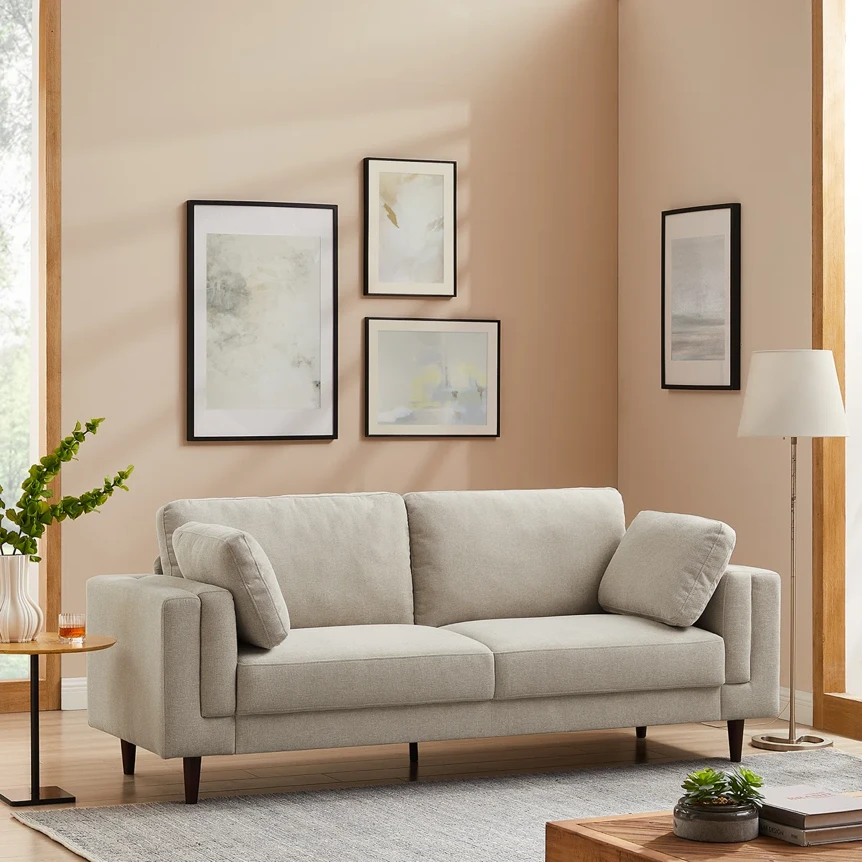
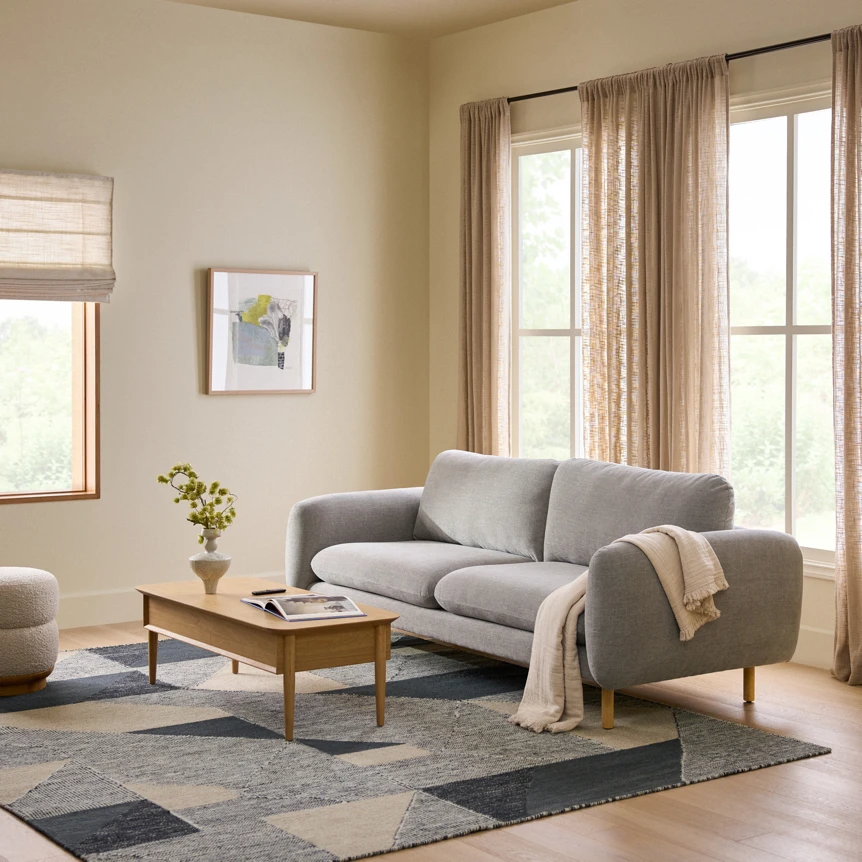
The budget tier of modern sofas centers on the 84-inch square-arm form in a neutral linen-blend upholstery, with sinuous-spring suspension over a hardwood-and-engineered-wood frame. Plan for cushions to compress within two to three years of daily use; this is the price the budget tier extracts. The right pick at this level has a removable cushion cover (so the upholstery can be cleaned or eventually swapped), a frame guarantee of at least one year, and a seat depth no shallower than 19 inches.
Avoid box-shaped budget sofas without visible legs. They almost always hide a stapled-particleboard frame; the visible legs that more reputable brands include exist partly to signal that the underlying construction is solid wood. A square-arm form in oat or pale gray linen-blend, with four wood legs and a single bench cushion or two-cushion configuration, is the safest pick at this price.
Mid-Range: Mid-Century-Leaning Modern Sofa
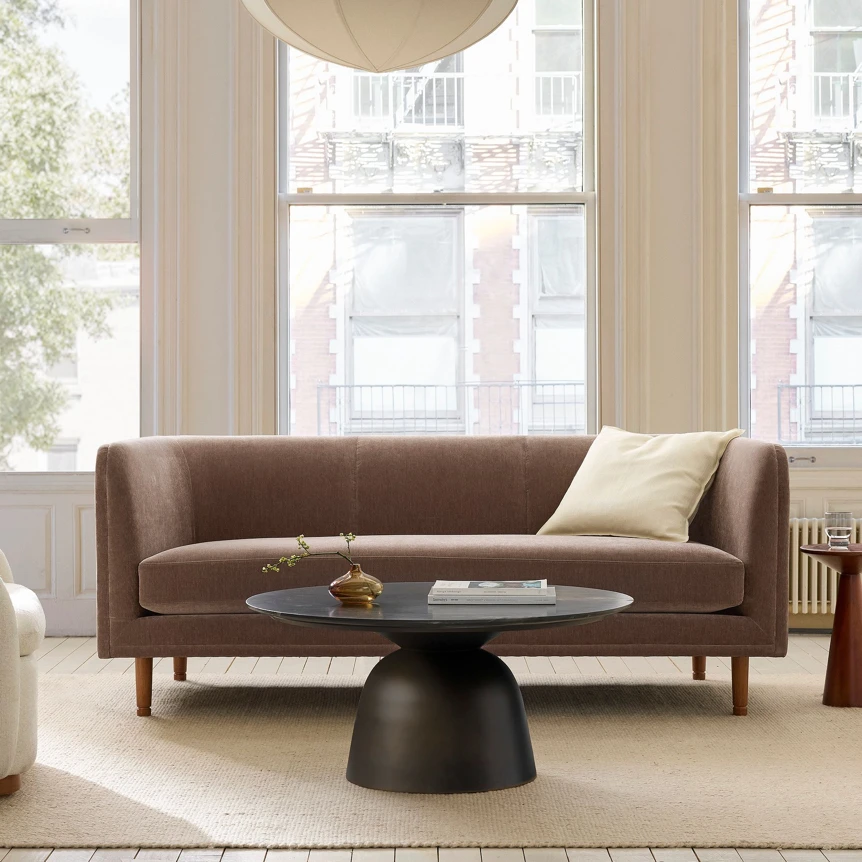
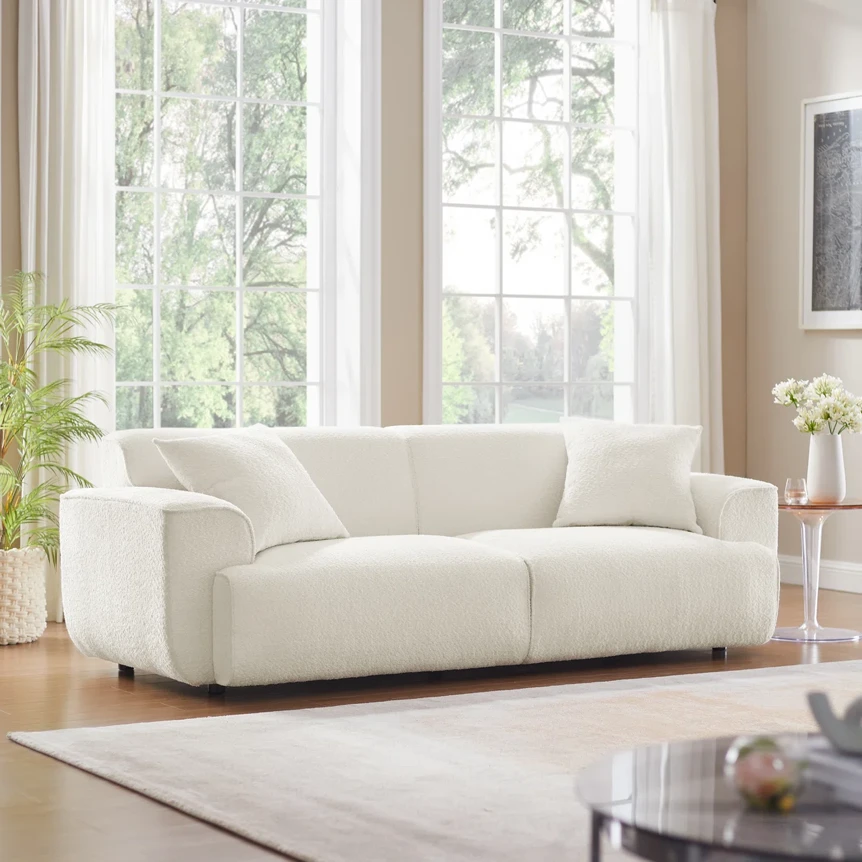
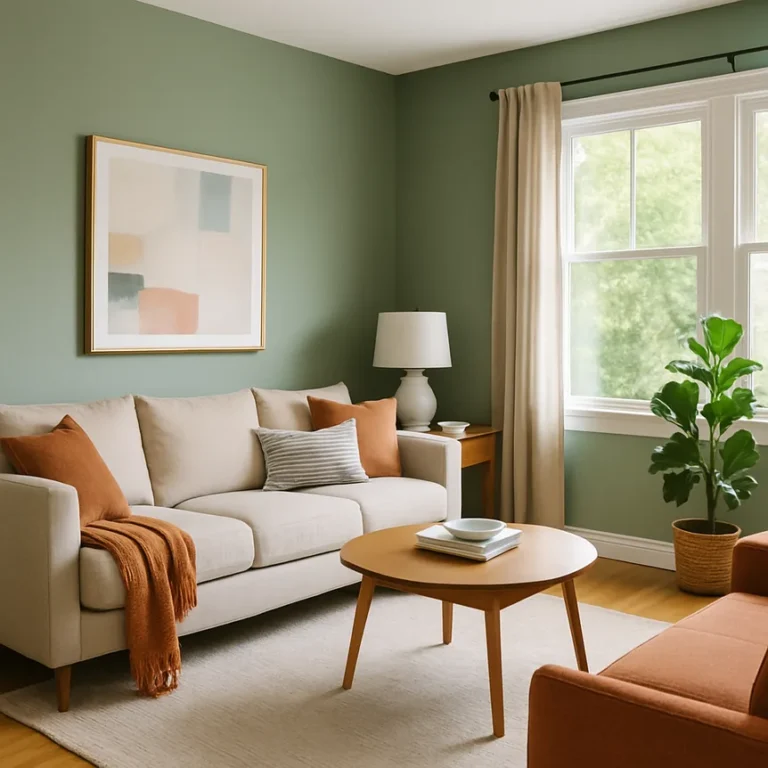
The mid-range tier rewards a slightly different silhouette: lower arms (8 to 10 inches), tapered solid-wood legs visible at the base, and a pulled-back back cushion that reads more “mid-century-modern” than the squared-off budget form. Solid hardwood frames become standard at this tier; sinuous springs give way to 8-way hand-tied suspension on the better picks. Cushions are typically high-density foam wrapped in down or down-alternative, which lasts five to eight years before noticeable compression.
The lead time at this tier (six to ten weeks for most pieces) is the real cost beyond the price. Plan the rest of the room around the sofa rather than the other way around: the coffee table and side tables can be acquired in two-week windows once the sofa lead time is set.
Premium: Deep-Seated Sectional with Chaise
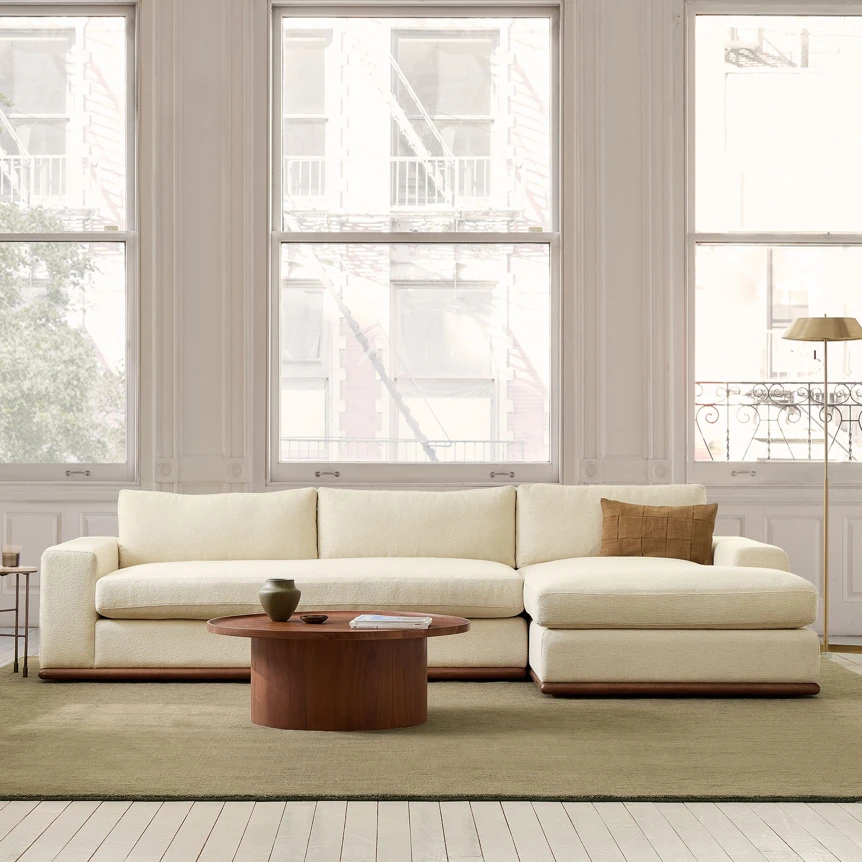
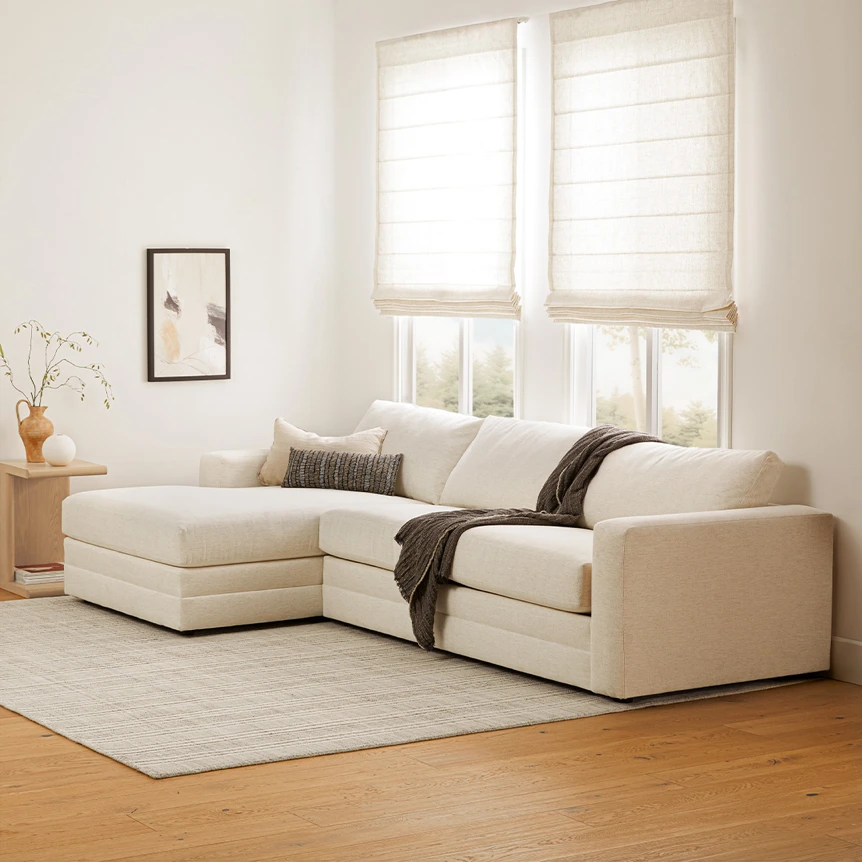
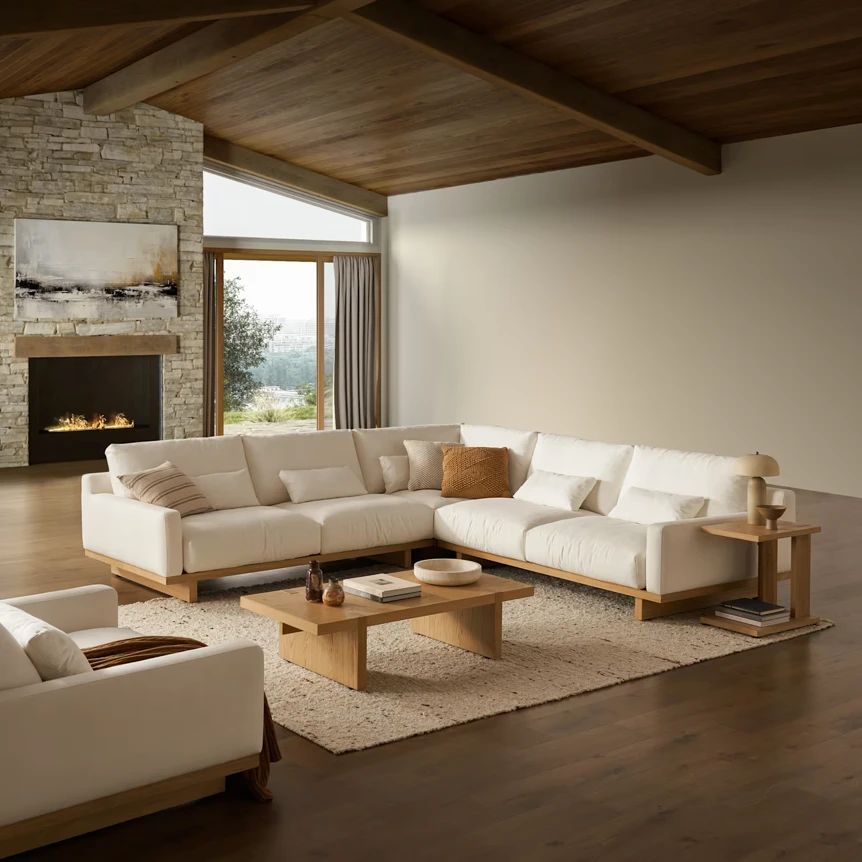
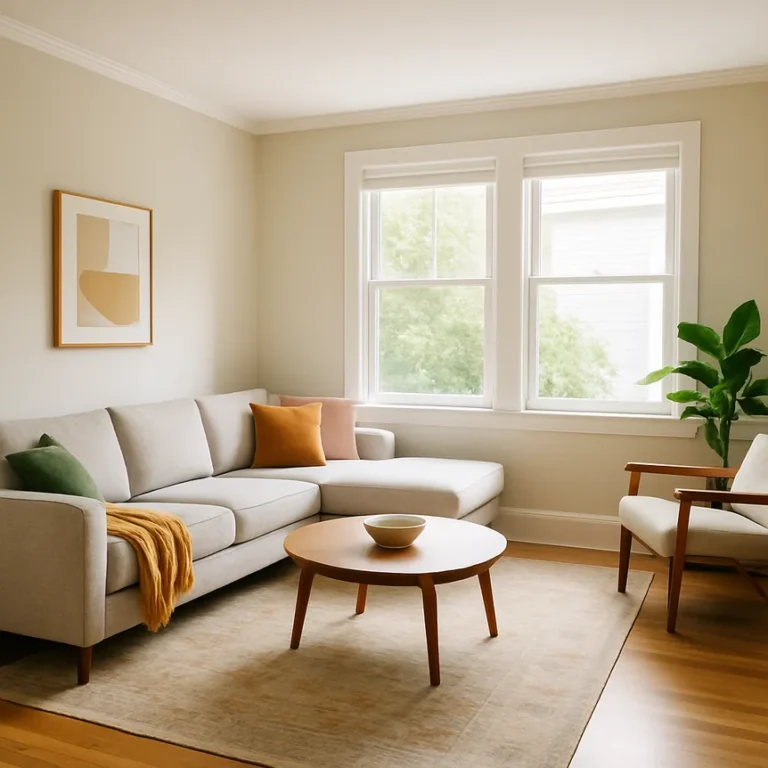
The premium tier of modern sofas is dominated by deep-seated sectionals (24-inch-plus seat depth) with a single chaise extending off the main body. The form is built for actual lounging rather than upright seating: think movie nights, naps, and hosting a fourth person without anyone perching on the floor. Frames at this tier are kiln-dried hardwood throughout, suspension is 8-way hand-tied, and cushions are high-density foam with a down or feather-blend wrap that holds shape for a decade or more.
Customization is the real upgrade. Most premium sofas at this level let you specify the chaise side (left or right facing), the leg style and finish, the cushion firmness, and the upholstery from a catalog of 50 to 200 fabrics. The lead time runs eight to fourteen weeks; budget for it. A premium sofa at this construction level should outlive several rounds of room redesign, which makes the per-year cost lower than the headline price suggests.
How to Choose the Right Modern Sofa
Measure the Space and the Doorway
Measure the room first, the doorway second, and the path between them third. A 96-inch sofa that fits the room but not through the front door is a costly mistake to undo. Standard widths are 72, 84, and 96 inches; sectionals add 30 to 40 inches of chaise. Mark the footprint on the floor with painter’s tape before ordering, walk around it, and sit at the spots where the cushions will land.
Match the Fabric to How You Actually Live
Households with kids or pets need performance fabric or leather; everything else stains, snags, or absorbs odors within a year. Single-occupant or low-traffic households can choose more delicate materials (linen, velvet, cotton-down blends) and accept the maintenance burden as a styling cost. The honest question is not what fabric you prefer but what fabric you will still be happy with in five years.
Test in Person Where Possible
Showroom testing is the part most online buyers skip and most online buyers regret. Sit on the sofa for at least five minutes (twenty if the showroom allows it), in the position you actually sit at home: feet on the floor, leaning back, then with your feet up. Check whether the seat depth lets your knees clear the front edge comfortably; press into the back cushion and feel for whether it offers structured support or sags.
Check the Return Policy Before Ordering
Online furniture companies vary widely in return policies. The reasonable ones offer 30 to 100 days with a partial restocking fee on used pieces; the better ones include white-glove delivery and a no-fee return window of at least two weeks. Read the policy before clicking buy, not after the sofa arrives in the wrong color.
Plan for Lead Time
Budget sofas usually ship within two weeks. Mid-range sofas often have six to ten week lead times. Premium customizable sofas can run twelve to twenty weeks. Buy the sofa first if it has a long lead, then build the rest of the room around it; the alternative is staring at an empty floor for three months while the rug, lamps, and side tables you bought first sit unused around it.
Fabric Recommendations
Fabric is the single most important durability decision after the frame. The four families below are the materials that consistently outperform their alternatives at each price tier.
- Linen: soft, breathable, and visibly natural; the right choice for low-traffic rooms or single-occupant households. Avoid it in any home with kids or pets, where every spill and pawprint shows.
- Linen-blend (linen with cotton, polyester, or rayon): the best value in the budget tier. Holds up better than pure linen, takes color more uniformly, and cleans more reliably. The middle ground that most modern sofas at the entry level should be specced in.
- Performance fabric: stain-resistant, fade-resistant, and easy to clean with water and mild soap. The honest pick for households with kids, pets, or anyone who eats dinner on the sofa. Slightly stiffer than untreated upholstery, but the lifespan justifies the small loss in hand-feel.
- Leather: the most durable upholstery option, expensive upfront but cheaper per year over a decade or more. Top-grain leather softens and develops patina with age; bonded leather flakes within three years and should be avoided regardless of price.
Common Mistakes Most Sofa Buyers Make
The mistakes below are the ones that turn an expensive purchase into a piece you tolerate rather than enjoy. They are also the ones most likely to be invisible until the sofa is already in the living room.
- Buying for a showroom posture, not a home one. Showroom sitting is upright and brief; living-room sitting is sprawled and hours-long. Test in the position you actually use at home, not the position the showroom encourages.
- Underestimating the doorway. A 96-inch sofa that does not clear an 80-inch hallway turn is the most common return reason for online furniture purchases. Measure every passage between the front door and the room.
- Choosing the wrong fabric for your household. A linen sofa in a home with two cats and a toddler is a planned disaster. Match fabric durability to actual life conditions, not aspirational ones.
- Skipping the suspension question. Webbing-only suspension is what cheap sofas use; sinuous-spring or 8-way hand-tied suspension is what holds shape over years. Ask the question before buying.
- Pairing with a coffee table that is the wrong height. A sofa with a 17-inch seat needs a 16 to 18 inch coffee table, not a 24-inch one. Form follows function; the coffee table that ships in the same listing is rarely the right one.
A Note on Price
Budget modern sofas start around $500 and run to $1,200; the marginal-quality jump is biggest between $700 and $1,000 and smallest above $1,500. Mid-range sofas cluster between $1,500 and $3,500, with most of the durability and customization at the high end of that band. Premium customizable sectionals start around $3,500 and can run past $10,000 for the largest custom configurations. Buy the sofa once and well; it is the piece you sit on every day for a decade or more, and it sets the proportion the rest of the room is sized to.
Bringing It All Together
A modern sofa earns its keep over years rather than months. Choose one with a frame that will outlast the upholstery, a fabric that will outlast its first stain, and a silhouette that will outlast the current furniture trend. The picks above are not exhaustive; they are the form factors that consistently outperform the alternatives at each price tier. For more ideas in the same spirit, see modern wall decor & art ideas.
For the broader argument about how the sofa fits into a fully designed modern living room, see the complete guide to modern living room design. For the next decisions after the sofa: a modern area rug to ground the seating zone, layered living-room lighting that works alongside it, and the color schemes that pair best with each upholstery family. 3 classic living room decor items covers what to check before paying for one.
Frequently Asked Questions
What is the standard width of a modern sofa?
Standard modern sofa widths are 72 inches, 84 inches, and 96 inches. A 72-inch sofa seats two adults comfortably; an 84-inch sofa seats three with no one perching on the arm; a 96-inch sofa seats three plus a child or pet at the end. Sectionals add 30 to 40 inches of chaise depending on the form.
Linen, performance fabric, or leather for a modern sofa?
Performance fabric is the most reliable choice for households with kids or pets; leather is more expensive upfront but cheaper per year over a decade. Linen is for low-traffic rooms or single-occupant households where the maintenance burden is acceptable. Avoid bonded leather at any price; it flakes within three years and is rarely worth its discount.
How long should a quality modern sofa last?
A budget modern sofa typically holds shape for two to three years before cushion compression becomes obvious. A mid-range sofa with 8-way hand-tied suspension and a hardwood frame should hold for five to eight years. A premium sofa with the same construction plus higher-density foam and a down-wrap cushion can last a decade or more before reupholstering becomes worth considering.
What seat depth should I look for in a modern sofa?
Aim for an 18 to 22 inch seat depth for everyday upright seating; 24 inches and up reads as a ‘lounge’ sofa for sprawling and napping. Anyone over six feet tall should test the deeper end of the range; anyone shorter than five feet five inches should test the shallower end. Seat depth is the single specification most likely to make a sofa feel wrong, and it is the hardest to compensate for with cushions or pillows.