Modern Side Tables & Accent Furniture: Complete Your Living Room

By Tereza Hower | Published March 9, 2026 | Updated September 5, 2026
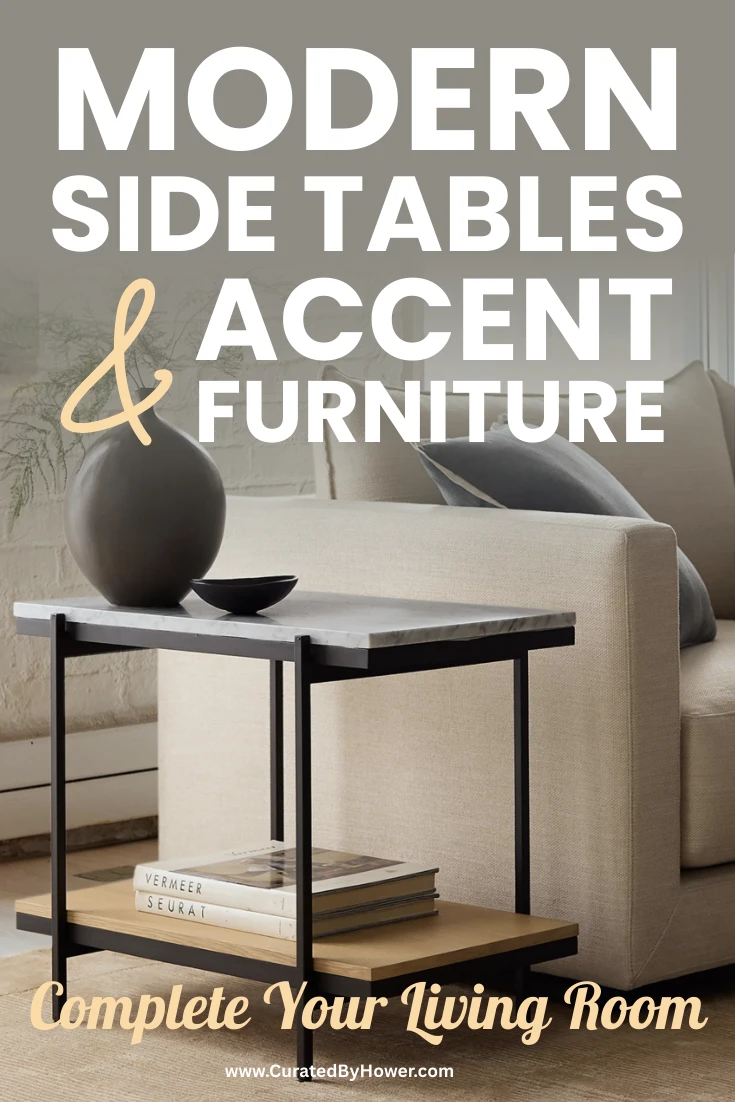
Sit down on almost any sofa and reach for the drink beside you. The glass sits two inches below the arm, the lamp wobbles when you shift your weight, and the table has been like that for a decade because nobody ever asked whether the original buy was right. A modern side table is the smallest piece in the room and the one your hand touches most, which is why it is worth getting right before the room is called finished.
This guide covers what makes a side table modern, how tall and wide it should be, how to tell a table that lasts from one that wobbles by spring, and which of the other accent pieces genuinely earn floor space around it. Where it makes a call, it is a buying call: which form, which material, which size, and in what order.
Key Takeaways
- A modern side table is a small, unornamented accent surface in honest materials, sized to the sofa it sits beside.
- The top should land within an inch of the sofa arm, which usually means 22 to 26 inches tall.
- Solid wood or thick gauge powder coated steel outlasts veneer and thin metal.
- Three or four accent pieces that get used read composed; six that fill space make the room feel smaller.
- Buy the sofa first, the side tables second, and the coffee table third, because each one sets the proportions of the next.
What Is a Modern Side Table?
A modern side table is a small accent surface, typically 22 to 26 inches tall, made from a single honest material or a wood and metal pairing, with no ornament. It sits beside a sofa or accent chair as a lamp base, a drink rest, and a visual counterweight to the larger furniture. The right one lands level with the sofa arm and stays quiet enough that the lamp on top is the visible piece, not the table.
Modern earns the label by what it leaves out. The form is geometric: a round pedestal, a square block, or a slim rectangle with no carved legs or applied trim. The materials are honest: solid walnut or oak, powder coated steel, marble, or a deliberate pair of two of them. Proportions are pegged to the sofa it sits beside, not chosen on their own.
Side tables look like the last decision in a living room and behave like the first, because they carry the objects that touch your hands every day. For how the piece fits the wider plan, the complete guide to modern living room design covers layout, the rug, and the relationship between sofa, coffee table, and side table.
How Tall Should a Side Table Be?
Within an inch of the sofa arm. Most modern sofas carry their arms at 24 to 26 inches, which puts the right side table between 22 and 26 inches tall. Shorter, and every drink takes a small downhill journey; taller, and the table competes with the sofa’s silhouette instead of supporting it.
Top size matters almost as much as height. The surface has to hold a lamp base, a glass, and a paperback at the same time, which works out to roughly 14 inches square or 16 inches in diameter at minimum.
| Placement | Height to aim for | Minimum top | What to check |
|---|---|---|---|
| Beside a sofa | Within 1 inch of the arm, usually 22 to 26 inches | 14 inches square or 16 inches round | Lamp shade bottom near shoulder height when seated |
| Beside an accent chair | Within 1 inch of the chair arm, usually 20 to 24 inches | 14 inches round | A cup goes down without lifting the elbow off the arm |
| Behind the sofa (console) | Level with the sofa back, 28 to 34 inches | 10 to 14 inches deep, 60 to 72 inches long | Doubles as a room divider in open plans |
| Small room or second surface | 22 to 26 inches, as a nesting pair | 14 to 18 inches round | Smaller table tucks under the larger one |
If the sofa is not yet chosen, decide it first. The table’s height follows the arm, and the guide to the best modern sofas covers the proportions the table will have to follow.
How to Tell a Quality Side Table from a Cheap One
The price gap between a side table that lasts a decade and one that wobbles after six months is rarely about wood species or metal gauge alone. Five checks separate them, and all are easier to run in person than from a photo.
- The seam test. Solid wood shows continuous grain that wraps over the edge; veneer over particleboard shows a repeating pattern and a visible seam line at the cut edge.
- The wobble test. A quality table holds a full glass of water without a ripple when someone sits down hard on the sofa beside it.
- Joinery. Dovetail or mortise and tenon joints in any drawer, and wood screws rather than staples where the legs meet the top.
- Weight. A metal frame table that feels surprisingly light in the box almost always wobbles in use. Thicker gauge holds a lamp still.
- Edge finish. A softly rounded edge survives feet, vacuum cleaners, and toddlers. A sharp 90 degree edge chips, and shows every chip.
Modern Side Tables by Style
Five forms cover almost every modern living room. The table is the short version of which one to buy for which problem.
| Form | Best for | Material | Price range | Watch for |
|---|---|---|---|---|
| Round wood pedestal | The safe default in any modern room | Solid walnut or oak | $150 to $800 | Lighter oak shows marks; sharp edges chip |
| Wood top on ceramic base | Adding texture without adding metal | Walnut top, ribbed ceramic | $250 to $700 | Top diameter under 14 inches is too small to use |
| Metal frame with wood top | Rooms with black metal already in play | Powder coated steel, solid wood | $200 to $600 | Thin gauge and hidden welds mean wobble |
| Two tier storage table | Rooms with no built in storage | Marble or acrylic, black steel | $200 to $700 | Open shelf is visible storage; acrylic scratches |
| Nesting pair | Small rooms and flexible second surfaces | Solid wood or steel and wood | $200 to $500 | Both tables must share one wood family |
Minimalist wood pedestal tables
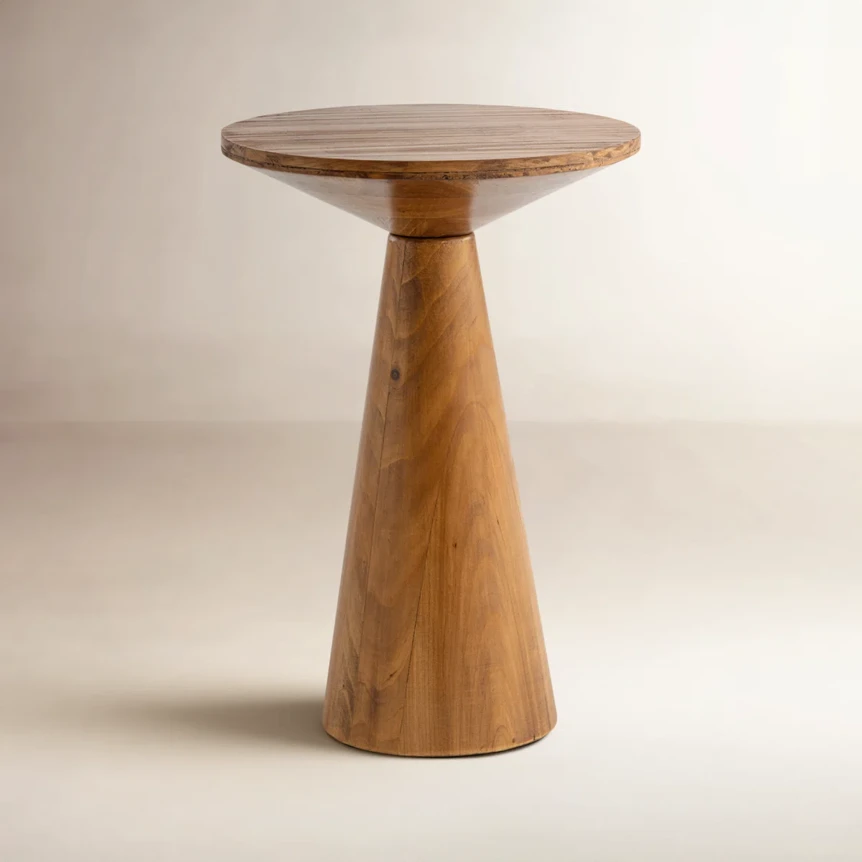
A simple round walnut or oak pedestal in the 18 to 22 inch diameter range is the safest pick for a modern living room on any budget. The tradeoff is finish: darker walnut hides daily marks better than lighter oak in the same form, and a rounded edge outlasts a sharp profile.
Skip glass tops for a table that will actually be used. Every glass leaves a ring and a metal lamp base marks the surface within weeks; glass belongs on a table that is looked at, not leaned on.
Mid century pedestal with ceramic base
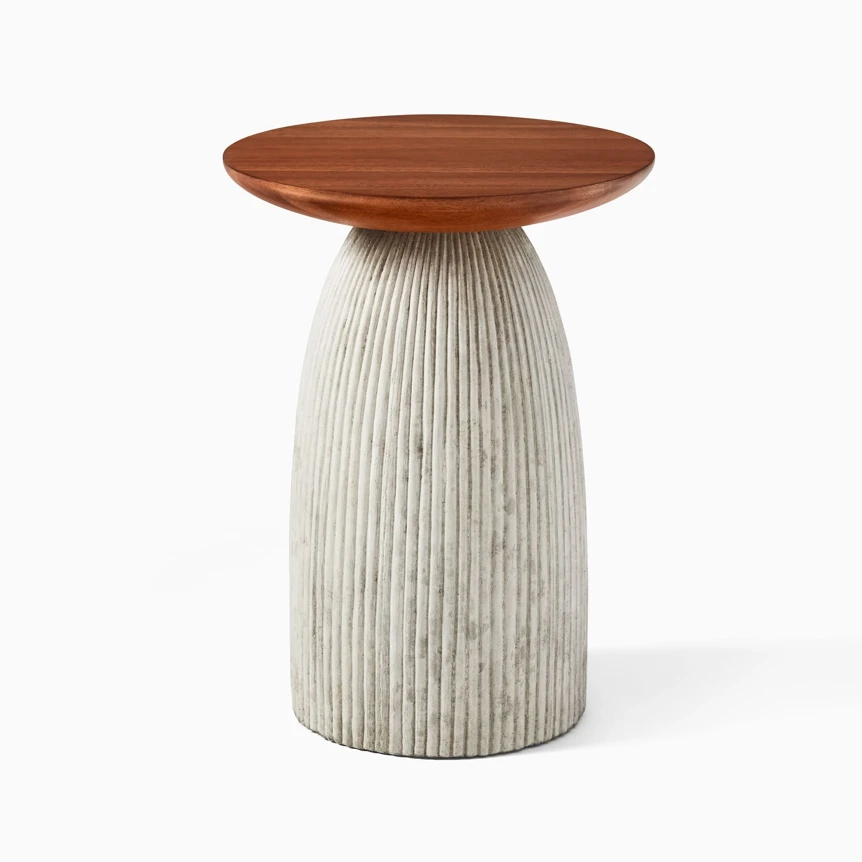
A walnut top on a turned ceramic base is the most versatile form in this category. The warm wood plays against any neutral palette, and the ribbed ceramic adds texture without committing the room to a metal. Look for a top between 14 and 18 inches across and a height within an inch of the sofa arm.
Metal and wood combination tables
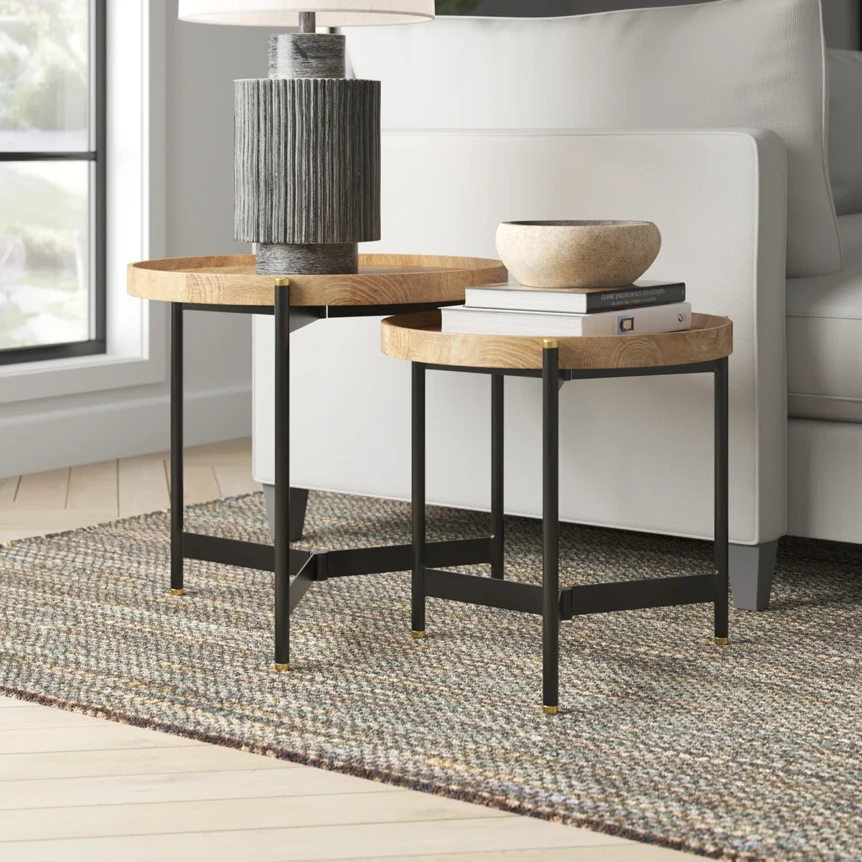
A metal frame with a solid wood top sits closer to industrial than to modern proper, but a powder coated black frame reads as both more contemporary and more durable than polished chrome. Check the welds on a thin looking frame; a clean, visible weld bead is a good sign. Avoid raw or oiled steel in rooms with humidity swings, because it spots and rusts under coasters.
Storage side tables
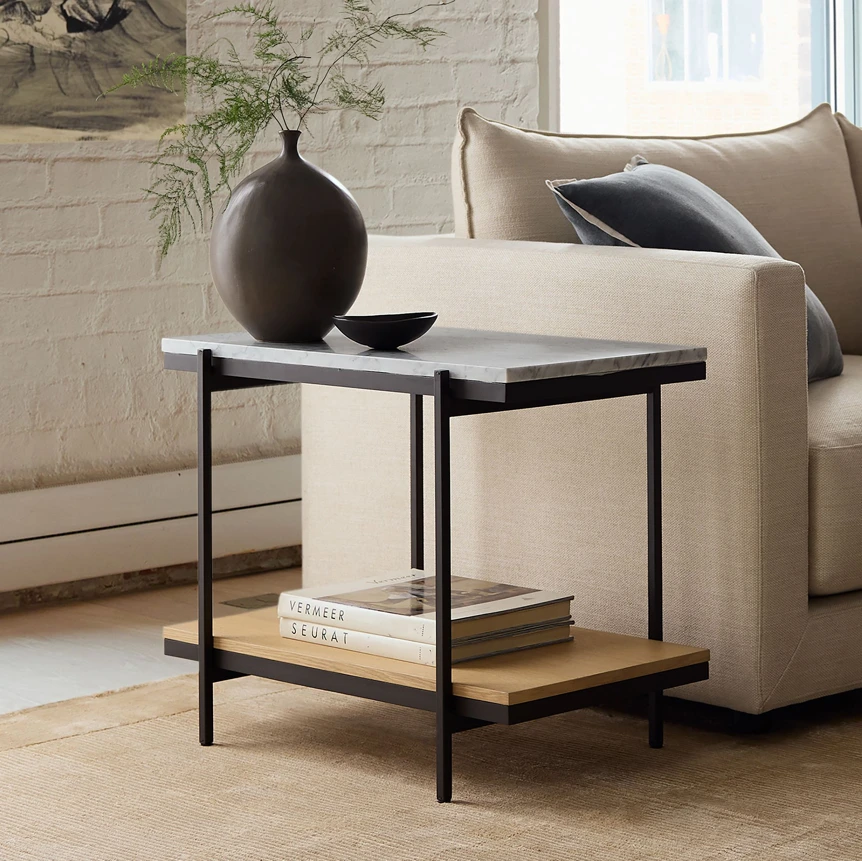
A two tier table with a marble top and a slim black steel frame is the most functional pick for a living room without built in storage. The open lower shelf takes books, a tray, or a basket. The honest tradeoff is that an open shelf is visible storage, so whatever lands on it becomes part of the room’s styling whether you meant it to or not.
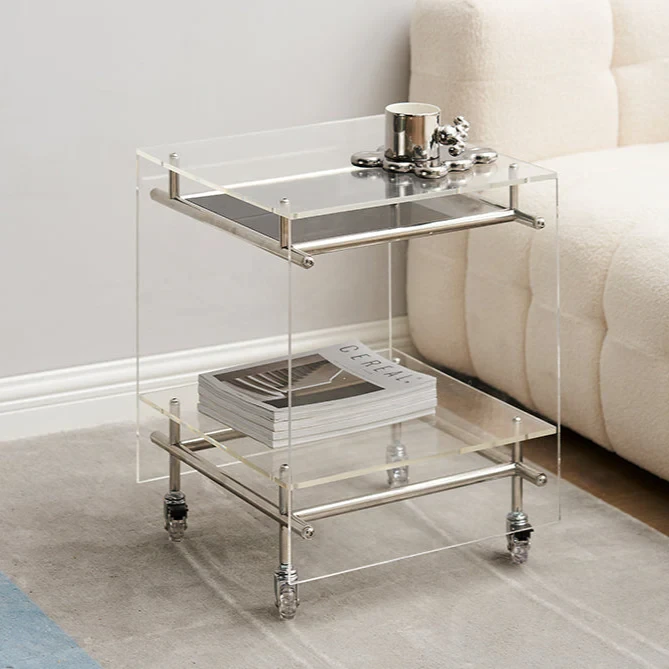
A clear acrylic version of the same two tier form suits a small or visually busy room where another wood and metal piece would crowd the eye. The acrylic nearly disappears, and the price is wiping fingerprints every few days.
Nesting tables
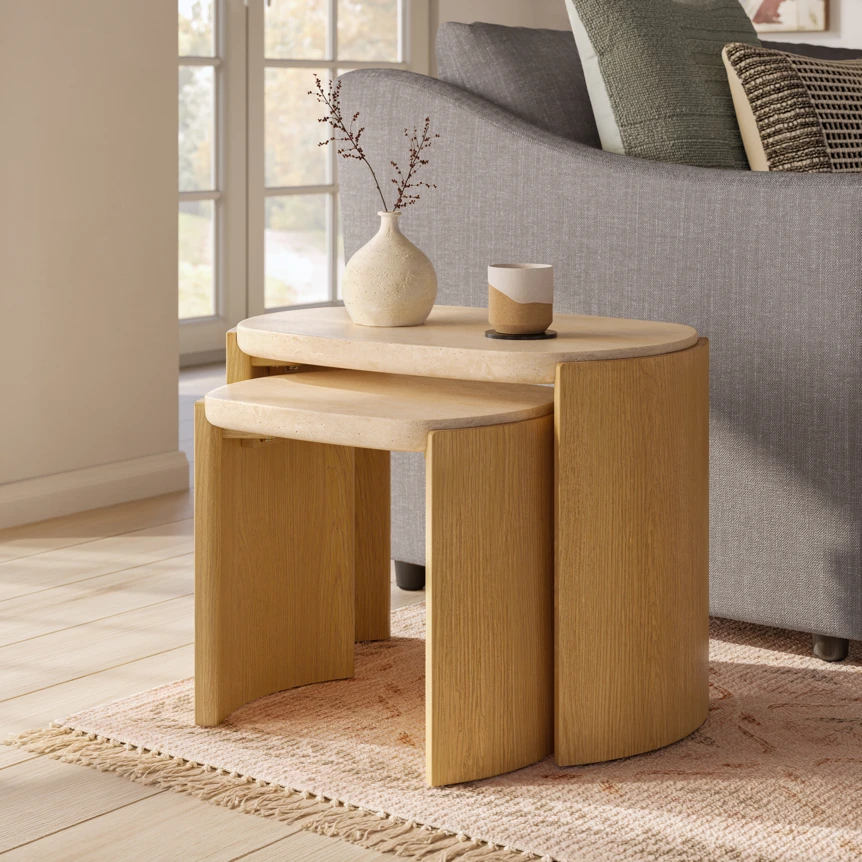
Nesting tables earn their place in a small living room or any room that needs a flexible second surface. The smaller table tucks under the larger one and pulls out when a guest needs a coaster, which is the whole reason to choose them over a fixed pair. Keep both tables in one wood family, and pair the wood to the floor rather than to the sofa frame.
Where Should a Side Table Go?
Next to the sofa
The most common placement, and the one to get right first. Set the table at the end of the sofa with its top within an inch of the arm, and choose a lamp that puts the bottom of the shade near shoulder height when you lean back.
That lamp is one layer of several. The guide to modern lighting for living rooms covers how it works alongside ambient and accent fixtures.
Behind the sofa
A console behind a freestanding sofa works hardest in narrow rooms or open plans where the sofa back faces a hallway or dining zone. Aim for a height level with the sofa back, around 28 to 34 inches, so the two read as a pair rather than as unrelated objects.
Flanking a chair
A side table beside an accent chair defines a reading corner. The table should be low enough that someone in the chair can set a cup down without lifting their elbow off the arm. The rule is the same as for the sofa: within an inch of the arm.
In a corner
A corner table fills dead floor and gives a tall lamp somewhere to live. If the rug under the seating does not reach it, the table reads as marooned, and the fix is a rug generous enough to bridge the gap. The guide to the best modern area rugs covers sizing the rug to the seating zone.
Which Accent Pieces Earn Their Place?
Accent furniture earns floor space by being used, not by being seen. Three or four pieces that each do a job read composed; seven in one average room read like a showroom floor and make it feel smaller than it is. Take what the room needs from the pieces below and leave the rest.
Console tables
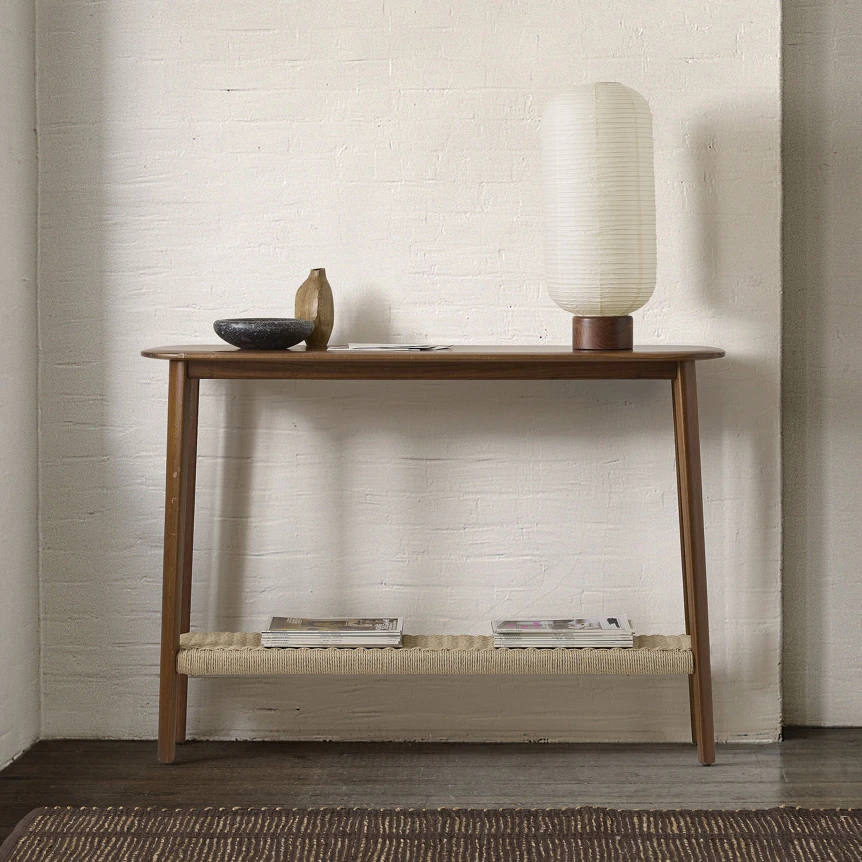
A 60 to 72 inch wood console with a lower shelf is the most functional default behind a sofa; a slimmer steel frame version reads more architectural and holds less. Hang one large piece of art above it rather than a gallery cluster. The guide to modern wall decor and art ideas covers framing and proportion for that single piece.
Accent chairs
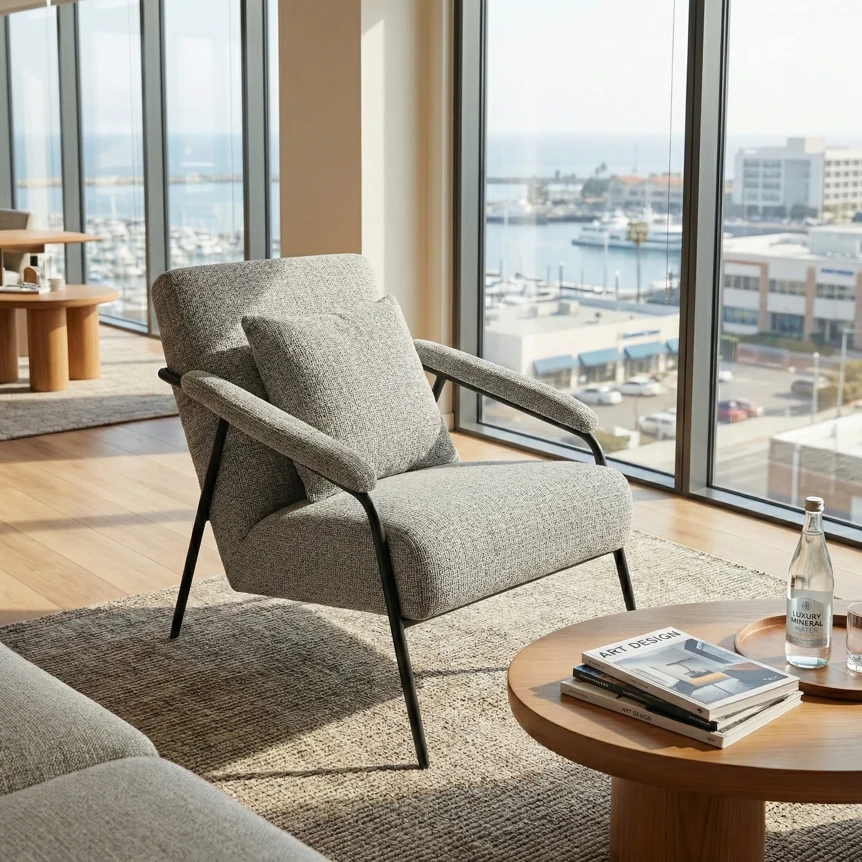
A low profile lounge chair in the same warm neutral family as the sofa is the most reliable pick. Mid century silhouettes need enough wall space to hold their angled stance, and a contemporary wingback is the right call only when the room needs a vertical anchor opposite the television.
Sitting in the chair is the part most people skip when shopping online, and the part I always made customers do in person. A chair chosen for how it photographs is the most expensive way to fill a corner.
Ottomans
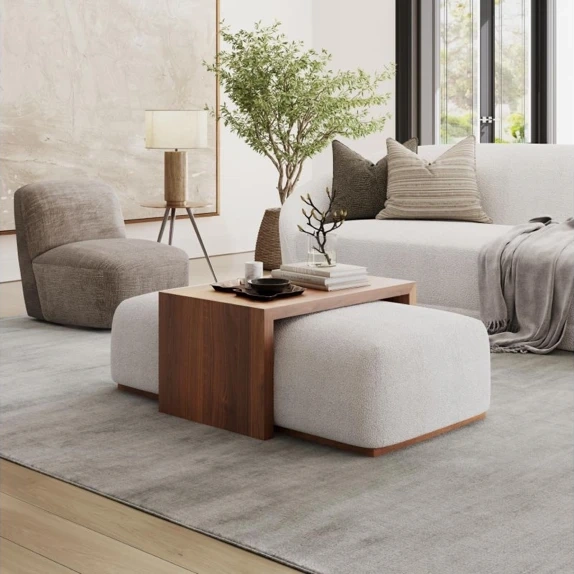
An ottoman is a footrest, extra seating, or a coffee table stand in with a tray, and the best ones do all three. A round upholstered pouf in the sofa’s neutral family is the most flexible default. A leather drum ottoman reads warmer and ages more interestingly than fabric.
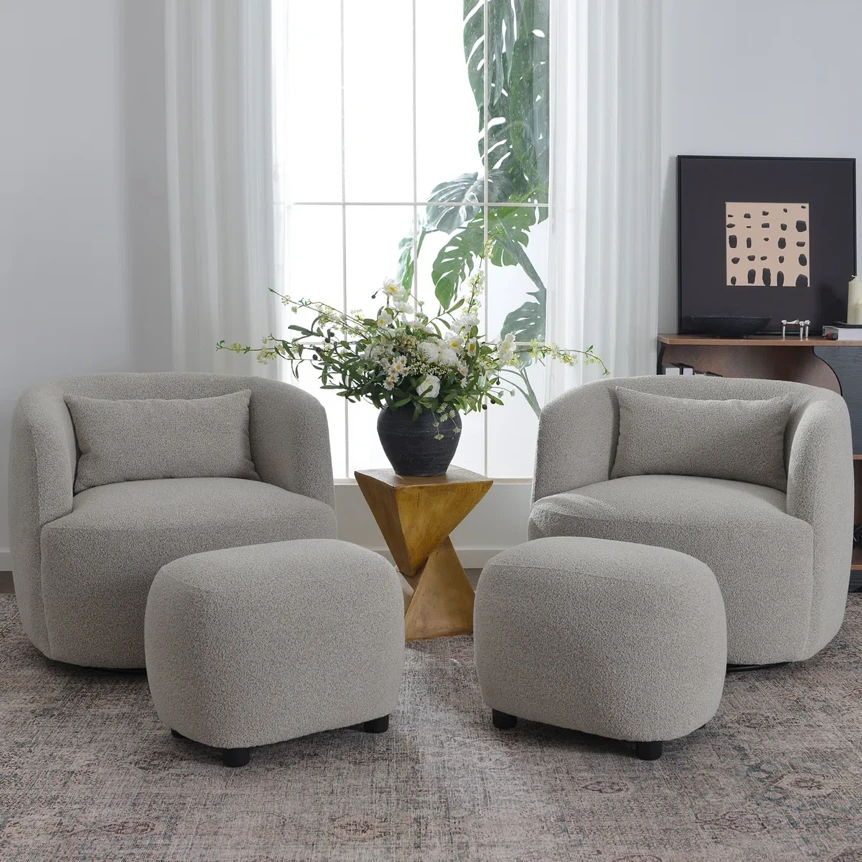
A pair of small ottomans tucked beside the chairs reads more intentional than one oversized piece mid floor, and they slide out as seats when the room fills up. Look for a solid hardwood frame under the upholstery; foam and fabric with no internal joinery sags within a year.
Bookcases
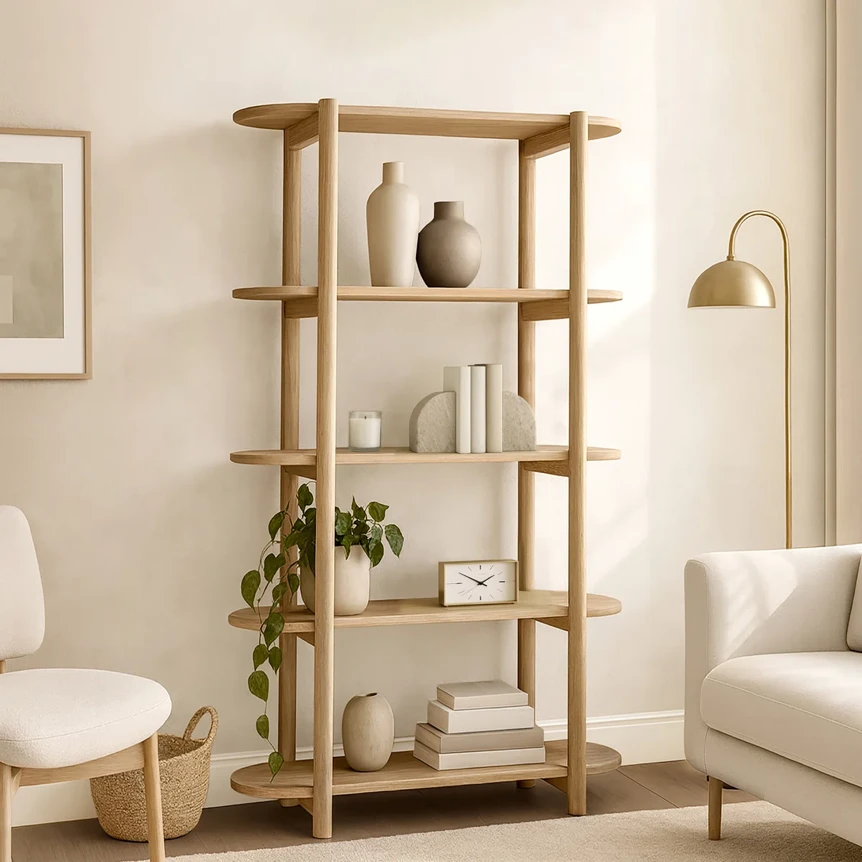
A tall solid wood bookcase in oak or walnut anchors a room more reliably than a metal frame, because the visual mass reads as architecture rather than as another piece of furniture. Floating shelves work when the wall is the feature and the books are the decor.
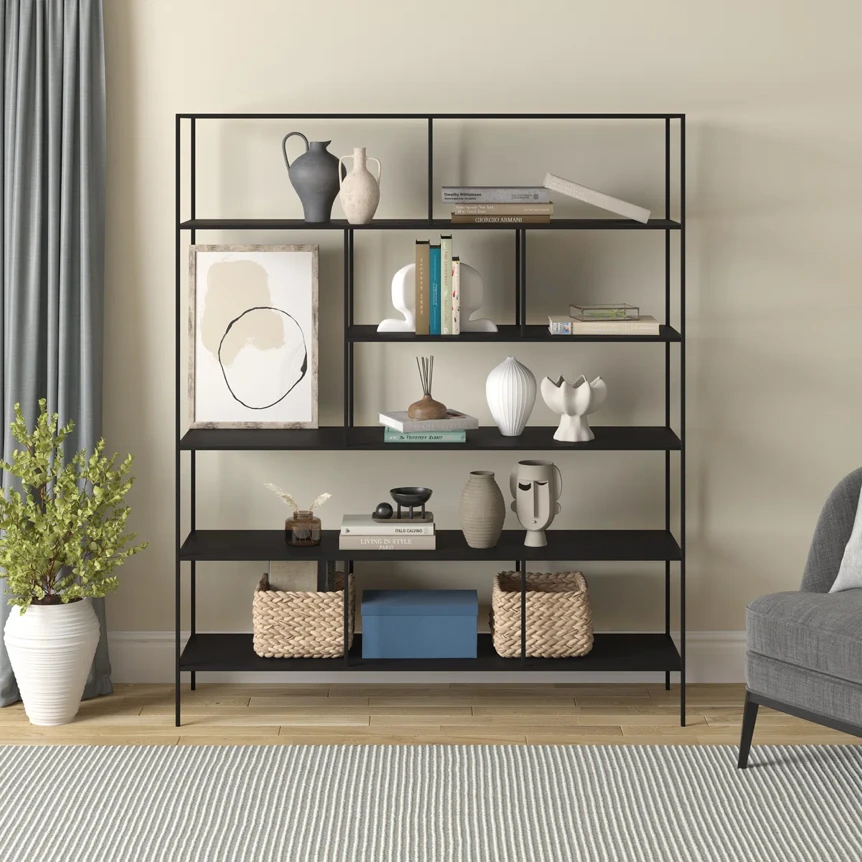
A black metal bookcase is the right pick when the room already carries a metal coffee table base, a steel framed mirror, or a metal side table. For what goes on the shelves once the case is chosen, the complete guide to bookshelf styling covers horizontal stacks, negative space, and odd numbered groupings.
Common Mistakes With Side Tables and Accent Furniture
- Buying the side table before the sofa. The table’s height follows the arm. Chosen first, it is wrong for a decade.
- Matching instead of coordinating. A walnut side table works on an oak floor when the undertones agree and fights a bleached pine floor no matter what the catalog photo suggested. The modern color schemes for living rooms guide sets out warm neutral combinations that hold up under lamp light.
- Adding pieces to fill floor. The room you stop adding to is usually the one that finally looks composed.
- Glass or acrylic where hands land. Both photograph well and neither hides a ring or a scratch.
- Letting the rug stop short. A side table or chair that sits off the rug reads as marooned. Size the rug to the whole seating zone, corners included.
- Ignoring visual weight. A heavy sofa on one wall wants a tall bookcase or a tall lamp opposite it. A low television wall wants a chair and side table across from it.
A Note on Price
Solid wood pedestal side tables start around $150 and run past $800. The jump in quality is biggest between $200 and $400 and smallest above $600, which makes the middle of that range the place to spend. Nesting pairs cluster between $200 and $500.
Consoles, accent chairs, and bookcases scale faster, with a console alone running from $400 to several thousand depending on solid wood content and joinery. Buy the side tables once and well; they outlast almost everything else in the room.
The Order to Buy In
Sofa first, side tables second, coffee table third, then one accent piece at a time as the room proves it needs one. Each purchase sets the proportions of the next. A modern living room that works is rarely the one with the most pieces; it is the one where each piece does a real job, within an inch of where it needs to be.
For the decision that comes right after the side tables, the guide to modern coffee tables that actually work covers height, clearance, and material against the sofa you already own. For the whole room in one place, return to the modern living room design guide.
Frequently Asked Questions
What is a modern side table?
A modern side table is a small accent table, usually 22 to 26 inches tall, in a simple geometric form with no ornament, made from solid wood, powder coated metal, marble, or a pairing of two. It sits beside a sofa or chair to hold a lamp, a drink, and a book, and it is sized so the top lands within an inch of the sofa arm.
How tall should a side table be next to a sofa?
Within an inch of the sofa arm. Most modern sofas have arms at 24 to 26 inches, which puts the right side table between 22 and 26 inches tall. A table much shorter than the arm makes setting things down awkward, and a table much taller competes with the sofa’s silhouette.
Should the side table match the coffee table?
The two should sit in the same material family without being identical. A walnut side table next to a walnut coffee table reads matched and slightly dated, while a walnut side table beside a darker oak coffee table reads layered. Match the undertone, warm with warm and cool with cool, rather than the exact finish.
What size side table works in a small living room?
Nesting pairs and small round tables of 14 to 18 inches across are the most space efficient. Square tables fight the rounded sofa arm in a small room and take more floor than their visual size suggests. A single 16 inch round in walnut or oak is the size I would default to if you are unsure.
Do I need a side table on both sides of the sofa?
Symmetry is a styling choice, not a rule. A pair flanking the sofa reads more formal and suits a square room with the sofa centered on one long wall. A single table on the more used side is more practical in a smaller or asymmetric room, especially if the other end of the sofa opens onto a walking path.