Best Modern Storage Benches: A Room by Room Guide

By Tereza Hower | Published February 28, 2026 | Updated September 7, 2026
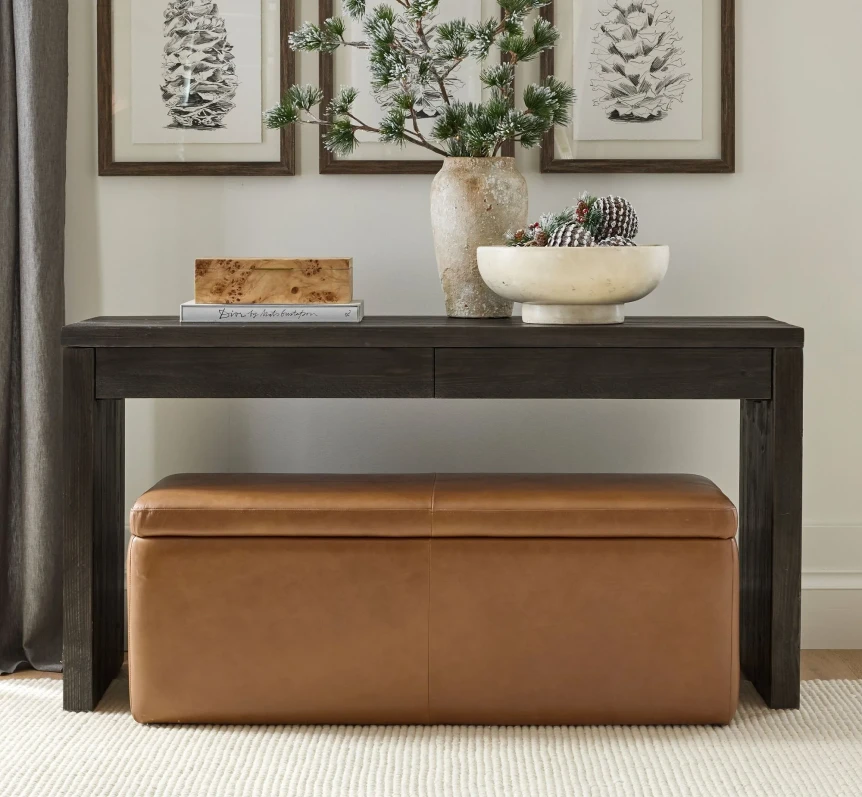
The storage bench was the piece customers most often underestimated at Hower Furniture. They’d shop it as decoration, expect it to handle daily life, and come back six months later when the hinges sagged or the upholstery flattened. The honest truth is that a storage bench is the most actively used piece of furniture in most homes. It gets sat on, dropped onto, kicked open, slammed shut, and asked to hide things adults don’t want guests to see. The benches that survive this are the ones built for it.
This guide covers how to choose a storage bench that holds up, which mechanism (flip top, drawer, or open shelf) makes sense for your room, and how to size it correctly for the entryway, foot of the bed, or living room. The product matters less than getting these decisions right.
Where a Storage Bench Actually Earns Its Keep
Three rooms. Three different jobs. The same bench rarely works in all three.
Entryway
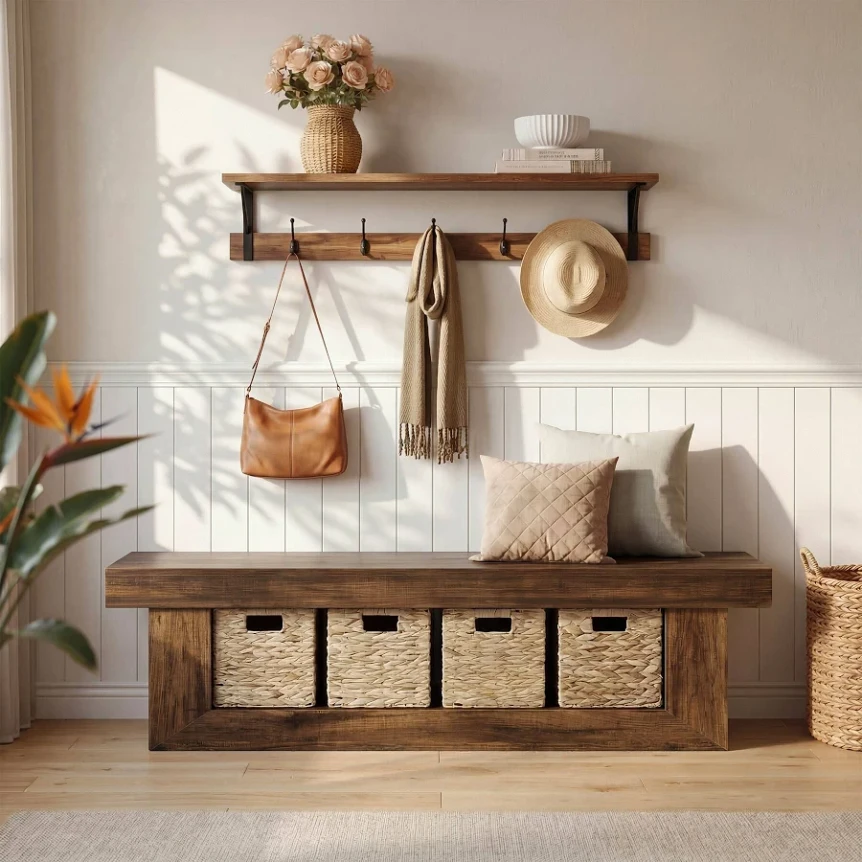
The entryway is where benches die fastest. Wet boots, dropped bags, kids climbing on it to reach a coat hook. You want a hard top surface (wood or faux leather, not velvet) and either a flip top with shoe storage below or a drawer base. A 36 to 42 inch bench is the right size for most entryways. Anything wider becomes a hallway obstacle. For more on the full entryway furniture conversation, our guide to entryway console tables covers the companion piece that often sits opposite a bench.
Foot of the bed
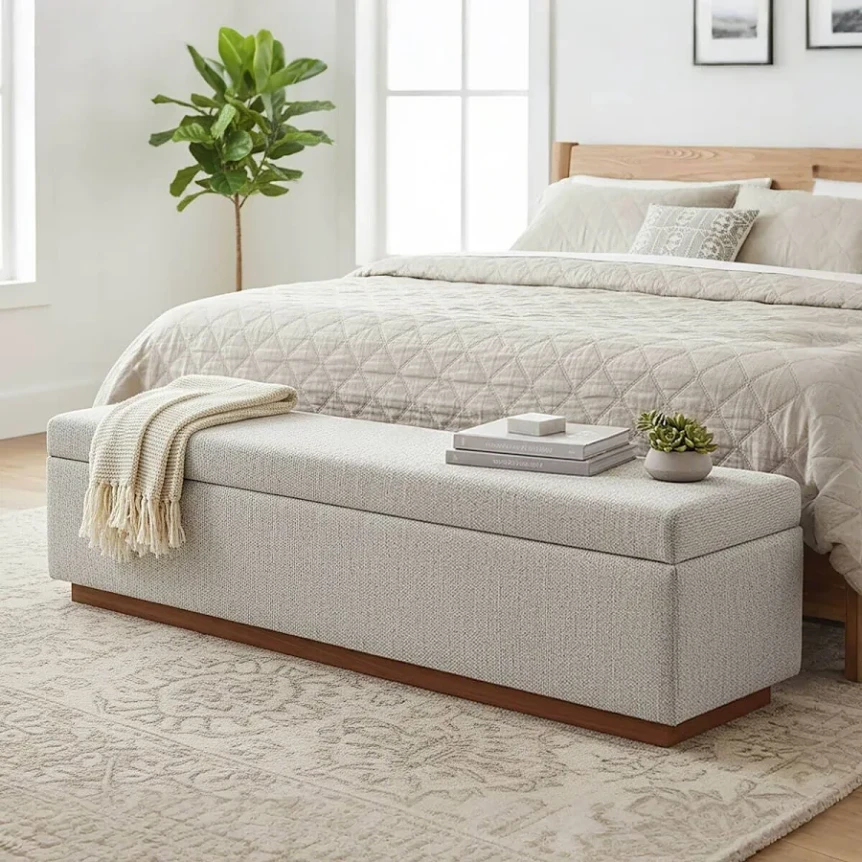
The bedroom bench is where upholstery makes sense. It is rarely sat on for long stretches, almost never wet, and usually visible in a styled photograph. Velvet, boucle, and linen all hold up here. Size to the bed: a queen wants a 50 to 60 inch bench, a king wants 60 to 72 inches. The bench should sit slightly narrower than the mattress, never wider. For the broader bedroom storage picture, see our smart bedroom storage guide.
Living room
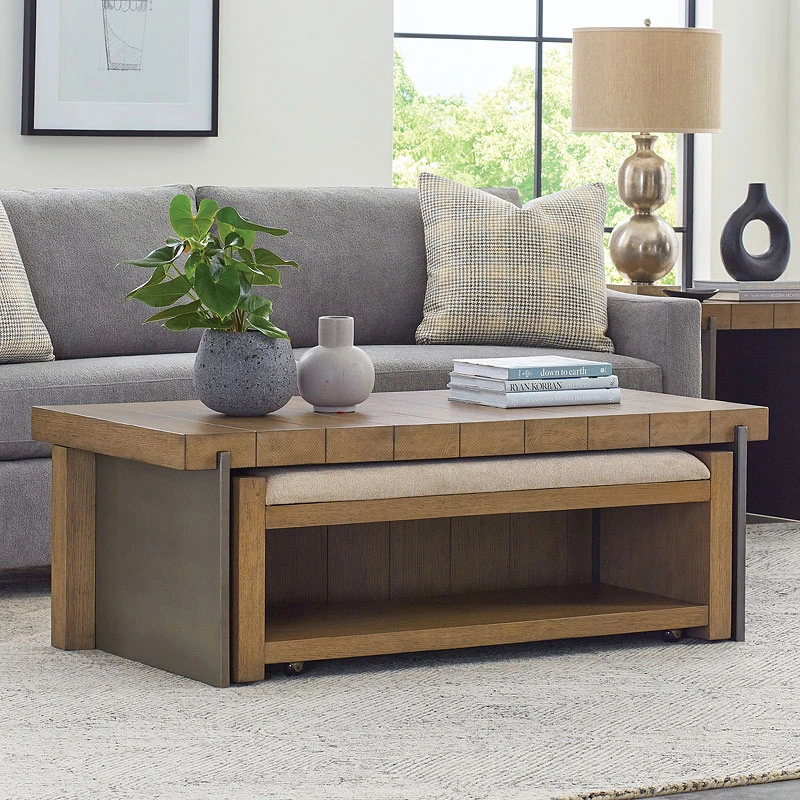
In the living room, a storage bench is doing two jobs at once: extra seating when guests come and a place to hide remotes, throw blankets, board games, and chargers. Look for a flip top with at least 4 cubic feet of interior capacity. The bench can serve as a coffee table substitute in smaller rooms, in which case the top surface needs to handle drinks and books, so faux leather or a hard wood top wins over upholstery.
The Four Storage Mechanisms, Honestly Compared
Flip top ottoman
The hinged seat lifts to reveal one large compartment underneath. Best for bulky items: blankets, pillows, comforters, seasonal coats. The footprint stays clean because nothing is visible from the outside. The catch is access: anything sitting on top has to come off first, and items at the bottom of a deep compartment get forgotten for years.
Choose this if: you want maximum storage and don’t need to dig in daily.
Drawer base
One or two drawers below the seat, accessed from the front. Great for shoes in an entryway or for daily use items. The seat stays usable while you grab what you need. Trade off: drawers need 18 to 24 inches of clearance in front to open fully, which limits where you can place the bench. They also fail faster than a flip top because slides take more abuse than hinges.
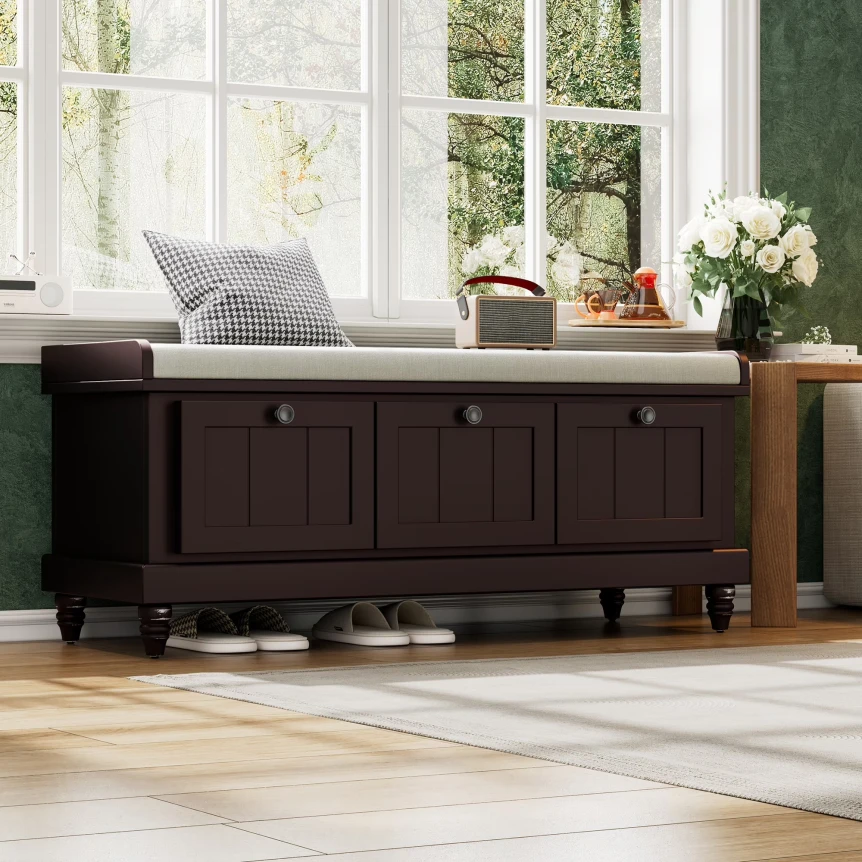
Choose this if: you need daily access to organized contents.
Open shelf with baskets
A shelf below the seat that holds baskets or bins. The most flexible option and the easiest to keep tidy because you can pull out a basket and bring it to where you need it. Lighter and usually cheaper than enclosed designs. Trade off: nothing is hidden. If your storage looks messy, the bench will look messy, regardless of how nice the baskets are.
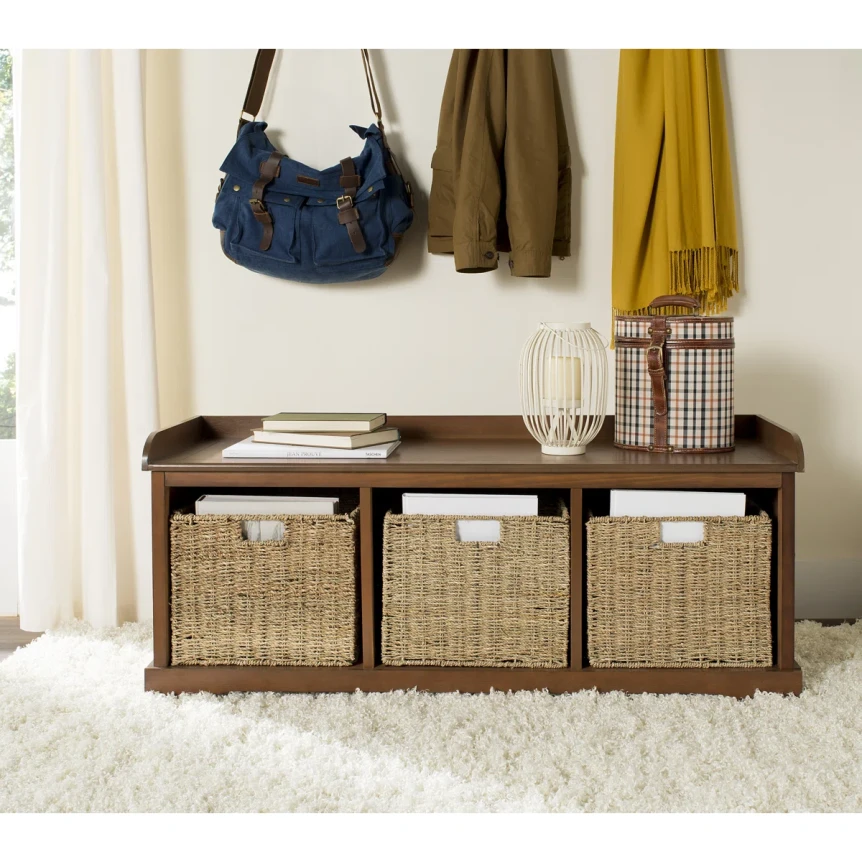
Choose this if: you have neat storage habits and want something easy to clean around.
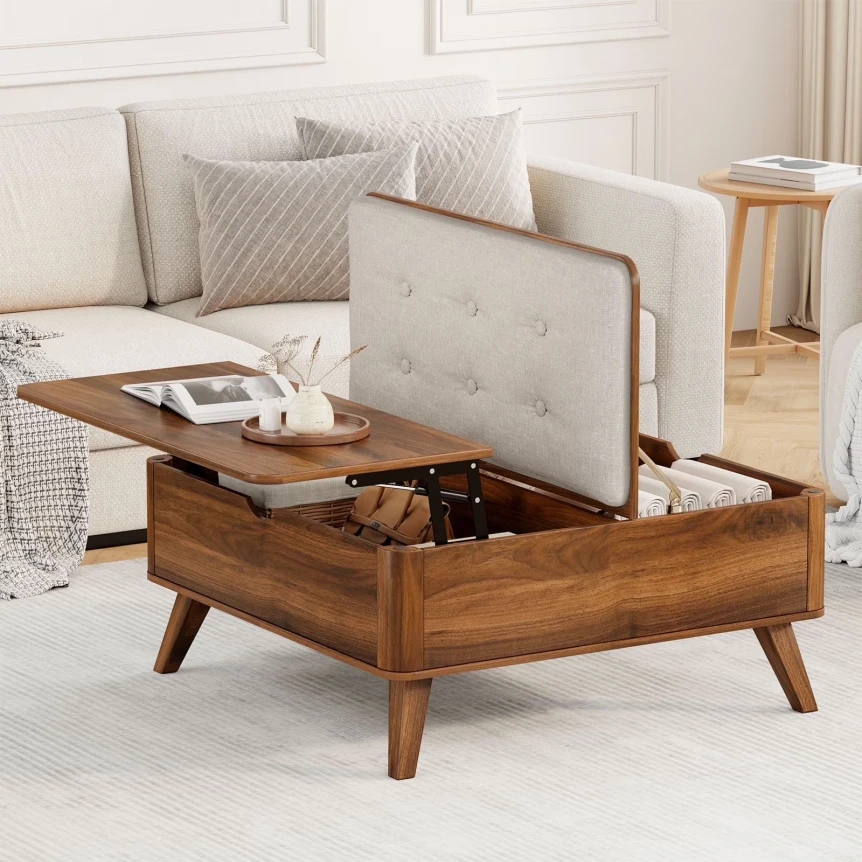
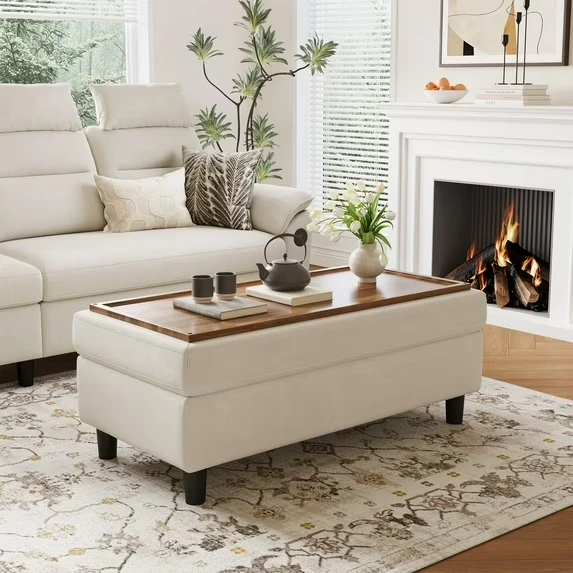
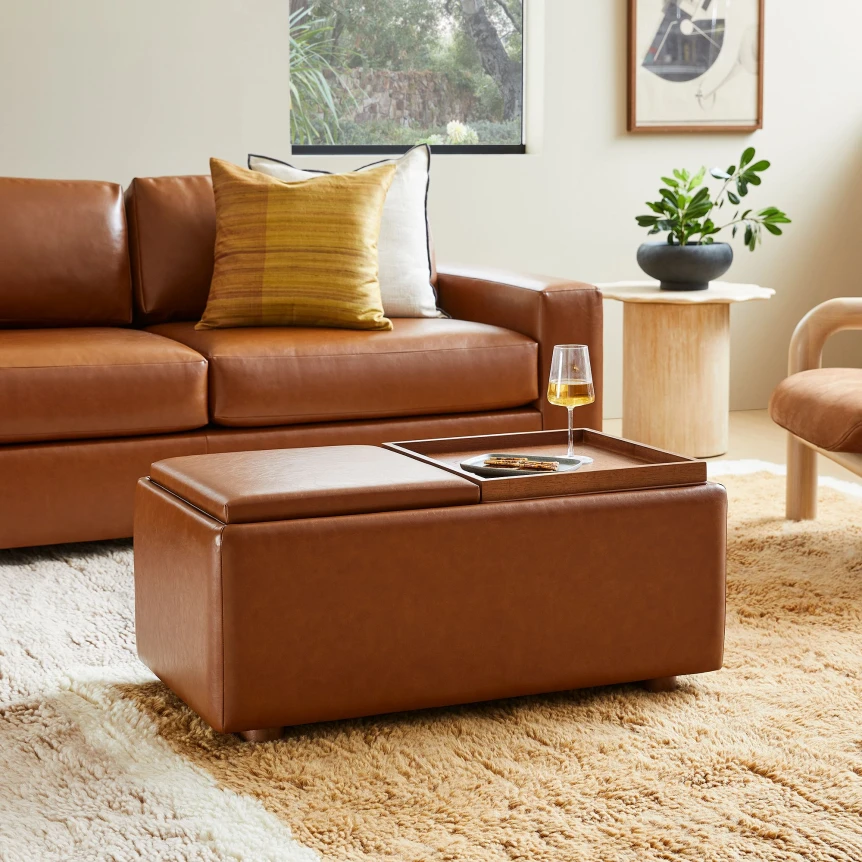
A newer hybrid: the seat cushion lifts to reveal storage, and a flat tray on top means you can keep drinks or books on the surface. Common in living room ottomans that double as coffee tables. Verify the lift mechanism (gas piston is best, friction stay second best) before buying. The cheap versions use spring hinges that fail within a year of regular use.
Choose this if: you want a coffee table substitute with hidden storage.
How to Tell a Quality Storage Bench From a Cheap One
This is the section that mattered most on the showroom floor. The price tag is unreliable. A $300 bench from a smart manufacturer will outlast a $700 bench from a hyped direct to consumer brand. Five things to actually check.
Open and close the lid five times. Quality benches use gas piston hinges or pneumatic stays that hold the lid open at any angle and close softly. Cheap benches use friction hinges or basic butt hinges that either slam shut or stay open in only one position. The slam test isn’t subtle; you’ll know within thirty seconds.
Press down on the seat, hard. A quality bench has a solid wood or thick plywood seat platform with high density foam (1.8 to 2.5 lb density) above it. Press down with both hands. If the seat has noticeable give or you can feel the platform flex, the foam is low density and the wood is thin. The seat will flatten within six months of regular use.
Check the upholstery seams. Run your hand along the edges. Quality upholstery has straight, evenly spaced stitching with no loose threads, and the fabric is pulled taut over the frame without bunching or visible staples. Cheap benches have wavy stitch lines and visible upholstery staples on the underside.
Look at the legs. Solid wood legs (oak, walnut, beech) screw directly into a hardwood frame. Cheap benches use plastic or hollow metal legs that thread into a particleboard frame, which means the legs eventually loosen and wobble. If the bench has metal legs, they should feel substantial and the welds should be smooth.
Lift one corner. A 48 inch upholstered bench with real frame construction should weigh 40 to 60 pounds. If you can lift it like a cardboard box, the frame is mostly engineered wood or stapled plywood and won’t survive being moved more than once or twice.
Upholstery: What Survives Daily Use
Not all fabrics are created equal, and the showroom photos rarely show the trade offs. Here’s what I’d watch for.
Performance fabrics (Crypton, Sunbrella, Revolution) are worth the upcharge in a household with kids, pets, or an entryway bench. They resist stains, repel liquid, and clean with water. The trade off is a slightly synthetic hand feel compared to natural fabrics, though the gap has narrowed significantly in the last few years.
Velvet looks rich and ages well in low traffic rooms (bedroom, formal living room). Polyester velvet is more durable than cotton velvet and easier to clean. Avoid velvet entirely in entryways. It crushes under repeated weight and shows water rings.
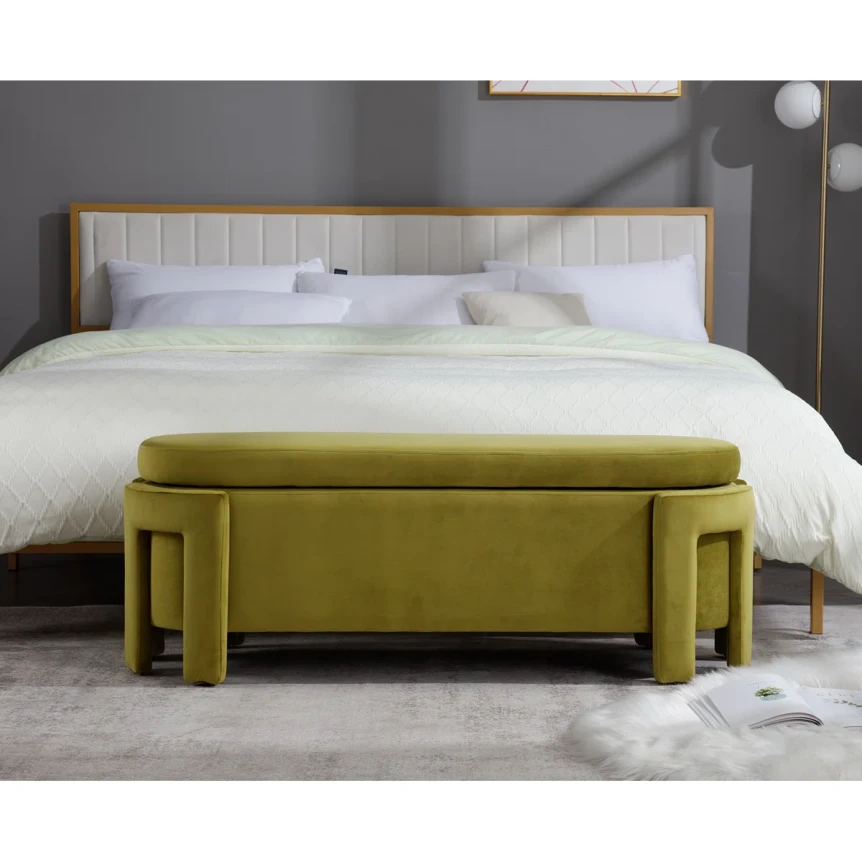
Boucle is the trend fabric of the moment but it pills. The looped texture catches on rough surfaces (jeans, dog claws, velcro) and pulls into loops that can’t be neatly trimmed. It’s a beautiful fabric for a bedroom bench that gets sat on lightly. It’s a poor choice for an entryway or a bench used as a footrest.
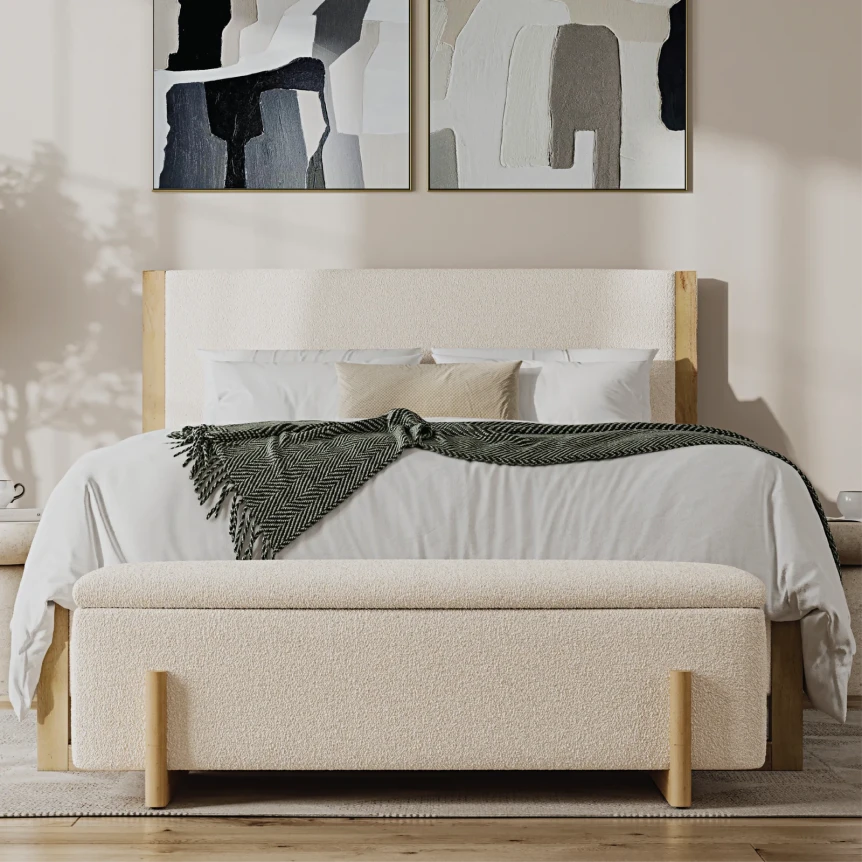
Linen and linen blends crinkle, which is part of the look. They show stains more visibly than synthetics but they age into something more interesting rather than just looking worn. Pre treated linens (some brands sell stain resistant versions) handle daily life better.
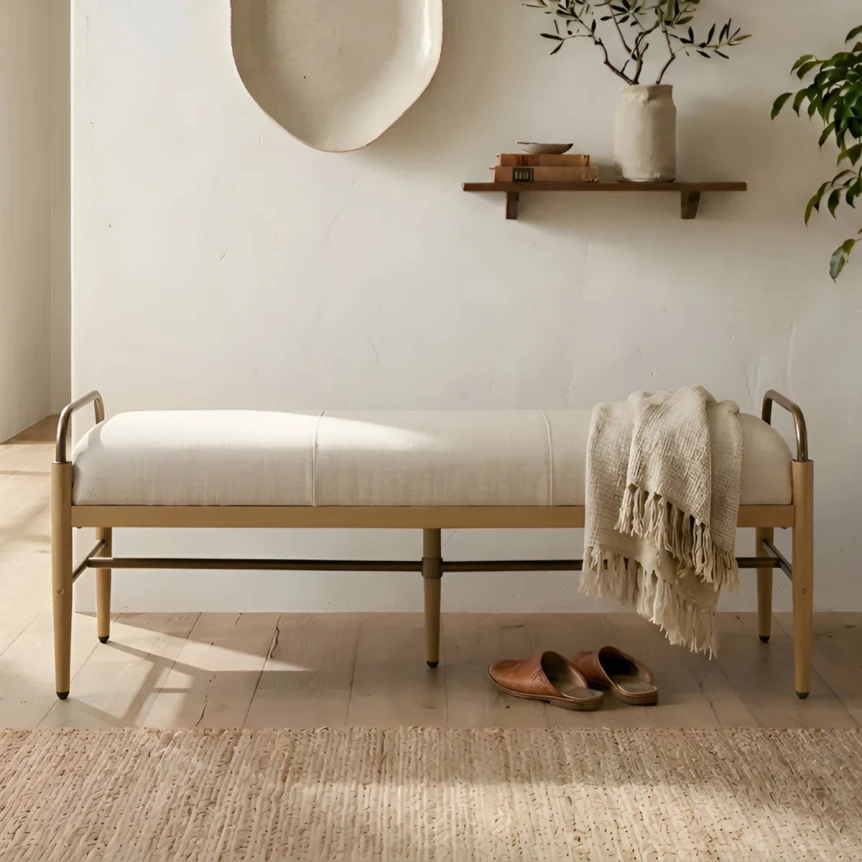
Faux leather is the most practical material for an entryway bench. It wipes clean with a damp cloth and resists water. Quality faux leather (look for “polyurethane” rather than “PVC” on the spec sheet) lasts five to ten years; cheap PVC faux leather cracks and peels within two.
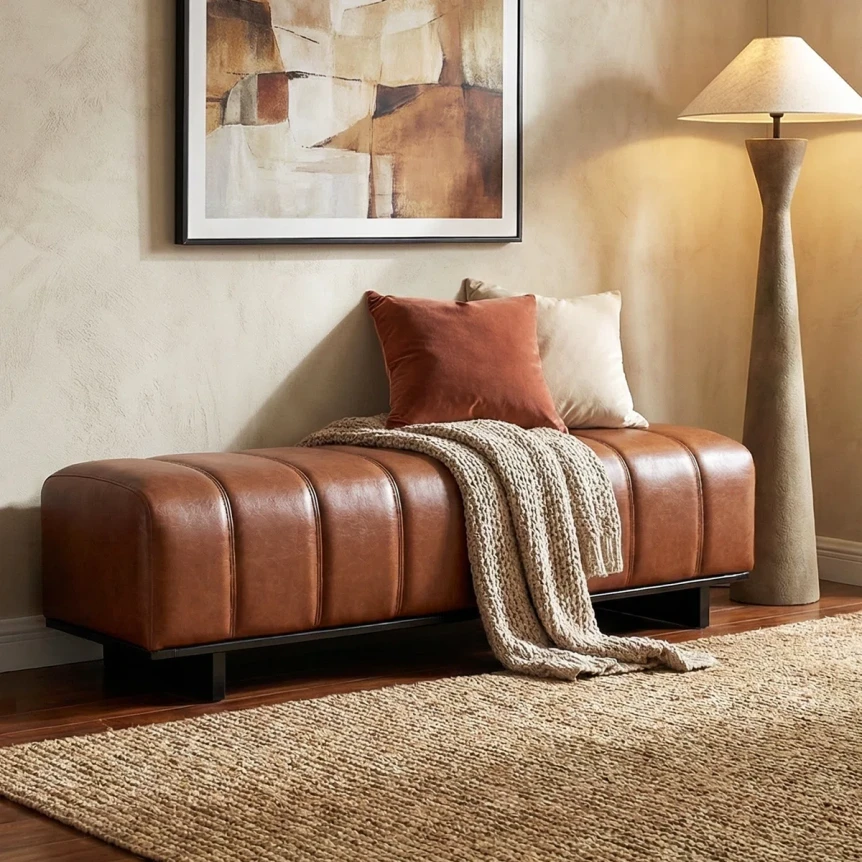
Sizing for Each Room
Quick reference numbers that will save you a return.
- Entryway: 36 to 42 inches wide, 14 to 16 inches deep, 18 inch seat height. Anything taller and shorter people can’t comfortably touch the floor while seated.
- Foot of a queen bed: 50 to 60 inches wide, 16 to 20 inches deep. Bench top should sit at or slightly below mattress height for visual balance.
- Foot of a king bed: 60 to 72 inches wide, 16 to 20 inches deep. Same height rule.
- Living room (in front of a sofa as a coffee table substitute): 40 to 54 inches wide, 16 to 22 inches deep, 16 to 18 inches tall to align with sofa seat height.
- Under a window: measure window sill height first; bench top should sit 4 to 6 inches below the sill.
What Most People Get Wrong
Three patterns I watched repeat at the showroom.
They buy upholstered for the entryway. A boucle or velvet bench in the entryway looks beautiful for two months and looks terrible by month four. Wet boots, dropped backpacks, and the friction of bodies sitting and standing repeatedly will flatten the seat and stain the fabric. If the entryway bench has to be upholstered, choose performance fabric or faux leather.
They underestimate weight capacity. A bench rated for 250 pounds is fine if a 150 pound adult sits on it gently. The same bench fails when a 200 pound adult sits down hard, or when two adults perch on it to put on shoes. Aim for 330 to 400 pound capacity for any bench that will see regular seating, especially in the entryway.
They forget about clearance. Drawer benches need 18 to 24 inches in front of them to open fully. Flip top benches need 14 to 18 inches above them so the lid can clear. I watched many customers buy a beautiful drawer base entryway bench, get it home, and discover they couldn’t open the drawer because the front door swing path was too close.
Styling Without Overthinking It
A storage bench is a supporting piece, not a focal point. Style it accordingly.
In the entryway, layer one or two throw pillows along the back if there’s wall space, and add a small rug below the bench (a 2×3 or 3×5 in a low pile material that handles foot traffic). Skip the basket on top. The bench is supposed to be sat on, and a basket parked there means it never gets used.
At the foot of the bed, fold one or two textured throw blankets across the bench in thirds, not in a tight roll. Add one decorative pillow if you must, but keep it minimal. The bench is meant to read as a horizontal grounding line at the foot of the bed, not a styling project.
In the living room, keep the surface mostly clear if the bench doubles as a coffee table. A small tray, a stack of two or three coffee table books, and a plant or candle is the entire styling brief. For more on this layered approach, our guide to timeless living room staples covers the supporting pieces that anchor the room.
Frequently Asked Questions
What is the best storage bench for an entryway?
A flip top ottoman bench with performance fabric or faux leather upholstery, 36 to 42 inches wide and 18 inches tall. The flip top works in tight entryways because it doesn’t need clearance to open. The hard wearing surface handles wet boots and dropped bags. Avoid velvet, boucle, or untreated linen for entryway benches: they flatten and stain quickly under daily use.
How wide should a bench be at the foot of a bed?
Match it to your mattress. A queen mattress (60 inches wide) wants a 50 to 60 inch bench. A king (76 inches wide) wants 60 to 72 inches. The bench should always be slightly narrower than the mattress, never wider, for a balanced look. Height should sit at or slightly below the top of the mattress.
Are flip top or drawer storage benches better?
Depends on what you’re storing. Flip top benches give you maximum interior capacity for bulky items like blankets and seasonal clothing, but you have to clear the top before accessing storage. Drawer benches are better for daily use items like shoes and accessories because access is instant, but they need 18 to 24 inches of clearance in front to open and the slides wear out faster than hinges over time.
How do I clean an upholstered storage bench?
Vacuum weekly with an upholstery attachment to lift dust and debris out of the fabric. Spot clean stains immediately with a damp cloth and mild soap, working from the outside of the stain inward. For velvet, brush the nap back into shape with a soft bristle brush after cleaning. Performance fabrics and faux leather can be wiped clean with a damp cloth without any special technique. Always check the manufacturer’s care tag before using any cleaning products.
What weight capacity should I look for in a storage bench?
For benches that see regular seating, 330 to 400 pounds is the right range. A 250 pound rating is fine for decorative or occasional use, but it fails faster under daily wear, especially when two adults sit on it together (which happens often in entryways when couples are putting on shoes). Higher weight capacity usually correlates with better frame construction overall.
How much can a storage bench actually hold?
A standard 48 inch flip top bench typically holds 3 to 5 cubic feet inside, which is enough for two to three folded blankets, several pairs of shoes, or a mix of seasonal clothing. A 60 inch bench gives you 5 to 7 cubic feet. Drawer benches usually hold less than flip top equivalents because the drawer mechanism takes up internal space.
The Bottom Line
The right storage bench is the one that does its job for ten years without needing to be replaced. Match the mechanism to how you’ll actually use it, size it correctly for the room, and check the hinges and frame before you check the price tag. A well chosen bench will outlast every trend cycle around it.
For more on the storage furniture that lives alongside a bench in a modern home, our sideboard buying guide covers the larger case goods conversation. The complete guide to modern living room design ties the bench together with the rest of the anchor pieces in the room, and our cozy living room styling guide works through layered styling across rooms of every size.