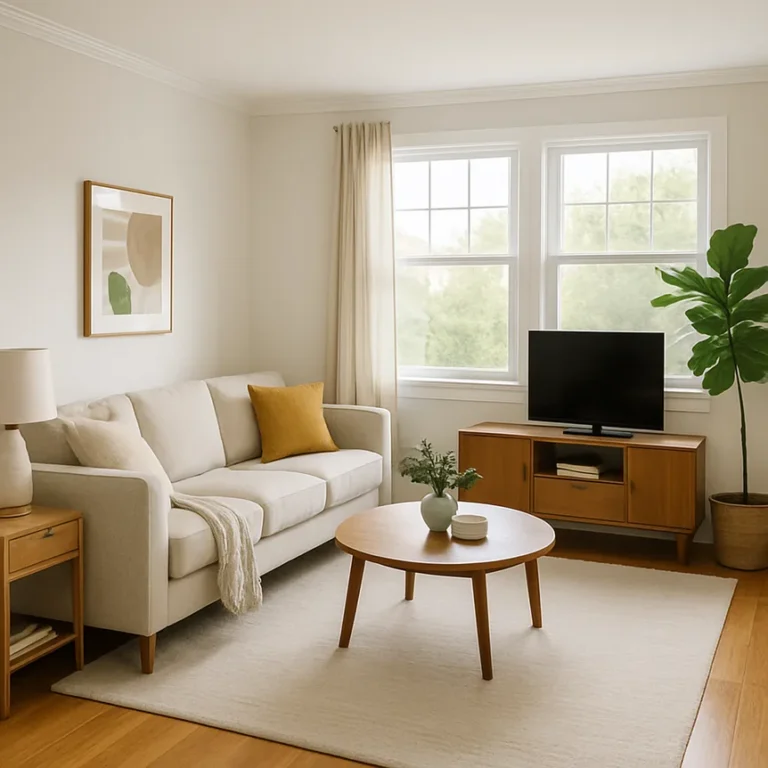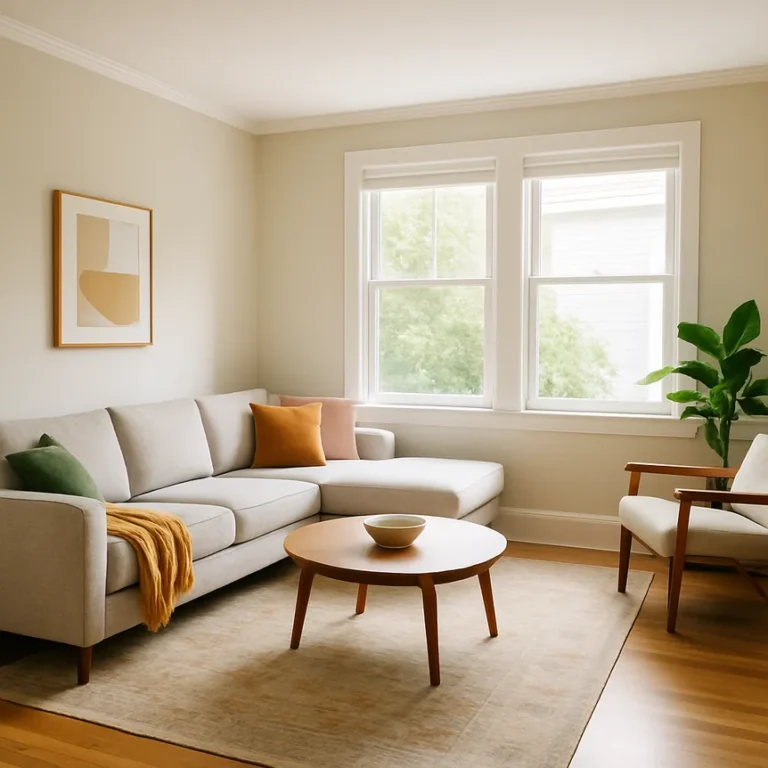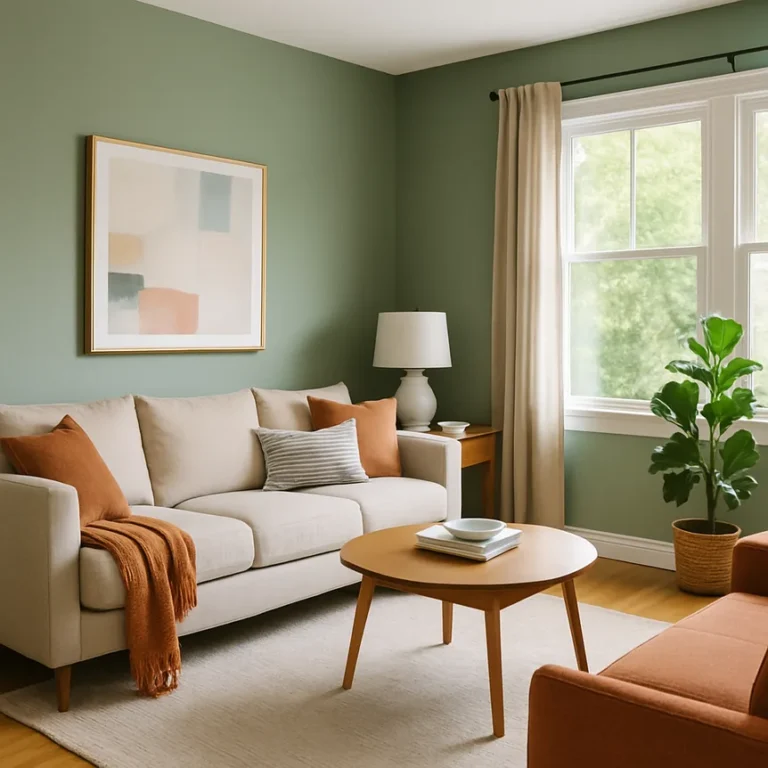
The Complete Guide to Modern Living Room Design

By Tereza Hower | Published March 9, 2026 | Updated August 14, 2026
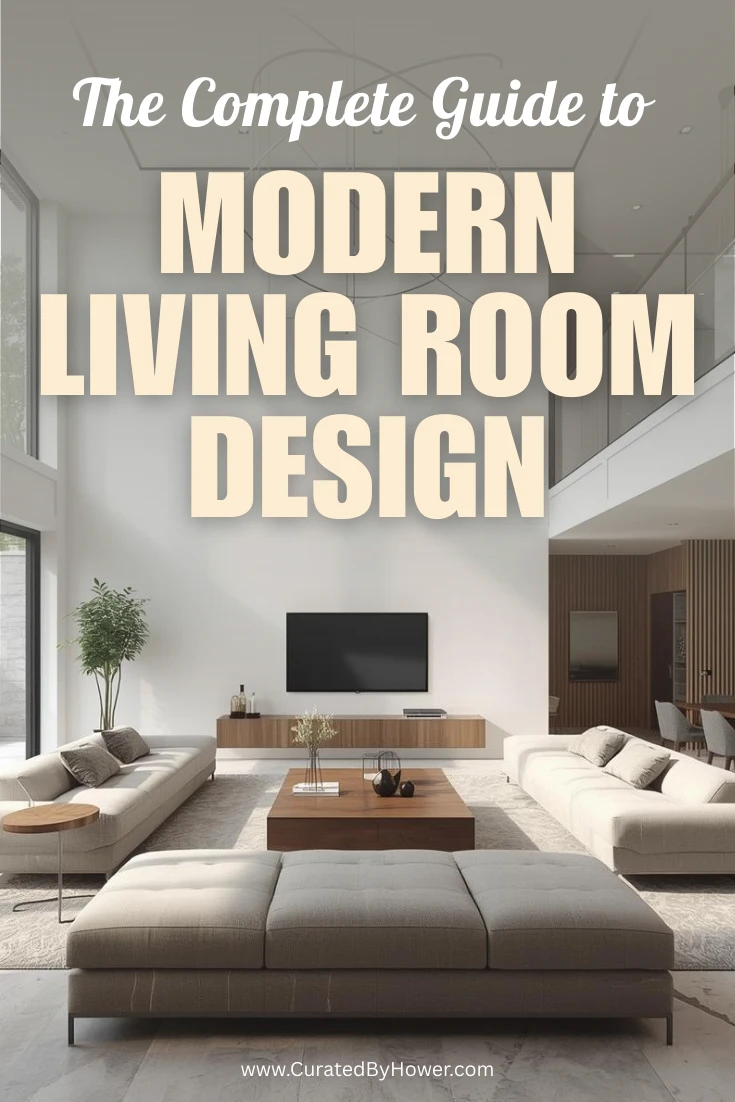
Modern living room design has been simplified into a furniture catalog and a paint chip in most online guides, which is why most modern living rooms end up looking the same and aging the same way. The principles below are what separate a room that holds up for a decade from one that needs a refresh in two.
This guide is the one to read first if you are planning a modern living room from scratch, or the one to come back to when a room you have already furnished is not quite working. It covers the principles, the palette, the essential pieces, the lighting layers, the decor restraint, and the common mistakes that compromise the result. For the three pieces that do the most work in a finished room, see our guide to classic living room decor items.
The cluster posts linked throughout each section go deeper on individual decisions: which sofas hold up over a decade, which color schemes survive low-light evenings, which side tables sit at the right height. Use this pillar to set the framework. Use the cluster posts to make the specific calls.
A modern living room is built around clean-lined furniture, a restrained neutral palette, honest natural materials, and intentional negative space. The form prioritizes function: every piece earns its place by being used, not by being seen. A room built this way reads composed today and still reads composed ten years from now.
What’s Covered in This Guide
- What Modern Living Room Design Actually Means
- Key Principles of Modern Design
- Choosing Your Color Scheme
- Essential Modern Furniture Pieces
- Modern Lighting Solutions
- Adding Modern Decor and Accessories
- Modern Living Room Layout
- Common Mistakes Most Modern Living Rooms Make
- Modern Design on a Budget
- Recommended Resources and Related Guides
What Modern Living Room Design Actually Means
Modern design is often confused with “contemporary” design, but they are different things. “Modern” refers to a specific design movement that emerged in the early twentieth century around the work of architects like Le Corbusier, Mies van der Rohe, and the Bauhaus school. “Contemporary” just means whatever is being made now. The distinction matters because the principles below are anchored in the modern movement, not in the floating signifier of “now.”
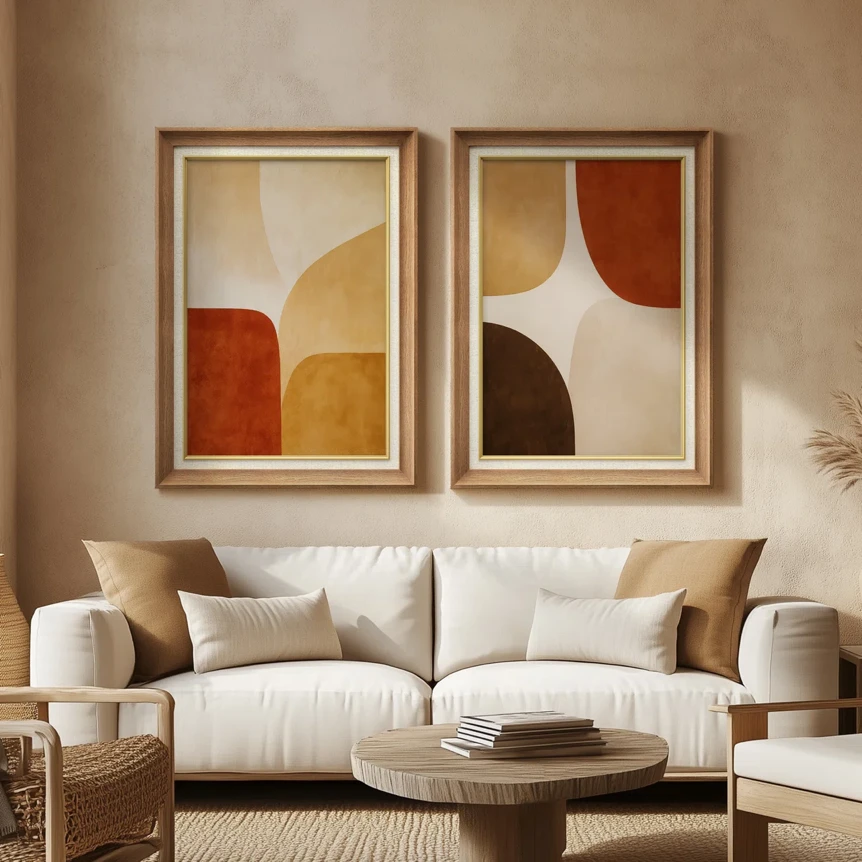
- Clean lines and minimalism: geometric forms, no carved ornamentation, no skirted bases, no fussy detailing
- Functional furniture: every piece earns its place by being used; decorative-only pieces belong to a different aesthetic
- Honest natural materials: solid wood, leather, metal, glass, used in their structural roles rather than disguised as something else
- Restrained color palettes: typically neutral with one or two considered accent colors; bold all-over color is a different vocabulary
- Open spaces: furniture arranged to maximize flow and to leave the floor and walls room to breathe
The goal of modern design is to create rooms that are both beautiful and functional, where form follows function and nothing is included for decoration alone. The discipline is in what gets left out as much as in what gets included.
Key Principles of Modern Design
The five principles below are the ones that separate a room genuinely doing modern design from a room loosely styled with modern-adjacent furniture. None of them is a strict rule, but together they form the framework that makes the rest of this guide cohere.
1. Simplicity Is Not Sparseness
Modern design strips away unnecessary elements; it does not strip away warmth. Every piece in the room should have a purpose, but having a purpose includes being comfortable, being personal, and inviting the eye to rest. Empty is not the same as cold; restraint is what makes the few pieces that survive feel intentional.
2. Function Before Form
Furniture should be comfortable and practical first, photogenic second. A beautiful sofa with a 14-inch seat depth is unusable for adults; a beautiful chair with a hard wooden seat will go un-sat-in. Choose pieces for how you actually live, then narrow by which of the functional options also looks the way you want.
3. Quality Over Quantity
A well-made sofa with a kiln-dried hardwood frame and 8-way hand-tied suspension lasts a decade; a stapled-particleboard equivalent fails in two to three years. The same logic applies across the room. Three good pieces consistently beat eight mediocre ones, both in how the room reads and in how often you replace anything.
4. Neutral Foundation, Considered Accents
Start with neutral walls and large furniture pieces (warm whites, oat, soft gray, walnut, natural leather). Add color through accessories that can be easily changed: a throw, a stack of books, a single framed piece of art. The room then has a long-lived foundation that supports short-lived seasonal styling.
5. Embrace Negative Space
Do not fill every corner. Negative space is a design element, not an absence of design. A room with deliberate empty space (a bare wall, an uncluttered side table top, an unbroken stretch of rug) reads larger and more peaceful than the same room with one more decorative object in it.
Choosing Your Modern Living Room Color Scheme
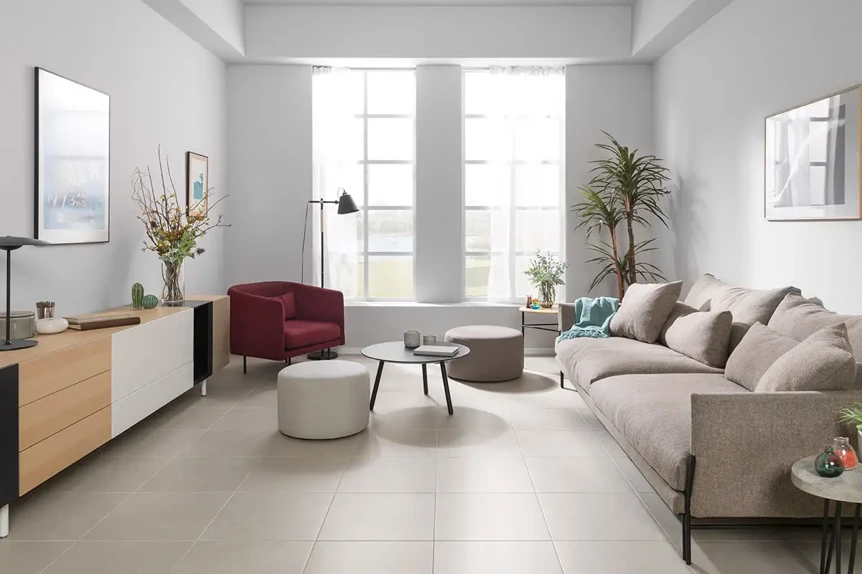
Modern color schemes typically follow the 60/30/10 rule used across interior design: 60% dominant neutral, 30% secondary neutral, 10% accent. The rule is a starting point rather than a constraint; it gives the eye somewhere to land and prevents the room from reading either too monochrome (boring) or too varied (chaotic).
- 60% dominant neutral: the walls, the largest furniture pieces, and any major built-ins. Warm white, oat, soft gray, beige, or pale taupe
- 30% secondary neutral: the rug, a different shade of the same neutral family, or a deliberate wood tone (walnut, white oak, ash)
- 10% accent color: introduced through pillows, art, throws, or plants. Navy, forest green, terracotta, mustard, or charcoal; never more than two accent colors at once
Popular Modern Color Combinations
Warm Minimalist
Warm white walls, natural-wood furniture, warm-gray accents, and terracotta or rust accents. The most consistently flattering palette under low-light evening conditions; reads cozy without committing to brown.
Cool Minimalist
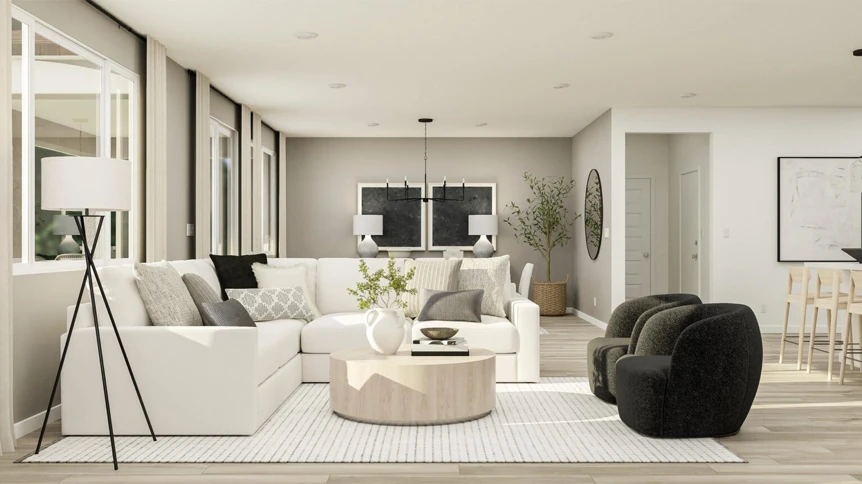
Soft gray walls, white furniture, charcoal accents, and navy or forest green accents. Reads sharper and more architectural; better in rooms with abundant natural light, where warm neutrals can read yellowish.
Monochromatic Modern
All shades of gray with black accents and natural wood elements. The hardest palette to get right because every choice has to be a deliberate undertone decision; the easiest to look flat if the textures do not vary enough to compensate.
For specific palette combinations and how each one reads under varying light conditions, see modern color schemes for living rooms.
Essential Modern Furniture Pieces
A modern living room does not need much: the right pieces arranged thoughtfully. The four below are the essentials that define the room. Anything beyond them is optional, additive, and should be evaluated against the room’s negative-space budget.
1. The Sofa
The sofa is the visual anchor and the functional center of the room. A modern sofa should have clean lines, minimal ornamentation, and quality construction. Look for:
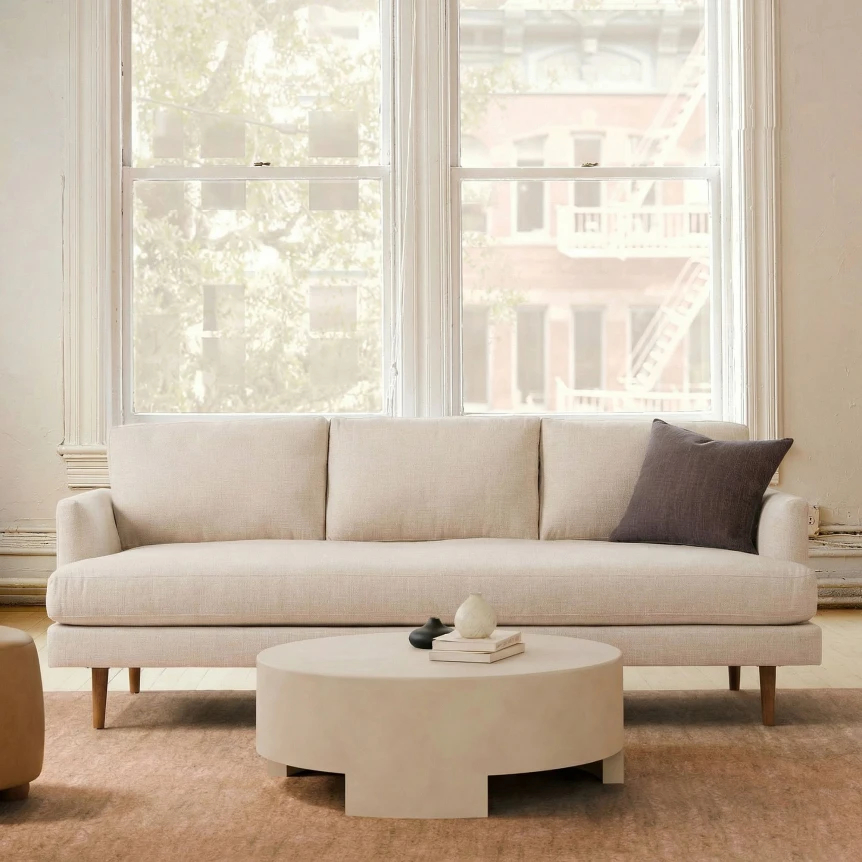
- Straight or slightly tapered arms (not rolled)
- Neutral upholstery (gray, ivory, oat, walnut leather)
- Durable fabric appropriate to your household: linen for low-traffic; performance fabric for kids and pets; leather for longevity
- 18 to 22 inch seat depth for everyday seating; 24 inches and up reads as a “lounge” sofa for sprawling and napping
- Solid hardwood frame and 8-way hand-tied or sinuous-spring suspension
For specific recommendations across price tiers and the construction details that decide which one earns its place, see best modern sofas for clean-lined living rooms.
2. The Coffee Table
A modern coffee table should be simple and functional, sized to the sofa it sits in front of (roughly two-thirds of the sofa’s length, 16 to 18 inches tall to land within an inch of the sofa seat). Look for:
- Clean, geometric lines (round pedestal, rectangular block, or oval)
- Natural materials (wood, marble, glass, powder-coated metal)
- Proportional to the sofa, not to the room
- Storage if you genuinely use it; open if you do not (open reads cleaner and is harder to misuse)
For form-and-function tradeoffs and specific picks, see modern coffee tables that actually work.
3. TV Stand or Entertainment Center
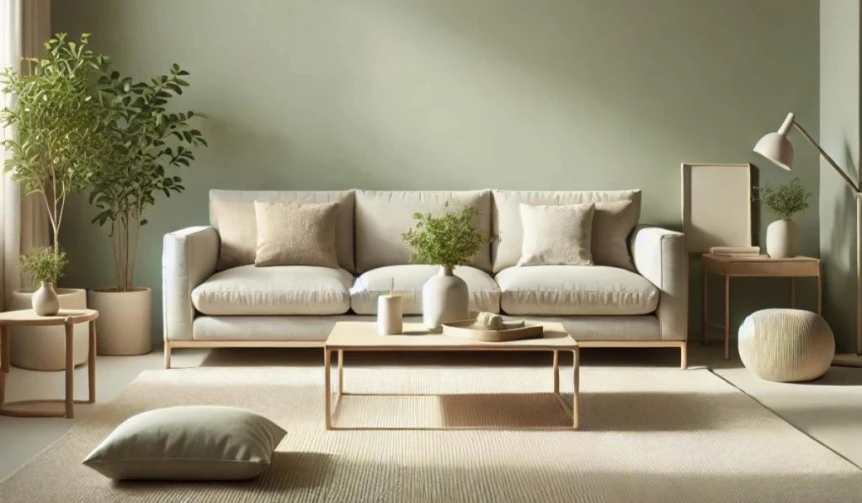
The TV stand should be lower than the sofa, longer than the TV mounted on top of it, and quiet enough that the eye lands on the screen rather than on the cabinet. Modern TV stands are typically:
- Low-profile, so the room reads horizontal rather than vertical
- Open shelving or minimal closed storage; deep cabinets read bulky
- Natural wood or matte powder-coated metal finishes
- Built-in cable management, not an afterthought
For sizing rules and material recommendations, see modern TV stands and entertainment centers.
4. Side Tables and Accent Tables
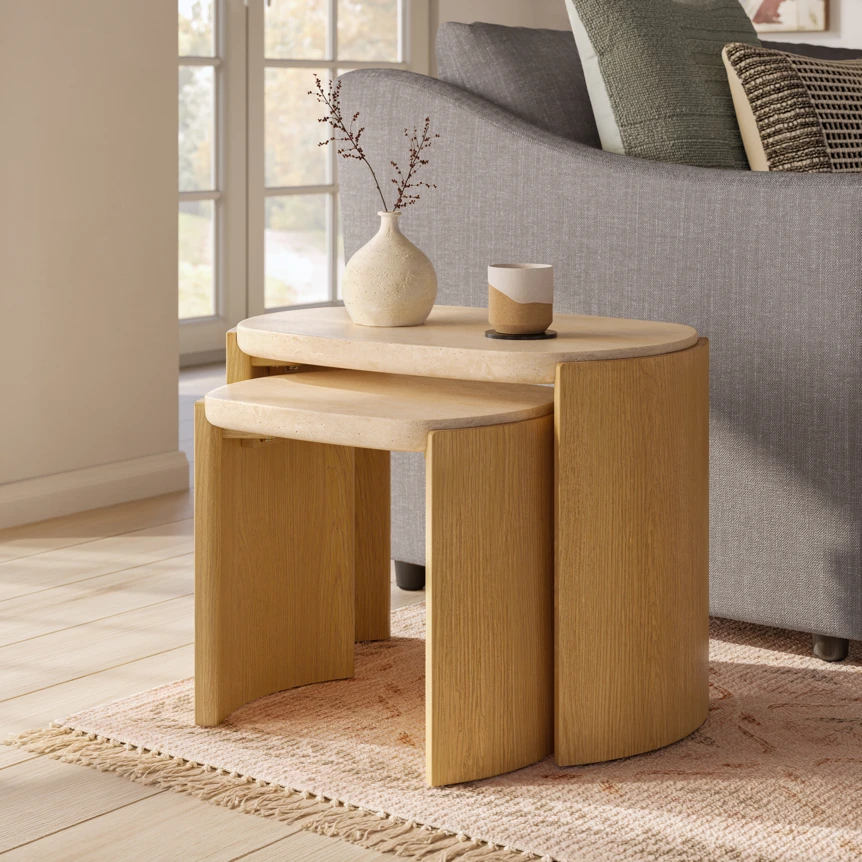
Modern side tables are minimal and functional. Sized to the sofa they pair with, they hold a lamp, a glass, and a paperback. Look for:
- Simple geometric shapes (round pedestal, square block, slim rectangle)
- Top within an inch of the sofa arm height (typically 22 to 26 inches)
- Honest materials: solid wood, marble, powder-coated metal
- Soft-rounded edges that survive feet, vacuum cleaners, and toddlers
For the full breakdown of types, placements, and the accent furniture that fills in around the sofa, see modern side tables and accent furniture.
Modern Lighting Solutions
Lighting is the most under-considered element in most modern living rooms. The room is photographed under abundant daylight in the catalog and lived in under a single overhead fixture in real life; the gap between those two states is what makes most rooms read flatter at night than they should.
Types of Modern Lighting
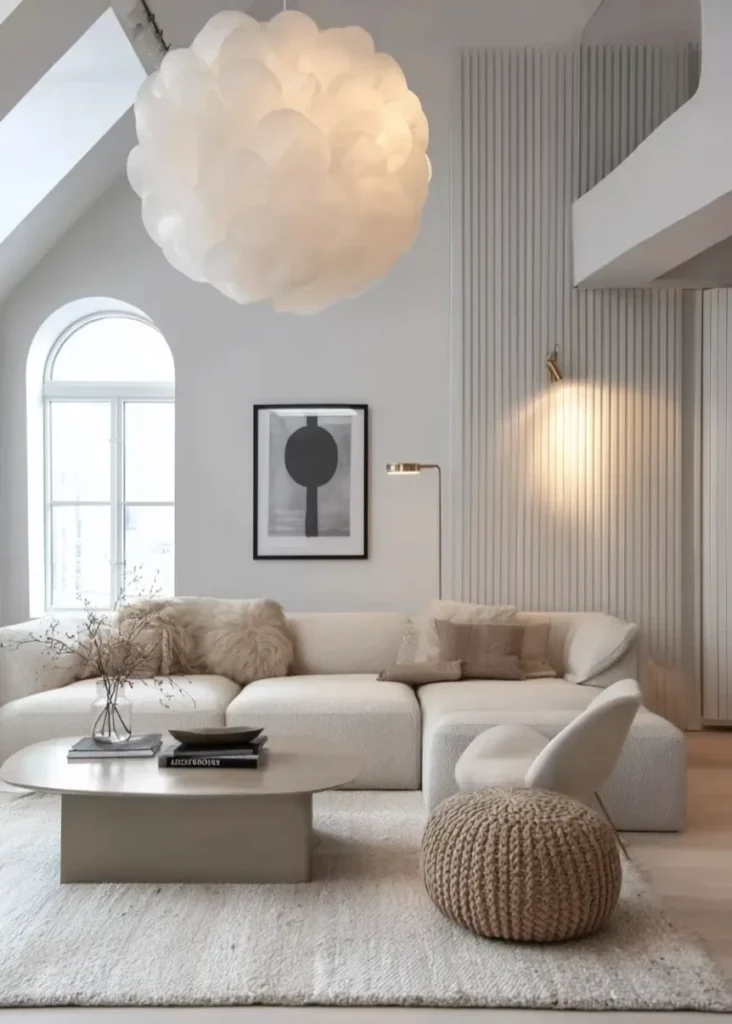
- Floor lamps: tall, simple designs with clean lines; arc lamps work over reading chairs, tripod lamps anchor empty corners
- Table lamps: ceramic, plaster, or turned-wood bases with linen or paper drum shades; height should bring the bottom of the shade roughly level with your shoulder when you sit
- Pendant lights: geometric forms, often metallic; size to the table or seating zone they hang over (usually 12 to 24 inches wide for a single pendant)
- Ceiling fixtures: flush mounts or semi-flush designs that disappear into the ceiling rather than dropping into the room
- Wall sconces: minimalist designs flanking artwork or a mirror; useful for the ambient layer in rooms without enough lamp surfaces
Lighting Tips
- Use multiple light sources at multiple heights (overhead, task at the sofa, accent in the corners)
- Choose 2700K warm white bulbs for everything in the living room; cooler bulbs flatten skin tone and make warm neutrals read greyer than they actually are
- Avoid ornate or overly decorative fixtures; the fixture should belong to the room, not be the focal point
- Put dimmers on as much of the lighting as the wiring supports; the same bulbs read very differently at 100% versus 60%
For the full layered-lighting framework (ambient, task, accent) and how each fixture type contributes, see modern lighting for living rooms.
Adding Modern Decor and Accessories
In modern design, accessories should be minimal but intentional. A few well-chosen pieces consistently beat many small ones; restraint is the styling skill the room rewards most.
Modern Wall Decor
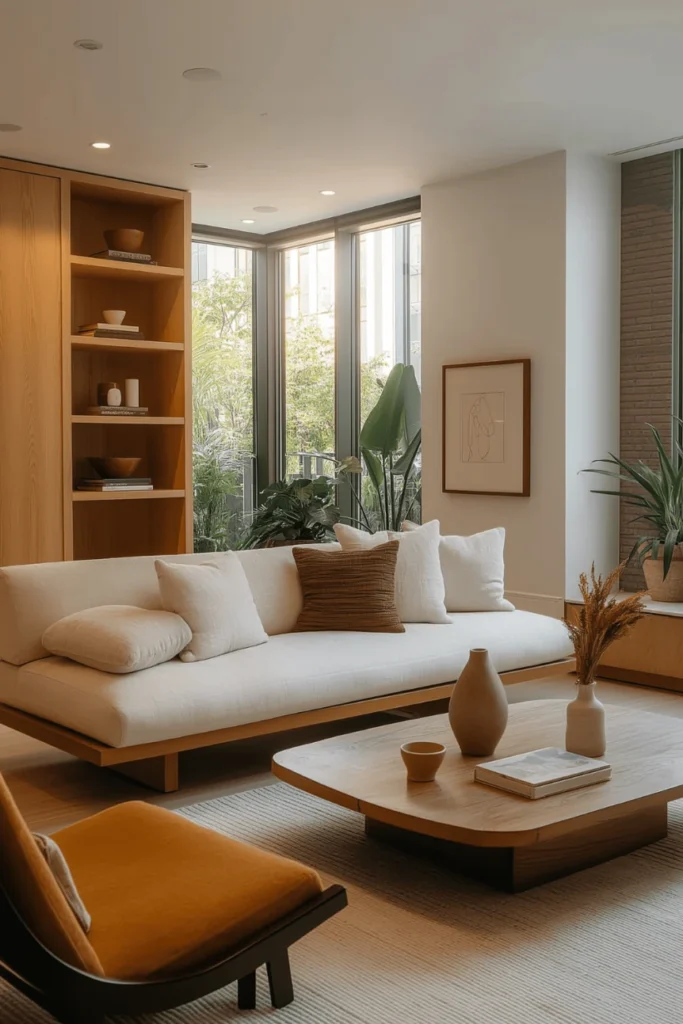
- Abstract art: geometric or minimalist pieces in 30 to 48 inch widths above the sofa
- Photography: black-and-white or limited-color compositions; one large piece outperforms a gallery wall in a modern room
- Mirrors: simple frames or frameless; round or organic-shape mirrors read warmer than rectangular ones
- Floating shelves: for displaying a small number of curated objects rather than for storage
For framing rules, art proportions, and the gallery-wall versus single-statement decision, see modern wall decor and art ideas.
Rugs
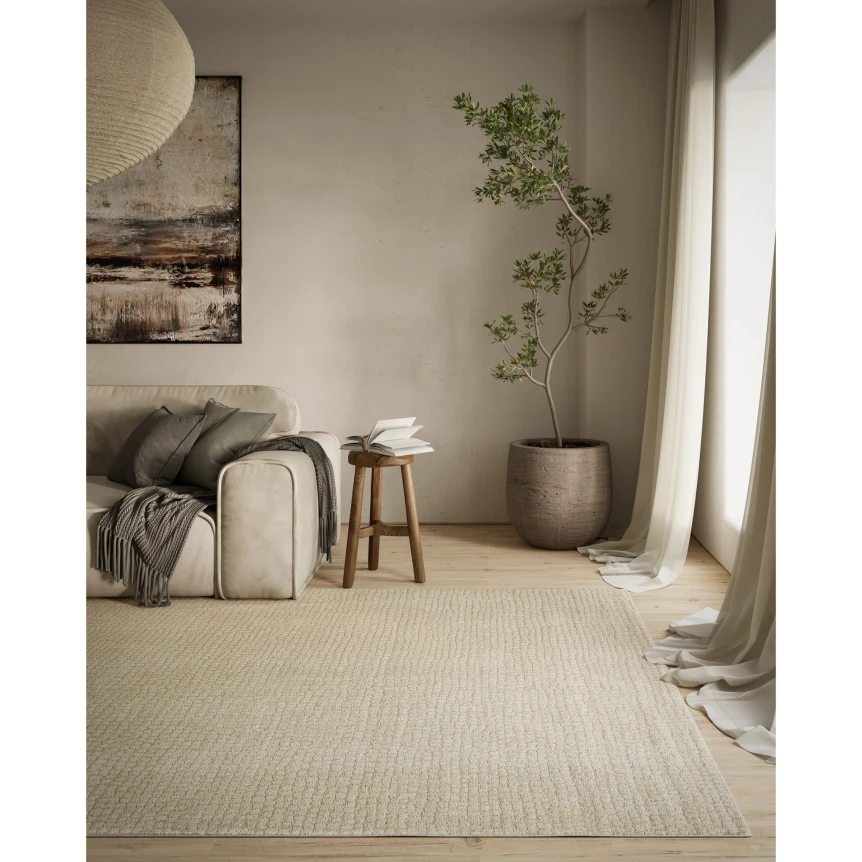
A modern area rug grounds the seating zone, defines the room’s edges, and adds the textural depth a quiet color palette needs. Look for:
- Neutral or subtly patterned (no busy florals; no tribal patterns unless specifically intentional)
- Sized to extend at least 6 inches beyond the sides of the sofa (a 9×12 anchors most living rooms)
- Clean, geometric edge treatment (no fringe; serged or bound edges)
- Wool or wool-blend for durability; jute for textural variation; avoid pure synthetic for any room with heavy use
For sizing rules by room dimensions and material tradeoffs, see the best modern area rugs.
Plants and Greenery
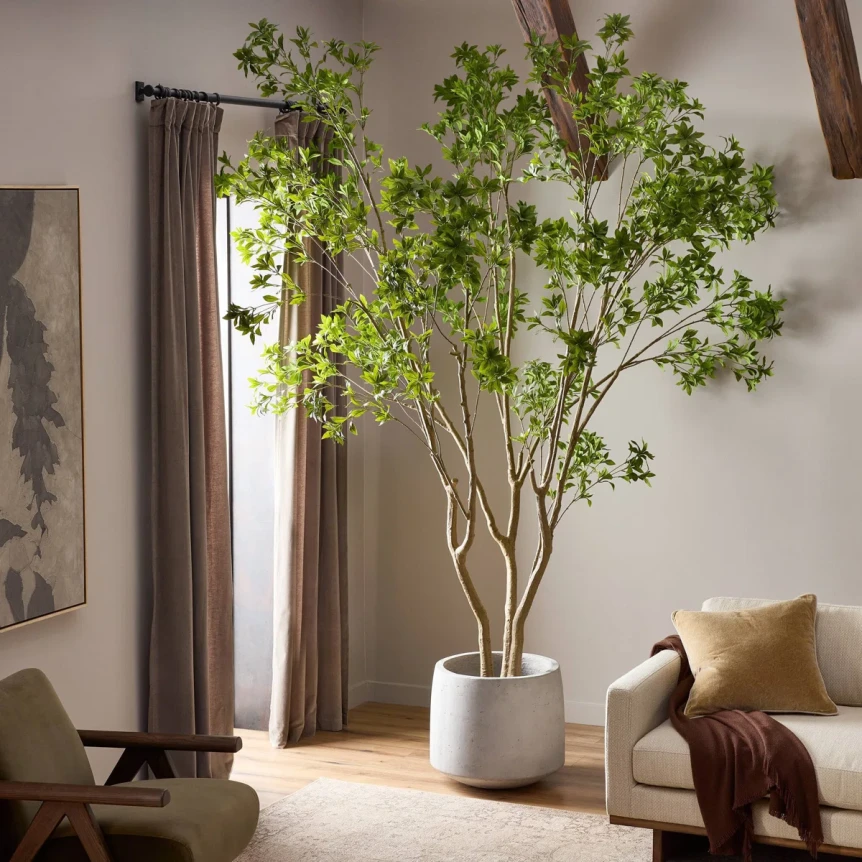
Plants add life to modern spaces; the discipline is in restraint, not abundance. Choose:
- Tall plants (fiddle-leaf fig, snake plant, kentia palm) for empty corners; one tall plant outperforms three small ones
- Trailing plants (pothos, philodendron) for floating shelves or high surfaces
- Simple ceramic, concrete, or terracotta pots; avoid decorative pot painting
- One to three plants total in a typical living room; the room is not a botanical garden
Throw Pillows and Blankets
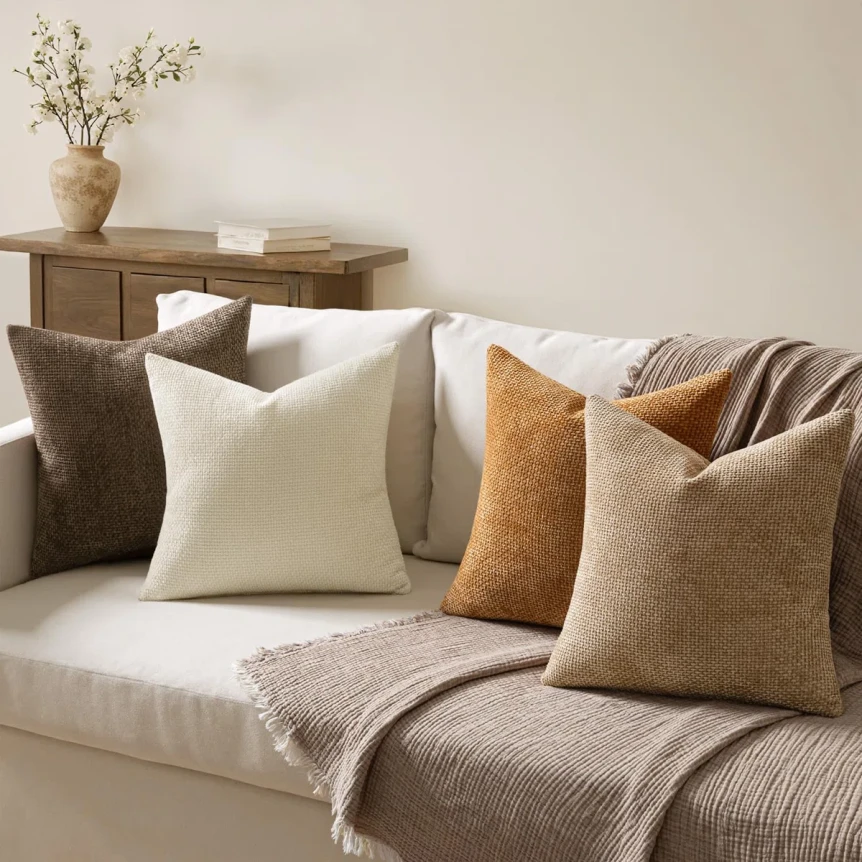
Soft accessories are the part of the room most likely to shift seasonally. Keep them minimal:
- Two to four pillows on the sofa, not more; matching pairs read more intentional than four different patterns
- Neutral colors or subtle patterns; the accent color from the 60/30/10 palette enters here naturally
- Quality fabrics that age well (linen, wool, cotton-velvet); avoid polyester blends that pill within months
- One throw blanket draped over the sofa arm; folded throws read styled in a way casual ones do not
Modern Living Room Layout
Layout is the part of modern design that the catalog photos almost never explain. The same sofa, coffee table, and rug can read composed in one arrangement and cramped in another. The two principles below cover most living rooms.
Anchor the Seating Zone Before Anything Else
Pick the sofa wall first. The sofa should sit against (or roughly parallel to) the longest uninterrupted wall in the room, with at least 24 inches of negative space at each end. Place the rug under the sofa with at least the front legs of the sofa landing on the rug; the back two legs can sit either on the rug or just off it depending on the rug size. Place the coffee table 14 to 18 inches from the front of the sofa, leaving room for legs to swing past without contact. Place accent chairs (if any) opposite the sofa or perpendicular to it, never against the same wall.
This is the order that consistently produces a finished room: sofa first, rug second, coffee table third, accent chairs fourth, side tables fifth, lighting sixth, decor last. Each decision constrains the next; reversing the order produces a room that fights itself for years.
Plan for Traffic Flow
Leave at least 30 inches of clear walking path between major furniture pieces and through any doorway. The front of a coffee table to the front of the TV stand should clear 36 inches if anyone walks past while seated. The path from the room’s main entrance to the seating zone should not require sidestepping anything. If the room is small enough that the layout cannot accommodate these clearances, the room is too small for the furniture you have chosen, not the other way around.
Open-plan living rooms (where the room continues into a kitchen or dining area) need a defined seating zone within the larger space. The rug is the simplest tool for that definition; a console behind the sofa is the second; a row of pendant lights overhead is the third. Use one of the three, not all of them at once.
Common Mistakes Most Modern Living Rooms Make
The mistakes below are the ones that turn a well-furnished modern living room into a generic catalog showroom. They are also the most fixable, usually for the cost of one swap or one removal.
- Treating “modern” as a synonym for “cold gray.” Cool grays and stark whites read clinical at evening light in a living room. Warm whites, oat, greige, and soft taupe consistently outperform them. Pick a wall and furniture undertone that flatters skin tones, not catalog photography.
- Buying the largest sofa the room can technically fit. A 96-inch sofa in a 12-foot room reads as a barricade, not as anchor furniture. Leave at least 24 inches of negative space at each end of the sofa; the negative space is the design element that makes the rest of the room read intentional.
- Filling every corner. Negative space is a feature, not a gap to fix. A bare corner or a single tall plant in an otherwise empty wall outperforms a crowded vignette every time. The room you stop adding to is usually the one that finally looks composed.
- Choosing fixtures and furniture for how they photograph rather than how they live. Modern living rooms are photographed in the brightest hour of the day and lived in for hours of evening lamp light. Test both conditions before any major purchase, especially for upholstery and lighting fixtures.
- Treating the rug as an afterthought. A small rug under a 90-inch sofa reads as a placemat. The rug should anchor the seating zone, with at least 6 inches of rug visible past each side of the sofa and ideally extending under the front legs of accent chairs. Size the rug to the seating arrangement, not to a budget round-down.
Modern Design on a Budget
Modern design can be expensive, but it does not have to be. The strategies below are the ones that consistently produce a finished-looking room at a fraction of the catalog cost.
Invest in the Pieces You Touch Every Day
Spend more on the items that decide how the room reads and how it lives:
- The sofa (you sit on it every day for a decade or more)
- The lighting (the cheapest single change with the biggest atmospheric effect)
- The rug (anchors the entire seating zone and fails visibly when undersized or low-quality)
- The coffee table (the only piece that touches every other piece in the seating arrangement)
Save on Pieces That Are Easy to Replace
- Throw pillows and blankets
- Wall decor (the frames specifically; the art inside them can be inexpensive)
- Plants and planters
- Small accent tables that do not have to carry weight
Where to Find Modern Pieces at Each Price Tier
The budget tier ($150 to $800 per piece) covers most accent furniture, throw pillows, simple lighting, and entry-level rugs. The mid-range tier ($500 to $2,500 per piece) covers most quality sofas, solid-wood coffee tables, and substantial area rugs. The premium tier ($2,000 to $10,000 and up) covers customizable sectionals, designer lighting, and statement furniture intended to outlast multiple room redesigns.
Secondhand markets are the most underused budget strategy in modern design. Mid-century modern and modern furniture from the 1960s and 1970s is consistently undervalued at estate sales and local antique stores; well-designed solid-wood pieces are often available for a quarter of the catalog equivalent. Inspect for joinery integrity, frame solidity, and refinishing potential before buying.
Recommended Resources and Related Guides
The cluster posts below dive deeper into individual decisions covered in this guide. Each is the post to read once you have decided to focus on that part of the room.
Best Modern Sofas: Comfort Meets Clean Design
Detailed picks across budget, mid-range, and premium tiers, with the construction details that decide which one earns its place.
Modern Coffee Tables That Actually Work
Form-and-function recommendations sized to common sofa configurations.
Modern Lighting for Living Rooms
The layered-lighting framework: ambient, task, and accent fixtures and where each one belongs.
Best Modern Area Rugs
How to size, choose, and place a rug under a modern living-room seating arrangement.
Modern Wall Decor and Art Ideas
Framing rules, art proportions, and the single-statement vs. gallery-wall decision.
Modern TV Stands and Entertainment Centers
Sizing the TV stand to the room and the screen, plus the storage decision behind every form.
Modern Side Tables and Accent Furniture
Side tables, consoles, accent chairs, ottomans, and bookcases sized to the sofa they sit beside.
Modern Color Schemes for Living Rooms
Tested palette combinations and how each reads under varying lighting conditions.
Updating a Modern Living Room Over Time
A modern living room is built to age slowly. The foundation pieces (sofa, coffee table, rug, lighting) are designed to last a decade or more; the styling layer (pillows, throws, art, plants) is the part that shifts seasonally without rebuilding the room.
Plan for two kinds of updates. The seasonal swap is small and frequent: switch the throw from linen to wool in the autumn, rotate one or two pillow covers, replace the dried branches in the floor vase. The structural refresh is bigger and rare: reupholster the sofa at year seven or eight rather than replacing it; refinish or oil a wood coffee table when the patina starts to read tired rather than considered; replace lampshades when the linen yellows past recovery.
The pieces most worth replacing on a regular cadence are the throw pillows (every two to three years for fabric quality reasons) and the area rug (every seven to ten years, depending on fiber and traffic). Everything else should outlast at least one round of seasonal styling.
Putting It All Together
A modern living room is the result of fewer good decisions, not more clever ones. Start with the principles, commit to a palette, choose the four essential furniture pieces with the right proportions, layer the lighting, accessorize with restraint, and stop before the room starts to feel crowded. The discipline is in what gets left out as much as in what gets included.
Take the cluster posts in the order that matches your priorities. The sofa decision is the highest-stakes; the throw pillows are the lowest. Build the foundation first, layer the small decisions on top, and let the room evolve over years rather than over a single shopping trip.
Frequently Asked Questions
What is the difference between modern and contemporary living room design?
Modern refers to a specific twentieth-century design movement built around clean lines, functional furniture, honest materials, and restrained color. Contemporary refers to whatever is currently fashionable in interior design. The two overlap in look but not in framework: modern principles are anchored in a movement, contemporary trends shift every five to ten years.
What is the right size sofa for a typical modern living room?
Standard modern sofa widths are 72, 84, and 96 inches; sectionals add 30 to 40 inches of chaise. For most living rooms (12 to 16 feet wide), an 84-inch sofa with 24 inches of clearance at each end reads as anchor furniture without overpowering the room. A 96-inch sofa needs at least an 18-foot wall to feel proportional.
What color temperature should bulbs be in a modern living room?
Use 2700K warm white bulbs throughout. Cooler bulbs (3000K and up) flatten skin tone and make warm-neutral walls read greyer than they actually are. Layer multiple light sources at different heights (overhead, table lamp, floor lamp) and put dimmers on as much of the lighting as the wiring supports.
How much should I budget for a modern living room?
A finished modern living room can be assembled at the budget end (sofa, coffee table, rug, two lamps) for around $2,500 to $4,000, mid-range for $5,000 to $12,000, and premium for $15,000 and up. The single biggest budget decision is the sofa; spend up the curve there before any other piece, since it is the one you sit on every day for a decade or more.