Scandinavian Home Office Ideas for Small Spaces

By Tereza Hower | Published May 9, 2026 | Updated May 14, 2026
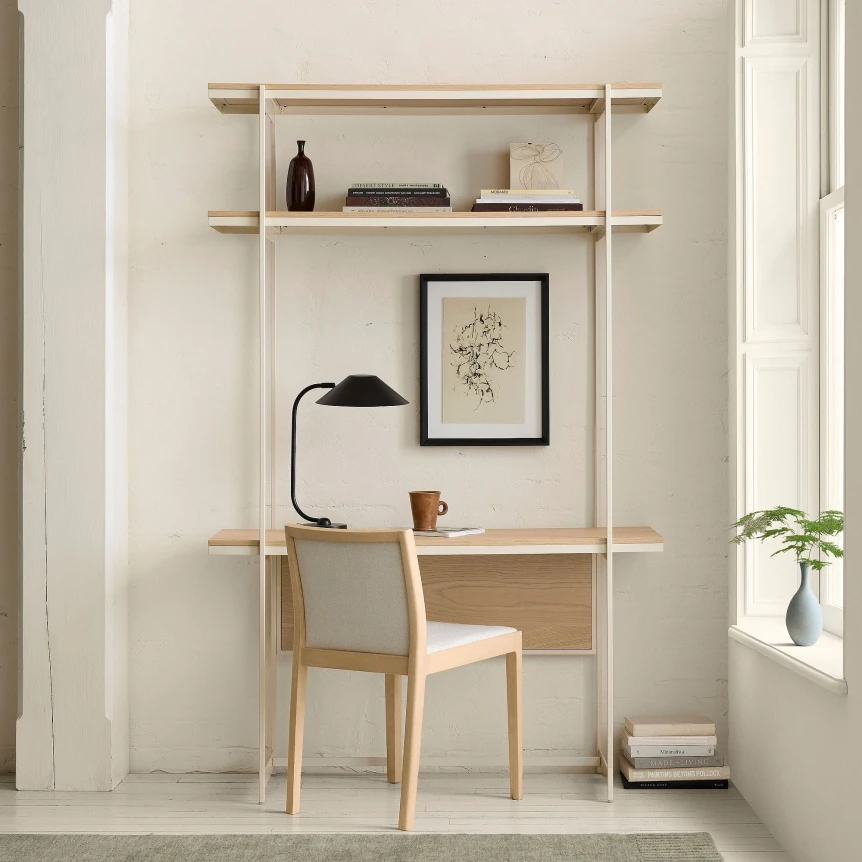
Our spare bedroom is barely 9 by 10 feet. It has one window facing north, one closet, and a door that swings inward and eats roughly two feet of floor space. By any measure it is a small room, and for almost two years I assumed it was too small to use as a working office. The thing that made it work was not a clever desk or a wall mounted setup. It was anchoring the layout to the window and choosing a piece with thin tapered legs that kept the floor underneath fully visible. The room felt twice the size as soon as the desk arrived.
Scandinavian design is the most forgiving direction for a small home office because every one of its core principles reduces visual weight. Light wood, white walls, thin furniture profiles, restrained color, and a heavy emphasis on natural light all make a small room read as larger than it is. If you are working with a tight footprint and want a room that feels calm rather than cramped, this is the style to follow.
What Makes a Home Office Scandinavian
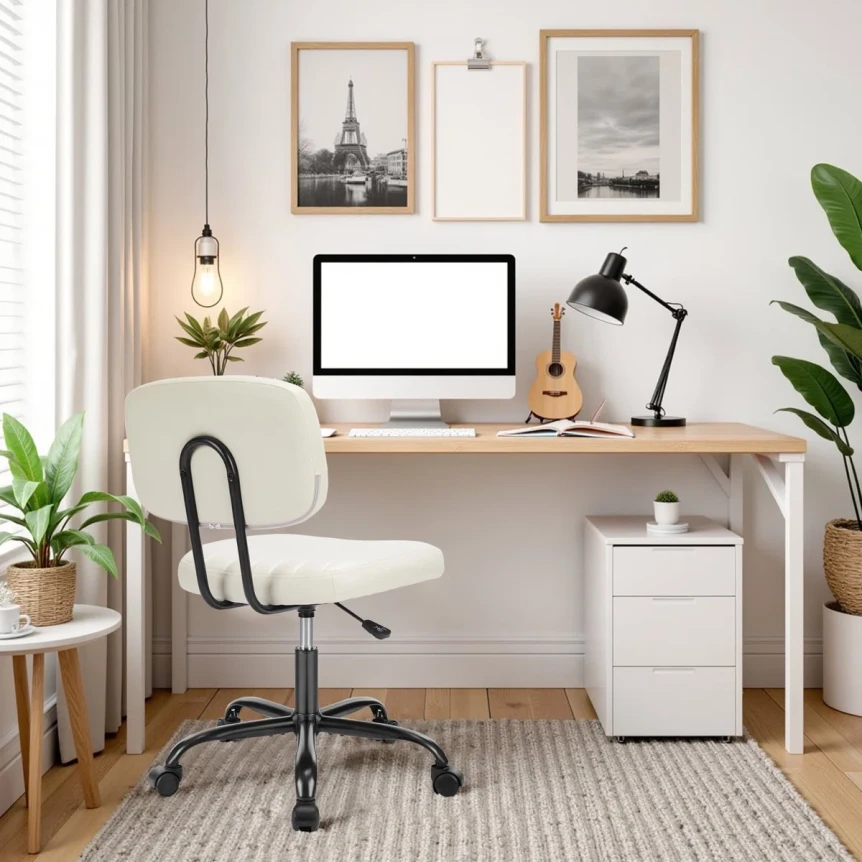
A Scandinavian home office uses light woods like oak, birch, and ash, paired with white or off white walls, restrained color accents, and furniture with clean lines and thin profiles. The style values natural light, functionality, and a sense of unforced ease that the Danes call hygge.
Applied to a small office, the style works because each of its rules reduces the visual weight of the room. Lighter colors reflect more daylight. Thinner furniture profiles keep the floor visible. Restrained accessories reduce the number of objects competing for attention in a tight space. For the broader principles, the complete guide to Scandinavian interior design covers the foundational logic.
Anchor the Layout to the Window
The single best move in a small Scandinavian office is to place the desk in front of the window or perpendicular to it. The window becomes the visual anchor of the room, the daylight does the heavy lifting for ambient lighting, and the view extends the perceived depth of the space beyond the wall.
A north facing window is the gold standard for a workspace because the light is even and free of harsh direct sun across the day. East and west facing windows are workable but require lined curtains or a thin sheer to manage the morning or afternoon glare. South facing windows in small rooms are the most challenging because the direct sun heats and brightens the room unevenly. The fix is a layered window treatment: a sheer linen for daylight diffusion and a heavier curtain for the brightest hours.
The Desk: Light Wood, Thin Legs, Right Size
In a small Scandinavian office, the desk is the most important piece. It carries the wood tone for the whole room and determines whether the floor reads as open or crowded. Look for light oak, ash, or birch. Walnut works but reads heavier and shrinks the room visually.
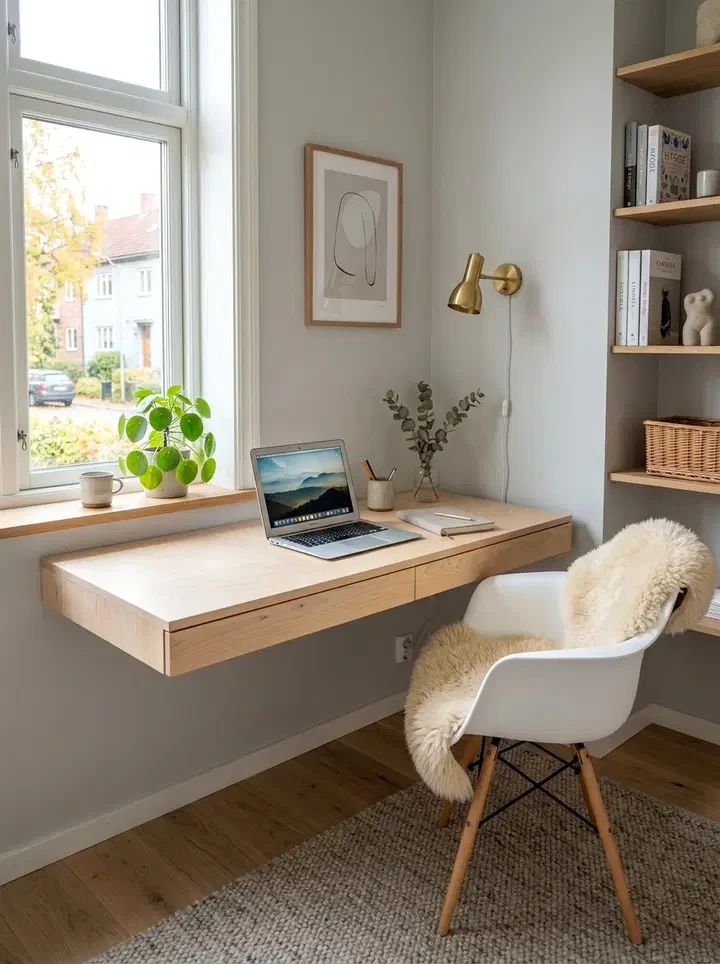
The base matters more than the top in a small room. Thin tapered legs, a slim trestle, or a wall mounted bracket all keep the floor visible underneath, which makes the room feel larger. A bulky pedestal base or panels that reach the floor will close the room down. If you cannot find a slim base in solid wood, a thin black or natural steel frame paired with a light wood top reads correct.
Size the desk to the room, not to your wish list. In a 9 by 10 foot room, a desk wider than 55 inches will feel oversized and limit your other furniture placement. Aim for 48 to 55 inches wide and at least 26 inches deep. Less depth than that and a laptop plus a coffee plus a notebook becomes a Tetris problem.
The Wall Mounted Desk Option
In a room under 80 square feet, a wall mounted floating desk is the strongest move you can make. It keeps the entire floor visible, lets you use the underdesk area for a small storage piece or a single chair, and reads as architectural rather than as furniture.
The downside is permanence. A wall mounted desk requires drilling into studs, takes more effort to install correctly, and is harder to reposition. If you rent, choose a freestanding desk with thin legs instead. If you own, the wall mounted route is worth the install effort.
The Chair: Smaller Footprint, Real Ergonomics
In a small Scandinavian office, the chair must do two jobs. It has to support real working hours, and it has to take up as little visual and physical space as possible. The honest answer is a modern task chair in white, light grey, or warm beige with a compact footprint, not a beautiful wooden chair.
Avoid chairs with five point bases that protrude beyond 26 inches in diameter. They eat floor space and make the room feel obstructed. Look for chairs with smaller, lower profile bases. A mesh back also reads less heavy than a fully upholstered back, which matters in a small room where the chair will often be visible against a light wall.
Lighting: Layered, Wall Mounted Where Possible
Small Scandinavian offices benefit from wall mounted lighting more than any other style. Floor lamps and table lamps eat surface and floor space. A wall sconce above the desk handles task lighting without occupying any surface, and a second wall sconce above a small shelf handles ambient light.
Choose warm bulbs in the 2700 to 3000 Kelvin range. Cool white reads clinical in a Scandinavian palette and clashes with the wood tones. A single statement pendant or a sculptural floor lamp can carry the third lighting layer if you have space. In rooms under 80 square feet, a small clip on desk lamp can replace the floor lamp without losing the principle.
Storage in a Small Footprint
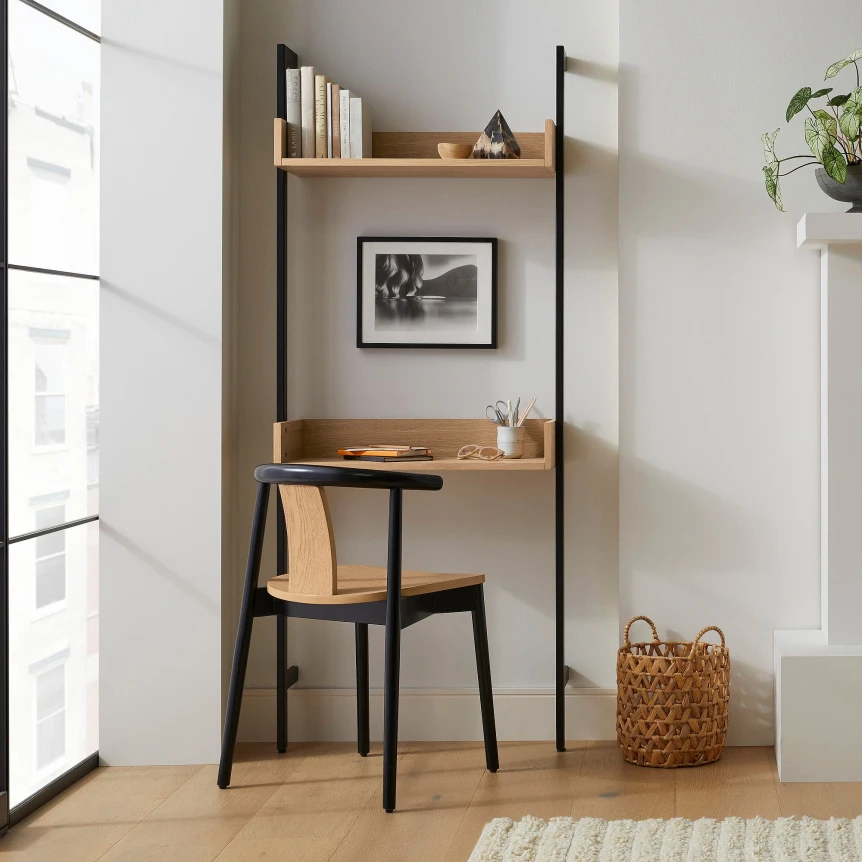
Vertical storage is your friend in a small Scandinavian office. A tall narrow bookcase or a stack of two wall mounted shelves uses height instead of footprint. A small closed cabinet under or beside the desk handles cables, chargers, and paper. Avoid any storage piece deeper than 14 inches in a room this small. It eats floor space without proportional benefit.
For a freestanding piece, a slim Scandinavian style sideboard in light oak with closed cabinets and one or two open shelves above is the move. The sideboard buying guide covers the broader logic of choosing one well.
Texture and Color: Where the Warmth Comes From
Small Scandinavian offices need texture to feel warm rather than clinical. A wool rug, lined linen curtains, a sheepskin or wool throw over the chair, and a few ceramic objects together build the hygge layer that makes the style readable.
Color accents should be restrained and natural: a soft sage, a dusty blue, a warm terracotta, or a deep forest green. One or two accents at most. The wall color should stay light: a warm white like Benjamin Moore’s White Dove or a soft greige like Sherwin Williams’s Pure White work better than pure brilliant white, which can read cold in north facing rooms. For the broader palette logic, see Scandinavian color palettes.
Common Mistakes in Small Scandinavian Offices
- Choosing furniture with bulky bases. Floor visibility is the single biggest contributor to perceived room size. Thin legs always.
- Pure white walls in a north facing room. Reads cold and grey. Use a warm white instead.
- Cool white bulbs. Always warm in a Scandinavian palette.
- Treating the closet door as an obstacle. If the door swings inward, consider replacing it with a curtain or rehanging it to swing outward. The floor space gain is meaningful.
- Skipping the rug. A rug defines the office zone, adds warmth, and absorbs sound. Choose wool or jute, sized to fit under the desk and the chair with a few inches on each side.
Scandinavian Versus Japandi for Small Offices
Both styles work in small rooms. The difference is tonal. Scandinavian leans lighter, brighter, and more forgiving of color. Japandi pulls darker and more restrained. In a room with limited daylight, Scandinavian almost always reads better because the lighter palette compensates for the lower light. In a room with strong natural light, either works. The Japandi versus minimalist versus Scandinavian guide covers the comparison in depth.
For other style directions applied to a workspace, see Japandi home office ideas, minimalist home office ideas, or the broader complete guide to modern home office design.
Putting It Together in a Small Room
The order I would recommend in a small Scandinavian office: rug first to define the zone, desk second placed at the window, chair third, lighting fourth, and storage last. Most people reverse this and end up with storage dominating a small room. The discipline is to commit to fewer, better pieces, and to leave at least one full wall almost empty. The empty wall is the single biggest contributor to a small room feeling calm rather than cramped.
FAQ
Frequently Asked Questions
What is the smallest room that can work as a Scandinavian home office?
A room as small as 60 square feet can work if you choose a wall mounted desk, a compact task chair, and limit yourself to vertical storage. The minimum I would call comfortable is closer to 80 square feet, which gives you room for a freestanding desk, a real task chair, and one small storage piece. Anything under 60 square feet starts to feel like a closet, even with the Scandinavian visual tricks.
Is white oak or birch better for a small Scandinavian office?
Both work and the choice is about personal preference. White oak is slightly darker, has more visible grain, and reads a touch warmer. Birch is paler, smoother, and reads cleaner. In a north facing room with limited daylight, birch keeps the room feeling brighter. In a south or west facing room, white oak adds warmth without weighing the room down. Both are correct.
Can I do a Scandinavian office in a rental?
Yes, and it is one of the easier styles to do without making permanent changes. Freestanding furniture with thin legs replaces the wall mounted desk option. Curtain rods can be mounted with tension or with minimal hardware. The rug, chair, lighting, and small storage piece all travel with you. The one piece I would invest in is the desk, because a good one will follow you to your next home.
How do I deal with a closet that takes up wall space?
Three options. Replace the closet door with a curtain to remove the visual weight of a swinging door. Rehang the door to swing outward into the hallway, which restores the floor space inside the office. Or accept the closet and use it for office storage, treating the closet interior as the closed storage element of the room and leaving the visible office cleaner.
What is the single most important Scandinavian office choice in a small room?
Furniture with thin profile bases. Floor visibility is the largest factor in perceived room size. A 9 by 10 foot room with thin legged furniture reads as comfortably sized. The same room with bulky pedestal bases or panel sided furniture reads small and obstructed. If you remember one rule, remember this one.
Where to Read Next
For broader Scandinavian context, the Scandinavian furniture guide and the Scandinavian bedroom ideas are the natural companions. The small bedroom design ideas guide also applies many of the same small space principles to an adjacent room.