The Complete Guide to Minimalist Interior Design

By Tereza Hower | Published April 10, 2026 | Updated October 13, 2026
Most failed minimalist rooms were edited too hard. Not too sparse and not too full, but stripped so aggressively of the things that gave the space personality that what remains photographs well and feels nothing like home by month two. Minimalist interior design that lasts is not the absence of objects; it is the careful selection of the few that earn the room.
The most common first attempt at minimalism overcorrects. A room cleared so thoroughly that it stops feeling lived in is usually fixed by bringing back a small set of loved objects: a ceramic bowl, a pair of framed prints, a single cushion in a favorite color. Minimalism is editing toward what matters, not editing toward zero, and that lesson is the through line of every recommendation in this guide.
What follows is the principles, the palettes, the furniture decisions, the decluttering process, the room by room application, the four variations worth knowing, what the style costs to do properly, and the specific mistakes that derail most attempts at it. Use it as a map, not a checklist.
Key Takeaways
- Minimalism is editing toward what matters, not editing toward zero; a room that stops feeling like yours has gone too far.
- Texture, warm wood, and at least one darker grounding element are what keep an all white minimalist room from reading sterile.
- Warm minimalism is the variation most people actually want to live with long term; modern, Japanese influenced, and Scandinavian are real alternatives, not synonyms.
- Decluttering by category (all the books at once, then all the clothing) reveals real inventory in a way decluttering by room does not.
- Nobody buys their way into minimalism; the style starts with editing what is already owned, not adding pieces designed to look minimal.
What’s Covered in This Guide
- What Is Minimalist Interior Design?
- Where Did Minimalism Come From?
- What Are the Core Principles of Minimalist Design?
- Which Minimalist Color Palette Works for Your Room?
- How to Choose Minimalist Furniture
- How Should You Declutter for a Minimalist Home?
- How Does Minimalist Design Look Room by Room?
- Which Minimalist Variation Suits Your Home?
- How Do You Start a Minimalist Room in Five Steps?
- What Does Minimalist Interior Design Cost?
- What Are the Most Common Minimalist Design Mistakes?
What Is Minimalist Interior Design?
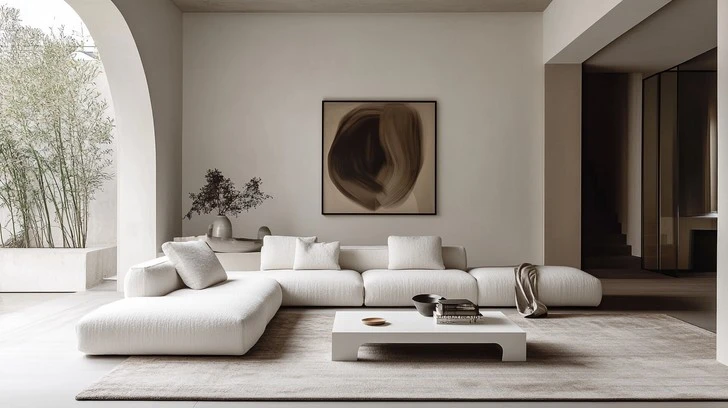
Minimalist interior design is a style built on the principle that less is more. It strips a space down to its essentials, removing decorative excess in favor of clean lines, open space, and carefully chosen objects. The goal is a room where nothing is superfluous and everything has a purpose.
The minimalist style is a philosophy as much as an aesthetic. It asks what a household actually needs and wants to live with, then gives those things room to be seen and used. A home shaped by that question feels uncluttered, calm, and intentional, and the architecture and the space itself become as important as any object inside.
Minimalism is not the same as having nothing. A minimalist room can include art, books, plants, and meaningful objects. The difference is that each is chosen with care and given enough breathing room to be appreciated rather than blending into a sea of competing items.
Where Did Minimalism Come From?
Modernist roots
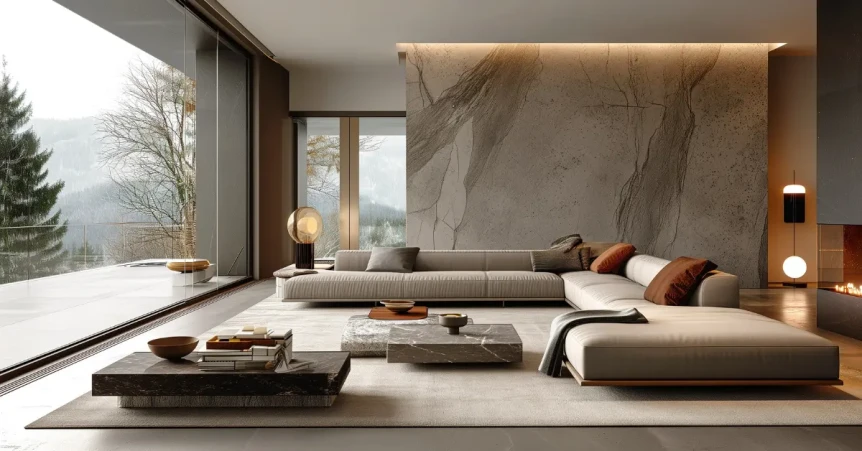
Minimalist design traces back to the early twentieth century modernist movement. Architects such as Ludwig Mies van der Rohe and schools such as the Bauhaus championed the idea that form should follow function. Ornament was viewed as unnecessary, even dishonest, and beauty came from materials, proportion, and the quality of the design itself rather than from added decoration.
Mies van der Rohe summarized the philosophy with the phrase “less is more,” which has been the unofficial motto of minimalism ever since. His work emphasized open space, geometric simplicity, and high quality materials in their natural state.
Japanese influence
Japanese aesthetics shaped minimalism profoundly. The concepts of ma (negative space), wabi sabi (beauty in imperfection), and the traditional emphasis on natural materials and restraint all informed how minimalism developed in the West. Many of the most respected minimalist designers cite Japanese architecture as a major influence.
From niche to mainstream
For most of the twentieth century, minimalism belonged to avant garde architecture and high end design. In its last decade the style entered mainstream culture through books, magazines, and eventually social media, which spread the appeal of decluttered, simplified rooms. Today minimalism is one of the most influential design philosophies in the world, and the warm variation that softens its modernist origins is the version most homes now reach for.
What Are the Core Principles of Minimalist Design?
Less but better
This principle, usually attributed to the designer Dieter Rams, captures the essence of the style. The goal is not to own as little as possible but to own only the things that are genuinely good, useful, or meaningful. One well made oak dining chair earns its place over three mediocre ones in a way no amount of styling can fake.
Negative space as design
Empty space is not waste in minimalist design; it is an active element. The areas around and between objects matter as much as the objects themselves. Negative space gives the eye somewhere to rest and lets the few things on display stand out; without it, even beautiful objects become visual noise.
Functional beauty
Beauty and function are deeply connected in this style. A well designed object looks beautiful precisely because it does its job well: a chair should be comfortable, structurally sound, and visually pleasing at once. Decoration for its own sake violates the principle.
Honest materials
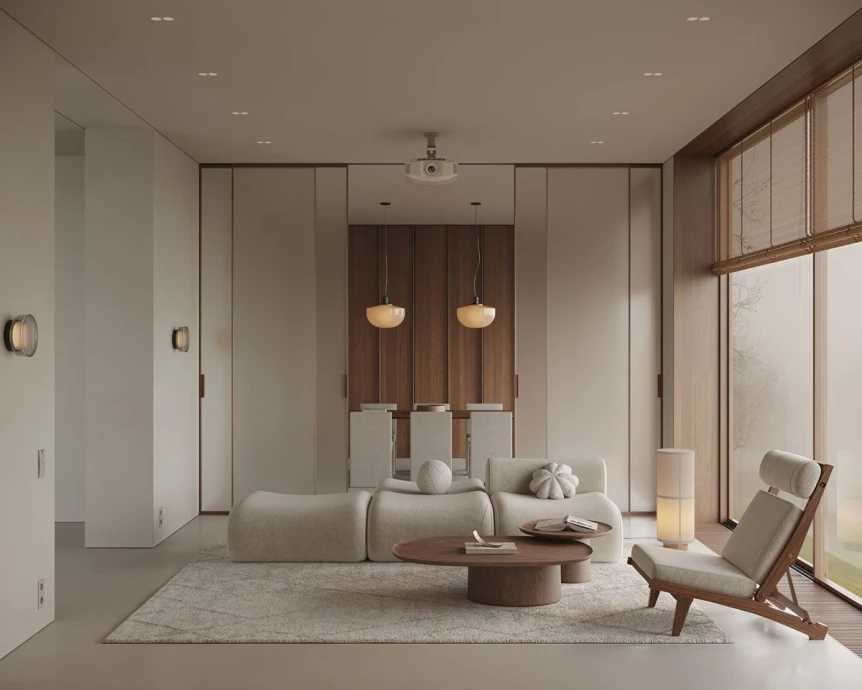
Minimalism values materials in their natural state: wood with visible grain, stone with natural variation, metal with honest finishes, linen with real texture. The materials provide the visual interest without added pattern or ornament. The trick is choosing materials that age into the room rather than fight it; solid oak develops a patina that a gloss lacquered finish never will.
Restrained color
Minimalist palettes are tight and intentional. Whites, grays, blacks, and natural tones dominate, and color, when used, appears sparingly and with clear purpose. The restraint is not fear of color; it prevents visual clutter and lets form, light, and material take the lead.
Clean lines and simple forms
Furniture and architecture favor straight lines, geometric shapes, and uncomplicated silhouettes. Curves are allowed but kept simple and purposeful; ornate carving, decorative trim, and busy detailing are not. A sofa with a clean rectangular silhouette and tapered legs reads minimalist, and the same sofa with rolled arms and a skirted base does not, whatever the fabric.
Intentional editing
A minimalist home requires ongoing editing. Items are added with care and removed when they stop serving a purpose, which makes this a way of relating to possessions over time rather than a single decluttering project. A weekly ten minute reset of surfaces prevents the slow accumulation that is much harder to reverse once it takes hold.
Which Minimalist Color Palette Works for Your Room?
Color in minimalist design is restrained but not absent. The most successful palettes use a small range of tones that work together to create calm, cohesive rooms. Pick one direction early and let it pull the rest of the choices into focus.
The all white palette
Pure or warm whites on walls, floors, and furniture create the iconic minimalist look. The palette relies entirely on form, light, and texture for interest; it is bright, open, and gallery like, and the challenge is keeping it from reading sterile. Warm whites that consistently work here are White Dove by Benjamin Moore, Wevet by Farrow and Ball, and Alabaster by Sherwin Williams.
Pair any of them with linen, oak floors, and a single grounding darker element: a charcoal lampshade, a black framed mirror, or a deep walnut side table. That one dark note is what keeps the room from drifting toward operating theater white.
Warm neutrals
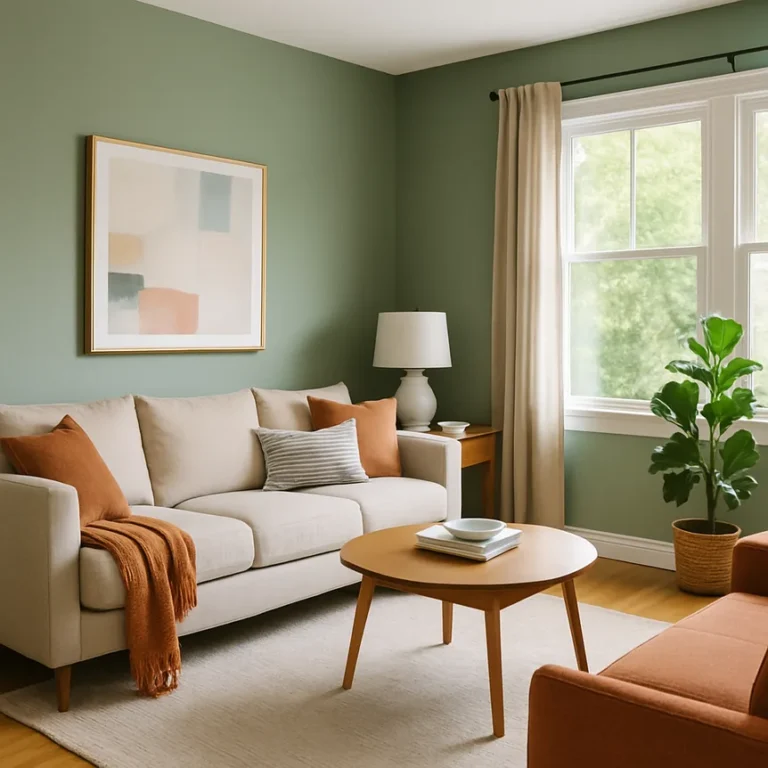
A palette of warm whites, soft creams, light beige, and natural wood tones creates a softer, more inviting version of the style. This is the foundation of warm minimalism, now the most popular variation because it delivers the calm without the coolness of all white rooms. Pair it with 2700 to 3000 Kelvin bulbs in every fixture; cooler bulbs above 3500 Kelvin push warm neutrals back toward clinical even when the paint is right.
Monochrome with black
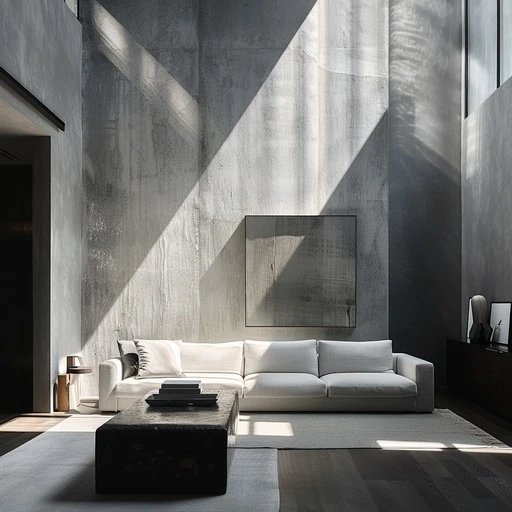
White and black with shades of gray between them create a graphic, slightly more dramatic look. Black accents define edges, ground the space, and add visual weight. The palette suits modern apartments and architectural rooms with strong lines, and it photographs unusually well, which is part of why it dominates social media even as warm minimalism dominates real homes. For specific combinations and room applications, see the minimalist color palettes for every room guide.
How to Choose Minimalist Furniture
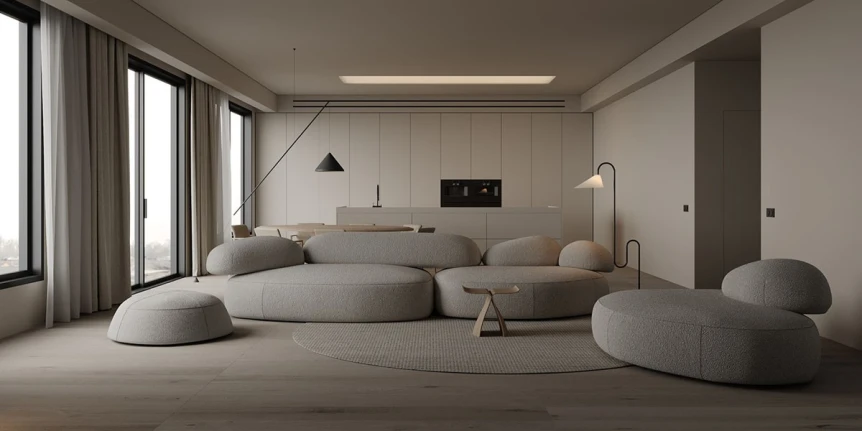
Minimalist furniture is defined by clean lines, simple forms, and quality construction. The pieces should look unfussy but feel substantial, serving their function without calling attention to themselves through decoration.
Key characteristics
Look for straight lines or simple geometric curves, slim tapered legs, and hardware that is understated, hidden, or absent. Upholstery sits in solid neutral tones, typically in natural fabrics such as linen, cotton, or wool. Wood pieces show their grain under an oiled or waxed finish rather than heavy stain or carving. Each of these visual cues is a hallmark of minimalist furniture design, which can be identified by six specific traits that set it apart from other styles.
Proportions matter as much as silhouette. A 28 to 30 inch sofa depth, a 16 to 18 inch coffee table height, and legs that keep at least 6 inches of visible floor beneath the piece are the numbers that consistently read minimalist across rooms and budgets.
Investment pieces
Minimalism rewards owning fewer, better things. A single high quality sofa, a well made dining table, or a thoughtfully designed bed frame can anchor a whole room, and each is worth the investment because it will be visible, used daily, and kept for years.
The price floor where solid wood and real construction live is roughly $1,500 for a sofa, $1,200 for a dining table, and $800 for a bed frame. Below those numbers the market shifts to engineered veneers and foam constructions that look the part for two years and then start to fail. The minimalist furniture guide covers how to judge construction piece by piece.
How Should You Declutter for a Minimalist Home?
No one creates a minimalist space without first addressing what they already own. Decluttering is the practical foundation of the style, and it is usually the hardest part of adopting it.
Start with categories, not rooms
Tackle possessions by category rather than by room. Gather all the books in one place, then decide what to keep, and do the same with clothing, kitchenware, and decorative objects. Seeing a whole category at once makes it far easier to judge how much there really is and to decide on value rather than on where a thing happens to live.
Ask the right questions
For each item, ask whether it is actually used, whether it brings genuine pleasure, or whether it carries real meaning. If the answer to all three is no, it probably does not belong in a minimalist home.
Storage strategy
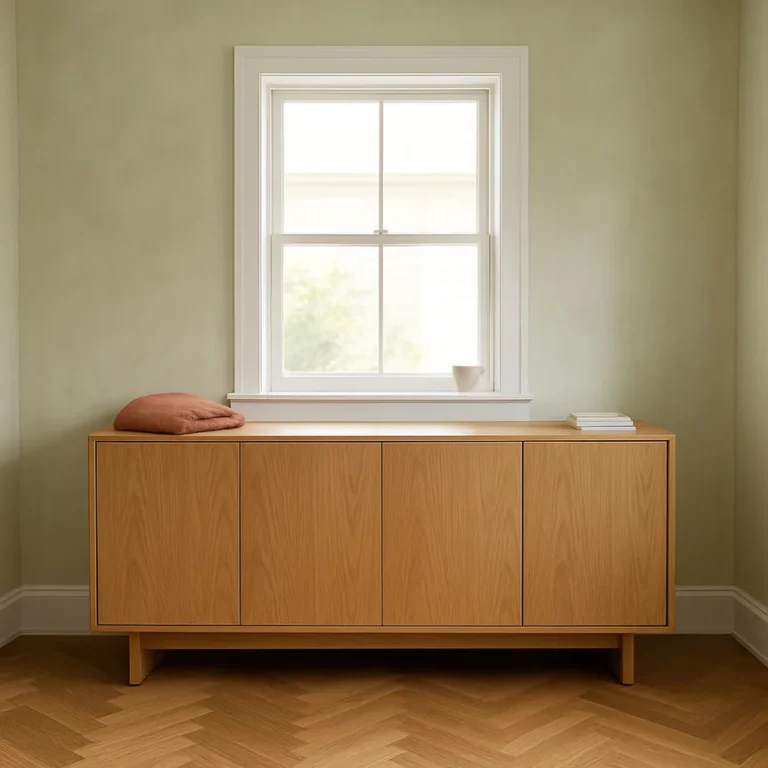
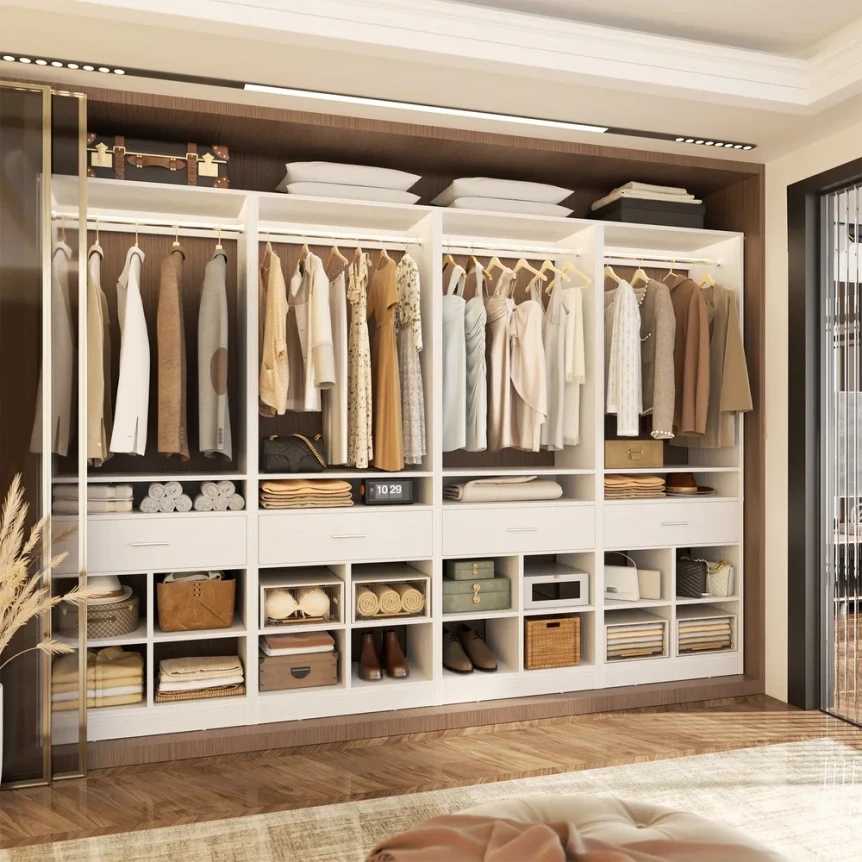
Minimalism does not mean having no storage. It means not needing storage to hide things that should no longer be owned. Built in cabinets, closed credenzas, and concealed shelving keep necessary items out of sight and contribute to the visual calm.
Aim for roughly two thirds closed storage to one third open display in any room under 150 square feet; in larger rooms the ratio can flip. For the step by step process and the maintenance habits that keep it working, see how to declutter for a minimalist home.
How Does Minimalist Design Look Room by Room?
Minimalist living room
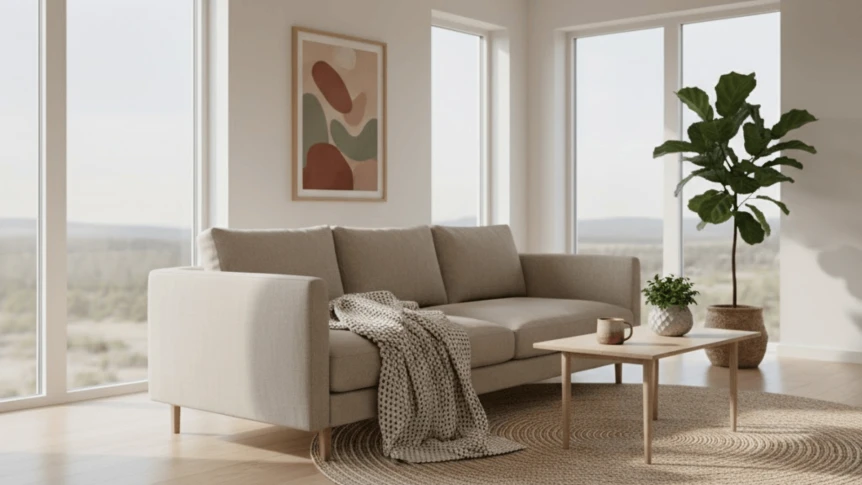
A minimalist living room centers on a comfortable, well chosen sofa and a single coffee table. Storage is concealed where possible, and decor is limited to one or two meaningful pieces.
Lighting is layered but understated: an ambient overhead at 2700 to 3000 Kelvin, a task lamp on a side surface, and one accent source elsewhere in the room to balance shadows. With those three working together the room feels open, calm, and ready to use without any tidying before guests arrive.
Minimalist bedroom
The bedroom is where minimalism feels most rewarding. A simple bed, quality bedding in neutral tones, one or two bedside surfaces, and minimal wall decor create a sleeping environment that genuinely supports rest. Linen sheets in cream or oat, a wool throw at the foot of the bed, and a single framed piece above the headboard are usually all the styling required; the minimalist bedroom design ideas guide goes further.
Minimalist kitchen
A minimalist kitchen prioritizes clean cabinetry, clear countertops, and a small, well chosen set of tools and dishes. Open shelving is used sparingly, and appliances are built in or kept behind doors when not in use. A calm kitchen with two or three things on the counter reads more luxurious than one packed with chrome gadgets, whatever the budget; see minimalist kitchen ideas and design tips for the cabinet and countertop decisions.
Minimalist bathroom
Bathrooms benefit enormously from minimalist principles. Concealed storage, simple fixtures, neutral tile, and clear surfaces create a spa like atmosphere. Limit visible products to a few essentials in matching containers, add a single plant for life, and choose tapware in one finish across every fixture; brushed brass and matte black are the most forgiving.
Minimalist home office
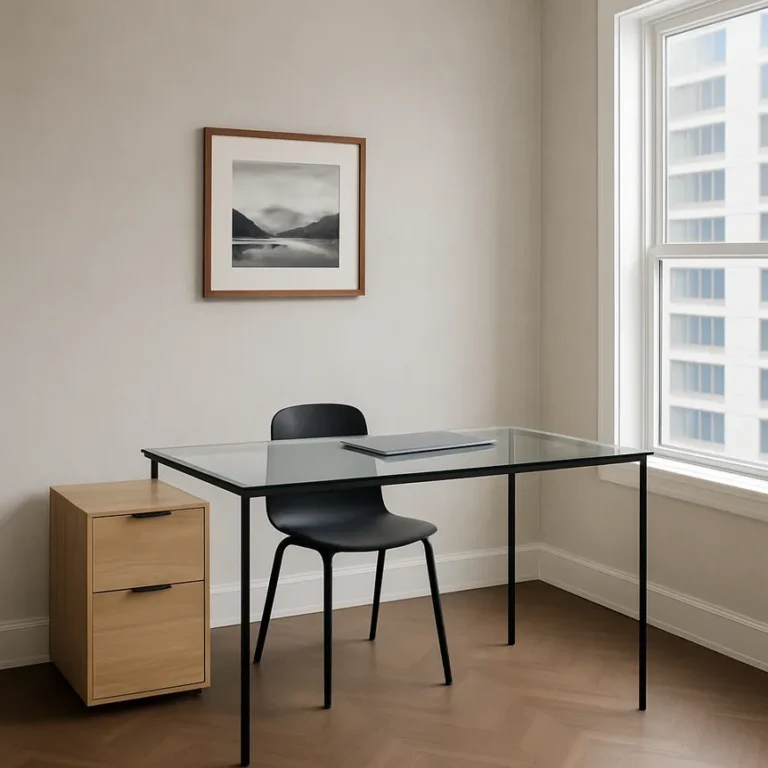
A minimalist office is built around a clean desk, one good chair, and only the tools actually needed. Cables are hidden behind a desktop grommet or in a tray under the desk, and storage is concealed where the room allows it.
Walls stay largely bare except for one piece of art or a single shelf with a few personal items, and the desk holds no more than two or three objects at any time. For the desk, chair, lighting, and storage breakdown see minimalist home office ideas, and for the desk itself, the minimalist desks roundup sorts seven types worth buying from the one to skip.
Which Minimalist Variation Suits Your Home?
Minimalism is not a single look. The differences between the variations are large enough that two minimalist rooms can look almost nothing alike, and choosing the wrong one for a home’s light, architecture, and temperament is the most common reason people abandon the style. The table summarizes how the four most common variations differ in palette, materials, mood, and the kind of home each suits.
| Variation | Palette | Materials | Mood | Best for |
|---|---|---|---|---|
| Warm minimalism | Warm whites, cream, sand, walnut | Linen, wool, oak, walnut, terracotta | Calm, lived in, tactile | Most homes; long term comfort |
| Modern minimalism | Bright white, charcoal, black accents | Polished concrete, glass, painted MDF, leather | Graphic, cool, architectural | Lofts, statement architecture |
| Japanese influenced | Off white, soft natural tones | Light wood, paper, ceramic, linen | Quiet, restrained, contemplative | Homes leaning toward wabi sabi |
| Scandinavian | Bright white, pale wood, soft accents | Light oak, ash, wool, cotton | Warm but tidy | Small apartments, light starved climates |
For a side by side comparison of the two variations most people actually choose between, see the warm minimalism vs modern minimalism guide. For how the style sits against its two closest neighbors, the Japandi vs minimalist vs Scandinavian comparison draws the lines.
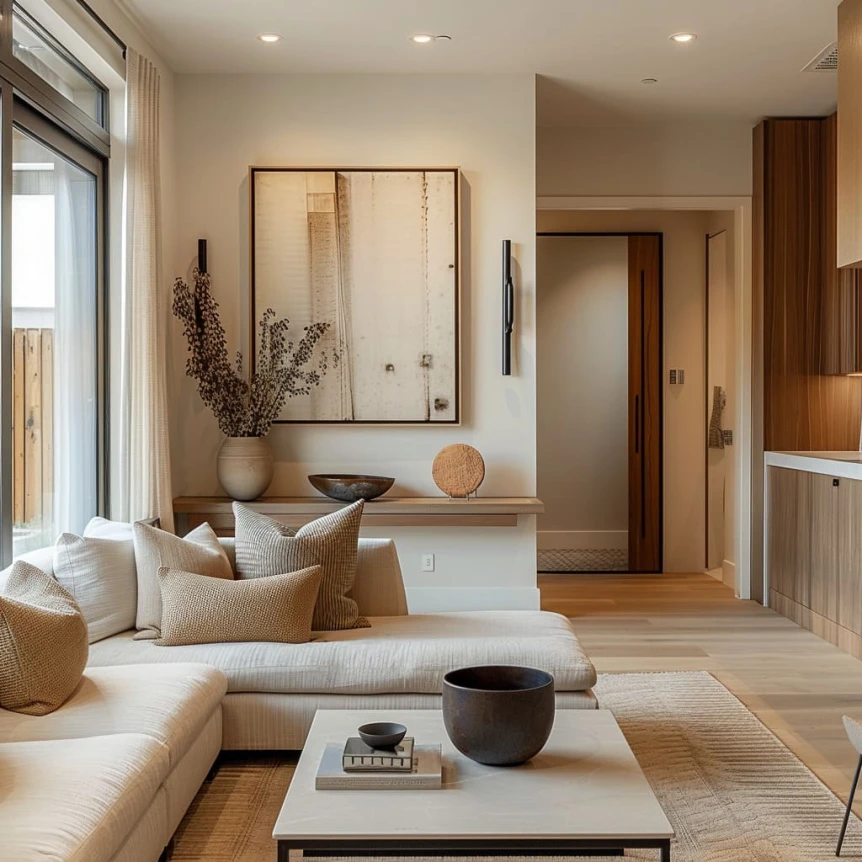
Warm minimalism
Warm minimalism softens the traditional version with natural materials, earthy tones, and tactile textiles. It keeps the visual restraint but adds the comfort that pure minimalism sometimes lacks. This is the most popular variation and the one most people end up at after living with a stricter version for a while.
Modern minimalism
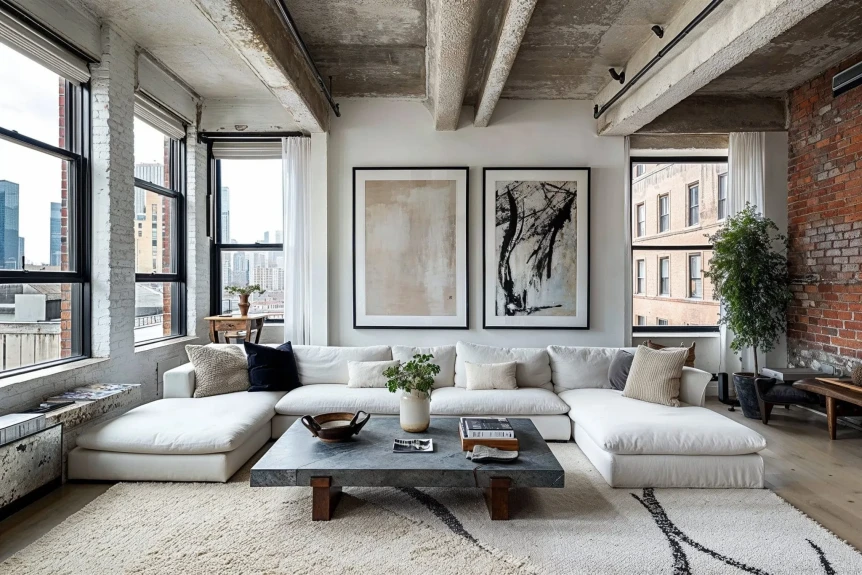
Modern minimalism leans into clean architecture, monochromatic palettes, and high contrast between light and dark. It is more graphic and cooler than warm minimalism, suiting contemporary apartments and homes with strong architectural features. It rewards consistency: every fixture, finish, and texture has to be deliberate, because there is no warmth or layering to disguise a wrong choice.
Japanese influenced minimalism
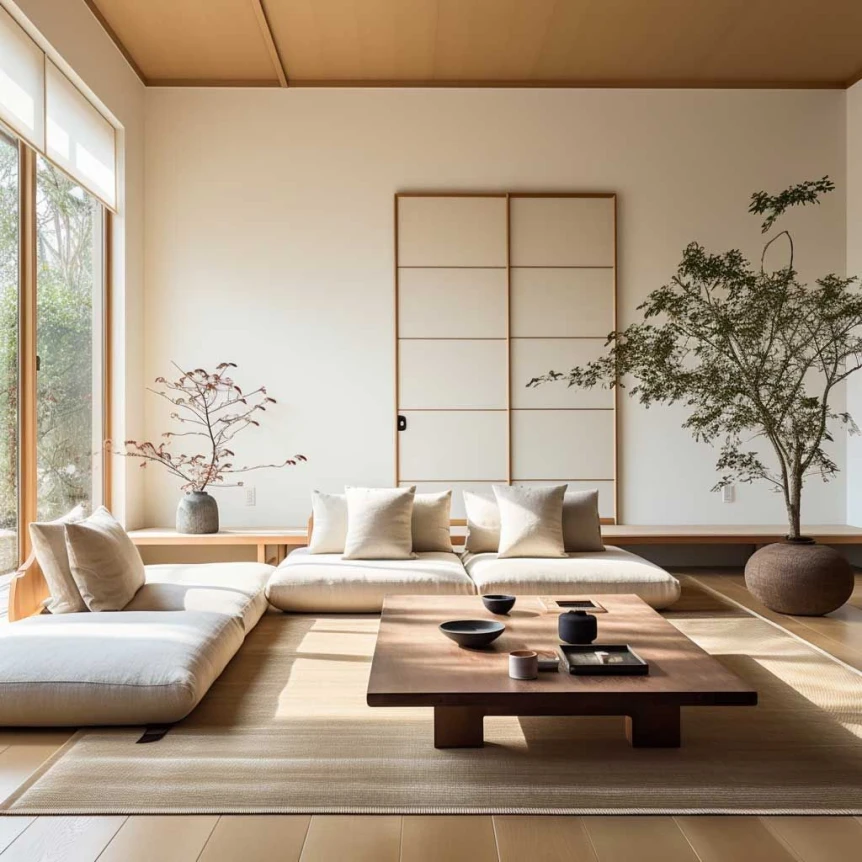
This variation blends minimalist principles with Japanese aesthetics. Low profile furniture, natural wood, paper lanterns, and a deeper appreciation for negative space and imperfection define the look. It overlaps heavily with Japandi, and the complete guide to Japandi interior design is the right next read for anyone drawn to it; the style asks for a willingness to leave large stretches of wall and floor empty.
Scandinavian minimalism
Scandinavian minimalism softens the style with cozy textiles, light wood, and a warmer overall feeling. It values comfort alongside simplicity and feels more lived in than the other variations. Bright white walls and pale oak floors make it especially effective in apartments that struggle for natural light, which is why the style was perfected in places that spend half the year in winter.
A single wool throw at the foot of a bed, a sheepskin over the back of a chair, and a chunky knit floor cushion are the small textile moves that separate Scandinavian minimalism from its cooler cousins. The complete guide to Scandinavian interior design covers the rest of the vocabulary.
How Do You Start a Minimalist Room in Five Steps?
Start with one room, and start with the room used most. A living room or bedroom that works teaches more about the style than a half finished whole house project, and it shows whether the household actually enjoys living this way before anything else is committed.
1. Empty the surfaces, not the room. Clear every horizontal surface completely and leave the furniture where it is. Live with the room for a week and notice what gets put back because it is used and what gets put back out of habit.
2. Edit by category. Books, textiles, decorative objects, and paper each get one pass across the whole room. Anything that fails all three questions (used, loved, meaningful) leaves.
3. Fix the palette before buying anything. Choose the direction (all white, warm neutral, or monochrome), test the wall color as a two foot square across a full day, and match the bulbs to one temperature. Most rooms need no new paint at all, only fewer competing colors on the surfaces.
4. Replace one piece, at most. Identify the single piece of furniture that fights the room hardest, usually the sofa or the largest storage unit, and replace it with something that meets the proportions above. Everything else waits until the room has settled.
5. Bring back three things. Once the room reads calm, return the three objects missed most. If nothing is missed, the edit is done; if the room still feels like someone else’s, the edit went too far, and the fix is more of what was loved, not more of what looks minimal.
What Does Minimalist Interior Design Cost?
Less than most people expect and more than the photographs suggest. The editing costs nothing, and for many rooms it is most of the work. The furniture that survives the edit is where the money goes, because a minimalist room has nowhere to hide a cheap piece.
| Element | Edit only | Lasting tier | What the extra buys |
|---|---|---|---|
| Decluttering and surfaces | $0 | $0 | Nothing; this is the part money cannot do |
| Wall color | $0 to $150 (one room) | $300 to $600 (professional) | Even coverage on a warm white that shows every roller mark |
| Sofa | Keep and recover: $400 to $900 | $1,500 to $3,500 | Kiln dried hardwood frame, feather wrapped cushions, linen or wool cover |
| Dining table | Keep and refinish: $100 to $300 | $1,200 to $3,000 | Solid oak or ash top that can be sanded and oiled for decades |
| Bed frame | Keep: $0 | $800 to $2,000 | Solid wood platform, no visible hardware, low profile |
| Lighting (three sources) | $100 to $200 | $400 to $900 | Matched bulbs, a dimmer, one fixture that reads as sculpture |
| Textiles | $150 to $300 | $500 to $1,200 | Real linen and wool that soften with washing instead of pilling |
The edit only column produces a room that reads minimalist within a weekend and costs a few hundred dollars in paint and textiles. The lasting tier is the room that still looks right in ten years, and it is reached one piece at a time, in the order the pieces fail. The mistake is spending the lasting tier budget on decor before the sofa and table have been dealt with.
Where to save: the bed frame, which is mostly hidden by bedding, and the lighting, where a well placed inexpensive lamp beats an expensive one in the wrong spot. Where not to save: the sofa and anything with a wood top, because those are the surfaces the style exposes most.
What Are the Most Common Minimalist Design Mistakes?
Confusing minimalism with emptiness
The biggest mistake is thinking minimalism means having as little as possible. A room with one chair and nothing else is not minimalist; it is empty. Real minimalism still includes the things that are needed and loved and removes only the excess.
This is the most common overcorrection. Bringing a few loved objects back often makes a room read more minimal than it did when nearly empty, because the few things kept finally have room to be seen. A room that does not feel like yours is the clearest signal that the editing has gone too far.
Making the space feel cold
All white walls, polished surfaces, and no soft textures create rooms that feel like waiting areas rather than homes. Add warmth through natural wood, soft textiles (linen, wool, bouclé), and one or two grounding darker elements, such as a charcoal pendant, a black framed mirror, or a deep walnut credenza, in any room that leans heavily on white.
Skipping personality
A minimalist home should still feel like the people who live in it. The few objects kept should reflect their taste and history, because a room without any personal touches feels staged, not minimalist. The point is to display what matters, not to display nothing.
Ignoring comfort
Minimalism without comfort fails. A beautiful sofa that is uncomfortable to sit on, a bed that looks right but does not support sleep, or a chair nobody uses because it is awkward all defeat the purpose. Function and comfort are part of the principle, not optional extras.
Forgetting texture
Without color and pattern, texture becomes essential, and a room with no textural variation feels flat. Mix smooth with rough, hard with soft, matte with subtle sheen. A linen cushion against a polished concrete coffee table, a wool throw on a leather chair, a ceramic vase on an oak shelf: these contrasts give minimalist rooms their depth and warmth.
Buying “minimalist decor”
Many people try to reach minimalism by buying more things, just minimal looking ones. This misses the point entirely. The style starts with editing what is already owned, not shopping for new items, and new pieces arrive only when there is a clear reason and a clear place for them.
Bringing It Home
Minimalist interior design is not about giving up the things you love. It is about choosing them more carefully and giving them room to matter. Done well, it produces homes that feel calm, intentional, and surprisingly personal.
The fewer things owned, the more each one means, and the clearer the space, the easier it is to think and rest in it. Use the guides linked throughout this page to go deeper into the specific decisions: color, furniture, decluttering, and the warm versus modern question that decides the mood of the whole house.
Frequently Asked Questions
Is minimalism the same as having nothing?
No. Minimalism is not about empty rooms. It is about owning fewer, better things and giving them room to be seen and used. A minimalist home can include art, books, plants, and meaningful objects; the difference is that each is chosen with care and given breathing room rather than competing with countless other items.
How do I make a minimalist home feel warm and not sterile?
Use warm whites (White Dove by Benjamin Moore, Wevet by Farrow and Ball, or Alabaster by Sherwin Williams) instead of cool whites. Add natural materials such as oak, linen, and wool. Include one or two darker grounding elements through furniture, a framed mirror, or a charcoal pendant. Match the bulb temperature across every fixture in the 2700 to 3000 Kelvin range, and add a plant or two for life.
What colors are used in minimalist interior design?
Minimalist palettes are restrained and tight. Whites, warm creams, soft grays, blacks, and natural wood tones dominate, and warmer variations add beige, sand, and stone. Color, when used, appears sparingly through one or two accent pieces rather than as a major design element.
Where do I start with minimalist design?
Start with one room and declutter by category rather than by room: all the books in one place, then clothing, then kitchenware and decorative objects. Ask whether each item is genuinely useful, meaningful, or loved and remove anything that passes none of the three tests. Once the inventory is real, fix the palette, replace at most one piece of furniture, and let the room settle before buying anything else.
Which minimalist variation should I choose?
For most homes, warm minimalism is the variation people end up at and the one easiest to live with long term. Modern minimalism suits lofts and apartments with strong architectural features and rewards strict consistency. Japanese influenced minimalism works in homes with a real appreciation for negative space and wabi sabi, and Scandinavian minimalism is especially effective in small or light starved apartments. The honest test is which mood you want walking in the door, not which one photographs best.