Minimalist Bedroom Ideas: 14 Ways to a Calm, Restful Room

By Tereza Hower | Published April 11, 2026 | Updated October 12, 2026
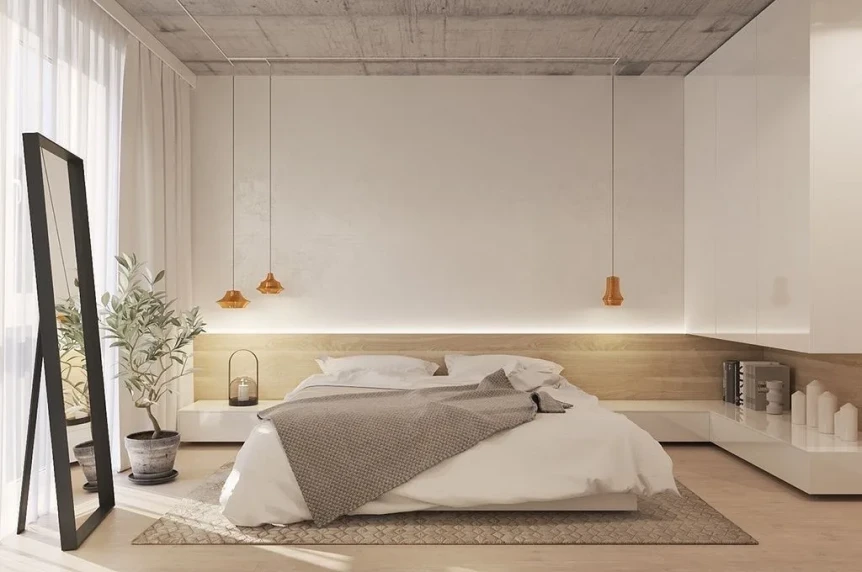
Most bedrooms lose their calm for a dull reason: every flat surface collects something, and a bedroom is full of flat surfaces. A minimalist bedroom works by having fewer of them, and by making the few that remain hard to clutter. The ideas below are the specific moves that get a room there, with the measurements, colors, and materials that decide whether each one works.
Key Takeaways
- A low platform bed with a mattress top around 18 to 22 inches off the floor sets the quiet, horizontal line the rest of the room follows.
- Warm whites such as Benjamin Moore White Dove read calm in most light, while a single dark color across walls and trim reads calmer than one accent wall.
- Concealed storage matters more than any decor choice, and wardrobe doors painted in the wall color almost vanish.
- Nightstand tops should sit within two inches of the mattress top, and 24 inches of walkway beside the bed is the minimum.
- A frame worth buying has solid slats no more than three inches apart and a center rail with a leg to the floor on queen sizes and up.
What Makes a Bedroom Minimalist?
A minimalist bedroom is a sleeping room reduced to the bed, one or two bedside surfaces, and closed storage, with decor limited to a few pieces chosen on purpose. The look comes from what is hidden as much as from what is shown. Clear floors, clear tops, and a restrained palette do most of the work.

It is not the same as an empty room. A bedroom with a mattress on the floor and bare walls is unfinished, not minimal. The difference is that every remaining piece is good enough to stand alone, which is why the buying decisions matter more here than in a busier style. For the principles behind the look across the whole house, start with the complete guide to minimalist interior design.
Minimalist Bedroom Ideas Built Around the Bed
1. Go low with a platform frame
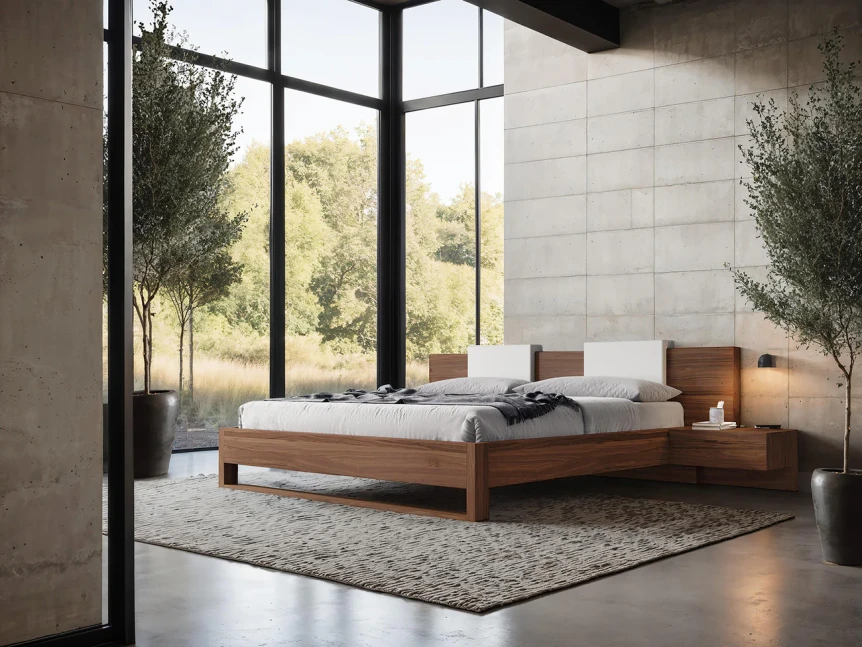
A platform bed that puts the mattress top 18 to 22 inches from the floor keeps the room’s main line low, which makes the ceiling feel higher and the walls feel emptier. A standard frame with a box spring often lands at 25 inches or more. Go much lower than 16 inches and getting up becomes a chore, so the very low floor beds in photographs suit fewer people than they appear to.
2. Let the headboard be the wall
Skipping the headboard is the most minimal option, but it only works when the wall behind the bed is clean and the pillows will not slide into a gap. A flat panel headboard in oak or a tight upholstered one in linen is the middle ground. Either way, keep it no taller than about 48 inches from the floor so it reads as part of the bed rather than as furniture of its own.
3. Dress the bed in one fiber
Matching the sheets, duvet cover, and one throw in the same fiber gives the bed texture without pattern. Linen around 160 to 190 grams per square meter has enough weight to drape and wrinkle softly; cotton percale reads crisp and matte. Two sleeping pillows per person and one throw at the foot is the full set, and decorative pillow mountains are the first thing to go.
Which Colors Work Best in a Minimalist Bedroom?
4. Use a warm white, not a gallery white
Bright, cool whites look clean on a paint chip and clinical on four bedroom walls, especially in north light. Softer whites such as Benjamin Moore White Dove (OC-17) or Sherwin-Williams Alabaster (SW 7008) hold their calm from morning to lamplight. For a little more depth without color, Benjamin Moore Pale Oak (OC-20) is a quiet greige that suits oak floors.
Test any white on a large sample board in the room itself and look at it at night under the bulbs you will actually use. More palettes and pairings are in our guide to minimalist color palettes for every room.
5. Commit to dark, all the way
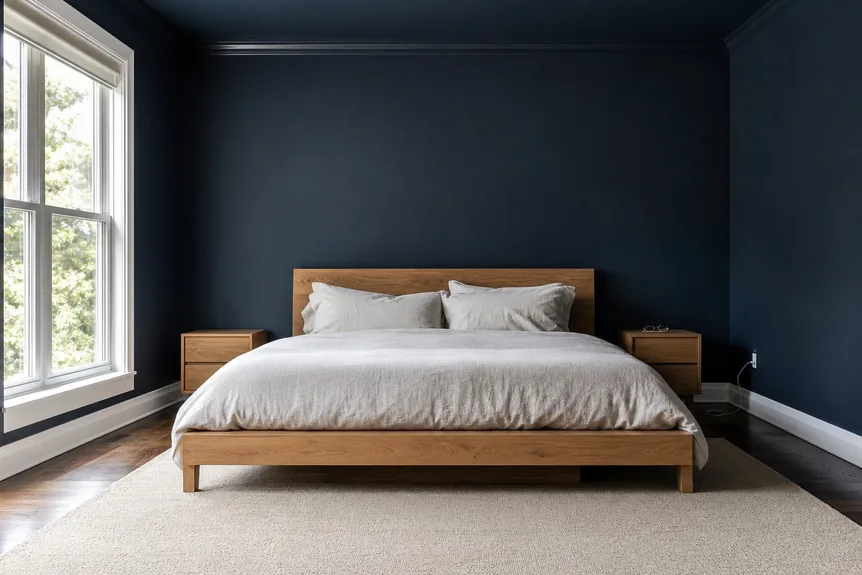
A dark bedroom can be just as minimal as a pale one, and it often feels more restful. The trick is to paint walls, trim, and even the ceiling in one color, such as Benjamin Moore Hale Navy (HC-154) or Sherwin-Williams Iron Ore (SW 7069), so no contrasting edges break the room up. A single dark accent wall behind the bed does the opposite: it adds a frame, and frames add busyness.
Bedside Ideas That Keep Surfaces Clear
6. Match the nightstand to the mattress, not the bed
The top of a nightstand should sit within two inches of the mattress top, which means a low platform bed needs a lower nightstand than most sold as standard. A piece 18 to 22 inches wide with one drawer is enough; an open shelf below invites piles. Choosing one nightstand where only one person needs it is more honest than buying a pair for symmetry.
7. Move the light onto the wall
A swing arm or fixed sconce frees the whole nightstand top. Mount it so the bottom of the shade sits roughly 20 to 24 inches above the mattress, and use a warm 2700K bulb on a dimmer. Renters can use plug-in sconces with a paintable cord cover, and the modern bedroom lighting ideas post covers ceiling and ambient options.
How Do You Hide Storage in a Minimalist Bedroom?
Storage is the idea that decides whether the rest of this list holds up a month later. Every item of clothing needs a closed home, and the closed home needs to be quiet itself. Before buying any of it, cut down what has to be stored; the steps in how to declutter for a minimalist home come first for a reason.
8. Paint the wardrobe wall to disappear
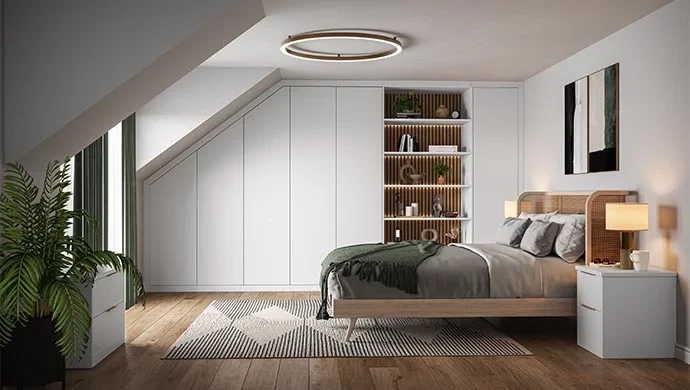
A run of flat front wardrobes painted the same color as the walls, with push latches or recessed pulls, reads as a wall rather than as furniture. Plan for 24 inches of depth so hangers fit, and take the doors to the ceiling if the budget allows, since a gap above collects boxes. A freestanding wardrobe can do the same job if it has plain doors and sits flush in an alcove.
9. Put the bed to work
A storage bed with drawers or a gas lift base holds seasonal clothes and spare bedding that would otherwise need a dresser. Drawers need about 24 inches of clear floor to open, while a lift base needs none, which makes it the better choice in tight rooms. Specific frames worth considering are in our roundup of storage beds that maximize space.
Minimalist Bedroom Decor Ideas That Add Warmth
10. One artwork, sized to the bed
A single piece above the bed works when it spans about two thirds of the headboard width, so roughly 40 inches over a queen. Hang it 6 to 10 inches above the headboard so it belongs to the bed. A painting with real brushwork or a large print in a thin oak frame brings more warmth than a grid of small frames ever will.
11. A bench, a plant, and nothing else
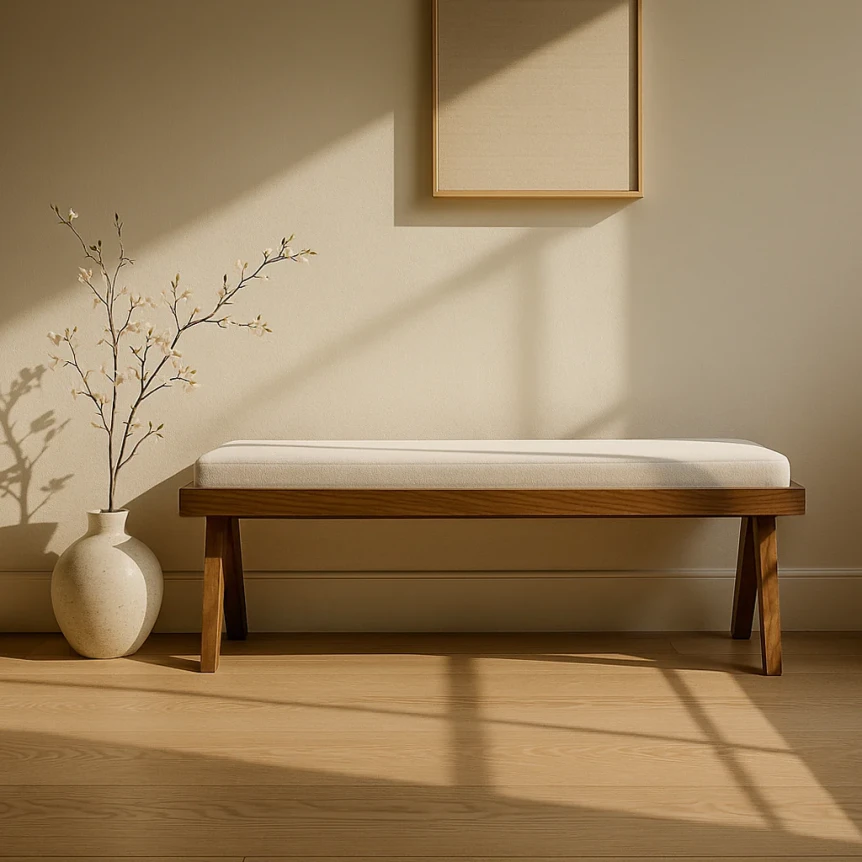
A simple wood bench at the foot of the bed, about two thirds as long as the bed is wide, gives the room a place to sit and a place for tomorrow’s clothes. One plant that tolerates low light, such as a snake plant or a ZZ plant, adds life without the clutter of a plant shelf. Stop there, and the room keeps its quiet.
Minimalist Modern Bedroom Ideas
12. Trade wood for steel and lacquer
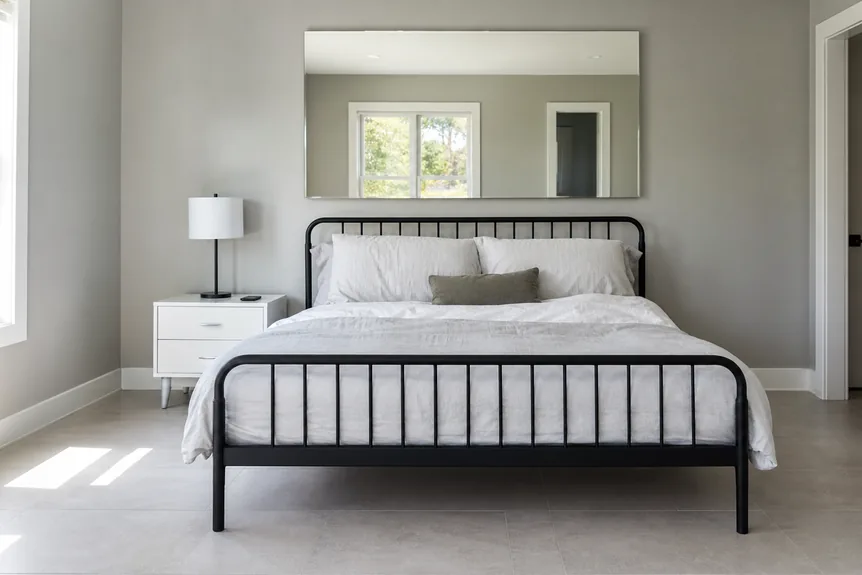
The modern take on a minimalist bedroom swaps warm oak and linen for a powder coated steel frame, lacquered or matte laminate case pieces, and higher contrast. Keep the contrast to two values, such as a charcoal bed against a pale wall, and let the warmth come from the bulbs and a wool rug. The comparison of warm minimalism vs. modern minimalism sets out where the two looks part ways.
If the room leans softer and more natural instead, the ideas in Japandi bedroom ideas for restful, minimal spaces sit close by and add more texture and craft.
Ideas for a Small Minimalist Bedroom
13. Shelf instead of nightstand
In a room under about 10 by 10 feet, a wall shelf 10 to 12 inches deep at mattress height replaces the nightstand and clears the floor. Pair it with a sconce above and the bedside zone takes no floor space at all. Keep 24 inches of walkway on any side of the bed that someone uses.
14. Run the curtains wall to wall
Curtains hung just below the ceiling and run the full width of the window wall make a small room look wider and hide an awkward window. Use one fabric in a shade close to the wall color, with a blackout lining or a separate shade behind it. The track or rod should be the plainest one available.
What Measurements Does a Minimalist Bedroom Need?
Minimal rooms show every mistake in proportion, because there is little else to look at. These are the numbers worth checking before buying anything.
| Element | Aim for | Why it matters |
|---|---|---|
| Mattress top on a platform bed | 18 to 22 inches from the floor | Low enough to keep the room horizontal, high enough to get up easily |
| Nightstand top | Within 2 inches of the mattress top | Lamps and water stay in easy reach without a stretch |
| Walkway beside the bed | 24 inches minimum, 30 to 36 preferred | A cramped path makes the room feel full even when it is not |
| Clearance in front of drawers | About 36 inches | Drawers open fully and someone can stand at them |
| Rug under a queen bed | 8 by 10 feet | Leaves about 18 inches of rug on each side of the bed |
| Rug under a king bed | 9 by 12 feet | Keeps the same border on a 76 inch wide bed |
| Art above the bed | About two thirds of the headboard width | One piece reads as intentional rather than lost |
| Wardrobe depth | 24 inches | Hangers fit without the doors bowing |
How to Tell a Well Made Minimalist Bed From a Cheap One
A minimalist bed has nowhere to hide. There is no carving to distract from a thin veneer and no skirt to cover a wobbly rail, so the construction is the design. Buyers who handle a lot of furniture learn to check the same few things first.
- Slats: solid wood, no more than three inches apart. Many foam and hybrid mattress warranties require this spacing, and wider gaps let the mattress sag.
- Center support: queen sizes and larger need a center rail with at least one leg to the floor. Without it, the slats bow within a year or two.
- Joinery: metal bolts into threaded inserts or barrel nuts hold far longer than wood screws driven into particleboard, which strip after one move.
- Edges: look at the corners of the headboard and rails. Veneer that wraps a clean edge is fine; a printed paper edge that is already lifting in the showroom will peel at home.
- Upholstery: a fabric rated 15,000 double rubs or more on the Wyzenbeek test suits daily use, and a removable cover outlasts a stapled one.
The frame that disappoints most often is the one that photographs best: a very low, very thin platform with a floating effect and particleboard rails. The detailed shortlist by piece, with price bands, is in minimalist bedroom furniture worth buying.
What Most People Get Wrong
The most common mistake is buying minimalist furniture before clearing the room, so the new pieces arrive into the same clutter and get blamed for it. The second is choosing everything in the same pale tone. A room of white walls, white bedding, and white oak with nothing darker than a pillow reads flat in photos and in person; one dark element, such as a walnut nightstand or a charcoal throw, gives the eye somewhere to rest.
The third is mistaking bare for finished. A bedroom with no rug, no textiles, and hard surfaces everywhere echoes and feels cold, so a wool or flat woven rug and lined curtains are part of the minimal kit, not extras. For a step by step order of work, see how to design a minimalist bedroom.
Where to Start
Clear the room first, then fix storage, then the bed, then color, and leave decor for last. Each step makes the next one cheaper, because a room with closed storage needs less furniture and a room with fewer pieces needs less decor. When the bedroom is done, the minimalist interior design guide carries the same approach into the rest of the house.
Frequently Asked Questions
What color is best for a minimalist bedroom?
A warm white or soft greige suits most rooms, such as Benjamin Moore White Dove (OC-17) or Pale Oak (OC-20). Cool, bright whites tend to look clinical in bedroom light. If you prefer dark, paint walls, trim, and ceiling in one deep color such as Hale Navy (HC-154) rather than a single accent wall.
What furniture does a minimalist bedroom need?
A bed, one or two nightstands or wall shelves, and closed storage for clothing. A bench at the foot of the bed is the one optional extra worth having. A storage bed or a wardrobe wall can replace a dresser entirely.
How do you make a minimalist bedroom feel warm and not cold?
Use one natural fiber for the bedding, a wool or flat woven rug, lined curtains, and warm 2700K bulbs on a dimmer. Add one darker element such as a walnut nightstand so the room is not a single pale tone.
How big should the rug be in a minimalist bedroom?
An 8 by 10 foot rug suits a queen bed and a 9 by 12 suits a king. Both leave roughly 16 to 18 inches of rug on each side of the bed, so feet land on something soft. A small rug floating beside the bed tends to look like an afterthought.