Bookshelf Styling Ideas by Style: Japandi, MCM, Minimalist, Industrial

By Tereza Hower | Published May 22, 2026 | Updated May 27, 2026
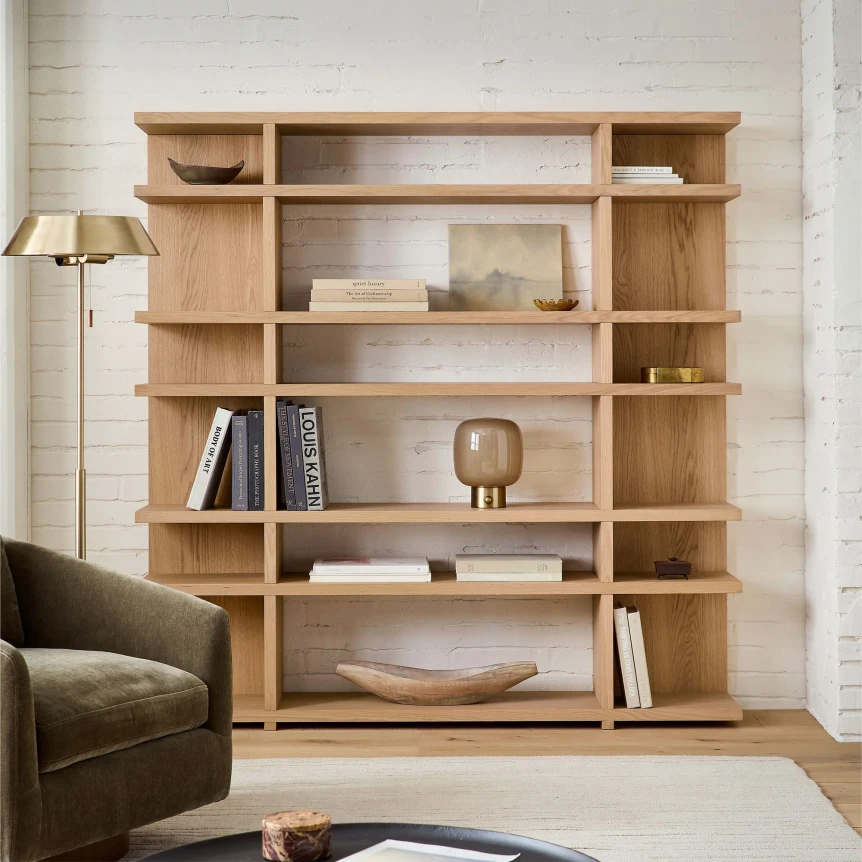
The same bookshelf, styled four different ways, reads as four entirely different rooms. The unit can be identical (a walnut six-shelf piece with closed back, say) and the change comes from object choices, density, color palette, and what gets left out. A Japandi version reads quiet and intentional, with linen-bound books and one ceramic. A mid century modern version reads warmer and more layered. A minimalist version reads severe and clean. An industrial version reads textural and material-forward. None of them is the “right” one. They are tuned to different design languages and they earn their place by being consistent with the rest of the room.
This post is a guide to the specific moves each style calls for, with concrete examples of what to use, what to leave off, and how the same general principles from the bookshelf styling pillar translate across visual vocabularies. The bookshelf styling ideas below are tested against rooms I have lived in and homes I have styled, not assembled from search results.
Key Takeaways
- The same bookshelf reads very differently in Japandi, mid century modern, minimalist, and industrial rooms.
- Material palette and density are the two biggest variables across styles.
- Japandi and minimalist styles edit harder; mid century modern and industrial allow more layering.
- Object choice should match the larger room language, not the shelf in isolation.
- Books themselves can be styled differently across approaches, with horizontal stacks, leaning frames, and exposed paper edges all reading differently by style.
What changes when bookshelf styling shifts by style?
Three things shift across style languages. The first is the material palette: which woods, metals, ceramics, and textiles belong in the room. The second is the density: how much breathing room the shelf carries. The third is the object character: whether the objects on the shelf read as artisanal, industrial, mass produced, or vintage.
What does not change is the structural principles. The thirds rule still applies. The empty shelf still grounds the unit. Leaning frames in pairs still produce depth. What changes is the execution and the surface vocabulary. The principles are universal; the style is the dialect.
How do you style a bookshelf for a Japandi home?
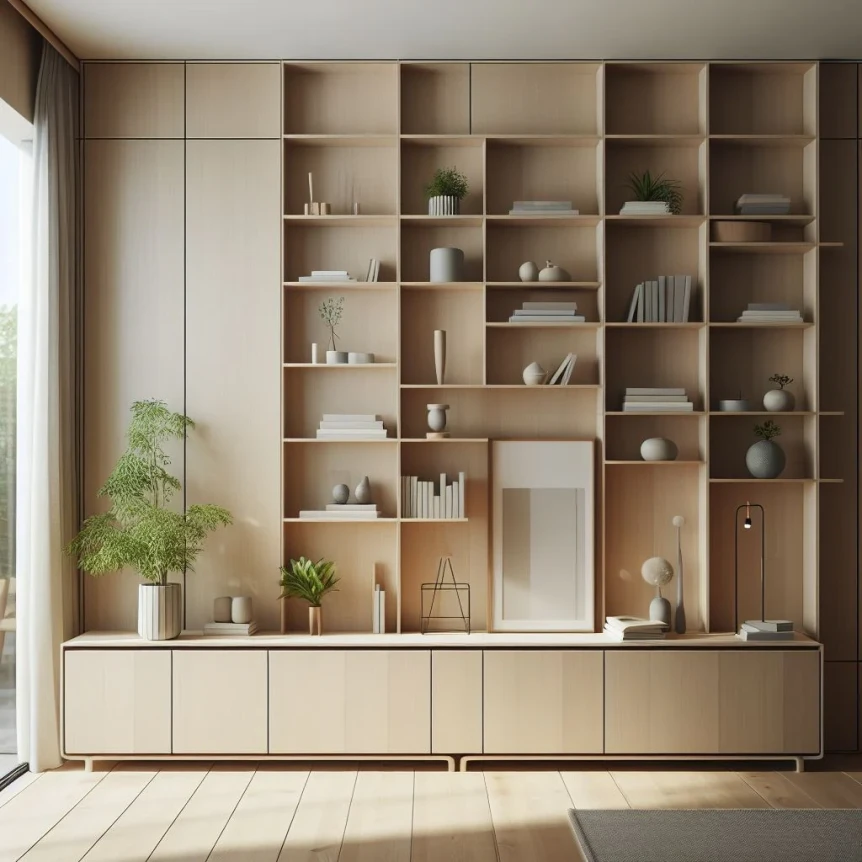
Japandi bookshelves are the quietest and most disciplined of the four styles. The material palette runs through pale woods (white oak, ash, light bamboo), undyed linen, raw and matte ceramics, and the occasional dark accent in oxidized brass or black wood. Color across the unit is restrained: warm whites, soft taupes, the occasional muted indigo or moss green.
Density is low. Most shelves sit closer to half full than two-thirds, with deliberate empty space between objects. Books are often a minority of the shelf content rather than the majority. Where there are books, they tend to be cloth bound, design or photography focused, and grouped tightly together in short blocks of five to eight spines.
Objects to include: a single ceramic vessel in matte stoneware glaze, a small wood bowl turned from a single piece, a slim folded textile in undyed linen, one piece of art that leans against the back rather than hangs. Objects to avoid: brass anything shiny, mass produced decor, bright color accents, anything with visible printed text. The Japandi interior design guide covers the broader room context, and the bookshelf is one of the easiest places to introduce a Japandi sensibility.
How do you style a bookshelf for a mid century modern home?
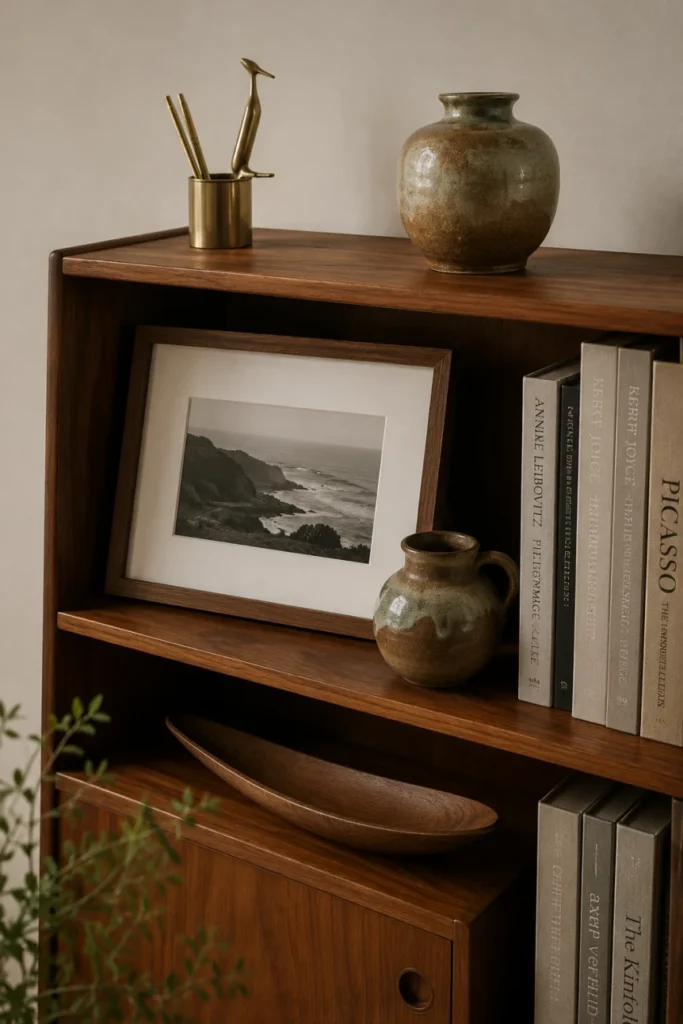
Mid century modern bookshelves are warmer and more layered than Japandi or minimalist versions. The material palette runs through walnut and teak in saturated finishes, brass and bronze with a slight age to them, leather, and warm-toned ceramics. The color story is richer: cognac, ochre, deep teal, burnt orange, charcoal.
Density runs closer to the standard two-thirds rule from the styling pillar. Books are roughly 60 to 70 percent of the shelf content, with objects in clear secondary roles. Horizontal stacks work especially well in this style; mid century interiors generally reward layered surface treatments. Leather-bound vintage books or older hardcovers with cloth spines reinforce the period vocabulary.
Objects to include: a small brass sculpture or pen holder, a vintage ceramic in earthy glazes, a framed black and white photograph leaned rather than hung, a single piece of teak or walnut treenware. Objects that work less well: light Scandinavian whites, modern stoneware in pale palettes, anything that reads too contemporary. The mid century modern furniture guide goes deeper into the material language across the room.Objects to include: a small brass sculpture or pen holder, a vintage ceramic in earthy glazes, a framed black and white photograph leaned rather than hung, a single piece of teak or walnut treenware. Objects that work less well: light Scandinavian whites, modern stoneware in pale palettes, anything that reads too contemporary. The mid century modern furniture guide goes deeper into the material language across the room.
How do you style a bookshelf for a minimalist home?
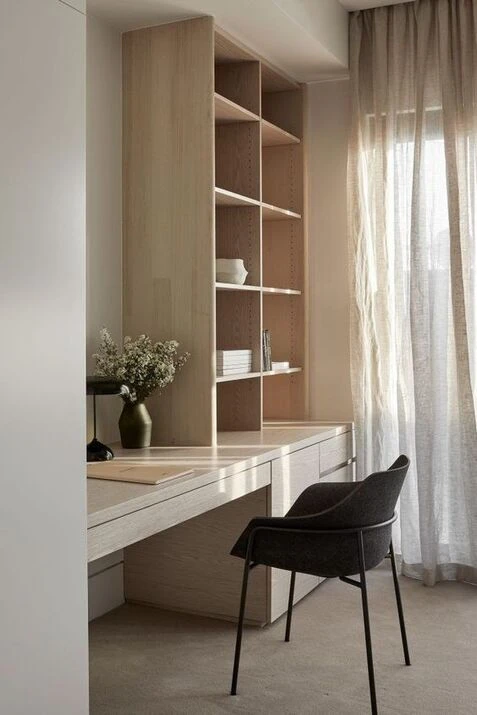
Minimalist bookshelves are the most edited and the most demanding to maintain. Material palette is tight: usually one wood (often white oak or ash, sometimes painted white), one ceramic finish (matte white or warm gray), and at most one accent material like brass or blackened steel. Color is largely monochromatic, with the occasional single accent piece that earns its presence by being the only saturated object on the unit.
Density is the lowest of the four styles, often closer to 40 to 50 percent fill. The empty shelf principle from the styling pillar applies almost universally; multiple shelves may be intentionally near-bare. Books are highly curated, with quiet spines preferred and loud dust jackets either removed or stored elsewhere.
Objects to include: a single white ceramic vase, a stack of three to five design books with quiet spines, a small framed black ink drawing leaning at the back. Objects to avoid: anything ornate, anything colorful, anything textural in a high-friction way (rough rattan, woven straw, heavily patterned ceramic). The minimalist interior design guide covers the broader room context, and the minimalist furniture guide walks through the material decisions in detail.
How do you style a bookshelf for an industrial home?
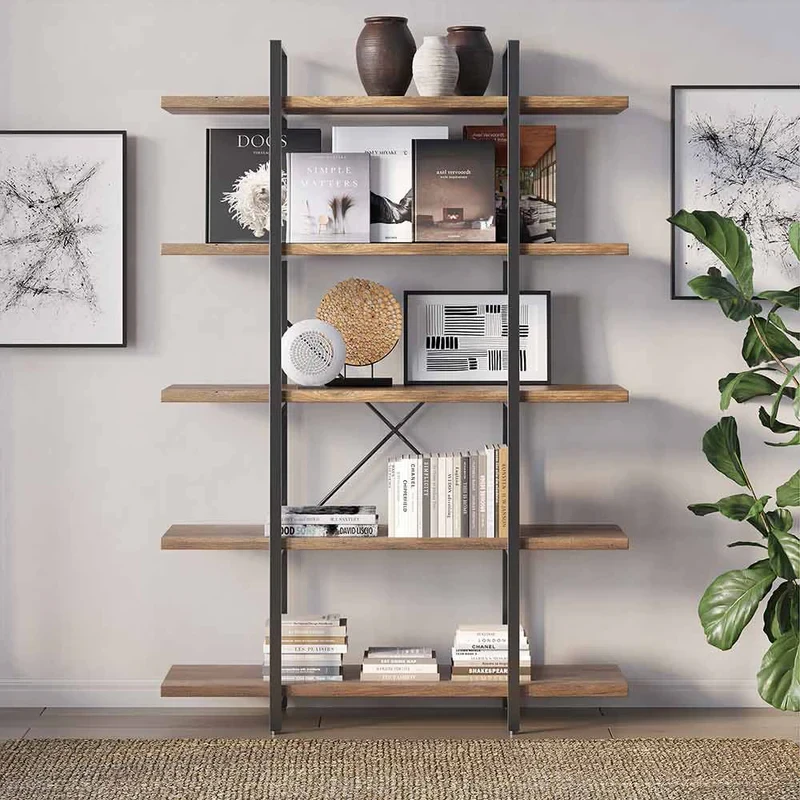
Industrial bookshelves carry the most material weight of the four styles. The unit itself is often a steel-frame piece with reclaimed wood shelves, or a heavy iron pipe and shelf board construction. The material palette is darker and heavier: blackened steel, raw or distressed wood, leather, aged brass, concrete. The color story runs through black, charcoal, deep brown, oxblood, and the occasional cream as relief.
Density runs higher than the other three styles, closer to 70 to 80 percent fill. The industrial vocabulary rewards visual accumulation; spare shelves can read as cold rather than calm in an industrial room. Books are styled with a mix of vertical and horizontal, with horizontal stacks doing more visual work than in other styles.
Objects to include: a piece of vintage industrial hardware (gear, valve, weathered tool), a leather-bound book or two, a heavy ceramic in matte oxblood or charcoal glaze, a framed sepia photograph or architectural drawing, a single brass piece with patina. Objects that fight the style: anything too pristine, light-colored ceramics, soft textiles, anything in a Japandi or Scandinavian register. The industrial interior design guide covers the larger material vocabulary.
Quick comparison across the four styles
| Style | Density | Material Palette | Book to Object Ratio | Key Move |
|---|---|---|---|---|
| Japandi | Roughly 50 percent fill | Pale wood, matte ceramic, undyed linen | 40 to 60 percent books | Deliberate empty space between objects |
| Mid Century Modern | Two thirds fill | Walnut, brass, leather, warm ceramics | 60 to 70 percent books | Layered horizontal stacks with object caps |
| Minimalist | 40 to 50 percent fill | One wood, one ceramic finish, one accent | 50 to 70 percent books, curated tightly | Multiple near empty shelves |
| Industrial | 70 to 80 percent fill | Blackened steel, reclaimed wood, leather, aged brass | 60 to 70 percent books | Visual accumulation and material weight |
The table is a starting point, not a rule. Any of these can shift slightly to match your specific room. The key is staying internally consistent with the rest of your interior. A Japandi-styled bookshelf in an otherwise industrial room reads as an accidental island; an industrial shelf in a Japandi room reads as a misplaced visitor.
What about Scandinavian and bohemian bookshelves?
Scandinavian bookshelves sit close to Japandi in material language but warmer and slightly denser. Light woods, plenty of natural textiles, and a generally cozier tonal palette. The styling allows for more soft objects (small wool throws, linen runners on lower shelves) and a slightly higher object count without losing the calm quality.
Bohemian bookshelves run the densest of any style. Layered textiles, woven baskets, plants (the only style where plants on bookshelves work consistently), travel objects, vintage finds, and mixed metal finishes all coexist on a single unit. The styling rule shifts from editing for restraint to editing for coherence; everything should feel collected over time rather than acquired in one shopping trip. Both the Scandinavian guide and bohemian guide cover their broader visual languages.
How does the bookshelf change when the room is mixed style?
Most real homes are not single-style. They mix two or three sensibilities that the homeowner has accumulated over time. The bookshelf in a mixed-style home should lean toward the dominant style of the room, with one or two objects nodding to the secondary style as accent. A primarily Japandi room with mid century modern furniture can have a Japandi bookshelf with one walnut object that pulls toward the secondary direction.
The styling failure mode in mixed-style rooms is trying to make the bookshelf carry all the style references at once. The result is visually confused. Pick the dominant style, style the unit to that, and let the rest of the room provide the cross-style notes.
Common mistakes when adapting bookshelf styling by style
Importing the wrong style’s density. A minimalist person trying to style a Japandi shelf often goes too sparse; the shelf ends up reading as cold rather than quiet. A bohemian person trying to do industrial often keeps too many soft textiles, which dilutes the material weight the style needs.
Treating style as a costume rather than a language. The shelf cannot be styled in a style language the rest of the room does not speak. A Japandi shelf in a fully traditional room with chintz upholstery and gilt mirrors will read as a foreign body. Style the shelf to the room you actually have, not the room you wish it were.
Buying new objects to fit the style. Most well-styled bookshelves are built from objects collected over years, not from a shopping trip dedicated to the unit. The bookshelf is the place that accumulates and rewards patience. If you do not have the right objects yet, leave the space until they come through.
Ignoring the unit itself. A unit that does not fit the style language fights the styling no matter how carefully you arrange it. A glossy lacquered piece in white reads as modern or contemporary, not Japandi or industrial. A heavy carved piece reads as traditional, regardless of what you put on it. Match the unit to the style first, then style on top.
Closing thoughts on style-specific bookshelf styling
The most useful thing to take from this guide is that bookshelf styling ideas are not universal. The same shelf in the same room can be styled in any of the four styles above, and the choice should follow the larger design language you have already committed to in the rest of the room. The structural principles (thirds rule, empty shelf, leaning pairs) survive across all styles. The execution details vary widely.
If you are still working out which style your home is leaning toward, the four style pillars are the best starting place: Japandi, mid century modern, minimalist, and industrial. Once the larger language is established, the bookshelf styling falls into place.
For the underlying styling principles that apply across all four styles, the complete guide to bookshelf styling covers the framework. For the form factor decision before any styling begins, modern bookshelf ideas and built in vs freestanding bookshelves walk through the unit-level choices.
Frequently Asked Questions
What is the difference between Japandi and minimalist bookshelf styling?
Japandi bookshelf styling uses warmer natural materials (linen, undyed wood, matte ceramic) and a softer tonal palette, while minimalist styling pushes harder toward severity with tighter material palettes and lower density. Japandi reads quiet and intentional; minimalist reads clean and edited. The two share an emphasis on negative space but differ on material warmth and object character.
Can you mix styles on a single bookshelf?
Lightly, yes; heavily, no. A primarily Japandi shelf with one walnut object pulling toward mid century modern works as a deliberate accent. A shelf trying to carry equal weight from three different style languages usually reads as confused rather than mixed. Pick the dominant style based on the rest of the room, and use the bookshelf to reinforce that direction with one or two notes toward a secondary style.
Why does the same bookshelf look so different in different styles?
Three variables change: the material palette, the density, and the object character. Japandi uses pale woods and matte ceramics at low density. Mid century modern uses warm woods and brass at moderate density. Minimalist uses tight palettes at very low density. Industrial uses dark metals and reclaimed wood at higher density. The same unit with the same books reads completely differently depending on which combination you apply.
Do bookshelves in industrial homes need to be heavier than in other styles?
Yes, both materially and visually. Industrial interiors call for unit construction in steel and reclaimed wood rather than light frames, and the styling tolerates and rewards higher density than other styles. A sparse industrial bookshelf often reads as cold or unfinished, while the same density in a Japandi room would read as calm. The styling weight has to match the material weight of the larger room.
Are plants appropriate on a bookshelf in any style?
Mostly only in bohemian and to a lesser extent Scandinavian styles. Japandi, mid century modern, minimalist, and industrial styles generally read cleaner without plants on the bookshelves themselves. Plants on bookshelves also carry maintenance and water damage risks that other object choices do not, which is why even style-appropriate use should be limited to hardy plants in well-sealed containers.