Warm Minimalism vs Modern Minimalism: The Real Difference

By Tereza Hower | Published April 11, 2026 | Updated October 13, 2026
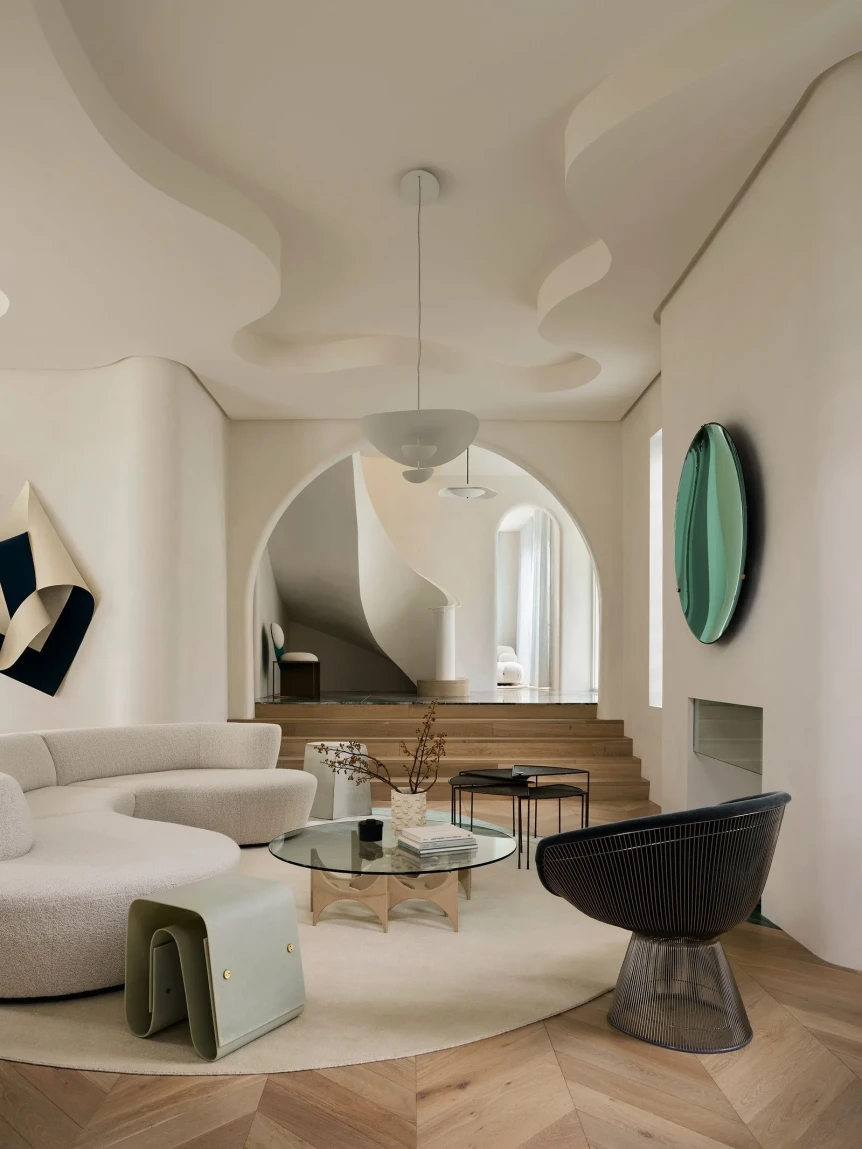
The classic first apartment is a study in strict modern minimalism. White walls, a polished concrete coffee table, a single black leather chair, and almost nothing else. It photographs beautifully. Most people last about six months before the linen throws and ceramic vases start arriving, and within a year the room has quietly redesigned itself. For a long time there was no name for that. The term warm minimalism had not yet entered the design vocabulary the way it has now.
Minimalism has more than one look. It is a philosophy with multiple legitimate expressions, and the two most popular today produce rooms that feel almost nothing alike. Warm minimalism leans cozy, tactile, and lived in. Modern minimalism leans cool, graphic, and architectural. Both are minimalist. Neither is more authentic than the other. The right one for you depends less on aesthetics than on how you actually want to feel when you walk in the door.
The Shared Foundation
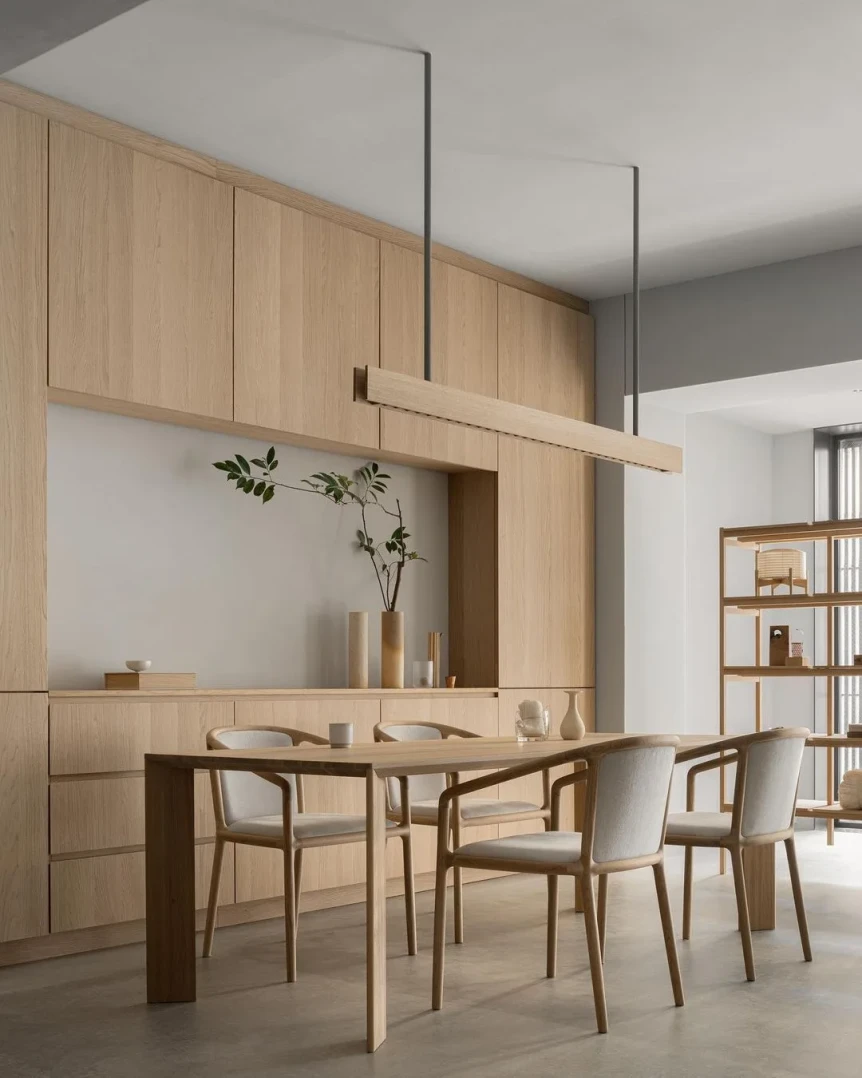
Both variations share the core principles of minimalist design: clean lines, restrained color, intentional negative space, quality over quantity, and concealed clutter. They both prioritize calm, function, and visual simplicity. The split happens in execution. How warm the palette runs, what materials carry the room, and whether the dominant feeling is comfort or composition.
If you are new to the underlying philosophy, the complete guide to minimalist interior design covers the foundational principles before they branch into variations.
What Warm Minimalism Actually Looks Like
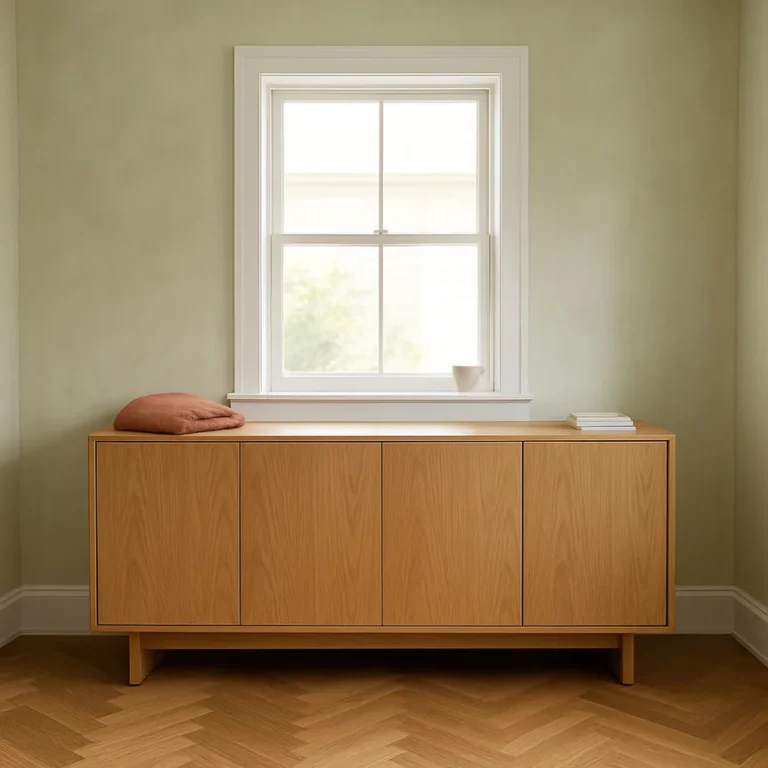
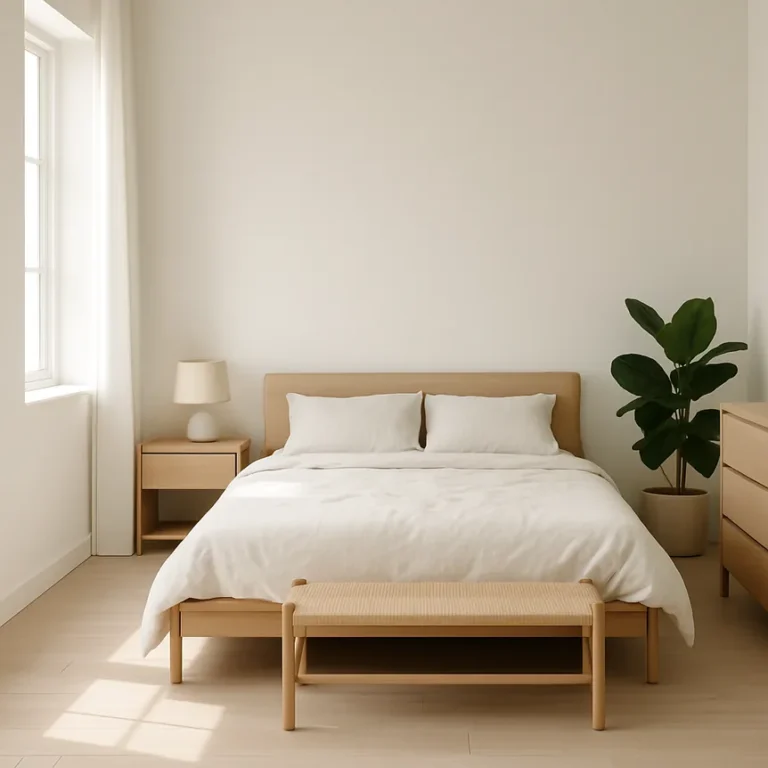
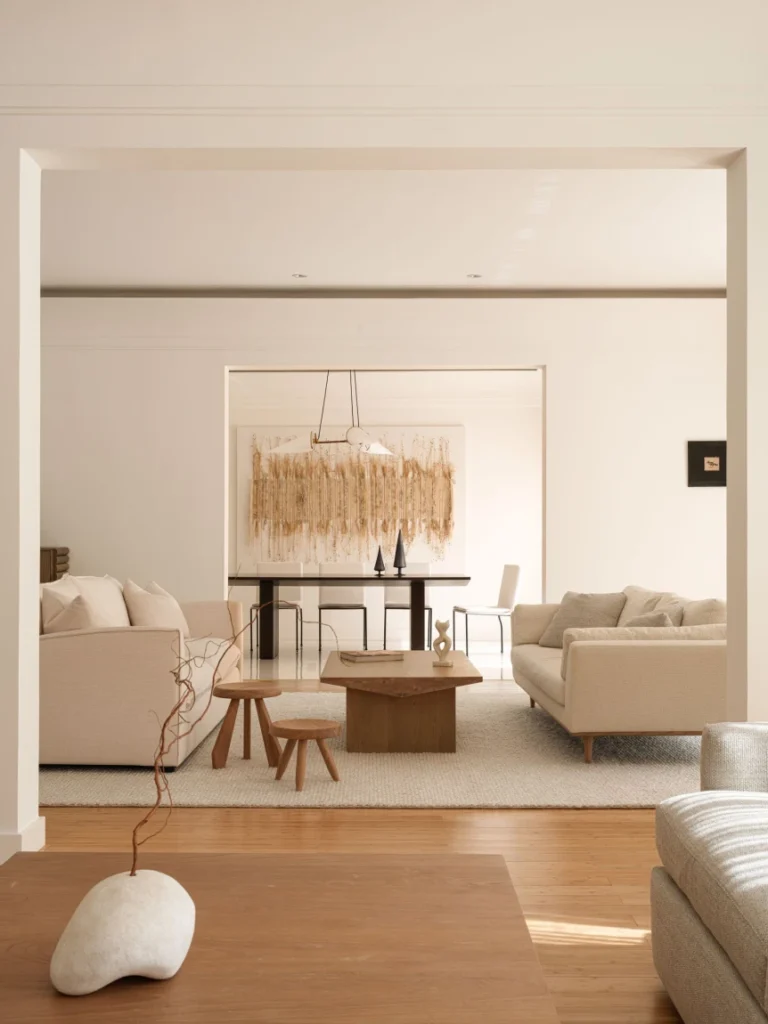
Warm minimalism softens the original style with natural materials, earthy tones, and tactile textiles. It keeps the visual restraint but adds the comfort that strict minimalism often lacks. The result is a room that feels calm and considered without reading austere. It is the version that has dominated design publications and Instagram feeds for the last several years, and the version most people picture now when they say they want a minimalist home.
Materials
Natural wood in warm tones (oak, walnut, ash), linen and cotton in soft neutrals, wool throws and rugs, handmade ceramics with visible glaze, and stone in warm beiges and tans. The materials do the heavy lifting visually. Their grain, weave, and texture carry the room without needing pattern or color to support them.
Color
Warm whites, soft creams, light beige, muted clay, and warm greige form the palette. Benjamin Moore’s White Dove, Farrow and Ball’s Slipper Satin, and Sherwin Williams’s Accessible Beige all work as foundational walls. Accent colors stay muted: dusty sage, soft terracotta, or a quiet mauve. The whole room sits in a tight tonal range that the eye reads as continuous rather than contrasting.
Furniture
Substantial without being heavy. Solid wood pieces with visible grain. Upholstery in linen, washed cotton, or boucle. Curves and organic forms appear more often than in modern minimalism. The pieces read handmade or artisanal, even when they are not, and the silhouettes lean rounded rather than angular.
What Modern Minimalism Actually Looks Like
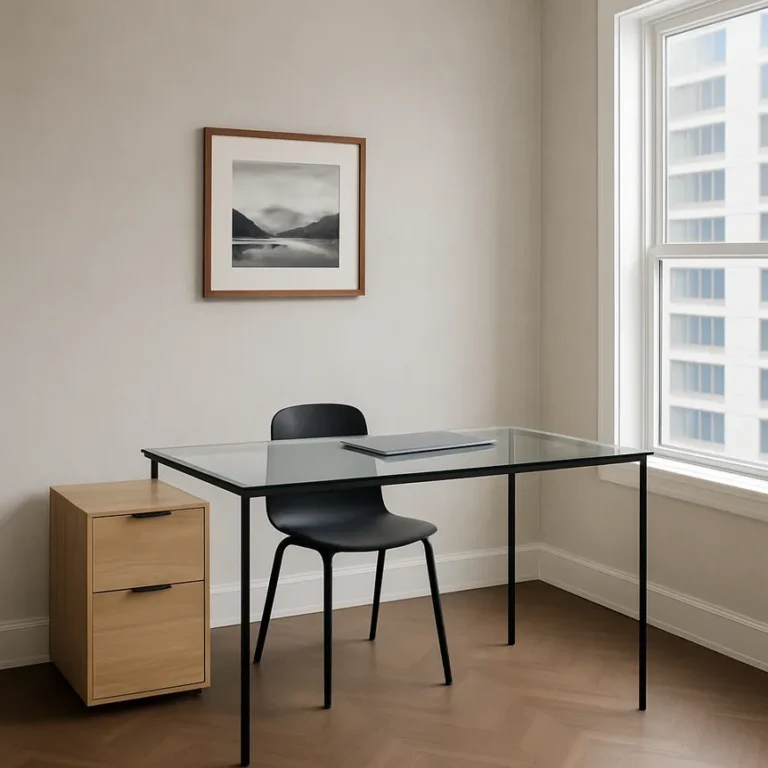
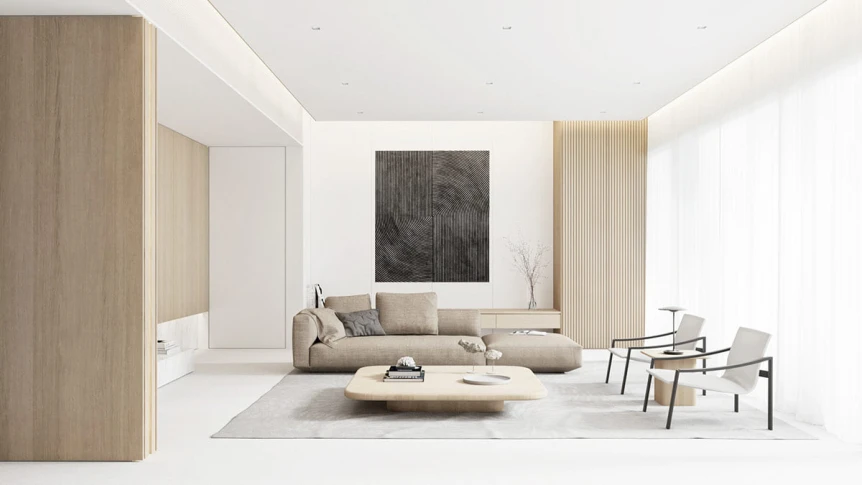
Modern minimalism is the gallery inspired version. Cooler, cleaner, more graphic, with stronger contrast between light and dark and a more architectural sensibility. It is the style that produced the famous white walled, concrete floored apartments that defined high end minimalism in the 2000s and 2010s. It still works beautifully in contemporary lofts, new construction, and homes with strong architectural bones.
Materials
Polished concrete, glass, steel, and engineered surfaces in matte or subtle finishes. Wood appears too, but in cooler or more neutral tones and usually in smaller doses. The surfaces are smoother and the edges are sharper than in warm minimalism. The visual character comes from form and light rather than from texture.
Color
Pure or cool whites, light gray, charcoal, and matte black dominate. Benjamin Moore’s Chantilly Lace, Sherwin Williams’s Pure White, and Farrow and Ball’s Strong White read correctly in the style. The palette is monochromatic and graphic, with deliberate contrast between the lightest and darkest elements. Color, when it appears, lands as a single bold accent in an otherwise restrained room.
Furniture
Cleaner lines, more refined construction, and geometric forms with sharp edges. Smooth upholstery without distressing. Metal frames in brushed steel, chrome, or matte black. The pieces feel manufactured, in a deliberate and architectural way. Iconic mid century pieces like the Barcelona chair or the LC2 sofa sit comfortably in modern minimalism even though they predate the term. These geometric forms and manufactured finishes are typical of minimalist furniture design, which is recognized by six specific traits across materials and construction.
Side by Side Comparison
Walls
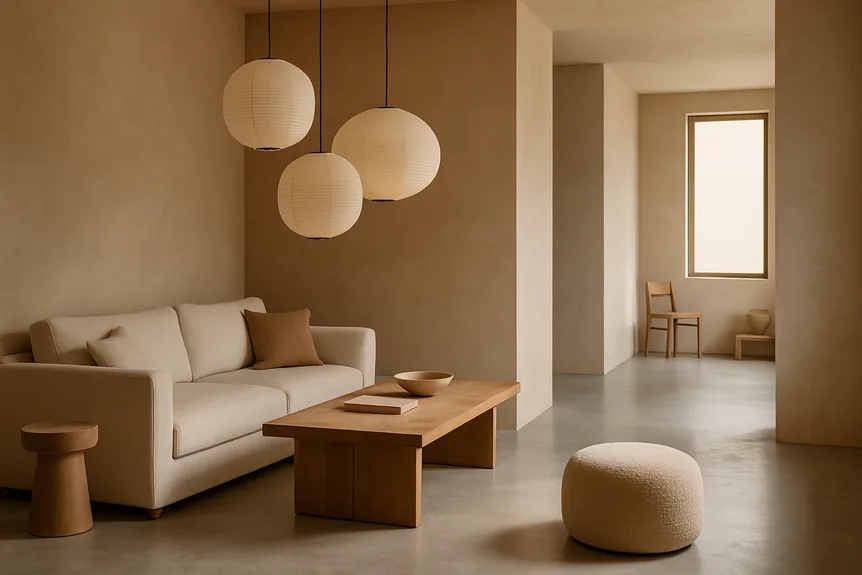
Warm minimalism: Warm whites, soft creams, or warm greige in matte finishes. Slight texture welcome, lime wash and plaster finishes earn their place.
Modern minimalism: Pure white or cool gray in flat or eggshell finishes. Smooth and uniform, with the wall itself reading as a surface to display light and shadow on.
Floors
Warm minimalism: Natural wood in warm tones, wide plank white oak or walnut, stone or tile in beige or warm gray.
Modern minimalism: Polished concrete, light wood with cool undertones, large format porcelain tile, sometimes pale terrazzo.
Furniture
Warm minimalism: Solid wood with visible grain, linen and boucle upholstery, organic curves alongside clean lines. For more on selecting pieces, see the minimalist furniture guide.
Modern minimalism: Sleek lines, metal frames, leather or smooth synthetic upholstery, geometric forms with sharp edges.
Color Palette
Warm minimalism: Warm whites, beige, taupe, natural wood, occasional muted earth accents in clay, terracotta, or dusty sage.
Modern minimalism: Cool whites, grayscale, black, and a single bold accent if any color enters the room at all.
Texture
Warm minimalism: Heavy emphasis on tactile materials. Linen, wool, ceramic, wood grain, and natural fiber rugs.
Modern minimalism: Smoother surfaces, less textural variation, more emphasis on form and the play of light.
Atmosphere
Warm minimalism: Cozy, inviting, slightly nurturing. Feels lived in even when newly furnished.
Modern minimalism: Sophisticated, formal, slightly cooler. Feels gallery like and composed.
What Most People Get Wrong
The most common mistake is the default one. People decide they want minimalism, default to the strict modern version because it photographs well and looks decisive online, and then quietly resent the room within a few months because it feels cold. Then they start adding pieces and accidentally end up somewhere between the two styles without naming what they did.
The fix is to choose the variation that matches how you want to feel, not how you want the photos to look. Modern minimalism rewards homes with strong architecture, abundant daylight, and high ceilings. It is also the better choice if you live alone, work from home in a focused way, or value composition over comfort. Warm minimalism is more forgiving across architectural styles and almost always the right answer for shared homes, families, or anyone who spends real time in their living spaces.
Other recurring mistakes worth naming:
- Using pure cool white walls in a north facing room. The light is already cool. Pure white compounds it and reads as a hospital corridor. Use a warm white instead, even in modern minimalist rooms.
- Mixing wood tones randomly. Both styles depend on tonal consistency. Pick one dominant wood and use it across at least two pieces of furniture.
- Skipping texture in modern minimalism. Even the cleanest gallery style room needs one wool throw, one linen cushion, and one ceramic object. Without them the room reads unfinished rather than minimal.
- Cluttering warm minimalism with too many “natural” objects. Three carefully chosen ceramic vessels read intentional. Twelve start to look like a pottery sale.
Tradeoffs Worth Considering
Every choice between the two styles is a tradeoff. Naming them in advance prevents the slow drift toward dissatisfaction that affects many minimalist homes.
Photogenic versus livable
Modern minimalism photographs better. Warm minimalism lives better. If your home is a place you actually inhabit for the long term, warm minimalism is almost always the right answer. If you are designing a space that has to perform on camera, like a content studio or a short term rental, modern minimalism gives the cleaner image.
Restoration cost versus daily wear
Modern minimalist materials like polished concrete, large format tile, and pure white walls show every mark. A scuff on a white wall reads as damage. A scuff on a lime washed warm white wall reads as character. Warm minimalism forgives daily life. Modern minimalism keeps a renovation crew on speed dial.
Cost over time
Modern minimalism tends to cost more both up front and over time. The engineered surfaces, sharper finishes, and architectural lighting required to do it well are not budget categories. Warm minimalism scales more gracefully with budget because the materials it relies on (linen, wool, ceramic, solid wood) are available at every price point.
Which Style Suits Your Space
Warm Minimalism Works When
You want a calm home that still feels welcoming and personal. You like natural materials and prefer rooms that feel cozy at the end of a long day. You are drawn to handmade or artisanal pieces. You live in a home with traditional architecture, warmer character, or a footprint that does not photograph naturally as a gallery space. You spend significant time at home and want it to comfort you, not just impress visitors.
Modern Minimalism Works When
You live in a contemporary apartment, condo, or loft with strong architectural lines. You prefer clean, composed, gallery like spaces. You appreciate the play of light and shadow across white surfaces. You are drawn to sleek, more formal aesthetics. You want a home that reads distinctly modern and you have the budget and patience for the finish work the style requires.
When You Cannot Choose
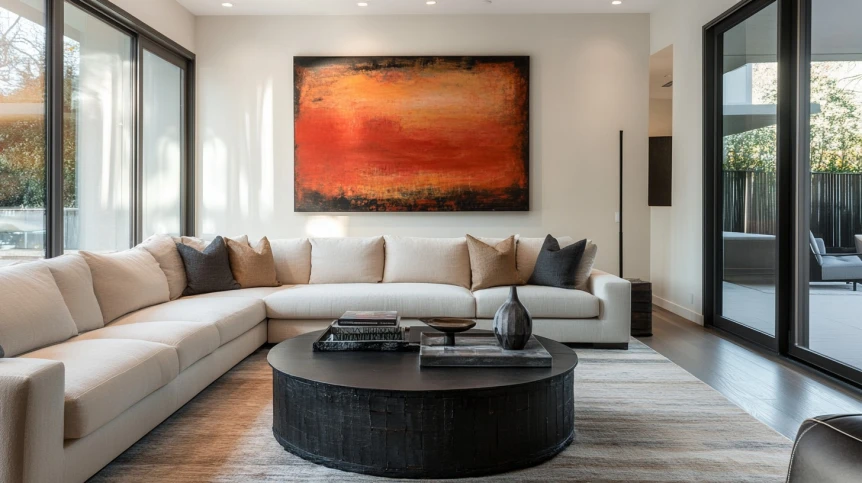
Most of the best minimalist homes blend elements of both, deliberately. A warm minimalist living room paired with a more modern minimalist kitchen. Modern silhouettes in a warm palette. Warm wood floors grounding an otherwise cool monochrome space. The two styles are not enemies. They share a parent, and most successful homes use the relationship rather than picking one camp.
Combining the Two Without Clashing
The cleanest way to blend warm and modern minimalism is to commit to one as the dominant direction and let the other appear in supporting roles. A warm minimalist room with one or two modern pieces reads cohesive. A fifty fifty split usually reads confused.
Practical moves that work consistently: pair sleek modern furniture with warm wood floors, use a warm color palette with cleaner modern forms, add tactile linen and wool to an otherwise cool monochrome room, ground a modern space with one substantial warm wood piece, or pair modern architectural lighting with warm textiles below. The discipline is making each addition deliberate. The minimalist color palettes guide covers the underlying tonal logic if you want to plan the palette in advance.
Room by Room Recommendations
Living Room
Warm minimalism is usually the better choice for living rooms because comfort matters more there than in any other room. Modern minimalism can work but demands extra effort on softness and texture. For complete guidance, see minimalist living room ideas.
Bedroom
Warm minimalism naturally suits bedrooms because the warmer tones and tactile materials promote rest. Modern minimalist bedrooms can read beautifully but require careful layering to avoid feeling cool. See minimalist bedroom design ideas for both approaches in practice.
Kitchen
Both styles excel in kitchens, for different reasons. Modern minimalism produces the cleanest, most architectural kitchens. Warm minimalism creates kitchens that feel inviting and lived in. The minimalist kitchen ideas guide covers both directions.
Bathroom
Modern minimalism often works well in bathrooms because the spa like, gallery feel suits the function. Warm minimalism offers a softer alternative that reads more residential and less institutional.
Home Office
The home office is where the choice between the two styles has the biggest day to day consequence. Modern minimalism suits offices that need to feel focused and professional, especially for video heavy work. Warm minimalism works for offices where you want to feel comfortable through long working sessions. The full breakdown is in minimalist home office ideas, and the decluttering for a minimalist home guide covers the discipline that sustains either look over time.
Where to Read Next
Warm minimalism and modern minimalism are two paths through the same philosophy. One leads toward warmer, more inviting rooms. The other leads toward cooler, more composed ones. Neither is more authentic. They are both legitimate expressions of minimalist design, and they both produce beautiful homes when executed with discipline.
Warm minimalism is the version that has aged better, and the one most people end up at once they have lived with the alternative. But that is a preference, not a verdict. For the complete framework, return to the complete guide to minimalist interior design.
Frequently Asked Questions
What is the main difference between warm minimalism and modern minimalism?
Warm minimalism leans warmer with natural materials, earthy tones, and tactile textiles like linen and wool. Modern minimalism leans cooler with cleaner lines, monochromatic palettes, and more polished surfaces like concrete and steel. Both share the core minimalist principles of restraint and intentional space, but they create very different atmospheres. Warm reads cozy and lived in. Modern reads composed and architectural.
Which type of minimalism is more popular right now?
Warm minimalism has become the more popular variation over the last several years. Its emphasis on natural materials and tactile comfort addresses the most common complaint about traditional minimalism, that it feels cold or impersonal. Modern minimalism remains the default in contemporary apartments, lofts, and architectural homes where the building itself supports the cooler aesthetic.
Can you combine warm and modern minimalism in the same home?
Yes, and many of the most successful minimalist homes do exactly this. The cleanest approach is to commit to one as the dominant direction and let the other appear in supporting roles. A warm minimalist room with one or two modern pieces reads cohesive. A fifty fifty split tends to read confused. Pair sleek modern furniture with warm wood floors, or use a warm palette with cleaner modern forms.
Which style works better for a small apartment?
Both can work, but the better choice depends on the architecture. A small apartment with strong modern features, abundant natural light, and high ceilings can carry modern minimalism beautifully. A small apartment with traditional architecture, smaller windows, or older bones almost always reads better in warm minimalism, where the softer palette and tactile materials prevent the room from feeling clinical.
Does warm minimalism cost more than modern minimalism?
Usually less, both up front and over time. Modern minimalism relies on engineered surfaces, sharper finishes, and architectural lighting that are expensive to install and to maintain. Warm minimalism uses linen, wool, ceramic, and solid wood, which are available at every price point. Warm minimalism also forgives daily wear better, so the lifetime cost is lower.