Small Entryway Ideas That Make a Real Difference

By Tereza Hower | Published June 5, 2026 | Updated September 7, 2026
Our editor’s first apartment had an entry you could photograph from the doorway without stepping inside. It was a strip of wall, maybe four feet wide, between the front door and the turn into the living room. Every solution she tried at first made it worse, because she kept treating it like a small version of a real foyer instead of accepting what it was. The breakthrough was going entirely vertical and shallow, and the lesson stuck: in a tight entry, the floor is the one thing you cannot spare. The best small entryway ideas start from that constraint.
That is the heart of working in a few square feet. You are not shrinking a foyer, you are defining a zone and giving it just enough function to keep the rest of the home tidy. A small space used well can carry a coat, a key, a bag, and a mirror without ever pinching the path. Used badly, it becomes the spot everyone trips over on the way in.
Key Takeaways
- In a small entry, protect the floor and move storage onto the walls.
- A shallow console under twelve inches deep adds a landing surface without blocking the path.
- A mirror is the highest value piece in a tight space, since it adds light and apparent depth.
- Hooks at two heights replace a bulky coat rack and take up no floor at all.
- One light layer beyond the overhead fixture changes how generous the space feels.
Why Do Small Entryways Feel So Cramped?
A small entry feels cramped when furniture eats into the walking path. The eye reads a blocked floor as a smaller room, even when the actual square footage is the same. The fastest way to open up a tight entry is to clear the floor and let the walls do the work.
The second culprit is clutter with nowhere to go. When there is no landing spot and no closed storage, every surface fills with mail and keys, and the small space reads as chaotic rather than just compact. Solving storage is what makes a small entry feel calm.
The third is poor light. A single dim overhead fixture leaves the corners dark and the whole strip feeling like a passage rather than a room. A little warm light at eye level changes how the space reads more than its size does.
Small Entryway Ideas That Go Vertical
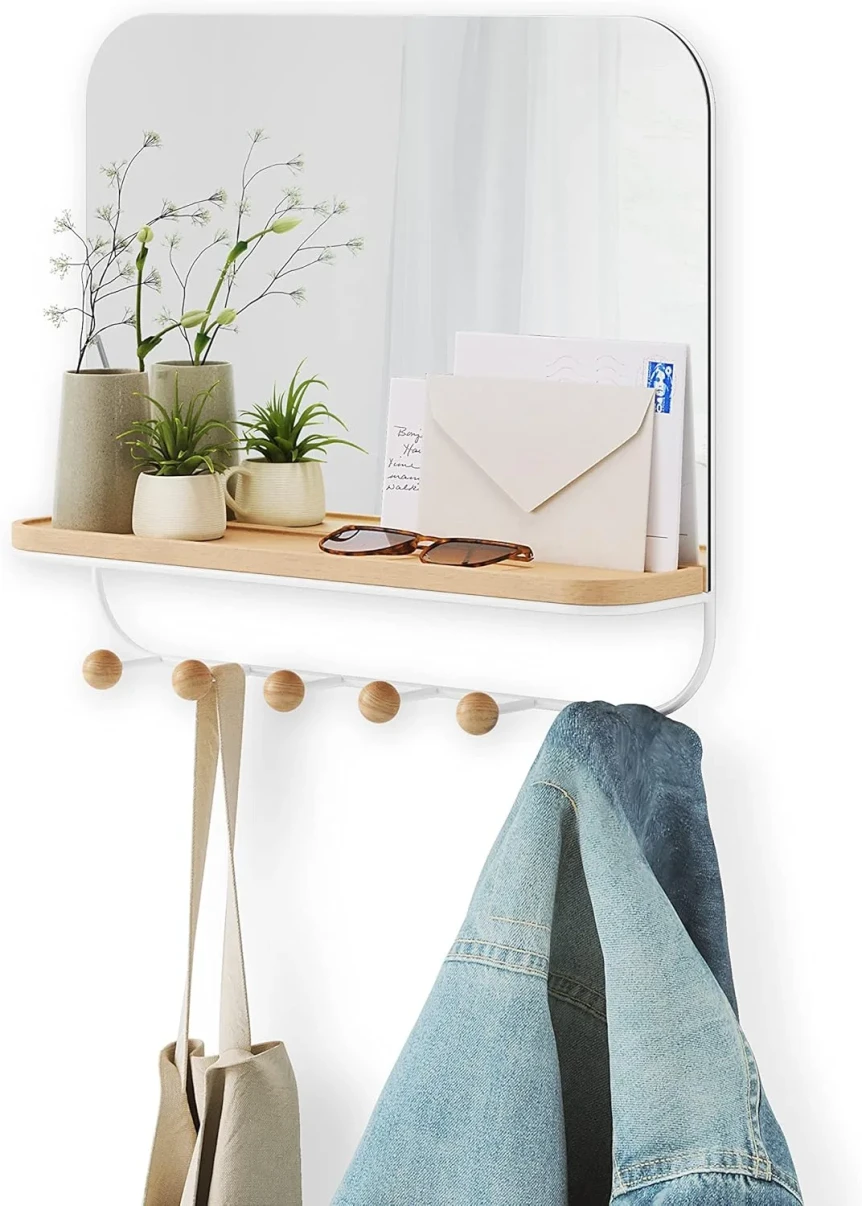
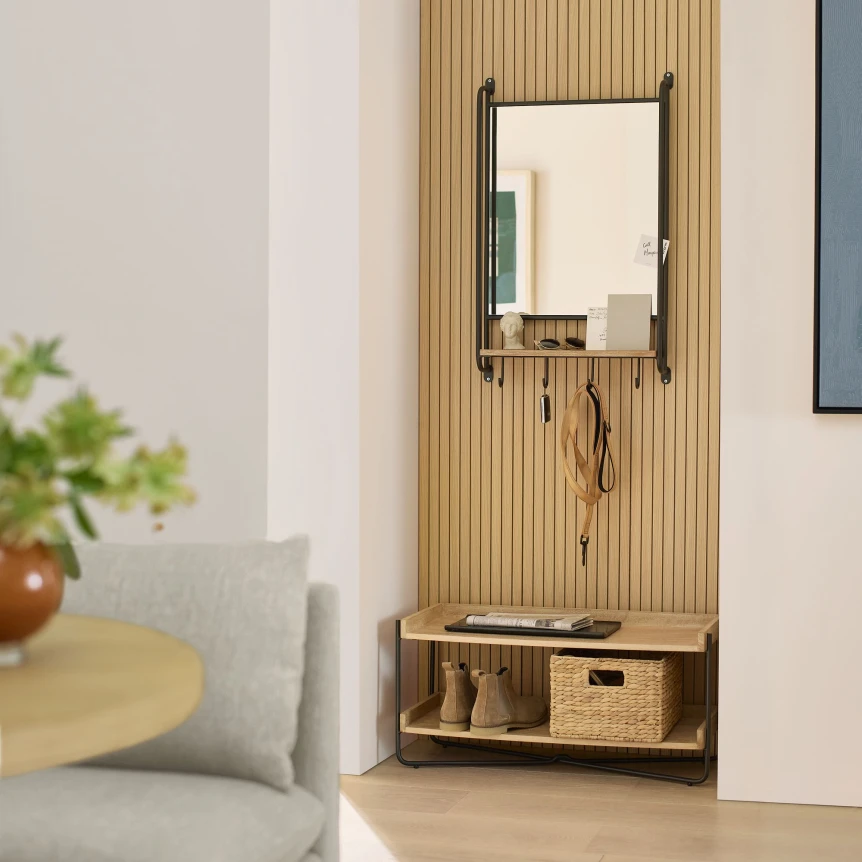
Wall mounted storage is the single most useful move in a small entry because it adds function without touching the floor. A row of hooks handles daily coats and bags. A floating shelf above the hooks gives you a landing surface for keys and mail. Together they replace a console and a coat rack while leaving the walkway completely open.
Mount hooks at two heights so coats clear the floor for both adults and children, with the upper row around sixty four inches and a lower row near forty four inches. A shelf at roughly chest height keeps the surface usable without crowding the head. If you need closed storage, a shallow wall cabinet hides clutter while keeping the same zero floor footprint.
A pegboard or a slim wall rail system is another vertical option that flexes with the seasons, letting you move hooks and small shelves as needs change. The point is the same throughout: every item you can lift off the floor and onto the wall buys back walking room. Hall tree buying guide covers what to check before paying for one.
Should You Use a Shallow Console?
When you can spare a few inches of floor, a shallow console adds a proper landing surface and a touch of furniture presence. The key word is shallow. A console under twelve inches deep gives you a spot for a lamp and a tray without narrowing the path enough to notice.
Look for a design with thin legs and an open base, which reads lighter than a solid cabinet and lets the floor show through. The visual airiness matters as much as the actual footprint, since a piece you can see under feels smaller than its measurements suggest. A wall mounted console with no legs at all is the most space saving version, floating clear of the floor entirely.
The fuller case for choosing one, including proportions for tight walls and how to style the top, is in our guide to console tables for modern entryways.
Why a Mirror Is the Best Investment in a Small Entry
A mirror does more for a small entry than any other single object. It bounces whatever light the space gets, which is usually little, and it adds apparent depth that makes a narrow wall feel like it continues. The practical bonus is a last look before you head out the door.
Hang a large mirror rather than a small one. A generous round or full length mirror reflects more light and reads as intentional, while a small mirror can look like an afterthought. Position it to catch a window or a light fixture if you can, so it actively brightens the space rather than just filling wall.
A leaning full length mirror works in a corner where there is a sliver of floor, and doubles as a dressing check. A round mirror above a shelf softens a boxy hallway. Either way, scale up rather than down, because a mirror is the cheapest way to make a small entry feel larger.
A Bench, If You Have the Room
A bench is a luxury in a small entry, but a slim one can pay for its footprint by giving you somewhere to sit while pulling on shoes and hidden storage underneath. Choose a narrow bench with an open base or a lidded seat, and keep the depth tight at around fourteen inches so it tucks against the wall.
If a full bench is too much, a single storage stool or a small storage bench can slide under a console and pull out only when needed. A pair of cube ottomans does the same and stacks out of the way. The deeper breakdown of bench types and storage bases is in our guide to entryway bench and storage solutions.
How Do You Light a Small Entry?
A small entry usually arrives with one overhead light and nothing else, which leaves the space flat. Adding a single second layer changes everything. A small lamp on the console or a pair of slim wall sconces beside the mirror adds warmth and the kind of task light you actually use to find your keys.
If there is no surface for a lamp, a wall sconce is the space saving answer, since it adds a light layer without using any floor or shelf. Keep the bulb warm, in the 2700 to 3000 kelvin range, so the small space feels inviting rather than clinical. The full method, including fixture heights, is in our guide to entryway lighting ideas.
Using Color to Open Up the Space
Color is a free tool in a small entry. A light, warm wall color reflects light and keeps a tight space feeling open, while continuing the same color from the entry into the adjoining room blurs the boundary and makes both feel larger. The trick is to avoid a hard color change that chops the small space off from the rest of the home.
If you want drama, a small entry is one of the few places a deep color works without overwhelming, since you pass through rather than linger. For pairing the entry with the rooms around it, our guide to modern paint colors covers keeping tones continuous across zones.
Defining the Zone With a Runner
A runner is the cheapest way to set a small entry apart from the hallway it sits in. A flat weave in a low pile marks the path, protects the floor from grit, and adds a layer of warmth underfoot the moment you step in. In a narrow entry, keep the runner proportional, leaving a few inches of floor visible on each side so it reads as deliberate rather than wall to wall.
Choose a washable runner, since this is the spot that catches the most dirt. A darker tone or a subtle pattern hides daily wear between cleanings. If the entry flows straight into another floor surface, a runner is often the only thing marking where outside ends and the home begins, which makes it worth more in a small entry than in a larger one.
Common Mistakes in Small Entryways
- Choosing furniture sized for a real foyer, which immediately blocks the path.
- Hanging a mirror too small to do any useful work.
- Skipping closed storage, so the compact space reads as cluttered.
- Relying on the single overhead light and never adding a warm layer.
- Filling the one shelf with decor and leaving no room for daily items to land.
- Using a hard color break that cuts the small entry off from the rooms around it.
The pattern is the same one that trips up larger entries, just less forgiving. In a small space, every piece has to earn its footprint twice over. When in doubt, take something away.
For the full framework behind these choices, including how scale and traffic flow drive every decision, start with our complete guide to modern entryway design. If your tight entry doubles as a drop zone for wet gear, the modern mudroom design guide covers the durable side of the same problem.
Frequently Asked Questions