The Complete Guide to Mid-Century Modern Design

By Tereza Hower | Published April 13, 2026 | Updated October 12, 2026
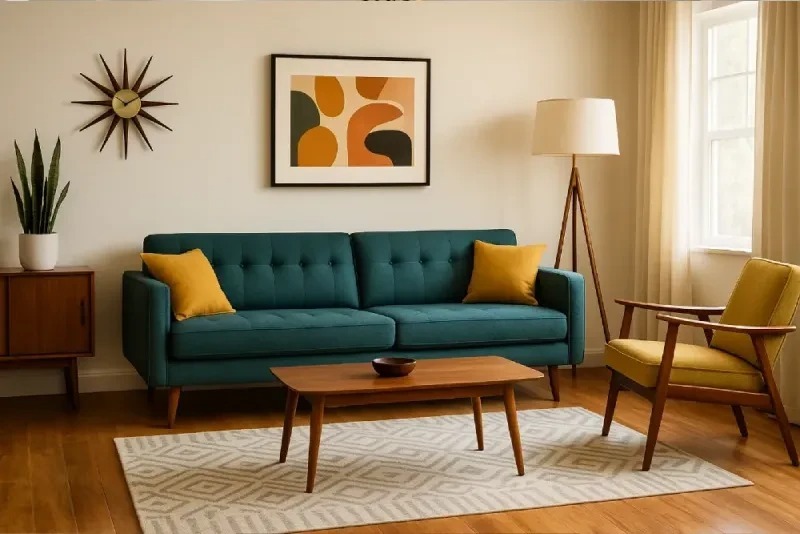
Most rooms that call themselves mid-century modern are wearing a costume. Three walnut pieces with the same chunky tapered legs, a starburst clock, a sunburst mirror, and the effect is a showroom set rather than a home. Real mid-century modern design is quieter than that: a low sofa, one credenza, one good lamp, and a lot of empty floor around them.
The style has never fully gone out of fashion because its principles still hold. Honest materials, furniture that does a job before it looks good doing it, and a room that connects to the light outside are not period details. They are simply good design, which is why a single well chosen chair from this tradition looks right in a city apartment and a suburban house alike.
This guide covers the whole style room by room: what defines it, the pieces worth buying, color, materials, lighting, decor, and how to tell a piece worth owning from one that only photographs well.
At a Glance
- Mid-century modern runs on warm wood, tapered legs, low horizontal lines, and restraint; one or two authentic silhouettes carry a room.
- Walnut and teak are the signature woods, and solid wood beats veneer on every piece you touch daily.
- Build on a warm neutral base and add one or two period accent colors through textiles, never across every wall.
- Lighting is where the style is most expressive: a Sputnik pendant, an arc floor lamp, or a ceramic table lamp establishes the look faster than any other purchase.
- Buy in order: the anchor piece for each room first, storage second, lighting third, and accessories last, after an edit.
What This Guide Covers
- What is mid-century modern design?
- What makes the style recognizable?
- The furniture that defines the look
- Color palettes and patterns
- Materials and textures
- How should you light a mid-century modern room?
- The living room
- How do you build a mid-century modern bedroom?
- The kitchen and dining room
- Which decor and accessories belong?
- How to tell quality from cheap
- What most people get wrong
- Where should you start?
What Is Mid-Century Modern Design?
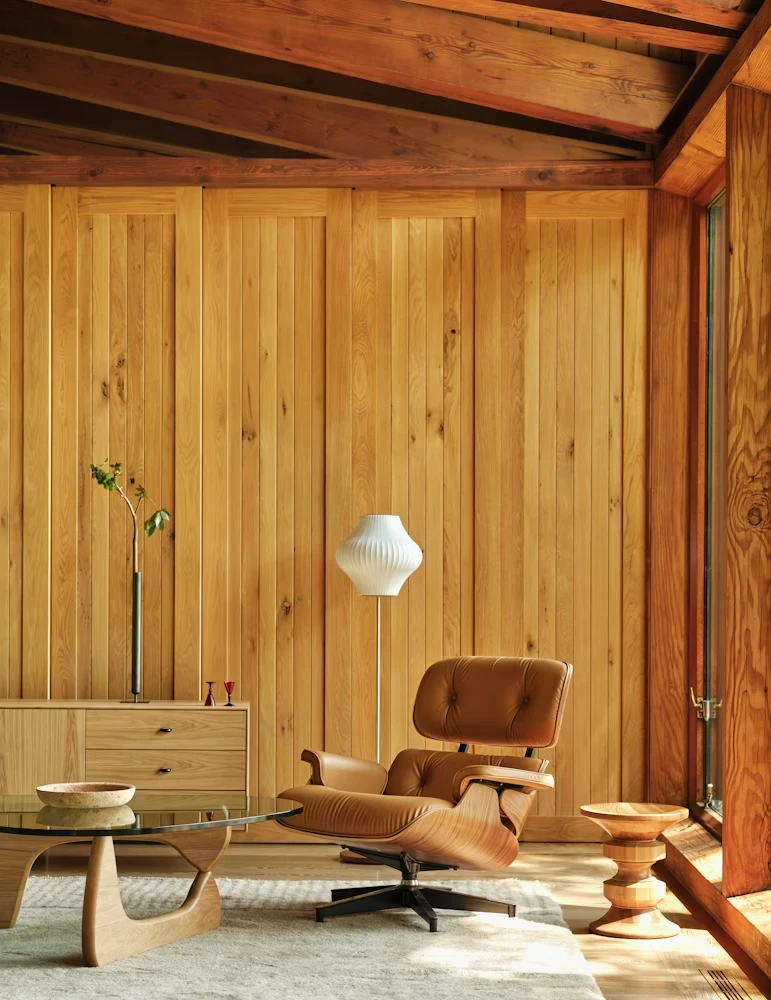
Mid-century modern design is an architectural and interior design movement that flourished from roughly 1945 to 1969. It was shaped by post-war optimism, new manufacturing methods, and a rejection of the ornate interiors that came before it, and it settled into a style defined by clean lines, organic forms, minimal ornamentation, and a close relationship between indoor rooms and the landscape outside.
The movement was driven by designers including Charles and Ray Eames, Eero Saarinen, Hans Wegner, Florence Knoll, and George Nelson. Their vocabulary is still referenced in almost every furniture catalog published today.
In practice, the phrase now covers both authentic pieces from that era and contemporary furniture built on the same principles. Reinterpreted so many times, the style feels both historically grounded and current.
What Makes the Style Recognizable?
Knowing what makes the style distinct lets you apply it deliberately rather than accumulating pieces that look vaguely retro. Each characteristic below is a test you can hold a piece of furniture up against.
Clean Lines and Organic Forms
The furniture pairs straight, clean lines with gentle curves borrowed from natural forms. Angular structure with organic softness is the most recognizable quality of the style. You see it in the curved legs of a walnut sideboard, the sweep of a tulip chair, and the clean horizontal line of a low sofa.
Function Before Decoration
Good design should be accessible and useful, not just decorative. A piece serves its purpose first and looks good doing it, which is why so many mid-century pieces feel livable rather than precious.
Natural Materials Next to Manufactured Ones
Warm woods, particularly walnut, teak, and oak, are central to the palette. They appear in furniture legs, case pieces, wall paneling, and floors. They sit alongside manufactured materials like molded plastic, fiberglass, and chrome, and that contrast between the organic and the industrial is characteristically mid-century.
The Indoor and Outdoor Connection
Mid-century architecture favored large windows, open plans, and a visual link to the landscape. Indoors, that becomes natural light, plants used as design elements, and colors drawn from nature rather than fashion.
Minimal Ornamentation
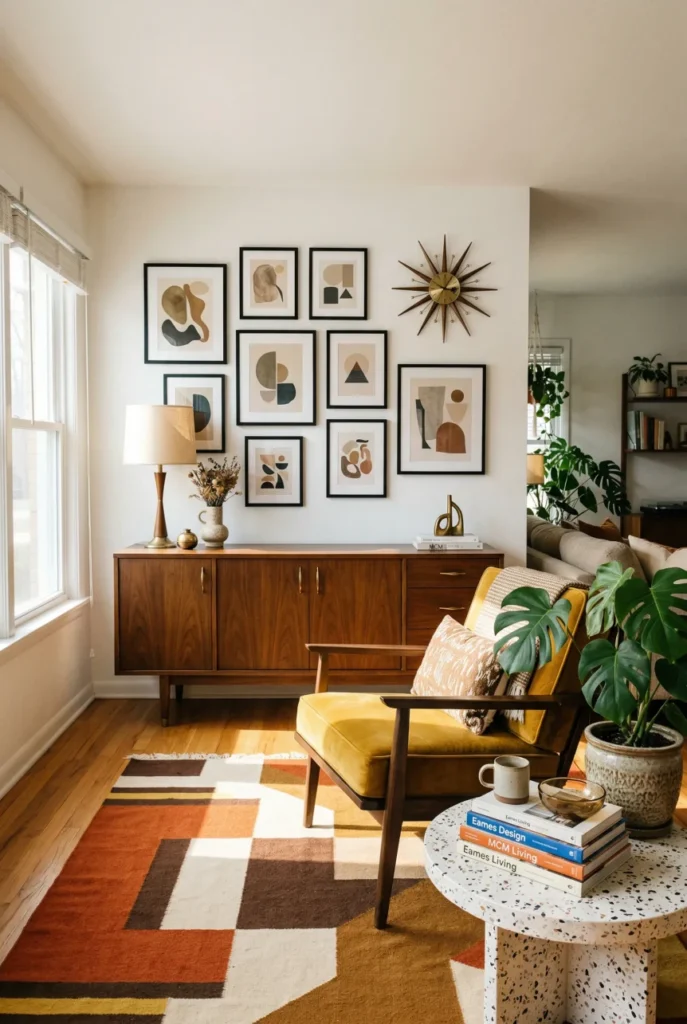
Decoration in a mid-century room is intentional and restrained. Pieces are chosen for form and craftsmanship rather than surface detail. Where pattern appears it is geometric or abstract, never floral or representational.
The Furniture That Defines the Look
Furniture is the most recognizable part of the style, and many original designs are still in production through the original makers or as licensed reproductions. The table below is the short version: the piece that anchors each room, what to check, and what a well made one usually costs.
| Room | Anchor piece | What to look for | Material to favor | Typical spend |
|---|---|---|---|---|
| Living room | Low sofa with tapered legs | Straight back, seat under 18 inches, legs bolted into a hardwood frame | Wool, boucle, or leather on a kiln dried frame | $1,200 to $3,500 |
| Living room | Credenza or sideboard | Long and low, sliding doors, continuous grain across the front | Solid walnut or teak, solid wood drawer boxes | $800 to $2,500 |
| Living room | Lounge chair | Sculpted shell or bent plywood, seat you can sit in for an hour | Molded plywood, leather, or wool | $500 to $5,000 |
| Bedroom | Platform bed | Low profile, slatted base, simple wood or upholstered headboard | Solid walnut, or linen over a hardwood frame | $700 to $2,500 |
| Bedroom | Low dresser | Clean front, minimal hardware, full extension drawer slides | Walnut with brass or chrome pulls | $600 to $2,000 |
| Dining room | Round or oval table | Pedestal or tapered legs, top at least an inch thick | Solid walnut or teak | $800 to $3,000 |
| Dining room | Shell or upholstered chairs | Stable base, shell that flexes without creaking | Molded shell on wire, or wool on tapered legs | $150 to $600 each |
The Sofa
A true mid-century sofa sits low, has a clean straight back, and stands on tapered wooden legs. Upholstery runs to solid colors or subtle textures in boucle, wool, velvet, or leather. The sofa buying guide covers the frame and cushion checks that apply to any style.
Lounge Chairs
The lounge chair is the most celebrated form of the era. The Eames Lounge Chair, the Egg Chair, the Womb Chair, and the Barcelona Chair all date from this period and remain in production. One good lounge chair can anchor a room on its own, which makes it the piece worth overspending on if the budget stretches to only one.
Case Pieces: Sideboards, Credenzas, and Storage
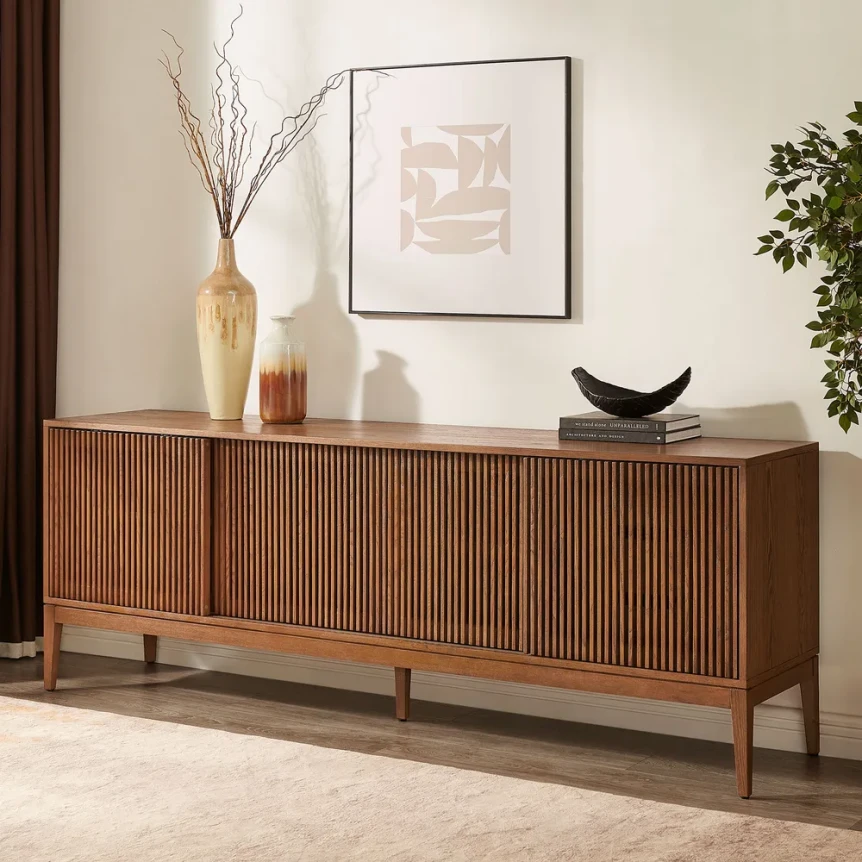
Case pieces are long and low, with tapered legs, clean fronts, and minimal hardware. A walnut credenza with sliding doors or a teak sideboard with brass pulls defines the style the moment it enters a room and gives the wall above it a base. The sideboard buying guide goes through the construction checks in detail.
Coffee Tables
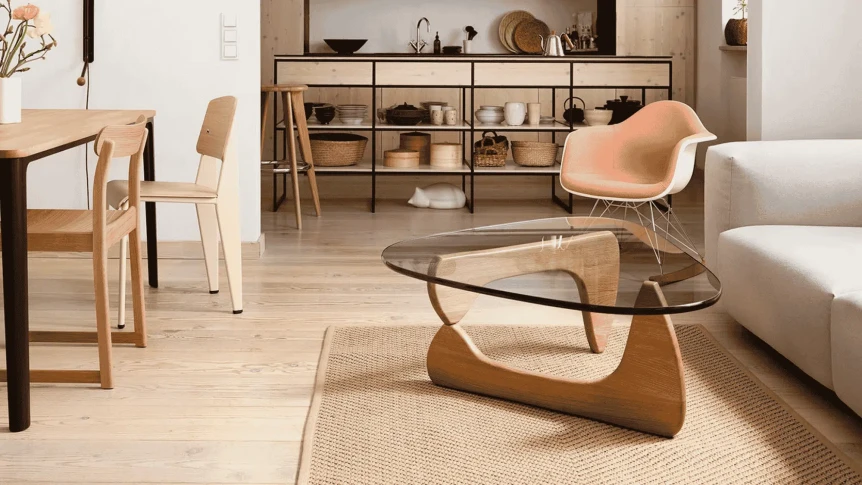
Low profile, organic shape, and mixed materials define the mid-century coffee table. The Noguchi table, a sculptural glass top on an interlocking wooden base, is the archetype; accessible versions follow the same idea with a low top on tapered or hairpin legs.
Color Palettes and Patterns
Color moves between warm neutrals and a set of specific accents rooted in postwar optimism. The balance between the two is what keeps a room from looking either bland or themed.
The Neutral Foundation
Most mid-century rooms are built on a warm neutral base: warm white, cream, soft beige, and warm gray. These tones let the wood furniture do the visual work without competition. Walls stay light so the furniture silhouettes read clearly against them; the warm earthy paint colors guide names specific shades that suit the style.
Accent Colors
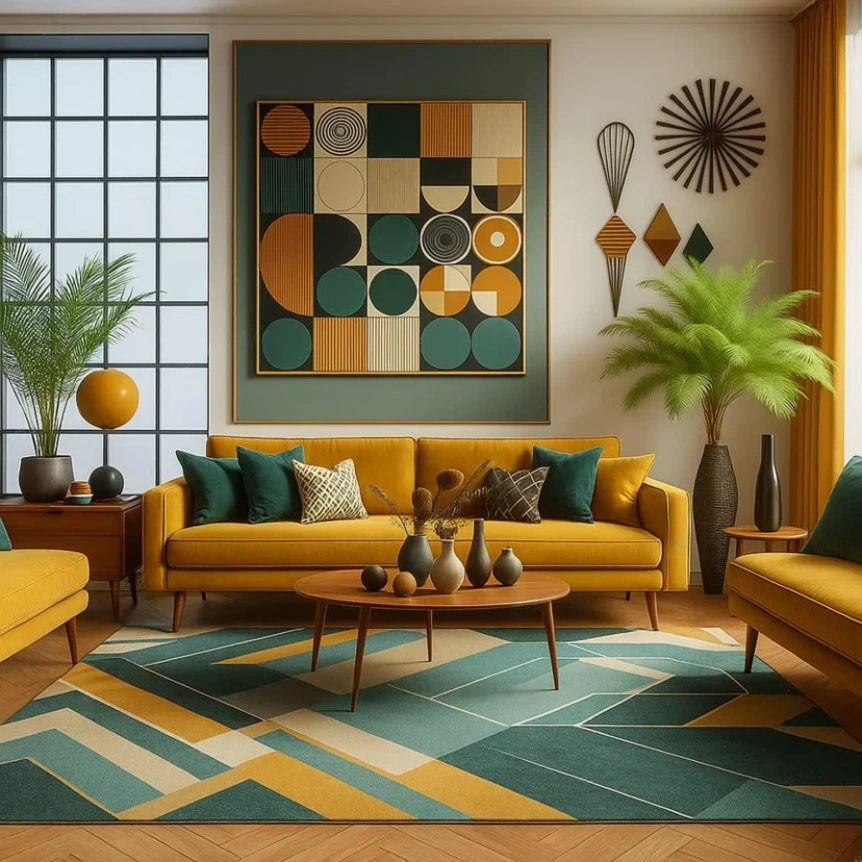
The accents are specific and intentional: mustard and golden yellow, burnt orange and terracotta, avocado and olive green, teal and peacock blue, warm brown and camel, deep burgundy and rust. They belong in upholstery, rugs, cushions, and art rather than on every wall. One or two accent colors in a room is the right amount, and three is where the costume starts.
Patterns
Patterns are geometric, abstract, and occasionally starburst inspired, and they live in rugs, cushions, and upholstery rather than wallpaper. A geometric rug in warm tones anchors a living room without turning it into a period set.
Materials and Textures
The material palette layers warmth and texture in a way that keeps mid-century rooms from feeling cold, and it is where cheap versions give themselves away first.
Warm Wood
Walnut is the quintessential mid-century wood, prized for its rich grain and chocolate tones. Teak was just as common in the Scandinavian branch of the movement, and oak and rosewood appear often. All are used close to their natural state with minimal stain, so the grain itself is the decoration.
Metal
Chrome reads as the most period authentic; brass is warmer and has become the contemporary default. Pick one dominant metal per room and hold to it across legs, lighting, and hardware.
Upholstery Fabrics
Wool, boucle, velvet, and leather all suit the style. Boucle in particular has had a strong revival; its nubby texture works well against clean lines. Leather in cognac or tan sits naturally inside the walnut and warm metal palette and ages better than any fabric.
Ceramics and Glass
Ceramics lean toward organic forms with matte or satin glazes in earthy tones. Period glassware carries bold color and sculptural form, and contemporary pieces in the same spirit work just as well.
How Should You Light a Mid-Century Modern Room?
In layers, with one sculptural fixture doing the talking. The period produced some of the most celebrated fixtures ever made, and a single well chosen light establishes the aesthetic faster than any other purchase.
Pendant Lights
The Sputnik chandelier, with its arms radiating from a central sphere, is the most recognizable mid-century lighting form. Dome pendants in spun metal or molded fiberglass are equally characteristic. Both are widely reproduced and suit living rooms, dining rooms, and entryways.
Floor Lamps
The arc floor lamp is a staple: a long curved arm from a weighted base that places the light over a seating area. It is practical and sculptural at once. The tripod lamp, three tapered legs holding a shade, is the other form that reads as mid-century from across the room.
Table Lamps
Mid-century table lamps pair a ceramic or glass base in an organic form with a simple drum or cone shade. The contrast between a sculptural, colored base and a plain neutral shade is a classic combination. Brass hardware and walnut details tie the lamp to the rest of the room, and the mid-century modern lighting guide goes fixture by fixture with placement advice.
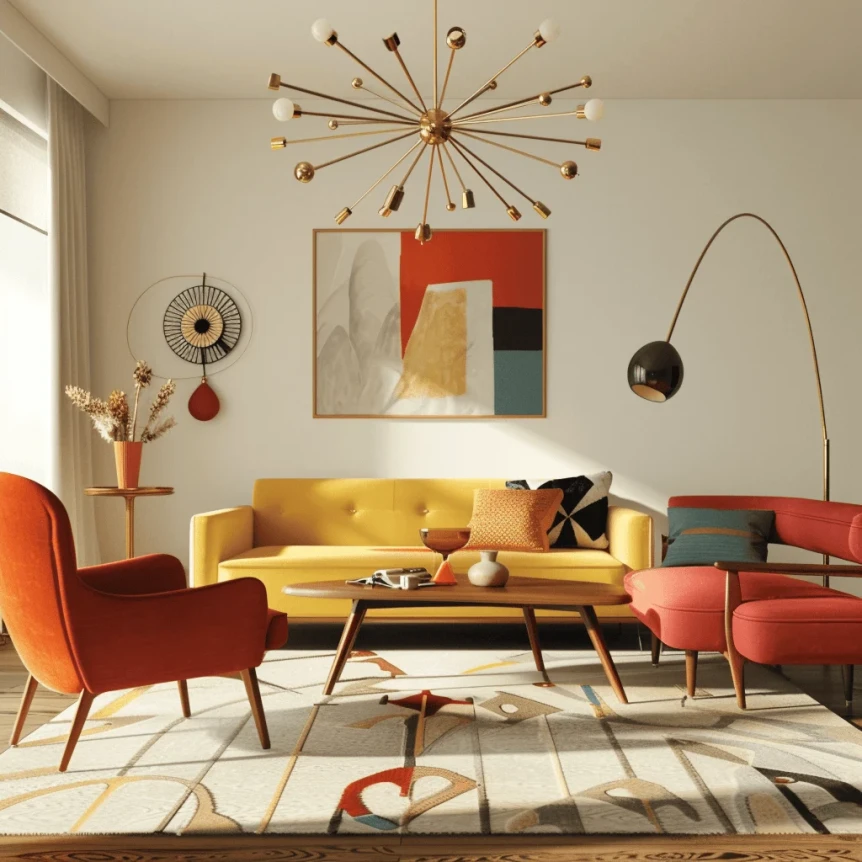
Mid-Century Modern in the Living Room
The living room is where the style is most at home. Its emphasis on comfortable, functional furniture and a considered arrangement suits the room’s job naturally, and it is the room most people start with.
A mid-century living room centers on a low sofa in a warm neutral or accent color, flanked by a lounge chair or two. A walnut or teak credenza anchors one wall and provides storage. A low coffee table with an organic or geometric form sits at the center, a geometric rug defines the seating area, and the lighting is layered: a statement fixture overhead, a floor lamp beside the seating, and a table lamp on a side table.
Keep the arrangement open rather than pushed to the walls; the furniture is designed to be seen from all sides, and the lifted legs need space around them to work. For layout principles that apply to any style, the complete guide to modern living room design is the companion read.
How Do You Build a Mid-Century Modern Bedroom?
Start with the bed frame, keep everything low, and use one wood tone throughout. The style’s warm wood, clean lines, and restraint translate naturally into a room that feels calm: no visual noise, nothing that does not belong.
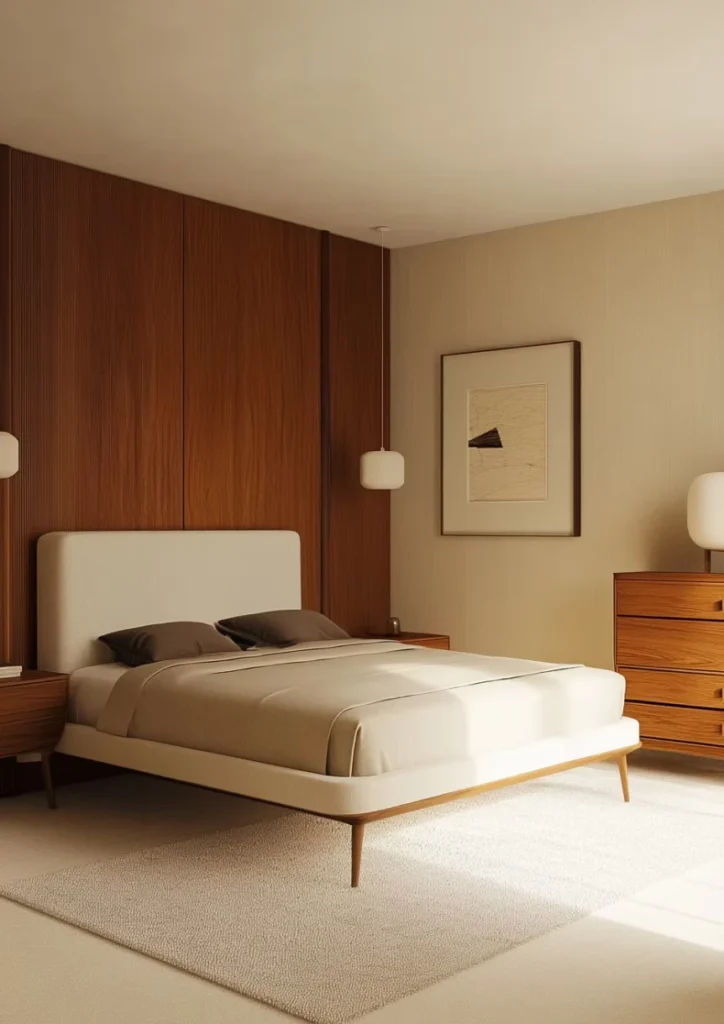
The Bed Frame: Low, Warm, and Clean
The bed frame sets the tone for everything else. The characteristic form is low to the ground, with a platform or slatted base and either a minimal upholstered headboard or a clean wood headboard with no ornament. The profile is horizontal and linear, on the same tapered or angular legs that define the style’s furniture everywhere else.
An upholstered headboard in cream, camel, warm gray, or boucle is the most versatile choice; a wood headboard with a clean panel or slats is more strictly mid-century and works best when its tone matches the nightstands and dresser. Beds in this style sit low, so if you are adding a thick mattress to an existing frame, check that the combined height still reads as low; the bed should belong to the floor rather than float above it.
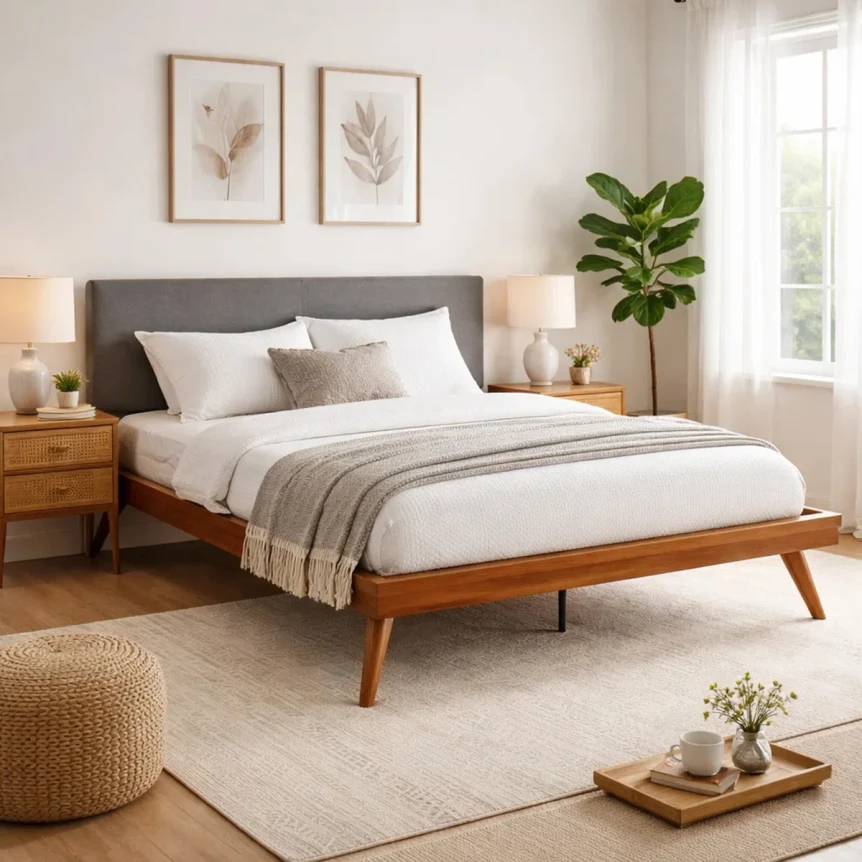
Nightstands and the Dresser
Nightstands are low, with one or two drawers, tapered legs, and minimal hardware, usually in walnut. The top sits at roughly mattress height so the horizontal line of the bed continues, and the surface holds a lamp, a book, and perhaps one small ceramic object.
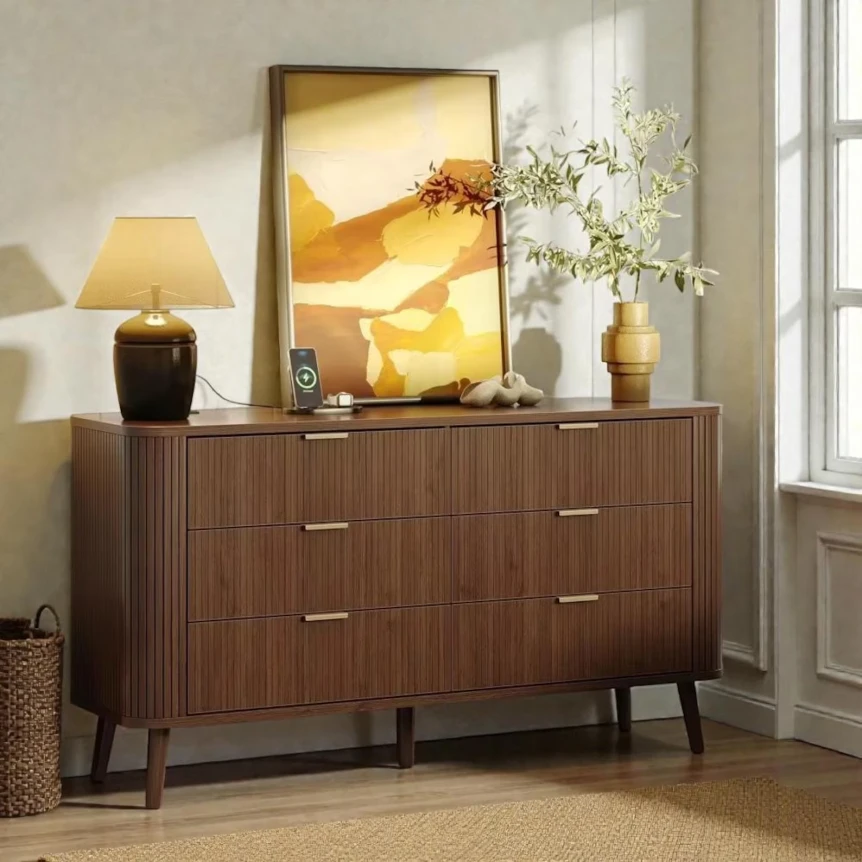
A low, wide walnut dresser continues the wood palette and the horizontal emphasis: clean front, tapered legs, a consistent grain across all the drawers, brass or chrome pulls. If the closet handles most clothing, a single low chest is enough. The modern bedroom furniture guide covers the buying order and the drawer hardware worth paying for.
Bedding, Textiles, and the Rug
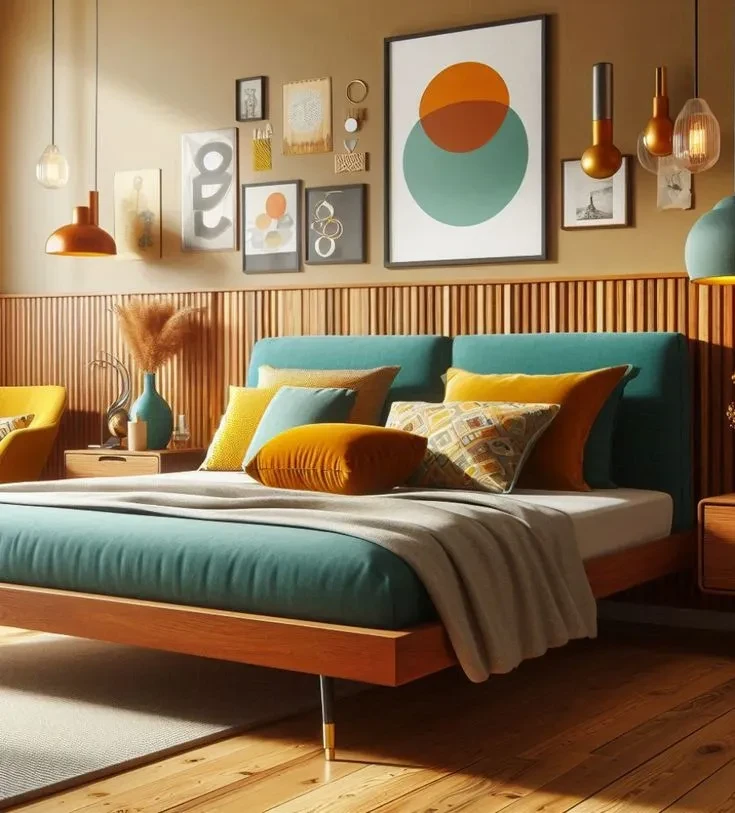
Bedding is restrained rather than layered: a duvet or coverlet in cream, oatmeal, or warm gray, one or two cushions in mustard, burnt orange, or teal, and a boucle or wool throw at the foot. Linen and cotton have the right texture; heavily patterned or layered bedding belongs to more maximalist styles.
A rug under the bed, large enough to step onto from either side, defines the sleeping area and warms the floor. A geometric pattern in warm tones suits the style, and the rug should sit under the lower two thirds of the bed rather than centered beneath it, so the pattern shows on three sides.
Bedroom Lighting and Color
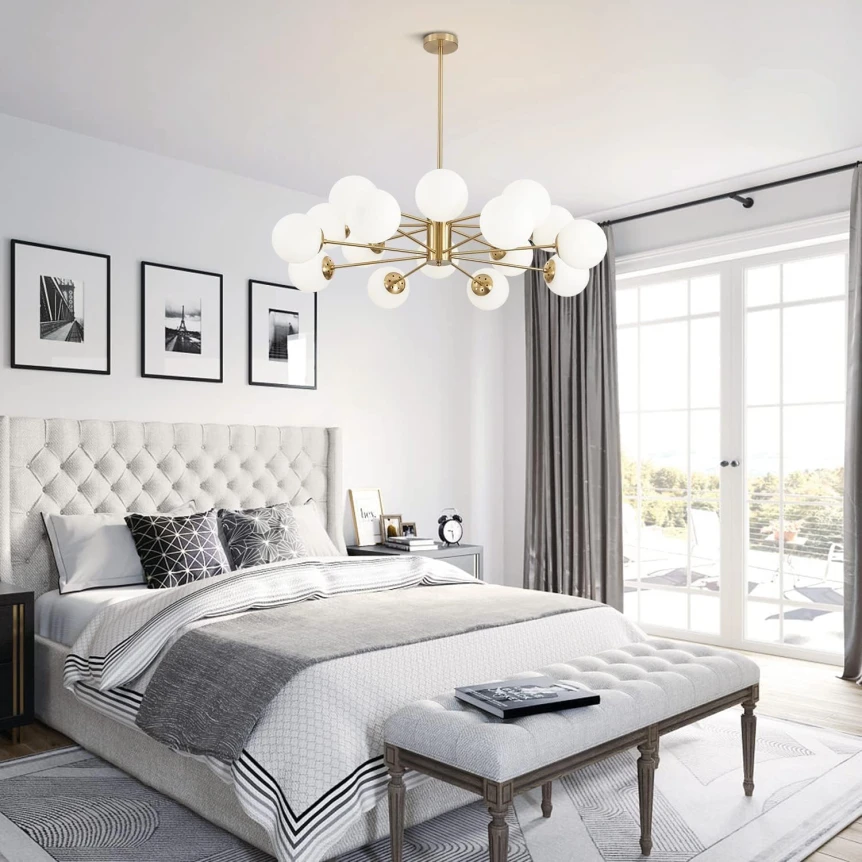
Table lamps on the nightstands do the reading and evening work: ceramic or glass bases in organic forms, warm tones, and simple drum or cone shades. A pendant or semi flush fixture centered over the bed adds a statement and frees up the nightstands; look for a spun metal dome, a globe cluster, or a minimal geometric form in brass or chrome.
Walls stay warm and light, in warm white, cream, or a soft warm greige, so the furniture and textiles carry the color. For more, a single accent wall behind the bed in terracotta, sage green, or muted teal grounds the bed without darkening the room. The complete guide to modern bedroom design covers the layout and storage decisions that sit underneath any style.
Mid-Century Modern in the Kitchen and Dining Room
In these rooms the style is less about an architectural overhaul and more about furniture, lighting, and materials. Warm wood, brass accents, and considered forms make functional spaces feel inviting, and most of it can be done without touching the cabinetry.
The Dining Table
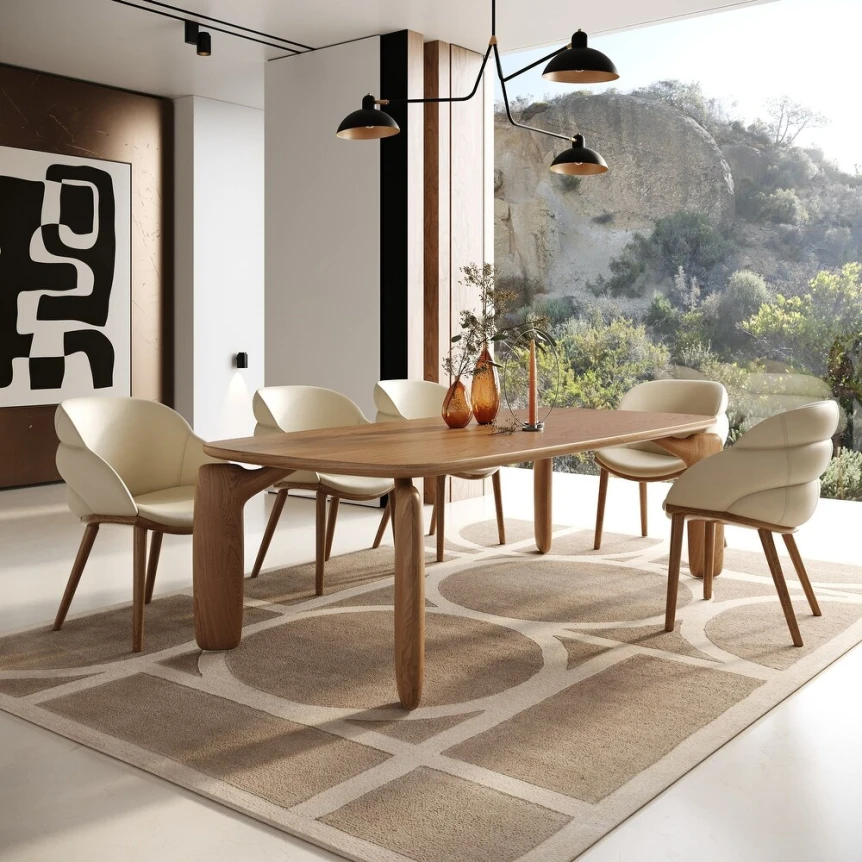
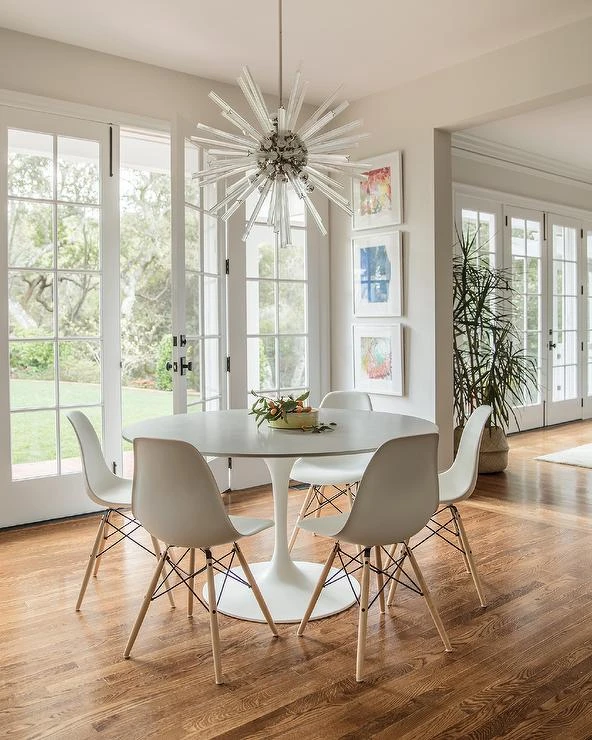
Round and oval tables are the most characteristic forms, and they suit the social nature of dining. A warm wood top in walnut or teak on tapered or hairpin legs is the classic configuration. Rectangular tables work in longer, narrower rooms, and a tulip table with a single pedestal base solves the leg clearance problem in a small dining space. The dining table buying guide covers sizing by room.
Dining Chairs
Mid-century dining chairs come in two families: molded shell chairs and upholstered chairs on tapered legs. The molded plastic or fiberglass shell, popularized by Charles and Ray Eames, is one of the most recognizable furniture forms in the world. It sits on a wire or wooden base and comes in colors that allow either a restrained or a playful approach; matching shells in a warm neutral read clean and cohesive, while mixed colors on a single base style add energy without chaos.
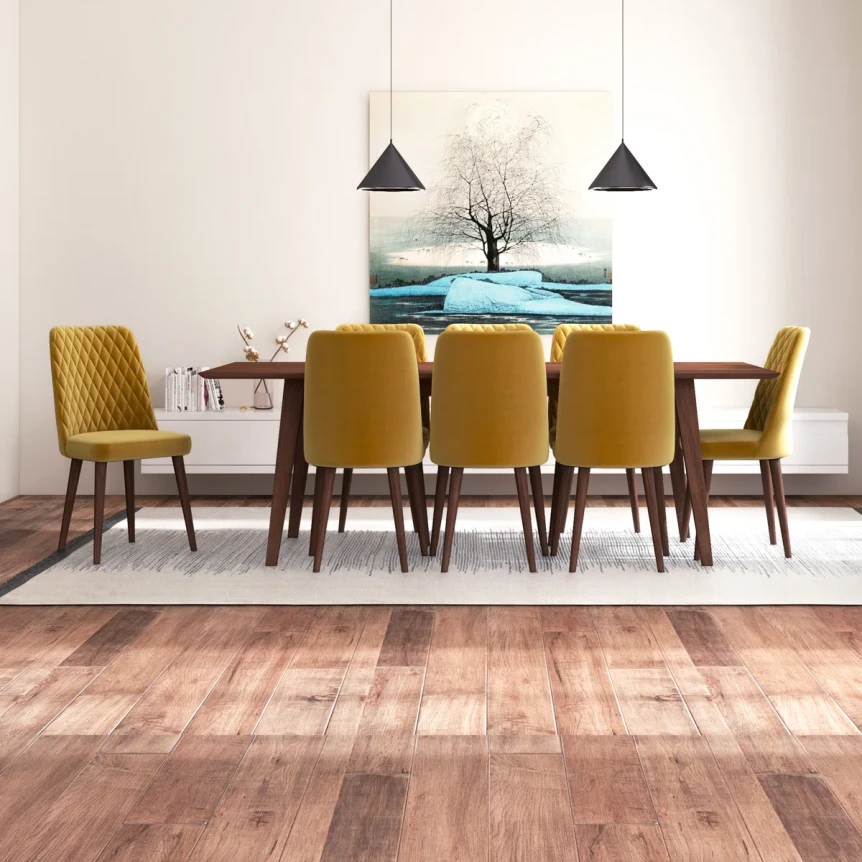
An upholstered chair with tapered wooden legs and a simple seat and back pad makes a warmer, more formal arrangement. Wool, boucle, or an accent color like mustard or teal suits the style, and these chairs pair especially well with a walnut table. For a mixed set, the guide to mixing and matching dining chairs explains what to hold constant.
The Sideboard and the Light Above the Table
A walnut or teak sideboard along one wall is both practical and visually essential. It stores linens and serveware, gives you a surface to style, and anchors the room, with the wall above it the natural place for a large piece of art or a mirror. Choose tapered legs, sliding or hinged doors, and minimal brass or chrome hardware, and size it to cover two thirds or more of the wall it sits on.
The pendant over the table is the single most impactful decision in a dining room. A Sputnik chandelier is the most recognizable choice and looks its best over a round or oval table; a cluster of globe pendants at varying heights gives a similar effect with a more relaxed character. Hang it so the lowest point sits 30 to 36 inches above the table surface, close enough to feel connected to the table and high enough to clear seated diners.
Bringing the Style Into an Existing Kitchen
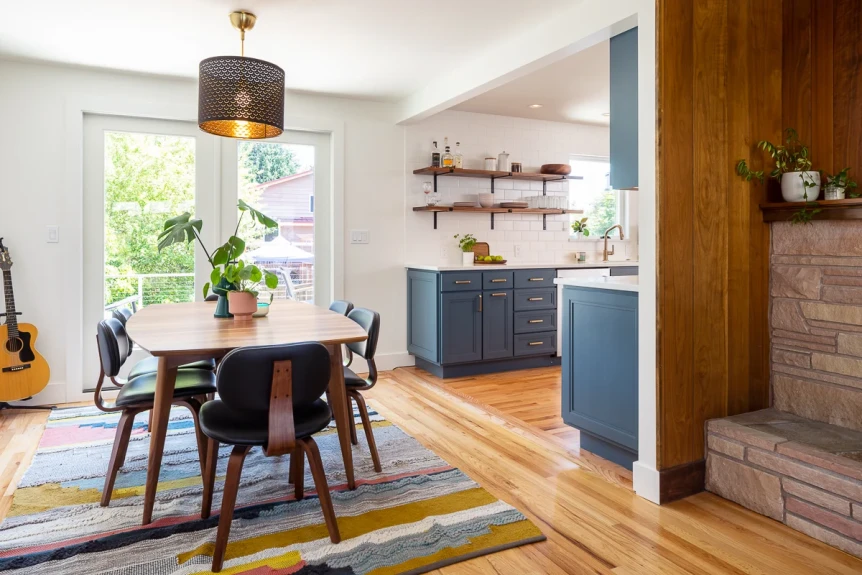
A full mid-century kitchen renovation is a major project, and for most people three smaller moves do the job. A run of walnut or oak floating shelves replacing one section of upper cabinets shifts the room immediately, provided it is styled with restraint.
Replacing cabinet hardware is the most cost effective update available. Brass bar pulls or cup pulls on flat front or shaker cabinets move the room toward mid-century at once, and a brass faucet carries the metal tone through and ties the kitchen to the dining room where the two are visible together. The third move is a single pendant with a spun metal dome, a globe, or a schoolhouse shade in brass over the island or peninsula. The complete guide to modern kitchen design covers the layout decisions these sit on top of.
Which Decor and Accessories Belong in the Style?
Fewer than you think, each chosen for form. The furniture establishes the structure and the palette sets the tone, but the objects you choose and how you arrange them tell the personal part of the story. Mid-century decor is restrained rather than abundant, curated rather than collected, and specific rather than generic.
Wall Art
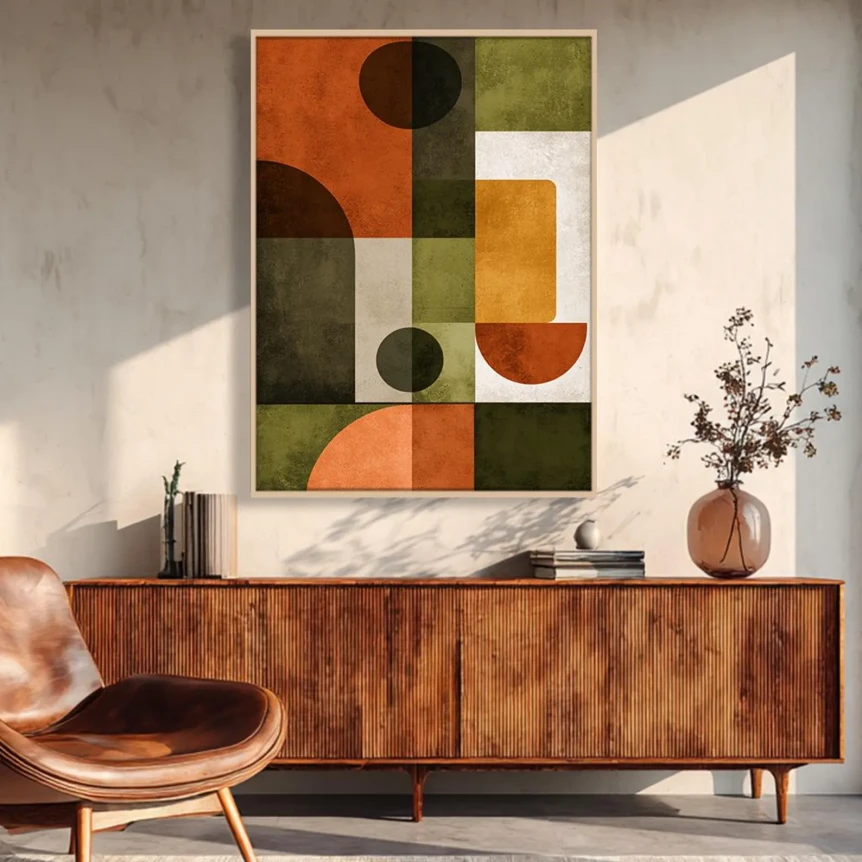
Art in a mid-century room is abstract, geometric, or graphic rather than figurative or decorative. The period produced a strong tradition of abstract expressionism and graphic design, and work in that spirit, original, printed, or contemporary, suits the style naturally. Large abstract prints in warm tones work above a credenza or sofa, geometric line drawings suit bedrooms and studies, and period graphic prints and travel posters carry the right character without requiring original art.
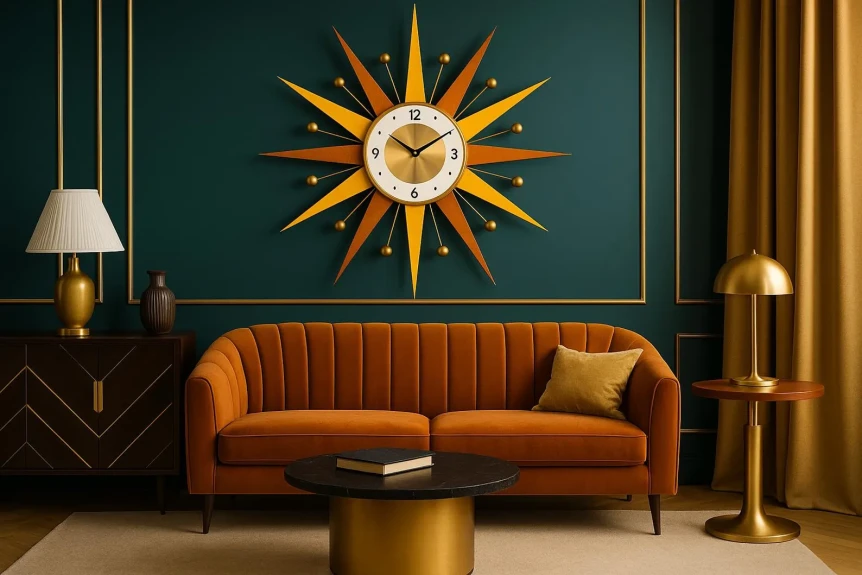
The Sunburst Mirror and the Starburst Clock
The sunburst mirror is the most characteristic mid-century wall piece. Its radiating spokes echo the starburst forms that run through the period, from the Sputnik chandelier to atomic age graphics. In brass or gold it works above a credenza, in an entryway, or as the focal point of a bedroom wall, and it brings visual interest and function without the commitment of a large artwork.
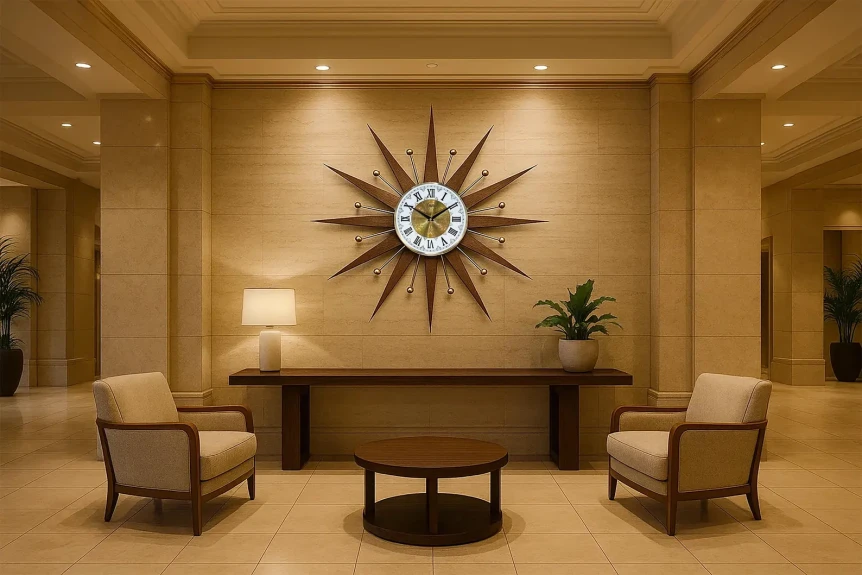
The starburst clock does the same job with a clock face at its center, on a living or dining room wall where it reads from a distance. Choose one of the two per room; both together is where the costume begins.
Ceramics and Pottery
Ceramics are central to mid-century styling: organic forms, matte or satin glazes, earthy tones. Contemporary pieces in the same spirit work as well as period ones and cost far less.
A few well chosen pieces on a credenza or shelf make a stronger statement than a crowded collection. Think in groups of three: a tall vase, a medium bowl or vessel, and a small sculptural object, with the heights and forms varied so the eye moves through the group rather than landing on a flat row.

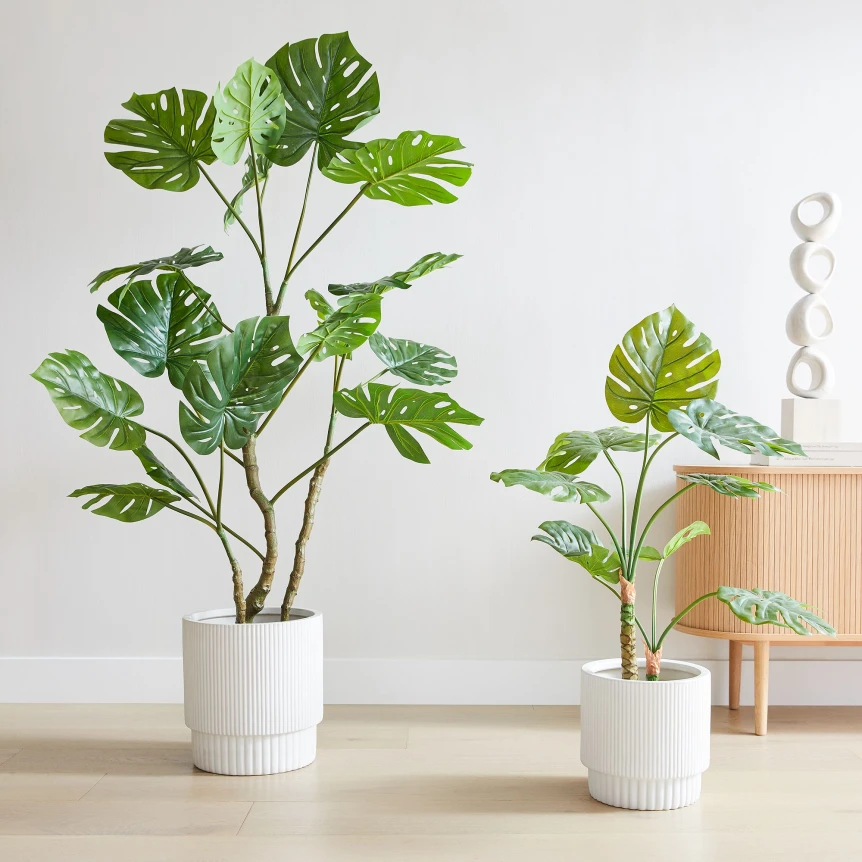
Plants and Planters
Plants are not optional. The style’s founding idea of connecting the interior to the natural world makes a plant a design element, and a large leafed one beside the sofa or on a plinth brings the scale the furniture wants.
- Fiddle leaf fig: tall and architectural, with large statement leaves. Suits a corner beside a sofa or a reading chair.
- Monstera: large glossy leaves with split forms. Works on a plinth or in a large floor planter.
- Bird of paradise: bold, structural, and tropical. Best in a well lit room as a single statement plant.
- Rubber plant: deep glossy leaves in a compact form. Suits smaller spaces and lower light.
The planter should complement the plant rather than compete with it. Warm ceramic planters in earthy tones, woven rattan baskets, and simple concrete or stone vessels all suit the style; decorative or patterned planters work against its restraint.
Shelves and Surfaces
Open shelving or the top of a credenza works best when styled with intent: books by color or size, and ceramic objects, small sculptures, or a piece of driftwood for texture without competing color.
Leave deliberate gaps between groupings rather than filling every inch. The empty space is part of the composition and is what makes a room read as considered rather than accumulated.
How to Tell Quality from Cheap
Mid-century modern is the most reproduced style on the market, so the gap between a piece worth owning and one that only photographs well is wider here than anywhere else. The tells are consistent and take under a minute to check.
Case pieces are where solid wood justifies its price over veneer. A veneer credenza looks identical to a solid one in a photograph and even on the floor for the first year; the difference shows at the edges and corners, where the thin face chips and the particleboard underneath appears. On a desk or a dining table the edge is where hands rest every day, and that is exactly where veneer fails first.
- End grain. Look at the edge of a top or the side of a drawer front. Solid wood shows grain wrapping around the corner; veneer shows a thin line where the face meets something else.
- Legs. Tapered legs on a quality piece are solid hardwood, threaded or doweled into a hardwood rail. Legs screwed into a metal plate on particleboard loosen within a year and never tighten again.
- Drawers. Pull one fully out. Solid wood drawer boxes with dovetail or dowel joints on metal slides mark a piece built to last; stapled boxes on plastic runners mark one built to ship.
- Weight. A solid walnut credenza at 60 inches wide weighs well over 100 pounds. If two people can lift it easily, it is not solid.
- Finish. An oil or matte lacquer lets the grain show and can be repaired locally. A thick, glossy coating is hiding something and cannot be spot repaired.
- Shell chairs. A good shell flexes slightly and returns silently. A cheap one creaks at the base and shows a visible seam where the mold halves met.
Price bands help too. Below about $400 a case piece is almost always veneer over particleboard; between $800 and $1,500 you get solid fronts on a plywood carcass, which is the sensible middle; above $2,500 you are paying for a maker’s name or a period original. The quality jump is biggest in the middle of each range and smallest at the top.
What Most People Get Wrong
The style is defined as much by what is absent as by what is present, and nearly every failed mid-century room fails by addition. These are the mistakes that turn a considered room into a themed one.
- Buying the matching set. Three walnut pieces with identical legs from one range read as a catalog page. Mix one or two strong period silhouettes with quieter contemporary pieces.
- Mixing wood tones without a hierarchy. One dominant wood per room, with at most one supporting tone. Walnut next to pale oak next to teak looks like a clearance floor.
- Overcrowding surfaces. Too many small objects erase the negative space the style depends on. Groups of three, then stop.
- Putting accent color on the walls. Mustard and teal belong in a cushion, a chair, or a rug. A whole room in either is a period set.
- Rustic or farmhouse accessories. Distressed wood, mason jars, and elaborate floral arrangements work directly against clean lines.
- Gallery walls of mismatched frames. They create visual noise where the style calls for calm. One large piece or a sunburst mirror does more.
- Choosing the sculptural chair as the everyday chair. A shell or bent plywood chair is a beautiful secondary seat. It is not the chair for a full day at a desk.
Where Should You Start?
With one anchor piece in the room that matters most. A low credenza, a lounge chair with tapered legs, or a Sputnik pendant establishes the aesthetic clearly even in a room that is not fully committed to it. Before buying that anchor, name its spot and its job. If neither is clear, the piece is probably wrong for the room, and that test applies to every mid-century purchase from a sofa to a vase.
Then buy in order: storage second, because a credenza or dresser keeps the surfaces clear that the style depends on; lighting third, once the shadows in the room are known; a rug fourth, sized to the furniture in place. Accessories come last, after a deliberate edit of what you already own, and the objects that survive that edit carry more presence than a room filled to its edges.
Resist filling the room before you have lived in it for a few weeks. The rooms that look most settled are almost always the ones that were bought slowly.
Recommended Reading
Two rooms have their own mid-century guides. The mid-century modern home office guide covers the walnut desk, the chair that survives a working day, and the credenza, in buying order. The mid-century modern lighting guide goes fixture by fixture, from the Sputnik chandelier to the arc lamp, with placement heights for every room.
For the decisions that sit underneath any style, the modern room pillars are the companions: the living room, bedroom, dining room, and kitchen guides. And if the lighter, paler end of the same tradition appeals more, the complete guide to Scandinavian interior design explains where the two styles part ways.
Frequently Asked Questions
What is mid-century modern design in one sentence?
A design movement from roughly 1945 to 1969, defined by clean lines, organic forms, warm natural woods like walnut and teak, minimal ornamentation, and a close connection between indoor rooms and the outdoors. Designers such as Charles and Ray Eames, Eero Saarinen, and Hans Wegner shaped it, and it remains the most widely reproduced furniture style today.
What wood is most associated with mid-century modern furniture?
Walnut, prized for its warm, rich grain. Teak is equally characteristic, especially in the Scandinavian branch of the movement, and oak and rosewood appear often. All are used close to their natural color with minimal stain. Use one wood tone as the dominant note in a room and keep any second tone in a supporting role.
What colors are typical of mid-century modern interiors?
A warm neutral base of cream, warm white, soft beige, and warm gray, with one or two specific accents: mustard yellow, burnt orange, teal, avocado green, or warm brown. The accents live in upholstery, rugs, cushions, and art rather than on every wall. A single accent wall behind a bed or sofa is the most the style comfortably takes.
Is mid-century modern the same as Scandinavian design?
They overlap but are not identical. Mid-century modern is a broad international movement with American, European, and Scandinavian branches. Scandinavian design shares the natural materials, function, and clean lines but leans toward paler woods, cooler tones, and even greater simplicity. Many celebrated mid-century designers, including Hans Wegner and Arne Jacobsen, were Scandinavian.
How do I start decorating in a mid-century modern style on a budget?
Begin with one anchor piece in a characteristic form: a low sofa or credenza with tapered legs, or a lounge chair. Spend on that piece and on solid wood where hands touch it daily; save on accessories, textiles, and secondary seating. Add a geometric rug, one or two accent colors through cushions, and a single statement light, then stop and live with the room before buying more.