Modern Coffee Tables That Actually Work: Style Meets Function

By Tereza Hower | Published March 9, 2026 | Updated September 7, 2026
Most coffee table mistakes are size mistakes. The wrong length, the wrong height, the wrong proportion to the sofa: these problems show up months after the table arrives, when it is harder to return and the rest of the room has already arranged itself around the error. Modern coffee tables in particular punish the wrong dimensions because their clean lines leave nowhere for a bad proportion to hide.
Buying a coffee table off a photograph is how most sizing mistakes start. A 42-inch table looks exactly right against the 6-foot sofa in the product shot, and exactly wrong against an actual 84-inch sofa. Move to a 54-inch piece and the difference is immediate: every other piece in the room finally has something the right size to relate to.
This guide is the practical breakdown of how to choose one that works without making the same swap: how to size it to the sofa, which style direction fits which room, how the major materials behave over time, how to style the surface without clutter, and the specific mistakes most worth avoiding before you buy.
Key Takeaways
- Aim for a length about two thirds the sofa and a height within an inch of the seat cushion; almost every “wrong size” complaint comes back to one of these two.
- Solid wood, glass on a thin metal frame, and concrete on a wood base are the three modern directions that age well; laminate over MDF rarely does.
- Storage matters more than it looks: a closed drawer or low shelf absorbs the remote, the magazines, and the chargers that would otherwise live on the surface.
- Leave 12 to 18 inches between the sofa and the table edge; closer reads cramped, further reads disconnected.
- Style the top with three things, not nine: a book stack, a tray of small objects, and one organic element (a plant, a bowl, a candle).
What Counts as a Modern Coffee Table?
Modern coffee tables are the contemporary category of low living room tables that prioritize clean geometric lines, restrained materials (wood, metal, glass, stone, or concrete), and proportions designed to recede visually rather than dominate the room. The word modern here describes how the piece is conceived, as a quiet anchor for the seating area rather than an ornamental centerpiece, more than a single style label.
Within that umbrella, modern coffee tables split into a few recognizable directions: warm minimalist (oak or walnut on tapered legs), industrial modern (concrete or steel with a wood accent), glass and metal (a light footprint for small rooms), and storage-forward (drawers or low shelving integrated into the silhouette). The right direction depends on the rest of the room and the way the table actually gets used day to day, not the photograph of it.
How to Size a Coffee Table to Your Sofa
Sizing is where most coffee table purchases go wrong, and where the most reliable rules apply. Three decisions matter: length relative to the sofa, height relative to the seat cushion, and the gap between the sofa and the table edge.
Length: about two thirds of the sofa
The table should run roughly two thirds the length of the sofa it sits in front of. For an 84 inch sofa, that is 48 to 56 inches of table. Smaller than that reads undersized and forces guests to lean for their drinks; larger than that swallows the room and crowds the side tables.
Height: within an inch of the seat cushion
The ideal coffee table height is 16 to 18 inches, which is roughly the height of a standard sofa cushion. A table that sits much lower than the cushion makes guests stoop for drinks; a table noticeably taller than the cushion fights the sofa visually and reads as the wrong piece in the wrong room.
Gap: 12 to 18 inches from the sofa
Leave 12 to 18 inches of clear space between the front of the sofa and the edge of the coffee table. Closer than 12 reads cramped and makes the legroom feel pinched. Further than 18 reads disconnected and the table stops functioning as part of the seating zone. The sweet spot is around 15 inches for most living rooms.
Measure the footprint on the floor with painter’s tape before ordering. The 12 inches between a 42-inch table and a 54-inch table looks like nothing on a website and looks like a different room in person, and tape on the floor is the cheapest way to learn that without returning a piece of furniture.
Which Style Direction Suits Your Room?
Modern coffee tables sit inside a few distinct style directions. The right direction depends on the sofa, the room’s broader palette, and how visually present you want the table to be.
Minimalist wood
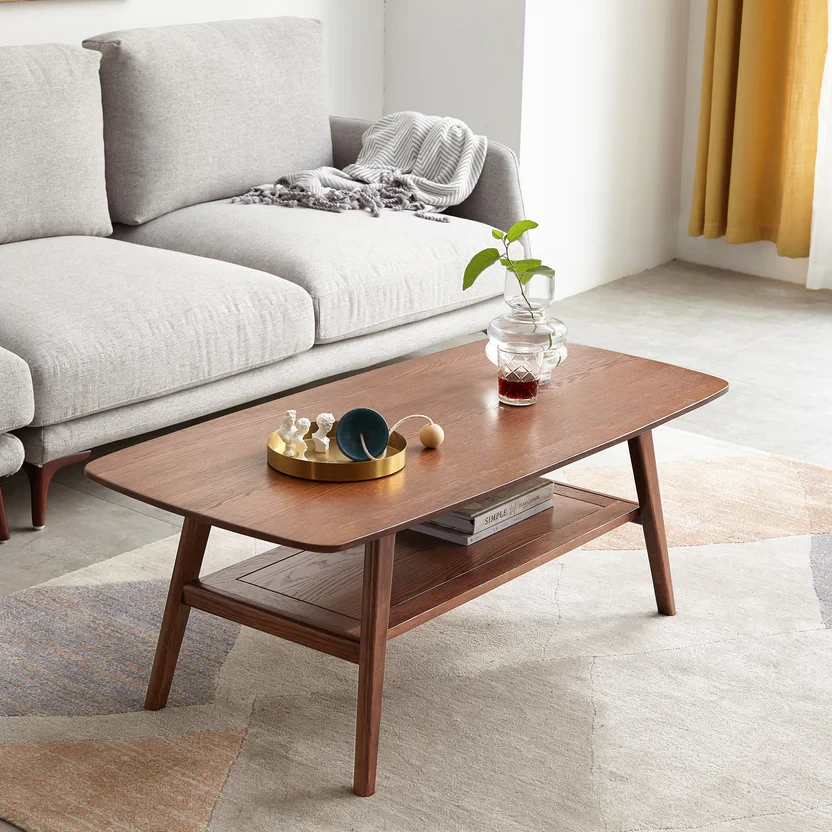
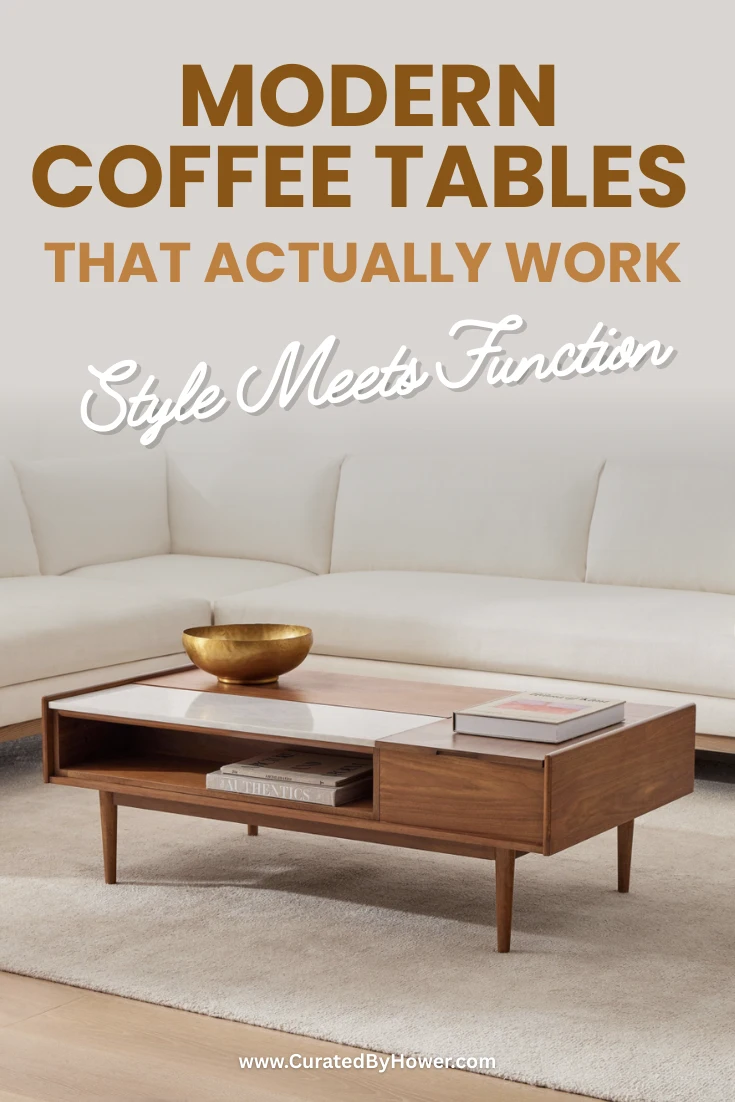
The most flexible direction and the one that ages best across redecorations. A solid oak or walnut top on thin tapered legs reads warm without dominating, pairs with almost any sofa, and tolerates the daily wear of drinks, books, and feet propped on the edge. Best for: most living rooms, any sofa color, budgets at every level.
The tradeoffs to know going in: solid wood shows surface scratches over years (a feature in some homes, a flaw in others), and the lighter wood tones show dust more visibly than darker ones. Look for a finish marked as solid wood rather than veneer over MDF if the table will be in heavy use.
Mid century walnut
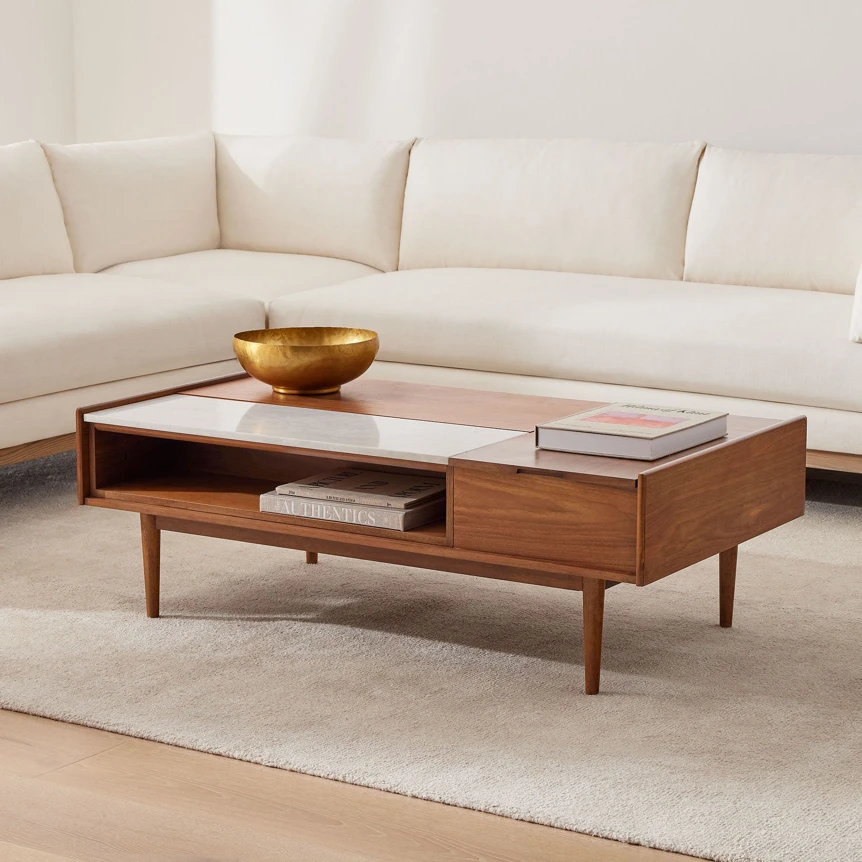
A warmer, more sculptural variant of the minimalist wood category. Walnut grain reads more present than oak, tapered legs lean into the period silhouette, and an integrated drawer or open under-shelf adds quiet utility. Best for: rooms leaning warm or mid century in their broader palette, sofas in brown leather or warm neutrals. This is also the direction to take after a size mistake: a 54-inch walnut piece still reads correct in the room years later, and it suits any sofa that leans warm.
Glass and metal
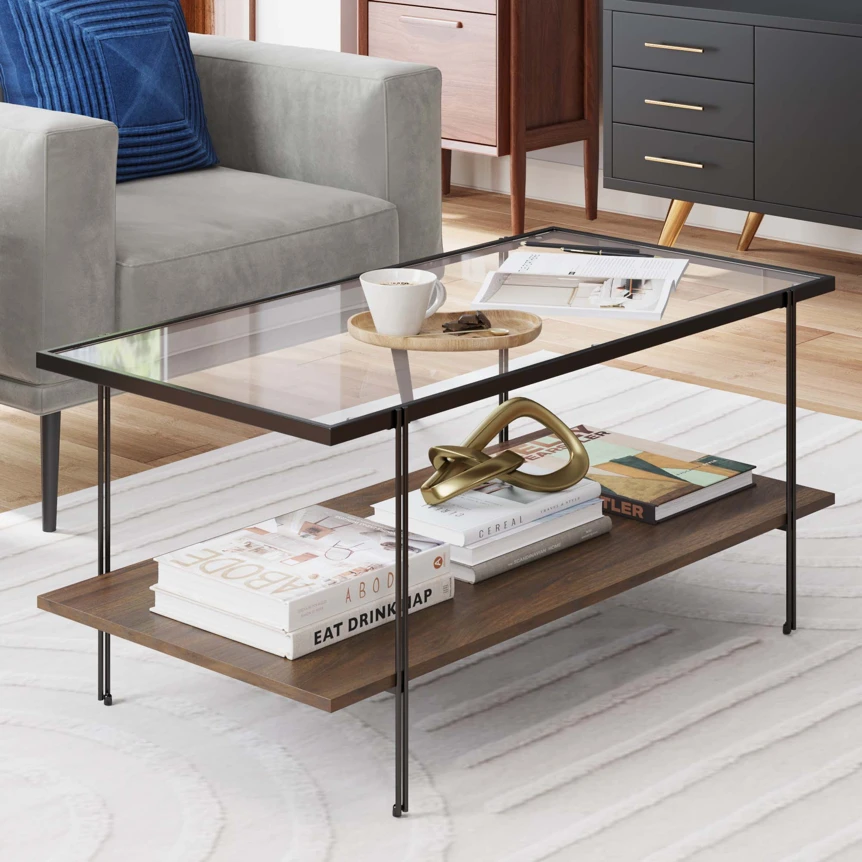
A tempered glass top on a thin metal frame is the lightest visual footprint available. Glass effectively disappears, the metal frame draws a clean perimeter, and the eye reads the rug and floor underneath as part of the seating area. Best for: small living rooms, apartments, any room where visual openness matters more than warmth.
The tradeoff is upkeep: glass shows every fingerprint, every dust film, every water ring. Households that style the surface and leave it tend to enjoy glass; households that put drinks down without coasters tend to regret it within a month.
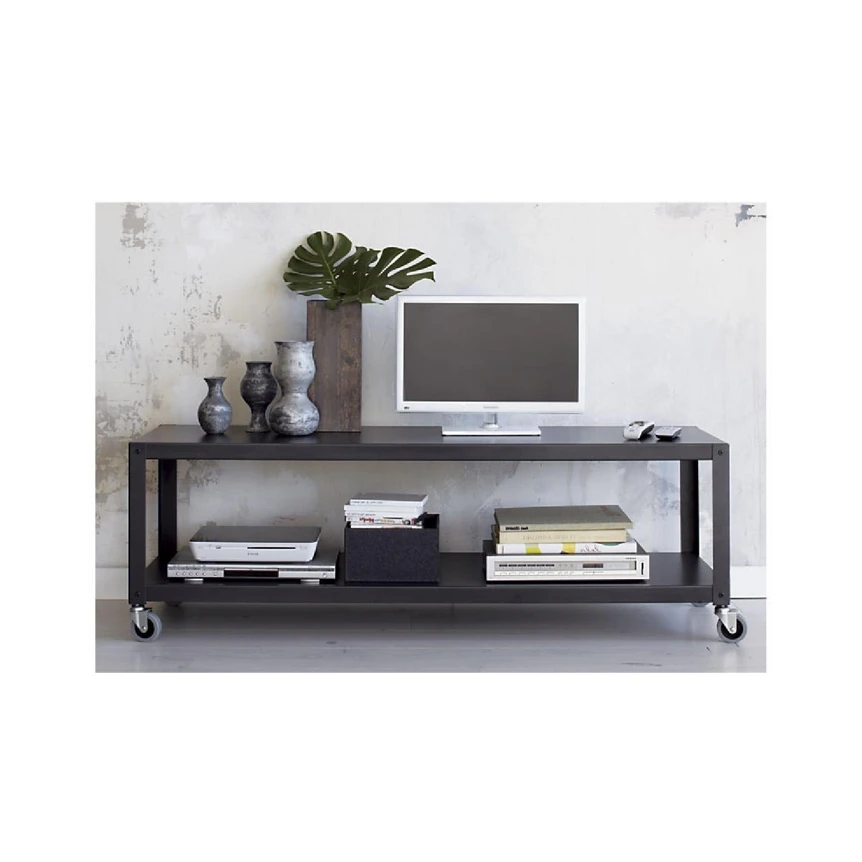
Concrete and metal
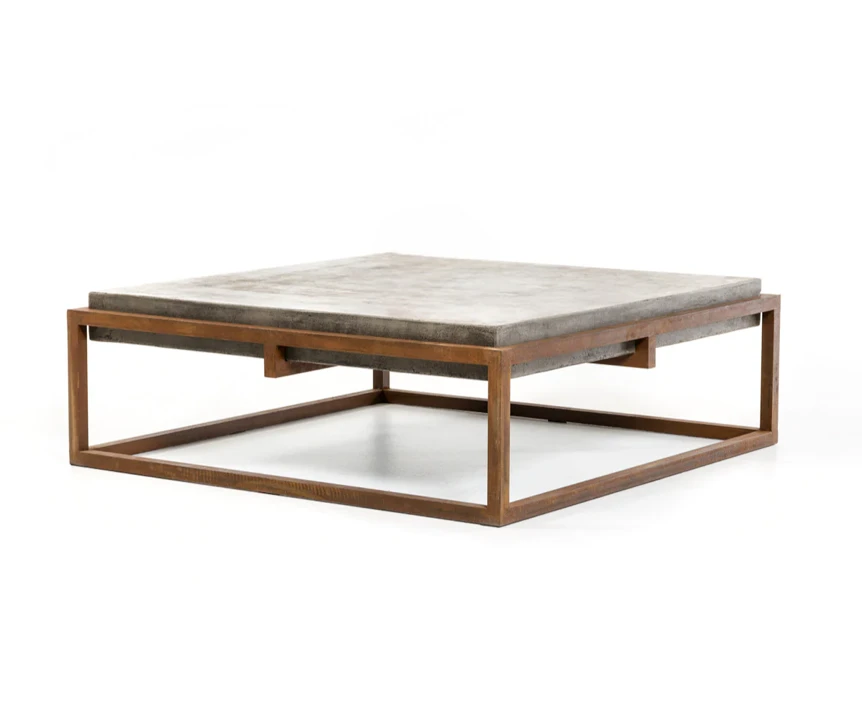
Concrete on a wood or steel base is the most committed of the modern directions. The top reads architectural, the surface ages with character if it is sealed properly, and the visual weight grounds open-plan living rooms that otherwise drift. Best for: industrial-leaning interiors, loft spaces, rooms with strong architectural bones.
Two practical notes: concrete is heavy enough that placement is effectively permanent (plan it once, place it once), and an unsealed top stains from acidic spills within an evening. Insist on a sealed surface.
Storage forward
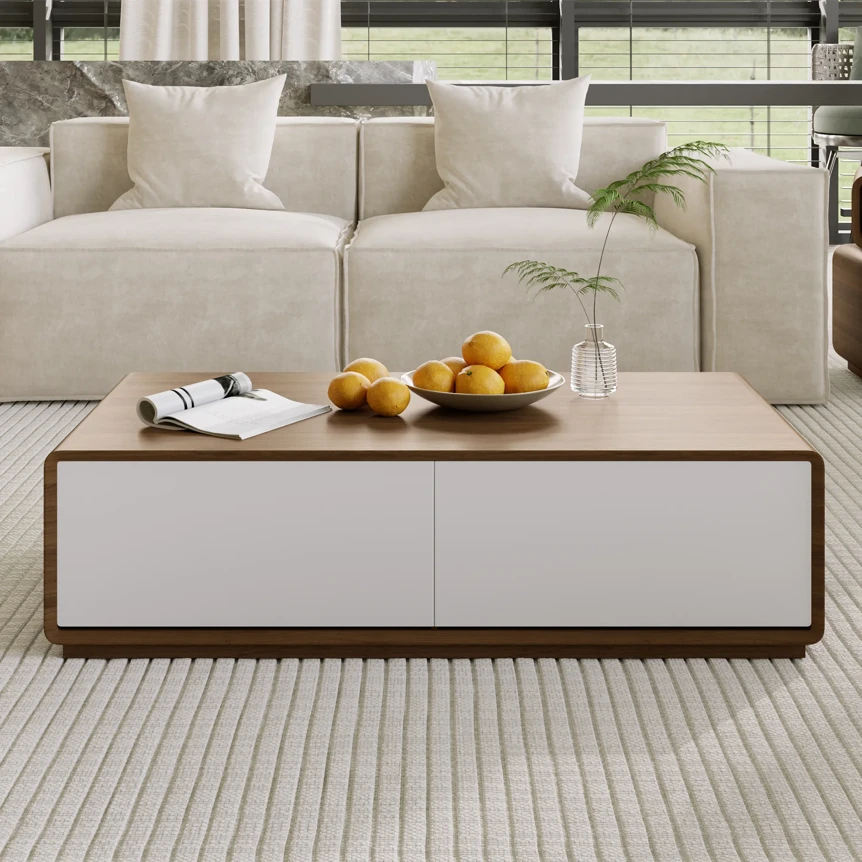
A coffee table with drawers or a low closed shelf earns its keep daily in households with kids, remotes, magazines, or any kind of small-item accumulation. The trick is to choose a piece where the storage is integrated cleanly into the silhouette rather than bolted on as an obvious extra. Best for: larger rooms, households with more small things to put away than to display.
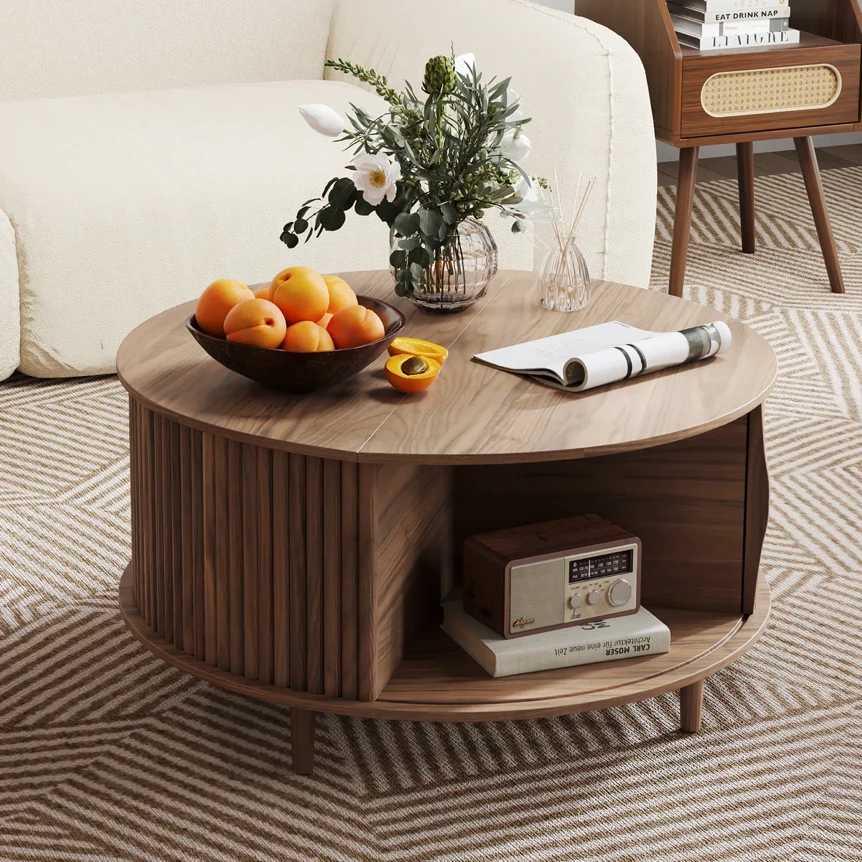
A round storage table with sliding doors is the compact-room version of the same idea: the same closed-storage benefit, a smaller footprint, and a softer silhouette that suits apartments and reading corners.
How Do Coffee Table Materials Compare?
The five materials below cover almost every modern coffee table on the market. The table summarizes how each one behaves over years of daily use, where it shines, and the maintenance tax that comes with it.
| Material | Visual weight | How it ages | Maintenance | Best for |
|---|---|---|---|---|
| Solid wood | Warm, medium | Patina over years; shallow scratches blend | Occasional oil or wax; refinish every 5+ years | Warm modern, Scandinavian, transitional |
| Glass on metal | Light, recessive | Tempered glass stays as-is; metal frame holds up indefinitely | Daily wipe to control fingerprints | Small rooms, apartments, contemporary palettes |
| Metal only | Medium to heavy | Powder-coated finishes hold up; raw steel develops a patina or rusts | Wipe to control scratches on hardwood floors | Industrial modern, loft spaces |
| Concrete | Heavy, architectural | Sealed concrete ages with character; unsealed stains | Re-seal every 2 to 3 years | Industrial modern, statement pieces |
| Marble or stone | Heavy, formal | Reads luxe when intact; etches and stains from acid (wine, citrus) | Seal annually; coaster everything | Modern luxury, low-traffic rooms |
The shorthand: if you want the table to age into the room, choose solid wood or sealed concrete. If you want it to read as light, choose glass on a thin metal frame. Marble is beautiful and rewards a household that consistently uses coasters; for any other household, it ages worse than the alternatives.
How to Style a Coffee Table Without Clutter
Modern coffee tables look best when the styling stays disciplined. The clean lines that define the category lose their impact the moment the surface fills with the daily flotsam of a living room. The rule that holds up: three things, no more.
A small stack of books
Two or three hardcover books with covers worth looking at, stacked horizontally. A small object on top (a small ceramic, a stone, a wooden bowl) anchors the stack and stops it reading like a pile. Topic-coherent stacks (all design books, all photography, all about food) read more deliberate than a random mix.
A tray for the small things
A flat tray (wood, brass, or stone) corrals the small items that would otherwise spread across the whole surface: a candle, a small vase, a single decorative object. The tray creates a visual edge that the eye reads as one zone instead of three scattered objects.
One organic element
A small potted plant, a low bowl of fruit, a clean glass vase with a single stem. Living material breaks up the hard surface and adds a layer no styling object can replicate. One element is enough; a jungle of small plants is back to clutter.
What Are the Most Common Coffee Table Mistakes?
- Going too big. A coffee table longer than two thirds of the sofa overwhelms the seating area and squeezes the side tables. The room reads cramped even if the floor plan is generous.
- Going too small. A table sized for two reads marooned in front of a four-seater. Guests lean to set drinks down and the table stops anchoring the room.
- Wrong height. A table noticeably lower than the sofa cushion makes drinks feel awkward to reach. Stay within an inch of the cushion top.
- Choosing on photo alone. Coffee tables look smaller on a website than in a room. Always check the listed dimensions against a tape-measured shape on your floor before buying.
- Buying a cheap laminate piece. Laminate over MDF chips at the corners within a year and cannot be refinished. The two year cost of replacing it usually exceeds the cost of a solid wood table you keep for a decade.
- Mismatched style. A rustic farmhouse table fights a modern living room. The table does not have to match the sofa, but it has to share a tonal family with the room’s other major pieces.
- Overstyling the surface. More than three or four objects and the table reads cluttered no matter how clean the silhouette is. Edit ruthlessly.
Where to Buy Modern Coffee Tables
Coffee tables are available across the full retail spectrum. The general shape of the market: Modern wall decor & art ideas picks up the same thread room by room. For specific pieces worth buying, see 3 classic living room decor items.
- Budget mass market (under 300 dollars). Mostly laminate over MDF, occasionally light real wood. Functional for short term setups and rentals; usually replaced within a few years.
- Mid range design retailers (300 to 1,200 dollars). The sweet spot for most living rooms. Solid wood construction, real veneer over engineered cores, sealed concrete, tempered glass. This is where most modern coffee tables that last a decade live.
- Premium design houses (1,200 dollars and up). Designer silhouettes, solid hardwood, hand-finished metal, real stone. Pays back in lifespan and the resale market if you choose recognizable pieces.
- Secondhand and vintage. Often the best value, especially for mid century walnut and solid wood pieces. Look on local resale marketplaces and estate sales; the imperfections that come with age are usually features in a modern room.
Frequently Asked Questions
What size coffee table do I need for a sectional?
For a typical L shaped sectional, measure the longest run (usually the longer side, often 90 to 120 inches) and aim for a coffee table about half to two thirds that length. Round or oval tables work well with sectionals because they avoid the dead space that rectangular tables leave at the inside corner of the L. A 36 to 42 inch round table fits most sectionals comfortably without obstructing traffic.
Is a glass coffee table a bad idea with kids or pets?
Tempered glass is structurally safe (it would take a hard blow to break), but the daily reality is fingerprints, smudges, and the occasional sticky residue, all of which read more obvious on glass than on wood. Households with young kids or large dogs usually prefer a solid wood or sealed concrete top that hides daily wear and tear. If you love the glass look, a small lower wood shelf gives the table a textural break and reduces the visual noise of the glass surface.
How much should I spend on a modern coffee table?
For a piece you want to keep for a decade, 400 to 1,200 dollars is the range where real materials and decent construction live. Below 300 dollars the market shifts to laminate over MDF, which chips at the corners within a year and cannot be refinished. Above 1,500 dollars you are paying for designer silhouettes, hand-finished metal, and solid hardwoods. The mid range is where most living rooms land for good reason.
Should a coffee table match the side tables?
Not exactly. Matching reads as a furniture set, which is the catalog-bought look most modern rooms try to avoid. Better: share a material family (warm wood across both, or matte black metal across both) without identical silhouettes. A round walnut coffee table with rectangular walnut side tables reads more curated than three matching pieces.
What is the most common mistake when buying a modern coffee table?
Buying the wrong size. The two thirds rule (table length about two thirds of sofa length) and the cushion-height rule (table height within an inch of the sofa cushion) together prevent the single most common purchase regret. Tape out the dimensions on your living room floor before ordering; the difference between a 48 inch and a 60 inch table reads completely differently in the room compared to on a website.
Complete Your Modern Living Room
Once you have chosen the coffee table, these guides cover the rest of the room: best modern sofas for the seating decision the coffee table sits in front of, modern living room lighting for the layered light plan, best modern area rugs for the soft layer underneath, modern TV stands for the visual counterweight on the opposite wall, and modern color schemes for living rooms for the palette that ties everything together. For the full roadmap, the complete guide to modern living room design is the place to start.