4 Timeless Bedroom Decor Essentials for a Calm, Elegant Look

By Tereza Hower | Published February 10, 2026 | Updated August 14, 2026

Walk into a bedroom that still looks right ten years after it was styled, and the same four pieces tend to be doing the heavy lifting. Not the trend-led ones photographed in shelter magazines this season, but the ones the same magazines come back to in a decade.
Trends move through a bedroom as accessories: a throw, a stack of books, a single piece of art. The four pieces below are the foundation those accessories sit on, and the room rarely outgrows them.
The safe timeless bedroom palette tends to look the same on paper: a white linen bed, a pale jute rug, and matching ceramic lamps with crisp white shades. By the first winter, rooms built this way often feel cold and oddly underlit, even though every piece checked the “neutral classic” box. Swapping the jute for a low-pile wool rug in a warm oat tone and changing every bulb to a 2700K warm white does more for a room’s calm than any of the original purchases.
Timeless bedroom decor is built around four foundational pieces: an understated bed or headboard, high-quality neutral bedding, warm bedside lighting, and a generously sized rug. The pieces are deliberately quiet so that small seasonal changes can refresh the room without renovating it.
1. Neutral Upholstered Bed or Headboard
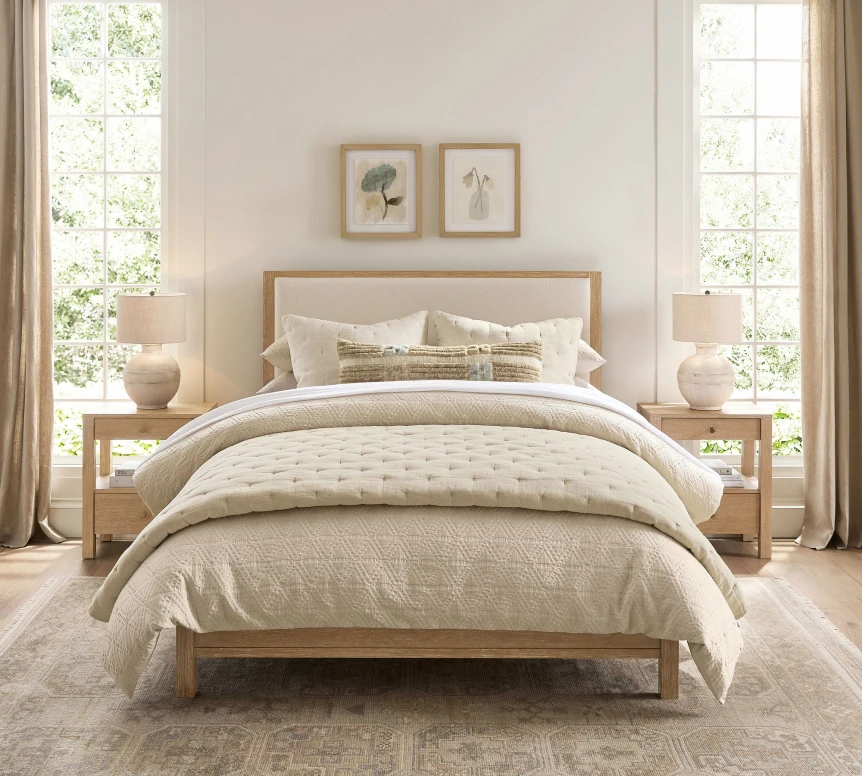
The bed is the visual anchor of the room, and most of its job is structural rather than decorative. A neutral upholstered headboard sets proportion: it tells the eye where the room ends vertically and gives the bedding something architectural to sit against. Once that anchor is calm and well-scaled, almost any bedding palette layered on top of it will read as considered.
Why it lasts
Upholstered headboards have appeared in classic interiors for at least a century. The form translates across modern, transitional, and traditional rooms because it relies on shape and fabric rather than the season’s hardware. A simple winged or panelled silhouette in a neutral fabric will look as appropriate over a percale duvet today as it does over a quilted coverlet in five years.
How to tell quality from cheap
The quickest signals are at the seams and the legs. Look for tightly upholstered corners with no puckering, a hardwood frame rather than engineered particleboard (the listing should state it; if it doesn’t, assume the worst), and foam density in the headboard above 1.8 lb per cubic foot. Heights of 50 to 56 inches generally read as substantial without overwhelming a standard 8-foot ceiling.
If you are starting from scratch, the best modern bedroom furniture breaks down the frames and headboards worth the spend.
Styling tip
Pair a simple headboard with crisp bedding and minimal wall decor for a relaxed, hotel-inspired feel. One large piece of art above the headboard generally outperforms a gallery wall in a bedroom; visual quiet matters here more than in a living room.
2. High-Quality Neutral Bedding
Bedding sets the tone of the room more than any single piece of furniture, and it does so on a surface area larger than the floor. The temptation is to pick the bedding last; in practice it is worth picking first, because the weight, weave, and undertone of the fabric will dictate which neutrals on the walls and floor work alongside it.
Percale, sateen, or stonewashed linen
Percale is cool, crisp, and visibly woven, with a thread count typically in the 200 to 400 range; it sleeps cool and reads modern. Sateen has a smoother face and a slight sheen, and feels warmer in the hand and warmer to sleep in. Stonewashed linen, in the 165 to 200 GSM range, is the most textural of the three; it wrinkles by design and forgives a casually made bed in a way no cotton ever does.
Which to actually buy
For most bedrooms aiming at calm, stonewashed linen is the right answer. It rewards low-effort styling, photographs well in lamp light, and the textural variation does the visual work that a complicated color palette would otherwise have to do. Percale earns its place in households that genuinely sleep hot or want a sharper, more hotel-coded feel.
If the bedding will define the room’s palette, it helps to work back from a tested neutral framework. These modern bedroom color schemes that actually work are a useful starting point for warm-neutral combinations that hold up in low light.
Styling tip
Layer one textured throw or coverlet at the foot of the bed instead of stacking multiple bold patterns. A waffle cotton throw over a linen duvet adds depth without introducing a competing color.
3. Warm Bedside Lighting
Bedside lighting is the cheapest single change with the biggest effect on a bedroom’s atmosphere. Most bedrooms are seen in low-light conditions: the early morning before the curtains open, the last hour before sleep. The color temperature of the bedside lamp dictates how every other neutral in the room reads under those conditions.
The bulb matters more than the lamp
Use 2700K warm white bulbs at the bedside, with a 60-watt incandescent equivalent (around 800 lumens) on a switch or a dimmer. Anything cooler than that, in the 3000K to 5000K range, starts to flatten skin tone and makes warm-neutral walls read grayer than they actually are.
This is the slowest lesson to learn in a bedroom. Switching every bulb to 2700K warm white, paired with one rug swap, does more for a room’s calm than any of the original purchases.
Lamp shape and proportion
A ceramic, plaster, or turned-wood base in a matte finish is harder to date than anything in polished metal. Aim for a shade diameter of 12 to 16 inches and a total lamp height that brings the bottom of the shade roughly level with your shoulder when you sit up in bed.
Styling tip
Use two matching lamps on opposite nightstands rather than one lamp and an empty surface. Symmetry reads as more polished in this room than in any other, and it gives both sides of a shared bed equal task light.
A bedside lamp is only one lighting layer in a well-designed bedroom. These modern bedroom lighting ideas cover the ceiling, wall, and accent fixtures that work alongside it.
4. A Generously Sized Rug
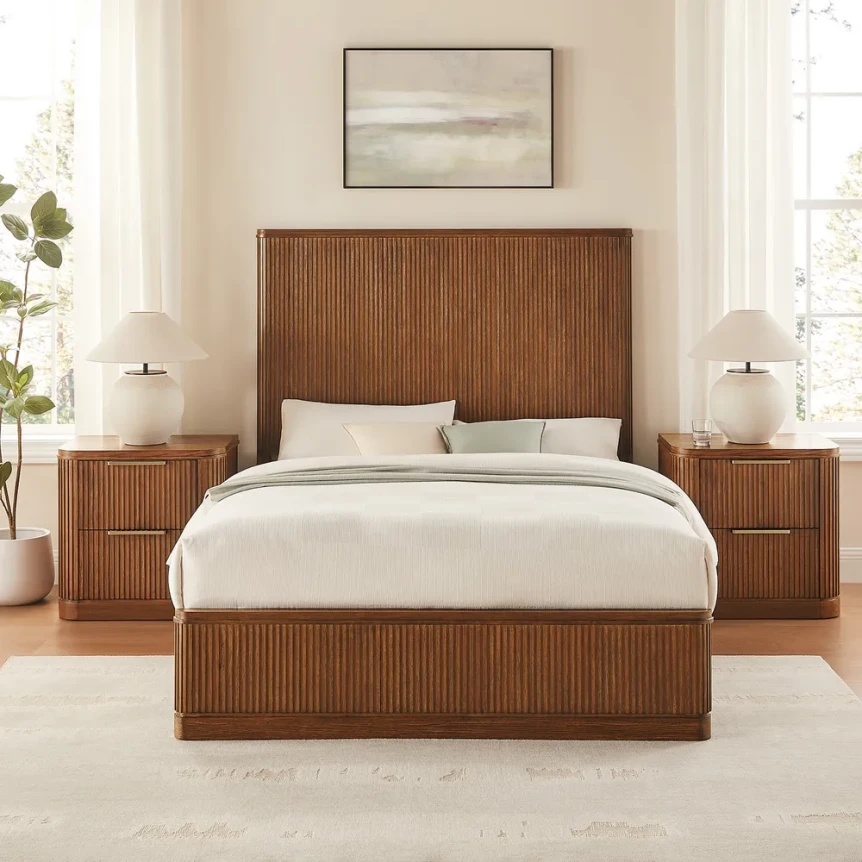
A rug that is too small does more visual harm in a bedroom than no rug at all. The single most reliable upgrade in this category is to buy one size up from whatever the room measurement first suggests; the rug should anchor the entire sleeping zone, not float beneath the bed like a placemat.
Size, by bed size
For a queen bed, an 8 by 10 rug is the practical minimum, with 9 by 12 a more generous and more forgiving size. For a king, default to 9 by 12. The rule is at least 18 inches of rug visible on each side of the bed and at the foot; 24 inches is better in any room with the floor space for it.
Sizing a bedroom rug correctly is the decision that separates a room reading intentional from one reading almost-finished. The full breakdown of sizes, materials, and placement is in how to choose the right rug for your bedroom.
Low-pile wool, almost always
A low-pile wool in a warm oat or greige tone is the most consistently right answer for a calm bedroom. Wool is durable, takes warmth and dye in a way synthetic blends cannot, and a pile under half an inch stays easy to clean and easy to walk on at night. Pale jute is photographically appealing but reads cold and scratchy in practice; it is the wrong rug for a room you want to feel restful.
Styling tip
Place the rug so it extends well past the sides and foot of the bed, with the headboard end either resting on the rug or sitting just behind it. In small rooms where a full-sized rug under the bed is not practical, two bedside runners do the same job for the place your feet actually land in the morning.

Common Mistakes Most “Timeless” Bedrooms Make
The errors below are the ones that quietly undo even a well-curated room. They are also the most fixable, usually for the cost of a single replacement piece.
- An undersized rug. A small rug under a queen bed is the single most common mistake in this room. The fix is straightforward: go up at least one standard size, ideally to 9 by 12.
- Cool-white bulbs. Bulbs in the 4000K to 5000K range are everywhere in big-box stores and they make every neutral in the room read grayer and colder. Switch to 2700K and the same bedding suddenly looks like it cost more.
- “Neutral” that means cool gray. Cool grays and stark whites read clinical at the bedside. Warm whites, oats, greiges, and soft taupes outperform them in almost every bedroom lighting condition.
- Buying the headboard before the bedding. The bedding does the visual work; the headboard sets the proportion. Choose the bedding first and the headboard becomes a supporting decision rather than a styling burden.
- Matching every neutral to the same beige. A bedroom in one repeated tone reads flat. Three different neutral textures (a matte wall, a linen duvet, an oak floor) in the same color family create depth without introducing a competing color.
The Foundation, Not the Trend
A calm bedroom comes from fewer good decisions, not more clever ones. Spend the budget on a rug that is large enough to do its job, bedding you actually want to touch, a bed that sets proportion without shouting, and lamps with warm bulbs. Everything else, from the throw to the art to the books on the nightstand, is allowed to change with the seasons because the foundation does not.
For the broader argument about how these four pieces fit into a fully designed bedroom, including layouts, paint, and storage, see the complete guide to modern bedroom design. For a softer, atmosphere-led take on the same calm, a cozy, restful Scandinavian bedroom shows how the same foundation reads with warmer wood tones and heavier textiles.
Frequently Asked Questions
What makes a bedroom decor piece actually timeless?
Timelessness in a bedroom comes down to honest materials, restrained proportion, and a color that is part of a neutral family rather than a trend. A linen-upholstered headboard, an oak frame, a wool rug, and a ceramic lamp will all read as appropriate ten years from now because none of them rely on the current season’s hardware or color.
What size rug do I need for a queen bed?
An 8 by 10 rug is the practical minimum under a queen, with 9 by 12 a more generous and more forgiving size. The rule is to leave at least 18 inches of rug visible on each side and at the foot of the bed, with 24 inches preferable wherever the floor space allows.
Cotton or linen bedding for a calm bedroom?
Stonewashed linen in the 165 to 200 GSM range is the more reliable choice for a calm, lived-in bedroom; it forgives a casually made bed and adds the textural depth a quiet color palette needs. Percale cotton is the better answer for households that sleep hot or prefer a sharper, more hotel-coded look.
What color temperature should bedside lamp bulbs be?
Use 2700K warm white bulbs at the bedside, around 800 lumens (a 60-watt incandescent equivalent) on a switch or dimmer. Cooler bulbs in the 3000K to 5000K range flatten skin tone and make warm-neutral walls read grayer than they actually are.