3 Classic Living Room Decor Items: Where to Start

By Tereza Hower | Published February 10, 2026 | Updated April 27, 2026
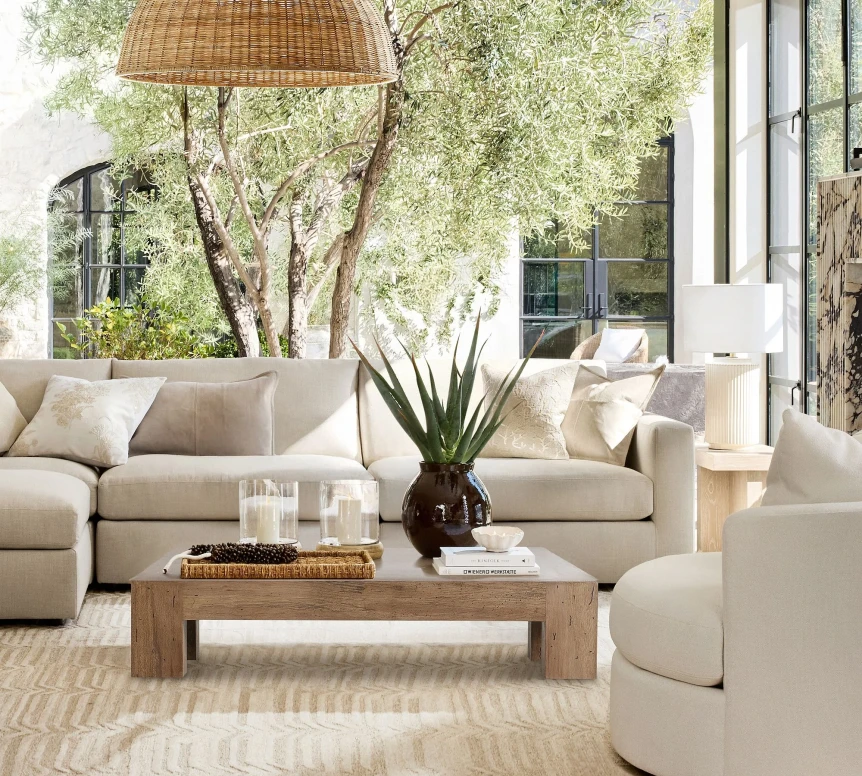
Most people furnishing a living room from scratch make the same mistake: they buy too much, too fast, and end up with a room that looks like a catalog spread instead of a home. After ten years of watching customers move through Hower Furniture, the pattern was clear. The rooms that came together best were the ones built slowly around three or four foundational pieces, with everything else added gradually.
This guide is for the moment before that. The first apartment, the post move blank slate, or the room that’s stalled out because there’s just too much to figure out. Three pieces, in this order, are the ones I’d buy first. Get these right and the rest of the room becomes much easier to layer in over the following months.
Once these three are in place, the five piece foundation guide is the natural next read. For the full picture across rooms, see our 10 timeless decor pieces guide. But start here.
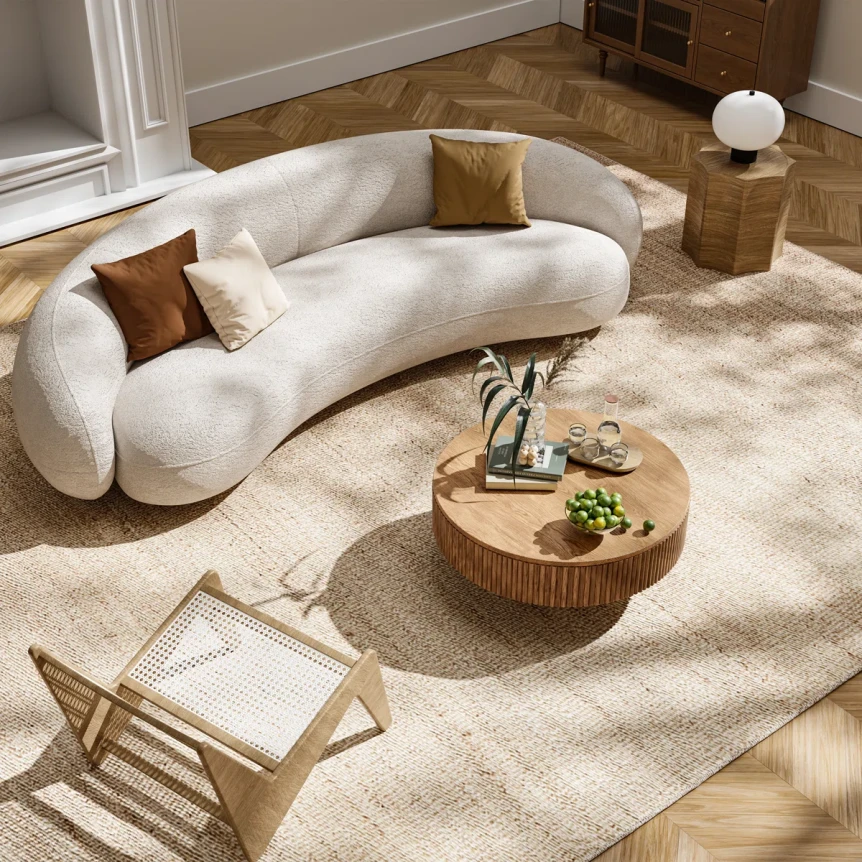
1. A Large Neutral Area Rug
The rug is the single highest leverage purchase you can make for a living room, which is why it goes first. It defines the seating area, sets the room’s color palette, and grounds every other piece of furniture you bring in. Buy the rug before the sofa if you can. The rug determines the room’s tone; the sofa just lives on it.
What to look for: natural fibers (wool, jute, or a wool jute blend), neutral colors in cream, oatmeal, or warm gray, and a subtle pattern (stripe, herringbone, or distressed) rather than a bold print. Avoid pure synthetics if you can; polyester rugs flatten and pill within a year of foot traffic.
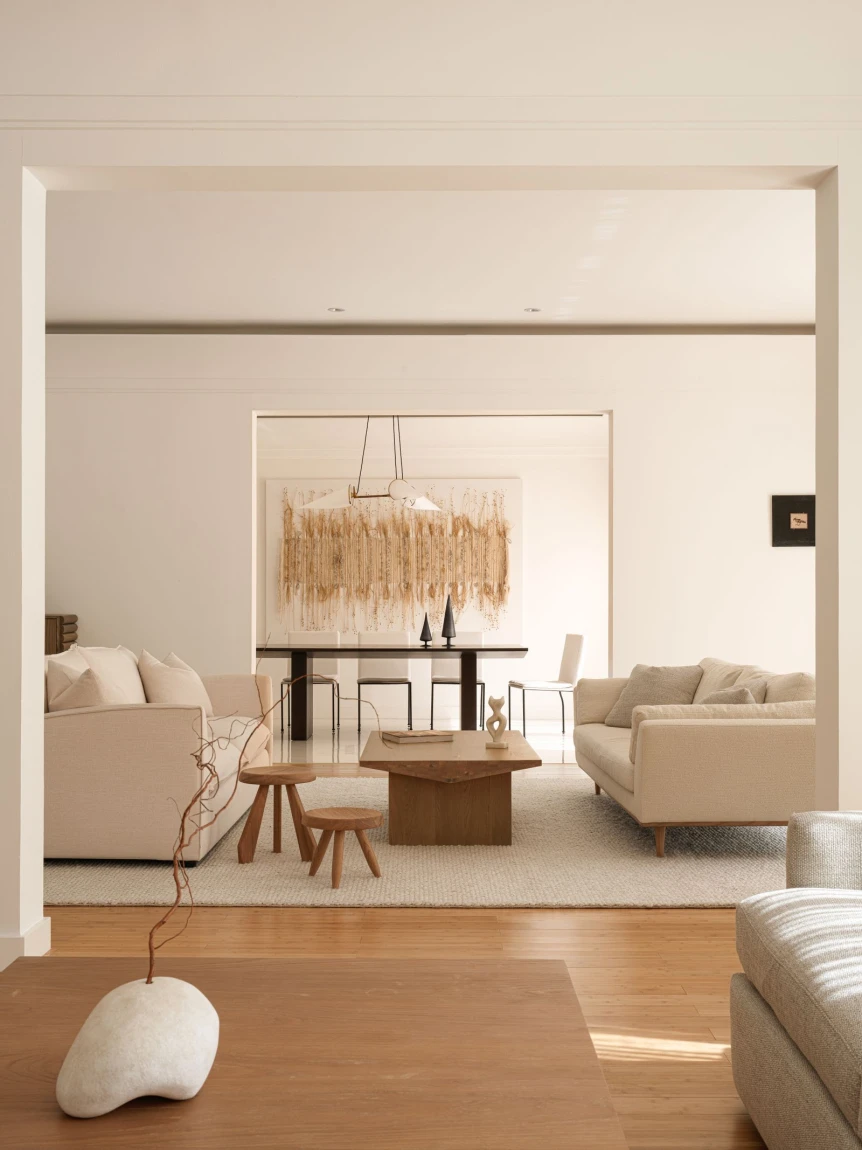
Size is non negotiable. The biggest mistake at the showroom was customers buying a 5×7 rug for a room that needed an 8×10. The rug should extend at least 6 inches under the front legs of every major piece of seating. In a typical 12×14 living room, that means a 9×12. In a great room, 10×14 minimum.
Why I’d buy this first: a properly sized rug makes a half furnished room feel intentional. A small rug or no rug makes a fully furnished room feel unfinished. The rug is doing structural work that no amount of styling can replicate.
2. A Solid Wood Coffee Table
The coffee table is the most physically abused piece of furniture in the house. Feet up, drinks down, kids climbing, dogs sleeping under it. A solid oak or walnut coffee table will absorb fifteen years of that. A veneer over particleboard table will start chipping at the corners within two. If there’s one piece worth spending real money on, it’s this one.
How to tell solid wood from veneer: tap the top with a knuckle. Solid wood gives a low, dense thunk. Veneer over particleboard sounds higher and hollower. Lift one end. A 48 inch solid oak coffee table should weigh 60 to 90 pounds. If you can lift it like a pizza box, the case is engineered.
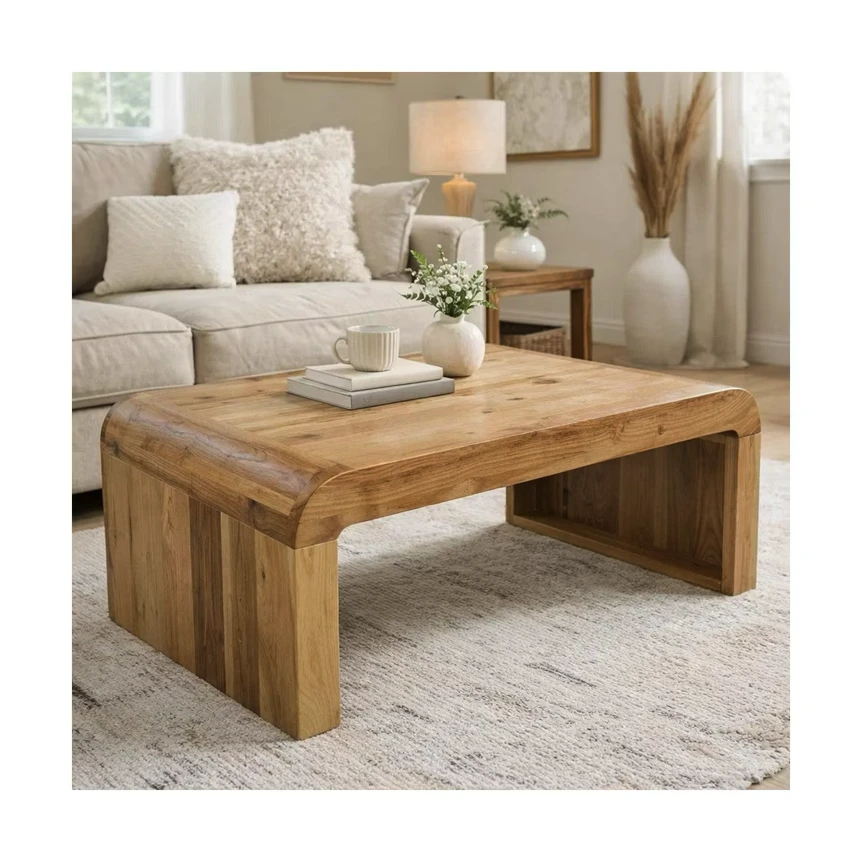
Sizing rule: the coffee table length should be roughly two thirds the length of your sofa, set 14 to 18 inches from the sofa front. The height should match the sofa seat within 2 inches. Significantly higher and reaching for a drink becomes awkward.
Wood tone matters more than shape. A round pedestal, a rectangular plank top, or a pair of nesting tables will all work; the silhouette is mostly a matter of personal taste and room size. The material is what determines whether the piece will still look good in a decade. Avoid matching the coffee table to your floor: contrast between the table and the floor is what makes the wood read as intentional.
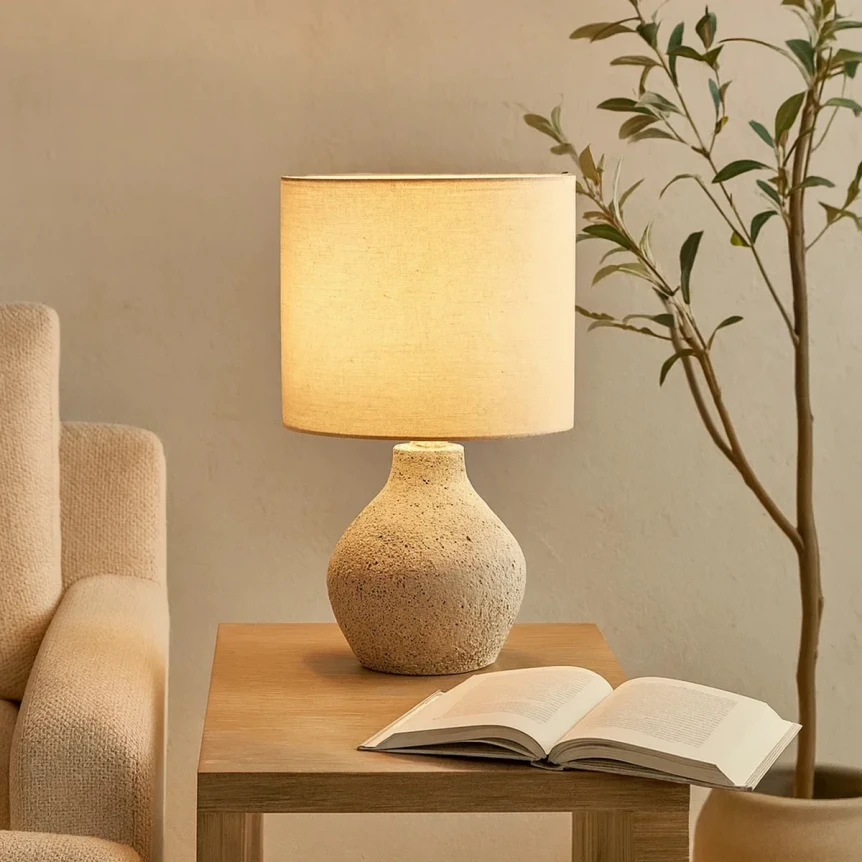
3. A Ceramic Table Lamp With a Linen Shade
The third piece is lighting, and specifically a c. The instinct is to skip this and rely on the room’s overhead light. Don’t. The single biggest jump in how a room feels happens the moment you stop using overhead lighting as the primary source.
What to look for: a ceramic, stoneware, or solid wood base; a linen or paper shade (not plastic); and a 2700K bulb. The 2700K temperature is the standard warm white that mimics incandescent. Anything cooler than that will make the room read clinical, no matter how nice the rest of the furniture is.
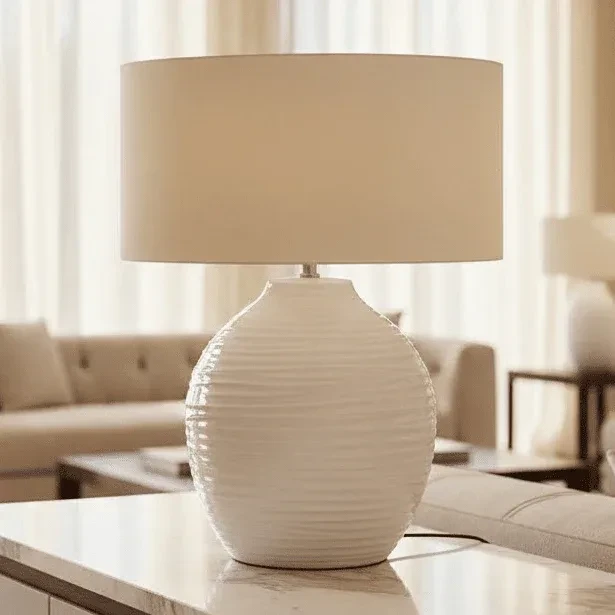
Sizing: the lamp height (base plus shade) should match the surface it sits on plus 4 to 6 inches. A 24 inch console wants a 28 to 30 inch lamp. The bottom of the shade should sit at roughly seated eye level, around 40 to 42 inches off the floor.
One lamp is enough to start. A pair on opposite sides of the room is the eventual goal, but a single well placed lamp on a side table next to the sofa will do more for the room than two cheap lamps splitting the budget. Buy quality once. Add the second lamp later when the budget allows.
Why These Three, in This Order
The order matters more than people realize. A common mistake is buying the sofa first, because it’s the biggest and most exciting purchase. The problem is that everything else then has to work around the sofa, including the rug (which is now constrained by the sofa’s color palette) and the coffee table (which has to match the sofa’s height and length).
Working in the order above (rug, coffee table, lamp) gives you the structural pieces first. The rug establishes the palette. The coffee table establishes the wood tone and the room’s anchor. The lamp establishes the lighting temperature. Once these three are in place, the sofa, accent chairs, side tables, art, and pillows have a clear set of constraints to work within. The room comes together more coherently than it would the other way around.
The other reason for these three specifically: they’re the pieces that don’t require knowing the rest of the room first. You can buy a great rug, a great coffee table, and a great lamp without having committed to a sofa style or a paint color. Everything else you buy later will work harder if these three are right.
What Most People Get Wrong With “Starter” Decor
Two patterns I watched repeat at the showroom and with friends starting from scratch.
They buy three medium quality pieces instead of one great one. A $400 solid oak coffee table will outlast three $150 veneer coffee tables, and at the end of ten years you’ve spent less and the room looks better the entire time. Restraint is more affordable than it looks because quality pieces don’t need to be replaced.
They wait too long to add lighting. The lamp feels optional when you’re staring at an empty room and trying to budget for furniture. It isn’t. A room with a sofa, a rug, a coffee table, and a single overhead bulb will always read as half finished. A room with the same furniture plus one warm table lamp reads as a home.
Frequently Asked Questions
What should I buy first when furnishing a living room from scratch?
Buy the rug first, the coffee table second, and a table lamp third. The rug establishes the room’s palette and scale, the coffee table grounds the wood tone, and the lamp sets the lighting temperature. Once these three are in place, the sofa and everything else have a clear set of constraints to work within. Buying the sofa first is a common mistake because it forces every other purchase to work around it.
How do I know if a coffee table is solid wood or veneer?
Two quick tests. Tap the top with a knuckle: solid wood gives a low, dense thunk; veneer over particleboard sounds higher and hollower. Lift one end: a 48 inch solid oak coffee table should weigh 60 to 90 pounds. If you can lift it like a pizza box, the case is engineered. Real wood also shows continuous grain across the entire surface, while veneer has a repeating pattern or visible seams at the edges.
What size rug do I need for a small living room?
Even in a small living room, go larger than you think. A 6×9 is the absolute minimum, and 8×10 is better. The rug should extend at least 6 inches under the front legs of your sofa and any major chairs. Undersized rugs make small rooms look smaller, not larger. The rug should feel slightly oversized when you first roll it out; that’s how you know it’s the right size.
Is one table lamp enough or do I need a pair?
One quality lamp is enough to start. A pair on opposite sides of the room is the eventual goal for a fully styled space, but a single well placed lamp on a side table next to the sofa will do more for the room than two cheap lamps splitting the same budget. Buy quality once and add the second lamp later when the budget allows. The 2700K bulb temperature matters more than the number of lamps.
What's a realistic budget for these three starter pieces?
A reasonable starting budget for quality versions of all three is around $1,200 to $2,000 total, with the rug ($500 to $800) and coffee table ($400 to $900) taking the largest shares and the lamp ($150 to $300) the smallest. You can do it for less by sourcing the rug and lamp at sale prices and the coffee table from estate sales or facebook marketplace. Solid wood coffee tables show up regularly on the secondhand market for half the retail price.
The Bottom Line
The three classic living room decor items worth buying first are a large neutral area rug, a solid wood coffee table, and a ceramic table lamp with a linen shade. Buy them in that order, spend more than feels comfortable on each, and let the rest of the room come together over the following months as you find pieces that work.
Once these three are in place, our guide to timeless living room staples covers the next two pieces to add (a wall mirror and linen pillows) for a complete five piece foundation. For the larger room around it, our complete guide to modern living room design walks through layout, color, and the supporting pieces. And when you’re ready to look across the rest of the home, the 10 timeless decor pieces guide is the comprehensive reference.