Modern Wall Decor & Art Ideas: Transform Your Living Room Walls

By Tereza Hower | Published March 9, 2026 | Updated September 5, 2026
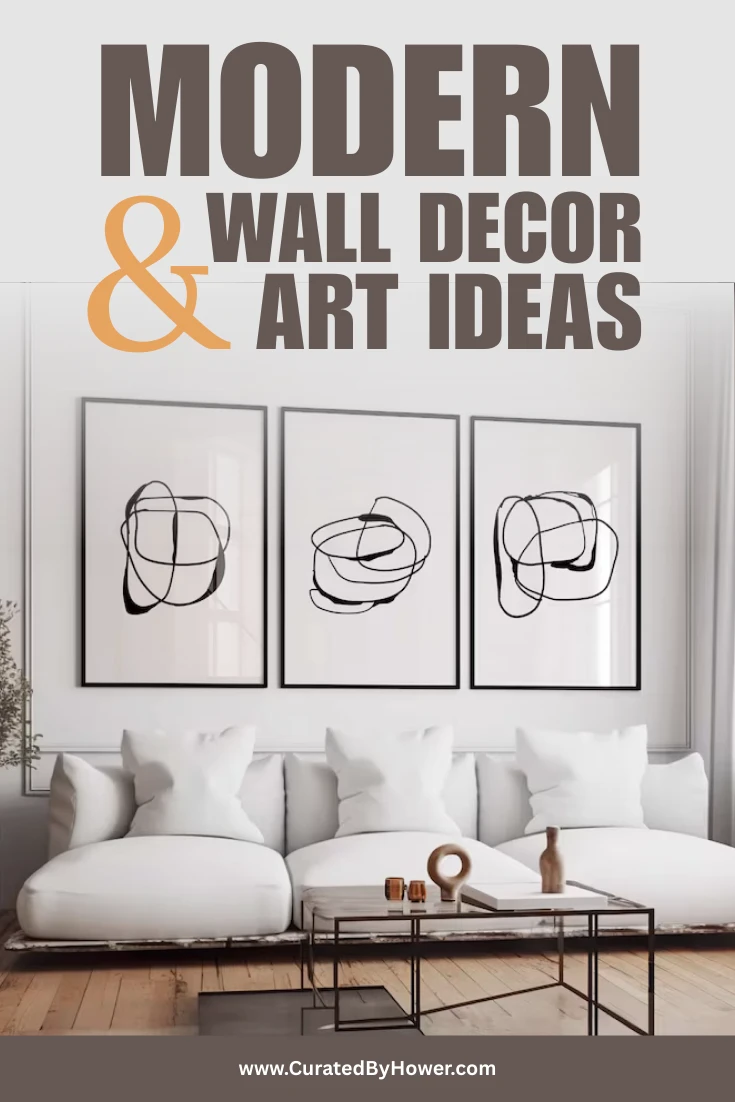
What is on the wall above your sofa right now? In most living rooms the answer is either nothing or a print bought in a hurry and hung two feet too high, and both read the same way from the doorway: unfinished. The modern wall decor ideas worth acting on are fewer than the catalogs suggest, and every one of them depends more on size, height, and restraint than on what the piece depicts.
Wall decor is the least expensive way to change how a living room feels, and the easiest to get slightly wrong. This guide covers the types that suit a modern room, the four arrangements that work, where each one belongs, how to frame it, how to do it on a small budget, and the mistakes that separate a composed wall from a busy one.
Key Takeaways
- One large piece above the sofa, two thirds its width, beats a scatter of small ones.
- Hang art with its center at 57 to 60 inches from the floor, or 6 to 12 inches above the sofa back.
- Keep frames to one material per wall: black, natural wood, white, or a single warm metal.
- A gallery wall stays modern when it is a grid with equal gaps, not a cloud of mismatched frames.
- Buy the art after the furniture and the lighting, never before.
What Makes Wall Decor Modern?
Modern wall decor is art and objects chosen for form, proportion, and restraint rather than ornament: abstract or graphic work, simple frames in one material, generous spacing, and at least one wall left plain. The style is defined as much by what stays off the wall as by what goes on it. A single well sized piece on a quiet wall is more modern than five good ones crowded together.
Walls do three jobs in a modern living room. They give the seating a focal point, they carry the color or texture the furniture leaves out, and they set the scale of the room, because a large canvas makes a ceiling read higher and a row of small frames makes it read lower. For how the walls fit the sofa, rug, and lighting decisions, the complete guide to modern living room design covers the whole room; this post covers the walls alone.
Modern Wall Decor Ideas by Type
Six kinds of wall decor suit a modern living room. Each one solves a different problem, and the table is the short version of which to reach for.
| Type | Best for | Frame or mount | Watch for |
|---|---|---|---|
| Abstract painting or print | The main wall above the sofa | Floating frame or unframed canvas | Colors that match the cushions too exactly |
| Black and white photography | Grids and linear rows | Thin black frame, wide white mat | Small prints on a large wall |
| Line drawings | Narrow walls, reading corners | Slim natural wood or black | Too many on one wall reads as a shop display |
| Mirror | Dark rooms, small rooms, walls opposite a window | Thin metal, wood, or frameless | Reflecting a television or a cluttered corner |
| Floating shelves | Rotating objects, books, plants | Solid wood or black steel, 8 inches deep or less | More than five objects per shelf |
| Textile wall hanging | Adding texture to a flat, hard room | Hidden rod or wood batten | Fringe and pattern that tip the room toward boho |
Abstract art
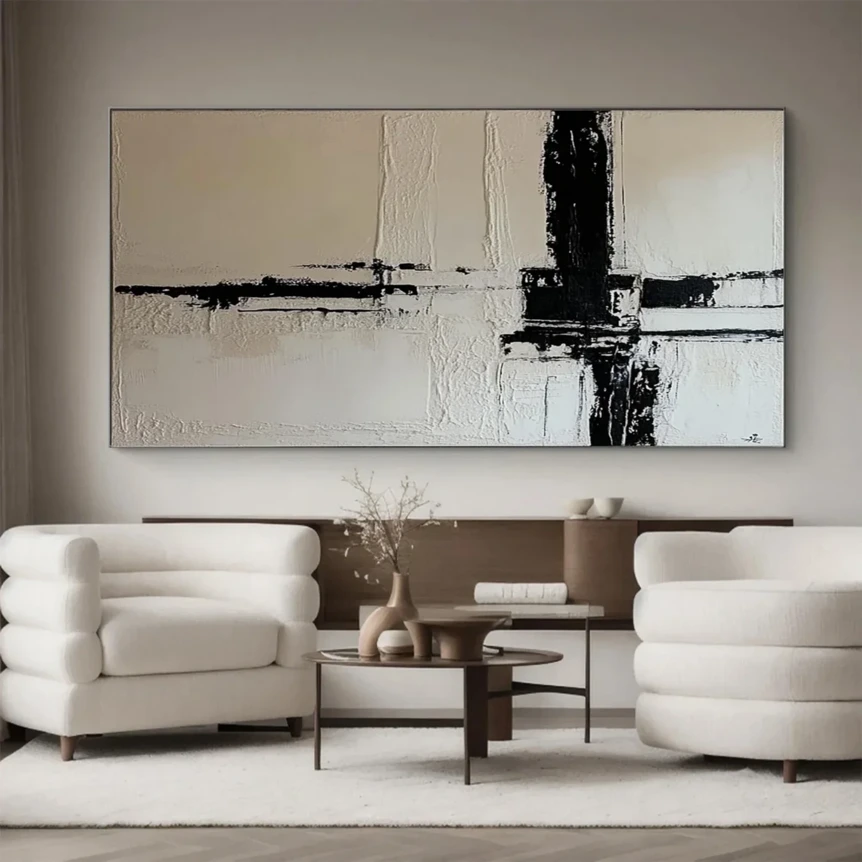
Abstract work is the natural fit for a modern room because it carries color and movement without a subject that dates. Choose a piece that shares one or two tones with the room and disagrees on the rest; a canvas that matches the cushions exactly looks like it came in the same delivery. Above a sofa, go large: a single 40 by 60 inch canvas does more than three 16 by 20 prints.
Photography
Black and white photography is the most reliable material for a grid or a row, because identical framing and a shared tonal range make even unrelated images read as a set. Architecture, landscape, and abstract detail shots suit modern rooms better than portraits, which pull attention from the seating. Mix one black and white grid with one color piece elsewhere in the room, not on the same wall.
Line drawings
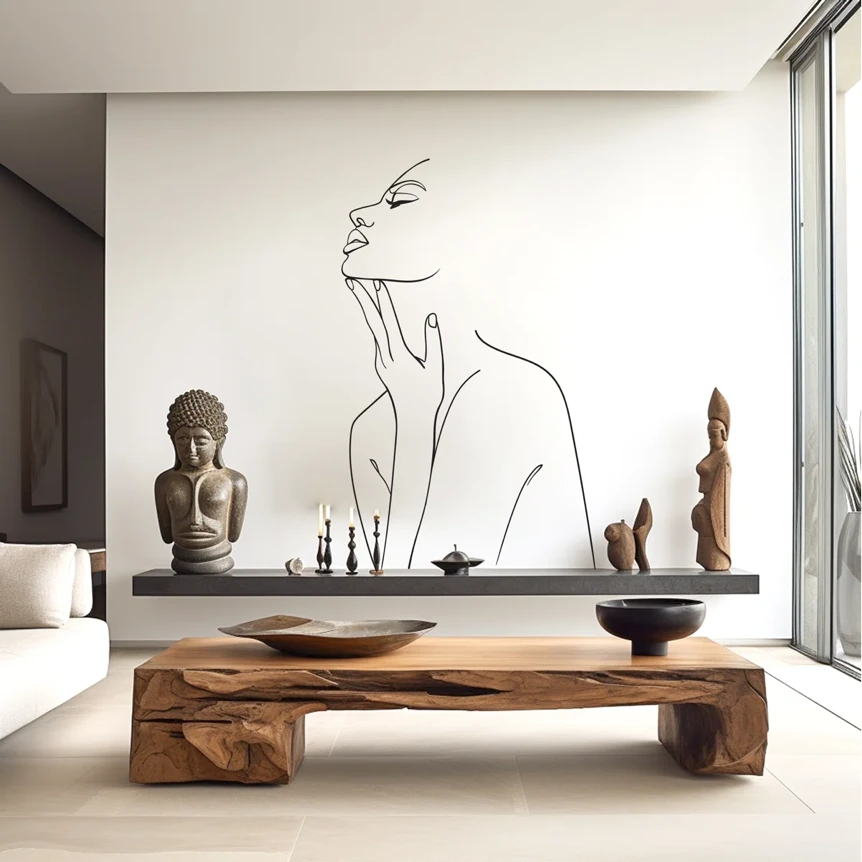
Single line botanicals, figures, and geometric drawings suit narrow walls and the space above an accent chair. They are quiet enough to hang in pairs and cheap enough to change. Frame them in slim black or natural wood with a wide mat, and stop at two or three in a room; a wall of line drawings starts to look like a print shop.
Mirrors
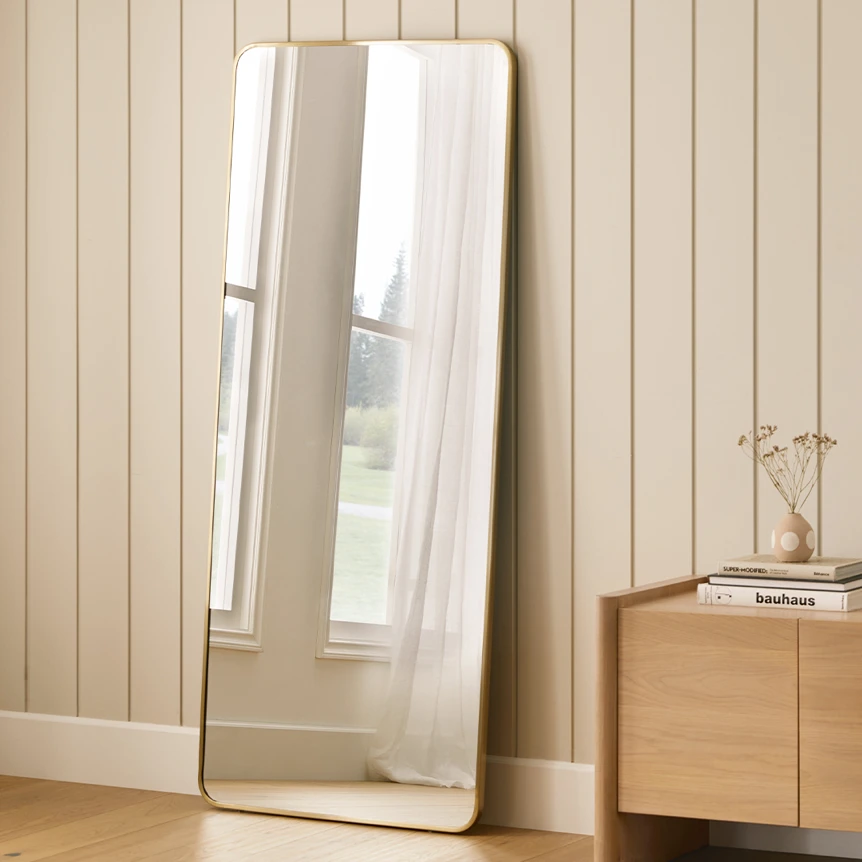
A mirror is decoration that also does a job: it doubles the daylight and deepens a small room. Hang it opposite a window, or lean an oversized one against the wall for a looser, more contemporary look. Check what it reflects before committing; a mirror facing the television or a cluttered corner doubles the wrong thing.
Modern mirror shapes are simple: a circle, a tall rectangle, or an arch, in a thin black or brass frame or no frame at all. Geometric novelty shapes date fast.
Floating shelves
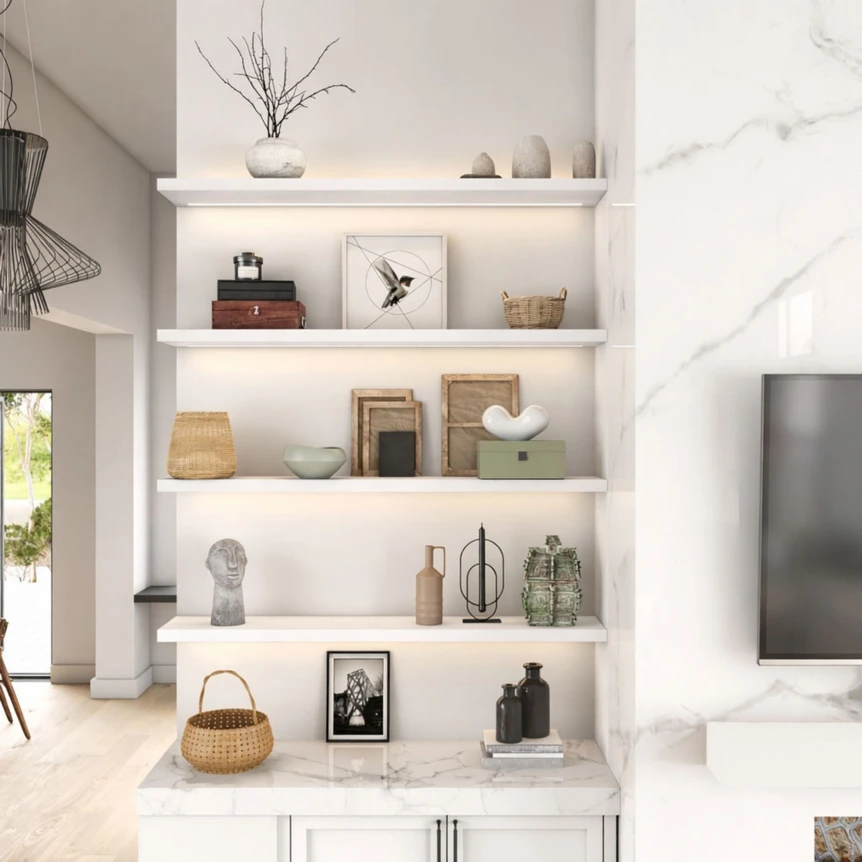
Shelves hold a rotating mix of leaning art, books, and a plant without new holes every season. Solid wood or black steel shelves no deeper than 8 inches suit a modern room; keep each one to three to five objects in odd numbers, vary the heights, and leave a gap of empty shelf between groups.
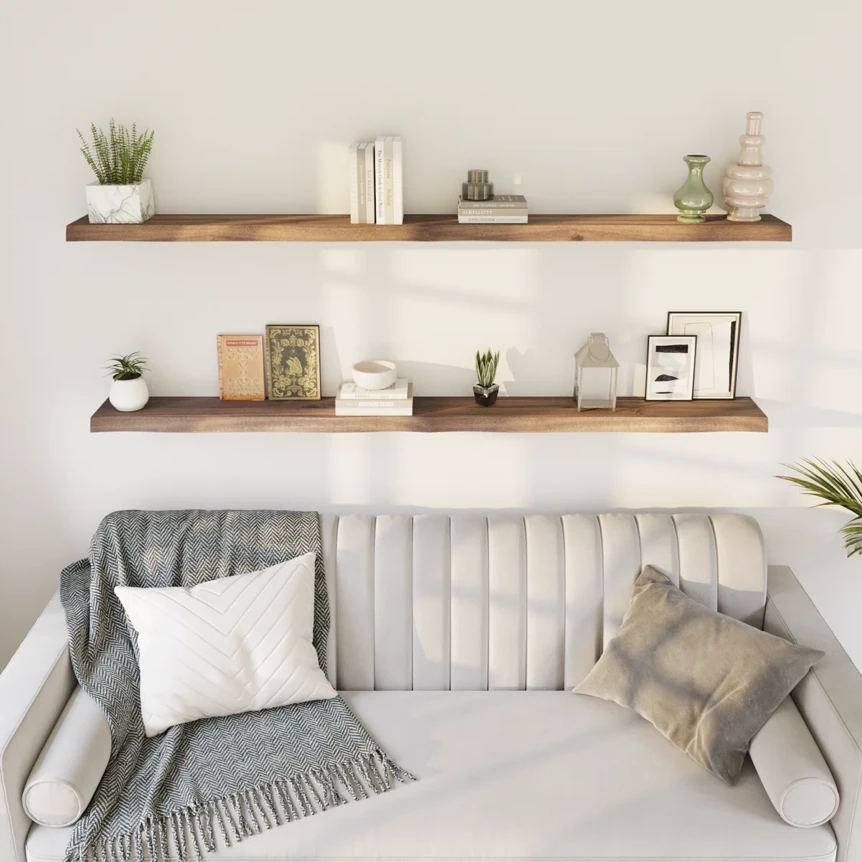
Above a sofa, two shelves spaced 12 to 14 inches apart with the lower one 10 inches above the back read as one composition. For the full method, including what to put where, the guide to styling open shelving in a living room covers it shelf by shelf.
Textile wall hangings
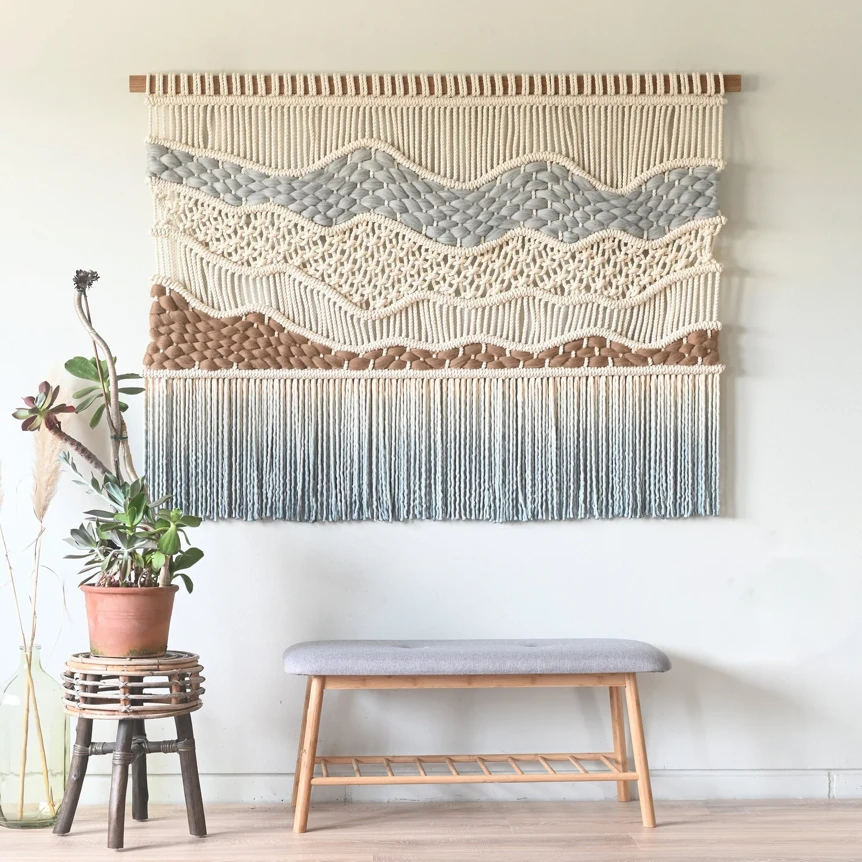
A woven or stitched hanging adds the texture a room of flat paint and hard furniture is missing. For a modern room, keep it geometric, in undyed wool, linen, or cotton, and hang it from a hidden batten so the top edge reads as a clean line. Heavy fringe and bright pattern push the same piece toward boho, which the boho wall decor ideas post covers if that is the goal.
How Should You Arrange Art on a Living Room Wall?
The gallery wall
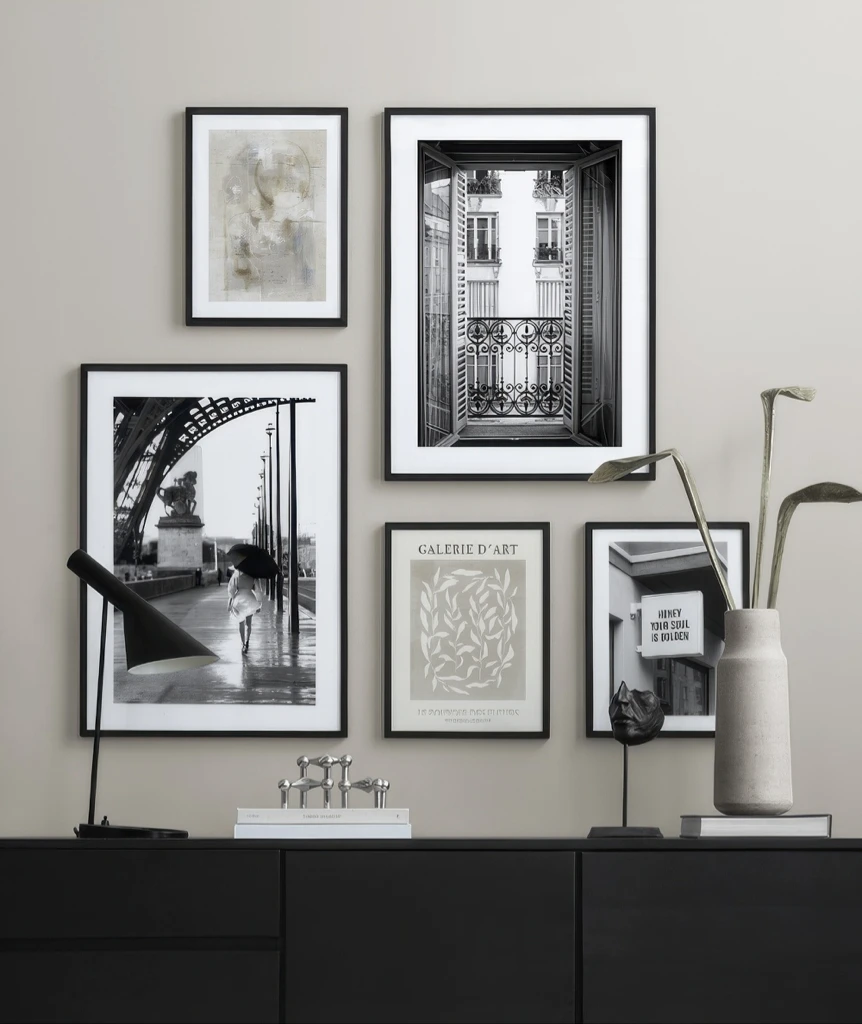
A gallery wall stays modern when it is a grid: identical frames, equal gaps of 2 to 3 inches, and an outer edge that forms a clean rectangle. Mixed sizes can work if the frames match and the outer edge still reads as a rectangle. Lay the whole arrangement on the floor first and cut paper templates for the wall; it is the difference between one set of holes and three.
The single statement piece
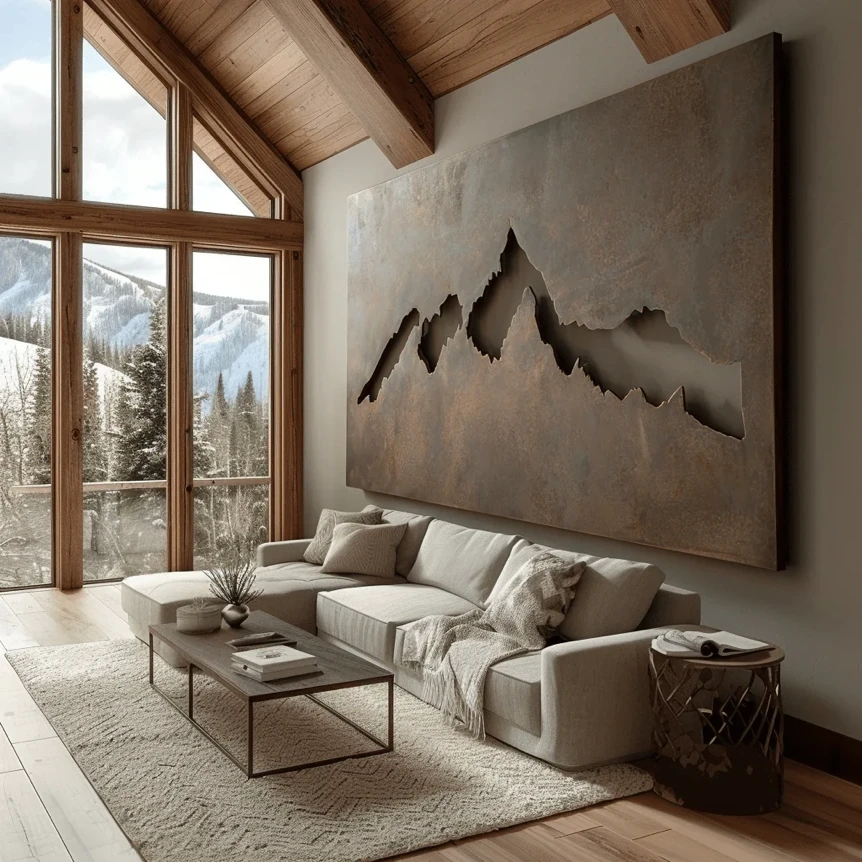
One large piece is the most modern arrangement and the hardest to get wrong, provided it is large enough. Size it at two thirds the width of the furniture below, hang it with its center at 57 to 60 inches, and give it a clear wall with nothing else competing. It is also the arrangement that survives every future sofa.
The symmetrical pair
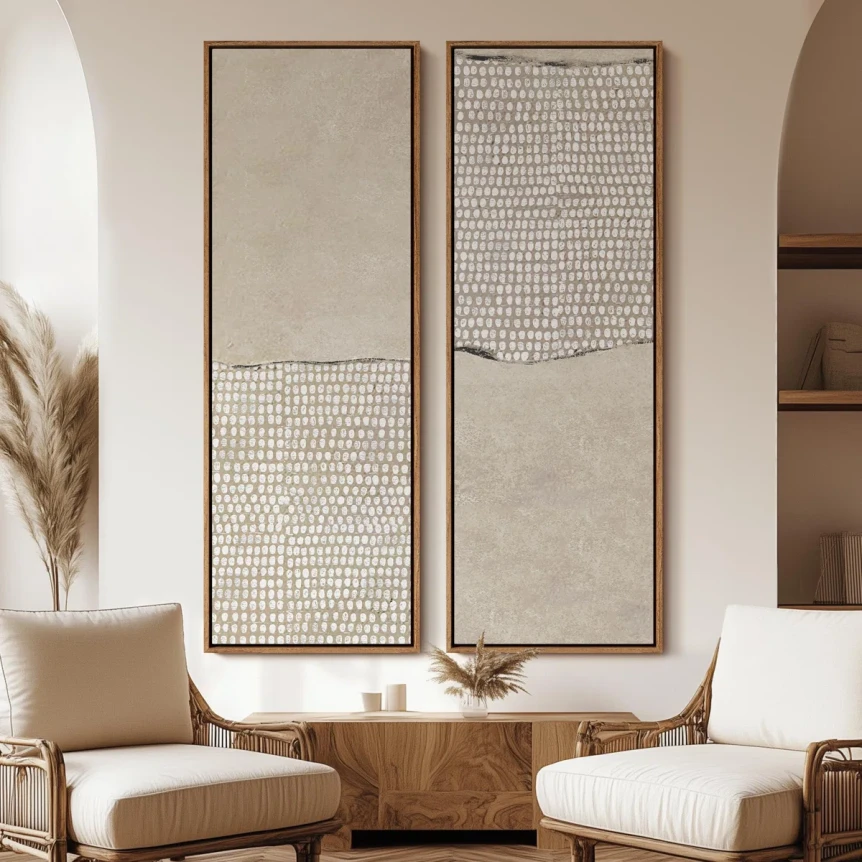
Two matching pieces flanking a center point, a console, a fireplace, or a window, give a room a formal balance that suits symmetrical furniture. Use identical frames, hang both at the same height, and space them equally from the center. A pair of tall panels above a console is the classic version and the easiest to buy as a set.
The linear row
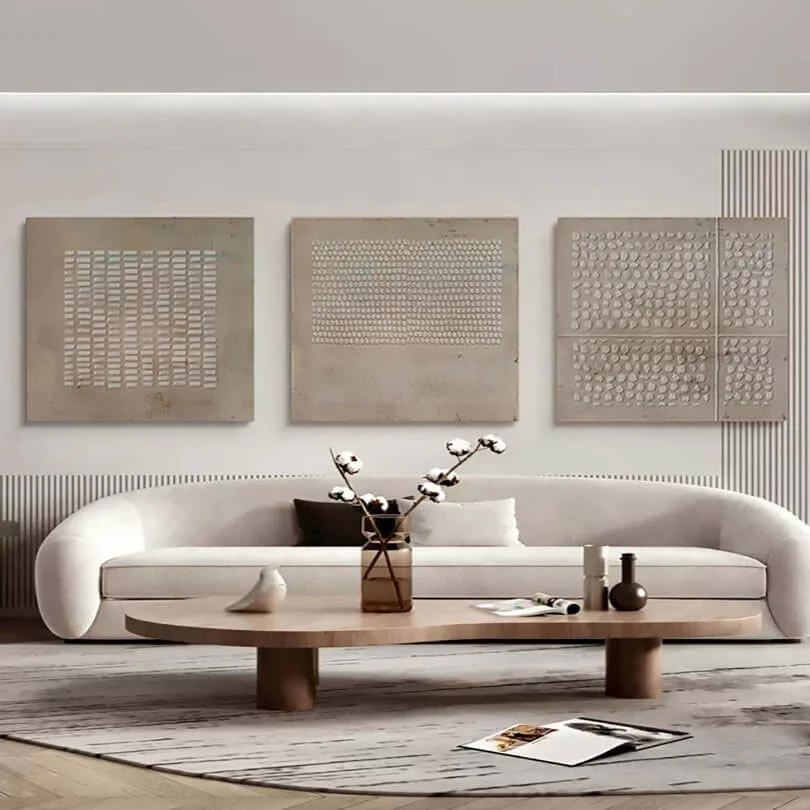
Three or more pieces of the same height in a horizontal line suit a long sofa or a wide console. Keep the frames identical, the gaps equal, and the row no wider than the furniture beneath it. Odd numbers read as intentional; four in a row looks like two pairs that lost their centers.
Where Should Wall Decor Go?
Above the sofa is the wall that matters most, and it has firm rules. Leave 6 to 12 inches between the top of the sofa back and the bottom of the art, size the piece or the group to about two thirds the sofa’s width, and never let it run wider than the sofa. The guide to the best modern sofas lists back heights, which decide where that gap lands.
Above a console, the same two thirds rule applies with a 6 to 8 inch gap, and the console becomes an accent wall in its own right. Flanking a fireplace, a symmetrical pair on either side reads formal and settles a room that already has a strong center. Above an accent chair, one modest piece or two small line drawings turn the chair into a reading corner without competing with the main wall.
Corners are the exception. A corner grouping fills dead space but almost always reads as clutter in a modern room; a tall plant or a floor lamp does the job better. Leave at least one wall in the room bare, and make it the one with the most daylight on it.
How Do You Frame Art for a Modern Room?
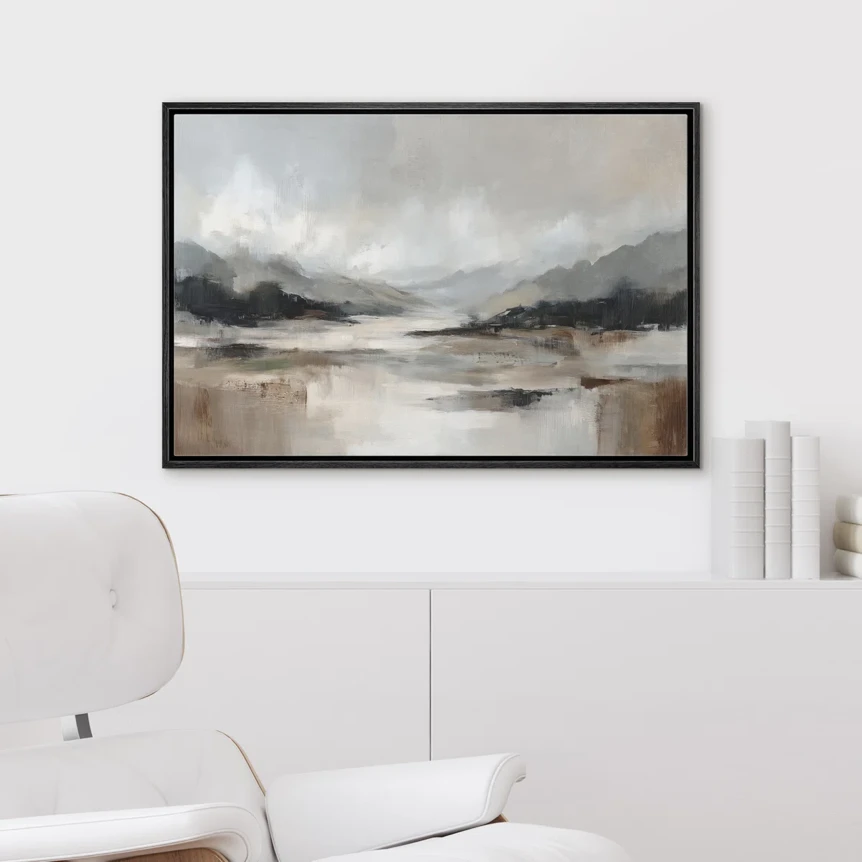
Choose one frame material per wall and, ideally, per room. Black is the most versatile and reads sharpest against pale walls; natural oak or walnut warms a neutral room; white disappears and lets colorful art carry the wall; a single warm metal, brass or bronze, suits a room that already uses that metal in lighting or hardware. Mixing all four on one wall is the fastest way to make good art look cheap.
Matting adds breathing room and makes a small print read larger. In a modern room keep mats plain white or off white and generous, 2 to 4 inches, and skip colored or double mats. For canvases, a floating frame with a small shadow gap looks more finished than an unframed edge and costs little more.
Glass or acrylic is a real choice. Glass looks better up close and resists scratches, but it is heavy and it breaks; acrylic is lighter, safer over a sofa, and blocks more ultraviolet light, at the cost of scratching if it is wiped dry. Use acrylic on anything large or anything hung above seating, and glass on small pieces at eye level. Non glare versions of either soften reflections on a wall opposite a window.
Wall Decor on a Small Budget
The look of modern wall decor costs less than most furniture, because scale and framing do most of the work. A large canvas painted in two flat colors with a hard edge between them is a weekend project and reads as a real abstract from across the room. A photograph you took yourself, printed large and matted wide in a thin black frame, is indistinguishable from a bought print.
Secondhand frames in the right material are worth more than what is in them; buy for the frame and replace the contents. Washi tape in a simple geometric pattern gives a rental a temporary feature wall that peels off clean. A row of books on a floating shelf, spines turned out, adds color that changes with what you are reading.
Spend where it shows: on one large piece for the main wall and on framing. Save on everything secondary. For the palette the art should sit inside, the modern color schemes for living rooms guide gives the combinations that hold up under lamp light.
What Most People Get Wrong
- Hanging too high. Art drifts up toward the ceiling in most homes. The center belongs at 57 to 60 inches, and above a sofa the bottom edge belongs 6 to 12 inches above the back.
- Going too small. A single 16 by 20 print over an 84 inch sofa looks like a postage stamp. Size to two thirds of the furniture, and if one piece that size is out of budget, use a pair or a row that adds up to it.
- Mixing frames. Black, oak, white, and brass on one wall read as leftovers. One material per wall.
- Buying the art first. Art bought before the sofa, the rug, and the lighting ends up the wrong size and the wrong color for the room that arrives later. The order I would recommend in any room puts textiles, art, and accessories last, after the furniture and the lighting are settled.
- Covering every wall. Modern rooms need a plain wall the way a paragraph needs a margin. Decorate two walls at most and leave the brightest one bare.
- Lighting nothing. Art on a wall with no light on it disappears after dark. A picture light or an aimed downlight is part of the cost of the piece; the guide to modern lighting for living rooms covers how to add one to a layered plan.
Finishing the Living Room
Pick one main wall, one large piece or one disciplined grid, one frame material, and one height, and the room looks composed before anything else is styled. Everything after that is editing, and most walls need less than they have.
The same rules carry into the next room: the dining room wall decor ideas post applies them to walls seen from every seat at a table. Below the art, the best modern area rugs guide sizes the rug the seating sits on, and for the whole room in order, return to the modern living room design guide.
Frequently Asked Questions
How high should art hang above a sofa?
Leave 6 to 12 inches between the top of the sofa back and the bottom of the frame, which usually puts the center of the piece at 57 to 60 inches from the floor. Closer to 6 inches ties the art to the sofa as one composition; closer to 12 suits a tall room or a low sofa.
How big should wall art be above a sofa?
About two thirds the width of the sofa, and never wider than it. Over an 84 inch sofa that means a piece or a group roughly 56 inches wide. If one canvas that size is out of reach, a symmetrical pair or a row of three that adds up to the same width does the same job.
Is a gallery wall still modern?
Yes, when it is a grid. Identical frames, equal gaps of 2 to 3 inches, and an outer edge that forms a clean rectangle read as modern; a loose cloud of mismatched frames reads as eclectic or boho. Black and white photography in thin black frames with wide white mats is the safest material for a modern grid.
Should I use glass or acrylic in picture frames?
Acrylic for anything large or hung above seating, because it is lighter, does not shatter, and blocks more ultraviolet light; glass for small pieces at eye level, where its clarity and scratch resistance show. Non glare versions of either help on a wall opposite a window.
How many pieces of wall decor should a living room have?
Decorate two walls at most: one main arrangement above the sofa or console and one secondary piece or mirror elsewhere, with at least one wall left bare. A single large piece, one grid, or one pair per wall is enough. More than that and the walls compete with the seating.