Scandinavian Living Room Ideas and Inspiration for a Cozy, Bright Space

By Tereza Hower | Published May 5, 2026 | Updated September 15, 2026
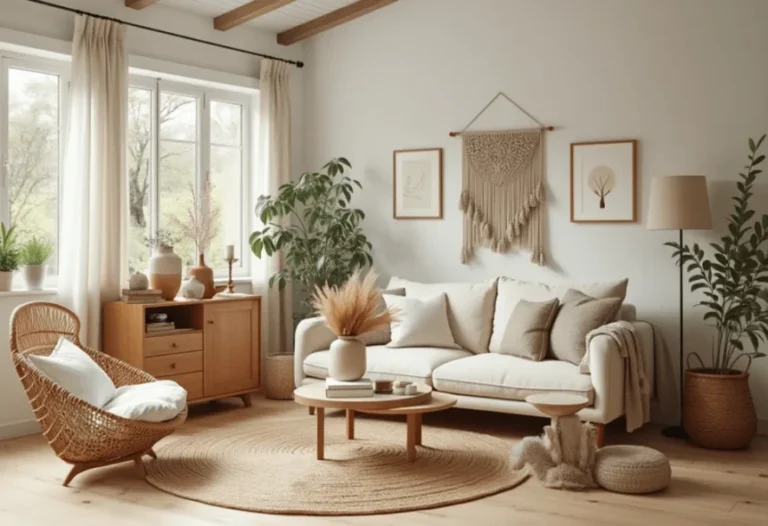
A Scandinavian living room feels like a warm welcome on a cold day. It’s bright without being stark, simple without being empty, and comfortable in a way that makes you want to actually use it. The style manages the rare trick of looking beautiful and feeling genuinely inviting at the same time, which is probably why it has remained so popular for so long. After years selling furniture to LA customers building living rooms in this style, I can tell you the rooms that work best are the ones that prioritize how the space feels at the end of a long day, not just how it photographs.
This guide covers everything you need to design a Scandinavian living room, from the anchor furniture pieces to color, lighting, textiles, and the small hygge touches that bring the whole look together. I’ll share the specific advice I gave customers in the store, including the mistakes I saw most often and the small choices that consistently made the biggest difference.
What Makes a Living Room Feel Scandinavian
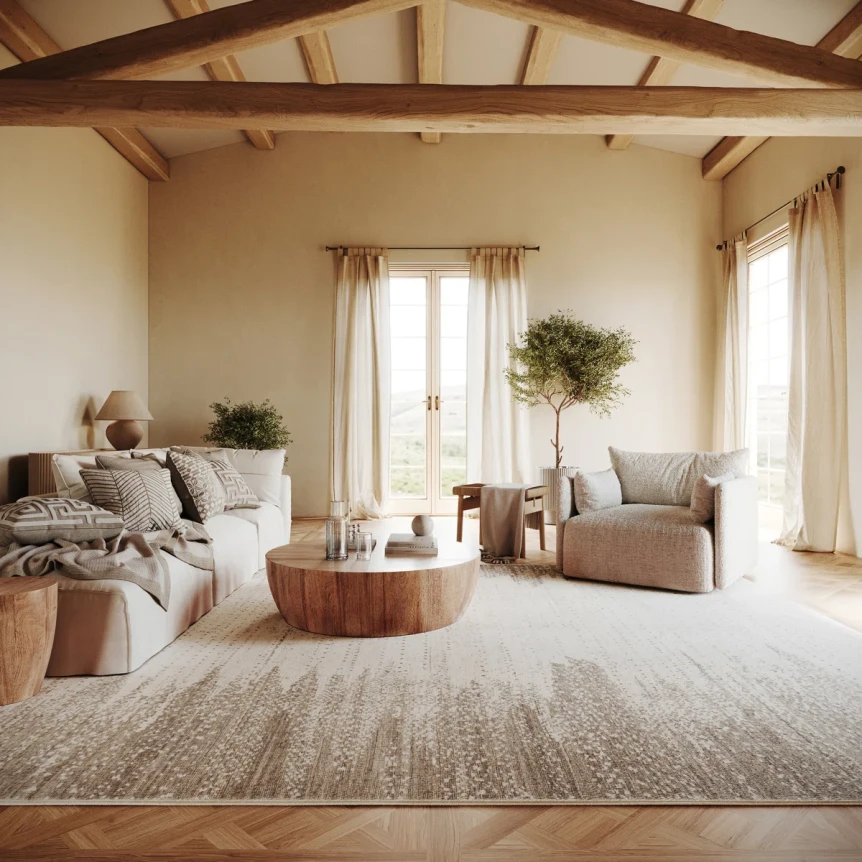
A Scandinavian living room is defined by several consistent qualities: a light color palette, natural wood furniture, soft layered textiles, warm and varied lighting, and a sense of calm simplicity. The room feels bright and open, but never cold. It’s edited but not sparse. Comfortable but never overstuffed.
The hardest part to get right isn’t any single element. It’s the balance between them. Too much restraint and the room feels like a showroom. Too much layering and you lose the calm that makes the style work. The good news is that the principles are forgiving once you understand them, and small adjustments tend to fix most problems.
If you want to understand the broader principles before diving into specifics, our complete guide to Scandinavian interior design covers the foundations.
Choosing the Sofa
The sofa is the single most important decision in a Scandinavian living room. It anchors the space, sets the tone for everything else, and gets used more than any other piece of furniture in the home. This is not the place to economize. A good Scandinavian sofa should last you ten or fifteen years and feel as good in year ten as it did in year one.
Form and Proportion
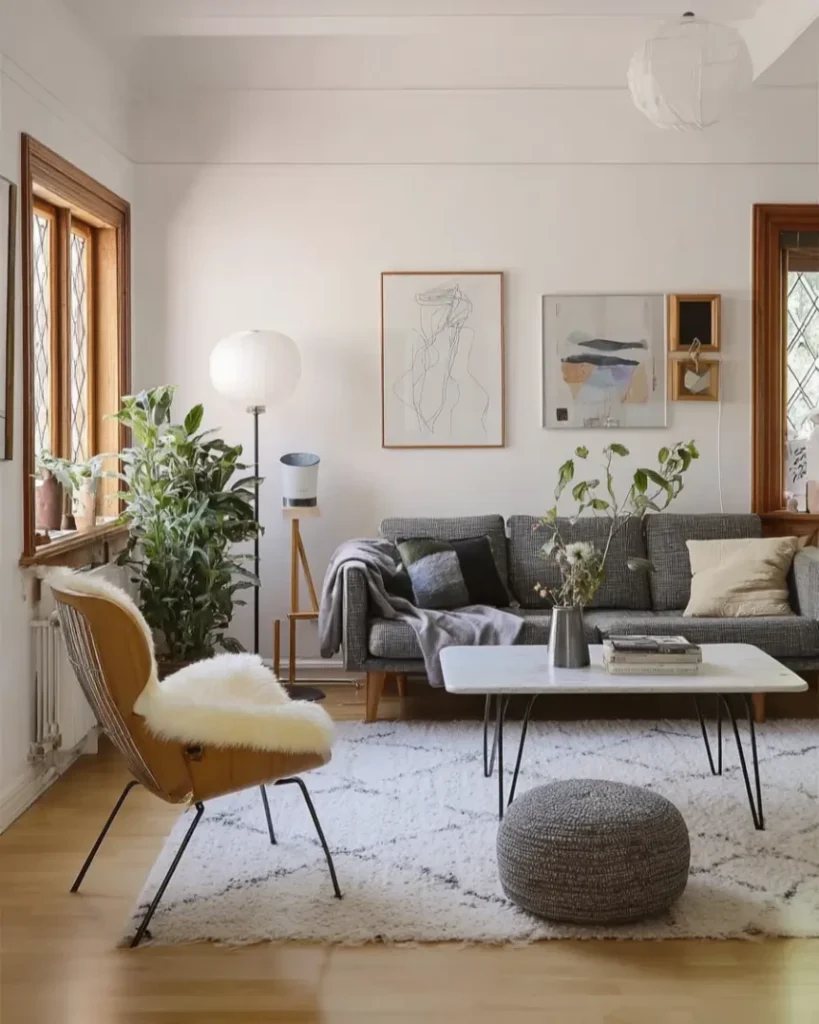
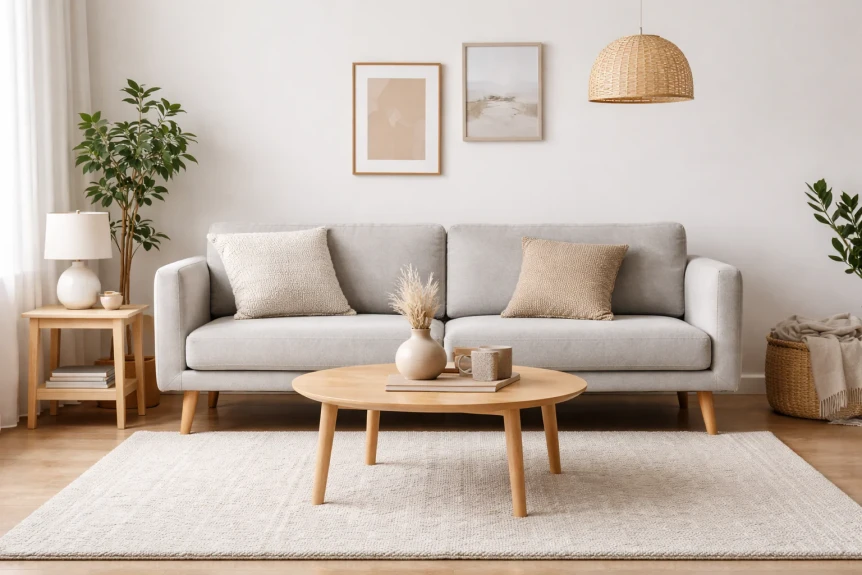
A Scandinavian sofa has clean lines softened by gentle curves, slim wooden legs, and a relatively compact silhouette. Avoid heavy overstuffed pieces, deep buttoning, or rolled arms. The form should feel light and approachable rather than imposing. One of the easiest ways to spot a true Scandinavian sofa: you can see daylight under it. The legs lift the piece off the floor, which keeps the room feeling open and the sofa looking light.
Upholstery
Choose upholstery in a soft neutral fabric. Warm white, cream, light gray, beige, or soft dusty blue all work beautifully. Linen, cotton, and wool are the most common materials. Their natural textures add visual interest to the simple forms. A quick warning from years of selling sofas: light fabric on a sofa that gets heavy daily use needs to be a fabric you can clean. Linen looks beautiful but stains easily. A performance fabric in a similar color will save you a lot of stress, especially if you have kids or pets.
Comfort Matters
This is the part most people skip when shopping online, and the part I always made customers do in person. Sit on the sofa. Lie on the sofa. Pretend you’re watching a movie. A Scandinavian sofa should look light but feel substantial. The seat should be deep enough to relax into without swallowing you, and firm enough to support your back over a long evening. Cushion fill matters more than fabric. Look for high resilience foam wrapped in down or feather, not just polyester batting that flattens within a year. If a sofa feels too soft in the showroom, it will be uncomfortable in your home within months.
For a deeper breakdown of frame construction, fill, and what separates a sofa worth keeping from one you’ll regret, our sofa buying guide covers the details.
Coffee Tables and Side Tables
Light Wood Centerpiece
A coffee table in light wood (oak, ash, or birch) is the classic Scandinavian choice. Round tables work especially well because they soften the room’s geometry and encourage conversation. They also eliminate the sharp corners that everyone in the household will eventually walk into. Rectangular tables with clean lines are equally appropriate, especially for longer sofas where a round table looks undersized.
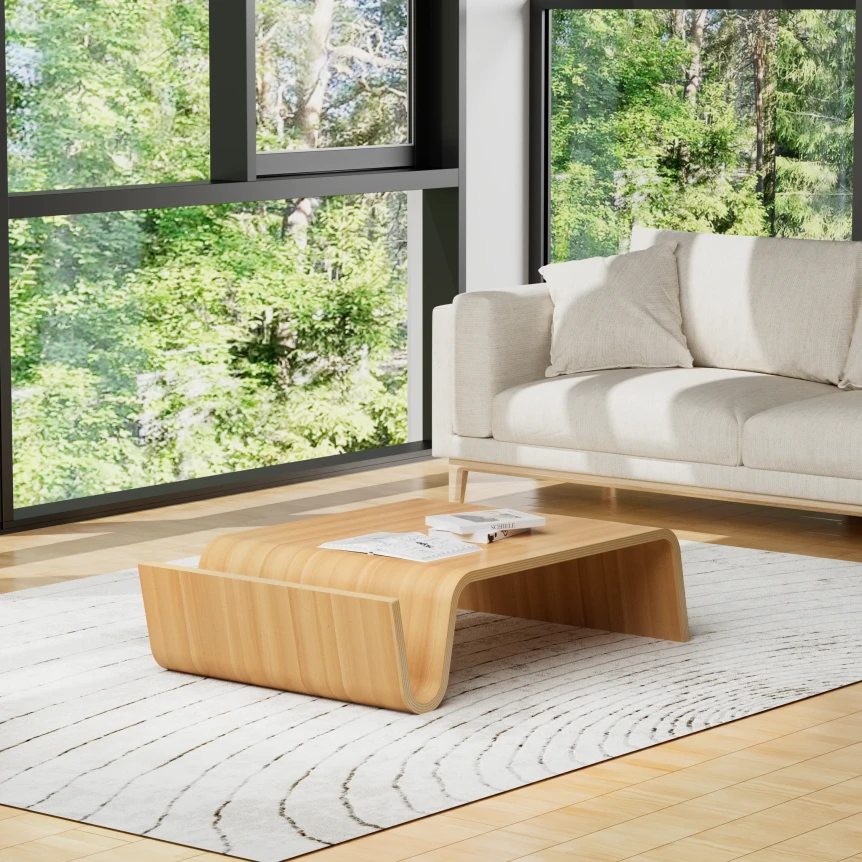
If you want to go deeper on coffee table proportions, materials, and specific picks at every price point, our guide to modern coffee tables covers what to look for.
Side Tables
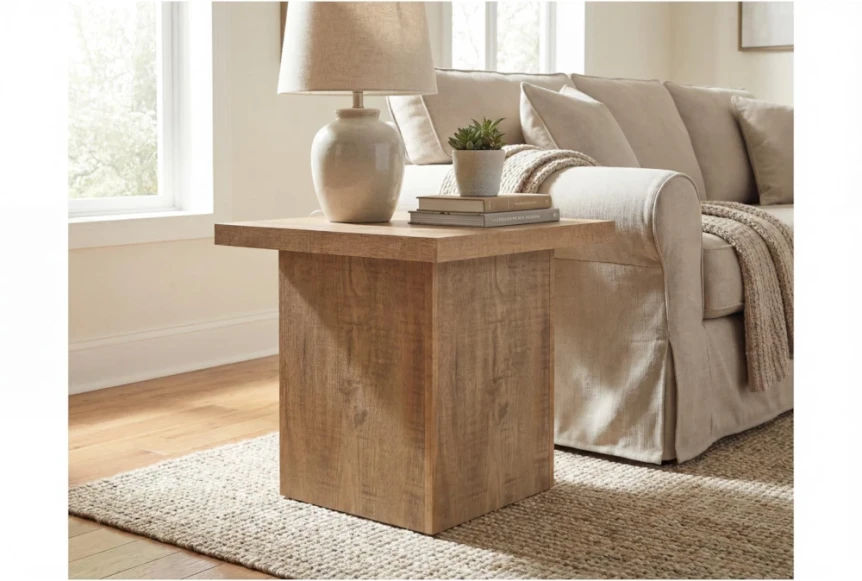
One or two small side tables beside the seating area provide practical surfaces for lamps, drinks, and books. Simple wooden stools, small round tables, or pedestal style tables all work. Mix forms rather than matching everything perfectly. A pair of identical side tables flanking a sofa looks staged. Two different but compatible pieces look like the room evolved naturally over time, which is exactly the impression you want.
Styling the Surfaces
Scandinavian coffee table styling values restraint with personality. A small stack of books, a single candle or two, a small vase with fresh or dried stems, and perhaps a ceramic bowl. Leave empty space around the objects so each one can be seen. The styling should feel simple but warm. The mistake I see most often is treating the coffee table like a display shelf and packing it with too many small objects. Three or four meaningful pieces with breathing room between them always looks better than a dozen items competing for attention.
Layering Textiles
If furniture is the bones of a Scandinavian living room, textiles are the soul. They’re what transform a room from looking Scandinavian to feeling Scandinavian. Without enough texture, even a perfectly furnished room will feel cold. With the right layering, even a simple setup will feel warm and lived in.
The Rug
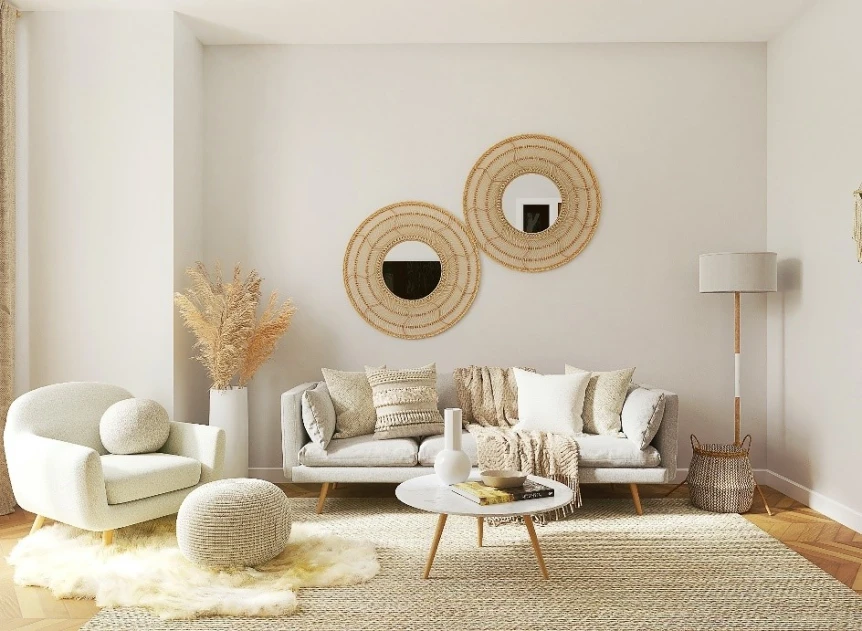
A Scandinavian living room almost always has a rug, and the rug matters more than you might expect. Choose a natural fiber rug in wool, sheepskin, or jute, in a solid neutral tone or simple geometric pattern. The rug anchors the seating area and adds essential warmth underfoot. Size matters too. A common mistake is choosing a rug that’s too small. The front legs of all your seating should sit on the rug at minimum. Anything smaller and the rug looks like an afterthought floating in the middle of the room.
Throw Pillows and Cushions
Layer three to five cushions on the sofa in varying textures and muted tones. Mix materials: chunky knit next to smooth linen, a wool cushion alongside a cotton one. Stick to a tight color palette of one or two tones plus white or cream to maintain visual calm. The texture mix is what creates depth. Five cushions in the same fabric and color look flat. Five cushions in three different materials and two related colors look intentional and rich.
Blankets and Throws
A sheepskin draped over one arm of the sofa or a chunky knit wool throw folded at the other is classic Scandinavian styling. These aren’t just decorative. They’re meant to be used on cold evenings, which is exactly why they look so natural in a Scandinavian room. A small styling tip: drape, don’t fold. A throw casually pulled across one corner of a sofa always looks more lived in and inviting than one folded into a precise rectangle.
Color and Materials
The Foundation
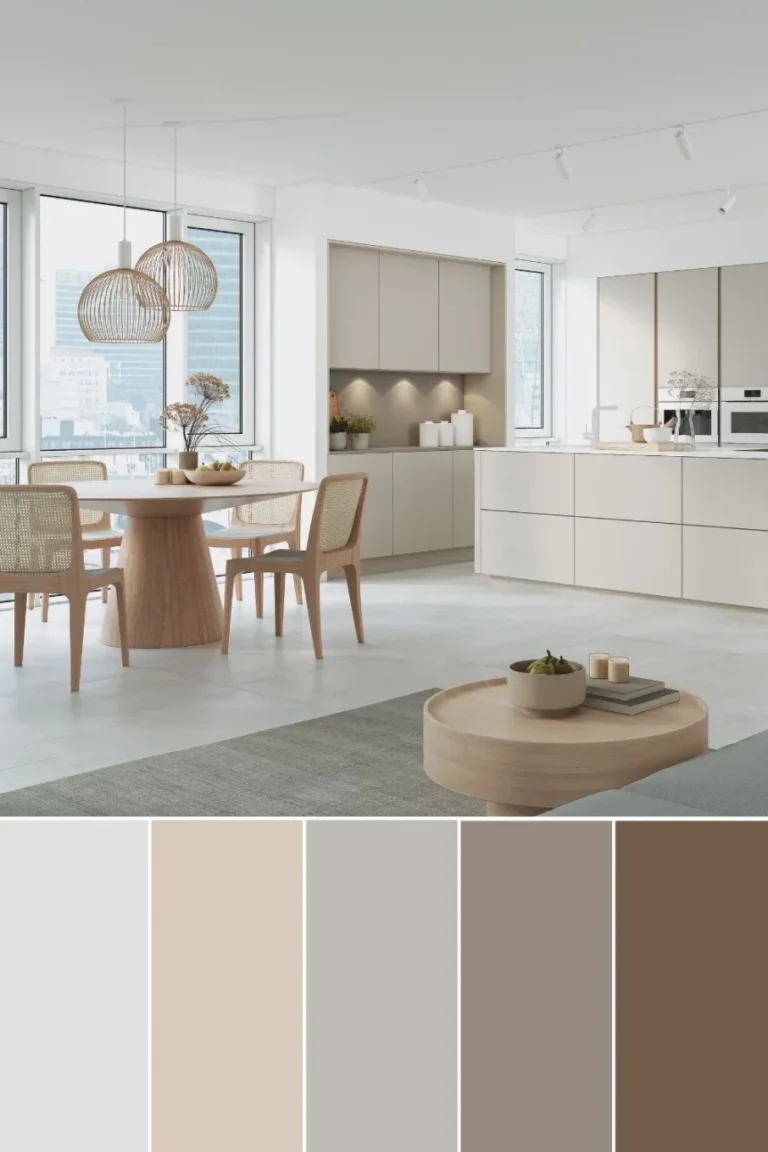
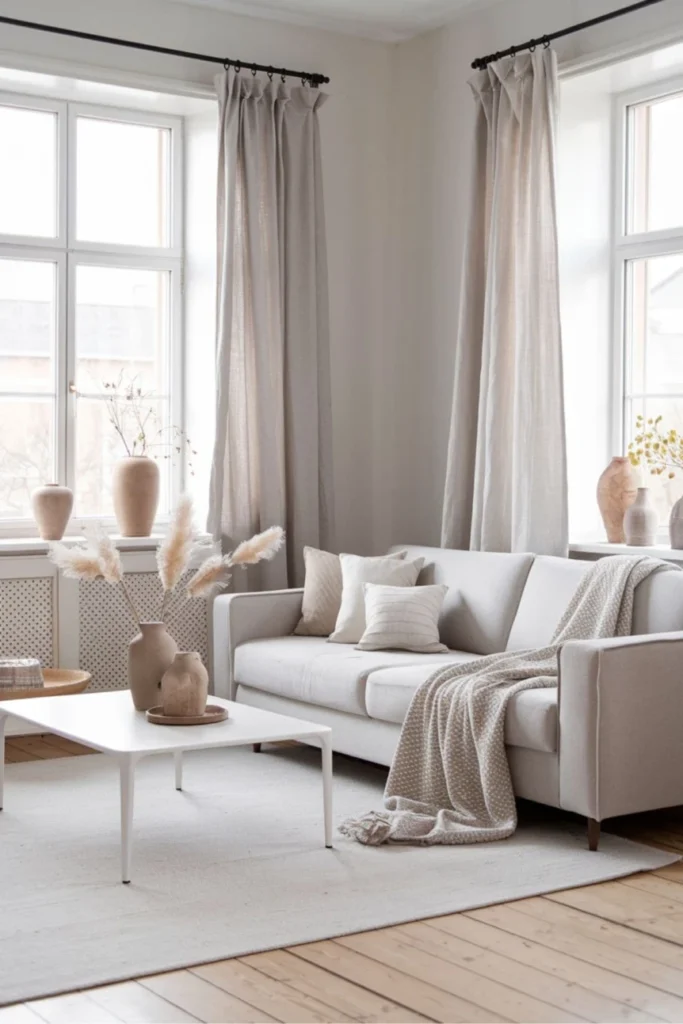
Start with warm white walls. Choose a warm white rather than a cool or stark one. Pair with light wood floors or a light toned rug if your floors are different. Furniture in neutral fabrics and light wood frames builds on this foundation. The wall color is the single most consequential decision in the room. Get it right and everything else falls into place. Get it wrong (especially with a cool or stark white) and even the best furniture will feel cold. For more palette ideas, see our Scandinavian color palettes guide.
Adding Color
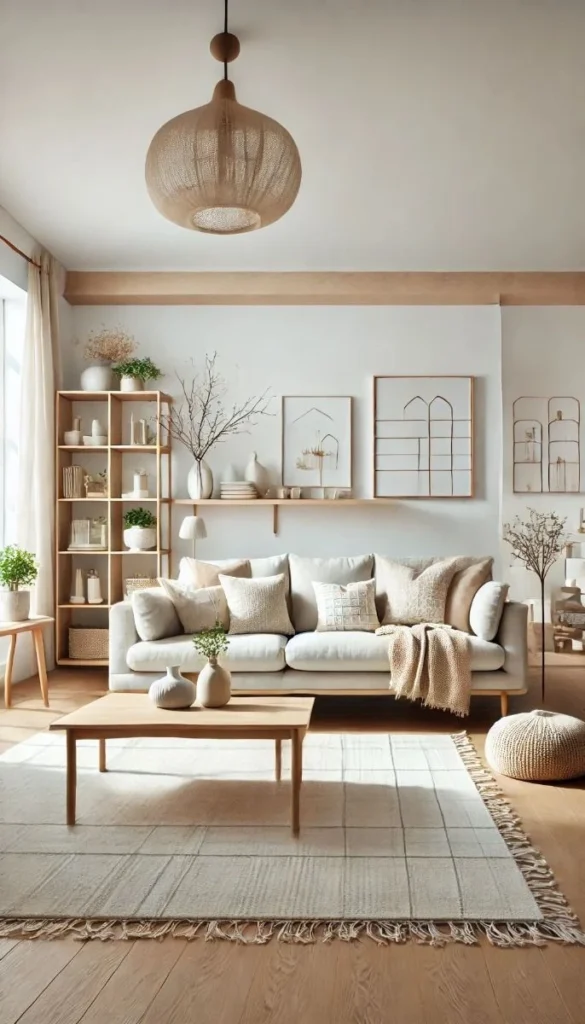
Unlike minimalism, Scandinavian design welcomes color, just in muted forms. A dusty pink cushion, a pale blue throw, a muted sage vase, or a piece of art with soft color all work. Stick to one or two accent colors throughout the room for cohesion. The biggest color mistake I saw in the store was customers trying to use color through a single piece of furniture (a teal sofa, a mustard armchair) rather than through smaller accents. Big colorful furniture commits you to that color for years. Cushions and throws let you change your mind without changing your sofa.
Natural Elements
Beyond paint and fabric, the materials in the room matter just as much. Light wood, ceramic, wool, sheepskin, jute, leather, and stone all contribute to the warm, organic feel that defines the style. Avoid plastic, glossy synthetics, and chrome. These materials read as cold and modern in a way that fights the Scandinavian aesthetic. If you have to include something synthetic for practical reasons (a TV, electronics), balance it by adding more natural materials elsewhere in the room.
Lighting for Atmosphere
This is the section worth paying the most attention to, because lighting is what separates a Scandinavian living room from a generic light wood and white living room. Most American homes are underlit, with a single overhead fixture and maybe a lamp in the corner. Scandinavian homes are layered with multiple smaller light sources at varied heights. The difference in feel is dramatic.
Layered Light Sources
Scandinavian lighting is about layering. A single overhead fixture is never enough. Combine a central pendant, two or three table lamps, a floor lamp in a corner, and candles. This creates multiple pools of warm light that you can adjust throughout the day. A good rule is at least three light sources per room at three different heights: overhead, mid level (table lamps), and low (candles or floor mounted lights). For more on choosing fixtures, our guide to modern lighting for living rooms covers the full approach.
Warm Bulbs
Use warm white bulbs in the 2200K to 2700K range. The warmer the better. Cool bulbs work against the cozy atmosphere the style depends on. This is the cheapest, fastest upgrade you can make to any room. Replace the bulbs and the entire feel of the space changes within minutes. If you’ve never paid attention to bulb color temperature before, do this one thing today and you’ll see what I mean.
Candles Always
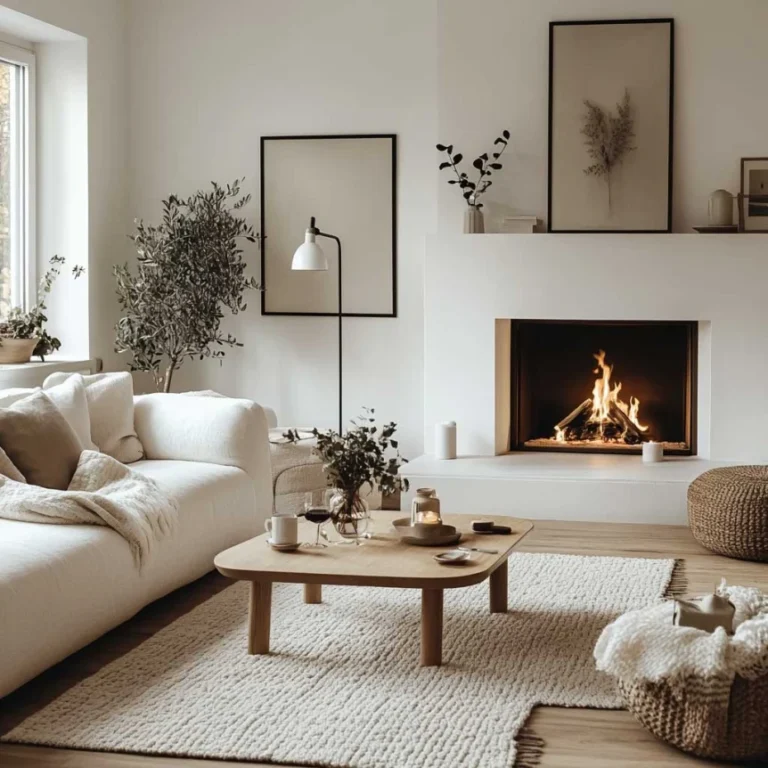
Candles aren’t optional in a Scandinavian living room. A few unscented candles on the coffee table, a grouping on a shelf, or a cluster on a tray near the sofa add the flickering warmth that defines hygge. Light them in the morning with your coffee, light them in the evening before you sit down to read or watch a movie. The simple act of lighting a candle is itself part of the Scandinavian way of slowing down. For more on creating this feeling, visit our guide on what is hygge and how to bring it home.
Layout and Flow
Maximize Natural Light
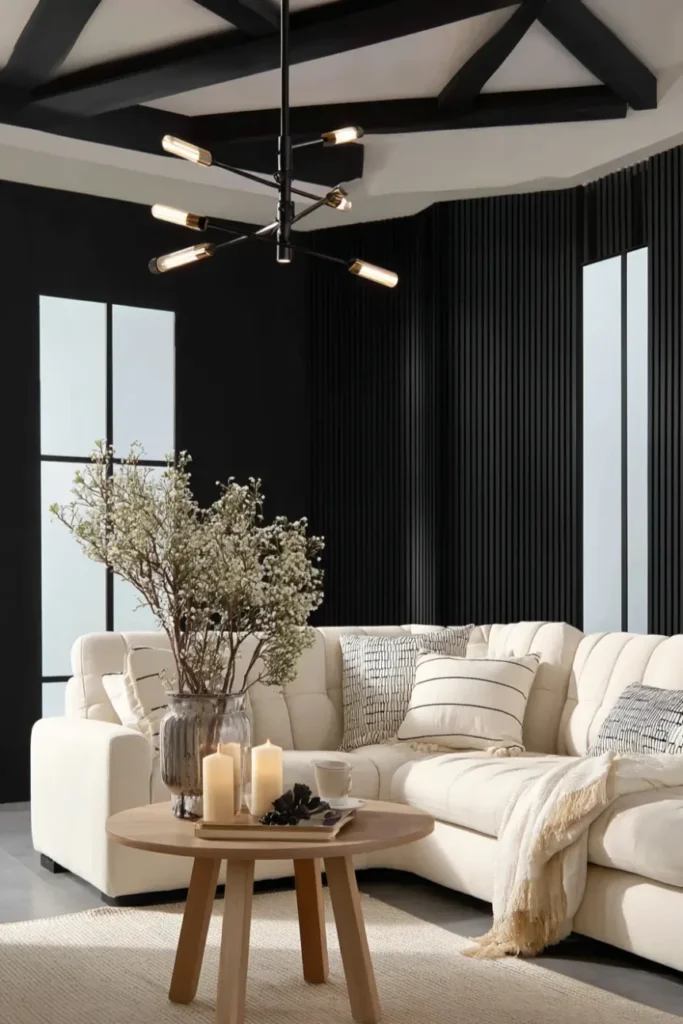
Arrange furniture so it doesn’t block windows. Keep window treatments minimal (sheer curtains or simple roller blinds) to let as much light in as possible. The room should feel bright even during the shortest winter days. If your living room doesn’t get a lot of natural light, place a large mirror across from the brightest window. The mirror essentially doubles the light coming into the room. It’s one of the oldest tricks in interior design, and it works.
Create Cozy Zones
A Scandinavian living room often has a main seating area plus a smaller reading nook, a corner with a comfortable chair and floor lamp, or a window seat layered with cushions. These smaller zones make the room feel more intimate and more useful. They also draw you into the room in different ways. The main seating area is where you gather with people. The reading nook is where you go to be alone. Most American living rooms have only the first. Adding the second is one of the easiest ways to make a room feel more thoughtful.
Negative Space
Don’t try to fill every corner. Leave visible floor space. Let the furniture breathe. A Scandinavian room should feel open and easy to move through, not crowded with pieces that compete for attention. The empty space between objects is what makes the objects themselves look more intentional. This is one of the hardest principles for people to embrace because it goes against the instinct to fill a room. Trust the empty space. It’s working harder than you think.
Wall Decor and Art
Scandinavian wall decor is restrained but personal. A single large piece of art, a small gallery wall with simple frames, or a wall with nothing but a well placed pendant light all work. Posters, prints, photographs, and simple line drawings are common choices. Frames are usually thin black, natural wood, or white. The frame matters as much as the art. A great print in a heavy ornate frame stops being Scandinavian. The same print in a simple thin frame becomes a statement piece.
Avoid filling walls with too many pieces. A Scandinavian room values the wall itself as part of the design. Keep arrangements simple and let the pieces you do include actually be seen. One large piece often does more for a room than a busy gallery wall, especially in smaller spaces.
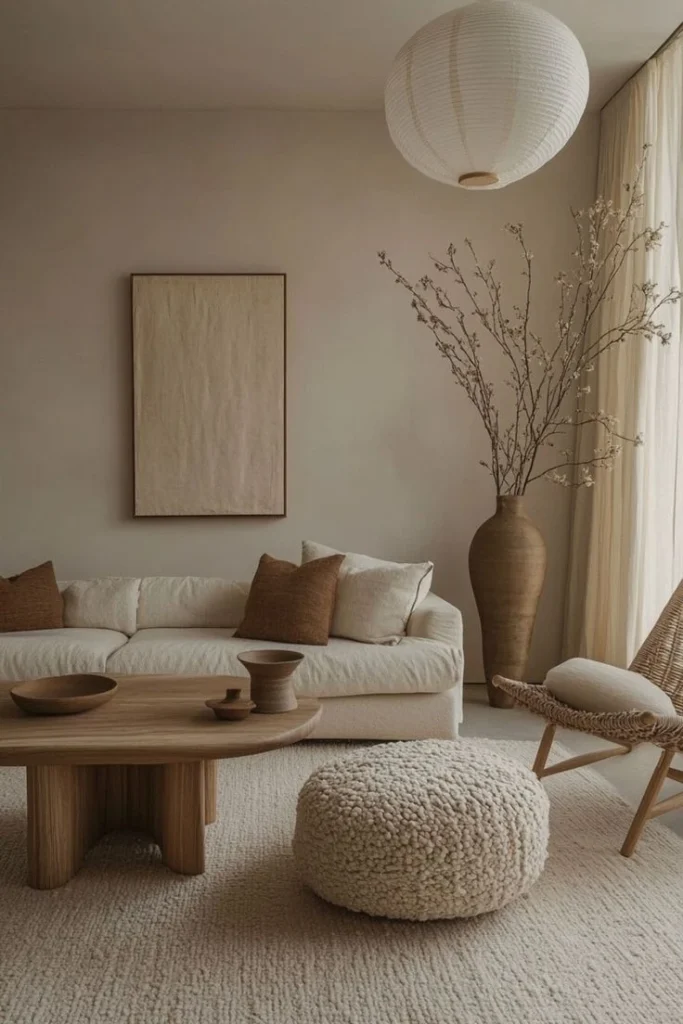
Plants and Natural Touches
A few plants bring life and color to a Scandinavian living room without disrupting the calm. A large fiddle leaf fig or monstera in a corner, a trailing plant on a shelf, or a grouping of smaller plants on a window sill all work. Fresh eucalyptus stems or dried pampas grass in a simple ceramic vase provide natural decor that lasts longer than cut flowers. If you’re not confident with plants, start with a snake plant or a pothos. Both are nearly impossible to kill and look genuinely beautiful in Scandinavian spaces.
Scandinavian Living Rooms in Smaller Spaces
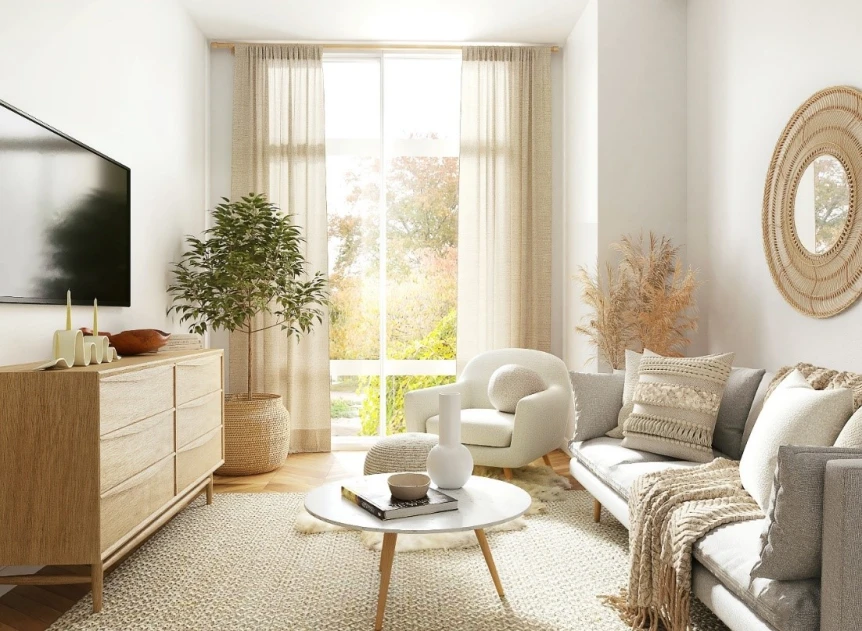
Scandinavian design is ideal for small living rooms, and this is the version of the style I recommended most often to LA customers in apartments. The light palette makes the room feel larger. The emphasis on edited furniture prevents overcrowding. The focus on natural light and warmth creates comfort in compact spaces. Choose a smaller sofa or loveseat, one or two chairs, and a single coffee table. Use wall mounted shelving and lighting to free up floor space. Stick to a tight color palette and focus on quality over quantity.
One specific tip for small spaces: choose furniture with visible legs rather than pieces that sit flush to the floor. The visible floor space underneath makes the room feel larger because you can see the boundaries of the space. Skirted sofas and storage ottomans that hide the floor make small rooms feel smaller, even when they technically take up the same square footage.
For coordinating with other rooms in your home, see our guides to Scandinavian bedroom ideas and Scandinavian kitchen ideas. If you’re deciding between style variations, our comparison of Scandinavian vs. Nordic vs. Scandi boho can help.
Conclusion
A Scandinavian living room is built on a simple idea: your home should feel good to be in. Start with a quality sofa in a neutral fabric, add a light wood coffee table and plenty of soft textiles, layer in warm lighting from multiple sources, and don’t forget the candles. Our coffee table buying guide covers how to size that table against the sofa. The room ends up feeling bright, cozy, and genuinely welcoming every time you walk into it. The real measure of whether the style is working is simple: you spend more time in the room than you used to.
For the full picture of Scandinavian design across every room, visit our complete guide to Scandinavian interior design.
Frequently Asked Questions
What makes a living room Scandinavian?
A Scandinavian living room features a light color palette (warm whites, light wood, soft neutrals), natural materials, layered textiles like sheepskin throws and wool cushions, warm layered lighting from multiple sources, and comfortable but simple furniture. The overall feeling is bright, cozy, and welcoming, with hygge touches like candles and soft blankets.
How do I make a Scandinavian living room feel cozy?
Layer soft textiles like sheepskin throws, wool blankets, and linen cushions. Use multiple warm light sources at varied heights. Add candles to multiple surfaces. Include plenty of natural wood through furniture and accents. Add one or two plants for life. These small touches create the hygge feeling that defines Scandinavian comfort.
What kind of sofa works best in a Scandinavian living room?
Choose a sofa with clean lines, slim wooden legs, and soft neutral upholstery in linen, cotton, or wool. Warm white, cream, light gray, or soft dusty blue are all versatile colors. The sofa should feel comfortable and inviting, not overstuffed or imposing. Test it for comfort before buying since you’ll spend a lot of time on it.
Can a Scandinavian living room have color?
Yes. Scandinavian design allows more color than minimalism, but colors should be muted and soft. Dusty pink, pale blue, muted sage, and light mustard all work well through cushions, throws, and art. Stick to one or two accent colors throughout the room to maintain cohesion, and keep the base palette in warm whites and neutrals.