Scandinavian Kitchen Ideas and Design Tips for a Bright, Functional Space

By Tereza Hower | Published May 6, 2026 | Updated September 11, 2026
A Scandinavian kitchen is built around the same values that shape the rest of the style: good light, honest materials, practical function, and warmth. Kitchens in Scandinavia are often the heart of the home, where families gather for long meals and lingering conversations. That’s the feeling a well designed Scandinavian kitchen captures, whether it’s a tiny galley or a spacious open plan cooking and dining area. After years of helping LA customers furnish their homes, the kitchens I saw work best were the ones designed for actual cooking, not for photo shoots.
This guide covers everything you need to design a Scandinavian kitchen, from cabinetry and countertops to lighting, open shelving, and the small details that pull the look together. I’ll share the practical advice I gave customers, including the specific decisions that matter most and the corners you can safely cut without compromising the result.
What Defines a Scandinavian Kitchen
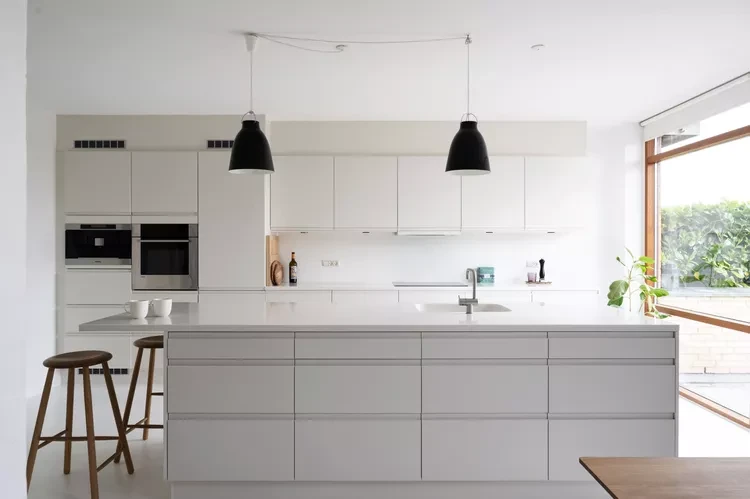
A Scandinavian kitchen features clean cabinetry in white or light wood, natural stone or wood countertops, simple hardware, warm lighting, and a mix of closed storage with a few thoughtful open shelves. The overall impression is bright, functional, and inviting. It looks like a place where real cooking happens, not a showroom. For the full picture, see the complete guide to modern kitchen design.
The hardest part to get right is the balance between minimal and warm. Strip away too many elements and the kitchen feels like a hospital. Add too many decorative touches and it loses the calm that makes the style work. The trick is letting natural materials do the warming work that decoration would do in other styles. For more ideas in the same spirit, see small kitchen design ideas that make the most of your space.
For the broader principles behind the style, see our complete guide to Scandinavian interior design. For the same approach in another style, see best Scandinavian paint colors.
Cabinetry
Cabinetry is the single biggest visual decision in any kitchen, and it’s also the most expensive thing to change later. This is one area where it pays to be conservative. Trendy cabinet colors and unusual finishes look great in magazines but date quickly. Classic Scandinavian cabinetry will look as good in fifteen years as it does today.
Flat Front Cabinets
Flat panel or slab cabinets are the most common Scandinavian choice. The smooth surfaces feel calm and contemporary, and they’re easier to clean than raised panel designs. Shaker style cabinets with simple, shallow framing work too, especially in homes that lean toward traditional Nordic style. The choice between flat front and Shaker often comes down to the rest of the home. A modern apartment suits flat front. A craftsman bungalow or older home looks more natural with simple Shaker.
Color Options
White is the classic Scandinavian cabinet color. It reflects light, brightens the room, and creates the open feeling the style is famous for. Light wood cabinets (oak, ash, or birch) are equally traditional and bring natural warmth. For a more contemporary look, soft gray or muted sage green cabinets work beautifully without feeling too bold. A specific warning about white: choose a warm white, not a cool or stark one. Cool white cabinets in a kitchen look clinical no matter what else you do. The difference between a warm and cool white is subtle on the swatch but obvious in the room.
Mixed Cabinetry
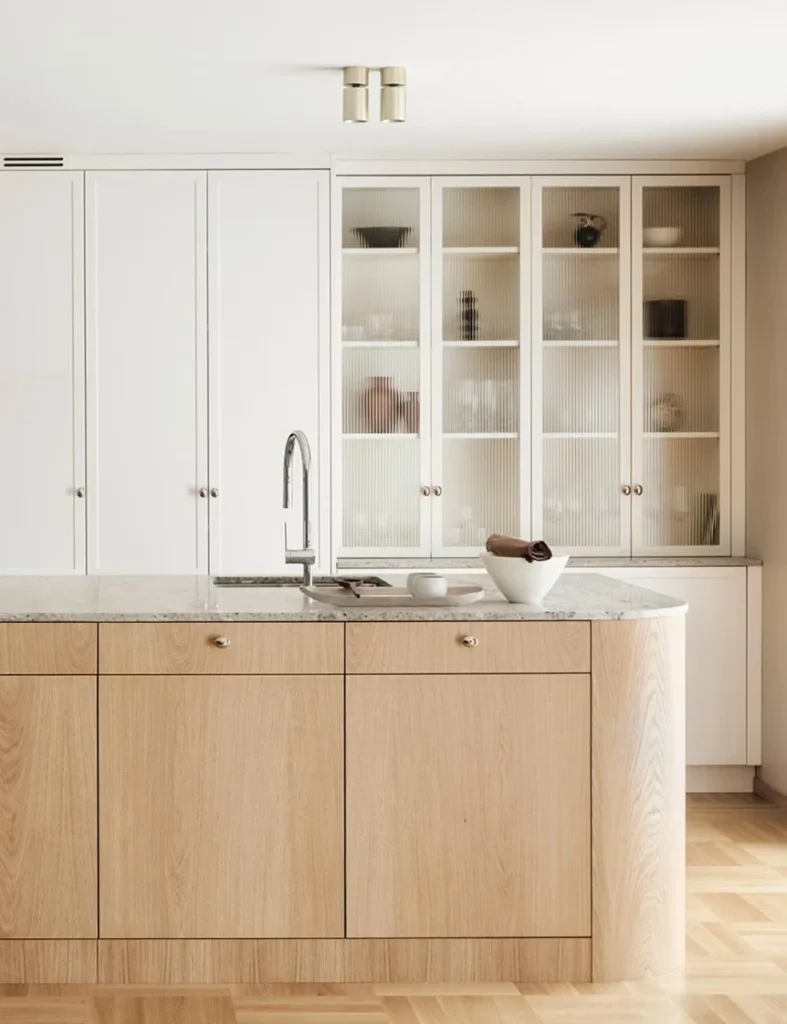
One of the most popular Scandinavian approaches combines white upper cabinets with light wood lower cabinets, or vice versa. This creates visual contrast that adds interest while keeping the palette light and calm. It also breaks up what could otherwise feel like a sea of cabinetry. The standard approach is white uppers and wood lowers, which keeps the visual weight low in the room and lets the upper cabinets recede into the wall. The reverse (wood uppers, white lowers) creates a more dramatic effect that works in larger kitchens but can feel heavy in smaller ones.
Hardware
Hardware should be simple and understated. Slim brass pulls, matte black hardware, or integrated finger pulls without visible hardware all work well. Avoid anything ornate or oversized. The cabinets should feel quietly functional. Hardware is also where small budgets can punch above their weight. Beautiful brass pulls on basic IKEA cabinet fronts can transform the look of an entire kitchen for the cost of a single specialty cabinet door.
Countertops
Natural Stone
Marble, quartz, and granite in light tones are popular Scandinavian countertop choices. White marble with subtle veining is especially classic. For a more practical option, engineered quartz in similar tones offers durability and less maintenance. Real marble is gorgeous but stains and etches with anything acidic. If you cook a lot or have a busy household, quartz that mimics marble’s look gives you the same aesthetic without the maintenance anxiety.
Butcher Block and Wood
Wooden countertops, particularly in oak or birch, add warmth and a handmade quality that suits the style beautifully. They’re especially popular for islands or dedicated work zones. Butcher block does require more maintenance than stone (regular oiling, no standing water) but the warmth it adds is often worth the care. A good middle ground is stone for the main counters and butcher block on the island, where the warmth shows up most prominently.
Concrete and Composite
Concrete and composite countertops in light gray or warm white tones work well in more contemporary Scandinavian kitchens. They pair especially nicely with white cabinets and light wood floors. They’re also more affordable than natural stone in most cases, which makes them a good choice when the budget is going toward cabinetry instead.
Backsplash
Simple Tile
Classic white subway tile is the most common Scandinavian backsplash. It’s bright, clean, and works with any cabinet color. For a softer look, try zellige tile in warm white or cream, which adds subtle texture without disrupting the calm. Zellige is one of those small touches that makes a Scandinavian kitchen feel custom rather than catalog. The slight irregularity in each tile catches light differently throughout the day, which adds depth to what would otherwise be a flat white surface.
Continuous Surface
Running the countertop material up the wall as a backsplash creates a seamless, sophisticated look that feels distinctly modern Scandinavian. This works especially well with marble or quartz. The cost is higher than tile, but the visual effect is dramatic and very contemporary.
Wood Accents
A wood paneled backsplash, particularly behind open shelving or in a coffee nook, adds unexpected warmth and reinforces the natural material palette. Keep the wood tone consistent with the rest of the kitchen. A small wood accent in the right place often does more than a full feature wall, especially in smaller kitchens where too much wood can start to feel heavy.
Open Shelving
This is the section worth being honest about, because open shelving is the single most overrated feature in Scandinavian kitchens. It looks beautiful in photos. It can look beautiful in real life. But it requires real discipline to maintain, and it doesn’t work for everyone. Before committing, think honestly about whether you’re the kind of person who will keep a shelf curated, or whether you’ll just end up with a row of mismatched mugs and the box of cereal you bought last week.
Why It Works
Open shelving is a signature Scandinavian kitchen feature. It adds visual interest, allows you to display beautiful dishware and cookware, and keeps frequently used items within easy reach. The key is being selective about what you display. The shelves work as a curated still life, not as bonus storage.
What to Display
Curate a collection of simple white or cream ceramic dishware, a few handmade mugs, glass jars with dry goods, wooden cutting boards, and a small plant. Keep the look cohesive by sticking to a tight color palette and limiting the variety of items on each shelf. The pieces should feel collected, not matched. A handmade ceramic next to a glass jar next to a wooden bowl tells a story. Twelve identical mugs in a row looks like inventory.
Balance With Closed Storage
Don’t rely on open shelving for all your storage. Pair one or two open shelves with plenty of closed cabinets for everything else. This lets you enjoy the display without the pressure of keeping every cooking tool perfectly arranged. The right ratio is usually 80 percent closed storage, 20 percent open. Anything more open than that and most households can’t maintain the look.
Lighting
Lighting in a Scandinavian kitchen does double duty. It needs to be functional enough for actual cooking and beautiful enough to add to the atmosphere when you’re sitting at the island with coffee in the morning. Most American kitchens lean too heavily on bright overhead fixtures and miss the layered lighting that gives Scandinavian kitchens their warm feel.
Pendant Lights
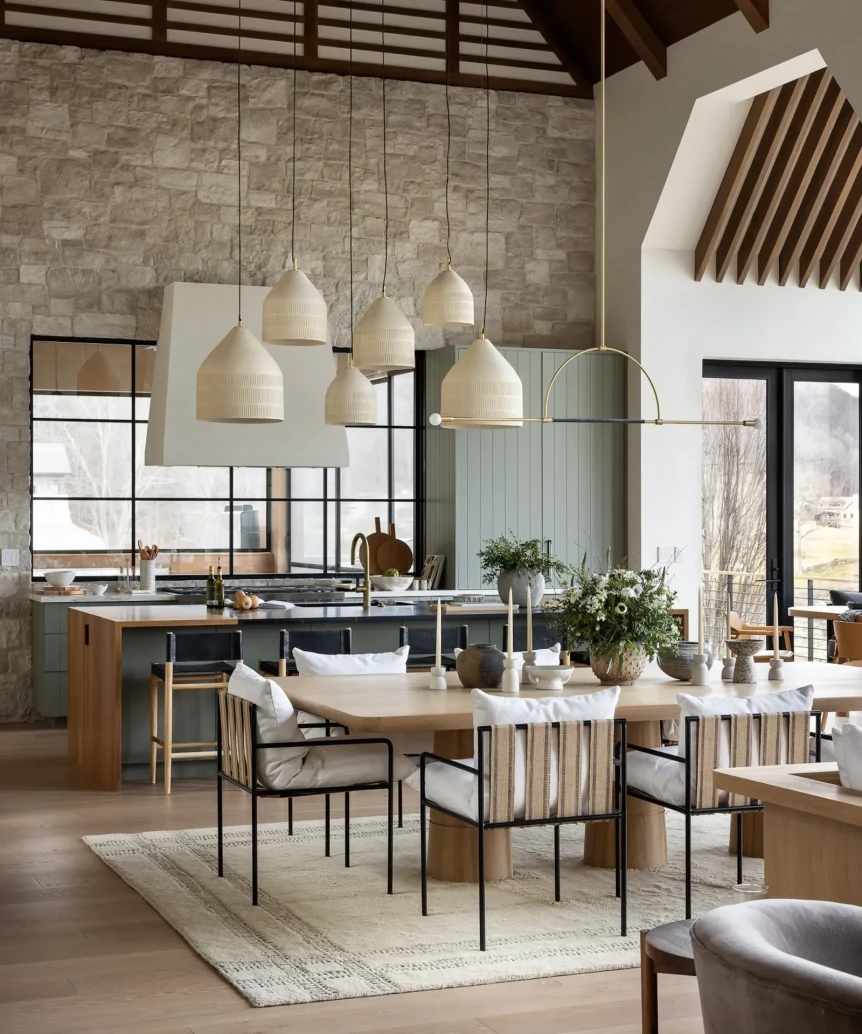
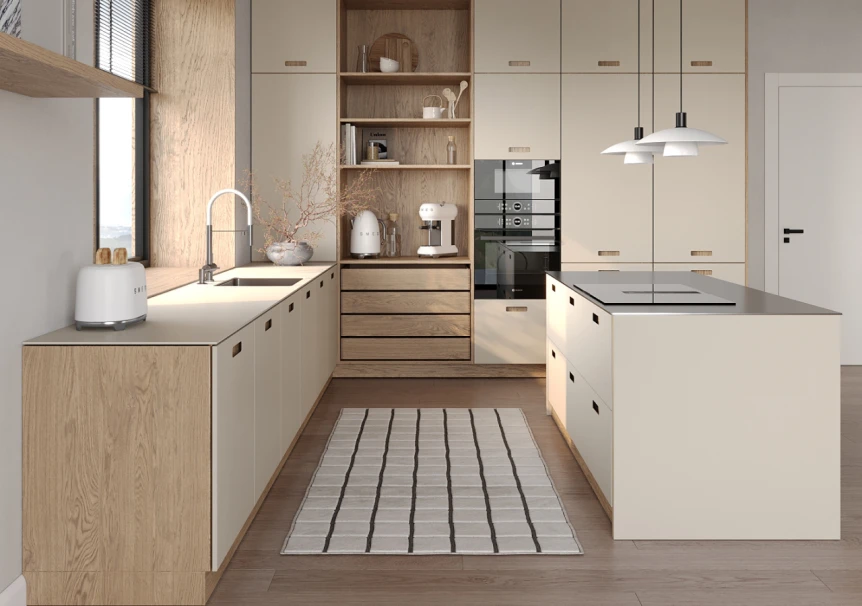
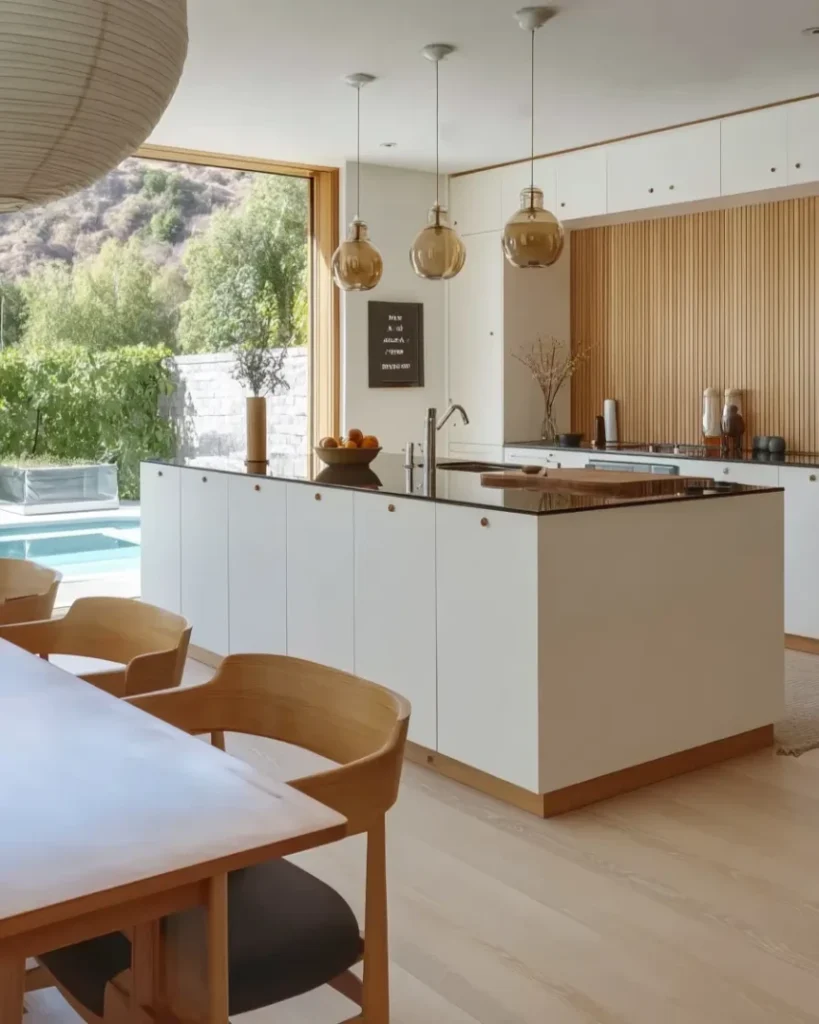
Pendants over an island or dining table are a defining Scandinavian kitchen feature. Choose fixtures with clean lines and natural materials. Paper lantern pendants, metal domes in white or brass, and woven rattan shades all work beautifully. Two or three matching pendants over a longer island create rhythm and visual impact. Hanging height matters more than people realize. Pendants should sit roughly 30 to 36 inches above the counter surface. Too high and they look like an afterthought. Too low and they block sightlines across the room.
Under Cabinet Lighting
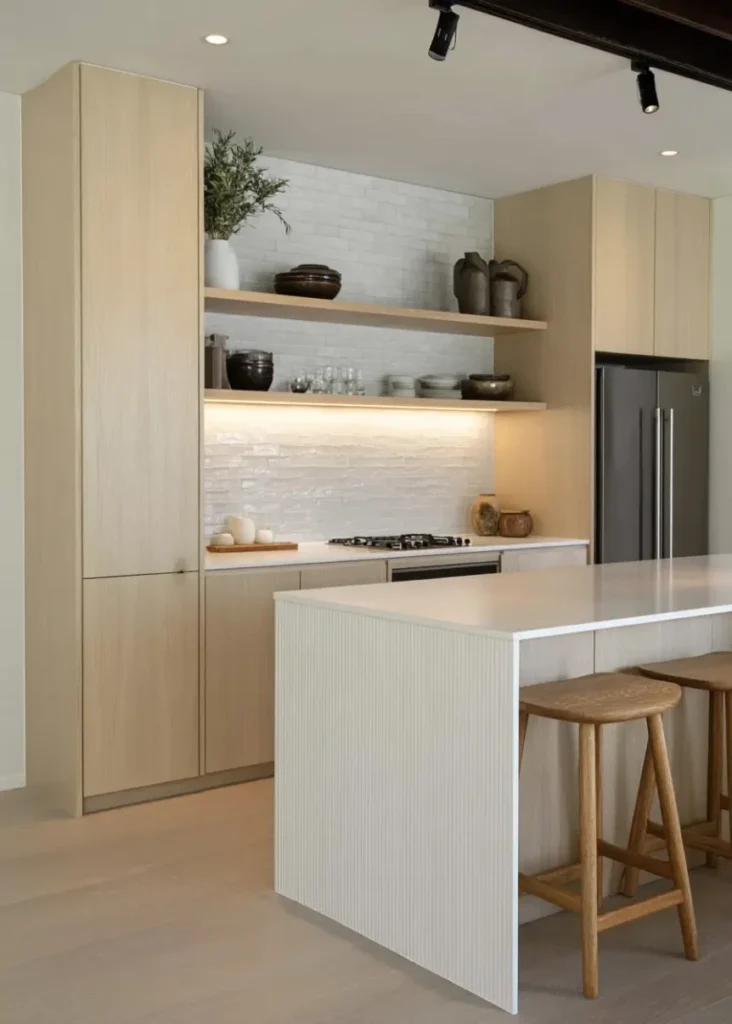
Warm LED strips under upper cabinets provide essential task lighting without disrupting the calm atmosphere. Choose bulbs in the 2700K to 3000K range. The warm glow creates cozy evening light when overhead fixtures are off. This is one of the highest impact, lowest cost upgrades you can make to an existing kitchen. Self adhesive LED strips are inexpensive, easy to install yourself, and immediately make any kitchen feel more thoughtful.
Natural Light
Scandinavian kitchens prioritize natural light. Keep window treatments minimal or skip them entirely. If privacy is a concern, simple roller blinds or sheer linen curtains let light through while providing some coverage. If your kitchen window faces a wall or another building, a frosted privacy film on the lower half of the window solves the privacy problem without blocking light from above.
Candles in the Kitchen
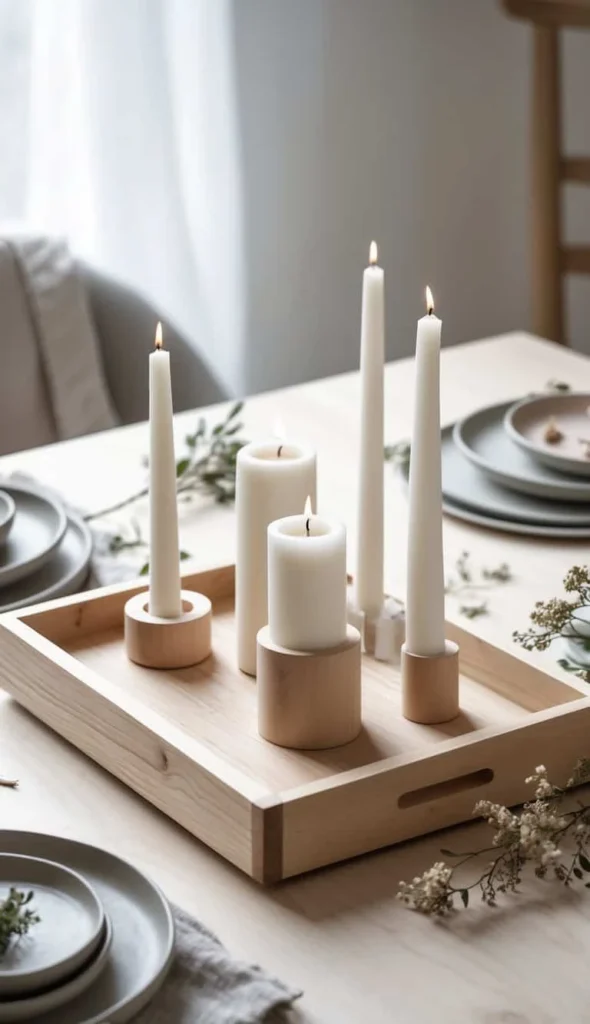
A small cluster of candles on the dining table or a shelf near the kitchen adds the hygge element that defines so much of Scandinavian living. Stick to unscented candles in the kitchen. Strong scented candles compete with food smells in unpleasant ways. For more on this feeling, see our guide on what is hygge and how to bring it home.
Color and Materials
The Foundation
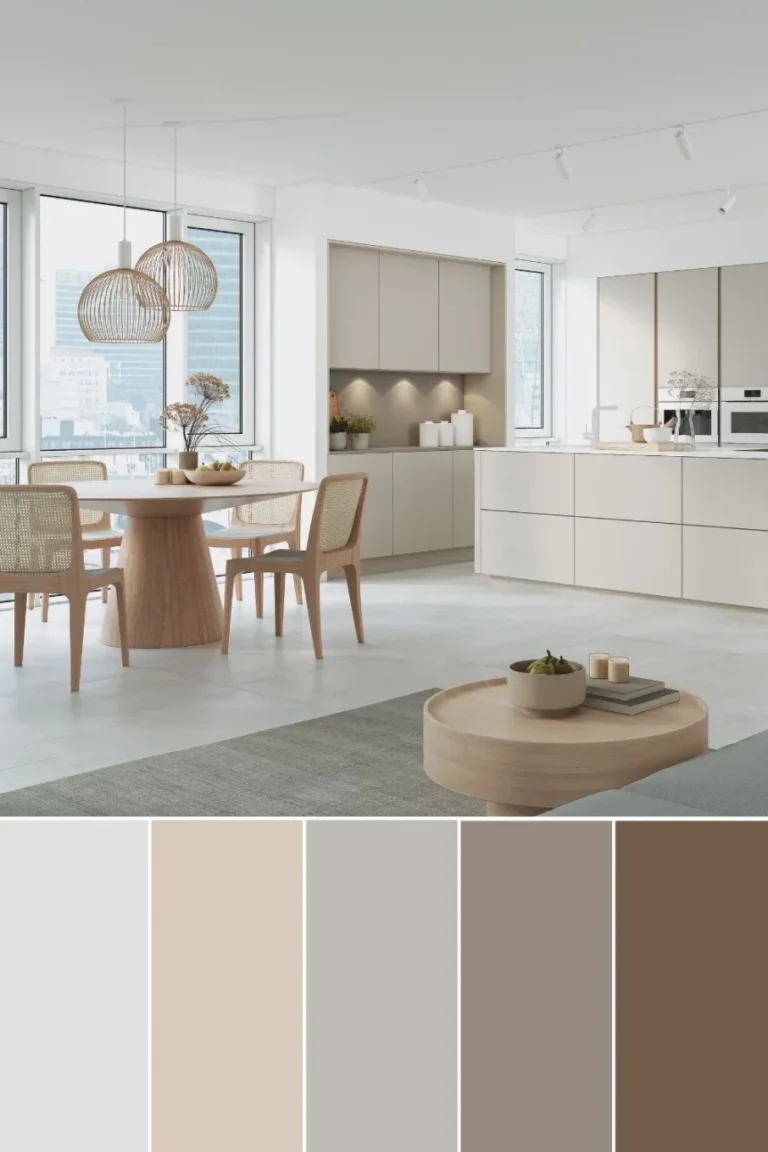
Most Scandinavian kitchens use a palette of warm white, light wood, soft gray, and maybe one muted accent color. The goal is to keep the room bright and calm while ensuring enough warmth through natural materials. For more specific combinations, see our Scandinavian color palettes guide.
Warming It Up
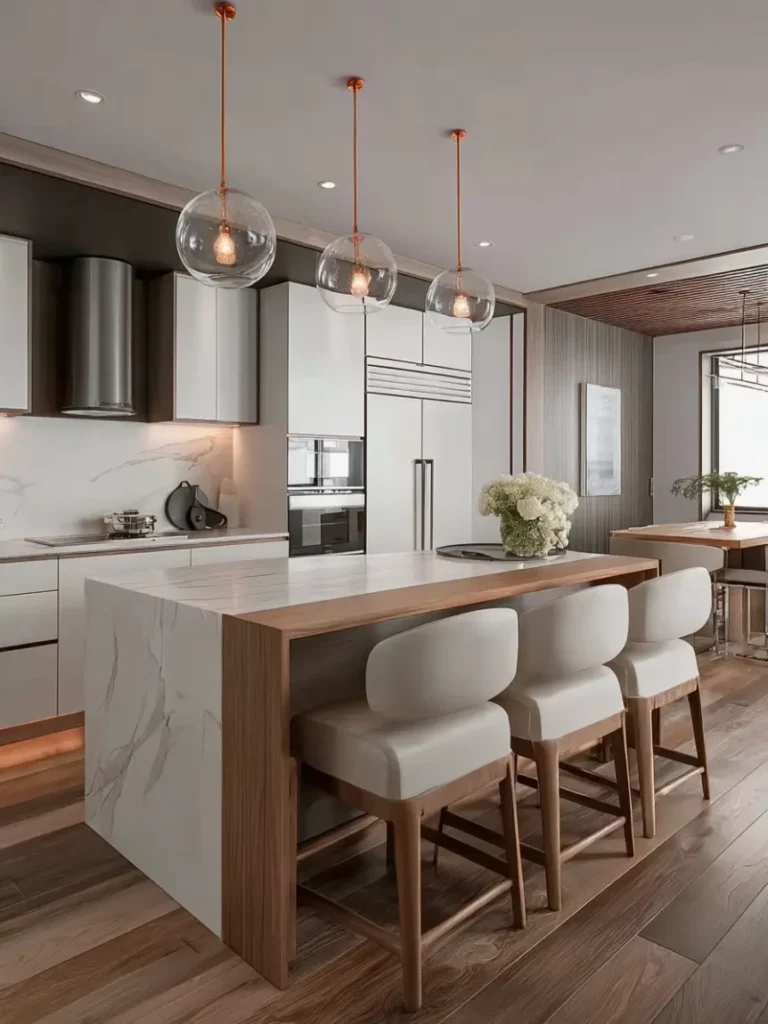
Natural wood is the most effective way to warm up a Scandinavian kitchen. Wood floors, a wood topped island, wood open shelving, or wood accents on cabinets all add the warmth that prevents the room from feeling sterile. The biggest mistake I saw in white kitchens was forgetting this entirely. Customers would install all white cabinets with white quartz counters and white tile, then wonder why the kitchen felt cold. The answer was almost always more wood, in more places.
Accent Color
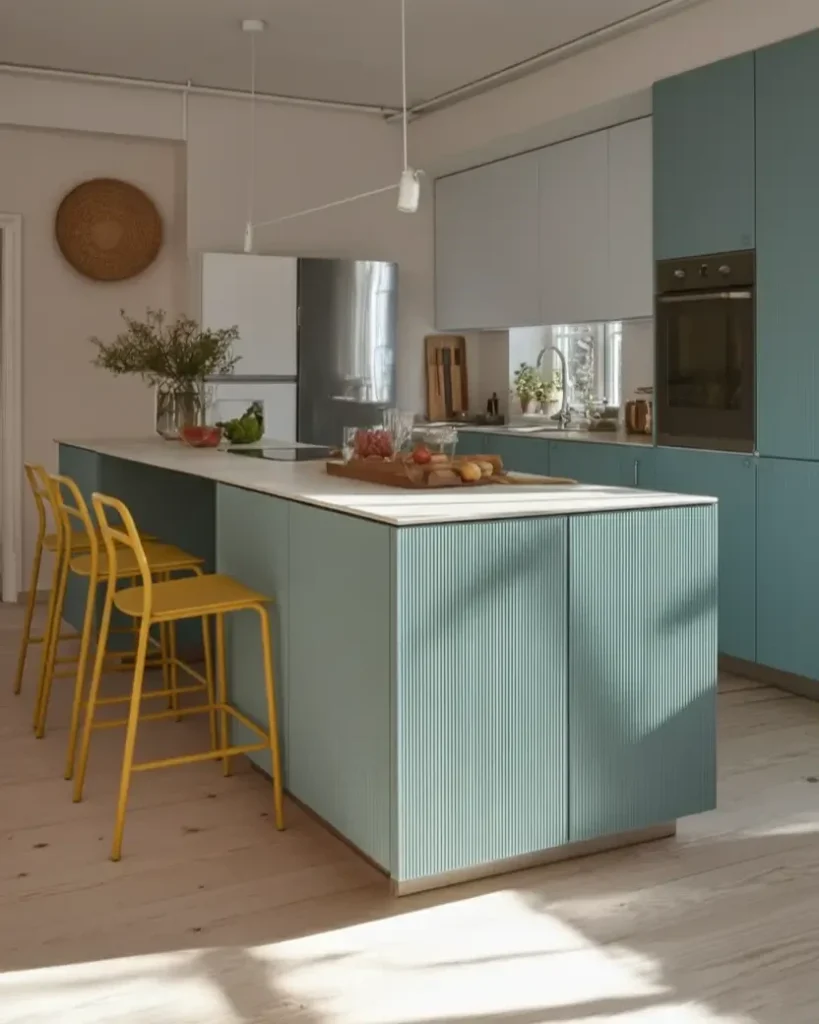
If you want more color, one accent works better than several. A muted sage green island, soft blue lower cabinets, or a warm mustard accent chair can add personality without overwhelming the calm palette. The kitchen is also a place where you can be slightly bolder with color than in other rooms, because the cabinetry naturally provides large fields of solid color that anchor the rest of the space.
The Dining Area
Tables and Chairs
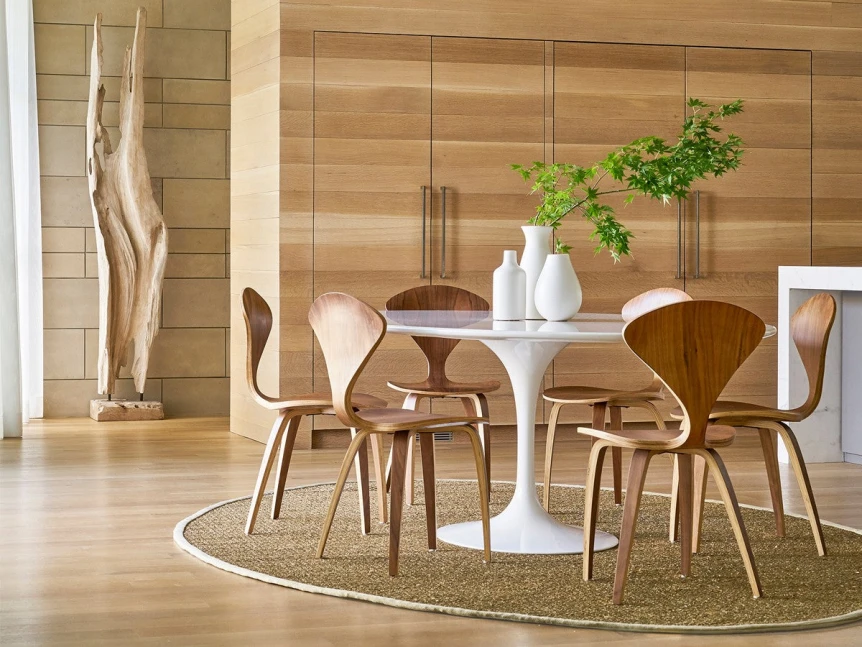
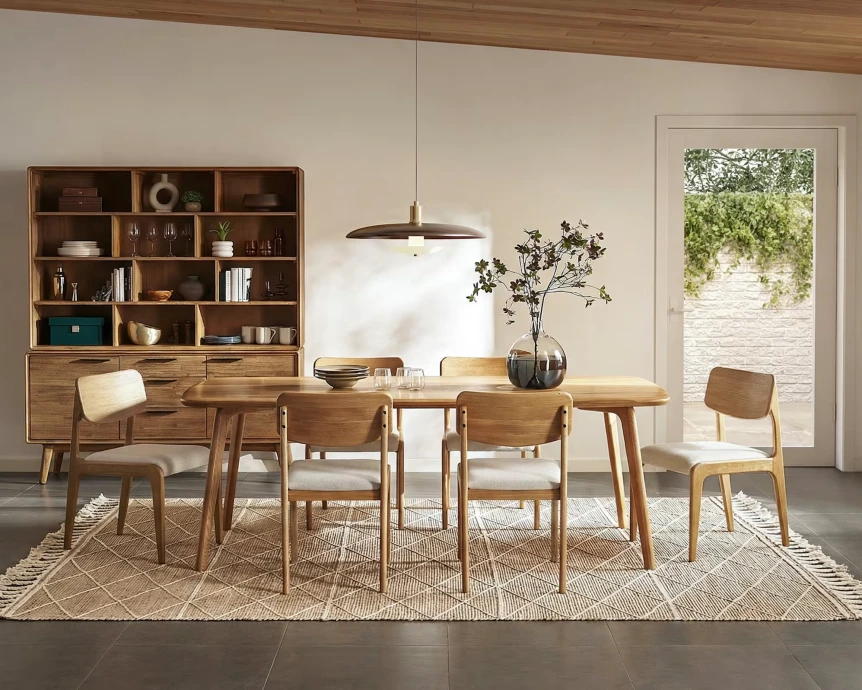
A solid wood dining table is the Scandinavian standard. Round tables work well in smaller kitchens, while rectangular tables suit larger spaces. Pair with wooden chairs in the same or a complementary wood tone. Mismatched chairs are acceptable when they share a common material or form. This is one of my favorite Scandinavian moves: a solid oak table with three or four different chair styles, all in similar wood tones. It looks intentional and personal in a way that matched dining sets never quite achieve.
For more on choosing the right dining setup, our dining table buying guide covers materials, sizing, and what to look for.
Everyday Comfort
Add a sheepskin draped over one chair or a few cushions on a bench for extra warmth. A simple table runner or a centerpiece of fresh greenery completes the inviting look. The sheepskin trick is worth using. It softens what could feel like a stark wooden chair, adds essential texture, and signals that the dining room is meant to be lingered in, not rushed through.
Dining Light
A single pendant or a row of small pendants hung directly above the table creates both function and atmosphere. Pair with candles on the table for evening meals. The dining table pendant is one of the most impactful single fixtures in a home. It defines the dining zone, anchors the space, and creates an intimate pool of light that draws people to the table.
Appliances
Stainless steel appliances work well in most Scandinavian kitchens. For a more seamless look, choose appliances with panel ready fronts that can be covered with matching cabinetry. Integrated refrigerators and dishwashers are especially popular because they disappear into the cabinet lines. The cost difference between a standard dishwasher and a panel ready one is usually a few hundred dollars. The visual difference, especially in a small kitchen, is enormous.
Induction cooktops and simple ovens without heavy branding or complicated controls suit the calm aesthetic of the style. The fewer logos, screens, and decorative bezels, the better. Appliance design has gotten more restrained in recent years, which makes finding Scandinavian appropriate options easier than it used to be.
Scandinavian Kitchens in Smaller Spaces
Scandinavian design is ideal for small kitchens, and this was the version I recommended most often to LA customers in apartments and condos. The light palette makes the room feel larger. The focus on functional storage prevents clutter. Open shelving replaces some upper cabinets to add airiness. A compact round table in a corner serves as a dining area. The principles of the style naturally solve many small kitchen challenges.
One specific tip for small kitchens: choose cabinetry that goes all the way to the ceiling. The dead space between standard upper cabinets and the ceiling collects dust, looks unfinished, and wastes valuable storage. Full height cabinets read as more custom, store more, and visually elongate the room.
For more on choosing the right furniture for your home, see our Scandinavian furniture guide.
Conclusion
A Scandinavian kitchen looks beautiful because it works well. Clean cabinetry, bright surfaces, good lighting, and warm natural materials create a room that’s calm to be in and practical to use. Start with the foundation (cabinets, countertops, layout), add warmth through wood and lighting, and let the open shelving show off a few favorite pieces. The result is a kitchen that improves how your home looks and how it functions. The best Scandinavian kitchens I helped customers build were the ones they actually wanted to spend time in, not just cook in. That’s the real test of whether the style is working.
For the complete picture of Scandinavian design, visit our complete guide to Scandinavian interior design.
Frequently Asked Questions
What does a Scandinavian kitchen look like?
A Scandinavian kitchen features flat front cabinetry in white or light wood, natural stone or wood countertops, simple hardware, classic white subway or continuous stone backsplashes, and pendant lighting over the island. Open shelving displays curated ceramics and dishware. The overall feeling is bright, clean, and warm.
What color cabinets work best in a Scandinavian kitchen?
White is the classic choice and reflects light beautifully. Light wood cabinets in oak, ash, or birch bring natural warmth. Soft gray or muted sage green cabinets work for a more contemporary look. Mixed cabinetry (white uppers with wood lowers, or vice versa) adds visual interest while keeping the palette light.
Should a Scandinavian kitchen have open shelving?
Open shelving is a signature Scandinavian kitchen feature, but it should be used selectively. One or two shelves displaying curated ceramics, glass jars, and a small plant works beautifully. Balance open shelving with plenty of closed cabinet storage for everyday items so you’re not pressured to keep everything perfectly arranged.
What lighting is best for a Scandinavian kitchen?
Pendant lights over the island or dining table are essential. Choose fixtures with clean lines in white metal, brass, paper, or woven rattan. Add warm under cabinet LED strips for task lighting. Maximize natural light with minimal window treatments. Use warm white bulbs in the 2700K to 3000K range for the coziest atmosphere.