Modern Backyard Ideas That Actually Get Used

By Tereza Hower | Published May 11, 2026 | Updated September 7, 2026
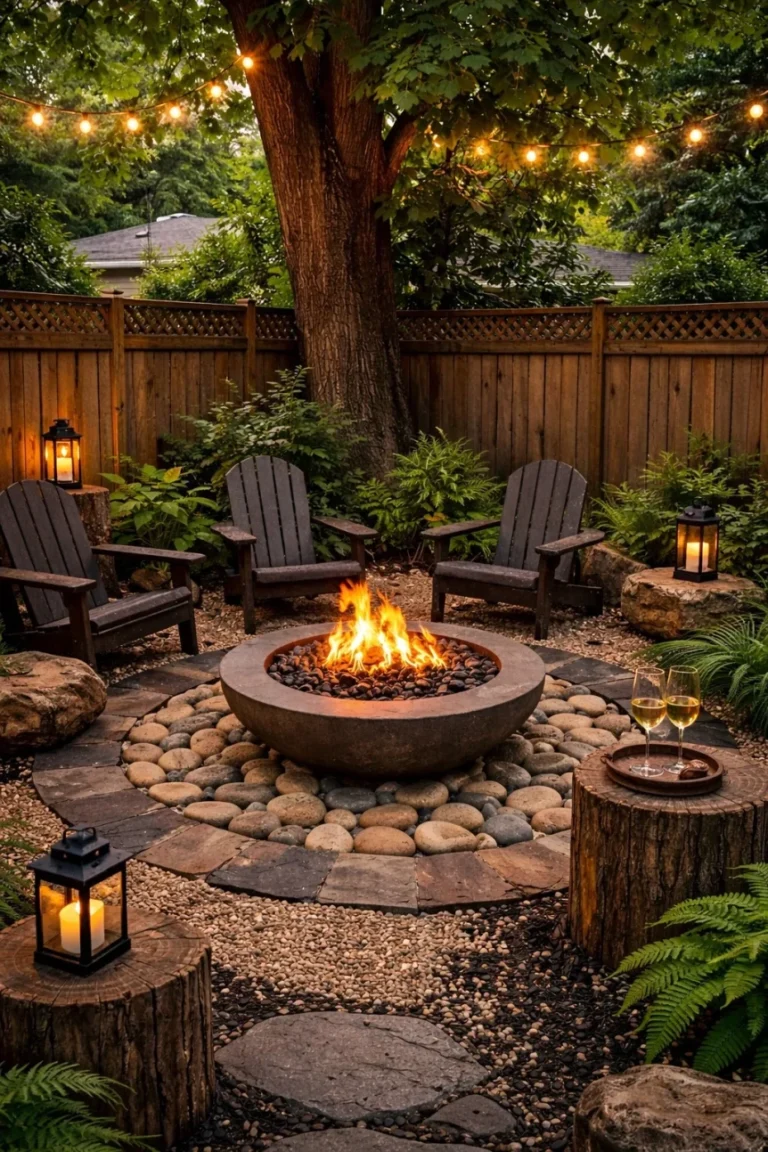
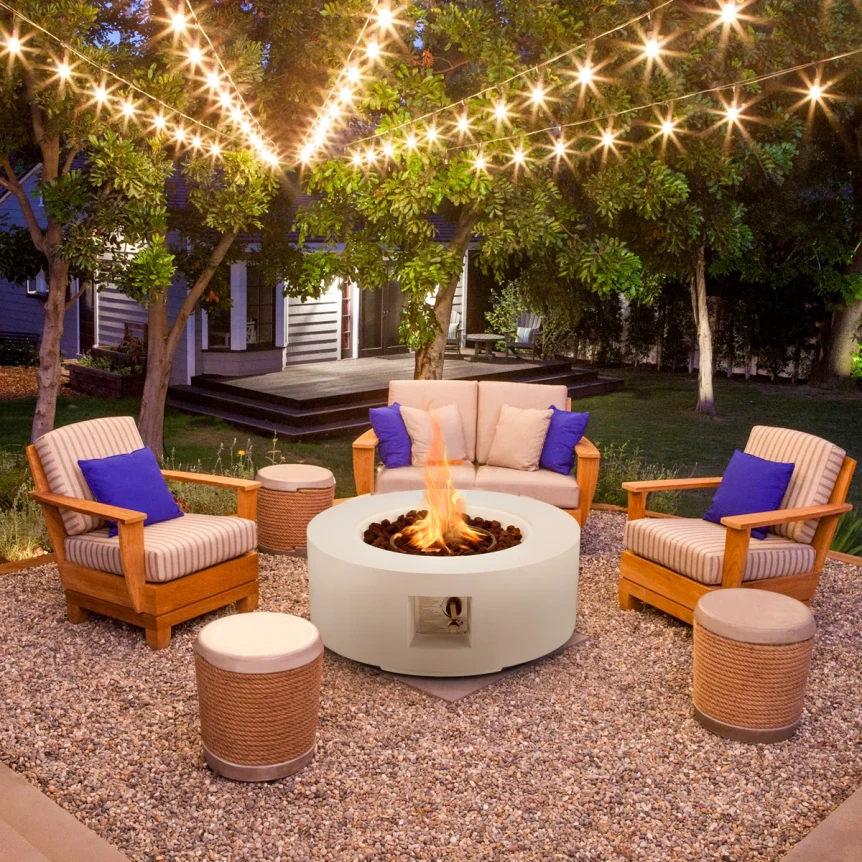
The honest realization that changed our backyard was that we had been maintaining a lawn we never sat on. We pulled out two thirds of it last spring, replaced the space with native ornamental grasses and a small gravel courtyard around the fire pit, and kept just enough grass for the dog. Of all the modern backyard ideas we tried, that swap was the single largest improvement to how the property feels.
The shape of the modern backyard has shifted in real ways. The old model of a large lawn with a small patio in one corner has given way to a more zoned, lower maintenance, more deliberately used outdoor space. This guide covers what defines that shift, the five zones worth thinking about, and the decisions that produce a yard that gets used every week of the warm season rather than only on holidays.
Key Takeaways
- Design the backyard as zones, not features: a patio, a recovery corner, a fire gathering circle, planted landscape, and a smaller working lawn.
- Shrink the lawn to the size you actually use, and replace the rest with ornamental grasses, gravel, or perennial borders.
- Use large format porcelain or natural stone for paving in warm neutrals; skip small format pavers and decorative landscape block.
- Combine a modest fence with planted screening for privacy; an enclosed-feeling yard gets used far more than an exposed one.
- Light the whole property, not just the patio: matched 2700 to 3000K bulbs across zones pull the yard together at night.
What Makes Modern Backyard Ideas Different Now?
Modern backyard ideas describe an outdoor space organized into clear zones with distinct purposes, designed with material and palette continuity, and reduced in maintenance load compared to traditional lawn-dominated yards. The approach prioritizes daily usability over showpiece curb appeal, and treats the backyard as a series of outdoor rooms rather than a single open field.
The shift is partly aesthetic and partly practical. The warm neutral palette and natural materials that define contemporary interior design have moved outdoors, and the reset of how people use their homes pushed the backyard from a place you maintain to a place you live. For the broader framework, the complete guide to outdoor and patio design covers the principles that scale up to the full property.
What Are the Five Zones of a Modern Backyard?
Almost every well designed contemporary backyard organizes around the same five zones. Not every yard includes every zone, but thinking in zones rather than in features is the single most useful planning move you can make.
1. The patio or outdoor living zone
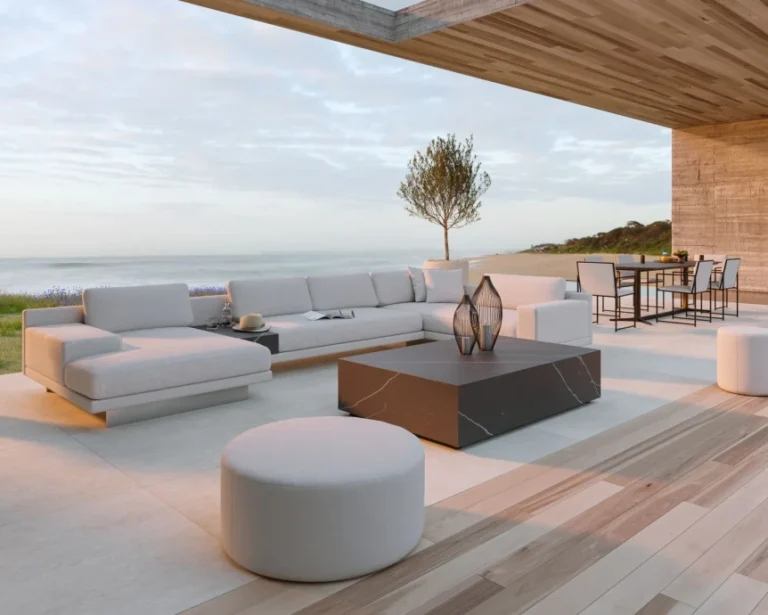
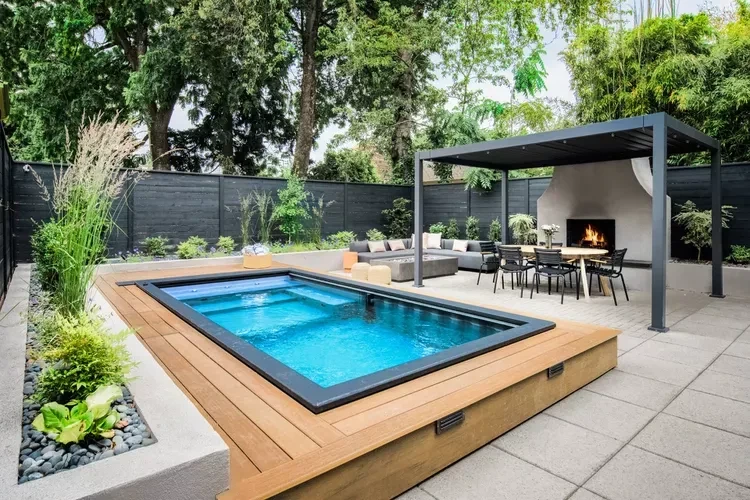
The main hardscaped area adjacent to the house. The outdoor equivalent of a living room, with seating, dining, and the visual connection to the interior. This is typically where the patio furniture lives and where most evening time is spent. For the full breakdown, see modern patio design ideas.
2. The recovery or wellness zone
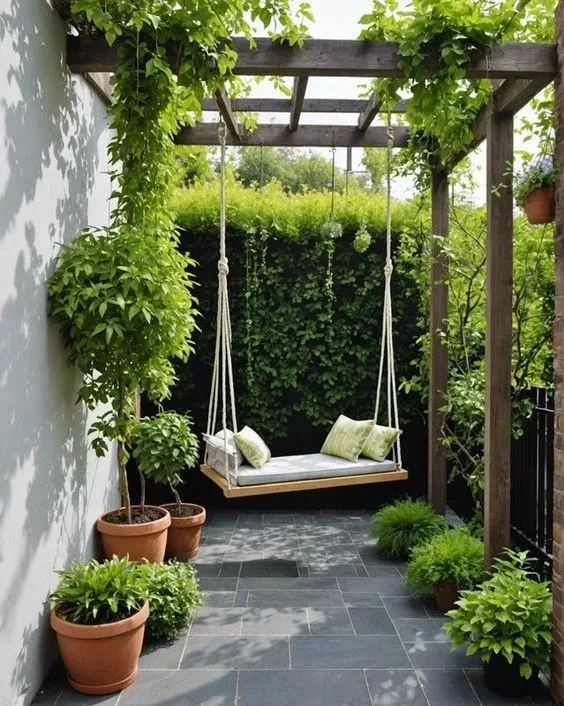
A separate quieter area built for solo rest, reading, or wellness practices. Can be as simple as a lounge chair in a corner with a side table and a plant, or as involved as an outdoor sauna and plunge tub. The dedicated rest zone has become a defining element of contemporary outdoor design rather than an afterthought. See outdoor recovery zones and wellness corners for the deep breakdown.
3. The fire and gathering zone
A dedicated zone organized around a fire pit, chiminea, or outdoor fireplace, with seating arranged in a circle for conversation. Distinct from the main patio, this zone tends to get used in evenings and cooler weather when the radiant heat extends usable hours. The fire pit area design guide covers the placement, sizing, and fuel type decisions in detail.
4. The planting and landscape zone
The deliberate planting that frames the hardscape zones. Trees, shrubs, ornamental grasses, perennials, and ground covers that provide privacy, screening, seasonal interest, and the structural backdrop that makes the rest of the backyard read as designed. In modern backyards, this zone often expands at the expense of lawn.
5. The working lawn (reduced)
A smaller, more deliberate area of grass kept for the specific activities that need it: kids playing, dogs running, the occasional lawn game. The modern backyard tends to have less grass than the traditional one, with the lawn area sized to actual use rather than filling whatever space is leftover.
Why Less Lawn Works Better
The single largest change in residential backyard design over the last decade has been the gradual shift away from large lawns toward smaller, more functional grass areas with the rest converted to planting, hardscape, or specialized zones. The drivers are practical (less mowing, less watering, less fertilizing), environmental (lawns are ecologically poor compared to native planting), and aesthetic (a backyard organized into zones reads more designed than one organized around an open green field).
The honest calculation that justifies the shift: how much of your lawn do you actually use? If the answer is “the kids play on a 15 by 20 foot section” or “the dog runs across it twice a day,” that is the size your lawn needs to be. The rest can be planting, hardscape, or recovery zones that get used hundreds more times per year than the unused grass does.
What replaces the removed lawn matters. Three options consistently work in modern backyards:
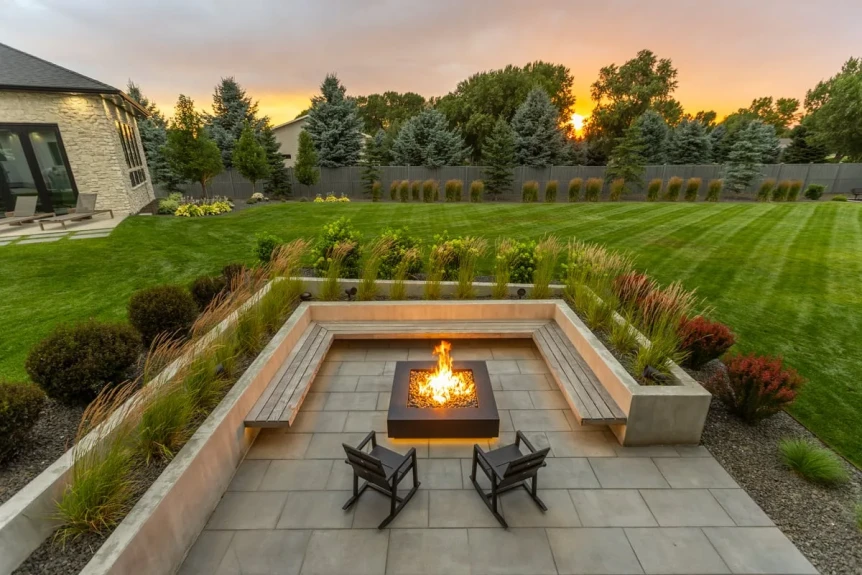
- Native and ornamental grass planting. Drought tolerant, low maintenance, and visually beautiful through multiple seasons. A bed of feather grass, prairie dropseed, or muhly grass reads contemporary and supports pollinators that lawn does not.
- Gravel courtyards. Free draining, naturalistic, and inexpensive to install. Pea gravel, decomposed granite, or larger river rock can create defined zones for seating, fire pits, or dining without the cost of paving.
- Mixed perennial borders. Deeper planting beds with a mix of structural shrubs, ornamental grasses, and seasonal perennials. Replaces a strip of lawn against a fence or property line with something that earns its keep visually all year.
How Should You Choose Paving and Hardscape?
The hardscape sets the tone for everything else. The paving material, the path connections between zones, and any retaining walls or structural elements together define whether the backyard reads contemporary or dated.
The paving direction worth knowing: large format porcelain or natural stone in warm neutral tones, with minimal joint width and consistent orientation. 24 by 24 inch or 30 by 30 inch pavers in bone, sand, or warm gray create the cleanest contemporary surface. Avoid small format pavers with frequent grout lines (they read busy), red toned brick (reads dated unless the home itself is brick), and patterned concrete pavers (almost always read suburban regardless of intent).
Path connections between zones matter more than people realize. A direct, intentional path between the patio and the fire pit reads designed; a worn track through the lawn reads accidental. Plan paths during the design phase rather than letting them emerge from use patterns. For retaining walls, dimensional natural stone or board form concrete read contemporary; stacked rounded river rock and decorative landscape block usually read suburban.
Which Plants Belong in a Modern Backyard?
The modern backyard leans on plants that perform in the local climate without heavy intervention. Native species, drought tolerant perennials, and structural ornamental grasses together create planting that looks beautiful through more of the year, supports local pollinators, and requires less water and chemical input than traditional ornamental gardens.
The principle is structure first, color second. Choose the bones (mature trees, structural shrubs, ornamental grasses) before adding seasonal flowers and perennials. A backyard with strong structural planting looks designed in every season; one built around seasonal flowers looks dead from late autumn through early spring.
Specific categories worth knowing: olive, fig, and Japanese maple as small specimen trees in pots or planted; boxwood, yew, and pittosporum as structural evergreen shrubs; feather grass, prairie dropseed, and muhly grass as ornamental grasses; lavender, rosemary, and salvia as fragrant low water perennials; jasmine, climbing rose, and clematis as climbers for vertical interest. The outdoor plants and landscaping ideas guide covers selection in more depth.
How Do You Create Privacy Without a Tall Fence?
Privacy is the unsung hero of backyard design. A beautifully designed backyard that overlooks a neighbor’s deck or a busy street gets used less than a more modest backyard that feels enclosed and private. The investment in screening pays back in actual use frequency.
The hierarchy of screening options, from least to most permanent: tall ornamental grasses in pots, trellises with climbing plants, freestanding wood or steel screens, planted hedges, and built fencing. Most backyards benefit from a combination: a permanent fence on the property line, supplemented by planted screening that softens the fence and adds vertical interest. The planted layer matters as much as the fence, because it reduces the institutional feel of a hard boundary.
For privacy in specific zones (the recovery corner, the dining area, the fire pit gathering circle), localized screening works better than trying to enclose the whole yard. A tall planter of bamboo, a trellis with jasmine, or a freestanding wood screen between zones can create the sense of enclosure without making the yard feel walled in.
Are Water Features Worth Installing?
Water features come back into vogue every few years and are currently having a moment. A small wall fountain, a basin style spillway, or a contemporary reflecting pool can add a sound and visual layer that nothing else replicates.
The honest test before installing one: are you committed to the maintenance? Water features need cleaning, pump care, and winterizing or algae management depending on climate. Features that get installed and abandoned become eyesores within a few years. If you have used a water feature elsewhere and kept up with it, the addition is worth considering; if not, a generously planted bed of ornamental grasses delivers most of the visual benefit without the upkeep.
If you do install one, the contemporary direction is restraint. A single wall mounted spillway in matte black, a basin in cast concrete, or a small reflecting pool with a clean rectangular shape reads modern. Multi tiered ornate fountains and faux rock water features almost always read dated regardless of cost.
How Should You Light the Whole Backyard?
Lighting in a modern backyard works at the scale of the whole property rather than the patio alone. The layering principle (ambient, task, accent) still applies, but the layout extends across the zones. A string of warm lights over the patio, a pendant over the fire pit, uplights at the base of mature trees, low bollards along paths, and a single softer fixture in the recovery zone together create a backyard that reads complete at night.
Match the bulb temperatures across all zones (2700K to 3000K, with 90+ CRI) so the backyard reads as one continuous environment after dark rather than a series of disconnected lit areas. For the full layering principle and the specific fixtures that earn their place, see outdoor lighting ideas.
Indoor Outdoor Connection
The modern backyard works best when it is visually and functionally connected to the interior of the house. A bistro setup visible from the kitchen window, a fire pit aligned with the sight line from the living room sofa, a recovery chair glimpsed from a hallway: the deliberate connection between inside and outside makes both spaces feel larger and increases how often the backyard gets used. The cheapest moves are also the most underused: one large potted plant in the sight line between interior and patio, one piece of interior furniture rotated to face the back doors, and matched bulb temperatures inside and out. For the full breakdown, see indoor outdoor flow design.
What Are the Most Common Modern Backyard Mistakes?
- Designing around features instead of zones. A backyard built around a pizza oven, a hot tub, and a putting green often ends up as three underused features and no comfortable place to sit. Zones first, features second.
- Keeping a large lawn out of inertia. Most backyards have more lawn than the household actually uses. Auditing the actual use is the first step toward a better design.
- Small format paving that reads busy. Brick, pavers, and small format stone all read dated and busy in a contemporary backyard. Larger formats with minimal joint width almost always read better.
- Skipping the planted screening. A fence alone reads institutional. Planted screening softens the boundary and makes the backyard feel enclosed without feeling walled in.
- Installing water features without maintenance commitment. An abandoned water feature is worse than no water feature. Be honest about the upkeep before adding one.
- Lighting only the patio. A lit patio with the rest of the backyard dark feels claustrophobic. Extending the lighting layers across the whole yard pulls the space together at night.
- Forgetting the recovery zone. A backyard built entirely for entertaining ends up used less than one that includes a quiet corner for solo rest. The single lounge chair in a private spot earns its place quickly.
- Decorative landscape block walls and rounded river rock. Almost always read suburban regardless of the rest of the design. Dimensional natural stone or board form concrete read modern.
Putting a Modern Backyard Together
The sequence that works: audit how you actually use the backyard now, identify which zones earn their place, plan hardscape and structural planting before furniture, then layer in the lighting last. Most people reverse this and end up with beautiful patio furniture on a yard that has no path between zones and a lawn nobody uses.
The honest test of a modern backyard is whether you use it on a regular Tuesday evening, not just on a holiday weekend with guests. The lawn nobody walks on, the outdoor kitchen used twice a year, the formal dining table for ten: these look correct in photos and consume budget without delivering daily value. Building around actual use rather than aspiration is the single most reliable path to a backyard that gets used.
FAQ
Frequently Asked Questions
How much lawn does a modern backyard need?
Only as much as you actually use. For households with kids who play in the grass, 200 to 400 square feet is usually enough. For households with dogs who run, the size depends on the dog. For households who use the lawn purely visually, almost any size works including zero. The exercise that consistently produces better backyards is honestly auditing how often the lawn gets walked on, then sizing it to that use rather than to whatever space happens to be available.
What replaces a lawn in a modern backyard?
Three options work consistently. Native and ornamental grass planting (feather grass, prairie dropseed, muhly grass) is drought tolerant, supports pollinators, and reads contemporary. Gravel courtyards (pea gravel, decomposed granite) are inexpensive, free draining, and create defined zones for seating or fire pits. Mixed perennial borders with structural shrubs and seasonal perennials replace the strip of grass against fences with something that earns its keep visually all year. Most backyards use a combination of all three.
Are water features worth installing in a backyard?
Only if you are genuinely committed to the maintenance. Water features need cleaning, pump care, winterizing in cold climates, and algae management in warm ones. The features that get installed and abandoned become eyesores within a few years. If you have used a water feature elsewhere and kept up with it, the addition is worth considering. If not, a generously planted bed with ornamental grasses delivers most of the visual benefit and movement (in wind) without the ongoing upkeep.
What is the single most impactful change in a modern backyard makeover?
For most yards, replacing two thirds of the lawn with a combination of native planting, gravel, and a defined hardscape zone. The change reduces maintenance load significantly, adds usable outdoor zones, and reads more designed than the lawn it replaced. The second most impactful change is usually adding a dedicated recovery corner with a single lounge chair in a quiet spot. Together those two moves often deliver more value than thousands of dollars of furniture or accessories.
How do I make a backyard feel private without building a tall fence?
Combine a modest fence with planted screening. A 6 foot fence is usually enough at the property line. The privacy that matters comes from what you add on the inside: tall ornamental grasses in pots, trellises with climbing plants, freestanding wood or steel screens, and planted hedges that break up sight lines from neighboring windows. Localized screening within specific zones (the recovery corner, the dining area) often works better than trying to enclose the whole yard.
Where to Read Next
For the patio at the heart of the backyard, see modern patio design ideas. For the quiet corner that ends up being the most used zone, see outdoor recovery zones. For the fire pit gathering circle, see fire pit area design. For connecting the backyard to the interior, see indoor outdoor flow design. For the lighting plan that pulls it all together, see outdoor lighting ideas. For smaller properties, see small patio ideas for compact yards. For the broader framework, the outdoor and patio design framework ties every zone together.