Fire Pit Area Design: Creating an Outdoor Gathering Space

By Tereza Hower | Published May 15, 2026 | Updated September 7, 2026
Most fire pits fail for a boring reason: they are too much work to light. Not the wrong material, not the wrong size, not even the wrong corner of the yard. Good fire pit area design starts by admitting how much effort you will really make on a Tuesday evening, then choosing the fuel, the placement, and the seating that match that honest answer.
A fire pit is the most sociable thing you can add to a patio. People drift toward flame without being asked, conversations run longer, and the outdoor season stretches by a month at either end. But the gap between a fire pit that gets used twice a week and one that gets used twice a year comes down to a handful of decisions made before anything is bought.
The order I would recommend is fuel type first, then placement, then the size of the circle, then the unit and the seating to fit it. This guide follows that order and ends with the mistakes that turn a handsome installation into expensive yard art.
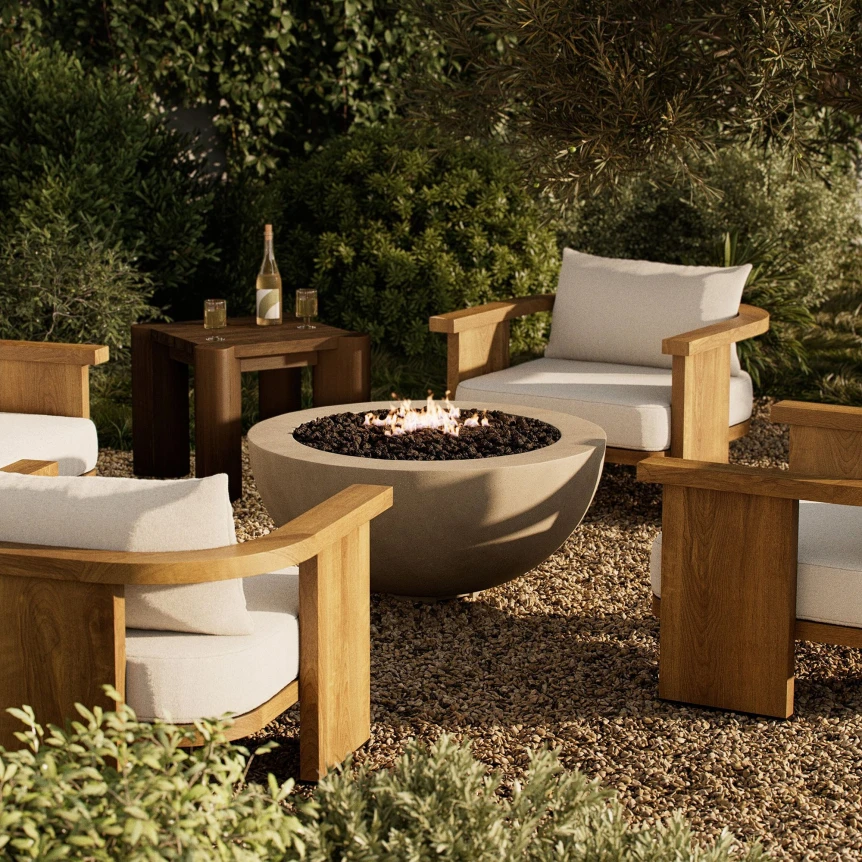
Key Takeaways
- Choose the fuel type first, because the effort of lighting the fire decides how often the area gets used.
- Propane or natural gas suits most households, while wood burning belongs on rural lots and with people who want the ritual.
- Keep the fire pit at least 10 feet from structures and plantings, and place it upwind of the seating.
- Seats should sit 36 to 48 inches from the fire pit edge, with a 30 to 42 inch pit serving four to eight people.
- Permanent seating on a level, heat resistant surface matters more to use frequency than the brand of fire pit.
What’s Covered in This Guide
- What Makes a Fire Pit Area Work
- Which Fire Pit Type Should You Choose
- Where Should a Fire Pit Go
- How Big Should the Gathering Circle Be
- Seating Around the Fire
- How to Tell a Quality Fire Pit from a Cheap One
- Built In vs Freestanding
- Designing for Year Round Use
- Lighting and Planting Around the Fire Pit
- Common Mistakes in Fire Pit Area Design
- Putting a Fire Pit Area Together
What Makes a Fire Pit Area Work
A fire pit area is a dedicated outdoor gathering zone organized around a fire feature, with seating positioned for conversation and a view of the flame, materials chosen for heat tolerance, and placement that handles smoke, wind, and safety clearances. It functions as the outdoor equivalent of a living room, with the fire taking the place of the television or the focal point art.
The area works when it does three things. It gathers people without requiring effort, it operates easily enough to use on a weekday evening, and it reads as part of the patio rather than as a separate installation dropped onto it. Get any one of those wrong and the fire pit becomes the project that gets used twice a season instead of the room that gets used twice a week.
Everything below assumes the fire pit is one zone within a larger outdoor plan. For how it relates to dining, lounging, and circulation, the complete guide to outdoor and patio design covers the wider framework, and this post goes deep on the one zone that people get most excited about and most often get wrong.
Which Fire Pit Type Should You Choose?
Fire pit categories have multiplied over the last decade, but five types cover almost every residential situation. Each trades atmosphere against effort in a different ratio, and that ratio is the real decision. The table gives the short version, and the sections that follow explain when each one earns its place.
| Type | Atmosphere | Effort to light | Smoke | Best for | Typical cost |
|---|---|---|---|---|---|
| Wood burning | Strongest: crackle, scent, sparks | High: build, tend, wait it out | Yes, wind dependent | Rural or large lots, people who want the ritual | 200 to 1,500 dollars |
| Smokeless wood (double wall steel) | Real flame and crackle | Medium: still built and tended | Low once fully burning | Dense neighborhoods that still want wood | 300 to 1,200 dollars |
| Propane | Clean flame over lava rock or glass | Low: switch or key valve | None | Most households, weeknight use | 800 to 3,500 dollars |
| Natural gas | Same as propane, no tank | Low | None | Permanent built ins near a gas line | 2,000 to 25,000 dollars installed |
| Bio ethanol | Small ambient flame | Low | None | Balconies and covered patios | 150 to 1,000 dollars |
Wood burning fire pits
The traditional version, and still the one with the strongest atmosphere: real flame, real crackle, real wood smoke. The downsides are just as real. You need a wood source, you need to build and tend the fire, you need to wait for it to die down before going inside, and you breathe smoke whenever the wind shifts.
Wood burning makes sense on rural or larger suburban properties where smoke is not a neighborly concern, where firewood is genuinely available, and where building the fire is part of what you want from the evening. In dense neighborhoods, or for casual weeknight use, the effort filter is heavy enough that most households end up using a wood pit far less than they imagined when they bought it.
Propane fire pits
The convenience choice. A standard exchangeable tank hidden inside the base, or a buried tank on larger properties, feeds a burner that lights with a switch or a key valve. No smoke, no ash, no waiting. Modern propane units with lava rock or tempered glass media throw real visual flame and meaningful radiant heat, without the cleanup.
The tradeoff is atmosphere. A propane flame does not crackle, does not throw sparks, and does not smell like a campfire. For some households that is the whole point, and for others it is a real loss.
The honest test: have you built wood fires regularly elsewhere and resented the cleanup, or have you admired them occasionally without ever building one? Most people are in the second camp, and propane serves them better.
Natural gas fire pits
The propane experience without the tank. A gas line runs to the fire pit, so there is nothing to refill and nothing to conceal. The installation requires a plumber and a permit in most places, which makes it the right call only when the fire pit is permanent and sits near an accessible line.
For a built in fire feature installed during a larger patio project, natural gas is usually the cleanest long term answer. For a freestanding unit, or a patio layout that might change in five years, propane keeps your options open.
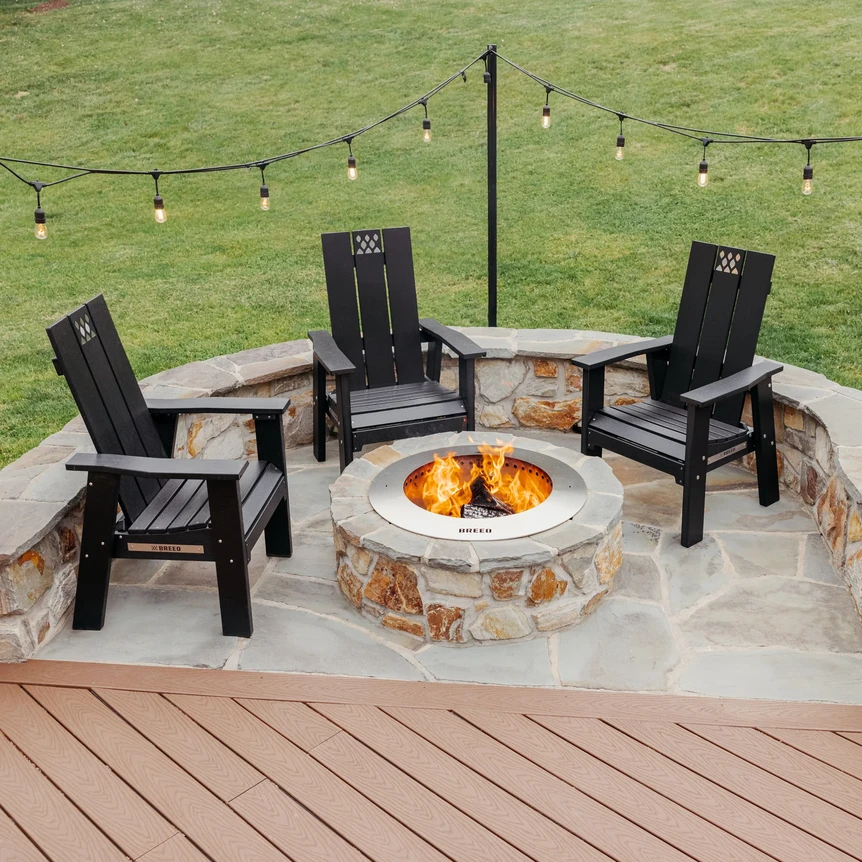
Smokeless wood burning
The newest category. These are steel fire pits with a double wall design that pulls air up between the walls and reburns the smoke before it escapes, producing a wood fire with dramatically less smoke than an open bowl. Solo Stove made the category visible, and several other makers now build similar designs in stainless and carbon steel.
They are worth knowing if you want wood fire without the neighbor problem. They still need wood and tending, the smaller models burn through a bundle quickly, and they smoke during ignition and whenever a fresh log goes in. But they close the gap between wood atmosphere and gas convenience better than any other wood burning option.
Bio ethanol fire pits
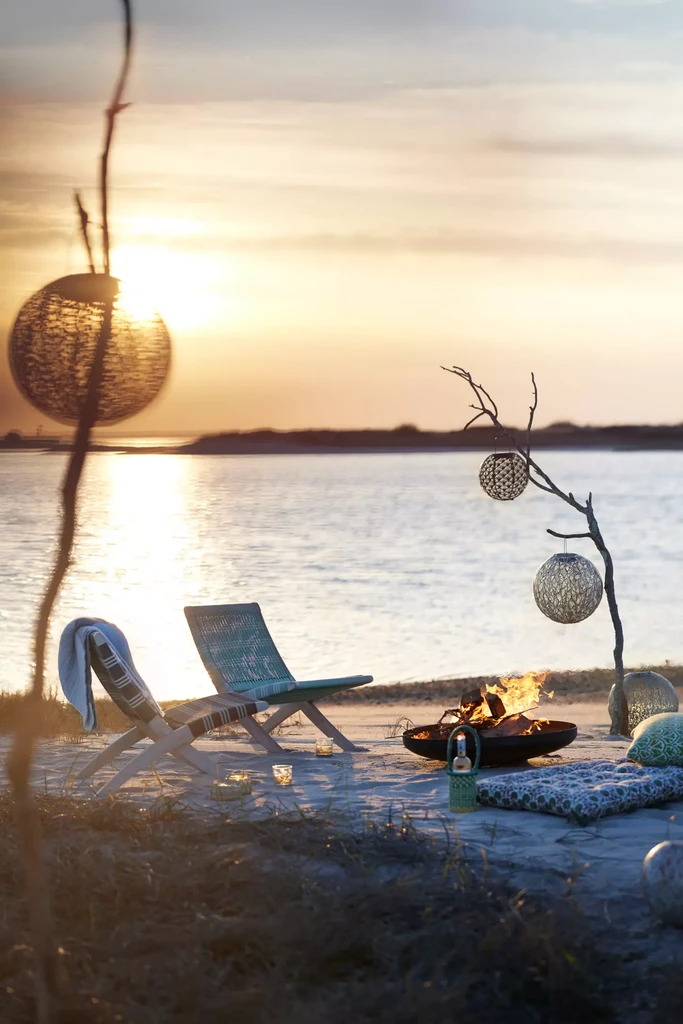
The smallest and most specialized category. Bio ethanol burns clean with a real flame and no smoke, fed from a refillable reservoir of liquid fuel. The flames are shorter and the heat output is lower than propane or wood.
What makes them useful is that they need no venting or gas line, so they work on balconies, under covered patios, and in apartment settings where nothing else is feasible. Treat them as an ambient feature, not a heat source. For small outdoor rooms where the fire has to share space with everything else, the small patio ideas post covers how to fit one in without crowding the seating.
Where Should a Fire Pit Go?
Placement is where most fire pit installations succeed or fail. Where the pit sits has larger consequences than the type or the brand, and it is the decision that is hardest to undo once a patio is built around it.
Distance from the house
Most local codes require at least 10 feet of clearance from any structure, and some jurisdictions require 15 or more. Check the local rules before committing to a spot. Beyond code, the practical minimum is 10 feet from any wall or overhang, with 15 feet preferred for wood burning so smoke can dissipate before it reaches an open door.
For propane and natural gas, the smoke concern disappears and the distance can shrink toward the code minimum. Do not go tighter than that even for gas. Radiant heat still discolors siding, and a fire pit that feels squeezed against the house also feels less like a destination.
Distance from plants and trees
Keep the fire pit at least 10 feet from tree canopy, dry grass, hedges, and wooden fences. Sparks travel further than people expect, especially from open wood pits on a breezy night. For overhead branches, 25 feet of vertical clearance is the conservative number, though gas units that produce no sparks can live closer.
Wind direction
This is the most overlooked placement decision. Spend a few evenings noting where the prevailing wind comes from during the months you will actually use the patio, not the whole year. Then position the pit so smoke blows away from the seating and away from the house.
A fire pit downwind of the seats means smoke in faces all evening, and one bad season is enough to stop a household using the area. The same fire pit moved eight feet so it sits upwind of the chairs becomes invisible from the seating. Wind direction should outrank the pretty view when the two disagree.
Foundation
Fire pits sit on a level, heat resistant, non flammable surface. Stone, poured concrete, brick, compacted gravel, or pavers rated for heat all work. Wooden decks need either a heat shield under the pit or a mat rated by the manufacturer for that specific unit, and even then a gas unit is the safer choice on timber.
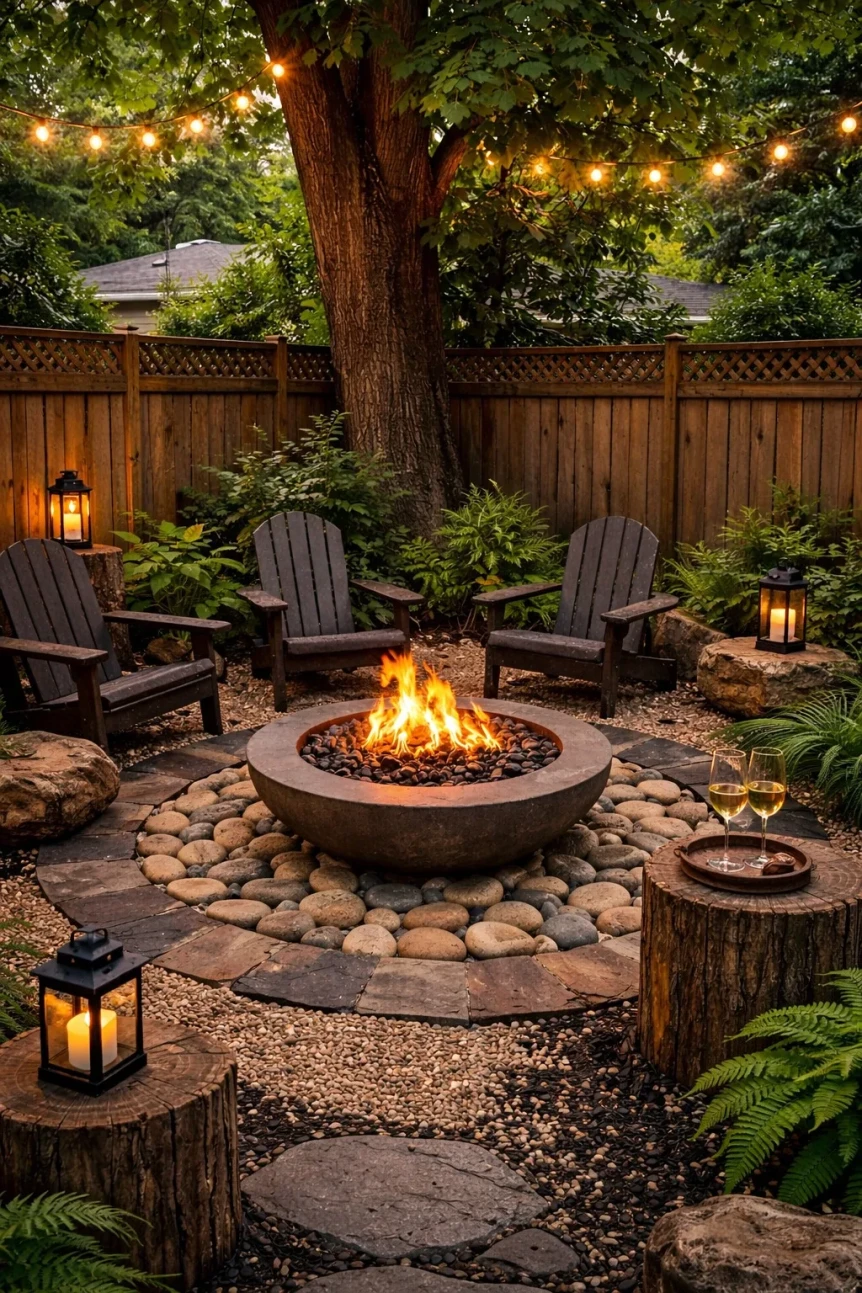
Grass directly under a fire pit dies within a use or two and becomes a fire risk once it dries out. A 10 to 12 foot circle of pea gravel or decomposed granite, edged in steel, is the least expensive proper foundation and happens to suit modern, minimalist, and Japandi patios equally well.
How Big Should the Gathering Circle Be?
The fire pit and the seating around it form a single circle. Sizing that circle correctly is what makes the area feel intimate and conversational rather than sparse or crowded.
The rule that works: the front edge of the seating sits 36 to 48 inches from the fire pit edge. Closer than 36 inches and the heat is uncomfortable on shins. Further than 48 inches and the radiant warmth drops off sharply, conversation across the fire strains, and the gathering feels diluted. Residential fire pits run 30 to 42 inches in diameter, which puts the whole circle of pit, clearance, and seats at 8 to 12 feet across.
| People | Fire pit diameter | Seat to pit edge | Total circle |
|---|---|---|---|
| 2 to 4 (small patio) | 24 to 30 inches | 36 inches | About 8 feet |
| 4 to 6 | 30 to 36 inches | 36 to 48 inches | About 10 feet |
| 6 to 8 | 36 to 42 inches | 36 to 48 inches | About 12 feet |
| 8 or more | 42 inches or a linear trough | 48 inches | 14 feet or more, loses intimacy |
For seating capacity, allow roughly 30 inches of seat width per person around the perimeter. A 10 foot circle handles four to six people comfortably and a 12 foot circle handles six to eight. Beyond that, the intimacy that made the fire pit appealing starts to leak away, and a second, smaller circle usually serves a big backyard better than one enormous one. The modern backyard ideas post shows how zones like that divide a larger lot.
Seating Around the Fire
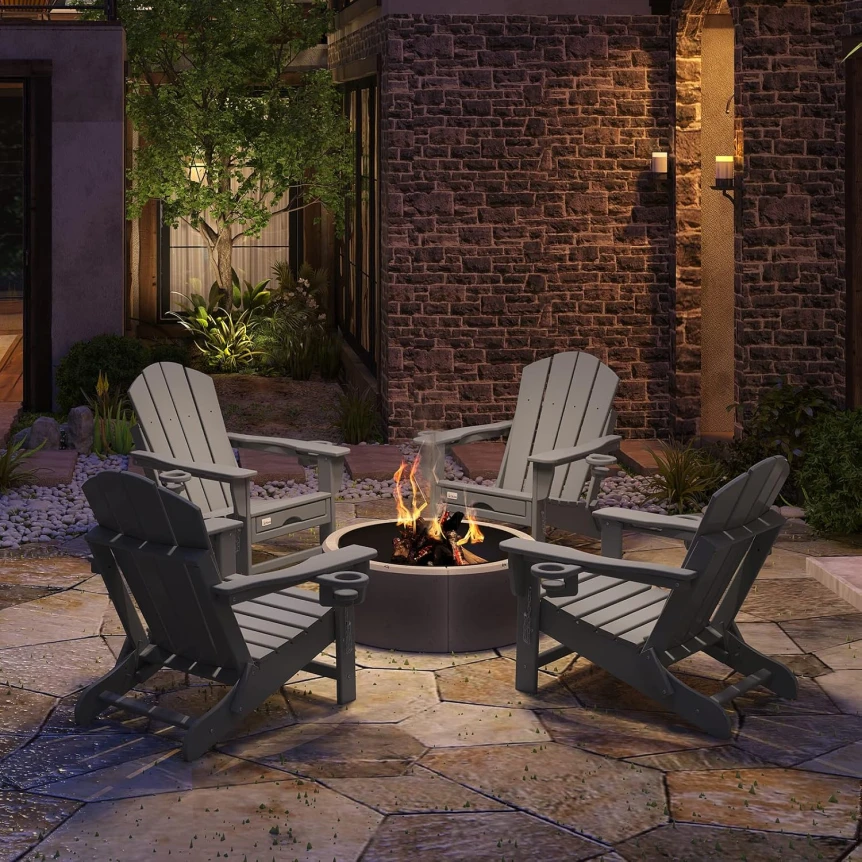
Seating decides both how comfortable the area is and how often it gets used. Three approaches work consistently, and the choice between them is mostly about how permanent the installation is and how much flexibility you want.
- Adirondack chairs in teak or another dense hardwood. The classic fire pit seat. The reclined back is made for staring into flame, the deep seat handles a long evening, and teak silvers gracefully if you leave it unoiled. Four to six chairs around a pit reads correct.
- Deep seat lounge chairs with cushions. The contemporary option. Solution dyed acrylic cushions in warm neutrals on hardwood or powder coated aluminum frames. Sectionals work too, but they fix the orientation of the gathering and cannot be nudged when the wind shifts.
- Built in bench seating. A masonry or timber bench set into the patio at the correct distance from the pit. It suits smaller spaces where freestanding chairs would crowd the circle, and it reads more architectural than anything you can buy. Add cushions or the bench goes unused after the first hour.
Avoid plastic chairs, folding camp chairs, and anything that has to be dragged into position each evening. That small friction compounds, and the area quietly stops being used. Seating should live around the fire pit permanently. For frame materials, cushion fabrics, and what actually survives outdoors, see the guide to best outdoor patio furniture.
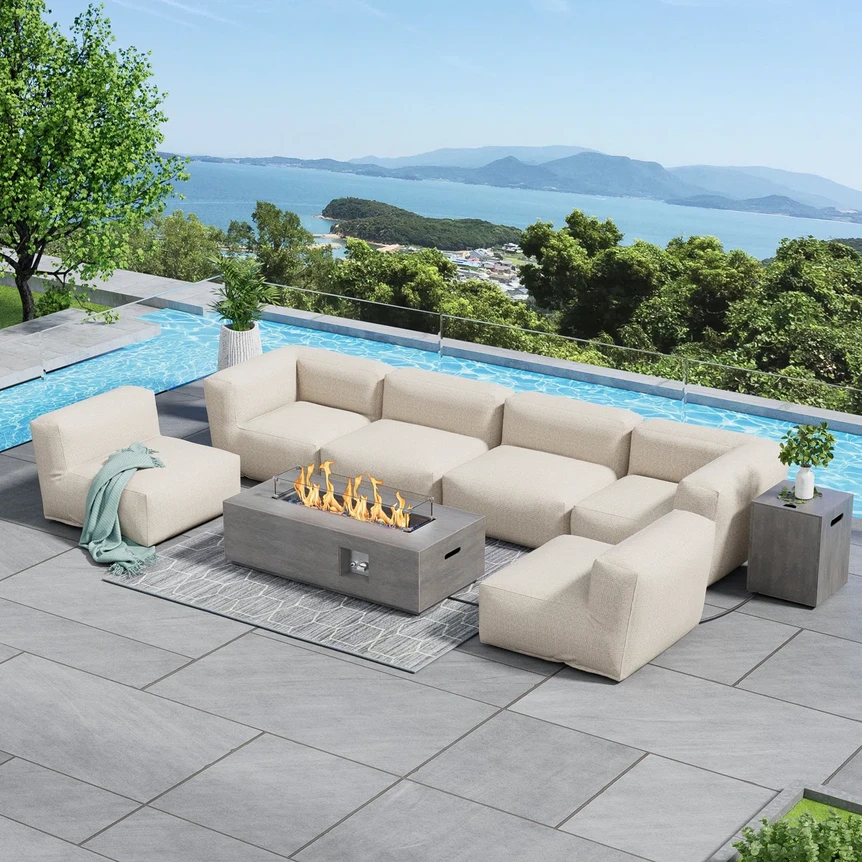
One contrarian note on textiles. An outdoor rug under the seating circle looks finished in photographs, but a wood fire throws sparks that melt polypropylene and scorch natural fibers. Keep rugs outside the spark radius, or reserve them for gas fire pits only. The outdoor rugs and textiles guide covers which fibers can live near heat.
How to Tell a Quality Fire Pit from a Cheap One
Fire pits are sold almost entirely on photographs, and photographs cannot show gauge, weld quality, or how a burner behaves in a breeze. Buying judgment built over more than a decade of curating home decor comes down to one unglamorous habit here: lift it. A fire pit that one person can carry easily is usually made of steel too thin to survive repeated heat cycles.
Beyond weight, four things separate a unit that lasts a decade from one that warps in a season. Look at the material, the burner, the ignition, and the finish.
Material
Steel is the most versatile choice, in powder coated matte black or as unfinished corten that weathers to a deep rust patina over a year or two. Look for 3/16 inch plate or thicker. Thin gauge steel bowls warp, and the powder coat on them flakes within a couple of seasons once the metal starts flexing under heat.
Copper develops a patina that moves from bright metal through brown to verdigris green over several years. It is beautiful in a specific way, especially against mature plantings, and it costs more than steel. Some homeowners dislike the awkward middle stage of that patina, so know that going in.
Stone and concrete fire pits are almost always built in rather than freestanding. They handle heat well, tie visually into a stone or concrete patio, and carry an architectural permanence steel cannot match. The cost is that they never move, and the gas line work behind a stone built in is significant.
Burner, ignition, and finish
On any gas unit, the burner is the component that fails first. Stainless steel burner rings and pans outlast aluminized or painted steel by years, and a burner rated at 50,000 BTUs or more gives you real heat rather than a decorative flicker. Cheap units hide a small burner under a generous pile of lava rock.
Ignition is a preference more than a quality marker. A match lit key valve has almost nothing that can break, while electronic push button ignition is more convenient and more failure prone. Either is fine from a reputable maker, but a unit with electronic ignition and no manual override should be a pass.
Finally, check the finish and the warranty together. A high temperature powder coat on thick steel should carry at least a few years of coverage against rust through, and a maker unwilling to warrant the burner is telling you something. Read the warranty before the product photos, not after.
Built In vs Freestanding
The choice between a built in fire pit and a freestanding one is partly aesthetic and partly practical. Both can be done well, but they commit you to very different levels of permanence.
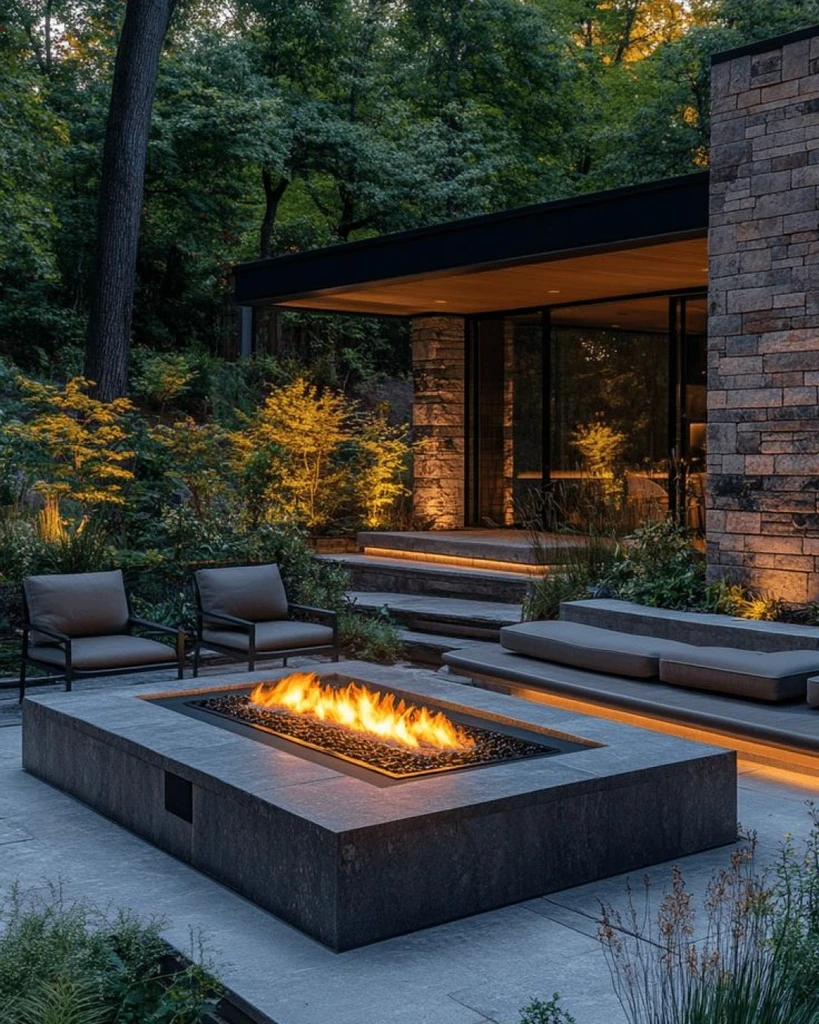
Built in fire pits, usually in stone or concrete with a natural gas connection, look the most permanent and the most architectural. They read as part of the patio rather than as a piece of furniture placed on it. They also lock the fire pit into that exact spot for as long as you own the house, which matters if the patio ever gets redesigned or the prevailing wind turns out to be different than you assumed.
Freestanding fire pits in steel, copper, or cast iron are far more flexible. You can reposition them after a smoky first season, take them with you when you move, or replace them when something better comes along. They look less integrated, but for most homes a quality freestanding propane unit at 1,500 to 3,500 dollars delivers more use per dollar than a built in at 8,000 to 25,000. Reserve the built in for a patio you have already lived with for a year and know you will not change.
Designing for Year Round Use
Fire pits earn their keep in shoulder season and cold weather, when the patio would otherwise sit empty. Designing for year round use means thinking about wind protection, overhead shelter, and the heating range of the fire itself.
Wind protection comes from planting, a low wall, or a trellis screen positioned to block the prevailing wind without trapping smoke. A windbreak on one side of the seating, with the fire between the seats and the open side, makes the area usable on evenings that would otherwise be too breezy. The screen also gives the zone a back, which is what makes it feel like a room rather than a clearing.
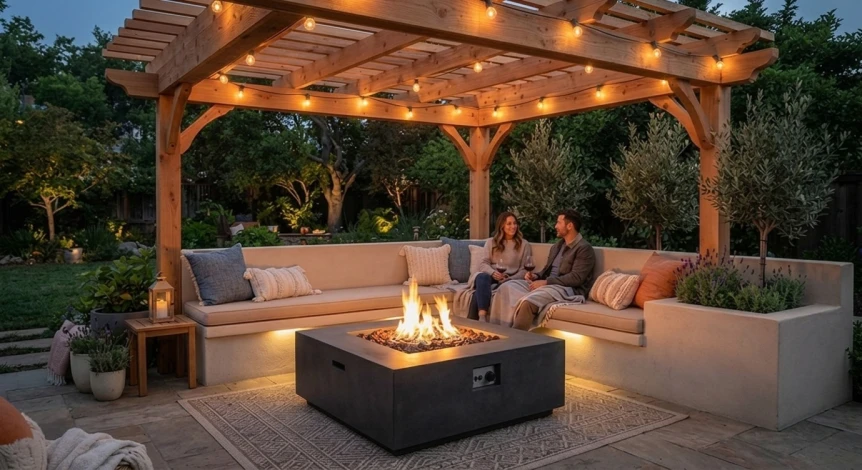
Overhead shelter is more complicated, because most fire pits cannot operate under a solid roof. Heat and venting requirements rule it out. A pergola with open beams works, a solid cover does not, and the manufacturer specification should be read before anything goes under anything.
For propane and natural gas, output is rated in BTUs. A 40,000 to 60,000 BTU unit handles a small circle on a mild evening. A 90,000 to 150,000 BTU unit delivers real warmth on a cold one. Choose the higher output if you intend to use the fire pit in winter rather than only for atmosphere in summer, since a burner can always be turned down but never up.
Lighting and Planting Around the Fire Pit
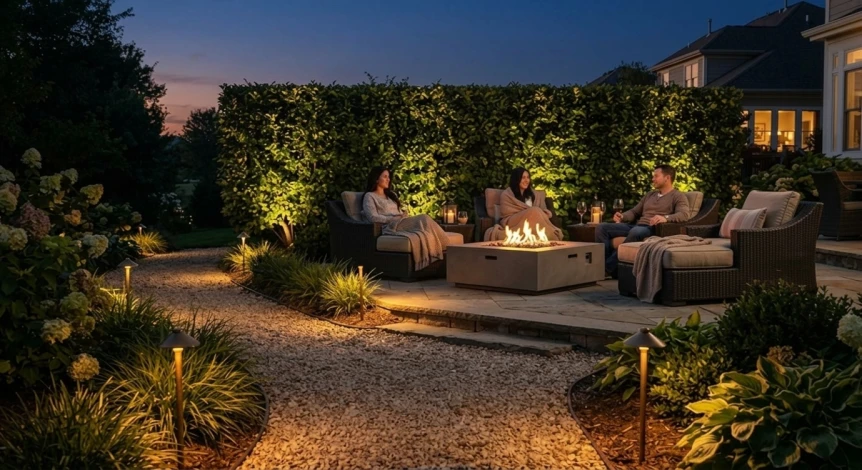
The fire is the light source at the center of the zone, and every other fixture should defer to it. Overhead floods flatten the flame and make the circle feel like a parking lot. Keep supporting light low and warm, around 2700K, in the form of path lights along the approach and a few uplights on the windbreak planting behind the seats.
Put those fixtures on a separate switch or a dimmer so the fire can carry the evening once everyone is seated. The outdoor lighting ideas post covers layering for the whole patio, and the fire pit zone is the one place where less is genuinely more.
Planting follows the same clearance rules as everything else. Nothing resinous or fine textured inside 10 feet, which rules out most conifers and ornamental grasses in the spark zone. Inside the circle, keep to gravel, low succulents, or a heat tolerant groundcover, and let the softer, taller planting form the windbreak outside the clearance. For what thrives in patio conditions and what only looks good at the nursery, see outdoor plants and landscaping ideas for patios.
Common Mistakes in Fire Pit Area Design
- Choosing wood burning by reflex. Wood is romantic, and the effort filter is real. Households that switch to gas almost always report using the area far more often. Be honest about your habits before deciding, not after.
- Placing the fire pit downwind of the seating. One season of smoke in faces is enough to end the habit. Observe the wind across the months you will actually use the patio before the pavers go down.
- Buying a fire pit too small for the circle. A 24 inch pit surrounded by six chairs looks lost and leaves the outer seats cold. Match the diameter to the seating, usually 30 to 42 inches.
- Skipping the foundation. A pit on grass kills the lawn within a use or two and creates a fire risk. Plan a level, heat resistant pad before the fire pit arrives.
- Using folding camp chairs as long term seating. Setting up chairs each evening is the kind of friction that quietly kills use. Permanent seating changes how often the area is used more than any other single decision.
- Forgetting to check local codes. Some jurisdictions restrict fire pit size, fuel type, or proximity to structures, and a few ban open wood fires outright. Check before installing.
- Treating the fire pit as a standalone feature. The zone integrates when it shares materials, palette, and lighting with the dining and lounge areas. As an isolated installation it reads as a separate project, and the indoor outdoor flow design guide explains how to carry those threads from the house all the way out to the fire.
Putting a Fire Pit Area Together
The order I would recommend: pick the fuel type first, based on an honest assessment of how often you will use the area and how much effort you are willing to spend each time. Then choose the placement, with wind direction taking priority over the view. Then size the gathering circle to the number of people you actually entertain, and choose the unit and the seating to fit that circle. Foundation, lighting, planting, and windbreak come last.
The fire pit area that gets used is not the most beautiful one in the catalog. It is the one with the lowest activation cost. A switch on a propane pit takes ten seconds, while building and cleaning up a wood fire takes the better part of an hour. Across a year of evenings that difference compounds into a room that gets lived in or a sculpture that gets looked at.
Pick the type that matches your actual willingness to do the work, not the romance of the habits you wish you had. Then build the rest of the zone around making that fire easy to reach, easy to light, and comfortable to sit beside.
Recommended Resources and Related Guides
The fire pit is one zone in a larger outdoor plan. These guides cover the rest of it, starting with the framework this post sits inside.
- The complete guide to outdoor and patio design. The parent guide: how dining, lounging, fire, and circulation share one patio without competing.
- Best outdoor patio furniture. Frames, fabrics, and finishes that survive weather, and which pieces earn a permanent spot around the fire.
- Outdoor lighting ideas for patios and gardens. Layering path, task, and accent light so the fire stays the focal point after dark.
- Outdoor plants and landscaping ideas for patios. What thrives beside hardscape, and how to plant a windbreak outside the spark radius.
- Modern patio design ideas. Contemporary patios with fire pit zones shown in context rather than in isolation.
- Patio design ideas for every outdoor space. A broader survey of layouts, including where a fire pit fits on a compact lot.
- Small patio ideas. Fitting a fire feature onto a balcony or into a courtyard without crowding the seating.
- Modern backyard ideas. Dividing a larger lot into zones, including when a second, smaller fire circle beats one enormous one.
- Outdoor recovery zones and wellness corners. The quiet counterpart to the social fire circle.
- Indoor outdoor flow design. Carrying materials and palette from the house out to the fire so the zone reads as part of the home.
- Outdoor rugs and textiles. Which fibers tolerate heat and which belong outside the spark radius.
- Outdoor kitchen and dining area ideas. Pairing the fire circle with a cooking and dining zone so the two support each other.
If the patio itself is still undecided, start with the parent framework and come back here once you know where the fire belongs. If the patio is built, the fuel decision above is the one to make this week.
Frequently Asked Questions
How far should a fire pit be from the house?
Most local codes require at least 10 feet of clearance from any structure, and some require 15 or more, so check local rules before choosing a location. For wood burning pits, 15 feet is the practical minimum to keep smoke from drifting into open windows and doors. For propane and natural gas pits, 10 feet usually works. Confirm with the local fire code and your homeowners insurance before installing.
Is wood or propane better for a residential fire pit?
Propane suits most households because the effort of lighting a fire decides how often the area gets used. A wood fire is more atmospheric but requires building, tending, waiting for it to die down, and cleaning up the next day. Propane lights with a switch and turns off when you are ready to go inside. Choose wood only if building the fire is genuinely part of what you want from the evening, or a smokeless double wall steel pit if you want wood without the neighbor problem.
What size fire pit do I need for six people?
For four to six people, a fire pit 30 to 36 inches in diameter is right. For six to eight, move up to 36 to 42 inches. Smaller than 30 inches looks lost surrounded by adult seating and leaves the outer seats cold, while larger than 42 inches loses the intimate feeling. Seats should sit 36 to 48 inches from the fire pit edge, which puts the whole circle at roughly 10 to 12 feet across.
Can I put a fire pit on a wood deck?
With caution, and preferably only a gas unit. Most manufacturers require a heat shield or a mat rated specifically for their fire pit, and a deck closer than the rated minimum clearance will scorch or worse. Read the manufacturer specification and use the recommended protection. Stone, concrete, brick, or gravel are safer foundations and the better long term choice for any fire pit that gets used often.
Can you use a fire pit under a pergola or covered patio?
Under an open beam pergola, usually yes, subject to the manufacturer’s overhead clearance and local code. Under a solid roof, almost never, because heat and venting requirements rule it out for wood, propane, and natural gas. Bio ethanol fire pits are the exception: they need no venting, produce a smaller flame, and are the one type designed for covered patios and balconies.