The Complete Guide to Outdoor and Patio Design

By Tereza Hower | Published March 23, 2026 | Updated October 12, 2026
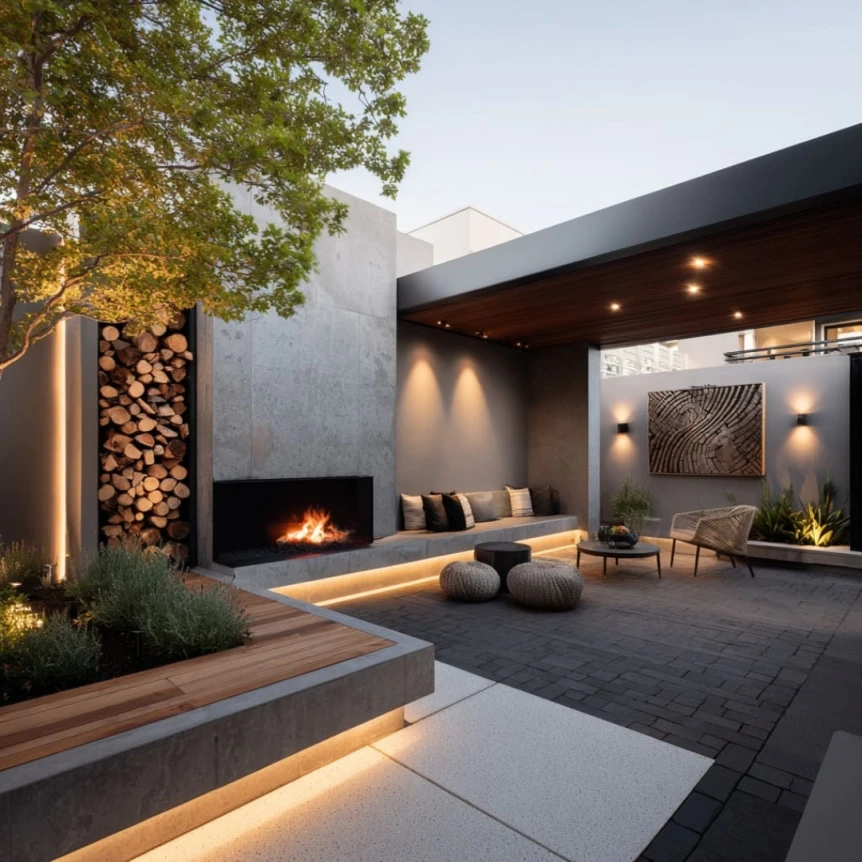
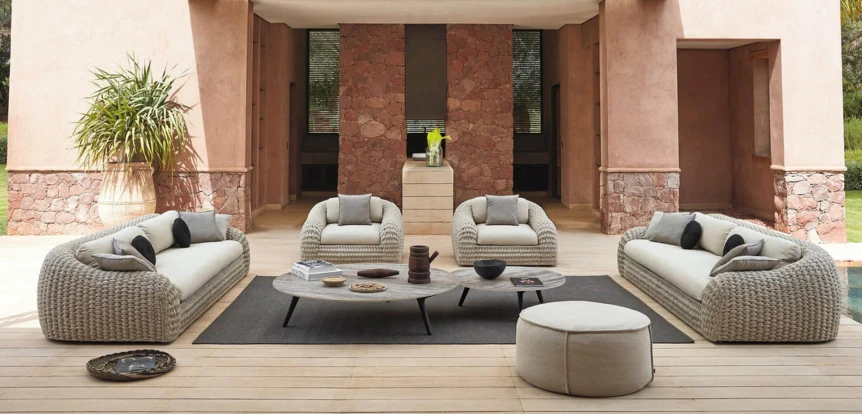
Step out the back door of most houses on a summer evening and the patio tells the same story: a dining set nobody sits at, a grill under a cover, and one wall light that makes everything look flat. Good outdoor and patio design starts by treating that space as a room without a roof, with the same thought given to layout, materials, and light as the living room gets.
The payoff is out of proportion to the effort. A round bistro table for two and one good lounge chair, placed where the evening light falls, will get more use than a dining table for eight chosen for parties that happen twice a summer. Much of this guide follows from that one idea: design for how the space is actually used.
Key Takeaways
- Plan the patio as a room, with zones, a clear path from the house, and one focal point.
- Decide the surface first, because paving and decking are the most permanent and most expensive choices.
- Size furniture to everyday use: a bistro set and a lounge chair beat an eight seat table in most homes.
- Layer the lighting with overhead string lights, low path lights, and one uplit plant or tree.
- Shade, wind screening, and heat decide how many months a year the space gets used.
What’s Covered in This Guide
- What Is Outdoor and Patio Design?
- Types of Outdoor Space
- Planning the Space
- How Much Space Each Zone Needs
- Surfaces and Materials
- Outdoor Furniture
- Outdoor Lighting
- Plants and Landscaping
- Outdoor Dining and the Bistro Shift
- Recovery Zones and Quiet Corners
- Outdoor Kitchens
- Small Patios
- Rugs, Textiles, and Accessories
- Year Round Use
- How to Tell Quality from Cheap
- Common Mistakes
What Is Outdoor and Patio Design?
Outdoor and patio design is the planning of an outdoor living area as a usable room: its layout, surface, furniture, lighting, planting, and shelter. It differs from landscaping, which shapes the wider garden, by focusing on the spaces people sit, eat, and gather in.
Interior rooms get floor plans, material samples, and lighting schemes. Outdoor spaces too often get a trip to a garden center and whatever is discounted at the end of summer, which is why so many feel improvised. A patio planned with the same care as an interior room has a clear purpose, works for the people who use it, and makes the whole house feel larger.
Outdoor rooms also answer to conditions indoor rooms never face: sun, frost, wind, rain, and the way a space changes across the year. Treat those as design inputs rather than obstacles. A patio that works with its climate is more comfortable, and more interesting, than one that tries to imitate a living room outside.
What Types of Outdoor Space Are There?
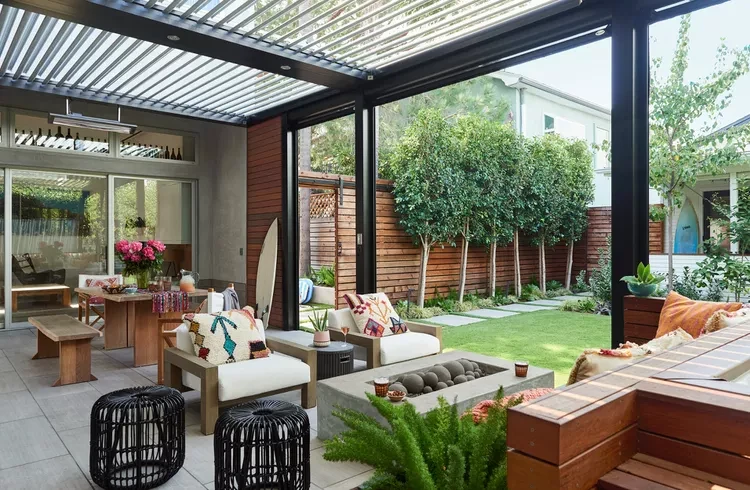
The type of space sets most of the constraints before any furniture is chosen. A balcony has weight and wind limits a ground floor patio never meets, and a deck handles a sloped yard that would need expensive grading for paving. Identify which one you are designing before anything else.
| Space | What it is | Typical surface | Works best for | Main constraint |
|---|---|---|---|---|
| Patio | Paved area at ground level, usually beside the house | Stone, porcelain, concrete, brick | Dining and lounging, heavy furniture | Drainage and a level base |
| Deck | Raised platform of timber or composite boards | Hardwood or composite decking | Sloped yards, warmth underfoot | Board upkeep and structure |
| Balcony | Platform on an upper floor | Tile, decking tiles, concrete | A bistro set and container plants | Weight, wind, building rules |
| Courtyard | Paved space enclosed by walls on three or four sides | Stone, brick, gravel | Privacy and a sheltered microclimate | Shade and limited light |
| Porch | Covered space attached to an entrance | Painted wood, tile, concrete | Sheltered seating in any weather | Depth, often under 8 feet |
Most homes have one primary space and possibly a secondary one, such as a patio off the kitchen and a porch at the front door. Give each one job rather than asking both to do everything. For how a patio connects to the rooms behind it, see indoor outdoor flow design, and for the wider yard, modern backyard ideas.
How to Plan an Outdoor Space
Good planning starts with observation, not shopping. Spend time in the space in the morning, the late afternoon, and the evening. Note where the sun falls, where the wind comes from, which corner feels sheltered, and what the best view is from the house and back toward it.
Then think in zones: a seating zone, a dining zone, perhaps a cooking zone, and a quiet corner for reading. Even a modest patio benefits from two clear zones. In small spaces, a rug, a planter, or the angle of a chair can mark a zone without any wall or step.
Finally, connect the outdoor room to the indoor one. Paving that matches the tone of the interior floor, a seating area aligned with the living room window, and a clear path from the door all make both spaces feel bigger. Keep that path at least 36 inches wide, 48 inches if two people will pass, and free of furniture.
How Much Space Does Each Outdoor Zone Need?
Most patio plans fail on clearance, not style. Furniture that fits the slab can still leave no room to pull out a chair or walk past the grill. Use the footprints below, which include the space people need around each piece, and mark them on the ground with tape or chalk before buying anything.
| Zone | Approximate footprint | Clearance to keep |
|---|---|---|
| Bistro set for two, 30 inch round table | 6 by 6 feet | 24 inches behind each chair |
| Dining for four, 42 to 48 inch round table | 10 by 10 feet | 36 inches behind each chair |
| Dining for six, 72 inch rectangular table | 9 by 12 feet | 36 inches behind each chair |
| Lounge chair with side table | 4 by 4 feet | 24 inches in front for legs |
| Sofa, two chairs, coffee table | 10 by 12 feet | 16 to 18 inches from seat to table |
| Fire pit with seating | 12 to 16 feet across | 3 to 4 feet from fire edge to seat |
| Main path from the door | 36 inches wide | 48 inches where two people pass |
Add the zones you want and compare the total with the space you have. If the numbers do not fit, drop a zone rather than shrinking every one of them; two comfortable zones beat three cramped ones. On a slab under 150 square feet, that usually means choosing between a dining table and a sofa group, not having both.
Which Patio Surface Material Should You Choose?
The surface is the most permanent decision in the project and usually the largest cost, so it comes first. The right choice depends on climate, budget, how the space is used, and how much upkeep is acceptable. The table compares the common options.
| Surface | Look and feel | Upkeep | Hard frost | Relative cost |
|---|---|---|---|---|
| Natural stone | Varied, develops patina | Seal lighter stones against stains | Choose dense stone; some flake | High |
| Porcelain pavers | Uniform, can mimic stone or concrete | Wash only | Excellent | Medium to high |
| Concrete pavers or poured concrete | Plain and modern | Occasional sealing | Good on a proper base | Low to medium |
| Hardwood decking | Warm, silvers with age | Oil yearly or let it weather | Good | High |
| Composite decking | Timber look, consistent color | Wash only | Good; gets hot in full sun | Medium |
| Gravel | Relaxed, free draining | Rake and top up; needs edging | Good | Low |
Natural stone such as limestone, sandstone, slate, and granite remains the most characterful paving. Every piece varies, and the surface gains depth as it weathers. The tradeoffs are cost and care: some stones are slippery when wet, and pale ones stain without sealing.
Porcelain pavers are the practical favorite in contemporary gardens. Outdoor porcelain is usually 20 mm thick, dense, frost resistant, and nonporous, so wine and oil wipe off. Large formats such as 24 by 24 inches mean fewer joints and a calmer surface. The best versions are hard to tell from stone once laid, though they lack its depth up close.
Decking brings warmth that stone cannot. Hardwoods such as ipe, cumaru, and teak can last 25 years or more and silver gracefully if left untreated, while composite boards give a timber look with far less maintenance. Gravel is the underused option: cheap, free draining, and easy to lay around existing plants. Lay it 2 to 3 inches deep over landscape fabric, choose angular stone that locks together rather than round pea gravel, and fit a steel or timber edge to hold it.
How to Choose Outdoor Furniture That Lasts
Outdoor furniture has to survive UV, rain, frost, and heat while still being comfortable. Start with the frame material, then the cushions, then the scale. Get those three right and style becomes the easy part.
Powder coated aluminum is light, rust free, and durable, which makes it the most practical frame for most climates. Teak is the benchmark outdoor timber: dense, naturally oily, and handsome both new and weathered to silver. Woven synthetic wicker has a relaxed look and, unlike natural rattan, can stay outside year round.
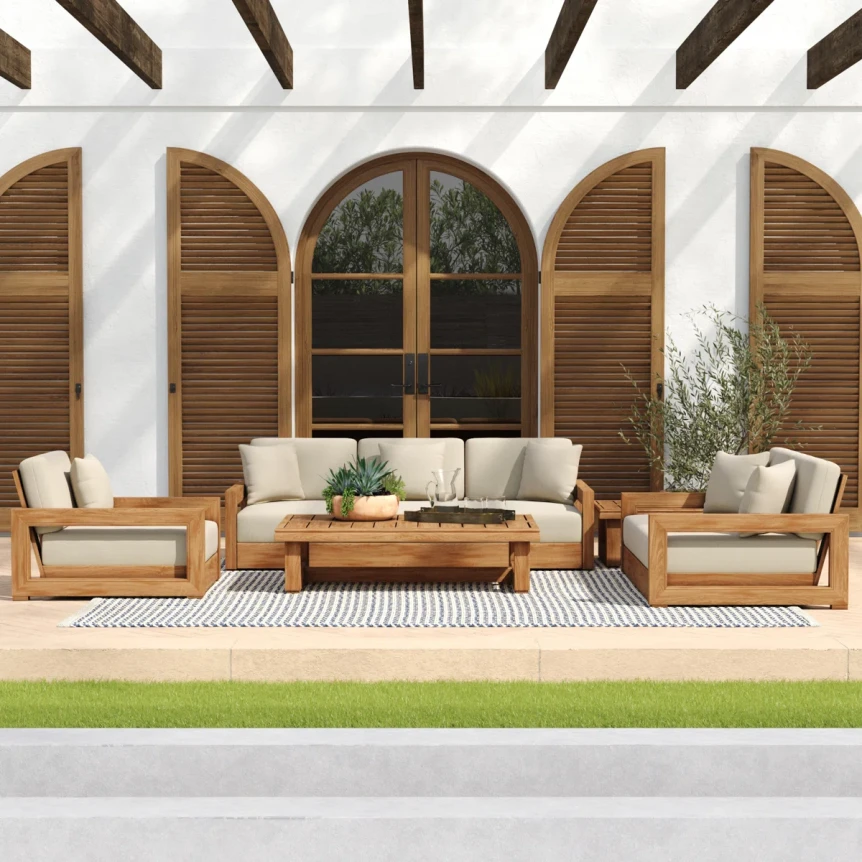
Cushions decide whether a set lasts. Solution dyed acrylic fabric, of which Sunbrella is the best known, is colored through the fiber rather than printed on the surface, so it resists fading for years. Pair it with quick dry foam, which lets water drain straight through instead of soaking the seat for days.
Scale needs more attention outdoors than people expect. A table that looks generous in a kitchen can look lost under open sky, while a sofa sized for a living room may crowd a narrow terrace. Mark furniture footprints on the ground with tape before buying.
Outdoor seats run deeper than indoor ones, often 30 inches or more for a lounge chair, so check depth as well as width. The best outdoor patio furniture guide covers materials, comfort, and price points in detail.
Outdoor Lighting in Layers
Lighting changes a patio after dark more than any other element, and it is the one most often reduced to a single fixture by the back door. The approach is the same as indoors: layers. Ambient light lets people move around safely, task light serves the table and the grill, and accent light picks out plants and textures.
String lights are the most useful single tool. Hung 8 to 10 feet above a seating or dining area, they give a sense of enclosure and warmth for very little money. Choose warm white bulbs around 2700K; anything above 3000K reads harsh outdoors.
Low lights add depth and safety. Path lights spaced 6 to 8 feet apart, step lights, and small bollards mark the route from the door without lighting the whole garden. One uplight under a tree or a large planter creates shadow and movement that overhead light cannot. Our outdoor lighting ideas guide covers fixtures, placement, and wiring.
Plants That Do Structural Work
Plants are the element of an outdoor room that changes most over time, and the one that gives it life. Treated as structure rather than decoration, they provide privacy, soften hard paving, define zones, and filter light.
On a patio, plants work in four ways. Large specimens in generous pots give height and scale, perimeter planting screens neighbors without a tall fence, fragrant plants near seating make the space memorable, and herbs within reach of the kitchen door get used daily. Three large pots, at least 18 inches across, in one material always look more considered than a dozen small ones in assorted finishes. Bigger pots also hold more soil and dry out far more slowly in summer.
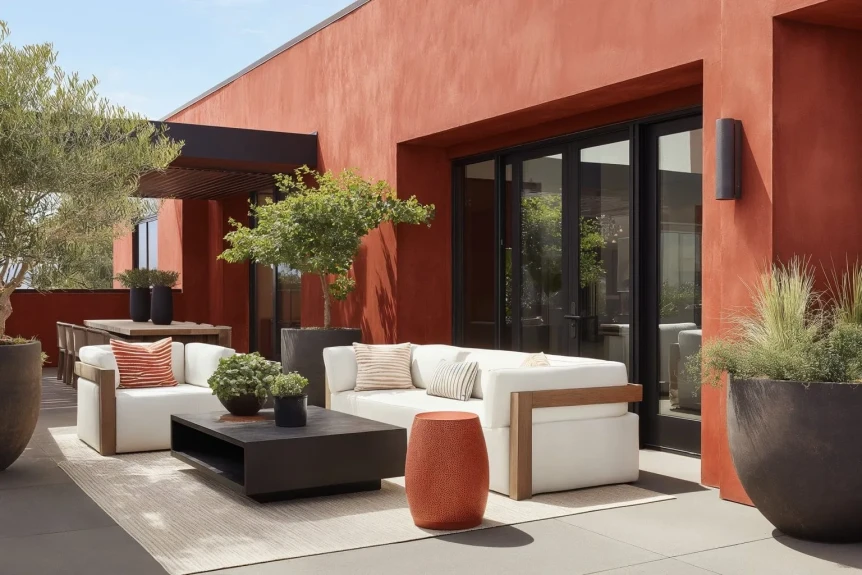
Choose plants for the conditions the space actually has: hours of sun, wind exposure, drainage, and winter lows. Plants suited to their spot establish quickly and need far less care than plants fighting the wrong aspect. The outdoor plants and landscaping ideas for patios guide lists reliable choices by condition.
Outdoor Dining and the Bistro Shift
For years the default outdoor dining setup was a long rectangular table for six to eight, bought for the dinner party that might happen twice a summer. The rest of the time it sat empty, took the visual center of the patio, and made the space feel formal even with nobody at it.
The better approach for most homes borrows from cafe culture: a round table for two or four, a stone topped pedestal table with slim metal chairs, or a small drinks table between two lounge chairs. Dining happens at the scale people actually eat outside, in twos and threes. A bistro table reads as an invitation, so people carry a coffee or a glass of wine out on an ordinary weeknight.
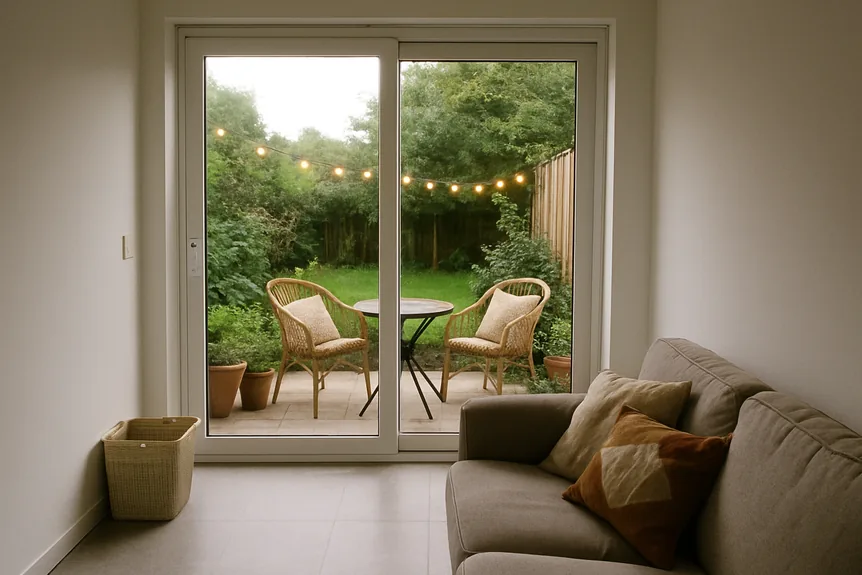
A larger table is still right when the household hosts groups often and the patio is big enough to absorb it. The honest test is habit: if six people did not sit at an outdoor table on at least four evenings last summer, a table for six is aspiration. Whatever the size, give the dining zone its own pool of light, such as string lights centered over the table or a pendant from a pergola beam.
Recovery Zones and Quiet Corners
A recovery zone is a corner of the patio set aside for rest, reading, or napping rather than eating and entertaining. In its simplest form it is one deep lounge chair, a small side table, a large plant, and softer light than the rest of the space.
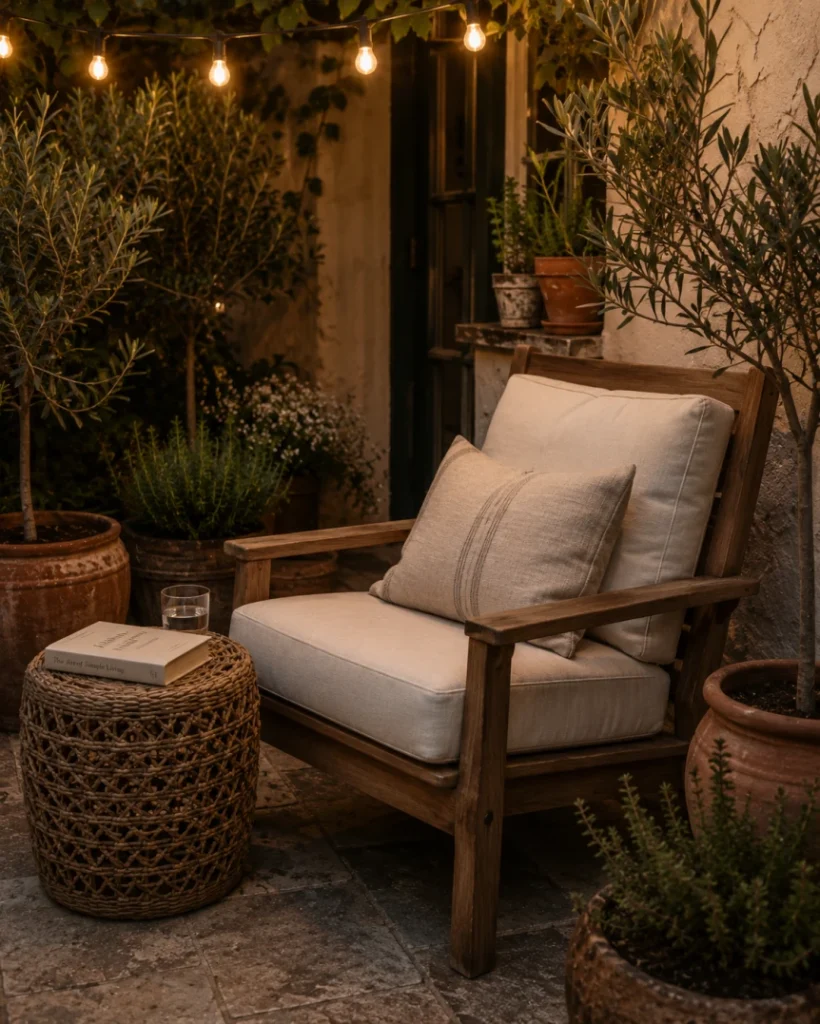
The design rules are separation and restraint. Put it in a corner rather than the middle, screen it with a tall planter or a trellis, and keep it nearly empty. A hammock on a freestanding frame is the low cost version and often becomes the most used seat outside.
At the involved end, some homeowners add a barrel sauna or a cold plunge tub. These need plumbing, power, and a solid base, so they belong in the plan from the start rather than as an afterthought. For layouts and screening ideas, see outdoor recovery zones and wellness corners.
When Is an Outdoor Kitchen Worth It?
Outdoor kitchens range from a grill with a counter beside it to full stations with refrigeration, a sink, and storage. A built in kitchen is worth it when outdoor cooking is a weekly habit through the warm months. If a grill was used fewer than ten times last season, a good freestanding grill and a sturdy side table will serve better.
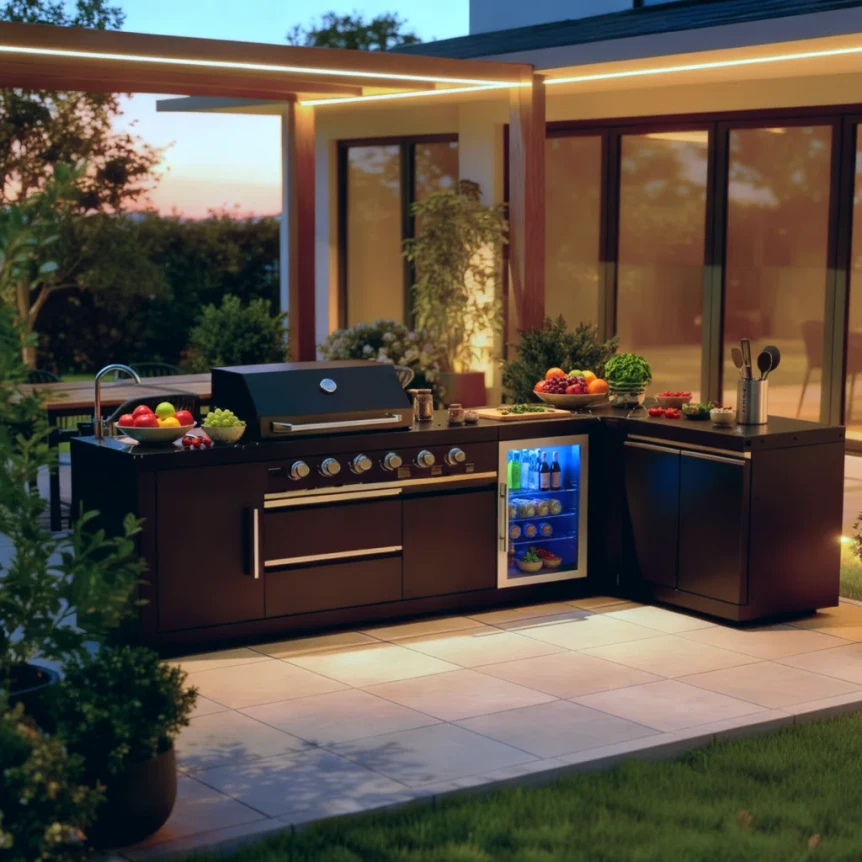
The freestanding route costs less, can be moved into the sun or out of the wind, and gives the patio back when it is not in use. When a built in kitchen does make sense, place it close enough to the indoor kitchen to carry plates, but downwind of the seating so smoke drifts away from guests.
Plan at least 24 inches of counter on each side of a built in grill for landing plates and tools, and a counter height of about 36 inches to match the indoor kitchen. Choose stainless steel, sealed concrete, or porcelain for the counters; tile with wide grout joints stains and cracks outdoors. Run a dedicated outdoor outlet to the station before the counter is built.
Designing a Small Patio
A small outdoor space is a brief with tight constraints, not a lesser version of a large one. Some of the most admired outdoor rooms are compact courtyards and balconies designed with precision.
The first rule is to resist filling it. One seating arrangement, two or three generous planters, and good lighting feel more inviting than the same space packed with chairs, small pots, and accessories. A 30 inch round table for two plus a single lounge chair makes a complete patio in under 80 square feet.
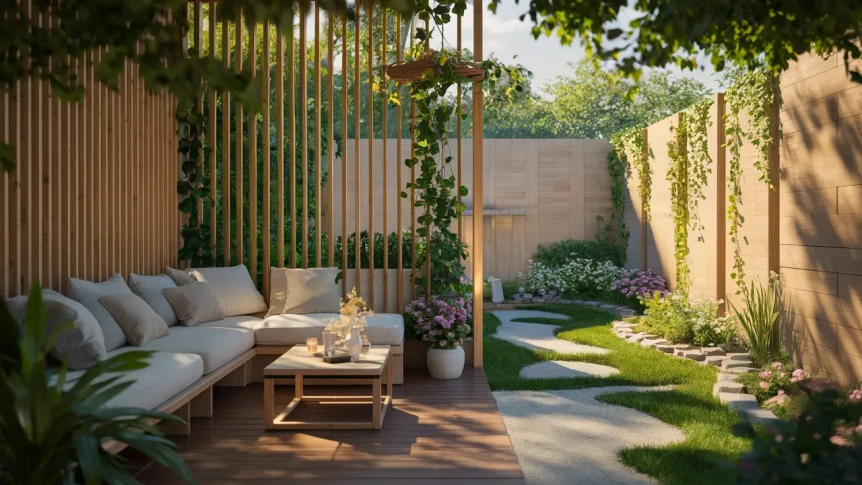
When floor space runs out, use the walls. Climbers on fences, wall mounted planters, a shelf of pots at head height, and lanterns at different levels all add richness without taking floor. The full playbook, with a footprint table, is in small patio ideas that make the most of your space.
Rugs, Textiles, and Accessories
An outdoor rug is the fastest way to make a patio read as a room. It defines the seating zone, softens the surface, and ties separate pieces together. Size it so at least the front legs of every seat rest on it; an undersized rug makes the group look like it is floating.
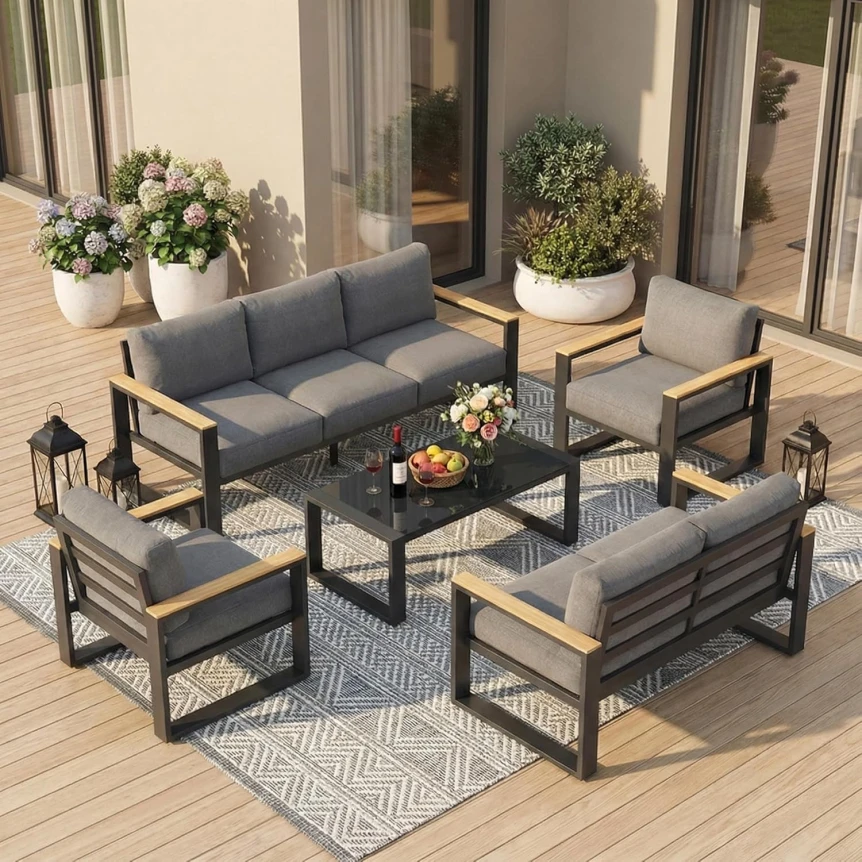
Choose flat woven polypropylene or recycled PET for rugs, and solution dyed fabrics for cushions and throws, since both shrug off sun and rain. Keep accessories few: a pair of lanterns, pots in one finish, and cushions in two or three colors drawn from the paving and planting. The outdoor rugs and textiles guide covers sizes, materials, and care.
How Do You Make a Patio Usable Year Round?
Most patios are pleasant for a few months and abandoned for the rest. Extending the season comes down to three things: shade in summer, shelter from wind and rain in spring and fall, and warmth on cool evenings.
Shade comes from pergolas, shade sails, awnings, and large cantilever umbrellas. A south or west facing patio is often unusable at midday in summer without one. An umbrella canopy should extend about 2 feet past the table edge on every side, and a pergola needs 8 to 10 feet of headroom to feel open. A pergola does the most work, since it defines the main seating zone and carries lights, climbers, and a retractable canopy.
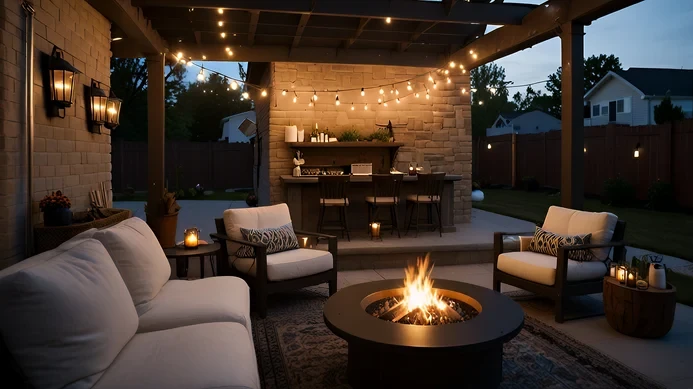
For warmth, infrared heaters warm people and surfaces directly rather than the air, so they keep working in a breeze. A fire pit adds a gathering point as well as heat; the fire pit area design guide covers seating distances and surfaces. Wind screening from dense planting, slatted screens, or a low wall makes a larger difference to comfort than most people expect.
Furniture can now stay out too. Frames built for constant exposure and solution dyed cushions mean many patios stay assembled all year, with cushions brought in only for heavy snow or long wet spells. Storage boxes that double as benches keep cushions dry between uses.
How to Tell Quality Outdoor Furniture from Cheap
Outdoor furniture is where a low price hides the most, because the failures take a season or two to appear. Photos show the shape; the checks below show whether it will last.
| Material | Sign of quality | Sign of cheap |
|---|---|---|
| Aluminum | Fully welded joints, thick even powder coat, solid feel | Bolted joints, thin coat that chips at screws, flex when sat on |
| Teak | Heartwood with tight grain, golden color, mortise and tenon joints | “Teak finish” on another wood, pale sapwood, staples or brackets |
| Synthetic wicker | HDPE strands woven tightly over an aluminum frame | PVC strands that crack in UV, steel frame that rusts inside |
| Steel and iron | Galvanized before coating, heavy enough to stay put in wind | Paint only, rust at welds within a season |
| Cushions | Solution dyed acrylic, quick dry foam, removable zipped covers | Printed polyester, standard foam that holds water |
In person, sit on every seat, press down on the arms, and rock the piece side to side. Turn a chair over and look at the joints and the feet; adjustable plastic glides and clean welds are good signs. A piece that wobbles or creaks on a showroom floor will be worse after a winter outside.
Common Mistakes in Outdoor and Patio Design
The same handful of mistakes turn up again and again, and patios get rebuilt because of them. Every one is cheaper to avoid than to fix.
- Buying the biggest dining table that fits. The table sets the visual weight of the whole patio. Size it to habit, not to the party you might throw.
- Leaving lighting to the end. Plan outlets and wiring runs with the layout, before paving goes down, so fixtures land where they are needed.
- Choosing paving from a photo. Stone and porcelain look different outside than in a showroom. Put samples on the ground for a week and check them wet and dry.
- Skipping the rug. Without one, a seating group looks like furniture stored outside rather than a room.
- Underplanting the edges. A patio with bare boundaries feels exposed. A few large pots or a planted border fix it quickly.
- Overbuilding the outdoor kitchen. A built in kitchen used four times a year takes space a lounge corner would have used every day.
- Forgetting the quiet corner. A patio designed only for entertaining spends most of its life empty.
Where to Go From Here
Sequence matters. Start with the layout and the surface, since those are the most permanent decisions. Then add the structure: furniture, shade, and planting. Finish with the layers that change over time, such as lighting, textiles, and seasonal pots.
Each stage has its own guide. For layouts by size and style, start with patio design ideas for every outdoor space, then follow the links above into furniture, lighting, planting, and textiles as each decision comes up. Design for how the household actually lives: the bistro corner used four nights a week is worth more than the dining table used twice a summer.
Frequently Asked Questions
What is outdoor and patio design?
It is the planning of an outdoor living area as a usable room: layout, surface, furniture, lighting, planting, and shelter. Unlike landscaping, which shapes the whole garden, it focuses on the spaces where people sit, eat, and gather.
Is a patio an outdoor space?
Yes. A patio is a paved outdoor area at ground level, usually beside the house. It differs from a deck, which is a raised platform of boards, and from a porch, which is covered and attached to an entrance.
What should come first when designing a patio?
The layout and the surface. Paving or decking is the most permanent and usually the most expensive decision, and it fixes where furniture, paths, and lighting can go. Furniture, planting, and lighting follow.
Is porcelain or natural stone better for a patio?
Porcelain wins on practicality: it is frost resistant, nonporous, and easy to clean, which suits cold climates. Natural stone wins on character, with real variation and a patina porcelain cannot copy, but it needs sealing and costs more.
Do I need to store outdoor furniture in winter?
Not always. Powder coated aluminum, teak, and HDPE wicker can stay out year round, and solution dyed cushions resist sun and damp. Bring cushions in or box them during heavy snow or long wet spells to extend their life.