Indoor Outdoor Flow Design: How to Make Two Spaces Feel Like One

By Tereza Hower | Published May 14, 2026 | Updated September 7, 2026
The single change that does the most for a patio often happens indoors. Move a tall potted fig tree from a kitchen corner to a spot just inside the back door, lined up with the bistro table outside. The view from the living room sofa then passes through the fig tree to the patio beyond, and the two spaces start to feel like one room with a door between them. It costs nothing and takes ten minutes.
Indoor outdoor flow is the difference between a home with a back door and a home that genuinely lives across the threshold. The principle has been around for decades in California and Mediterranean architecture, but the conversation around it has accelerated as more people work from home, value outdoor recovery time, and treat the patio as a real room rather than an afterthought. This pillar covers what indoor outdoor flow actually means, why a few small moves often beat expensive renovations, how to apply the principle room by room, and the tradeoffs to weigh before committing to a flush threshold or a wall of folding glass.
Key Takeaways
- The cheapest flow moves often beat the expensive ones: one large potted plant in the sight line, one piece of interior furniture rotated to face the doors, matched bulb temperatures.
- The threshold is where flow is won or lost; flush flooring across the boundary is the highest impact single decision when you are building or renovating.
- Slim profile sliding doors deliver about eighty percent of the visual flow benefit of bifold doors at a fraction of the cost.
- Plants are the single best bridging element because they belong equally in both spaces; pair one large interior specimen with one outdoor counterpart in line of sight.
- Continuity is not always the right goal: harsh climates, distant patios, or traditional architecture sometimes call for intentional contrast instead.
What Is Indoor Outdoor Flow Design?
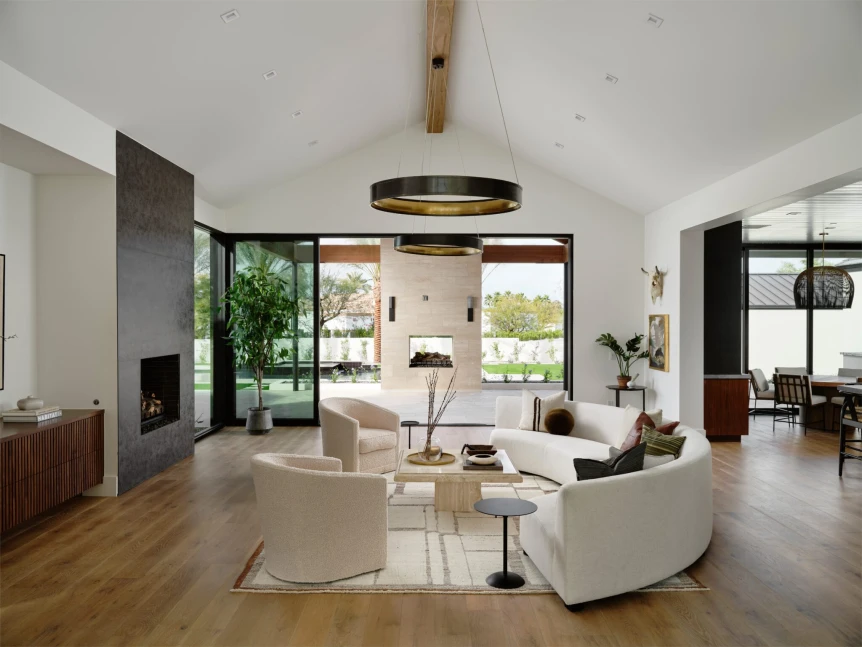
Indoor outdoor flow is the design principle that treats the interior and exterior of a home as one continuous environment rather than two separate worlds. It uses material continuity, aligned sight lines, considered thresholds, and consistent design language to make the boundary between inside and outside feel like a transition rather than a hard break.
The concept does not require knocking out a wall or installing folding glass doors. Some of the most effective indoor outdoor flow is achieved through small, deliberate decisions about flooring transitions, furniture placement, and plant positioning that cost very little but change the perceived size and atmosphere of both spaces significantly. For the broader outdoor design context, the complete guide to outdoor and patio design covers how flow fits within the rest of the patio framework.
Why Does Indoor Outdoor Flow Matter?
A home with strong indoor outdoor flow lives larger than its floor plan suggests. The patio reads as part of the house. The interior rooms borrow visual depth from the garden. The whole property feels more generous, more connected, and more usable.
A home without flow can have a beautiful interior and a beautiful patio that nevertheless feel like separate properties. The threshold reads as a hard line. The transition feels like leaving one room to enter another, with all the friction that implies, and the patio gets used less often as a result. The same physical spaces can deliver dramatically different daily experiences depending on whether the flow has been considered.
The other reason this matters is that flow is achievable in almost every home, regardless of budget or architecture. A 1950s ranch with sliding doors, a modern apartment with a single balcony, and a contemporary home with a glass wall to the garden can all have strong indoor outdoor flow if the principles are applied. The principles are about decisions and alignment, not about expensive structural work.
How Should You Treat the Threshold?
The threshold between indoor and outdoor space is where flow is won or lost. The decisions about flooring transition, door choice, and the height difference between interior and exterior are the most consequential indoor outdoor flow choices in any home.
Continuous flooring across the threshold
The single strongest move is to use a flooring material that visually continues from inside to outside. Large format porcelain pavers exist now in versions designed for both interior and exterior use, with the same color and texture available in both an interior tile and an exterior frost rated paver. Specifying the same product across the threshold creates a visual continuity that the eye reads as one room rather than two.
If matching flooring is not feasible, the next best move is matching tone and material family. Warm wood interior flooring paired with warm wood deck boards outdoors. Bone colored interior tile paired with bone colored exterior pavers. The materials do not need to be identical; they need to read as related rather than contrasting.
Threshold height and drainage
A flush threshold, where the interior floor and exterior surface meet at the same height with no step, is the gold standard for indoor outdoor flow. It is also a real construction project, requiring careful drainage design and waterproofing. The exterior surface needs to slope away from the house and incorporate a linear drain or a small drainage channel at the threshold to prevent water from migrating inward.
If you are renovating or building, specify the flush threshold from the start; retrofitting it later usually requires lifting the exterior surface and reworking the waterproofing. If the existing threshold has a step, work with it rather than against it: align the interior furniture and the exterior furniture to the same level rather than fighting the height difference, and use the step as a deliberate edge rather than something to disguise.
Sliding, French, or Bifold? Which Door Type Wins?
The door between inside and outside matters more than most other architectural decisions in the house. The right answer depends on budget, the existing wall, and how dramatic you want the connection to feel when the door is open. The table below summarizes the four options most worth knowing.
| Door type | Visual flow when open | Relative cost | Construction effort | Best for |
|---|---|---|---|---|
| Slim profile sliding glass | High | $$ | Low to moderate | Most homes; retrofits and new builds alike |
| French doors | Medium | $$ to $$$ | Moderate | Traditional architecture; better airflow control |
| Bifold or accordion | Highest | $$$$ | High; often structural | New builds; indoor outdoor as the architectural centerpiece |
| Pivot or pocket sliders | High to highest | $$$ to $$$$ | High | Architectural statement projects; sleek modern builds |
Slim profile sliding doors deserve their popularity. Modern versions with narrow aluminum or steel frames and oversized glass panes look architectural and disappear visually when open. The older heavy framed sliders that dominated the seventies and eighties read as a barrier even when open and are usually the single biggest upgrade in any older home.
French doors remain the right answer in traditional architecture and in any home where the door has to operate when the patio is being used (the swing of a hinged door is easier to leave partially open than a slider). Bifolds and pivot doors are dramatic when fully open but spend most of their lives closed, and their cost is hard to justify unless the indoor outdoor connection is the architectural centerpiece of the home rather than a nice feature. For most renovations, slim sliders deliver eighty percent of the flow benefit at a fraction of the bifold cost.
How to Design Sight Lines From Inside Out
The view from interior seating to the patio beyond is the single most important indoor outdoor sight line in most homes. Where do your eyes land when you sit on the sofa, work at the kitchen island, or stand at the kitchen sink? If the answer is the back of a fence, a blank exterior wall, or a tangle of unstyled patio furniture, the flow is broken before the door is even opened.
The fix is to design the view deliberately. Position one beautiful object on the patio in the natural sight line from inside: a sculptural planter with a mature olive tree, a single lounge chair styled with a wool throw, a fire pit, or a piece of outdoor art. Then arrange the interior furniture so that sight line is preserved when you sit down. A sofa positioned to face the back wall instead of the back doors breaks the connection; a sofa angled toward the doors, or placed perpendicular so the view is to one side, restores it.
Take the fig tree from the intro as a working example. Moving it from a corner where it was barely visible to a spot in the direct sight line between the living room and the patio created a layered view: foreground (fig tree) to middle ground (bistro table on patio) to background (planted fence beyond). The eye reads this as depth, and the depth makes both spaces feel larger. The same logic scales: any tall, generous object placed in the foreground of the sight line creates the same effect.
Material Continuity Between Spaces
Beyond the flooring, the materials of furniture, planters, and accents should share a family between indoor and outdoor zones. A walnut dining table inside and walnut deck furniture outside speaks one design language. A walnut dining table inside and white plastic patio furniture outside speaks two.
The principle does not require identical pieces; it requires shared material vocabulary. Warm wood inside and out. Linen and natural fibers crossing both zones. Ceramic and terracotta as the continuous planter material. Matte black or warm brass as the consistent metal finish. When the materials repeat, the eye reads continuity even when the specific pieces differ.
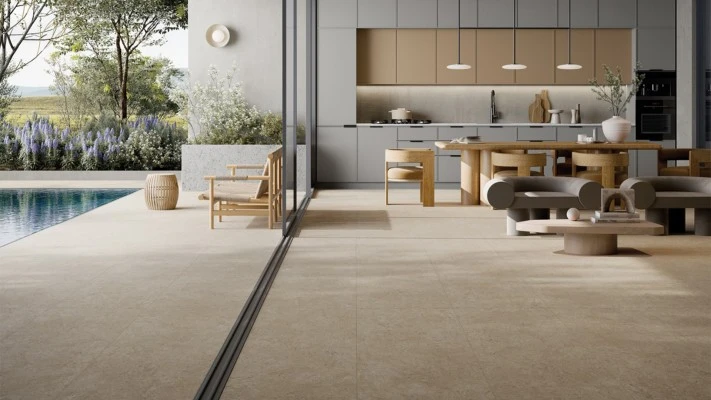
The same logic applies to color palettes. A warm neutral interior paired with a warm neutral patio reads as one home. The same interior paired with a moody dark patio creates a tonal shift at the threshold that fights the flow. For more on how palette decisions work across styles, the Japandi guide, the Scandinavian guide, and the minimalist guide all cover palette logic that translates directly to outdoor spaces.
How Should Lighting Cross the Boundary?
Lighting is one of the most underused tools for indoor outdoor flow. After dark, an interior lit at 3000K and a patio lit at 4000K creates a visible tonal break at the threshold. Match the bulb temperatures across both spaces, ideally in the 2700K to 3000K warm range, and the two zones read as one continuous environment at night.
The other lighting move that works: a single visible fixture (a pendant, a wall sconce, or a lantern cluster) positioned on the patio in the sight line from inside. After dark, that fixture becomes the visual anchor that extends the eye from the interior room outward, and it makes the patio feel like it is part of the lit interior rather than the dark exterior. For the full outdoor lighting layering principle, see the outdoor lighting ideas guide.
A small detail that compounds the effect: dimming the interior lights at the same percentage as the patio lights in the evening. A bright interior next to a dim patio reads as two disconnected zones; both spaces dimmed together read as one continuous room at end of day. Smart bulbs and matched dimmers make this easier than it sounds.
Which Furniture Choices Bridge Indoor and Outdoor?
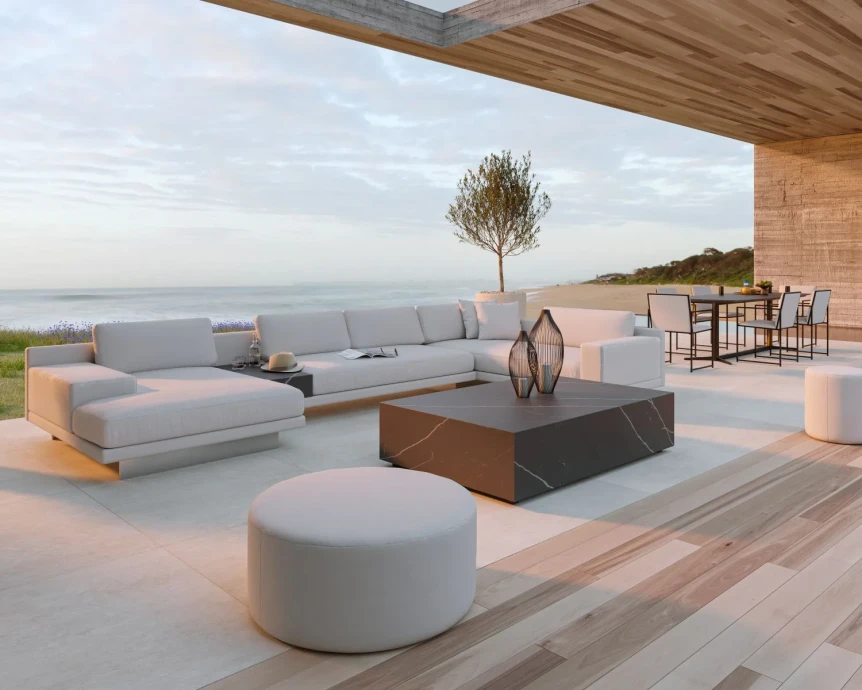
Outdoor furniture has improved so much over the last decade that some of it now reads as residential rather than patio specific. Deep seat teak lounges with linen looking cushions, modern bistro tables with marble tops, and well finished outdoor sectionals all share visual DNA with interior furniture. Choosing outdoor pieces that look like outdoor versions of your interior furniture, rather than obviously different patio furniture, reinforces the flow.
The reverse also works. A few interior pieces positioned to be visible from outside (a beautiful table lamp on a console near the back door, a piece of art on the wall opposite the patio) create the same bidirectional sight line. The relationship works both ways; designing for both views simultaneously is what flow means in practice. For the specific outdoor furniture choices that earn their place, see best outdoor patio furniture and modern patio design ideas.
One contrarian note on rugs: an outdoor rug under the patio dining table, in the same tonal family as the interior rug just inside the door, is one of the cheapest and most underused flow tools. The eye reads the two rugs as related anchors and groups the spaces visually. See outdoor rugs and textiles for the specific material and weave choices that hold up over years of outdoor use.
Why Plants Are the Best Bridging Element
Plants are the single best bridging element between indoor and outdoor space because they belong equally in both. A large potted olive tree, fig tree, or fiddle leaf fig positioned just inside the back door creates a visual transition that softens the architectural boundary. Outside, the same plant family in a complementary pot continues the gesture.
Three plant moves consistently strengthen flow: one large specimen indoors near the door, one large specimen outdoors aligned with it, and a fragrant climbing plant near the threshold so the scent crosses the boundary when the door is open. Jasmine, honeysuckle, or star jasmine trained near the door fills the interior with garden scent on summer evenings in a way that genuinely makes the two spaces feel like one.
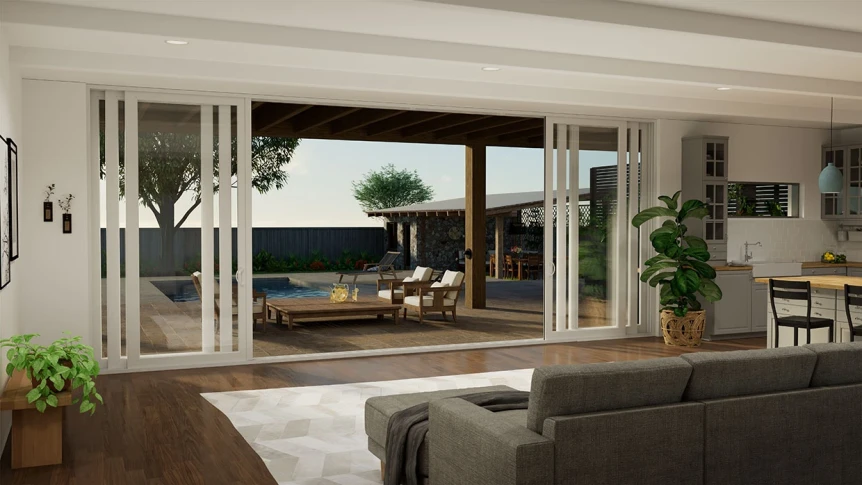
The outdoor plants and landscaping ideas guide covers plant selection for the exterior side. For interior plant selection, the principle is the same: choose mature, generous specimens in beautiful pots rather than collections of small plants in mismatched containers. One large fig tree in a substantial terracotta vessel reads as deliberate architecture; six small plants on a shelf read as clutter, no matter how loved each one is.
How Does Indoor Outdoor Flow Work Room by Room?
The principle is universal, but the practical moves shift depending on which interior room the patio connects to. The three most common adjacencies are the living room, the kitchen or dining, and the primary bedroom.
Living room to patio
The most common and the most rewarding adjacency. The sight line from the sofa to the patio is the dominant view, so the patio styling and the interior furniture orientation matter most here. Angle or rotate the sofa toward the doors, place one styled object on the patio in line of sight, and treat the threshold as the room’s fourth wall rather than a back wall.
Kitchen or dining to patio
The kitchen sink and the dining table are the two interior anchor points where you spend long stretches of time facing outward. If the sink has a window above it with a view to the patio, design the patio styling for that specific view. If the dining table sits near the back doors, treat the outdoor dining setup as a continuation of the interior table, with similar lighting heights and matched tonal palettes.
Bedroom or office to patio
A bedroom or office that opens to a small private patio (or a balcony) is one of the most underused adjacencies. The flow moves here are quieter: a single beautifully styled chair outside the door, a planted screen for privacy, soft warm lighting that matches the interior at night. The space gets used for morning coffee, an afternoon break, or an end of day decompress more than people expect when it is set up well.
Tradeoffs Worth Thinking Through
Every flow decision is a trade. Naming the costs in advance keeps you from accepting a flow upgrade that becomes a daily problem.
Flush thresholds versus weatherproofing
A flush threshold is the strongest visual flow move and the highest risk waterproofing detail in a home. Done well, it is invisible; done badly, it leaks. If you are committing to a flush threshold, budget for the linear drain, the proper slope on the exterior surface, the membrane work, and either an experienced contractor or an architect to detail the assembly. Cutting corners here is the single most expensive mistake in indoor outdoor flow construction.
Open doors versus climate control
The flow only activates when the doors are actually open. In a hot, humid summer or a cold winter, the energy cost of holding the doors open for hours is real. The practical compromise is shoulder season use: spring evenings, summer mornings, autumn afternoons. Treat the year as having a flow season and a closed door season, and design both views (open and closed) so the space works in either mode.
Connection versus privacy
An open patio in a dense neighborhood feels less private than a closed interior room. The flow that pulls the inside out also pulls the outside in, including views from neighboring properties. Plan the planted screening, the fence height, and the specific zones that need full visual privacy before committing to an open threshold; otherwise the flow gets undermined by the curtains you end up keeping closed.
When Continuity Is the Wrong Goal
Indoor outdoor flow is not universally the right ambition. Some homes are built around a stronger contrast between inside and outside, and trying to force continuity into them produces an awkward middle ground that fights both spaces.
The honest signals that flow may not be your goal: the architecture is genuinely traditional with small windows and clearly delineated rooms, the climate is harsh enough that the indoor and outdoor seasons are fundamentally different, the patio is far enough from the main living areas that flow is not visually possible, or you actively want the patio to feel like an escape from the interior. Any of these is a legitimate reason to keep the two spaces distinct, with stronger thresholds and more contrast rather than less.
The best version of contrast is also intentional. A moody interior paired with a bright airy patio, or a minimal interior paired with a lush garden, can both work. The principle is design with intent rather than design by accident.
What Are the Most Common Indoor Outdoor Flow Mistakes?
- Mismatched flooring at the threshold. Dark wood inside meeting light beige tile outside creates a hard line that breaks flow. Either match the materials closely or commit to a deliberate contrast as a design choice.
- Furniture positioned to face away from the doors. A sofa facing the back wall ignores the patio entirely. Rotate or angle interior furniture so the outdoor view is part of the visible scene from the seat.
- Bulb temperature mismatch. Warm interior lights and cool exterior lights create a visible break at night. Match the Kelvin across both spaces.
- An empty patio in the sight line. A bare slab visible from the living room reads as a missing room. Even one beautiful planter or one lounge chair styled deliberately changes the entire view.
- Cheap exterior furniture that looks like exterior furniture. Plastic chairs and resin tables read as compromises. Outdoor furniture has improved enough that residential looking pieces are available at almost every price point.
- Closed doors as the default. If you keep the back doors closed by reflex, the flow never has a chance to work. Make a habit of opening them in good weather; the act of opening the door is the act of activating the flow.
- Forgetting the air side of the threshold. A jasmine or honeysuckle trained near the door brings garden scent indoors. Without it, the connection is only visual; adding the sensory layer makes the flow feel real rather than just looking right.
- Designing for the wide open view and ignoring the closed view. The doors are closed more than they are open. The view through closed glass should still feel composed; a patio that looks lovely framed by an open bifold but messy through a closed sliding door is a half-finished design.
Putting Indoor Outdoor Flow Together
The cheapest path to indoor outdoor flow is also the most underused. Move one large potted plant into the sight line between the interior seating and the patio. Rotate one piece of interior furniture to face the doors. Add a styled object on the patio in the natural view from inside. Open the doors when the weather is good. Match the bulb temperatures. None of these moves requires a renovation; together they change the entire experience of the home.
If you are building or renovating, push the flow further. Specify matching flooring across the threshold. Choose slim profile sliding doors over older heavy framed alternatives. Plan a flush threshold rather than a stepped one. Plant the bridging specimens at the same time as the interior plants. The structural decisions made during construction set a ceiling on how strong the flow can ever be.
For the broader outdoor framework, return to the outdoor and patio design framework. For applications of the principle to specific outdoor zones, see the contemporary patio playbook, outdoor recovery zones, fire pit area design, and small patio ideas for compact yards.
Frequently Asked Questions
Do I need to renovate to achieve indoor outdoor flow?
No. The cheapest moves are often the most effective. Moving one large potted plant into the sight line between interior seating and the patio, rotating one piece of furniture to face the doors, matching bulb temperatures across both spaces, and adding one styled object on the patio in the view from inside together change the entire experience of the home without any construction. Renovation decisions like flush thresholds and matching flooring raise the ceiling, but the basics work in almost any home.
What is the single most important indoor outdoor flow decision?
The sight line from interior seating to the patio. Where your eyes land when you sit on the sofa or stand at the kitchen sink determines how strong the flow feels. Position one beautiful object on the patio (a mature potted tree, a sculptural planter, a single lounge chair styled deliberately) in the natural sight line, and arrange interior furniture so that view is preserved. Everything else builds on this foundation.
Are bifold doors worth the cost?
For some homes, yes. They genuinely transform the connection between inside and outside when open and create the most dramatic threshold available. But they are expensive, often require structural work, and the visual benefit is incremental over slim profile sliding doors at a fraction of the cost. For most homes, modern slim profile sliders deliver about eighty percent of the flow benefit at twenty percent of the cost. Bifolds make sense when the indoor outdoor connection is the architectural centerpiece of the home, not just a nice feature.
Can I design indoor outdoor flow in a small apartment or balcony?
Yes, and balconies are actually one of the best applications of the principle because the small scale forces precision. Use a continuous flooring material if you can specify it (outdoor rated tile that matches the interior), position one beautiful plant on the balcony in the sight line from the main interior seat, hang a wall mounted fixture outside that is visible from inside at night, and keep the door open when weather permits. The same principles scale down.
What if the patio is not visible from any interior room?
Then indoor outdoor flow in the strict sense is not your design priority. The patio still benefits from its own internal design coherence, and the home still benefits from the patio being well designed, but the visual continuity principle does not apply. The honest move is to treat the patio as a destination rather than an extension, and design accordingly. A patio reached by walking through a hallway or down a staircase can be a beautiful surprise rather than a continuation.
Where to Read Next
For the patio side of the flow, see modern patio design ideas, outdoor recovery zones, and best outdoor patio furniture. For the broader backyard context, see modern backyard ideas. For the interior style direction that translates most naturally outdoors, see the Japandi guide or the minimalist design guide. For the full outdoor framework, the complete guide to outdoor and patio design is the place to start.