Mid-Century Modern

By Tereza Hower | Published March 12, 2026 | Updated August 14, 2026
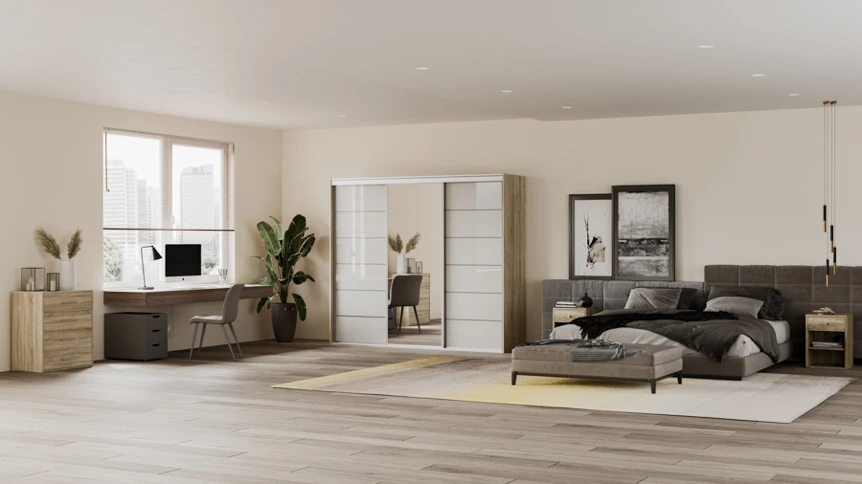
There is a direct relationship between storage and atmosphere in a bedroom. The best bedroom storage ideas are not the cleverest products; they are the ones that match what you actually own, fit the room’s bones, and stay easy to use after the first month. A room slightly short on storage slowly fills with objects that have nowhere to go, and that accumulation erodes the restful quality of the space more than almost any other design issue.
This guide covers the storage solutions that work best in modern bedrooms, how to think about storage before you buy anything, and the habits that keep a well organized bedroom looking its best over time.
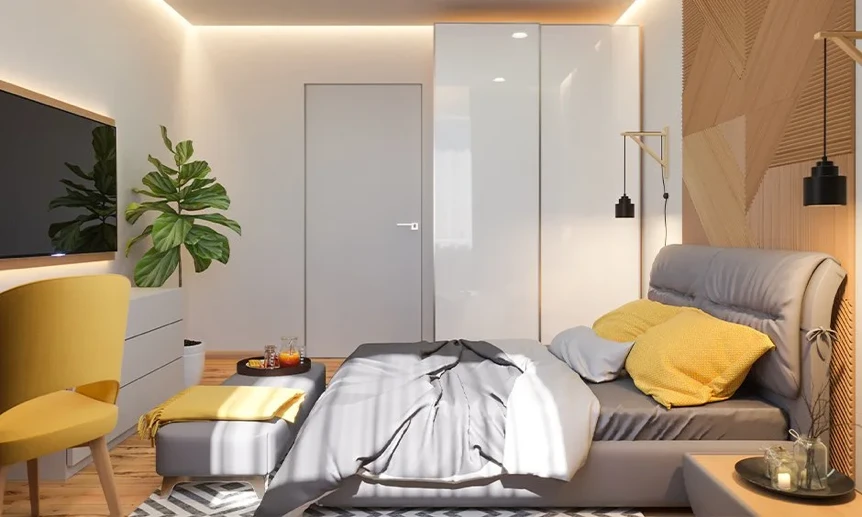
Smart bedroom storage is the set of solutions that matches what you actually own, fits the architecture of the room, and stays easy to use over the long term. The principle is not about owning more storage furniture; it is about choosing storage that absorbs the items you already live with so the surfaces of the room can stay clear.
Three things separate the storage that works from the storage that does not. It has to match the inventory you actually own rather than a generic guess. It has to sit close enough to where you use the items that putting them away takes seconds, not minutes. And it has to read as part of the room rather than as added bulk, because storage furniture that competes visually with the rest of the bedroom undermines the calm it is supposed to create.
The most common storage mistake is buying solutions before understanding what you actually need to store. This leads to wardrobes that are the wrong configuration, dressers with too many small drawers for the items you own, and under bed boxes that get filled with things you forget about until you move house.
Before making any storage decisions, take stock of what needs to live in the bedroom. Clothing is the obvious category, but think also about bedding, books, charging cables, personal care items, bags, shoes, accessories, and anything else that tends to land in the bedroom. Break these down roughly by how frequently you access them: daily items need to be easily reachable, seasonal or occasional items can go in deeper or less convenient storage.
The audit also tells you what kind of storage you need. A wardrobe full of folded clothing needs drawer space. A wardrobe mostly of hung items needs long hanging rails. A significant shoe collection needs dedicated shoe storage rather than a general shelf. The configuration only becomes obvious once you have counted what you own.
If budget and circumstance allow, built in wardrobes are the single most effective storage upgrade you can make in a bedroom. They use the full height and width of a wall without the visual interruption of freestanding furniture, they can be configured precisely for what you own, and their flush fronts contribute to the clean, uncluttered aesthetic that defines modern bedroom design.
The key decisions in a built in wardrobe are the external design and the internal layout. Externally, flat panel doors with integrated handles or push to open mechanisms read as most modern. A single consistent finish, whether painted, wood veneer, or lacquered, makes the wardrobe feel like part of the room rather than a piece of furniture in it. Internally, a mix of hanging space, shelving, and deep drawers tends to work best for most people, but the earlier audit is what tells you the precise ratio.
Floor to ceiling wardrobes are worth the extra effort if your ceiling height allows. Using the full height eliminates the awkward gap at the top that collects dust and clutter in standard height wardrobes, and it makes the room feel taller and more architectural.
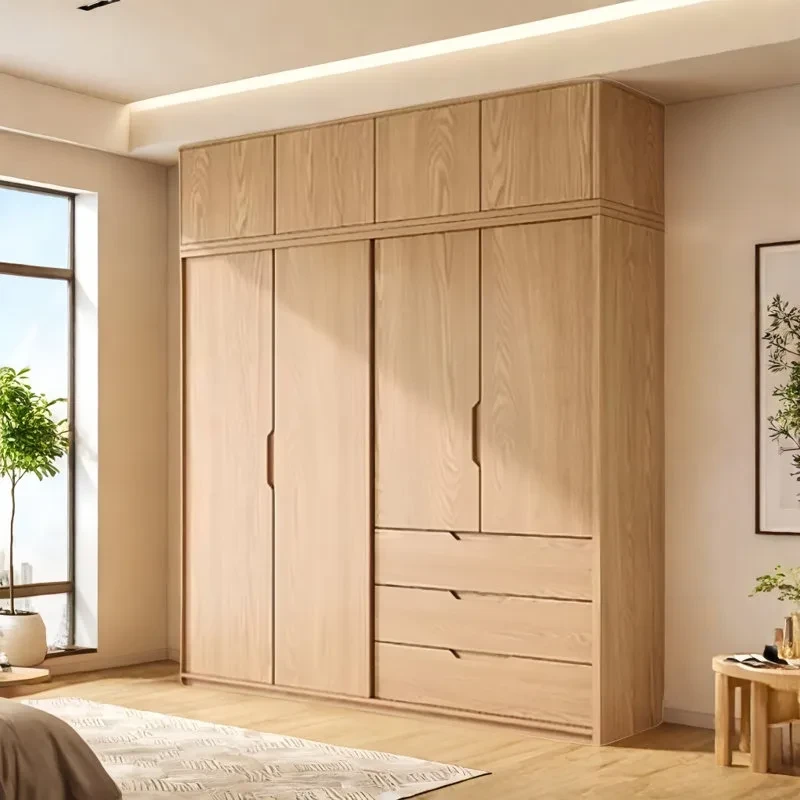
For renters, or for anyone whose room is not ready for a built in project, a well chosen freestanding wardrobe can do a very good job. The key is to choose pieces that are proportional to the room, have a clean and simple profile, and are placed thoughtfully rather than wherever there is space.
Avoid wardrobes with overly decorative fronts, heavy handles, or complex grain patterns in the veneer. These tend to date faster and compete with the rest of the room for visual attention. A simple matte finish in white, warm gray, or a natural wood tone will outlast any trend and work with a wider range of room palettes.
If you are buying multiple pieces, keep them in the same finish or within the same material family. A white wardrobe next to an oak dresser next to a dark brown chest can make a room feel like it was furnished on impulse rather than with intention. Consider using an alcove if your room has one; a wardrobe fitted into an alcove sits more quietly in the room than one placed on an open wall, and it makes better use of the architectural features of the space.
The space beneath the bed is one of the most valuable and most wasted storage opportunities in the bedroom. In a standard double bed with a reasonable gap between the base and the floor, there is enough space for a meaningful quantity of items you need occasionally but not every day: spare bedding, seasonal clothing, extra pillows, suitcases.
The most seamless way to use this space is a platform bed with integrated drawers. Drawer storage beneath the bed is invisible from most of the room, keeps contents dust free, and makes the space genuinely easy to access. The drawers are typically on the sides of the bed and pull out along the length, which means you need clear floor space alongside the bed to open them.
If your current bed does not have integrated storage, low profile rolling boxes or shallow open topped boxes on casters work well. Clear or labeled boxes are more practical here than opaque ones: you want to be able to find things without unpacking everything. Avoid storing items under the bed without any container; it inevitably turns into a dusty chaos of forgotten things.
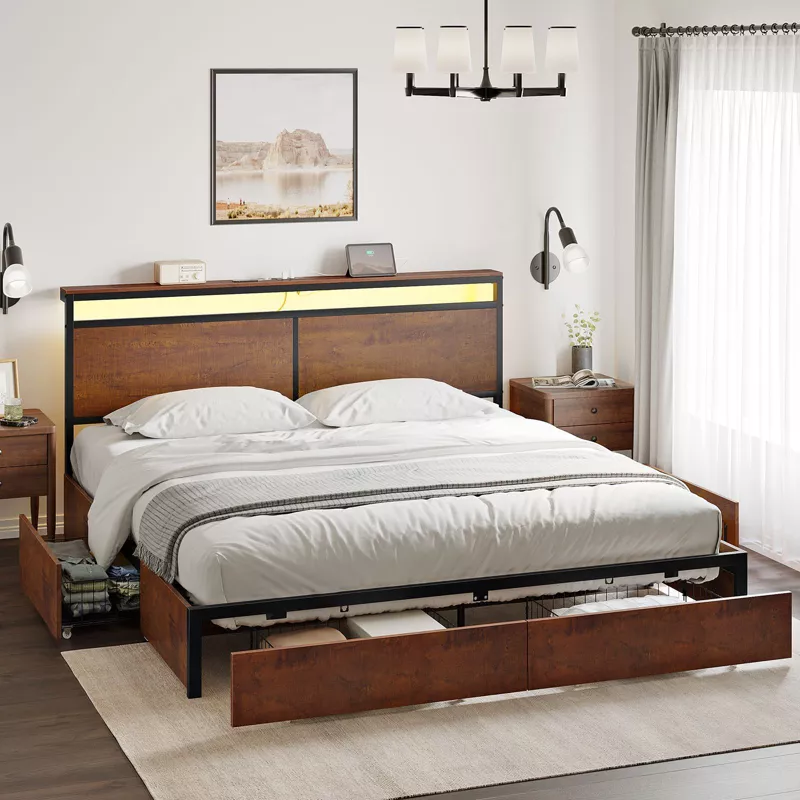
A nightstand with at least one drawer makes a meaningful difference to how the area around your bed looks and feels. The drawer becomes a home for the small items that would otherwise accumulate on the surface: phone chargers, reading glasses, lip balm, painkillers, the book you are halfway through. Surface clutter is particularly noticeable in a bedroom because the nightstand sits at eye level when you are lying down.
If your nightstands do not have drawers, a small tray on the surface creates at least a visual boundary for items and stops them from spreading. It is a lower tech solution but surprisingly effective at maintaining a sense of order.
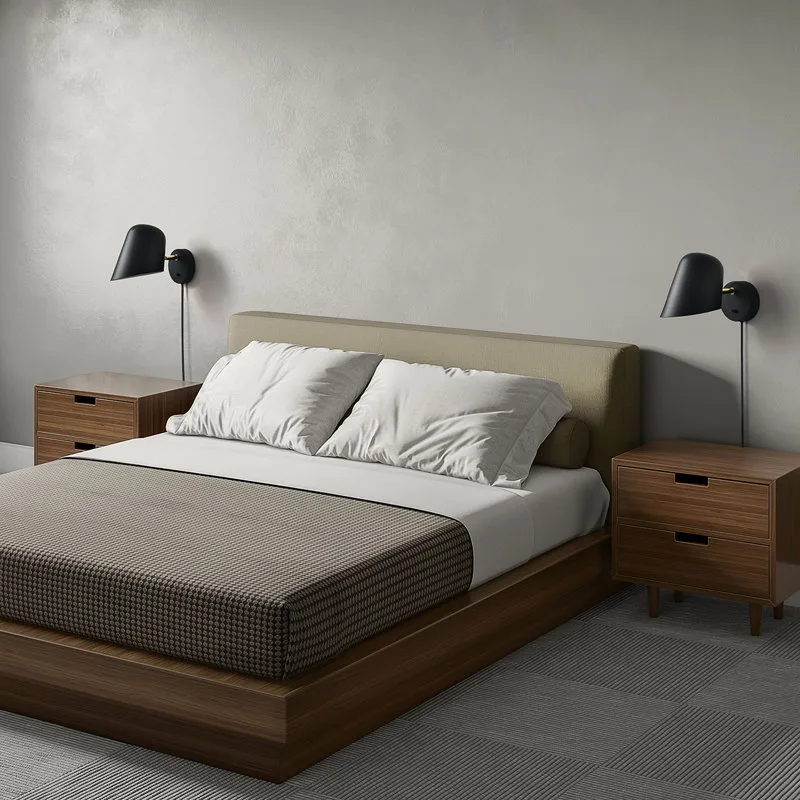
Open shelving in a bedroom can look beautiful and also become chaotic very quickly. The difference between a shelf that contributes to the room and one that undermines it is almost entirely about what goes on it and how it is maintained.
The most successful open shelving in modern bedrooms tends to be limited in quantity (a single floating shelf above the nightstand, a small bookcase in a corner) and curated in what it holds. A few books, a plant, a candle, and perhaps one personal object is about the right density for a shelf in a bedroom. Beyond that, it starts to feel like storage rather than styling.
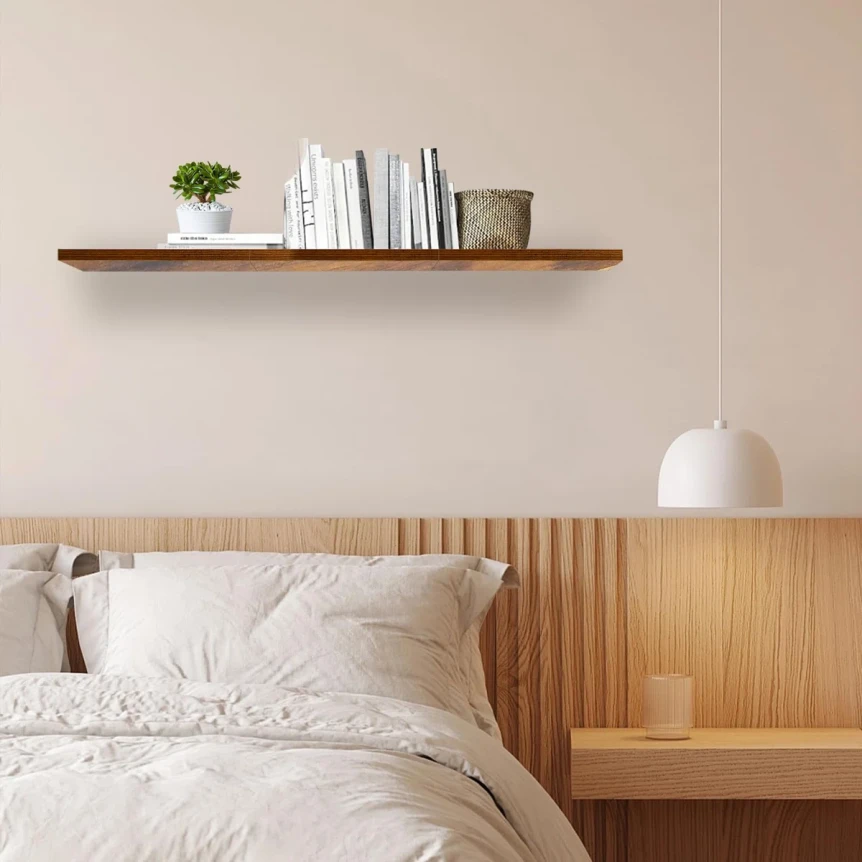
If you find that open shelving reliably becomes cluttered, closed storage is simply the better choice for your lifestyle and there is nothing wrong with that. A beautiful wardrobe with the doors closed is always preferable to an open shelf that is slowly filling up with things that have nowhere else to go.
No storage system, however well designed, works without the habit of returning things to their place. This sounds obvious but it is where most bedroom storage falls short: the system is there but the habit of using it is not quite automatic.
The most useful thing you can do is make sure every item in the bedroom has a specific home that is convenient enough to actually use. If putting something away requires more than a few seconds of effort, it will not happen consistently. The closer the storage sits to where you use the item, the more reliably it gets used.
A regular ten minute edit of the bedroom surfaces, once a week is plenty, resets the room and prevents the slow accumulation that is much harder to reverse once it takes hold.
For most rooms, a built in wardrobe that uses the full height and width of one wall. It absorbs more inventory than any freestanding alternative, configures to what you actually own, and contributes to the clean uncluttered look that defines modern bedroom design. If a built in is not possible right now, a platform bed with integrated drawers is the second most impactful single piece because it converts the under bed space from waste into real storage.
Do the audit first. Count your hung items, your folded items, your shoes, and any specialty categories like coats or sportswear. Most people end up needing more drawer space and fewer shelves than the default wardrobe configuration provides. Once you know the inventory, the ratio of hanging to drawers to shelving becomes obvious and you can either specify a built in to those numbers or choose a freestanding piece that already matches.
Yes, with one caveat: it has to be containerized. Items stored loose under the bed accumulate dust and become forgotten within months. Clear or labeled rolling boxes, shallow open topped boxes on casters, or a platform bed with integrated drawers all work. The space is best used for occasional items (spare bedding, seasonal clothing, suitcases, extra pillows) rather than daily use items.
Almost always. Open shelving rewards discipline and punishes the slightest accumulation. If you know yourself well enough to keep a shelf curated to a few books, a plant, and a candle, open shelving can read beautifully. If your honest assessment is that shelves become catch alls within weeks, closed storage is the right answer and a beautiful wardrobe with the doors closed is always preferable to a cluttered open shelf.
Returning items to a specific home every time. The system only works when putting something away takes a few seconds rather than several minutes, which means the storage has to sit close to where the item is used. Pair the system with a regular ten minute weekly reset of the surfaces and the bedroom stays calm without any heroic effort.
Once your storage is sorted, these guides will help you complete the rest of the room: best modern bedroom furniture for the desk, dresser, and bed-side pieces; how to design a minimalist bedroom for the underlying restraint principle; small bedroom design ideas for compact rooms; modern bedroom color schemes that actually work for the palette that supports calm storage; modern bedroom lighting for the layered light plan; and how to choose the right bedroom rug for the soft layer underfoot. For the complete bedroom design roadmap, read the complete guide to modern bedroom design.