Modern TV Stands & Entertainment Centers: A Buying Guide

By Tereza Hower | Published March 9, 2026 | Updated September 18, 2026
The TV stand is the piece of furniture customers spent the most time agonizing over at Hower Furniture, and the one they came back to return most often. Not because the pieces themselves were bad, but because nearly everyone got the proportions wrong. They bought to fit the TV instead of the room, ended up with something either swallowing the wall or floating awkwardly under a 65 inch screen, and within a month they were calling about a swap.
This guide is built around the questions I answered most often on the showroom floor. Sizing math, quality cues, material trade offs, and the mistakes I watched repeat over and over. If you have already worked through our sideboard buying guide, a lot of the construction logic carries over, but TV stands have their own set of rules worth knowing.
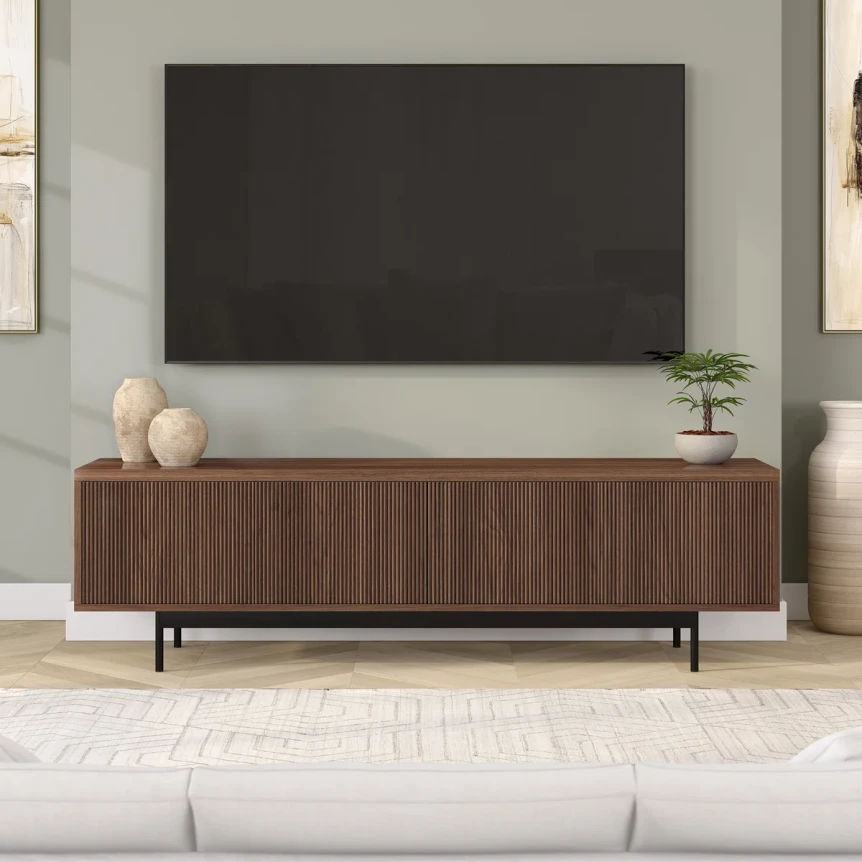
What Makes a TV Stand Modern
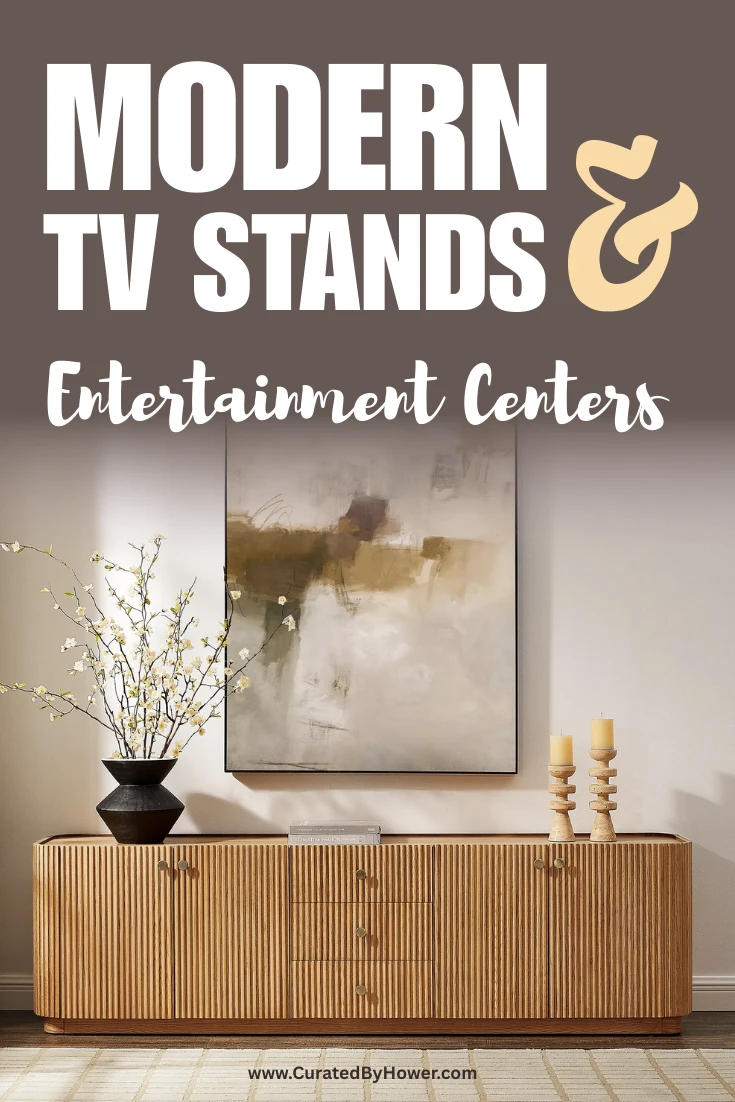
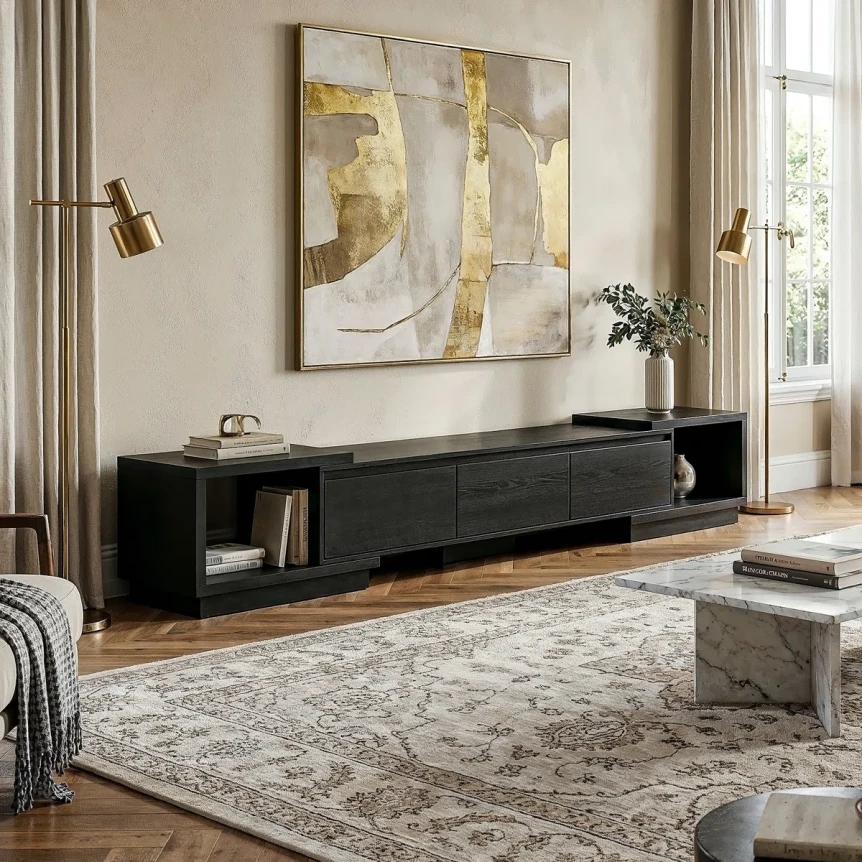
A modern TV stand reads as one quiet horizontal line, not a piece of furniture loaded with features. Look for a low silhouette (usually 18 to 26 inches tall), a flat front with minimal hardware, and a long uninterrupted top surface. Materials run toward white oak, walnut, or matte black metal. Anything with bowed glass doors, beveled trim, or a shiny lacquer finish belongs to a different decade.
The other thing that separates modern from traditional is the storage logic. Older entertainment centers treated electronics like trophies to display behind glass. Modern stands hide the electronics in closed cabinets and use the open shelves for books, ceramics, or a small lamp.
Sizing: The Numbers That Actually Matter
This is where most TV stand purchases go sideways. The width of the stand should always be driven by the room and the wall, not the TV alone. Use the TV size as a minimum, then go up from there based on the wall.
- 43 to 50 inch TV: stand minimum 50 inches wide, ideal 55 to 65 inches
- 55 to 65 inch TV: stand minimum 65 inches wide, ideal 70 to 80 inches
- 70 inch and larger TV: stand minimum 80 inches wide, ideal 84 to 96 inches
The general rule I’d give customers: the stand should be at least 6 inches wider than the TV total, and ideally close to two thirds the length of the wall it sits against. A 65 inch TV on a 66 inch stand looks like a snowboard balanced on a stump. The same TV on a 78 inch stand reads as intentional.
TV Height and Viewing Distance
Center the TV at seated eye level, which is roughly 42 inches from the floor for an average sofa. That means a 55 to 65 inch TV pairs best with a stand that is 22 to 26 inches tall. Anything taller and you are looking up at the screen, which gets uncomfortable after about twenty minutes.
For viewing distance, sit between 1.5 and 2.5 times the screen’s diagonal away from the TV. A 55 inch TV reads best from 7 to 11 feet. If you are closer than that, a smaller TV will actually look sharper and more cinematic.
How to Tell a Quality TV Stand From a Cheap One
The price tag lies. A $1,400 TV stand from a glossy direct to consumer brand can be hollow particleboard with a vinyl print, while a $700 piece from a less hyped manufacturer can be solid oak. Check these four things on the showroom floor or, if you are buying online, in the product specs.
Tap the top. A solid wood top makes a low, dense thunk. A hollow core or composite top makes a higher, lighter sound. The top is the one surface that will be loaded with weight (a 65 inch TV plus a soundbar can be 60 plus pounds), so this matters more than anywhere else on the piece.
Look at the back panel. Quality stands have a real plywood back, often with cutouts for cable routing rather than a thin hardboard panel stapled on. The thickness should be at least 1/4 inch. Thinner than that and the case will rack within a couple of years of being moved or having weight on top.
Pull the drawers and check the doors. Drawers should ride on full extension metal glides and open with one finger. Cabinet doors should swing on adjustable European hinges, not surface mounted hinges. Soft close mechanisms are a nice signal that the maker is paying attention to the parts customers don’t see.
Lift one end. A quality 70 inch stand in solid oak should weigh 90 to 130 pounds. If two people can carry it like an empty laundry basket, the case is mostly air and laminate.
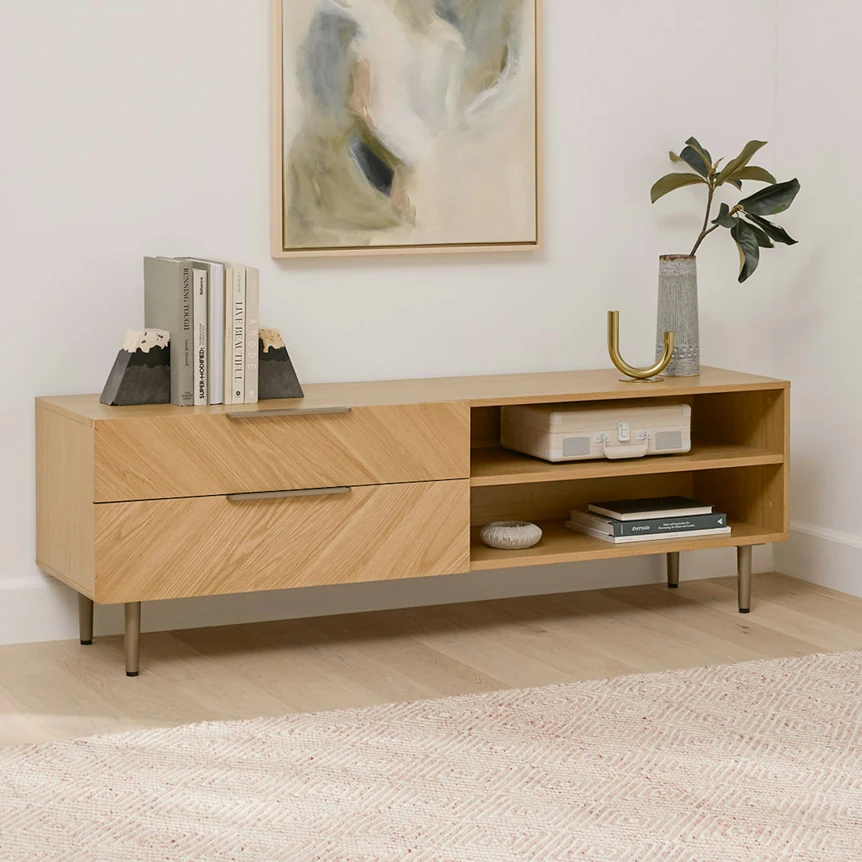
Modern TV Stand Styles
Minimalist Wood Stands
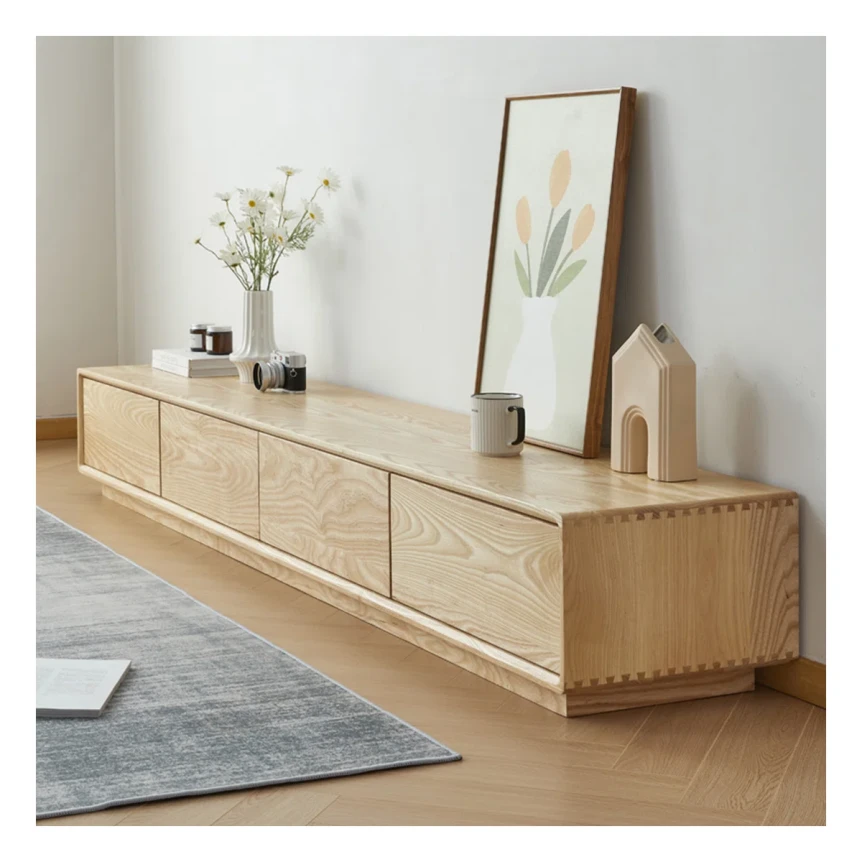
The category that will age best. White oak or walnut, two to four flat front cabinets, a low profile silhouette, and almost no visible hardware. These work in nearly any modern interior and they don’t pull focus from the rest of the room. Best paired with TVs up to about 65 inches, since wider screens need a more substantial base.
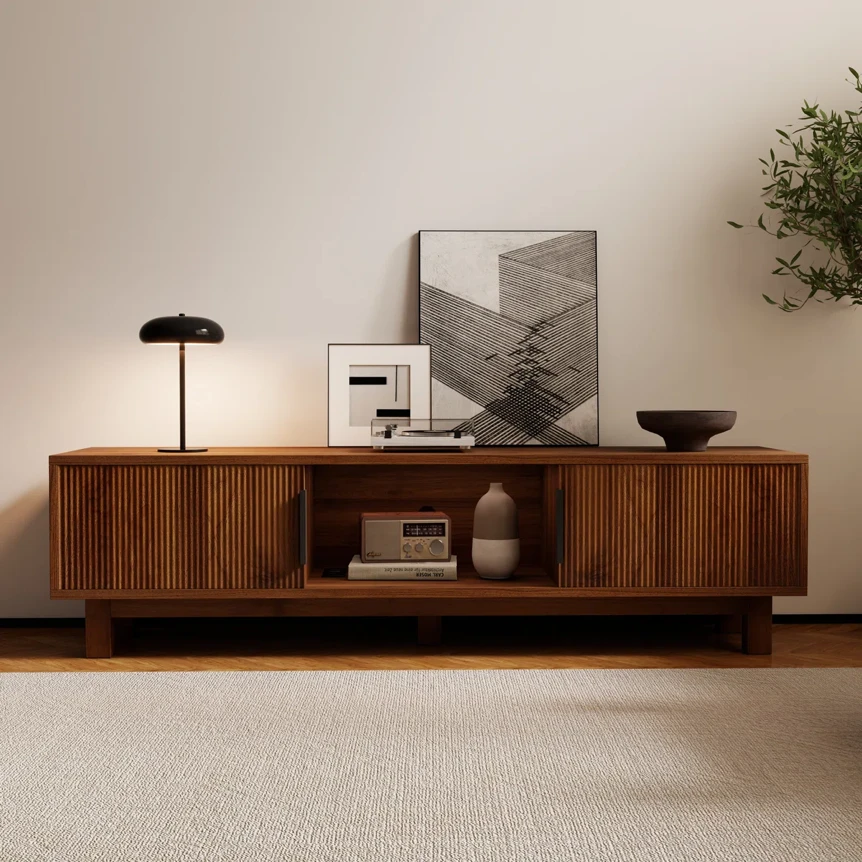
Mid Century Modern Stands
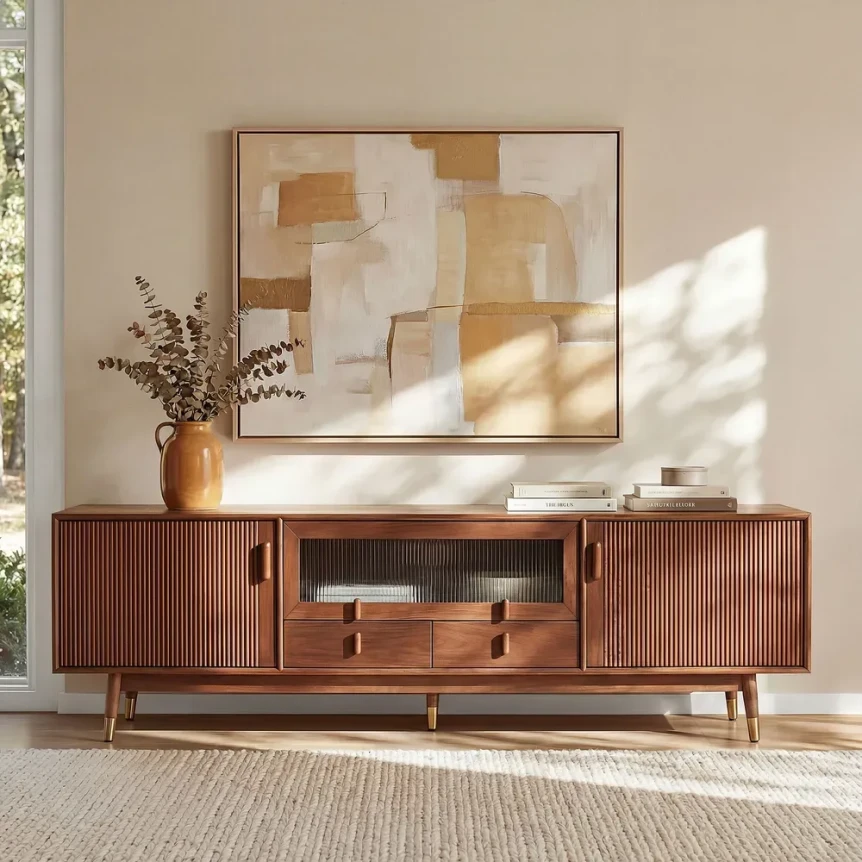
Tapered legs, walnut or teak veneer, and a slightly raised silhouette that lets you see the floor under the piece. The taller leg height (often 6 to 9 inches) makes a room feel more open, which is why these work well in apartments under 1,000 square feet. The trade off is less interior storage. If you have a lot of media gear, this style will fill up fast.
Industrial Stands
Black metal frame, wood or reclaimed wood shelves, often more open than closed. They suit loft spaces and rooms with exposed brick or concrete elements, but they look out of place in soft, layered interiors. Industrial stands also collect dust faster because the open shelving leaves everything exposed.
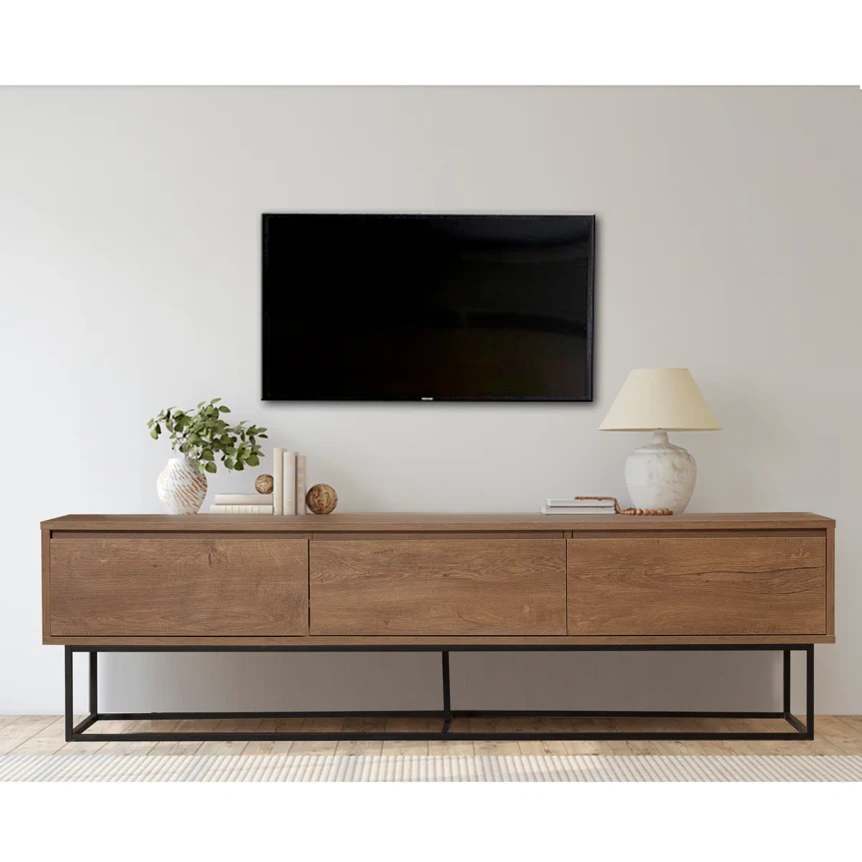
Full Entertainment Centers
Long, low units (84 to 96 inches) with substantial closed storage. The right answer if you have a 75 inch or larger TV, a soundbar, a gaming console, and a stack of board games to hide. Wrong for a small apartment, since they will visually consume the room. Look for at least one section with adjustable shelves, which lets you size the cabinet around whatever component is taking up the most space.
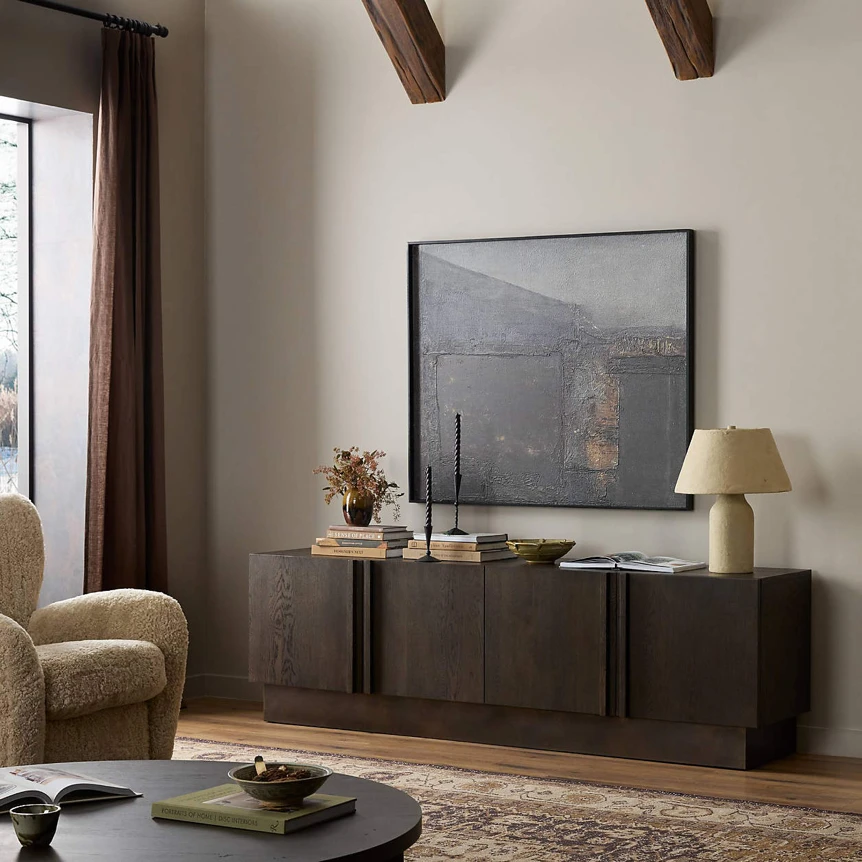
Floating TV Stands
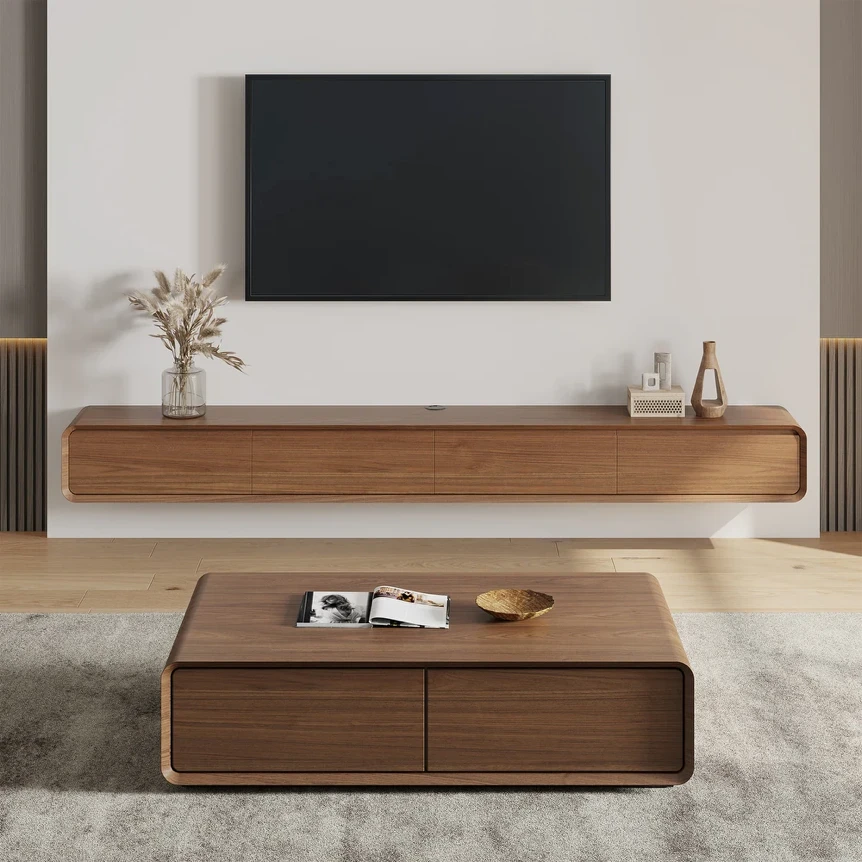
Wall mounted, no legs touching the floor. The look is sleek and the floor stays visible, which makes a small room read significantly larger. The trade off is real: installation requires hitting wall studs, the weight capacity is usually capped around 100 pounds, and you cannot rearrange the room without patching drywall. I’d only recommend a floating stand if you are confident in your final layout.
Materials, Ranked by Longevity
Solid white oak is the safest bet. It takes light or dark stains, dents less than walnut, and looks intentional in nearly every modern style. Expect to pay $900 to $2,500 for a quality solid oak stand and to keep it for fifteen plus years.
Solid walnut is the more refined option, especially for mid century and warm modern rooms, but it is softer and shows wear faster. A walnut top will pick up rings and scratches if you set drinks or hot mugs on it.
Wood veneer over plywood is the honest middle ground. Real wood face, stable engineered substrate, fraction of the price of solid wood. Just confirm the substrate is plywood, not MDF. MDF veneers chip at the edges and cannot be sanded or refinished.
Particleboard with vinyl wood print is what most sub $400 stands actually are. They photograph well and survive a few years in a stable environment, but they swell if exposed to even mild humidity, the print peels at corners over time, and they cannot be repaired. Fine for a starter apartment, not worth buying twice.
Glass and metal combinations look striking in renderings and showrooms but they show every fingerprint and dust particle. I steered most customers away from them unless they specifically wanted a high contrast industrial look.
Cable Management That Actually Works
Bad cable management is what makes an otherwise beautiful stand look cheap. The fix is mostly about planning rather than gear.
- Buy a stand with a cable cutout in the back panel. If the piece you love doesn’t have one, a 1.5 inch hole saw and a rubber grommet take ten minutes to install.
- Put a single power strip inside one cabinet. Run all components into that one strip. One cord exits the back of the stand, not five.
- Use velcro ties, not zip ties. Zip ties are permanent. Velcro lets you swap a soundbar or console without rebuilding the whole bundle.
- Skip in wall cable channels unless you are wall mounting the TV. They are overkill for a TV that sits on a stand and the patching is harder than the marketing suggests.
What Most People Get Wrong
Three patterns I watched on the showroom floor every week.
They buy a stand to fit the TV, not the wall. A 65 inch TV looks balanced on a 78 inch stand under a 12 foot wall. Drop that same combination in front of an 8 foot wall and the TV reads as crowded. Always measure the wall first and let that determine the stand width. The TV is just the minimum.
They mount the TV too high. The most common showroom question was “should I mount it above the fireplace?” The answer is almost always no. A TV mounted above a typical fireplace mantel sits at 55 to 65 inches center, which forces you to tilt your head up for hours of viewing. Eye level seated is 42 inches. Stay close to that.
They overstyle the open shelves. Three objects per shelf, maximum. A short stack of books, one ceramic, and one trailing plant is a complete vignette. Five mismatched objects fighting for attention is what makes a stand look chaotic in photos. The TV is already a strong visual element; the rest of the styling should be quiet.
Styling the Stand
The TV draws the eye whether you like it or not, so the goal is to keep the rest of the composition restrained enough that the stand reads as a piece of furniture and not a TV pedestal.
On the top surface, flank the TV with one element on each side: a small plant on the left, a ceramic vase or table lamp on the right. Asymmetry works better than mirroring. On the open shelves below, stick to the rule of three: one stack of horizontal books, one decorative object, one piece of greenery, repeated across the shelves with variation.
Adding artwork above the TV is an option but a tricky one. Frame TVs in the Samsung Frame style work because the TV becomes the art when off. A standard black slab below traditional artwork rarely lands. If you want art in that wall zone, lean a piece on the stand surface beside the TV instead of hanging anything above it.
For broader living room layout decisions, our guide to timeless living room staples covers how a TV stand fits alongside the rest of your anchor pieces, and the cozy living room styling guide works through layered styling in detail.
When to Choose a Sideboard Over a TV Stand
A common move in modern living rooms is to use a sideboard as a media console. It works, but only if a few conditions are met.
Check the height first. Sideboards run 30 to 36 inches tall, which puts the TV center too high for most sofas. If your sofa is taller than 34 inches at the seat back, a sideboard can work. If you have a low slung modern sofa with a 28 inch back, the TV will sit uncomfortably above eye level.
Then check ventilation. Sideboards rarely have wire passthroughs or ventilated cabinets, which means a closed cabinet can shorten the lifespan of a cable box, gaming console, or AV receiver. The fix is to leave the cabinet doors slightly cracked when components are running, or to drill a vent grille into the back panel. If you are leaning toward a sideboard for its looks, our sideboard buying guide walks through exactly this conversion.
Frequently Asked Questions
How wide should my TV stand be for a 65 inch TV?
At minimum 65 inches, but the better answer is 70 to 80 inches. The stand should be at least 6 inches wider than the TV total, with about 3 inches of breathing room on each side. If your wall is over 10 feet long, lean toward the wider end so the stand doesn’t look stranded.
What height should a TV stand be?
Aim for the center of the TV to land at 42 inches off the floor when seated, which is the average eye level on most sofas. For a 55 to 65 inch TV, that translates to a stand height of 22 to 26 inches. Anything taller and you’ll be looking up at the screen for hours, which gets uncomfortable fast.
Is a floating TV stand worth it?
Only if you are confident in your final room layout and you have a wall with accessible studs where you want to mount it. Floating stands make small rooms feel larger because the floor stays visible, but installation is permanent in a way a regular stand isn’t. The weight capacity is also lower, usually around 100 pounds, which limits how much gear you can store.
Can I use a sideboard as a TV stand?
Yes, but check two things. First, the height: sideboards typically run 30 to 36 inches tall, which works for taller sofas but puts the TV uncomfortably high if you have a low slung modern sofa. Second, ventilation: sideboards rarely have factory wire passthroughs or vented cabinets, so closed components like cable boxes can overheat over time. A cable cutout and a small vent grille fix the second issue.
What is the best wood for a TV stand?
Solid white oak is the most durable and the easiest to live with across modern styles. It dents less than walnut, takes both light and dark stains, and holds up to the weight of a TV plus soundbar without sagging. Walnut is the better choice for a more refined mid century look, but it shows wear faster. Avoid solid pine, which is too soft for the surface to stay smooth, and avoid laminate prints if you want the piece to last more than five years.
The Bottom Line
The right TV stand is the one you stop noticing after a week. Solid case construction, a width that matches the wall (not just the TV), and a height that puts the screen at seated eye level will get you most of the way there. Skip the trends. A low profile white oak or walnut stand has aged well for sixty years and will keep aging well long after any direct to consumer brand has changed its name.
For the broader room around it, our complete guide to modern living room design covers how the stand fits alongside the rest of your anchor pieces. If you’re still working through accent pieces, the modern side tables and accent furniture guide is the natural next read, and our modern living room lighting guide covers the layered lighting that makes the space feel finished.