Best Entryway Console Tables: A Buyer’s Guide

By Tereza Hower | Published February 28, 2026 | Updated September 7, 2026
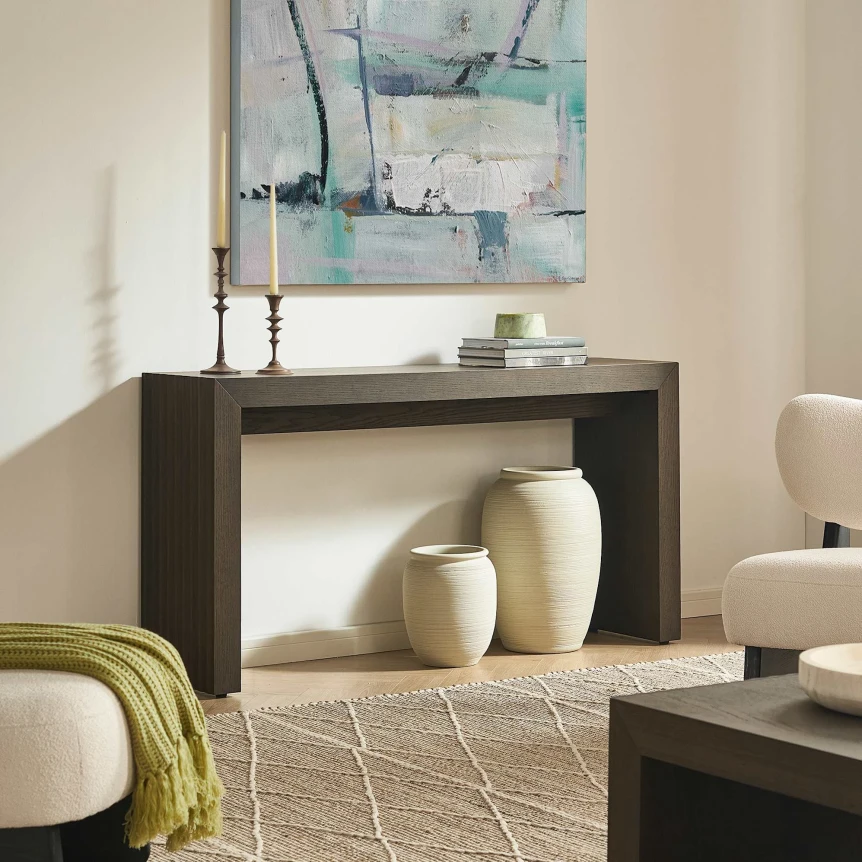
The best entryway console tables are rarely the ones that photograph best. A console is the most public piece of furniture in the house, the first thing every visitor sees, and the one most often bought for its silhouette rather than its measurements. That is why it is so often bought twice: the first one is the wrong width for the wall, the storage turns out to be decorative, or the wood tone fights the floor.
This guide is about the decisions underneath the purchase: how to size a console for its wall, which storage configuration actually clears hallway clutter, and how to tell a table that lasts fifteen years from one that sags in three. The modern entryway design guide covers the room as a whole; this is the deep dive on its anchor piece.
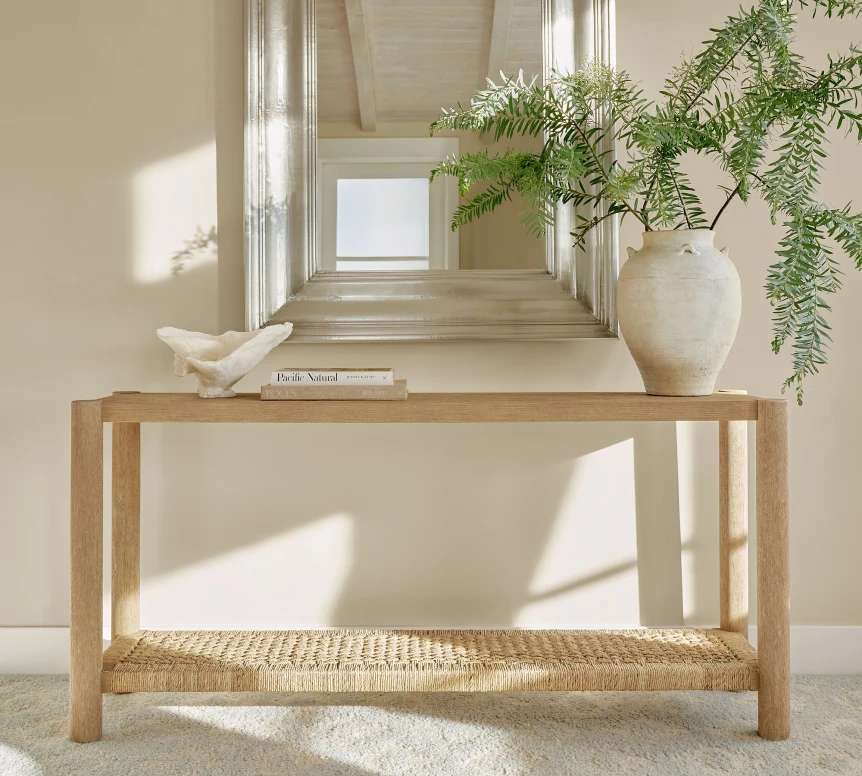
Key Takeaways
- A console should span roughly two thirds of its wall, which makes 48 inches the default for a 72 inch entry wall.
- In a hallway under 48 inches wide, keep the console 10 to 14 inches deep so at least 36 inches of walkway stays clear.
- Drawers solve daily clutter, open shelves only solve it visually, and swinging doors need 18 to 24 inches of clearance.
- Solid wood or veneer over plywood in the $300 to $600 range is the tier that lasts; MDF under $150 is a three year purchase.
- Contrast the console’s wood tone with the floor rather than matching it.
Where Does a Console Table Earn Its Keep?
A console table is a long, shallow table built to sit flat against a wall, typically 28 to 34 inches tall and 10 to 18 inches deep. The same piece is called a hallway, entryway, or sofa table depending on where it lands, and the location decides which dimensions and which storage matter.
One of the questions I always asked customers was “where will this live, and what will it do?” If the answer was vague, the piece probably didn’t belong in their home. For a console, that one answer sorts everything that follows.
Entryway or hallway
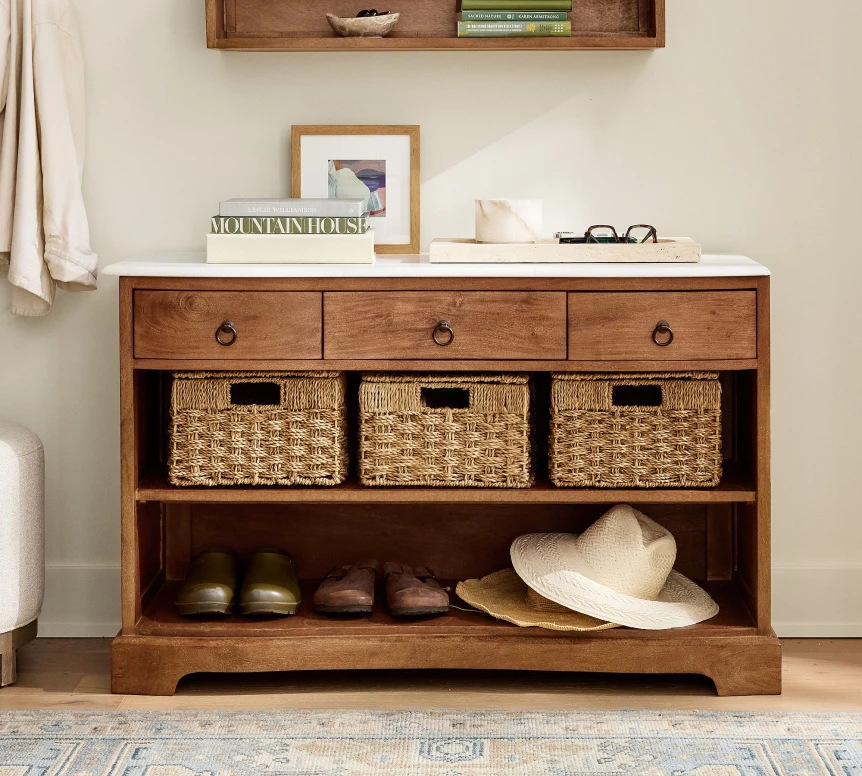
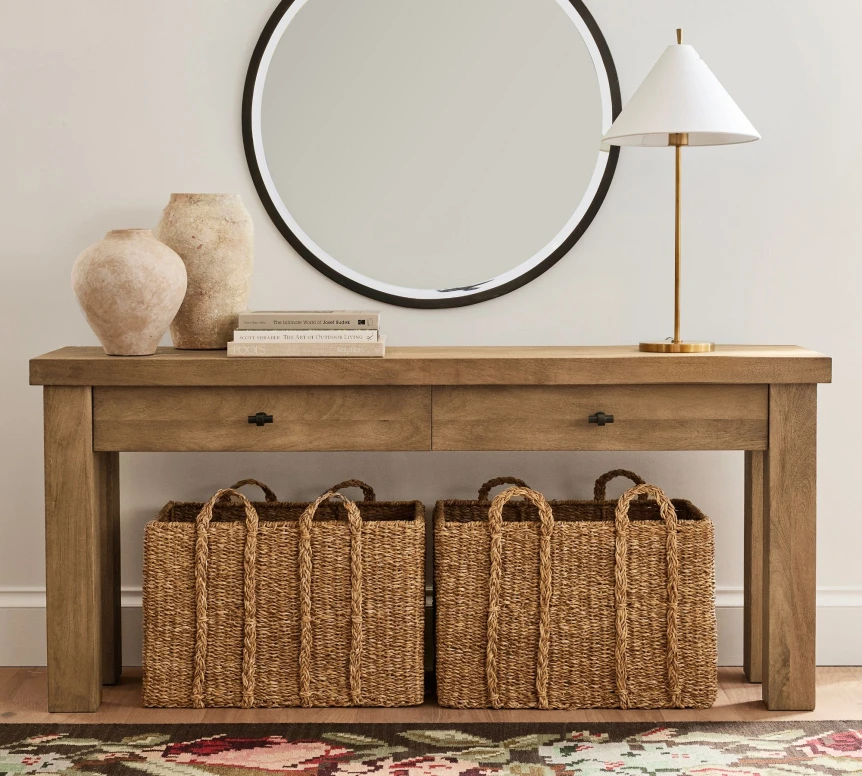
The most common position, and the one with the strictest constraints. The surface gets touched dozens of times a day by keys, mail, a dog leash, and the grocery bag set down in transit. Look for a sealed wood or stone top and drawers on metal slides, in a width of 36 to 60 inches and a depth of 10 to 16 inches.
Behind a sofa
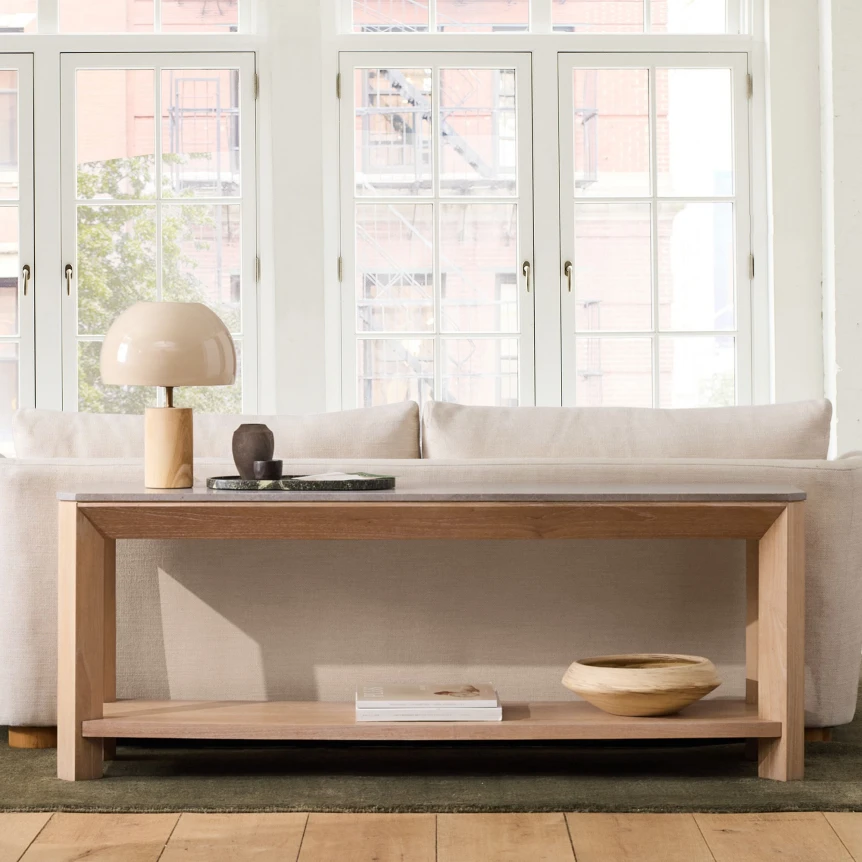
A console behind the couch is one of the most underused moves in an open plan living room: it gives the sofa a defined back edge and puts a pair of lamps at reading height. Match the sofa back or sit an inch or two below it, usually 30 to 34 inches, and hold the depth to 12 to 14 inches so the sofa stays put. The sofa buying guide covers the seating side of that pairing.
Living or dining room display
As a display surface in a primary room, a console is about presence rather than function. Widths of 60 to 72 inches and depths of 18 to 22 inches make sense here, and the design can lean sculptural because nothing is asking it to swallow clutter.
How Big Should an Entryway Console Table Be?
Most console regret traces back to size: a table that looked right on a showroom floor either dominates a small entry or floats on an oversized wall. Four numbers settle it.
- Wall length: the console should occupy roughly two thirds of the wall it sits against. A 72 inch wall wants a 48 inch console; a 96 inch wall wants 60 to 72 inches. Shorter reads apologetic, wider crowds the wall.
- Depth in a hallway: 10 to 14 inches maximum if the hallway is under 48 inches wide. What remains behind the table needs to be at least 36 inches for comfortable foot traffic.
- Height: 28 to 34 inches is standard for entryway use. Taller, 34 to 38 inches, suits formal foyers with high ceilings; under 28 inches reads as a side table.
- Mirror or art above: the piece above should be roughly two thirds the width of the console. A 48 inch console wants a 30 to 36 inch mirror centered over it, with its bottom edge 6 to 10 inches above the table top.
The painters tape trick catches what a spec sheet misses: mark the exact footprint on the floor, walk past it for a day, and open an imaginary drawer into the walkway. In a narrow hallway this is the difference between a useful entry and an obstacle course, and the small entryway ideas post covers the other moves that keep a tight entry usable.
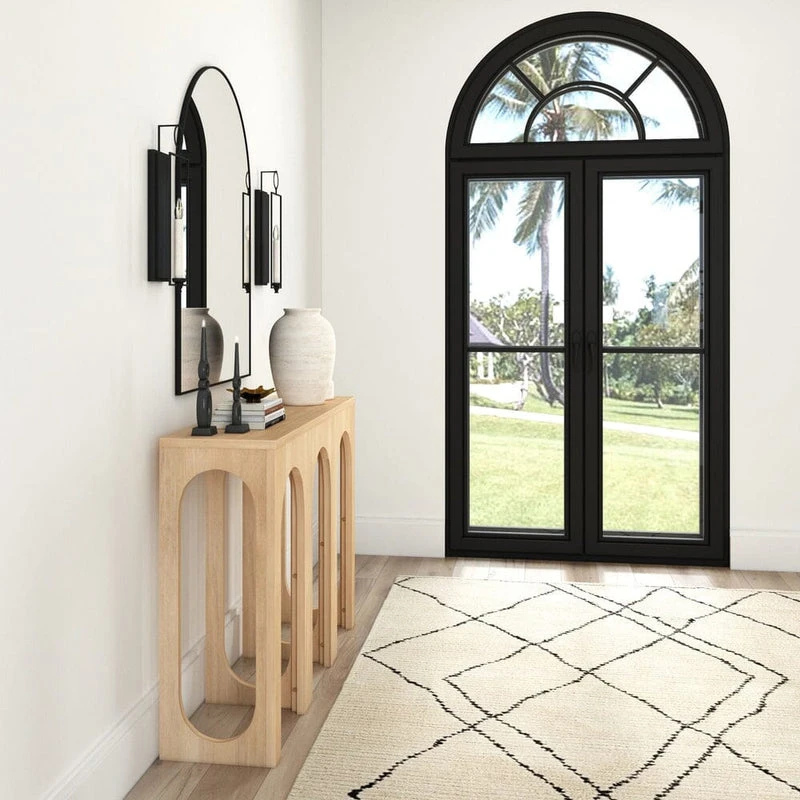
Which Storage Configuration Fits Your Hallway?
Function is the half of a console that photographs badly and matters most. Every storage configuration trades visual lightness against hidden capacity, and the trade is easiest to see side by side.
| Configuration | Best for | Hides clutter | Watch for | Typical price |
|---|---|---|---|---|
| Open shelf base | Baskets, books, visual storage | No | Dust and pet hair on the shelves | $100 to $400 |
| Drawers | Keys, mail, cables, small daily items | Yes | Plastic glides that sag within three years | $200 to $700 |
| Sliding doors | Tight hallways with no swing room | Yes | Plastic tracks; only half the cabinet opens at once | $250 to $800 |
| Swinging doors | Bulky storage where 18 to 24 inches of clearance exists | Yes | Surface mounted hinges that drift out of alignment | $250 to $900 |
| No storage | Formal foyers, sofa tables, display | No | Becomes a dumping ground in a working entry | $150 to $1,200 |
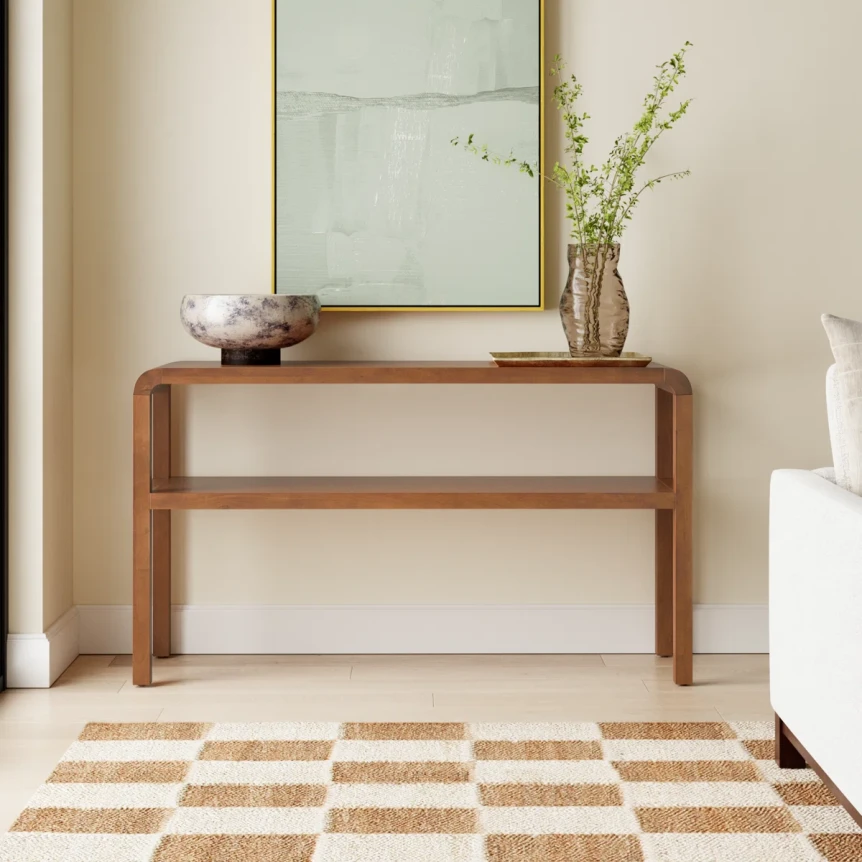
Open shelf base
A flat top over one or two open shelves: the lightest look, the lowest price, and the easiest to style with a pair of baskets. Right for entries where the storage need is mostly visual, and wrong for anyone who drops receipts at the door, because every one will be on display.
Drawers
One to three shallow drawers across the front is the right answer for daily small items: keys, mail, and cables disappear while the top stays clear for a lamp and a bowl. Pull a drawer all the way out before buying and lift it. Quality drawers ride on full extension metal slides with soft close hardware; cheap ones ride on plastic glides that bind and sag within two to three years.

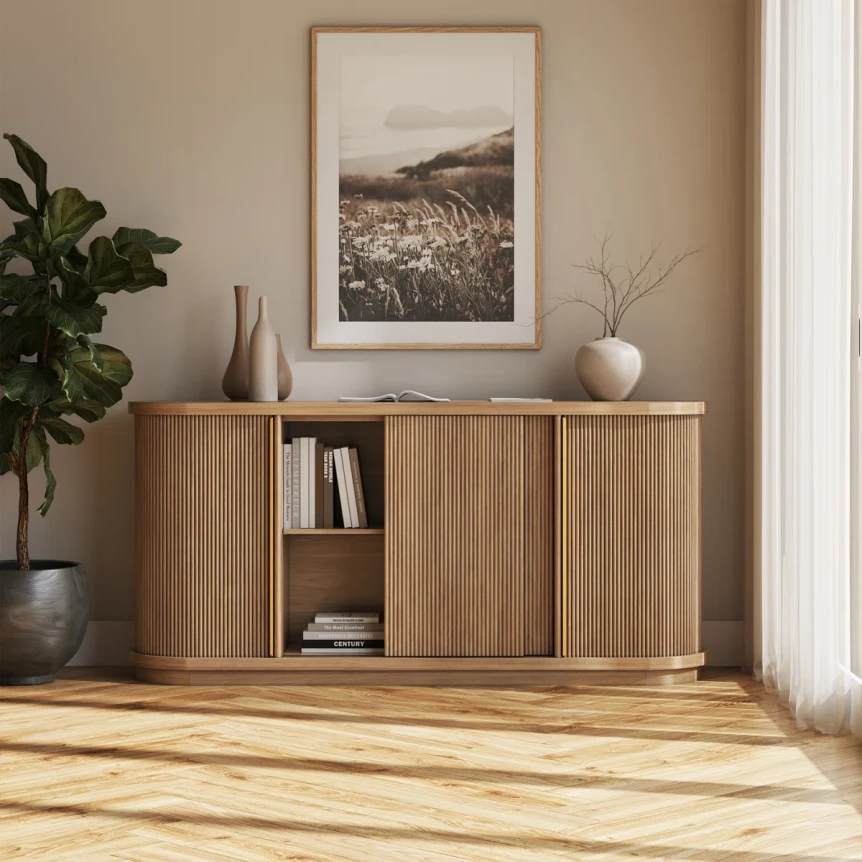
Sliding doors
Doors that slide sideways are the smartest configuration for a tight hallway, because nothing swings into the walkway, and shoes and pet supplies disappear behind them. The compromise is that only half the cabinet is open at a time, and the track is one more thing that can fail. Look for metal hardware and doors that run on bearings rather than a bare wood groove.
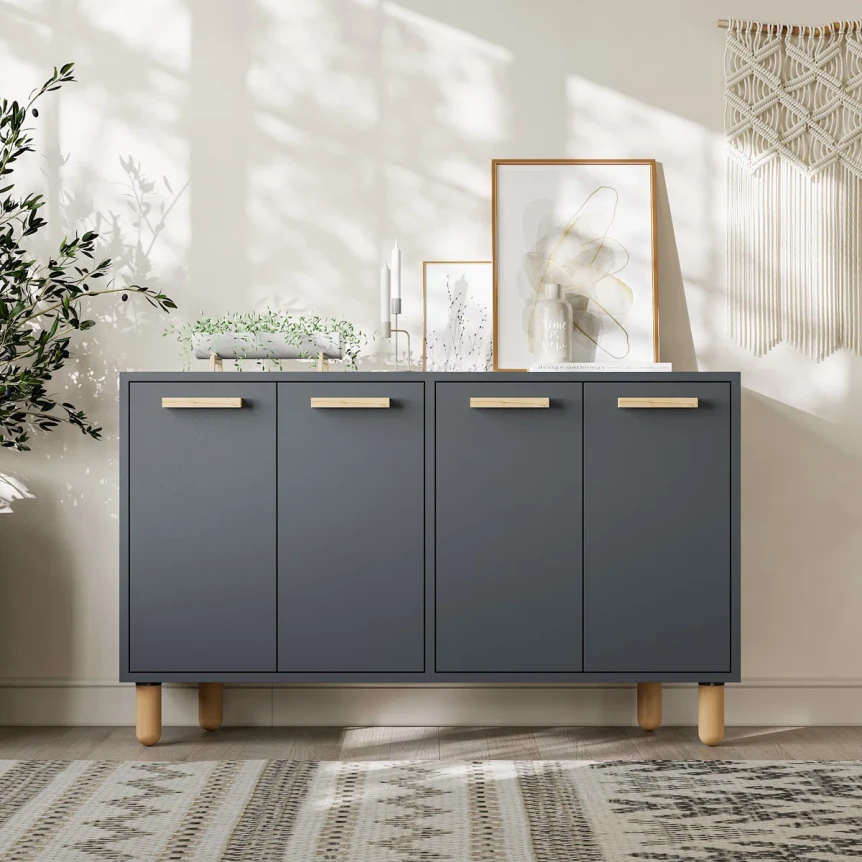
Swinging cabinet doors
The most generous storage: full access with both doors open, full coverage when closed, and 18 to 24 inches of clearance needed in front for the swing. Check that the doors hang on adjustable European cup hinges, because surface mounted hinges age badly and leave doors that never quite close. Where a seat also has to fit on the same wall, the entryway bench and storage guide covers how the two pieces share the space.
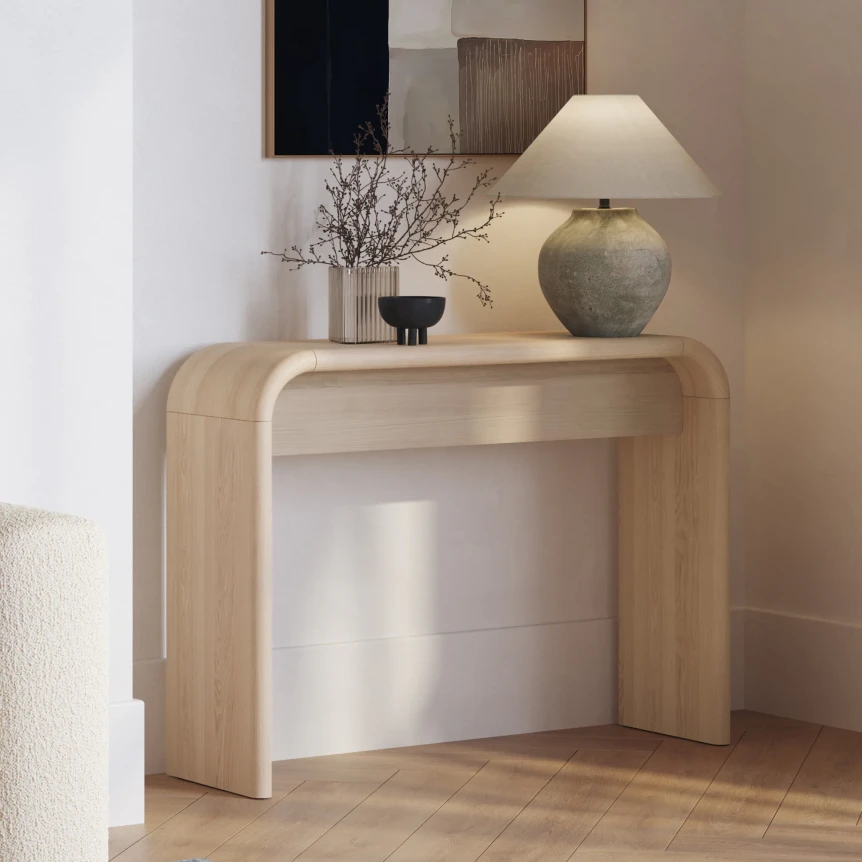
No storage at all
A top and four legs: the lightest and often the most architectural option, right for a formal foyer or a sofa table where the job is display. In a working family entry it becomes a dumping ground within a week.
How to Tell a Quality Console Table From a Cheap One
Price is one of the least reliable signals in case goods. Five checks take two minutes on a showroom floor and say more than the tag does.
Tap the top with a knuckle. Solid wood gives a low, dense thunk; veneer or laminate over particleboard sounds higher and hollower. The top is the most touched surface on the piece, so this matters more here than anywhere else.
Lift one corner. A 48 inch console in solid wood should weigh 50 to 80 pounds. If two people can carry it like an empty laundry basket, the case is mostly hollow particleboard with a wood print on top, and a lamp plus a few objects will ask 25 pounds of it.
Push down hard on one corner of the top. The whole table should feel rigid. If the corner gives or the case twists, the construction is too thin; a well built console at any price feels immovable under a hand.
Check how the legs attach. Solid wood or metal legs should bolt into a hardwood frame with visible hardware. Plastic legs, hollow tubes, or legs threaded straight into particleboard loosen and wobble within a couple of years.
Look at the underside. Quality consoles show sealed wood underneath with corner blocks bracing the joints. Cheap ones show raw particleboard, exposed staples, and thin glued seams.
Materials Compared: Solid Wood, Veneer, Metal, and Stone
Solid hardwood in oak, walnut, ash, mango, or rubberwood is the safest investment. A solid top can be sanded and refinished after fifteen years of keys and coffee cups, and it develops a patina that synthetics cannot copy. Expect $300 to $700 for a well made solid wood console.
This is one piece where I always pushed customers toward solid wood over veneer. The top of an entry console takes more daily abuse than any surface in the house except the kitchen counter, and veneer has no second life once its edge chips.
Wood veneer over plywood is the honest middle ground: a real wood face on a stable engineered substrate. It lasts 8 to 12 years and reads as solid wood at a fraction of the price. Confirm the substrate is plywood, not MDF, by looking at an unfinished edge underneath.
MDF with veneer or laminate is what most consoles under $200 actually are. The face looks fine for two to three years, then the MDF swells in mild humidity and the edges chip. Fine for a first apartment, not worth moving to the next one.
Metal frame with a wood, stone, or rattan top suits industrial and modern rooms. Solid steel frames last; thin tube steel rings hollow when tapped and bows under weight. A metal base under a natural top such as rattan, marble, or travertine ages well and reads as designed rather than cheap.
All metal or all glass consoles belong in an industrial loft or a strict contemporary interior and feel cold in most homes. They show fingerprints and water rings more than wood, so choose one only when the visual statement is the point.
Which Console Style Matches Your Home?
The right silhouette depends on the rooms the console can see from where it stands, so judge it against the adjacent living room rather than in isolation. The console tables for modern entryways post goes deeper on the modern end of the range.
Modern and minimalist homes are flattered by clean lined consoles in white oak or walnut, with tapered, dowel, or trestle legs and minimal hardware.
Mid century homes want walnut or teak with tapered legs and a rectangular case. Brass pulls or recessed finger pulls read more refined than chunky metal handles.
Farmhouse and rustic interiors take thick plank tops, X frame bases, and distressed natural finishes. Sliding barn style doors belong here and almost nowhere else.
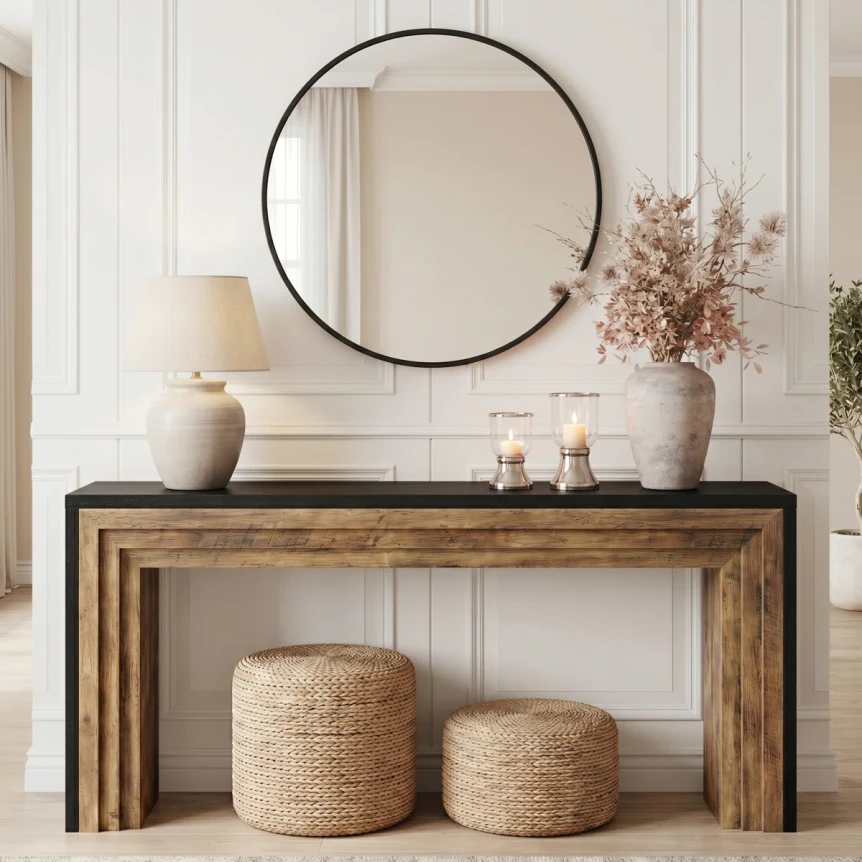
Industrial and loft spaces absorb black metal frames with reclaimed or dark stained wood tops. Painted white finishes fight the aesthetic and should be avoided.
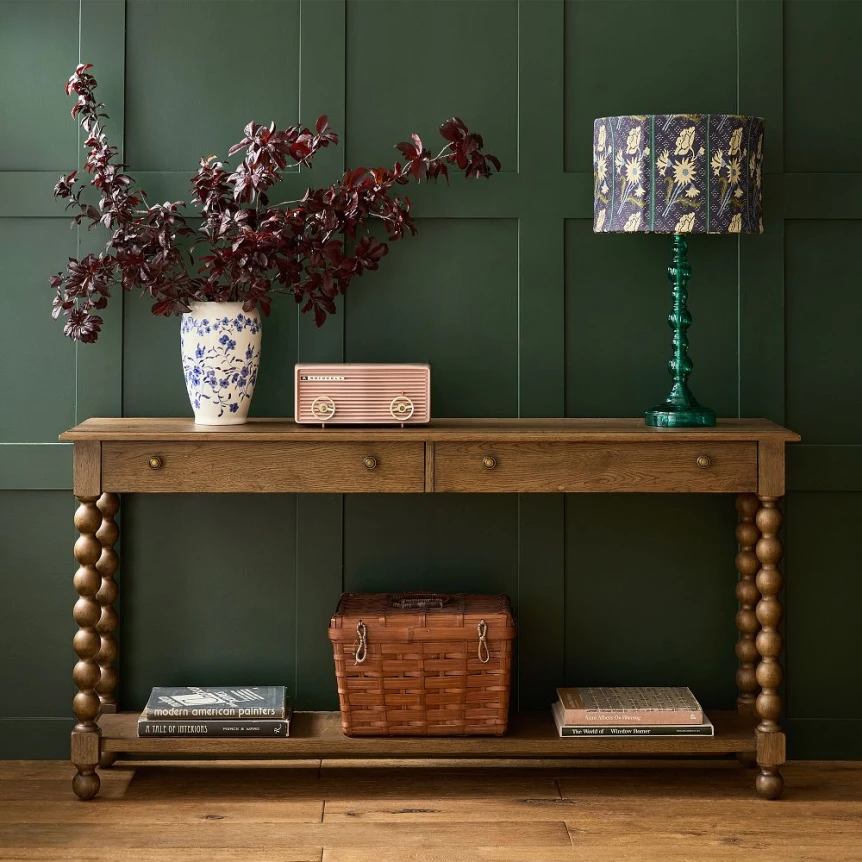
Traditional and transitional homes want turned legs, painted finishes in white, soft black, or warm cream, and detail such as beaded edges or bun feet. Consoles with cabinet doors or drawers in classic proportions fit best.
The wood tone rule: contrast the console with the floor rather than matching it. A walnut console on a walnut floor blurs the entry into one wash of brown. Pair light floors with darker consoles, and dark floors with warm honey tones.
What Most People Get Wrong
Three patterns repeat often enough to count as rules.
Buying too narrow for the wall. A 36 inch console under a 96 inch wall reads as apologetic. The instinct to buy small is right in a narrow hallway, but in a foyer with wall to spare, wider almost always looks better.
Choosing style over storage when storage is the problem. The most beautiful open shelf console is a frustration if the daily clutter has nowhere to go. If the entry is chaotic now, a console without hidden storage will not fix it; it will give the chaos a more elegant home. When coats and bags are the real issue, a hall tree is the honest alternative.
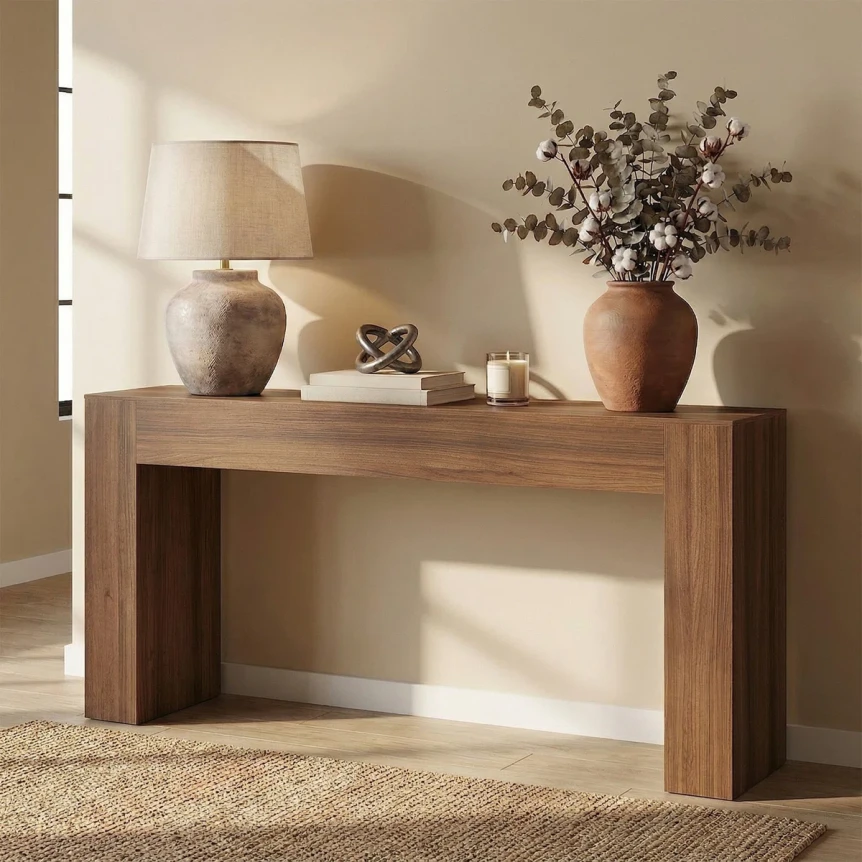
Overstyling the surface. Seven objects, a tall vase, three books, and a candle read as a magazine shoot, not a working entry. The formula that holds up is a tray for keys, one taller element such as a lamp, and one smaller piece such as a stack of books, with half the surface left clear.
What the Best Entryway Console Tables Cost
Under $150: MDF with a printed laminate face, basic metal frames, simple open shelf designs. It looks fine for a year or two, then edges chip and joints loosen, with replacement inside three years. Acceptable for a first apartment.
$150 to $300: the widest range and the most variable quality. Real veneer over plywood exists here, and the showroom checks above matter most in this tier. A good $250 console exists, and so does a $300 one that is worse than a $175 one.
$300 to $600: the range for a console that lasts ten years or more. Solid hardwood or plywood veneer construction, full extension drawer slides, and adjustable hinges are standard here. This is the tier worth spending in for a piece meant to move house with you.
$600 and above: custom finishes, designer collaborations, and premium materials such as solid walnut or a marble top. The jump from $400 to $1,200 buys brand and material rather than a better structure. Worth it for a foyer console you plan to keep fifteen years, not required for one that simply lasts.
The Bottom Line
The right entryway console table does its job for fifteen years without asking for attention. Two thirds of the wall, a depth the hallway can spare, storage that matches how you actually come through the door, and a wood tone that contrasts with the floor get you most of the way. Spend in the $300 to $600 range and skip anything that fails the knuckle tap or the corner press.
Once the console is settled, the rest of the entry falls into place. The complete guide to modern entryway design covers flooring, the mirror above, and the sequence of the room; entryway lighting in three layers handles the lamp that will sit on top; and the storage bench guide covers the seat that most often pairs with it.
Frequently Asked Questions
How tall should an entryway console table be?
Between 28 and 34 inches for most entryways. Taller consoles of 34 to 38 inches suit formal foyers with high ceilings or a tall mirror above, and anything under 28 inches starts to read as a side table. If the console will sit behind a sofa, match the sofa back or sit an inch or two below it, usually 30 to 34 inches.
How deep should a console table be for a narrow hallway?
10 to 14 inches at most when the hallway is under 48 inches wide, which leaves the 36 inches of clear walkway that comfortable foot traffic needs. In a hallway wider than 48 inches, a standard 16 to 18 inch deep console works. In a tight passage the slim profile is the difference between a useful entry and an obstacle course.
What should I put on an entryway console table?
Three things, no more. A tray or bowl for keys that also catches sunglasses and small daily items, one taller element such as a table lamp or a tall ceramic vase, and one smaller piece such as a stack of books, a candle, or a small plant. Half the surface should stay clear so the table can be used for daily life rather than only looked at.
Should I anchor a console table to the wall?
Yes, in any home with children or pets. Console tables are top heavy by design, since most of the mass is the top and whatever sits on it, and a child pulling on the edge can tip one over. Most new furniture ships with anti tip hardware; if yours does not, anchoring straps cost under $20 at a hardware store and disappear once installed.
What is the difference between a console table, a sofa table, and an entryway table?
They are the same piece of furniture named for where it stands. Console table is the broad term for any long, shallow table designed to sit against a wall. Sofa table means a console placed behind a sofa, and entryway or hallway table means one placed by the front door. The ideal dimensions change with the location, but the category is the same.