Best Storage Beds That Maximize Space

By Tereza Hower | Published February 27, 2026 | Updated September 5, 2026
The storage bed is the piece people most often buy for the wrong reason. The closet is overflowing, a bed that doubles as a dresser sounds like the answer, and the frame that arrives solves the storage problem on paper while creating three new ones at home: drawers that will not open because the bed sits against a wall, a lift mechanism that fails inside two years, or a frame so heavy it takes four people to move. The best storage beds avoid all three, and the difference is decided before the order is placed, not after delivery.
This guide covers the three storage mechanisms and who each one suits, how to judge frame quality, and how to size a storage bed to the room it has to live in. The brand matters less than getting those decisions right. A well chosen storage bed adds 20 to 60 cubic feet of usable storage and lasts more than a decade; a poorly chosen one is the most expensive furniture mistake in the house.
Key Takeaways
- Drawer beds suit daily access items and need 18 to 24 inches of clearance on the side they open from.
- Hydraulic lift beds hold the most, sit flush against walls, and suit seasonal storage rather than everyday use.
- Check the drawer glides, the slats, the joints, and the weight of the frame before the price tag.
- Storage beds sit 4 to 8 inches taller than standard frames, so measure bed height and the delivery path as carefully as the footprint.
- The $800 to $1,500 tier is where a storage bed that lasts ten years usually lives.
Which Storage Bed Mechanism Should You Choose?
Most storage beds fall into one of three categories. They look similar in catalogs and live very differently in real bedrooms, because each one decides where the bed can sit and how often you will actually reach what is stored.
| Mechanism | Best for | Capacity | Clearance needed | Weak point |
|---|---|---|---|---|
| Side or foot drawers | Daily access: clothing, bedding, books | Two to six drawers, 30 to 50 lb each | 18 to 24 inches on the drawer side | Cheap glides and stapled drawer bottoms |
| Hydraulic lift platform | Seasonal storage in small rooms | 40 to 60 cubic feet, about 200 lb total | 4 to 6 feet overhead; none at the sides | Spring supports sold as “lift up” that fail in two to four years |
| Headboard storage | Replacing nightstands in tight rooms | Shelves and cubbies for bedside items | None | Visual clutter and dust on open shelves |
Drawer storage beds
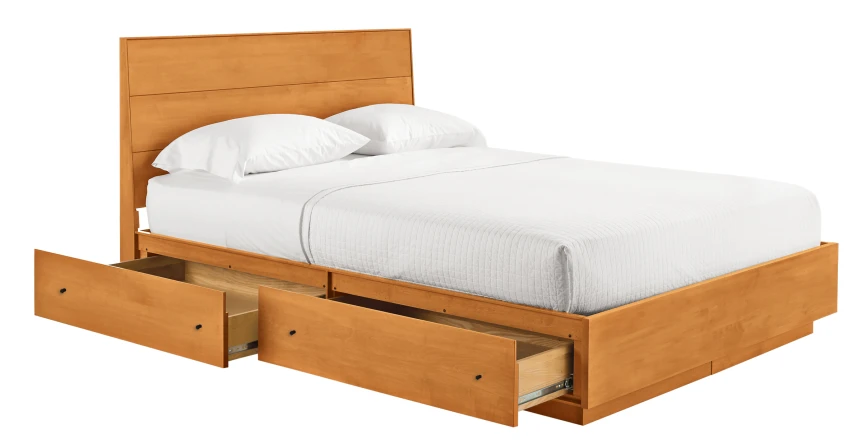
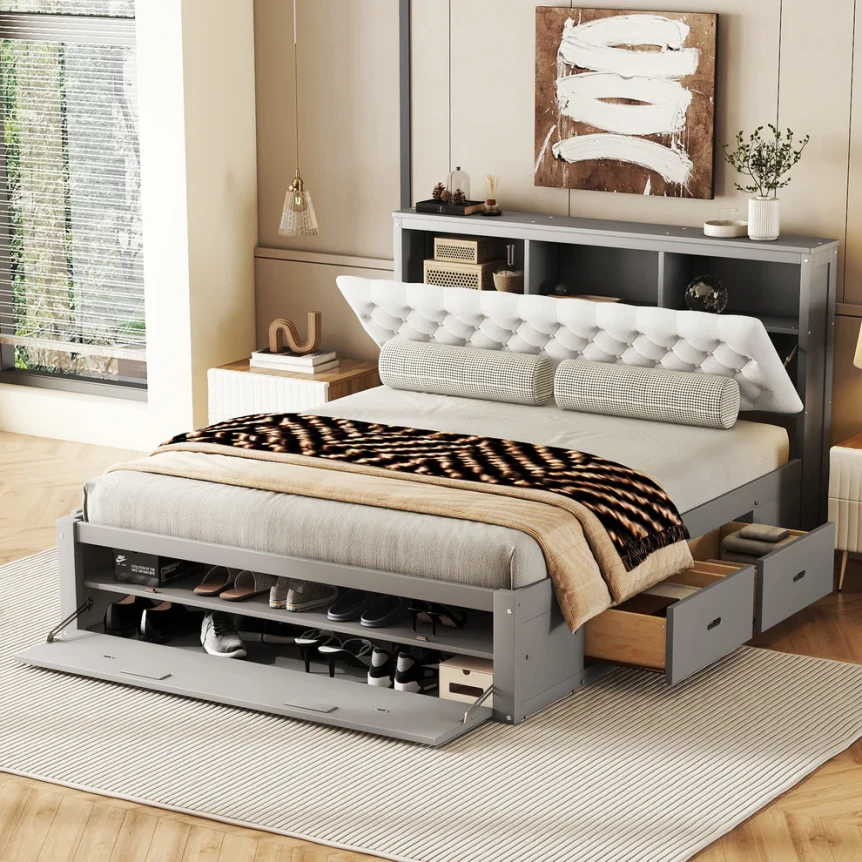
Two to six drawers built into the base, opening from the side or the foot. These suit everyday items: folded clothing, bedding, books, accessories. The drawers stay reachable without disturbing the mattress, which is the whole advantage over a lift platform.
The catch most people discover after delivery is clearance. Drawers need 18 to 24 inches of clear floor on the side they open from, so a bed pushed against a wall loses half its drawers, and a bed tight on both sides loses all of them. Foot of bed drawers are the fix, at the cost of capacity and 24 inches of clear floor at the foot.
Choose drawers if you have at least 18 inches of clearance on one side and you want daily access to what is stored. Skip them if the bed has to sit tight against a wall on both sides.
Hydraulic lift beds
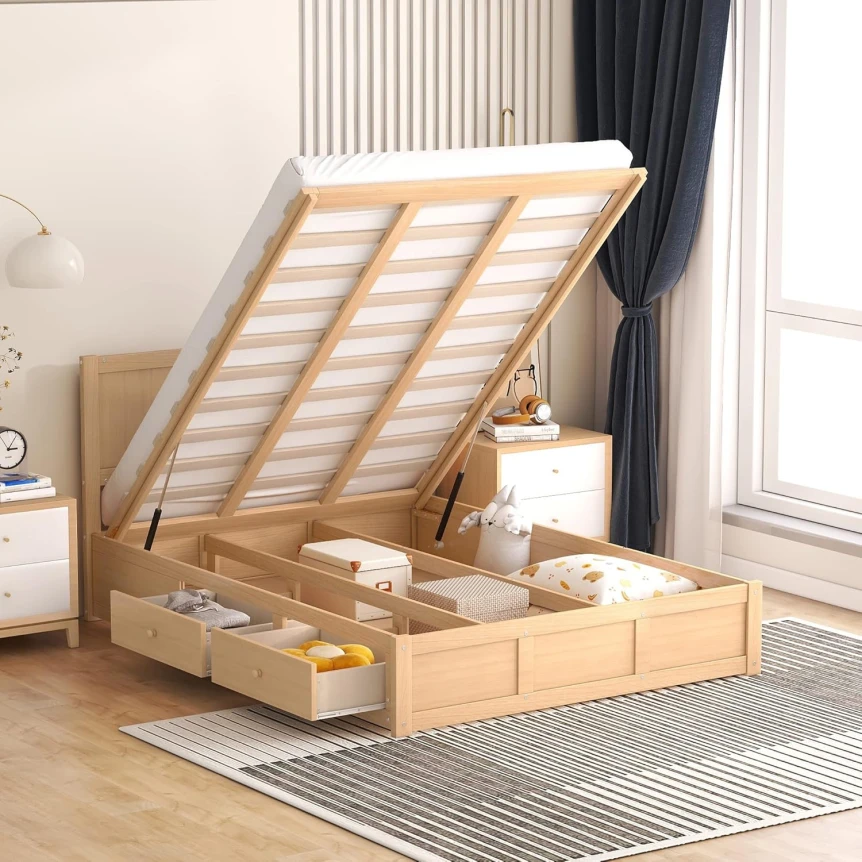
The whole mattress platform rises on gas pistons to expose one compartment under the entire bed. Capacity is large, often 40 to 60 cubic feet, which is more than most dressers hold. Because access is from above, the bed can sit flush against walls on three sides.
The tradeoff is access friction. Opening the bed means removing pillows, folding back bedding, and lifting the platform, which is fine for winter coats in summer and holiday decorations in January and tiresome for anything you need weekly. A hydraulic bed bought to replace a dresser usually ends up next to a dresser.
Verify the piston quality before buying. Real gas pistons hold the platform open at any angle and last 10 to 15 years. Spring loaded supports, often sold as “lift up storage” without the words gas piston, fail within two to four years and are expensive to replace because the frame has to be partly disassembled. The full commitment without the trial is the version I would advise against: lift the platform in person before committing to any hydraulic bed.
Choose hydraulic lift if the bedroom cannot spare side clearance, or you need maximum volume for items you rarely reach. Pair it with a dresser for anything you use weekly.
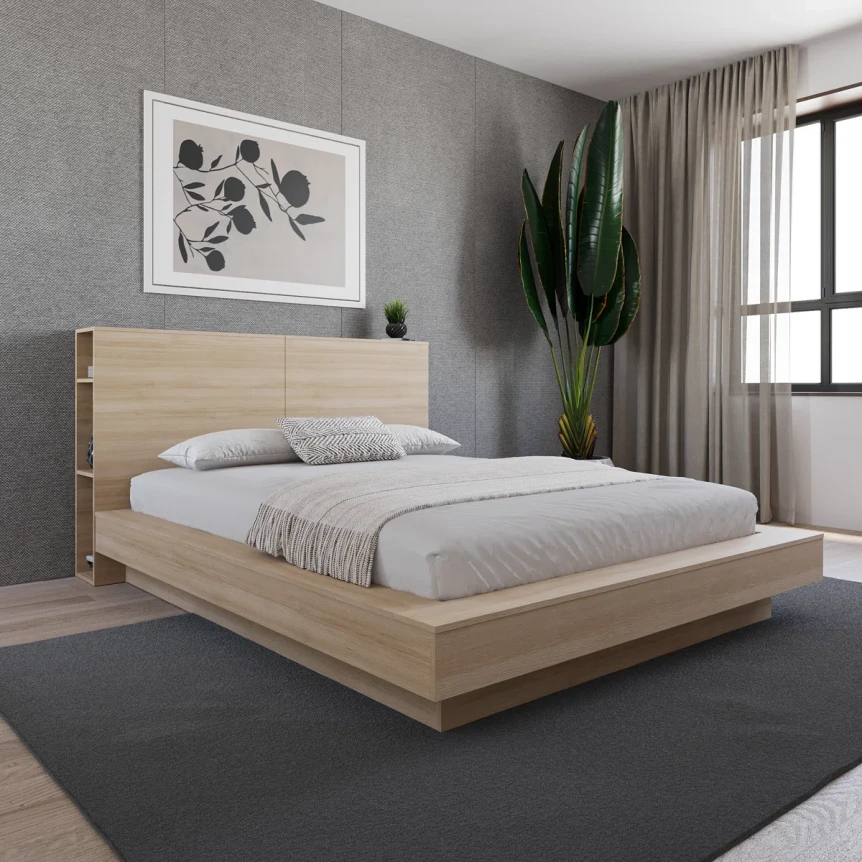
Headboard storage
Open shelves, cubbies, or small cabinets built into the headboard, with or without storage under the bed. They hold nightstand items: books, phone, glasses, a water glass, charging cables. Newer designs add USB ports and reading lights, which can remove the need for nightstands in a tight room.
The downside is visual clutter. Headboard storage looks intentional in a catalog because nothing is on it yet; in a real bedroom the shelves collect dust and read as messy unless they are styled with discipline. Open shelves also collect crumbs.
Choose headboard storage if you want to remove nightstands to save floor space, or you read in bed and want books and devices within reach. Keep the shelves to a few objects or the headboard becomes the clutter it was meant to hide.
How to Tell a Quality Storage Bed From a Cheap One
Storage beds carry more weight than regular beds, since the frame supports the sleepers plus everything stored inside it, so structure matters more than it does on a basic frame. More than a decade of curating furniture for picky buyers comes down to five checks here, and all five are easier in a showroom than on a screen.
Pull a drawer all the way out. Quality drawers ride on full extension metal glides and open with one finger, with a bottom of solid wood or thick plywood. Cheap drawers ride on plastic glides or basic ball bearing slides over a stapled hardboard bottom that warps under weight. Drawers that bind, sag, or wobble in the slide are the first thing to fail.
Check the slats. Storage beds skip the box spring and rely on a built in slat system. Quality systems use solid oak, beech, or birch slats spaced no more than 3 inches apart, with center support legs to the floor. Thin pine or particleboard slats at 4 to 5 inch spacing sag within a year and void most mattress warranties.
Test the lift mechanism. On a hydraulic bed the platform should rise smoothly when pulled and hold at any angle. If it shoots up, drops on its own, or needs real force, the pistons are undersized. Lift it five times in a row and listen for binding.
Examine the corners and joints. Quality frames use mortise and tenon joints, dowels, or visible wood screws into hardwood. Cheap frames use cam locks, the round metal disks that turn with a screwdriver, and plastic dowels into particleboard. Cam locks are fine on a bookshelf and loosen over time on a bed carrying 400 plus pounds.
Lift one corner of the empty frame. A quality queen storage bed weighs 110 to 180 pounds. If two people can carry it like a folding table, it is mostly engineered wood under thin veneer and will not hold together past three or four years.
How Do I Choose the Right Size Storage Bed for My Room?
Measure the clearances the mechanism needs, not just the footprint of the mattress. A storage bed dictates where it can sit in the room, and the numbers below are the ones that separate a bed that works from one that goes back.
- Side drawer clearance: 18 inches minimum on the drawer side, 24 preferred, on both sides if both have drawers.
- Foot drawer clearance: 24 inches from the foot of the bed to the nearest furniture.
- Lift clearance overhead: the raised platform needs 4 to 6 feet above the bed. Sloped ceilings and low pendants can stop it opening fully.
- Bed height: storage beds sit 18 to 24 inches off the floor against 14 to 16 for a standard frame. With the mattress on, the top should land near knee height when you stand beside it.
- Doorway and stair access: measure the route from the front door to the bedroom, including any hallway turn. Storage beds ship in longer, heavier boxes and the assembled frame is awkward to pivot.
In a small bedroom, the sizing answer is usually a hydraulic lift bed, because it needs no side or foot clearance and can sit against walls on three sides. If daily access matters more than floor space, a foot of bed drawer model with one side against the wall is the compromise. For how the bed relates to everything else in the room, the complete guide to modern bedroom design covers layout and circulation.
Materials That Survive Ten Years of Use
Solid hardwood in oak, walnut, ash, or rubberwood is the safest investment. These frames last 15 plus years, can be repaired or refinished, and hold resale value. Expect $1,200 to $2,500 for a quality solid wood storage bed.
Wood veneer over plywood is the honest middle ground: a real wood face on a stable engineered core, 8 to 12 years of life, and a noticeably lower price. Confirm the core is plywood, not MDF. MDF veneers chip at the edges and cannot be repaired.
Upholstered frames wrap the structure in fabric for a softer look. Three things to verify: the frame underneath is still solid wood or plywood, the fabric is a linen blend, microfiber, or performance weave rather than raw cotton or pure velvet, and the covering can be cleaned, since headboards collect skin oils.
Polyurethane faux leather is the most common leather look on storage beds and lasts 5 to 10 years when it is genuine polyurethane. PVC faux leather, often unlabeled and cheaper, cracks and peels within 2 to 3 years. A faux leather bed priced well below its peers is PVC.
Particleboard with printed wood look laminate is what most storage beds under $500 actually are. They photograph well and fail at the joints, slats, and slides within two to four years. Fine for a starter apartment, not for a bed you plan to keep.
What Most People Get Wrong
They overload the storage. A storage bed complements a closet; it does not replace one. Drawers rated for 30 to 50 pounds fail when stuffed with dense books or packed winter coats, and lift platforms carry around 200 pounds of stored goods in total. Soft goods belong in the bed, and heavy goods belong on shelves.
They buy hydraulic for daily access. The lift looks easy in the showroom. At home, moving pillows and bedding every morning to reach the compartment gets old within two weeks. Hydraulic storage is for seasonal items, and daily access means drawers.
They underestimate the height. Storage beds run 4 to 8 inches taller than standard frames, which can let the bed dominate a small room and becomes a daily friction for shorter people, anyone with mobility limits, and pets that sleep on the bed. Measure frame plus mattress before buying and compare it with your knee height.
They skip the pairing. A storage bed still needs somewhere for the things it cannot hold. The guide to the best modern bedroom furniture covers the dresser and nightstand decisions that sit alongside it, and the storage bench guide applies the same quality logic to the foot of bed seat that often completes the set.
Best Storage Beds by Budget
Price predicts construction more reliably on storage beds than on most furniture, because the drawer glides, slats, and pistons are where the cost goes. The tiers below describe what the money buys, and where the tests above matter most.
| Price tier | Typical construction | Honest lifespan | Best for |
|---|---|---|---|
| Under $400 | Particleboard with printed laminate, basic slides, thin slats | 2 to 4 years | A starter apartment, not a bed to keep |
| $400 to $800 | Veneer over MDF or plywood, mixed slide quality, often faux leather | 4 to 10 years depending on the unit | Buyers willing to run every showroom test |
| $800 to $1,500 | Veneer over plywood, full extension metal slides, solid slats, gas pistons | 10 plus years | The primary bedroom on a sensible budget |
| $1,500 and up | Solid hardwood, soft close drawers, premium upholstery, longer warranties | 15 plus years | A primary bed you intend to keep |
The middle tier is the widest and the least predictable. A great $700 storage bed exists, and so does a $750 one that is worse than a $400 alternative, which is why the drawer and slat checks matter most between $400 and $800. Above $800 the checks mostly confirm what the price already suggests.
When Storage Beds Are the Wrong Answer
One contrarian take to end on: a storage bed is not always the right fix for a cluttered bedroom. In two situations, a regular bed plus dedicated storage furniture is the better buy.
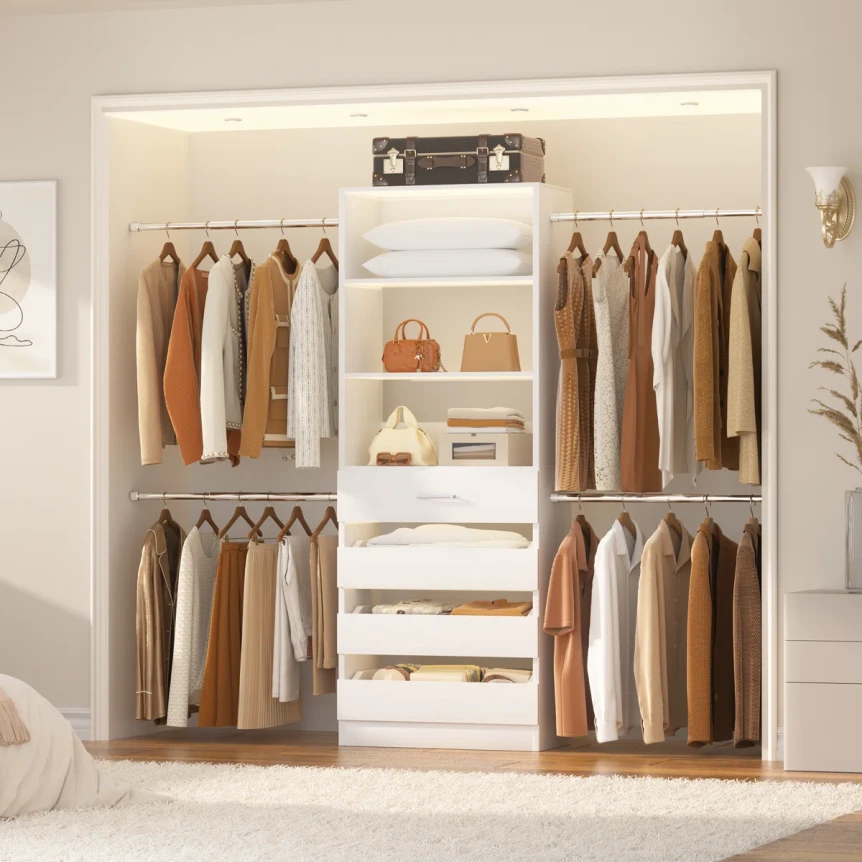
When the closet is the real problem. A storage bed adds 20 to 60 cubic feet. A properly organized closet with double hanging rods, drawer inserts, and full height shelving often adds twice that. If the closet is a single rod and a high shelf, the higher leverage move is the closet, not the bed.
When you move often. Storage beds are heavy, slow to disassemble, and easy to damage at the drawer mechanisms in transit. A regular frame, a good dresser, and under bed bins are the flexible answer if another move is likely within a few years. For a room that stays small on purpose, the guide to designing a minimalist bedroom makes the case for owning less rather than storing more.
The Bottom Line
Match the mechanism to how you will actually use it: drawers for daily access, hydraulic lift for seasonal storage, headboard storage in place of nightstands. Measure the clearances and the delivery route before the footprint, and check the glides, slats, joints, and weight before the price tag.
Spend in the $800 to $1,500 tier for a bed that lasts, and treat anything under $400 as temporary. For the rest of the room, including the palette the bed frame sits inside, the modern bedroom color schemes guide is the natural next read, and the modern bedroom design guide holds the whole plan together.
Frequently Asked Questions
How do I choose the right size storage bed for my room?
Start with the clearances the mechanism needs rather than the mattress size. Drawer beds need 18 to 24 inches of clear floor on the side the drawers open from, foot drawers need 24 inches at the foot, and hydraulic lift beds need 4 to 6 feet of overhead space but no side clearance. Then check the bed height, usually 18 to 24 inches before the mattress, and measure the delivery route including any hallway turn.
Do storage beds need a box spring?
No. Storage beds are platform beds with built in slats that support the mattress directly. A box spring would raise the mattress too high and interfere with drawer access or the lift mechanism. Check that the slats sit 3 inches apart or less, especially under a foam mattress.
Can I put a storage bed against a wall?
It depends on the mechanism. Hydraulic lift beds and headboard storage beds work against walls because access does not need side clearance. Drawer beds need 18 to 24 inches on the side the drawers open from, so if both sides are tight, choose a foot of bed drawer model or a hydraulic lift instead.
How much weight can storage bed drawers hold?
Most storage bed drawers are rated for 30 to 50 pounds each, and hydraulic lift platforms usually hold 150 to 250 pounds of stored items in total. Keep dense, heavy items like stacked books out of the drawers, because the slides fail early under that load. Folded clothing, bedding, and towels are the right use.
How long does a hydraulic lift mechanism last?
Genuine gas pistons last 10 to 15 years with regular use. Cheaper spring loaded mechanisms, often labeled only as lift up storage, fail within two to four years and are costly to replace because the frame has to be partly disassembled. Confirm the mechanism is gas piston and lift it five times in the showroom; it should rise smoothly and hold at any angle.