Best Modern Bathroom Vanities and Sinks

By Tereza Hower | Published March 18, 2026 | Updated September 7, 2026
A modern bathroom vanity carries more of the room than any other piece. It is the first thing you see when you walk in, the surface you use every morning and every night, and the piece that most directly communicates the style and quality of the room. Get it right and the rest of the bathroom can be modest; get it wrong and the room never quite recovers.
This is the expensive lesson. A honed marble counter shows within the first summer how aggressively perfume, hand soap, and the wrong kind of cleanser etch the surface. The damage is not visible from across the room, but it is visible up close every morning, in exactly the places the counter gets used most. That single decision shapes every recommendation in this guide.
This guide covers the format choice (floating vs freestanding), how to size the basins to the household, which sink type fits which routine, how the major counter materials behave over time, what kind of storage configuration earns its place daily, and how to choose a hardware finish that ties the room together.
Key Takeaways
- Choose floating only after you’ve confirmed the wall can take the weight; in drywall over a light frame, you need a blocking plate installed before the vanity arrives.
- A double basin needs at least 120 centimeters of wall width to read proportional, and 150+ centimeters to give each side genuine counter space.
- Undermount sinks are the cleanest choice for daily use; vessels look beautiful in photos and add cleanup friction in real households.
- Engineered stone or porcelain in a marble-look pattern delivers the visual benefit of stone without the etching tax; choose real marble only if you can accept patina over time.
- Limit the bathroom to two hardware finishes total; three or more reads as indecision rather than intention.
Should a Modern Bathroom Vanity Float or Sit on the Floor?
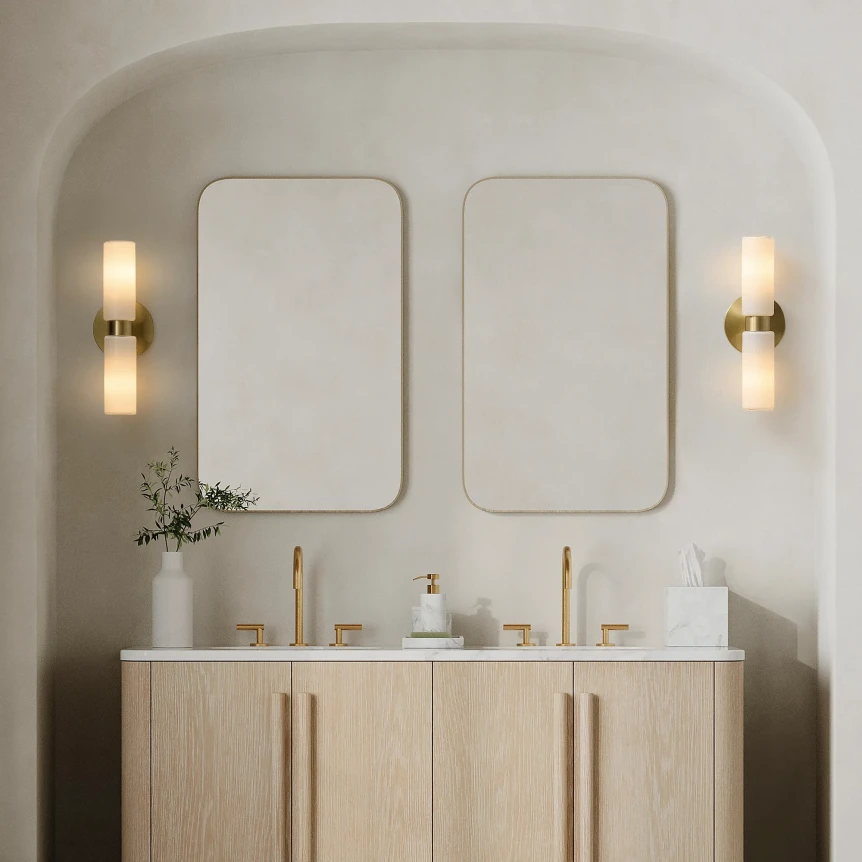
The most fundamental modern bathroom vanity decision is whether to go wall-mounted or floor-standing. Both can look beautiful, but they create very different atmospheres and suit different room types.
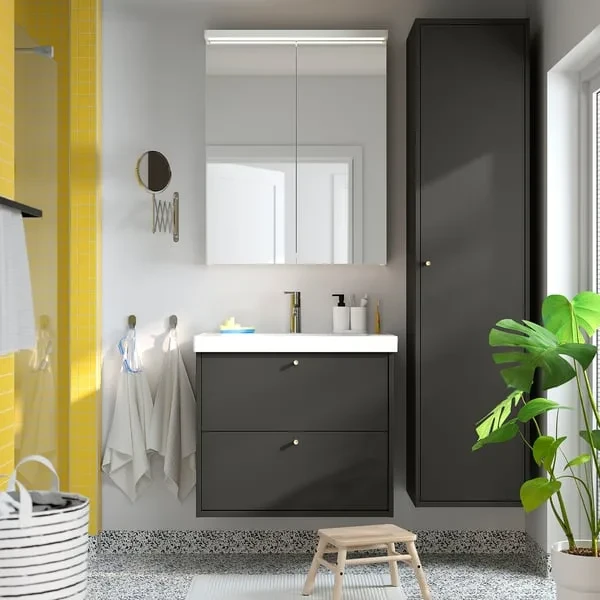
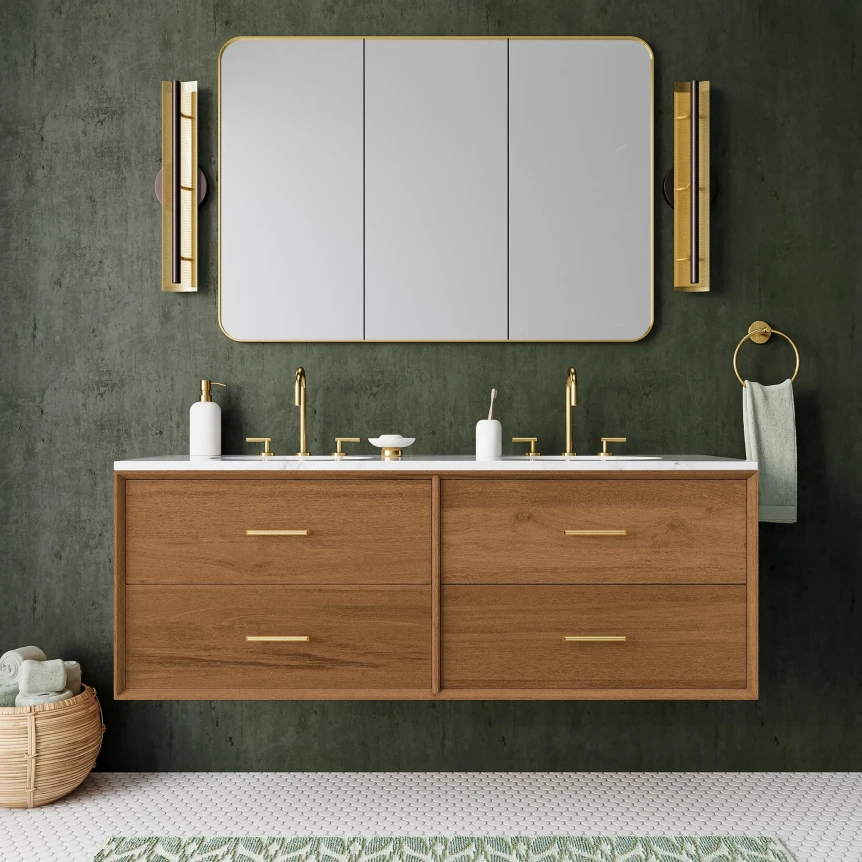
Floating vanities, wall-hung units with no legs or base touching the floor, are the defining choice of modern bathroom design. The visible floor beneath them makes the room feel larger and more open, they are straightforward to clean around, and their horizontal profile gives the room a sense of calm that grounded furniture often cannot. They also allow precise height adjustment during installation, which is particularly useful in households where people of different heights share the bathroom.
The practical requirement for a floating vanity is a sufficiently robust wall to take the weight. In most cases this means solid masonry or a timber-framed wall with the vanity fixings going into structural members. Confirm wall composition with your installer before committing to a floating unit, particularly in older properties or where the walls are drywall over a light frame; adding a plywood blocking plate is straightforward during rough-in and disruptive afterward.
Freestanding vanities, units that sit directly on the floor either on legs or a solid base, have a more furniture-like quality that suits bathrooms with a warmer, less austere aesthetic. A vanity with tapered timber legs has a very different character from a wall-hung unit in white lacquer, and may be exactly the right choice for a bathroom going for something more relaxed and organic. Freestanding units are also easier to install in situations where wall fixings are complicated. Modern bathroom essentials covers what to check before paying for one.
How Many Basins Should a Modern Bathroom Vanity Have?
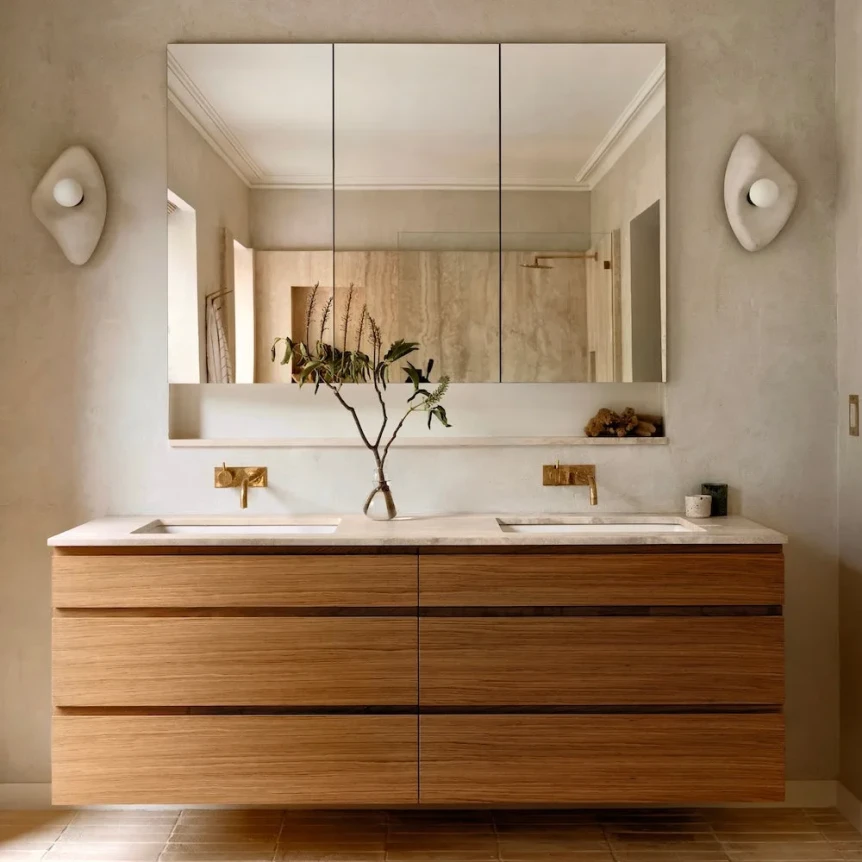
In a bathroom used by two people, a double basin vanity is one of the most practical upgrades available. It eliminates the morning bottleneck at the sink, allows each person their own side with their own products, and gives the bathroom a sense of scale that a single basin unit cannot quite match.
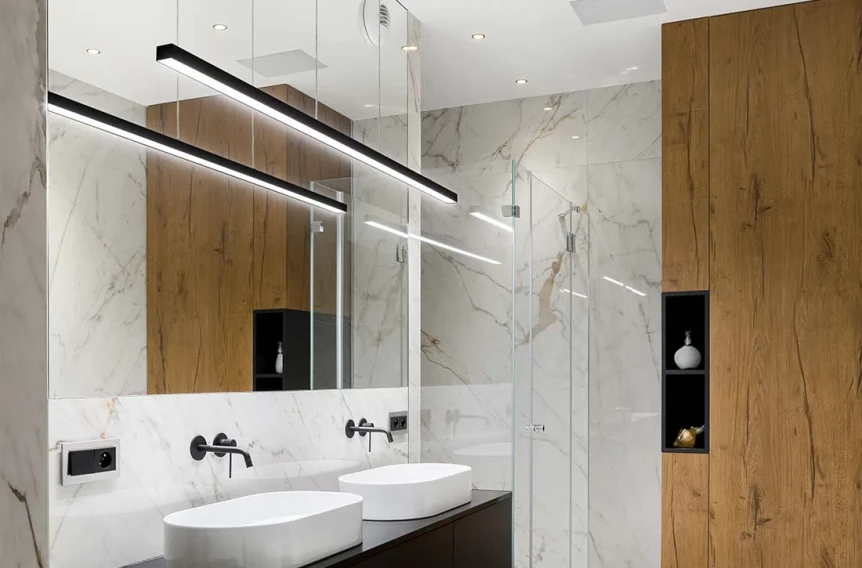
Double vanities work best in bathrooms with enough wall width to accommodate them without feeling cramped. As a rough guide, a double vanity needs at least 120 centimeters to look proportional, with 150 centimeters or more giving each basin genuine comfort and counter space.
In smaller bathrooms or those used by one person, a single basin vanity is the right choice. It can be centered on a wall or positioned off-center to make room for additional storage, depending on the room’s configuration.
Which Sink Type Works Best?
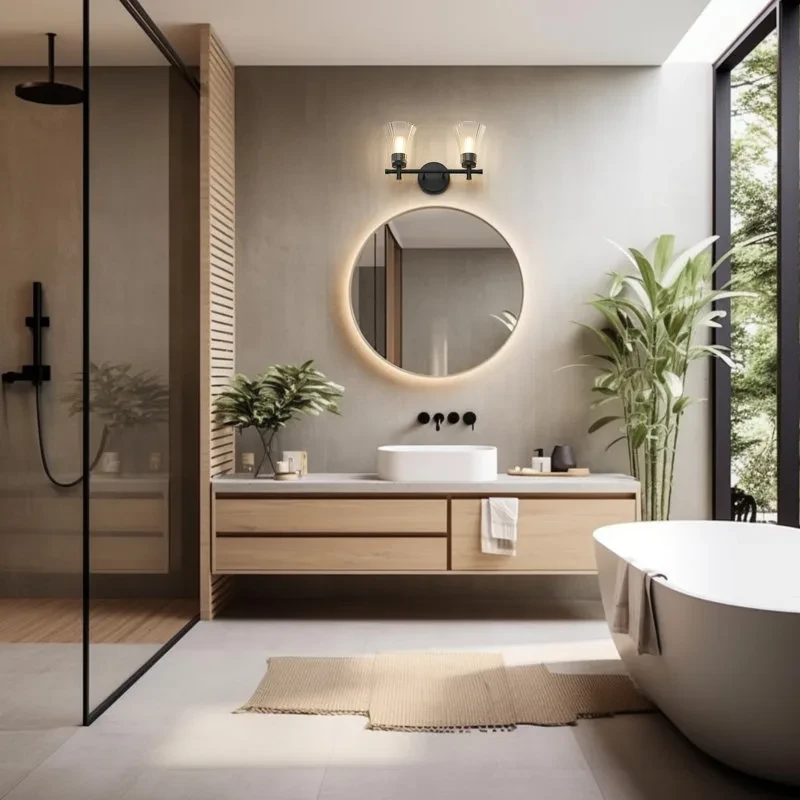
The sink type you choose has a significant effect on both the look of the vanity and the practicality of the counter surface. The three main options in modern bathroom design each have distinct characteristics.
Undermount sinks are set below the level of the counter, with the rim of the basin invisible from above. This leaves a clean, uninterrupted counter surface that wipes down in seconds because there is no lip or edge to clean around. Undermount sinks suit stone, engineered stone, and solid surface countertops particularly well, as the material can be finished right to the basin edge without interruption. This combination of a stone counter with an undermount sink is one of the most reliably elegant choices in a modern bathroom.
Vessel sinks sit above the counter surface entirely, like a bowl placed on top of the vanity. They make a strong visual statement and suit bathrooms where the vanity is intended to be a feature. The tradeoff is that they typically require a taller counter or a wall-mounted tap rather than a deck-mounted one, and the gap between the base of the vessel and the counter surface collects water and product if not cleaned regularly. They work best in bathrooms used by adults rather than children.
Integrated sinks are formed from the same material as the counter, usually a solid surface, ceramic, or cast resin, with no joint between the basin and the surround. They give the cleanest look possible: a single seamless surface with no grout lines, no edges, and no places for water or product to accumulate. Integrated designs have become significantly more refined in recent years and are increasingly available at accessible price points.
How to Choose a Counter Material
The vanity counter is the most tactile surface in the bathroom and the one most in contact with water, products, and daily use. The five materials below cover almost every modern bathroom vanity on the market; the table summarizes how each one behaves over time, and the paragraphs underneath go deeper.
| Material | Look | Stain / etch resistance | Maintenance | Best for |
|---|---|---|---|---|
| Natural stone (marble, limestone) | Luxurious, unique veining, ages with patina | Low: etches from acid, stains from cosmetics | Seal twice a year; coaster everything | Adults-only bathrooms, owners who accept patina |
| Granite | Strong stone presence, less veining than marble | Medium-high when sealed | Seal annually; otherwise wipe-down only | High-use family bathrooms wanting real stone |
| Engineered stone (quartz) | Marble-look or solid color, very consistent | High: stain and etch resistant | Wipe-down only; no sealing | Most modern bathrooms; the safe default |
| Porcelain or solid surface | Seamless, available in matte and warm tones | High | Wipe-down only | Integrated sink designs; minimalist directions |
| Timber (solid or timber-effect) | Warm, organic, softens a clinical bathroom | Low (solid) to medium (engineered) | Annual sealing for solid; wipe-down for engineered | Warm modern, Japandi-leaning bathrooms |
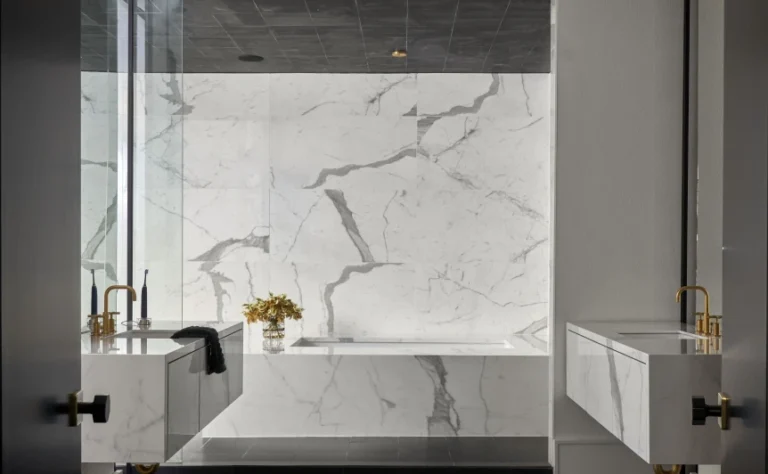
Natural stone counters in marble, granite, or limestone are the most luxurious option. Each piece is unique, the material has a depth and variation that nothing manufactured fully replicates, and it ages beautifully in the right conditions. The important caveats are that marble in particular is susceptible to staining from cosmetics and etching from acidic products like some cleansers and perfumes; engineered stone or a high-quality porcelain countertop achieves a very similar aesthetic with significantly less care required.
This is where the marble tradeoff bites. Etching from perfume, hand soap and the wrong cleanser is not visible from across the room, but it is visible up close, every day, in exactly the places the counter gets used most. Quartz or porcelain in a marble-look pattern gives the visual benefit of stone without a decade of negotiating with bottles you are supposed to be enjoying.
Solid surface materials, including composite and cast resin options, offer a seamless, non-porous surface that is highly resistant to staining and very easy to clean. They can be formed into integrated sink designs that are not possible with natural stone, and they are available in a wide range of colors and finishes. Matte versions in warm white, soft gray, or pale terracotta are particularly effective in modern bathroom contexts.
Timber and timber-effect surfaces bring warmth and organic texture that stone and solid surfaces cannot match. Solid timber requires careful sealing and maintenance to withstand the humidity of a bathroom environment but is deeply beautiful in a Japandi or warm-modern direction. Timber-effect laminates and water-resistant engineered finishes offer much of the visual warmth of real timber with considerably less maintenance.
How Should You Plan Vanity Storage?
The storage configuration of your vanity will have more effect on the daily experience of your bathroom than almost any aesthetic decision. A vanity that looks beautiful but does not provide enough of the right kind of storage will be a constant source of minor frustration.
Deep drawers are generally more useful than shelves behind cabinet doors. With drawers, everything is visible at once when they are opened, items at the back are as accessible as items at the front, and the drawer itself can be divided with inserts to keep different categories of products organized. Shelves behind cabinet doors require things to be moved to access items at the back, and tend to become messy more quickly.
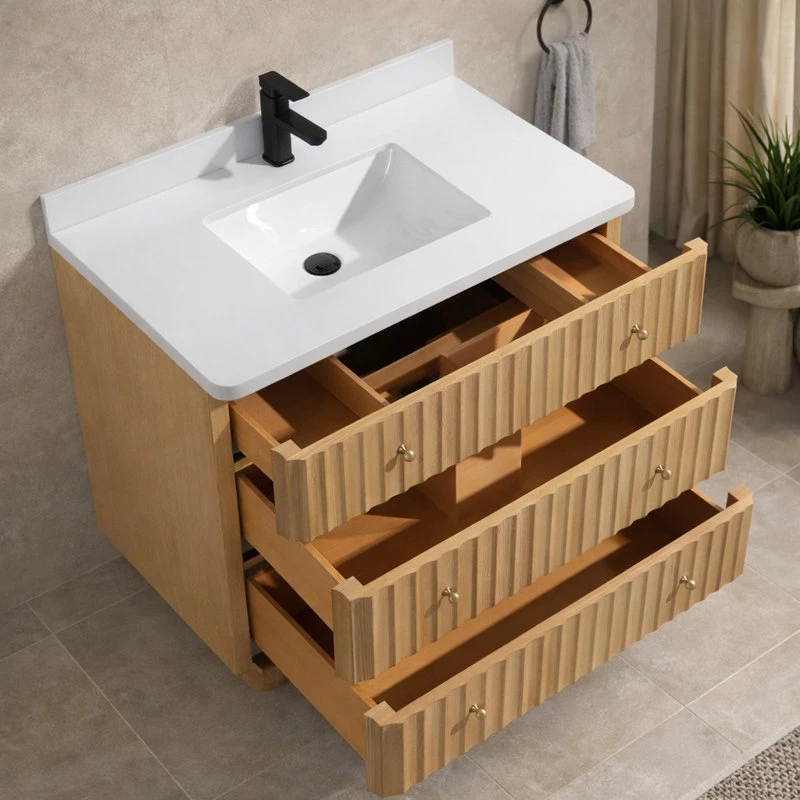
A combination of one shallow drawer for daily items, a deeper drawer for larger products, and a cupboard space for spare stock and cleaning products covers most households efficiently. If the bathroom is used by two people, mirrored storage arrangements on each side of a double vanity give each person their own organized space.
Which Hardware Finish Ties the Bathroom Together?
Taps, handles, and any other hardware on the vanity should be chosen in a finish that matches or closely complements every other piece of metal hardware in the bathroom: the towel rail, the toilet roll holder, any shower fittings, and the light switches if they are metal. This consistency is one of the clearest markers of a well-designed bathroom and one of the easiest things to get wrong.
Matte black hardware has had a significant period of popularity and continues to work well in bathrooms with a monochrome palette or strong graphic tile choices. Brushed brass and unlacquered brass suit warmer, more organic bathroom schemes and pair beautifully with stone, timber, and earthy palettes. Brushed nickel and polished chrome remain the most versatile and timeless choices, sitting comfortably in both warm and cool bathroom contexts.
Avoid mixing more than two hardware finishes in a single bathroom. Occasionally, a deliberate combination of two metals (brushed brass and matte black for instance) can work well. More than two becomes difficult to resolve and tends to read as indecision rather than intention. For the same approach in another style, see warm earthy paint colors that work in modern homes.
Frequently Asked Questions
How much should I spend on a modern bathroom vanity?
For a piece you want to keep for at least a decade, 800 to 2,500 dollars is the range where real construction and quality finishes live. Below 500 dollars the market shifts to thin laminate over MDF that swells from bathroom humidity within a few years. Above 3,500 dollars you are paying for designer silhouettes, solid hardwood carcasses, integrated lighting, and high-end stone or solid surface tops. Custom built-in vanities run higher again but pay back in fit and storage configuration for the specific room.
Can I install a floating vanity in a drywall bathroom?
Usually yes, but only with the right preparation. A floating vanity loaded with stone, water, and daily use needs to attach into structural members, not just into drywall. The cleanest fix is to add a plywood blocking plate behind the drywall during rough-in, sized to span the vanity’s mounting points. Talk to your installer about this before the wall is closed up; retrofitting it later means cutting open and re-finishing the wall, which usually costs more than doing the work during the renovation.
Is marble worth it on a bathroom vanity?
Only if you can accept patina. Marble is beautiful, unique, and develops character over years, but it etches from perfume, hand soap, hairspray, and most acidic cleansers, and it stains from cosmetics. Households that use coasters religiously and don’t mind a softening surface enjoy marble; households that want a counter that still looks new in five years are usually better served by engineered stone or a porcelain top in a marble-look pattern, both of which deliver most of the visual benefit with a small fraction of the maintenance.
What size vanity do I need for a small bathroom?
For a bathroom under about 5 square meters, a 60 to 75 centimeter single basin vanity is usually the right scale, ideally floating to keep visual floor space. Below 60 centimeters the basin and counter become tight to use; above 75 centimeters in a small room, the vanity starts to dominate. A wall-mounted unit with shallow drawers and a slim profile reads larger than its dimensions suggest, especially in a room with limited wall length.
What is the most overlooked modern bathroom vanity decision?
Hardware finish consistency. The vanity tap, drawer pulls, towel rail, toilet roll holder, and any shower fittings all need to share a finish family or read as a deliberate two-metal combination. Bathrooms with three or four mismatched finishes look unfinished even when every individual piece is beautiful. Pick the finish at the same time as the vanity and confirm it across every piece of bathroom hardware before installation.
Where to Read Next
Once your vanity is sorted, these guides cover the rest of the bathroom: best modern bathroom tiles and flooring for the surface decisions the vanity sits inside, modern bathroom lighting for the layered light plan that lands on the counter, bathroom storage solutions for the broader storage logic, bathroom color schemes that work for the palette decision, and modern bathroom accessories and decor for the hardware-finish thread that ties everything together. For the full roadmap, the complete guide to modern bathroom design is the place to start.