Mid-Century Modern Living Room Ideas: Furniture, Layout, and Styling Tips

By Tereza Hower | Published April 14, 2026
The living room is where mid-century modern design feels most natural. The style’s emphasis on low-profile furniture, warm wood tones, and considered arrangement suits the format of a living space almost perfectly. It creates rooms that are visually calm but not cold, furnished but not crowded, and rooted in a specific aesthetic without feeling like a period recreation.
This guide covers how to approach a mid-century modern living room from the ground up, including furniture selection, layout principles, color, lighting, and the finishing details that bring it all together.
Start with the Sofa
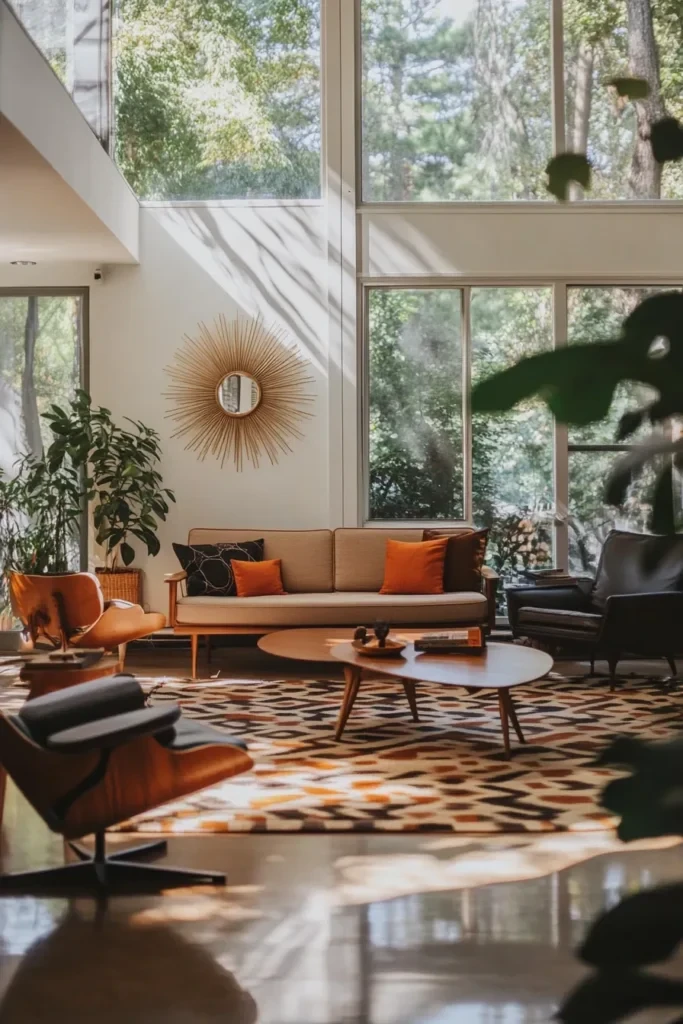
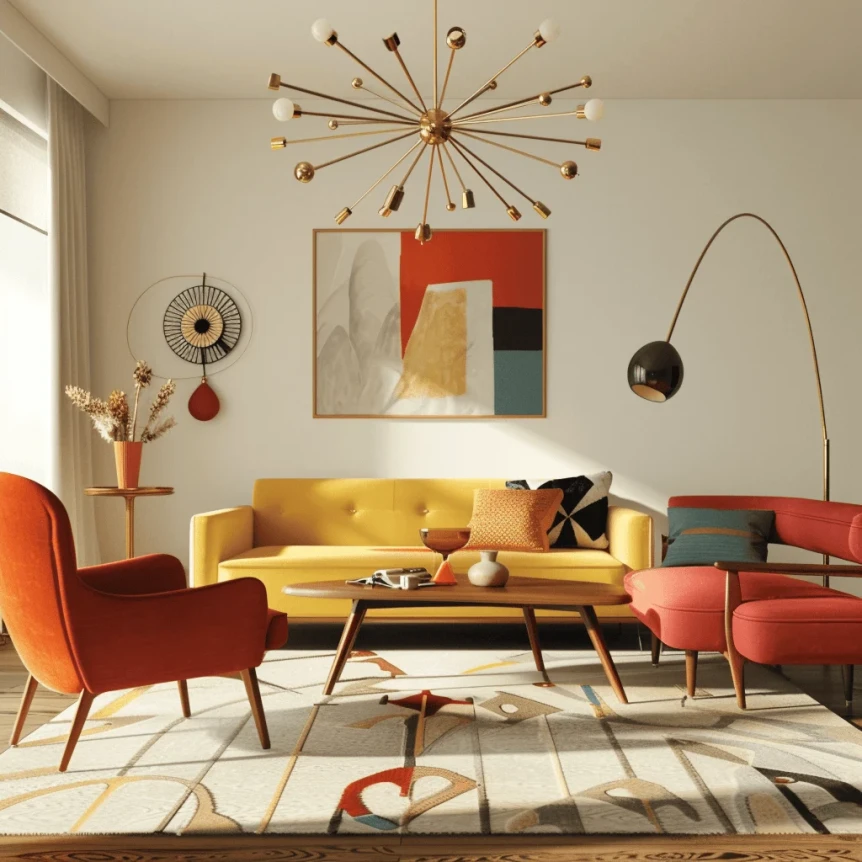
The sofa is the visual anchor of a mid-century modern living room, and the silhouette matters more than almost anything else. A true mid-century modern sofa sits low to the ground, has a straight, tailored back, and features tapered wooden legs that lift it clearly off the floor. The legs are what give the piece its characteristic lightness.
Choosing the Right Profile
Look for a sofa where the back is relatively low and the seat depth is generous without being oversized. Track arms, meaning arms that are the same height as the back, create a clean rectangular profile that reads as distinctly mid-century. Avoid sofas with rolled arms, tufted backs, or skirts that reach the floor, as these details belong to a different aesthetic entirely.
Upholstery Colors and Materials
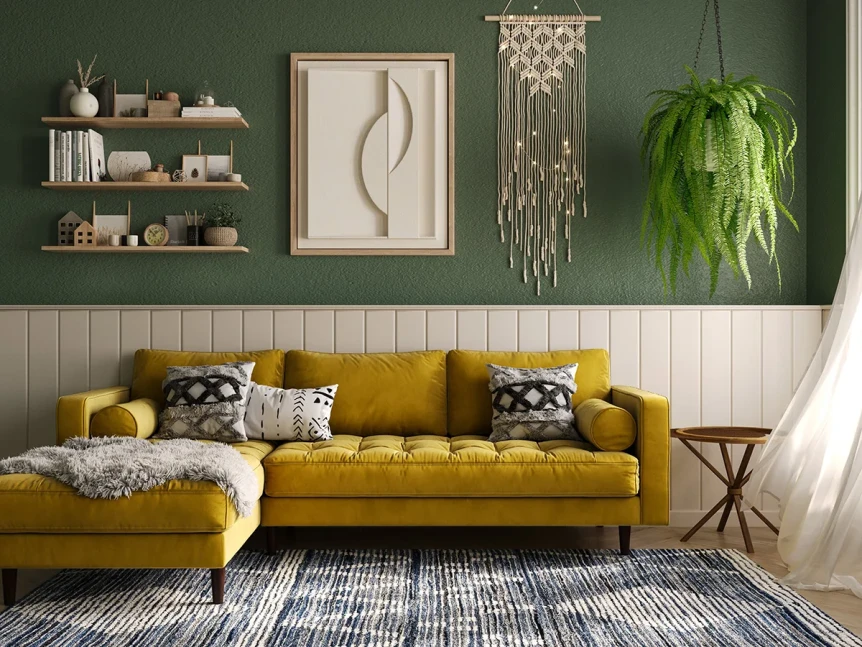
Mid-century modern sofas look best in solid colors or very subtle textures. Warm neutrals like cream, camel, and warm gray are the most versatile. Accent colors like mustard yellow, burnt orange, teal, or forest green make a stronger statement and work well when the rest of the room stays neutral. For materials, boucle, wool, velvet, and leather all suit the style. Save pattern for the rug or cushions rather than the sofa itself.
Add a Lounge Chair
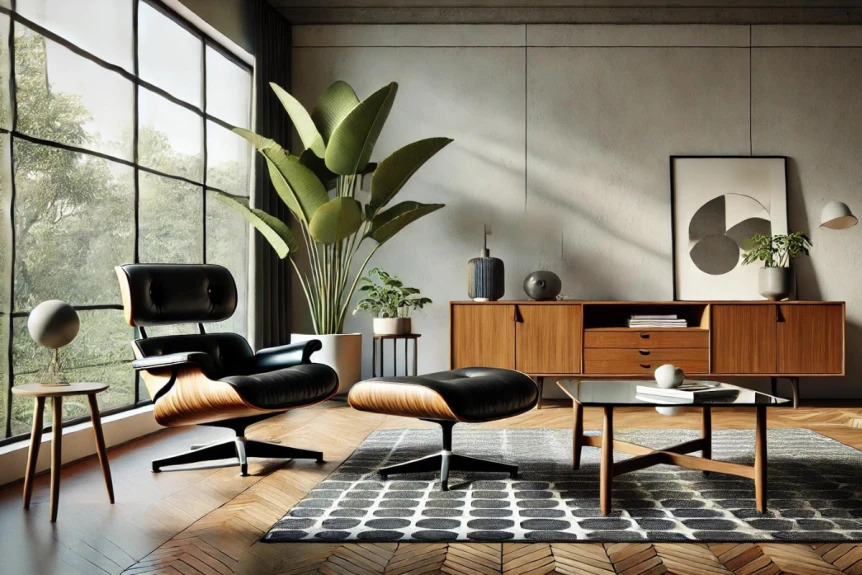
A lounge chair is nearly essential in a mid-century modern living room. It adds visual variety to the seating arrangement and gives the room a sense of considered completion that a sofa alone can’t achieve. The lounge chair is also where the most iconic mid-century forms appear: the Eames Lounge Chair, the Egg Chair, the Womb Chair, the Tulip Chair.
You don’t need an original or even a licensed reproduction to achieve the look. Many furniture makers produce chairs that follow the same design principles, with tapered or pedestal bases, organic shells, and upholstered seats in appropriate materials. What matters is the silhouette and the spirit rather than the label.
Positioning the Lounge Chair
A lounge chair works best positioned at an angle to the sofa, creating a conversational grouping rather than a formal facing arrangement. A side table between the chair and the sofa ties the grouping together and provides a practical surface for a lamp or a drink. This arrangement also allows the chair’s legs to be visible from multiple angles, which is important since they’re often the most visually interesting part of the piece.
The Credenza or Sideboard
A walnut or teak credenza along one wall is one of the most defining elements of a mid-century modern living room. It’s long, low, and typically features tapered legs, sliding or hinged doors with minimal hardware, and a clean, uninterrupted top surface that serves as a display and styling area.
The credenza provides practical storage for media equipment, books, and miscellaneous items while functioning as a room anchor. The wall above it is a natural location for a piece of art, a sunburst mirror, or a curated arrangement of objects at varying heights.
Coffee Table and Side Tables
The mid-century modern coffee table is typically low, with an organic or geometric form. Wood, glass, and stone all work well. The Noguchi-style table, with its sculptural base and glass top, is the archetype. More accessible versions in solid walnut with tapered legs or hairpin legs follow the same principles and work just as well in most rooms.
Side tables are an opportunity to introduce variety in form. A round side table at a different height than the coffee table adds visual interest without creating clutter. Nesting tables in walnut or metal are particularly practical and feel characteristically mid-century in their considered functionality.
Layout Principles
Mid-century modern furniture is designed to be seen from all sides. The tapered legs that define the style create a sense of visual lightness that benefits from space around each piece. This means a mid-century modern living room generally works better with furniture pulled away from the walls rather than pushed against them.
Define the Seating Area with a Rug
A rug is essential in a mid-century modern living room, both to define the seating area visually and to introduce pattern and texture that warms the space. The rug should be large enough that at least the front legs of every piece of furniture in the seating group sit on it. A rug that’s too small makes the furniture look unanchored.
Geometric patterns in warm tones, abstract designs, and flat-weave or low-pile constructions all suit mid-century modern rooms well. Avoid ornate or floral patterns, which belong to a different aesthetic, and very thick, shaggy piles, which compete with the clean lines of the furniture.
Avoid Overcrowding
Mid-century modern rooms are edited rather than filled. Every piece of furniture has a clear purpose and a defined position. Resist the temptation to add additional seating or accent furniture that the room doesn’t need. The negative space in a mid-century modern interior is part of the composition, not a gap to be filled.
Color and Materials in the Living Room
A mid-century modern living room works best with a warm neutral base: walls in warm white, cream, or a very soft warm gray. This lets the furniture do the visual work without the walls competing. The natural wood tones of the furniture become the primary color element, and one or two accent colors are introduced through soft furnishings.
If you want to introduce more color, consider a single accent wall in a characteristic mid-century tone like burnt orange, deep teal, or forest green. This creates a backdrop for a credenza or a seating area without committing the entire room to a bold palette.
Lighting the Mid-Century Modern Living Room
Lighting in a mid-century modern living room should be layered and considered. A statement overhead fixture, either a Sputnik chandelier, a cluster of globe pendants, or a sculptural flush-mount, establishes the style immediately. An arc floor lamp beside the lounge chair or sofa adds a practical task light and a sculptural vertical element. Table lamps on the credenza or side tables complete the layering and add warmth in the evenings.
All fixtures should share a consistent metal finish, typically brass, chrome, or brushed nickel. Brass has become the most popular choice in contemporary mid-century interiors for the warmth it adds to the walnut-led palette.
For a full guide to mid-century lighting choices, see Mid-Century Modern Lighting Ideas.
Finishing Touches
Accessories in a mid-century modern living room are chosen with restraint. A few well-placed objects on the credenza, one large plant in a warm ceramic planter, a sunburst mirror or a large piece of abstract art on the wall, and geometric cushions on the sofa are enough. The temptation to add more should be resisted; the style is at its best when it’s edited.
For more on styling decisions, see our guide to Mid-Century Modern Decor and Accessories. For color direction, Mid-Century Modern Color Palettes and Patterns covers how to build a cohesive palette. For furniture decisions in detail, read Mid-Century Modern Furniture: Key Pieces Worth Knowing. And to understand the style’s foundations, visit The Complete Guide to Mid-Century Modern Design.
Frequently Asked Questions
What makes a living room look mid-century modern?
The key elements are low-profile furniture with tapered wooden legs, warm wood tones (particularly walnut or teak), a restrained color palette with one or two characteristic accent colors, a geometric rug, and a statement light fixture. The overall arrangement should feel open and considered rather than crowded.
What color sofa works best in a mid-century modern living room?
Warm neutrals like cream, camel, and warm gray are the most versatile and work with any wood tone. Bold accent colors like mustard yellow, burnt orange, teal, and forest green create a stronger mid-century statement when the rest of the room stays neutral. Avoid busy patterns on the sofa itself since the silhouette is what carries the aesthetic.
Do I need original mid-century furniture to achieve the look?
No. Many furniture makers produce pieces that follow mid-century modern design principles without being licensed reproductions of original designs. What matters is the silhouette: tapered legs, low profile, clean lines, and warm wood tones. A room built around well-designed contemporary pieces in the mid-century spirit will read as authentically as one furnished with vintage originals.
What rug works best in a mid-century modern living room?
Geometric patterns in warm tones, abstract designs, and flat-weave or low-pile constructions all suit mid-century modern rooms. The rug should be large enough that at least the front legs of every piece of furniture in the seating group sit on it. Avoid ornate, floral, or very shaggy rugs since these work against the clean lines of mid-century furniture.
How do I add mid-century modern style without buying all new furniture?
Start with the most visible elements: a statement light fixture, a geometric rug, and one or two accessories like a sunburst mirror or a walnut-toned side table. These additions can shift the feel of a room significantly without replacing the larger furniture pieces. If you can change one piece of furniture, a lounge chair with tapered legs or a low credenza will have the most impact.
Build the Room Around Strong Furniture
A mid-century modern living room comes together when the furniture is right. Start with a sofa that has the correct silhouette, add a lounge chair with a characteristic form, anchor the space with a credenza and a rug, and layer the lighting thoughtfully. From there, the accessories and color follow naturally.
The style rewards patience. Buying one strong piece at a time and building outward produces a better result than furnishing everything at once. Take the time to find pieces with genuine character and the room will reward it.
For the full style guide, return to The Complete Guide to Mid-Century Modern Design.