Mid-Century Modern Bedroom Ideas: Warm, Calm, and Considered

By Tereza Hower | Published April 14, 2026
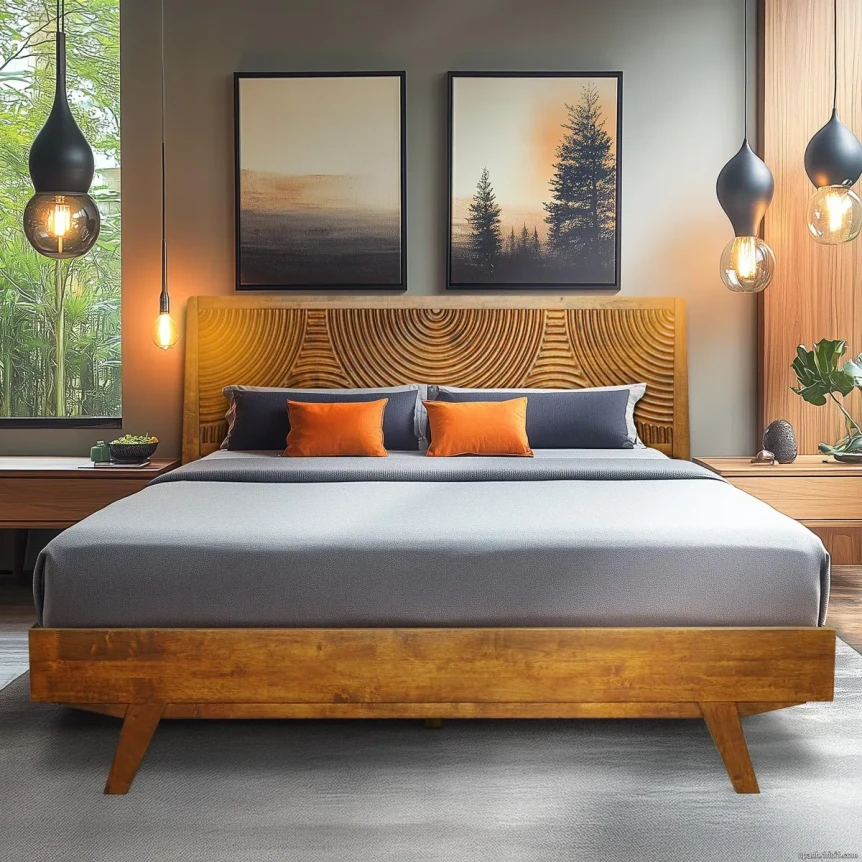
A mid-century modern bedroom is one of the most satisfying rooms to put together. The style’s emphasis on warm wood, clean lines, and restrained decoration translates naturally into a space that feels calm and genuinely restful. There’s no visual noise, no competing elements, nothing that doesn’t belong. What remains is a room that looks as good in the morning as it does at night.
This guide covers the furniture, textiles, lighting, and finishing details that make a mid-century modern bedroom work.
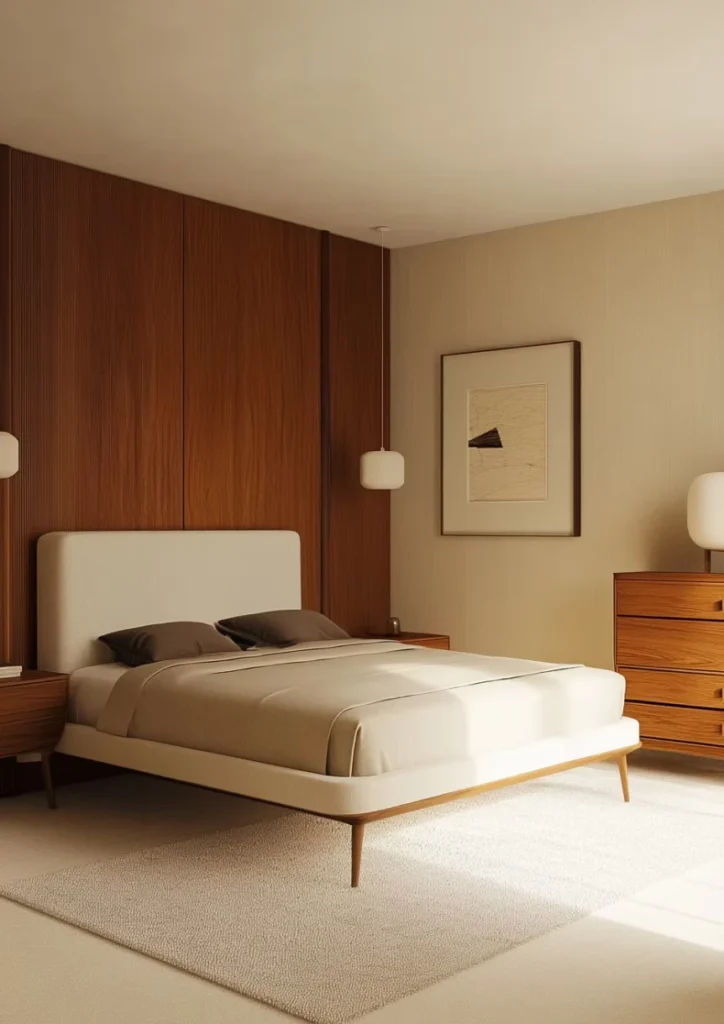
The Bed Frame: Low, Warm, and Clean
The bed frame sets the tone for everything else in a mid-century modern bedroom. The characteristic form is low to the ground, with a simple platform or slatted base and either a minimal upholstered headboard or a clean wood headboard with no ornament. The profile is horizontal and linear, with the same tapered or angular legs that define mid-century furniture throughout.
Headboard Options
A simple upholstered headboard in a warm neutral fabric, cream, camel, warm gray, or boucle, is the most versatile choice. It adds a soft element that balances the harder lines of wood furniture without introducing the visual bulk of a large, statement headboard. A wood headboard with a clean panel or slatted design is more strictly mid-century and works particularly well when the wood tone matches the nightstands and dresser.
Bed Height
Mid-century modern beds sit low. This creates the horizontal emphasis that’s central to the style and makes the room feel more grounded and calm. If you’re adding a mattress to an existing low frame, check that the combined height still reads as low rather than standard. The goal is a bed that looks like it belongs to the floor rather than floating above it.
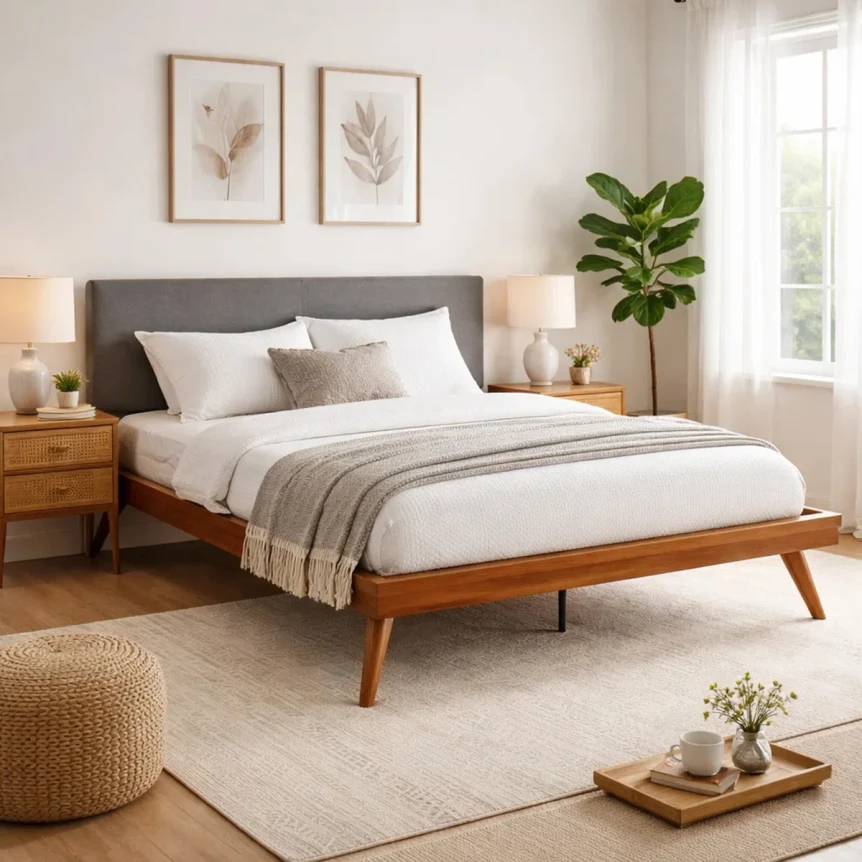
Nightstands
Mid-century modern nightstands are typically low, with one or two drawers, tapered legs, and minimal hardware. Walnut is the most characteristic material. The nightstand should sit at roughly mattress height, keeping the horizontal line consistent with the bed frame rather than interrupting it with a taller piece.
A single drawer nightstand is often more appropriate than a taller, multi-drawer unit. The bedroom in mid-century modern design is not a storage room; it’s a retreat. Keep the nightstands simple, with just a lamp, a book, and perhaps a small ceramic object on top.
Dresser and Storage
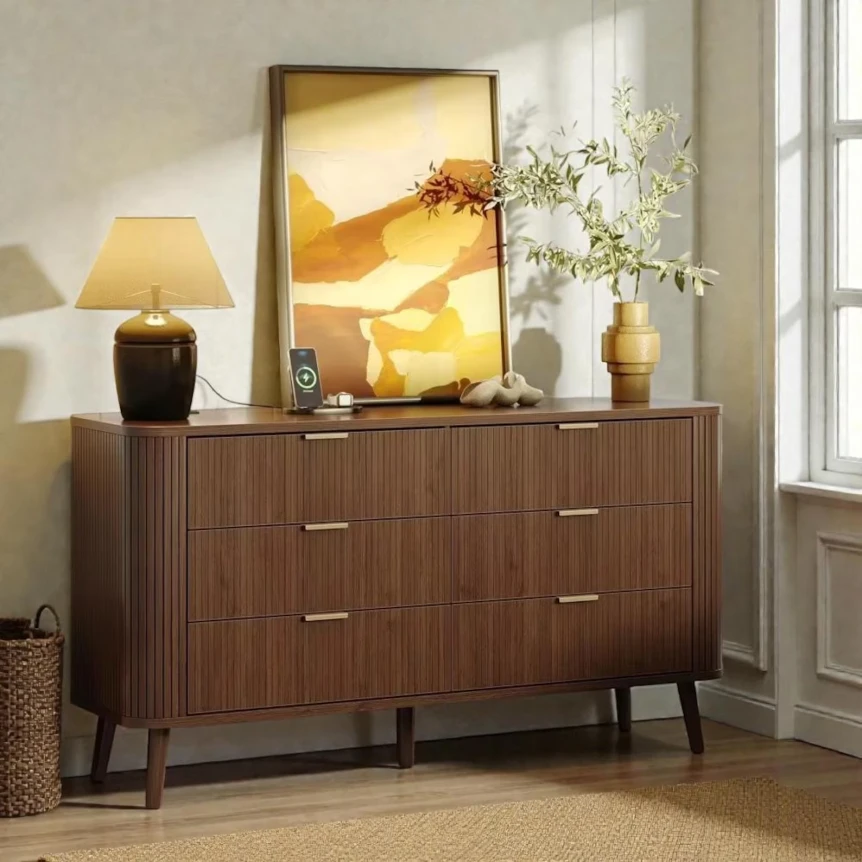
A low, wide dresser or chest of drawers in walnut continues the warm wood palette and horizontal emphasis of the bedroom. The best mid-century modern dressers have clean fronts with minimal hardware, tapered legs, and a consistent wood grain across all drawers. Brass or chrome pulls are the most appropriate hardware choice.
If the bedroom has a closet that handles most clothing storage, a smaller dresser or even a single low chest can be sufficient. The goal is to have enough storage that the surfaces remain clear rather than accumulating items that belong elsewhere.
Bedding and Textiles
Bedding in a mid-century modern bedroom is restrained rather than layered. A simple duvet or coverlet in a warm neutral, cream, oatmeal, warm white, or soft warm gray, forms the base. One or two accent cushions in a characteristic color like mustard yellow, burnt orange, or teal add warmth without visual complexity.
Materials
Linen and cotton are the most appropriate bedding materials for a mid-century modern bedroom. They have a natural texture that complements warm wood furniture without competing with it. Avoid heavily patterned duvets or elaborate layered bedding that suits more maximalist styles. A throw blanket in boucle or wool draped at the foot of the bed adds texture and warmth without adding visual weight.
A Bedroom Rug
A rug under the bed, large enough that you step onto it when getting out of bed on either side, adds warmth and defines the sleeping area. A geometric pattern in warm tones suits the style naturally. The rug should sit under the lower two-thirds of the bed rather than centered beneath it, so the pattern is visible on three sides.
Lighting
Bedroom lighting in a mid-century modern room serves both function and atmosphere. Table lamps on the nightstands are the primary light source for reading and ambient evening use. Look for lamps with ceramic or glass bases in organic forms, warm tones, and simple drum or cone shades. Brass hardware and walnut details connect the lamps to the broader material palette.
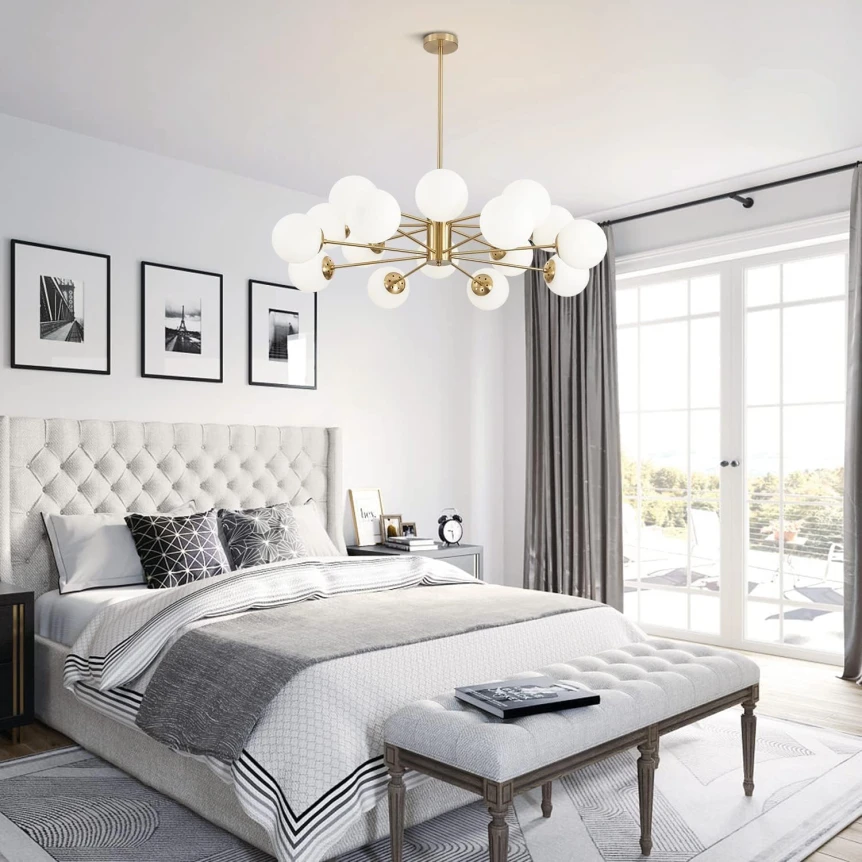
A pendant light or semi-flush ceiling fixture centered over the bed adds a statement element and frees up the nightstand surfaces. Choose a fixture with a mid-century character: a dome in spun metal, a globe cluster, or a minimal geometric form in brass or chrome.
Color in the Mid-Century Modern Bedroom
Bedroom walls in a mid-century modern interior are typically kept warm and light, letting the furniture and textiles carry the color. Warm white, cream, and soft warm greige are all strong choices. If you want to introduce more color, a single accent wall behind the bed in a deeper tone, warm terracotta, sage green, or muted teal, creates a backdrop that grounds the bed without darkening the whole room.
For a full guide to color in mid-century modern interiors, see Mid-Century Modern Color Palettes and Patterns. For lighting choices, read Mid-Century Modern Lighting Ideas. For decor and finishing touches, see Mid-Century Modern Decor and Accessories. And for the full style foundation, visit The Complete Guide to Mid-Century Modern Design.
Frequently Asked Questions
What does a mid-century modern bedroom look like?
A mid-century modern bedroom features a low platform or slatted bed with tapered legs, a simple upholstered or wood headboard, walnut or teak nightstands and dresser, warm neutral bedding with one or two accent colors, and layered lighting with ceramic or brass table lamps. The overall impression is warm, uncluttered, and horizontally oriented.
What color should bedroom walls be in a mid-century modern room?
Warm white, cream, and soft warm greige are the most reliable choices. They let the furniture and textiles carry the color without the walls competing. For more drama, a single accent wall in terracotta, sage green, or muted teal behind the bed works well without darkening the whole room.
What wood is best for mid-century modern bedroom furniture?
Walnut is the quintessential choice, prized for its warm, rich grain. Teak is equally characteristic and was particularly common in Scandinavian mid-century design. Oak in a warm, natural finish works well too. The key is to use one wood tone consistently throughout the room rather than mixing multiple woods.
How do I style a mid-century modern bedroom on a budget?
Focus on the bed frame first since it has the most visual impact. A low platform frame with tapered legs, even in a more affordable material, establishes the aesthetic immediately. Add matching nightstands in a warm wood tone, replace existing lighting with ceramic or brass table lamps, and introduce one or two accent colors through cushions and a throw. A geometric rug under the bed completes the look without requiring new furniture.
What bedding works best in a mid-century modern bedroom?
Simple, unadorned bedding in warm neutrals like cream, oatmeal, and warm white works best. Linen and cotton have the right natural texture for the style. One or two accent cushions in a characteristic color like mustard yellow or burnt orange add warmth without visual complexity. Avoid heavily patterned or elaborately layered bedding, which works against the clean simplicity of mid-century furniture.
A Bedroom Built for Rest
The mid-century modern bedroom is one of the style’s most successful applications because its principles align naturally with what a bedroom should be: calm, warm, uncluttered, and conducive to rest. Start with a strong bed frame, build outward with matching wood-toned furniture, keep the surfaces clear, and let the lighting do the atmospheric work in the evenings.
For the complete mid-century modern style guide, return to The Complete Guide to Mid-Century Modern Design.