Mid-Century Modern Lighting Ideas: Fixtures That Define the Style

By Tereza Hower | Published April 13, 2026 | Updated October 12, 2026
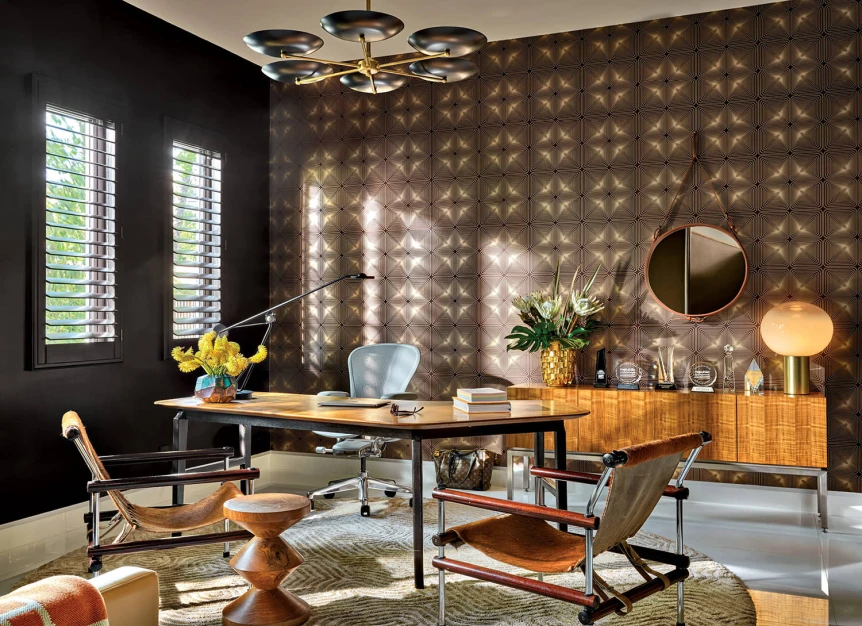
Lighting was one of the most creative areas of mid-century modern design. The period produced some of the most celebrated light fixtures ever made, many of which remain in production today. A well-chosen light fixture can establish the mid-century modern aesthetic more efficiently than almost any other single element, which makes lighting decisions worth taking seriously.
Key Takeaways
- A single sculptural fixture establishes the mid-century modern look faster than any other element.
- The Sputnik chandelier, arc floor lamp, and tripod lamp are the three signature forms.
- Brass is the go-to finish for warmth against a walnut palette, while chrome reads more period-authentic.
- Keep one dominant metal finish across all the fixtures in a room.
- Table lamps in matching pairs add symmetry and a sense of calm.
The Sputnik Chandelier
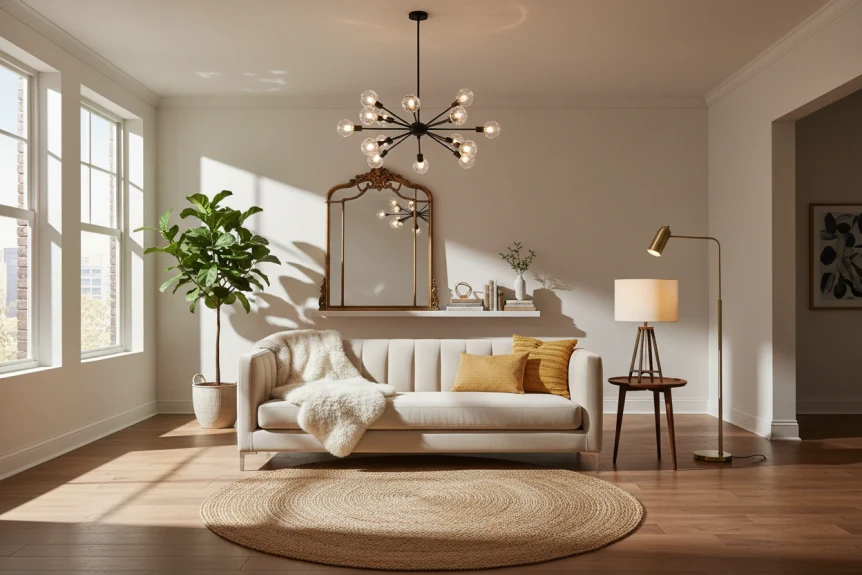
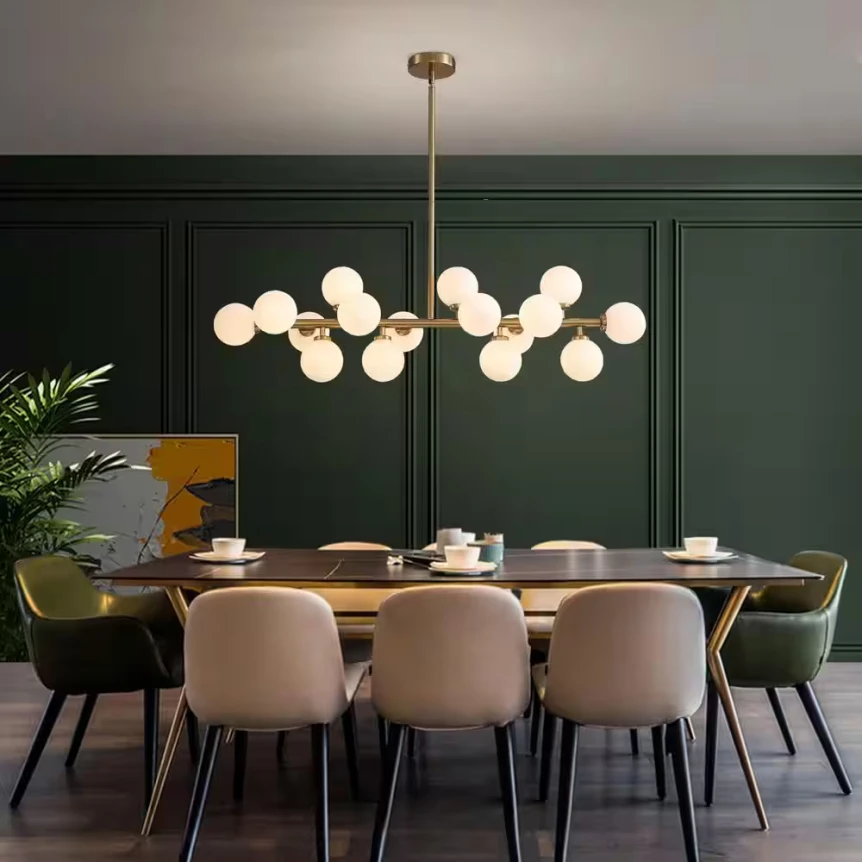
The Sputnik chandelier is the most recognizable mid-century modern light fixture. Named for the Soviet satellite launched in 1957, it features a central sphere from which multiple arms radiate outward, each ending in a globe bulb. The form is bold, sculptural, and unmistakably mid-century.
It works particularly well in dining rooms, where it hangs over the table as a statement piece, and in living rooms with sufficient ceiling height to accommodate the spread of the arms. In brass or chrome, a brass Sputnik chandelier connects directly to the metal palette of mid-century furniture. Smaller versions work in bedrooms and entryways. The fixture reads as equally appropriate in a large, formal room and in a compact apartment with high ceilings.
The Arc Floor Lamp
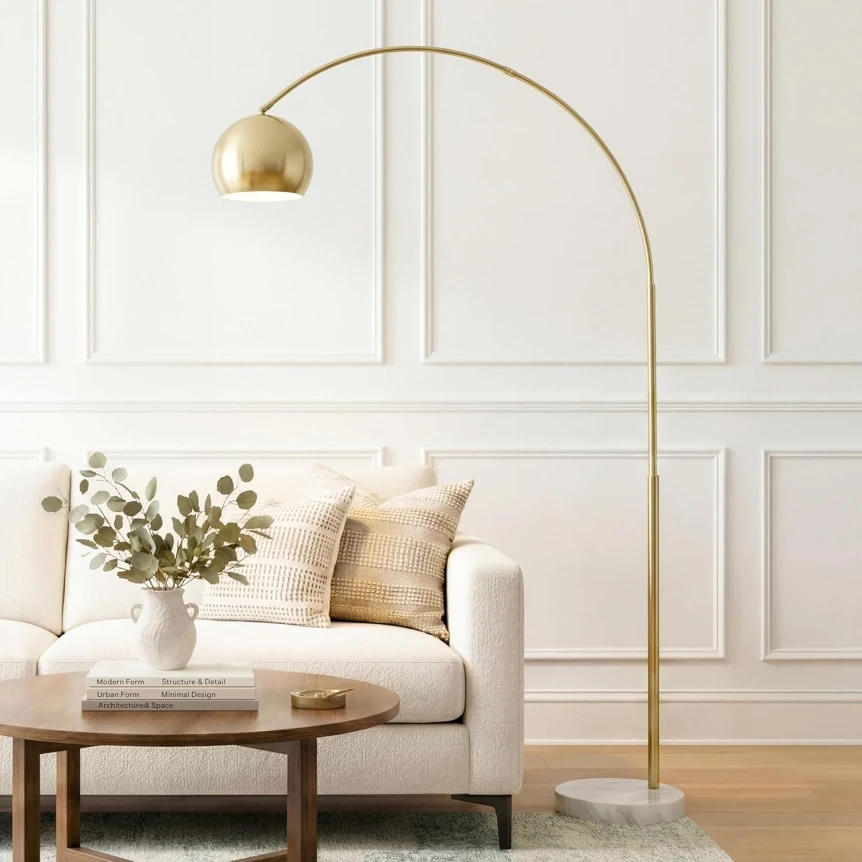
The arc floor lamp is a practical and sculptural addition to any mid-century modern living room. A long, curved arm extends from a weighted base and positions the light source over a seating area, creating the effect of an overhead light without any ceiling installation. This makes it particularly useful in rental spaces or rooms where ceiling fixtures aren’t practical to add.
The arc lamp should be positioned so it arcs over the sofa or lounge chair, with the shade centered over the seating area rather than off to one side. The base typically sits beside or behind the furniture rather than in front of it. A marble or stone base provides the counterweight needed to stabilize the long arm and adds a characteristic material contrast to the metal and wood elements of the room.
The Tripod Floor Lamp
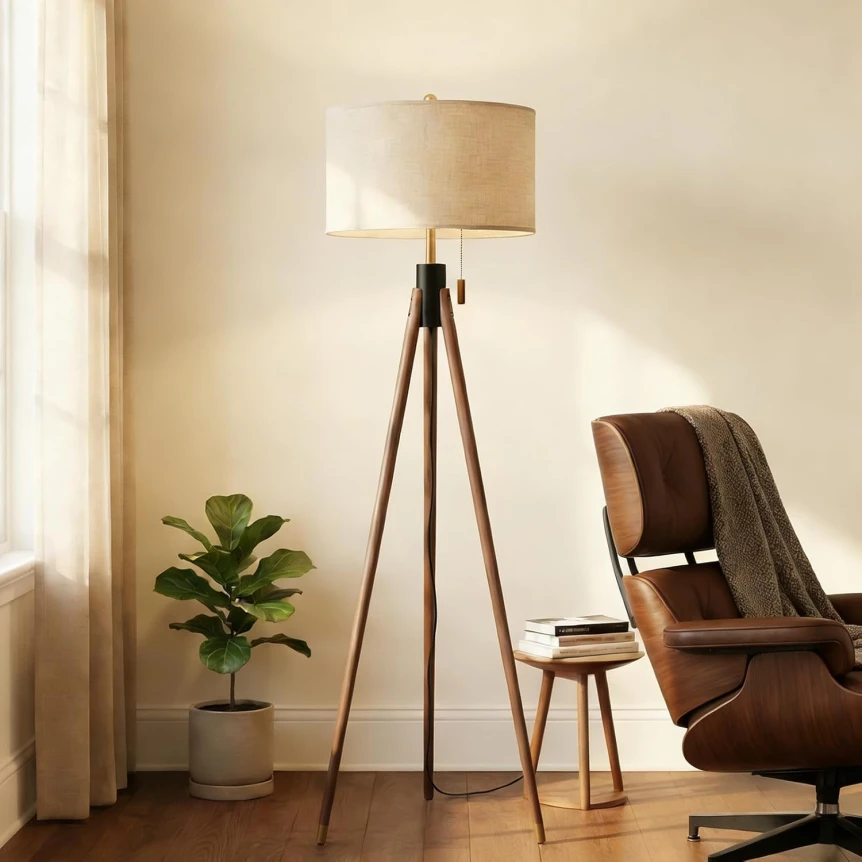
A tripod floor lamp, with three tapered legs supporting a shade at a standard floor lamp height, is another strongly mid-century form. It echoes the tapered-leg furniture in the room and adds a vertical element that balances the predominantly horizontal orientation of mid-century furniture. In walnut with a brass fitting or in metal with a drum shade, it suits the style naturally and works in living rooms, bedrooms, and reading corners.
Dome Pendant Lights
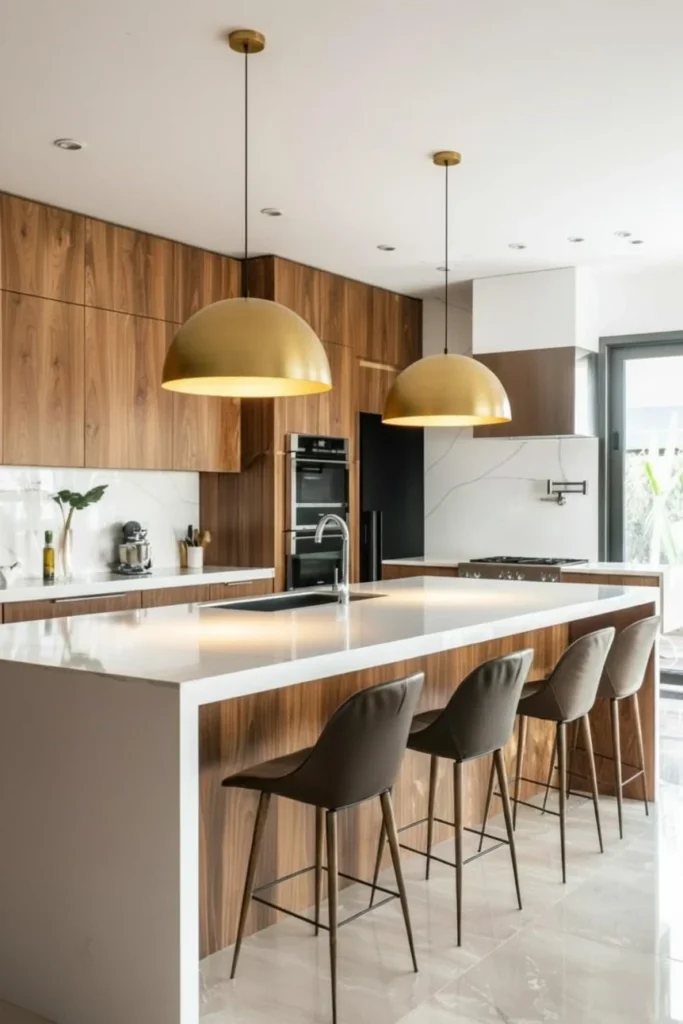
A dome pendant in spun metal, typically brass or painted in a warm tone, is a versatile mid-century modern choice for kitchens, dining rooms, and entryways. The dome form has a period-correct quality without being as bold as the Sputnik. It works well in pairs over a kitchen island, as a single statement over a small dining table, or as a cluster of varying sizes in a larger dining or entryway space.
Globe Pendant Lights
Globe pendants, either single large globes or clusters of smaller ones, are a softer mid-century choice that suits a wider range of room sizes and ceiling heights than the Sputnik chandelier. In amber glass, they add warmth and color to the ceiling plane. In clear glass with visible Edison-style filaments, they create a warm, intimate atmosphere that suits both dining rooms and bedrooms.
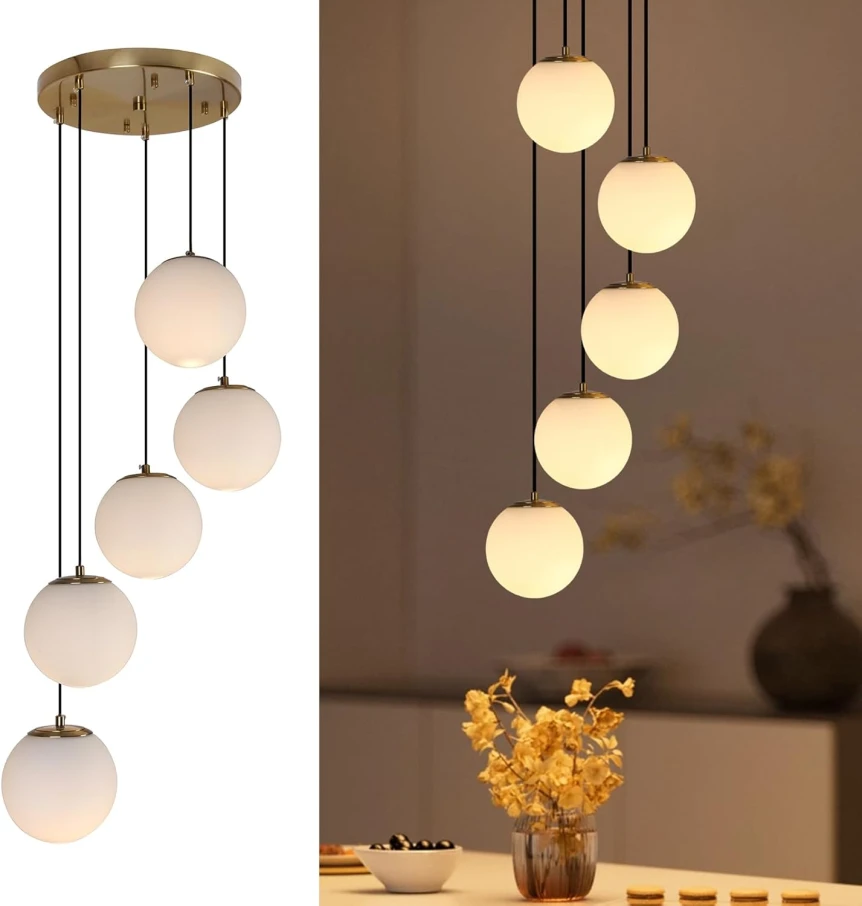
Table Lamps
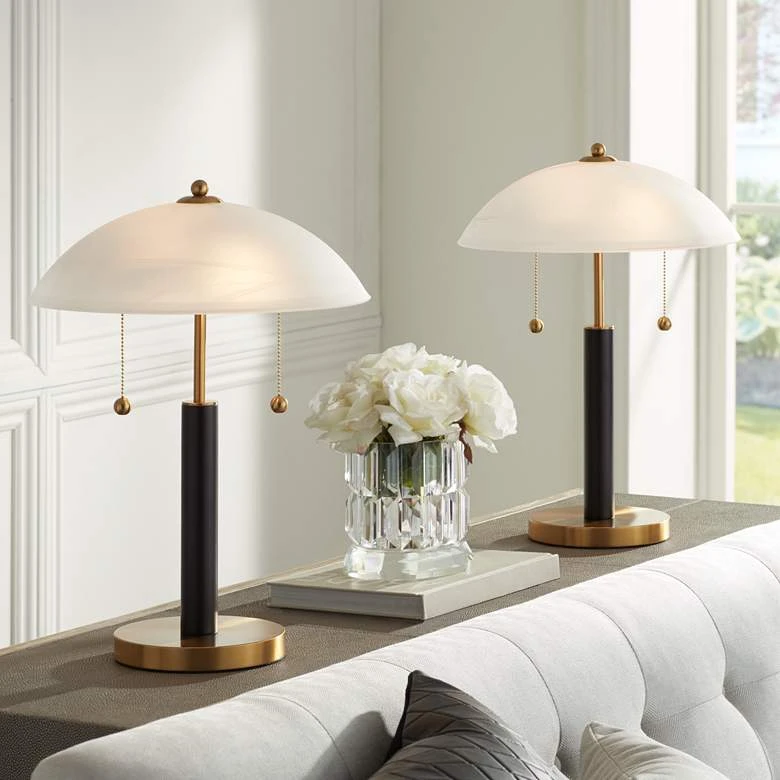
Mid-century modern table lamps typically feature ceramic or glass bases in organic forms, warm glazes, and simple drum or cone shades. The contrast between a sculptural, sometimes colorful base and a clean neutral shade is a classic mid-century combination. Look for bases in warm earthy tones, warm white, or a characteristic accent color like mustard or teal.
Brass hardware connecting the base to the shade and cord details in warm metals continue the material palette throughout. A pair of matching mid-century table lamps on nightstands or on a credenza creates symmetry and visual calm. Mismatched lamps can work when the forms and tones are complementary, but matching pairs are the more classically mid-century approach.
Metal Finishes in Mid-Century Lighting
Brass is the dominant metal finish in contemporary mid-century modern interiors, valued for the warmth it adds to the walnut-led palette. Chrome has a more period-authentic quality, as it was more widely used in the original mid-century era, and works well in rooms with a cooler or more architectural character. Brushed nickel sits between the two and suits rooms where stainless steel appliances are part of the picture.
Consistency across fixtures matters. Choose one dominant metal finish for the lighting in a room and carry it through to the hardware, the faucet in kitchens and bathrooms, and the furniture leg details. This creates a cohesive material language that makes the room feel considered rather than assembled.
Which Mid-Century Lighting Fixture Is Right for Your Room?
Each form of mid-century modern lighting has a setting where it does its best work. The table below pairs the signature fixtures with the rooms and finishes that suit them, so you can match the fixture to the space rather than the other way around.
| Fixture | Best room | Signature finish | Best for |
|---|---|---|---|
| Sputnik chandelier | Dining or living room | Brass or chrome | A bold statement over a table |
| Arc floor lamp | Living room | Marble base, metal arm | Overhead-style light with no ceiling fixture |
| Tripod floor lamp | Living room, bedroom, reading corner | Walnut and brass | A vertical accent beside seating |
| Dome pendant | Kitchen, dining, entryway | Brass spun metal | A softer statement than the Sputnik |
| Globe pendant | Dining room, bedroom | Amber or clear glass | Warm, intimate light |
| Table lamps | Nightstands, credenza | Ceramic base, brass hardware | Symmetry and calm in pairs |
For how lighting fits into specific room designs, see Mid-Century Modern Living Room Ideas, Mid-Century Modern Bedroom Ideas, and Mid-Century Modern Kitchen and Dining Ideas. For color coordination with your lighting choices, read Mid-Century Modern Color Palettes and Patterns. And for the complete style foundation, visit The Complete Guide to Mid-Century Modern Design.
Frequently Asked Questions
What is the most iconic mid-century modern light fixture?
The Sputnik chandelier is the most recognizable mid-century modern light fixture. Its starburst form with radiating arms and globe bulbs is strongly associated with the postwar period and remains widely produced today. The arc floor lamp and tripod floor lamp are also characteristic forms that appear frequently in mid-century modern interiors.
What metal finish works best for mid-century modern lighting?
Brass is the most popular choice in contemporary mid-century modern interiors because of the warmth it adds to the walnut-led furniture palette. Chrome has a more period-authentic quality and suits cooler or more architectural rooms. The most important principle is consistency: choose one dominant metal finish and carry it through all the fixtures in a room.
How do I choose a pendant light for a mid-century modern dining room?
A Sputnik chandelier works particularly well over a round or oval dining table, creating a visual relationship between the radiating form of the fixture and the circular form of the table. A dome pendant in brass or a cluster of globe pendants are strong alternatives for smaller dining rooms or lower ceilings. Hang the fixture so its lowest point sits 30 to 36 inches above the table surface.
Can I use an arc floor lamp in a small room?
Yes, but with some planning. The arc lamp needs its base positioned beside or behind the furniture it’s lighting, which requires a small amount of floor space behind the sofa or chair. In a small room, this works best when the base is tucked into a corner. The visual effect of the arcing arm is actually quite space-efficient since it provides overhead-quality light without taking up any ceiling space.
Let Lighting Do the Work
A single well-chosen light fixture can establish the mid-century modern aesthetic in a room more efficiently than almost any other element. Start with the most visible fixture, typically the ceiling pendant or chandelier, and build the rest of the lighting outward from there. Keep the metal finish consistent, layer the sources thoughtfully, and let the sculptural quality of mid-century lighting speak for itself.
For the complete style guide, return to The Complete Guide to Mid-Century Modern Design.