Mid-Century Modern Decor and Accessories: How to Style Every Room

By Tereza Hower | Published April 13, 2026 | Updated April 14, 2026
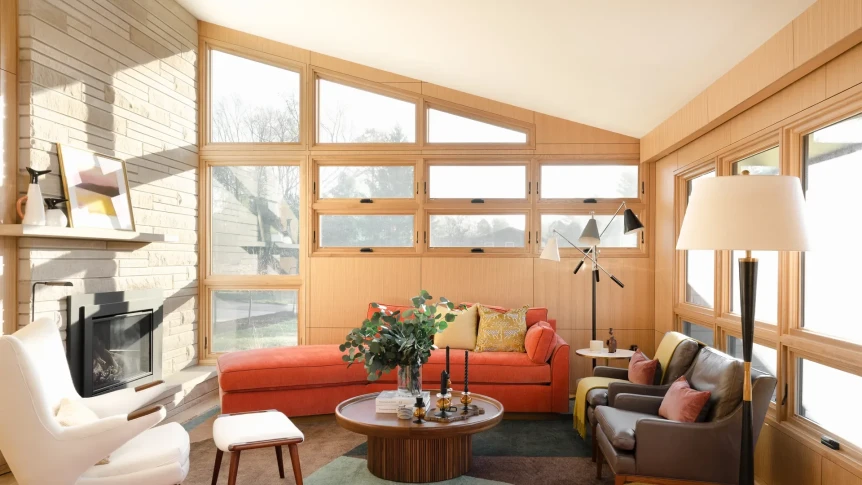
Accessories in a mid-century modern interior are where the style’s personality shows most clearly. The furniture establishes the structure and the palette sets the tone, but the objects you choose and how you arrange them tell the more personal part of the story. Mid-century modern decor is restrained rather than abundant, curated rather than collected, and specific rather than generic.
Wall Art
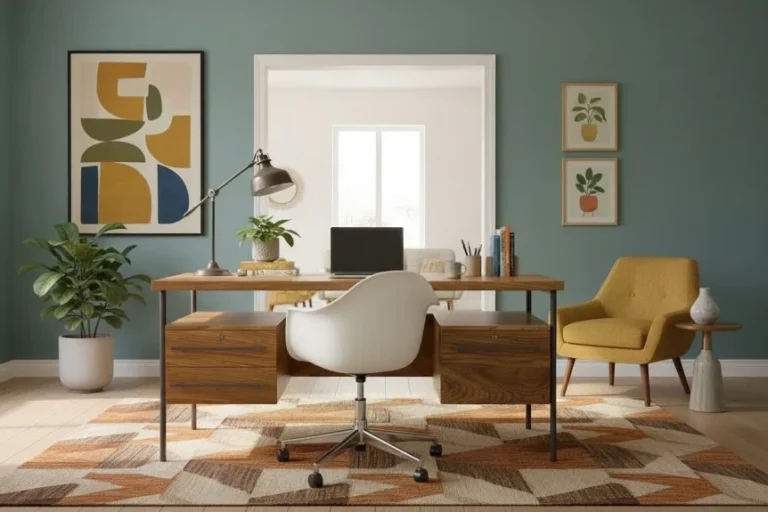
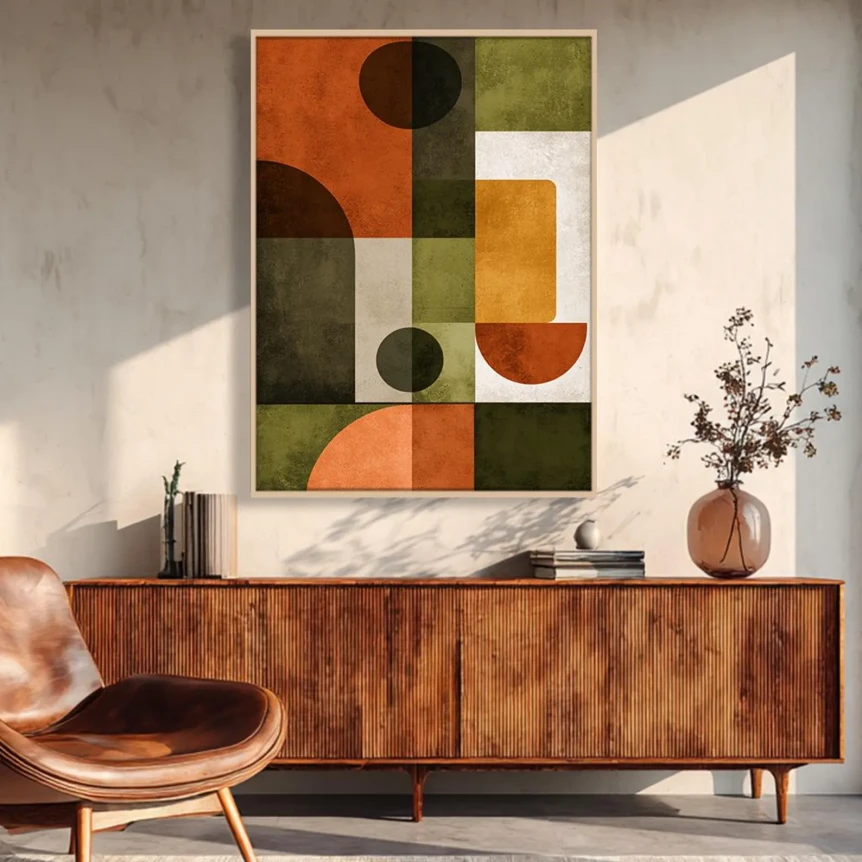
Wall art in a mid-century modern room is abstract, geometric, or graphic rather than figurative or decorative. The period produced a strong tradition of abstract expressionism and graphic design, and art in this spirit, whether original, printed, or contemporary, suits the style naturally.
What to Look For
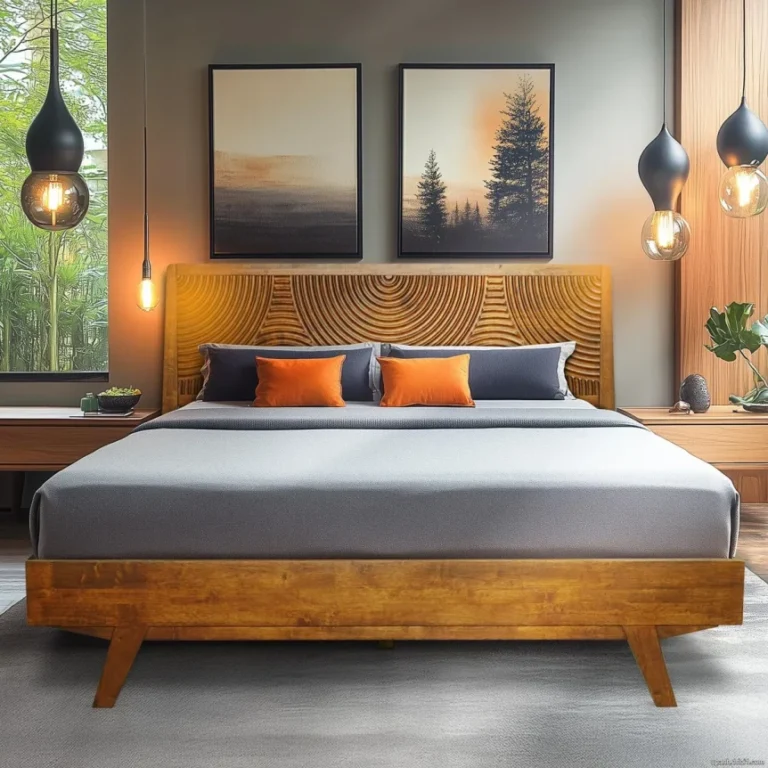
Large-scale abstract prints in warm tones work well above a credenza or sofa. Geometric line drawings in simple frames suit bedrooms and studies. Graphic prints from the period’s design culture, travel posters, exhibition prints, and typographic works, have a period-appropriate quality that doesn’t require original artwork to achieve. The key is choosing work with visual confidence: strong forms, deliberate composition, and a color story that connects to the room’s palette.
The Sunburst Mirror
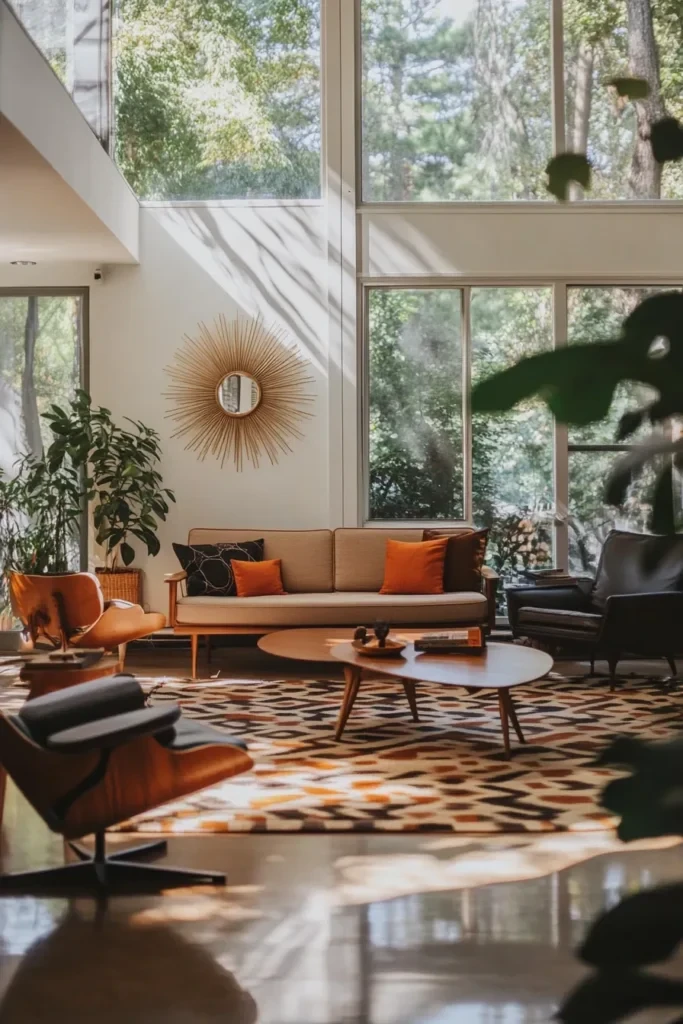
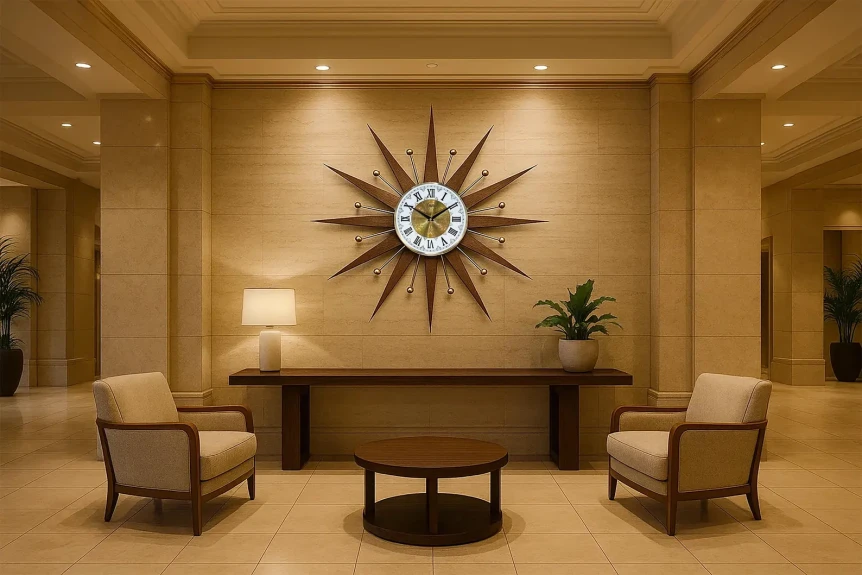
The sunburst mirror is one of the most characteristic mid-century modern wall pieces. Its radiating spokes echo the starburst forms that appear throughout the period’s design culture, from the Sputnik chandelier to atomic-age graphics. A sunburst mirror in brass or gold works above a credenza, in an entryway, or as the focal point of a bedroom wall. It brings both visual interest and practical function without the commitment of a large piece of art.
Ceramics and Pottery
Ceramic objects are central to mid-century modern styling. The period’s ceramics tend toward organic forms, matte or satin glazes, and earthy tones in warm browns, creams, dusty greens, and deep terracottas. Contemporary ceramics in the same spirit work equally well and are often more accessible.
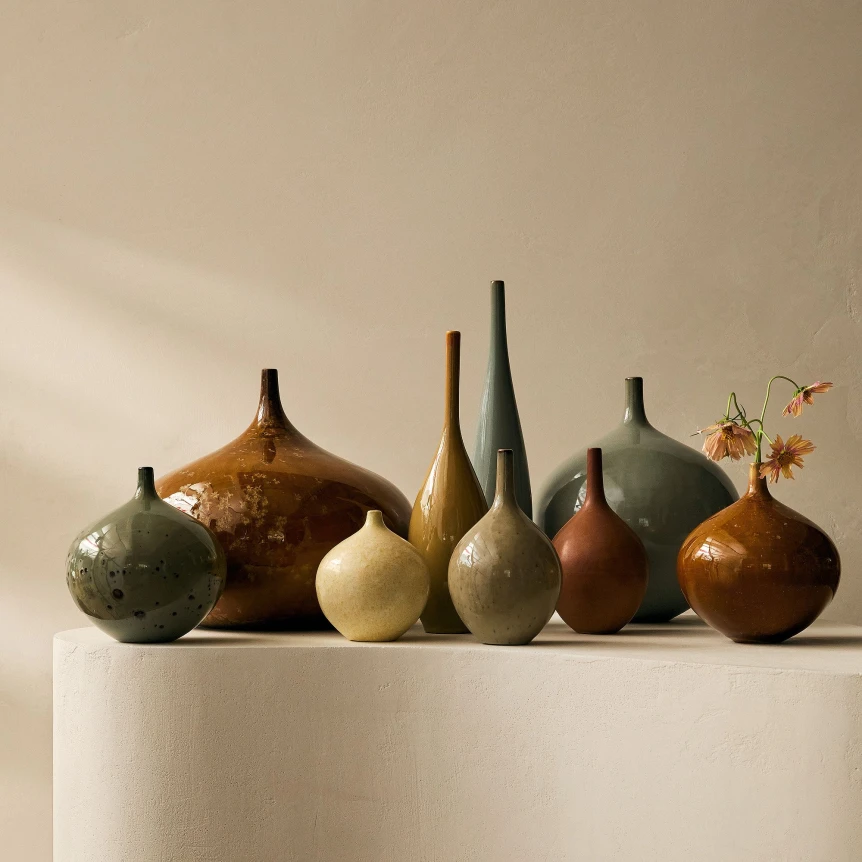
A few well-chosen ceramic pieces on a credenza or shelf make a stronger statement than a crowded collection. Think in terms of groupings of three: a tall vase, a medium bowl or vessel, and a small sculptural object. Vary the heights and forms within the grouping so the eye moves through them naturally rather than landing on a flat arrangement.
Plants
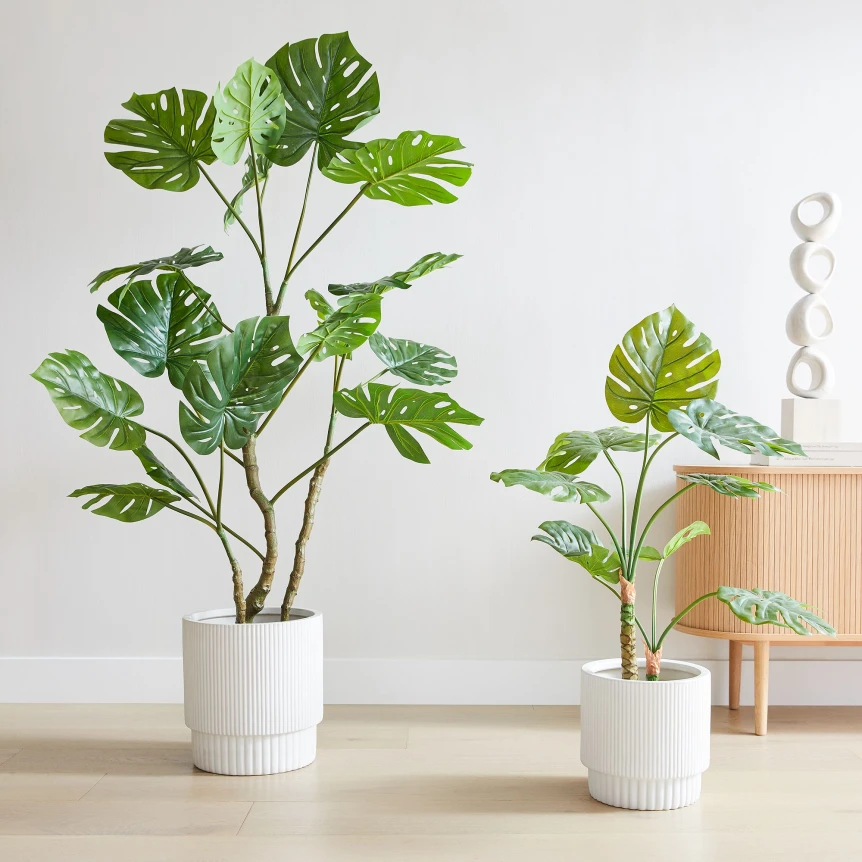
Plants are not optional in a mid-century modern interior. They’re integral. The style’s founding principle of connecting indoor spaces to the natural world makes plants a design element rather than a decoration. A large-leafed plant in a statement location, beside the sofa, in a corner, or on a plinth, brings the scale and organic presence that suits mid-century furniture naturally.
Best Plant Choices
- Fiddle-leaf fig: Tall, architectural, with large statement leaves. Suits a corner beside a sofa or in a reading nook.
- Monstera: Large, glossy leaves with distinctive split forms. Works well on a plinth or in a large floor planter.
- Bird of paradise: Bold, structural, and tropical in character. Works in well-lit rooms as a large statement plant.
- Rubber plant: Deep, glossy leaves in a compact form. Suits smaller spaces and lower light conditions.
Planters
The planter should complement the plant without competing with it. Warm ceramic planters in earthy tones, woven rattan baskets, and simple concrete or stone vessels all suit mid-century modern interiors. Avoid highly decorative or patterned planters, which work against the restrained aesthetic of the style.
The Starburst or Sunburst Clock
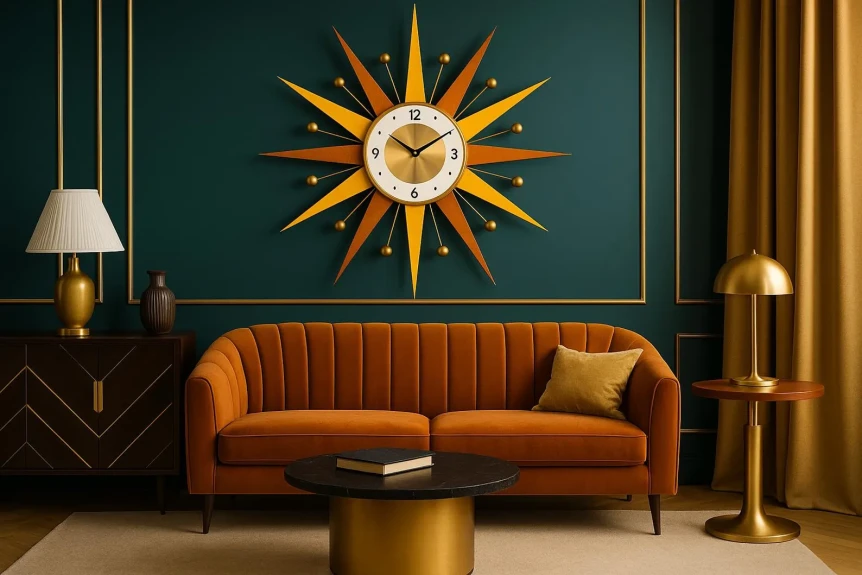
The starburst wall clock is one of the most recognizable mid-century modern accessories. With its radiating spokes extending from a central clock face, it captures the atomic-age aesthetic of the period perfectly. In brass or gold, it works on a living room or dining room wall where it can be seen from a distance. Like the sunburst mirror, it combines practical function with strong decorative character.
Books and Objects on Shelves
Open shelving in a mid-century modern room, whether a floating shelf, a bookshelf, or the top surface of a credenza, works best when styled with intention. Books can be arranged by color or size for a more curated look. Ceramic objects, small sculptures, and natural elements like a stone or a piece of driftwood provide textural variety without introducing competing color or pattern.
The principle of negative space applies directly here. Leave deliberate gaps between groupings rather than filling every available inch. The empty space is part of the composition and contributes to the visual calm that makes mid-century modern interiors feel considered rather than accumulated.
What to Avoid
Mid-century modern decor is defined as much by what’s absent as by what’s present. A few things to actively avoid:
- Overcrowding surfaces with too many small objects
- Mixing too many different wood tones without a clear hierarchy
- Introducing overly rustic or farmhouse-style accessories that work against the clean lines of mid-century furniture
- Floral arrangements in elaborate vases, which suit other styles more naturally
- Gallery walls with mismatched frames, which create visual noise where the style calls for visual calm
For how decor choices connect to the broader room design, see Mid-Century Modern Living Room Ideas and Mid-Century Modern Bedroom Ideas. For color coordination with your accessories, read Mid-Century Modern Color Palettes and Patterns. For lighting that works alongside your decor, see Mid-Century Modern Lighting Ideas. And for the full style foundation, visit The Complete Guide to Mid-Century Modern Design.
Frequently Asked Questions
What kind of art works in a mid-century modern room?
Abstract, geometric, and graphic art suits mid-century modern interiors most naturally. Large-scale abstract prints in warm tones, geometric line drawings, and graphic prints from the period’s design culture all work well. The key is choosing work with visual confidence, strong forms and deliberate composition, rather than decorative or figurative art that suits other styles.
What plants work best in a mid-century modern interior?
Large-leafed plants with structural, architectural qualities suit mid-century modern interiors best. The fiddle-leaf fig, monstera, bird of paradise, and rubber plant are all strong choices. They should be planted in simple ceramic pots in earthy tones, woven rattan baskets, or concrete vessels rather than decorative or patterned planters.
How do I style a mid-century modern credenza?
Style the credenza top with a grouping of three objects at varying heights: a tall vase or lamp, a medium ceramic vessel or small sculpture, and a low object like a book or a small bowl. Leave deliberate negative space between groupings. The wall above the credenza can hold a piece of art, a sunburst mirror, or a simple shelf with additional objects.
What is a sunburst mirror and does it work in modern homes?
A sunburst mirror features a round mirror face surrounded by radiating spokes in metal, typically brass or gold. It’s one of the most characteristic mid-century modern wall accessories, evoking the atomic-age starburst forms that appear throughout the period’s design culture. It works very well in contemporary homes as a statement wall piece, particularly above a credenza or in an entryway, where it brings visual interest and practical function simultaneously.
Edit First, Then Style
The most common mistake in styling a mid-century modern room is adding too much. The style rewards editing above all else. Before placing a single accessory, decide what the room actually needs rather than what you own. The objects that remain after that edit will have more presence, more impact, and more visual calm than a room that’s been filled to the edges.
For the complete mid-century modern style guide, return to The Complete Guide to Mid-Century Modern Design.