Dining Room Wall Decor Ideas: 15 Ways to Dress the Walls

By Tereza Hower | Published March 30, 2026 | Updated October 12, 2026
Sit at a dining table and look up. The furniture sits in the middle of the room, so every chair faces a wall, and whatever hangs there stays in view for the length of a meal. The 15 dining room wall decor ideas below are the ones that hold up to that kind of attention, each with the size, height, or material that makes it work.
Modern dining rooms reward restraint. Pick one idea for the main wall and at most one more for a second wall, and let the table remain the point of the room.
Key Takeaways
- Size art to about two thirds the width of the furniture below it, and go large on open walls.
- Hang art with its center at 57 to 60 inches, or its bottom edge 6 to 8 inches above a sideboard.
- Mirrors opposite a window and lit art do the most work in a small or dim dining room.
- Decorate one or two walls and leave the rest quiet so the table stays the focus.
How Big Should Dining Room Wall Art Be?
Dining room wall decor is anything hung, mounted, or applied to the walls around the table: art, mirrors, shelves, paneling, wallpaper, or textiles. Because every seat faces a wall, scale mistakes show more here than in any other room. Use these numbers before choosing any idea below.
| Wall situation | Art size | Hanging height | Note |
|---|---|---|---|
| Above a sideboard or console | Two thirds the width of the furniture, centered | Bottom edge 6 to 8 inches above the top | Wider than the furniture reads as top heavy |
| Open wall, no furniture below | Half to two thirds the wall width | Center at 57 to 60 inches from the floor | A small print here looks lost |
| Wall behind the head of the table | Roughly the width of the table end | Center at seated eye level, around 54 inches | Seen head on from the far end of the table |
| Narrow wall or pier between windows | Tall vertical piece, 60 to 70 percent of the wall width | Center at 57 inches | Vertical format suits the proportion |
What Art Works Best on a Dining Room Wall?
1. One Oversized Canvas Above the Sideboard
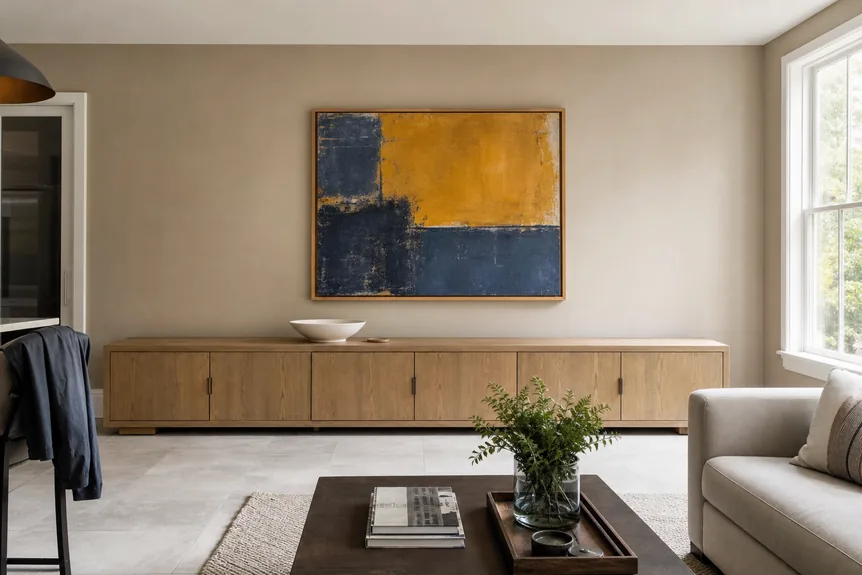
One large piece on the wall seen from the most seats is the simplest idea and usually the strongest. Above a 60 inch sideboard, look for art about 40 inches wide, hung with its bottom edge 6 to 8 inches above the top. Abstract work and photography suit modern rooms; landscapes and still lifes suit transitional ones.
Keep the frame simple, in natural wood or a thin metal, or choose an unframed canvas with a floating frame that leaves a shadow gap around the edge.
2. A Grid of Matching Frames
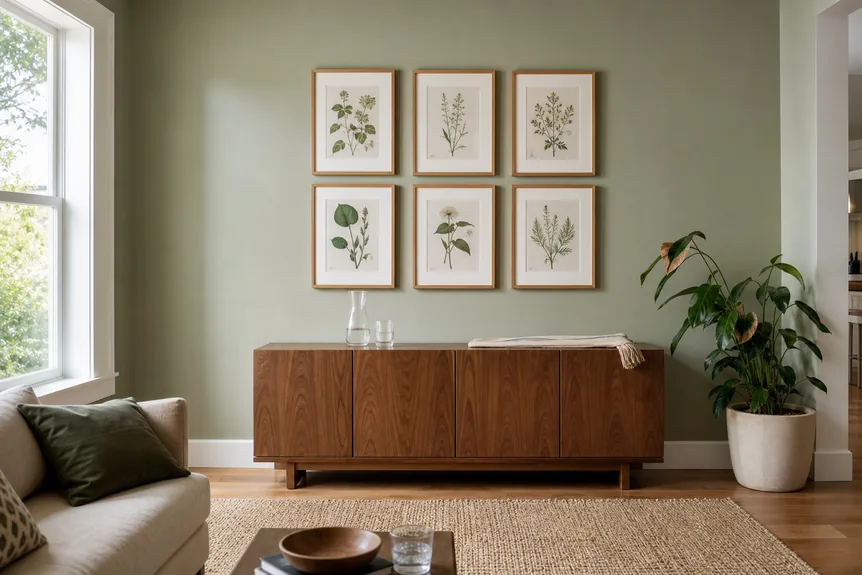
Six or nine identical frames in even rows read as calm rather than busy, which makes a grid the gallery wall for modern and minimal rooms. Keep 2 to 3 inches between frames and treat the whole grid as one piece: its total width should still be about two thirds of the furniture below. Botanical prints, architectural drawings, or a single photographer’s series all suit the format.
3. A Salon Style Gallery Wall
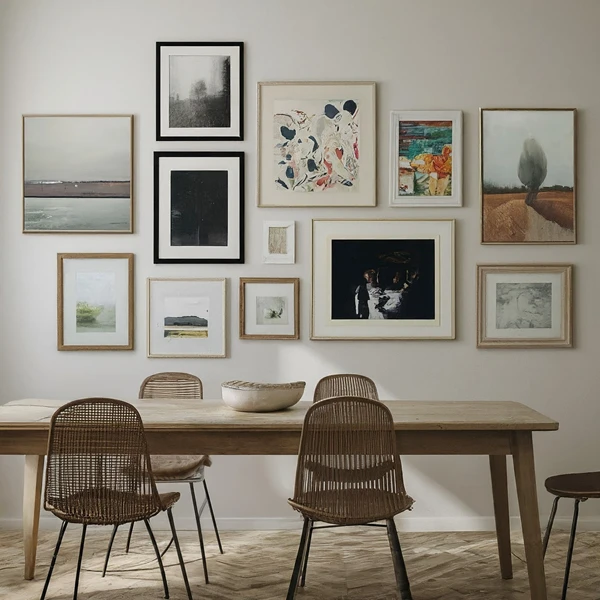
A salon wall mixes sizes and media in a balanced, asymmetric arrangement. It belongs on the longest uninterrupted wall and works only when planned: lay every piece on the floor first, trace each frame onto kraft paper, and tape the paper to the wall before drilling.
Anchor the arrangement with one larger piece just off center, keep gaps a consistent 2 to 4 inches, and mix a print, a photograph, a small painting, and one object such as a woven plate. One frame finish throughout holds a mixed arrangement together.
4. Graphic Photography Against Brick or Concrete
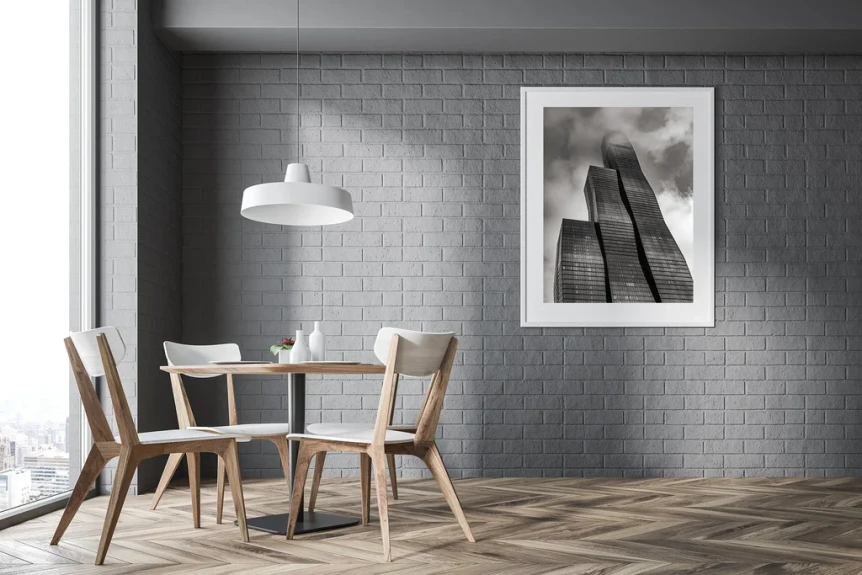
Exposed brick or concrete already has texture, so the art should be bold and simple: a large photograph, a graphic print, or a monochrome abstract. Fix it with masonry anchors rated for twice the frame’s weight, or hang it from a picture rail to avoid drilling the brick. One piece is enough on a textured wall; a gallery would fight the surface.
Should You Hang a Mirror in the Dining Room?
5. A Round Mirror Facing the Window
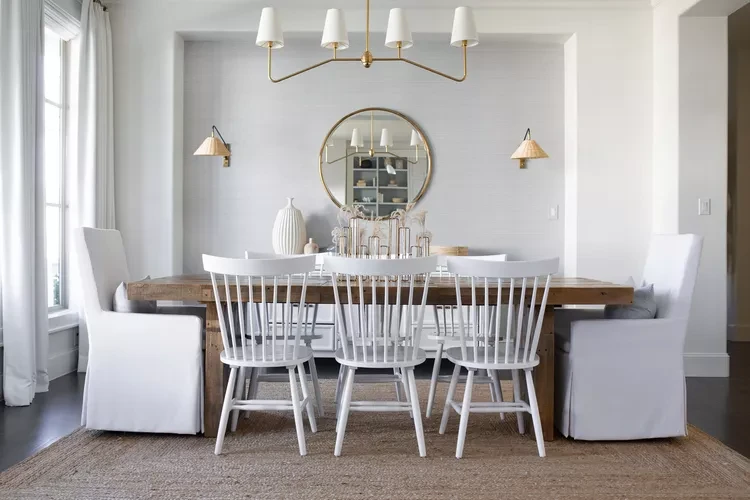
Yes, especially in a small or dim room. A mirror opposite a window doubles the daylight, and at night it multiplies candlelight and the pendant. A round mirror 30 to 40 inches across softens a room full of straight table and chair lines.
Check the glass before buying: look at the reflection from an angle and pass on any mirror that bends a straight line. Thin, cheap mirror glass distorts, and a dining room wall shows it from every seat.
6. An Oversized Leaning Floor Mirror
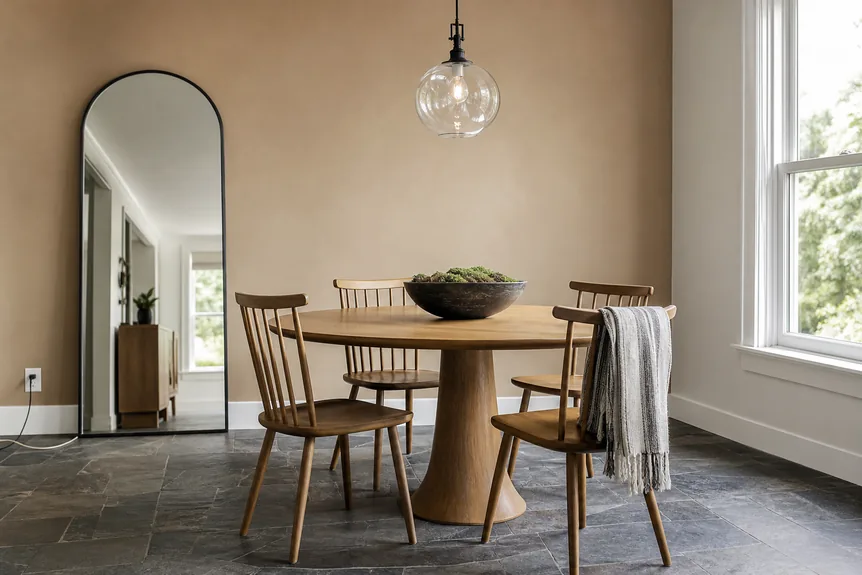
A mirror 70 inches or taller, leaned rather than hung, reads relaxed and contemporary and can move when the room changes. Place it at the end of the table or in a corner where it reflects the room back toward the seats. Secure the top to the wall with an anti tip strap, out of sight behind the frame, especially in homes with children or pets.
Which Shelf Ideas Suit a Dining Room?
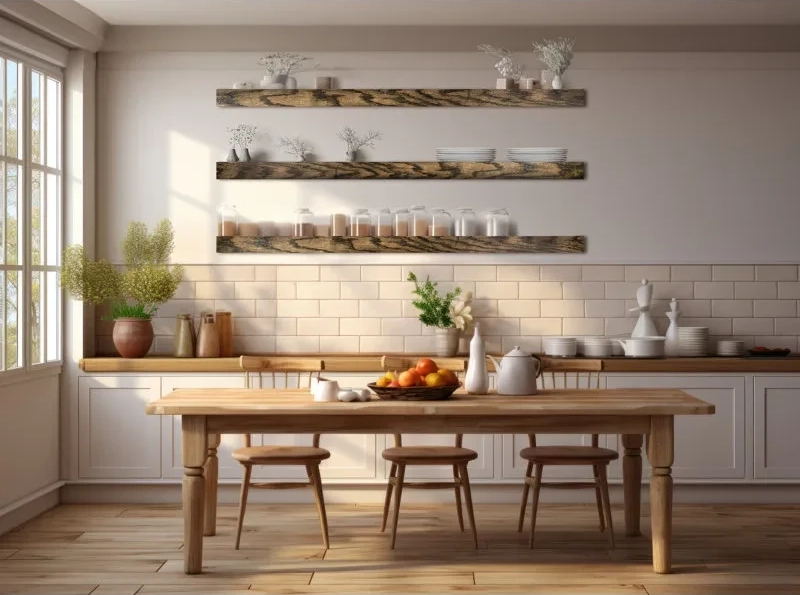
7. Floating Shelves With a Rotating Display

Floating shelves can be restyled by season without new holes in the wall. Mount the lower shelf 48 to 54 inches from the floor, roughly seated eye level, and a second one 10 to 14 inches above. Keep them no deeper than 8 inches so they do not loom over the chairs.
Style each shelf with three to five things: a small leaning print, a vase, a candle, and a short stack of books. Alternate tall and short and leave space between them.
8. A Plate Rail or Plate Wall
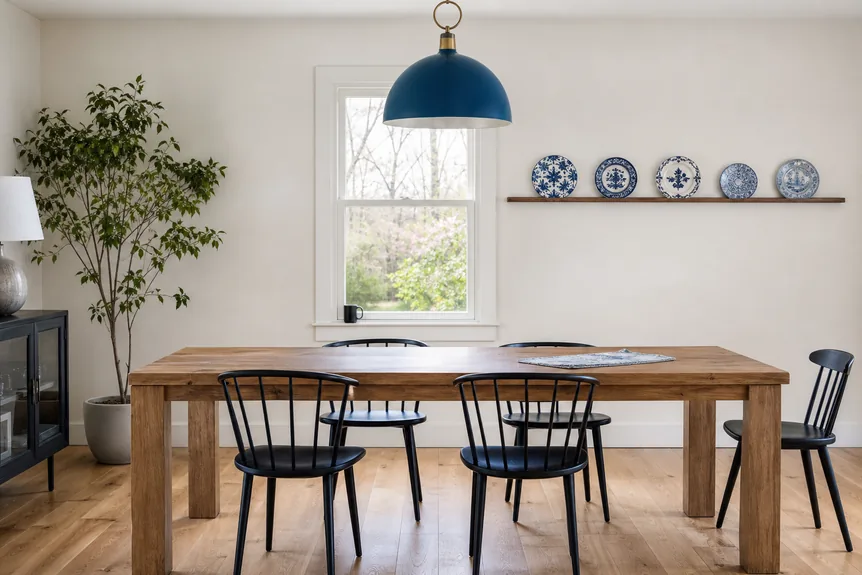
Plates belong in a dining room more naturally than anywhere else. A narrow plate rail, 3 to 4 inches deep with a groove to hold plates upright, mounted at about 60 inches, lets a collection change over time. A hung plate wall uses spring or adhesive disc hangers; keep all plates in one color family or one maker so the wall reads as a single piece.
How Can the Wall Itself Become the Decor?
9. Wainscoting or Board and Batten
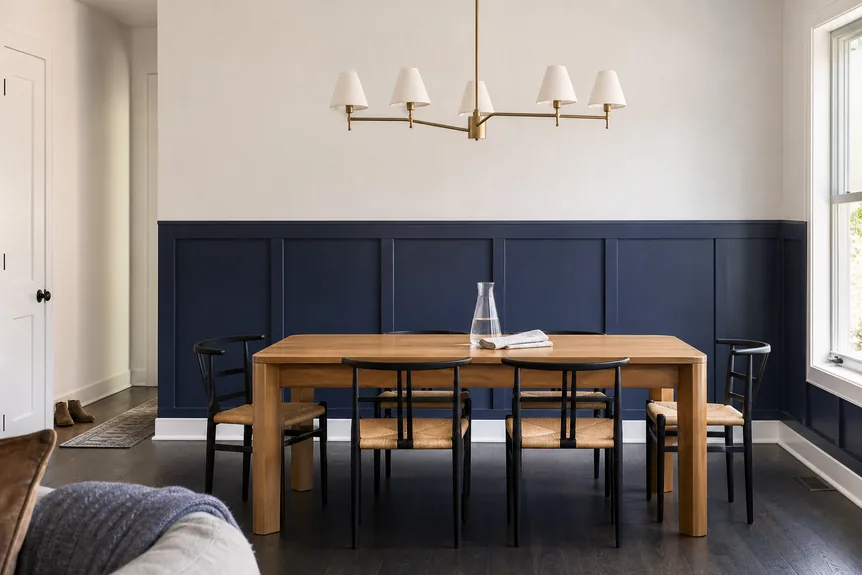
Paneling adds architecture without hanging anything. Run wainscoting or board and batten to about 36 inches, roughly chair rail height, and paint it a different color from the wall above, or take it to two thirds of the wall height for a more modern proportion. It also protects the wall where chairs scrape against it.
10. Vertical Wood Slats
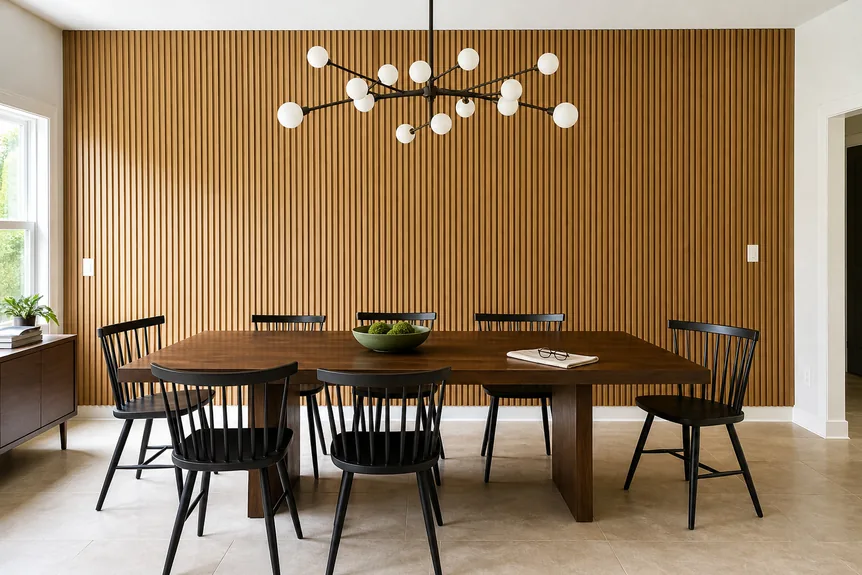
Vertical slats add rhythm, warmth, and a little acoustic softening, which helps in a hard surfaced room full of conversation. Slats 1 to 2 inches wide with gaps of the same width read clean and modern. Prefinished slat panels with a felt backing install in an afternoon and hide uneven drywall better than paint.
11. Grasscloth or Textured Wallpaper on One Wall
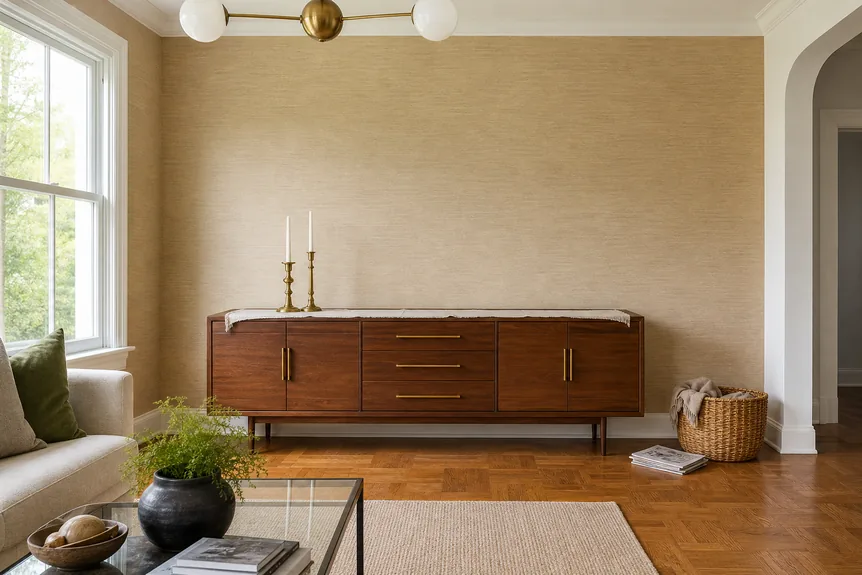
A textured wallpaper can stand in for art altogether. Grasscloth, linen weave, or a muted geometric adds depth without dominating; keep the pattern understated so it does not compete with the table. Use it on the wall behind the sideboard or the head of the table, and note that real grasscloth stains, so keep it out of splash range of a serving area.
12. A Deep Paint Color as the Decor
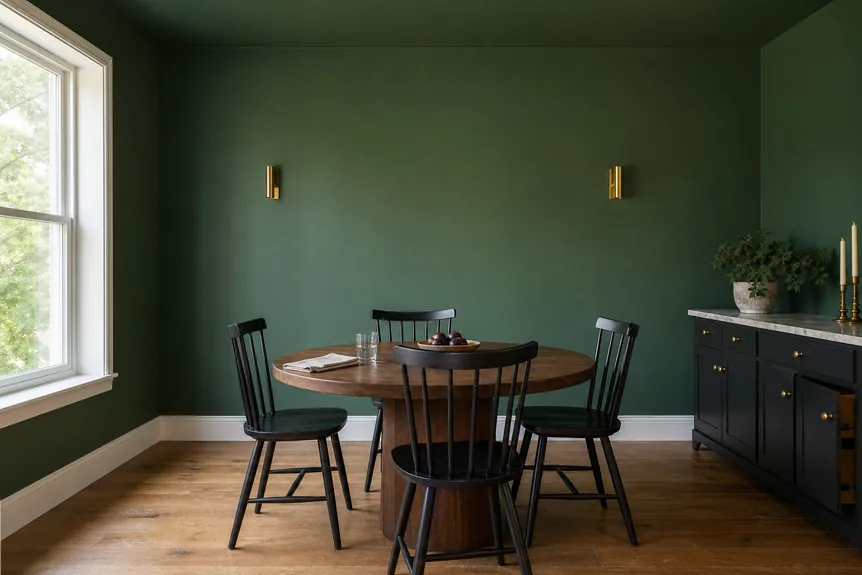
A saturated color does the job of art for the price of paint. Deep green, oxblood, ink blue, and warm clay flatter both food and faces under candlelight. For a bolder version, paint the walls, trim, and ceiling the same color; the room feels enclosed and calm at night. The dining room color schemes guide covers which tones work in which light.
What Wall Hanging Ideas Work in a Dining Room?
13. A Large Woven or Textile Hanging
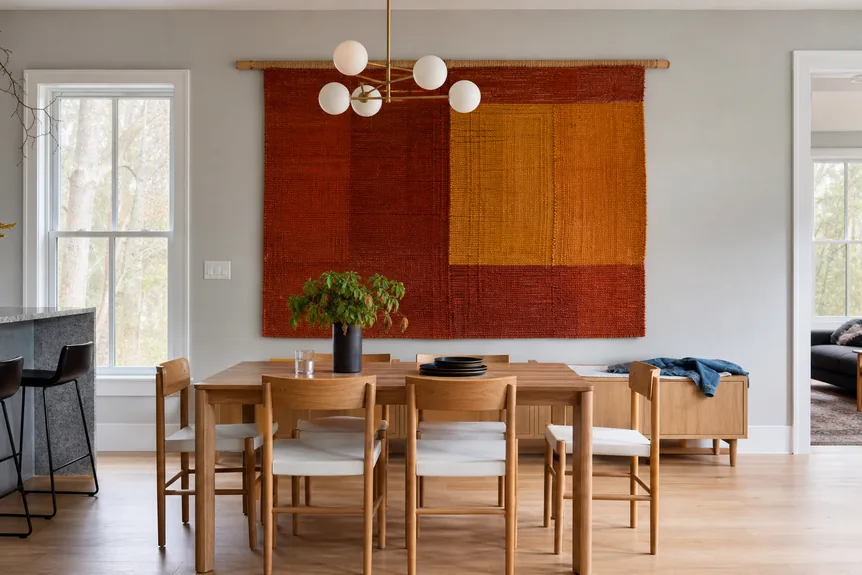
A textile softens a room of hard surfaces and absorbs some of the echo that bare walls and a wood table create. Choose something at least 36 inches wide for a main wall, and hang it from a wooden dowel or a hanging rail at the same height rules as art. A vintage rug, a woven tapestry, or a framed quilt section all work.
14. A Pair of Matching Pieces Flanking the Sideboard
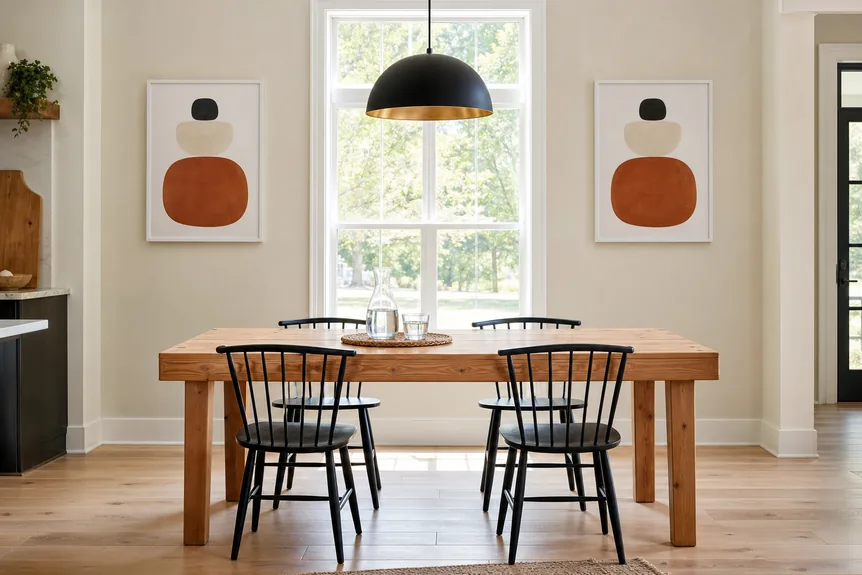
Two identical pieces either side of a window, a doorway, or a sideboard give a room calm symmetry. Hang them at the same height, with the gap between them equal to or slightly less than the width of whatever sits between. A pair works well where one large piece would be too expensive or would not fit the wall.
How Should You Light Dining Room Wall Decor?
15. A Picture Light or Wall Sconces
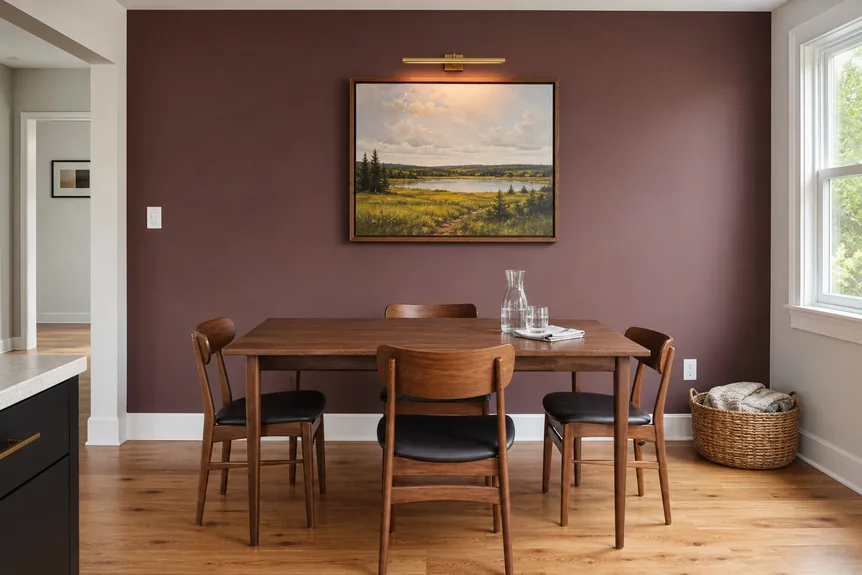
Art looks the way it is lit, and a painting on a dark wall disappears at dinner if nothing is aimed at it. A picture light 2 inches narrower than the frame, a recessed downlight angled at the wall, or a pair of plug in sconces each solve it at a different budget. Choose 2700K bulbs on a dimmer. The dining room lighting guide shows how wall lighting fits a layered plan.
What Are the Most Common Dining Room Wall Decor Mistakes?
- Hanging too high. Art centered above 60 inches floats away from a seated room. Aim lower, not higher.
- Going too small. A 16 by 20 inch print on an 8 foot wall looks unfinished. Size to the wall or the furniture below.
- Matching the art to the textiles. Perfect coordination looks like a showroom set. Share an undertone and let the art differ.
- Filling every wall. Four decorated walls fight the table. Two is plenty.
- Forgetting the light. Unlit art at dinner is a dark rectangle. Budget for the picture light with the painting.
Choosing Among These Dining Room Wall Decor Ideas
Start with the wall seen from the most seats and pick one idea for it, then decide whether a second wall needs anything at all. Small and dim rooms gain the most from a mirror and lighting; large rooms from scale, paneling, or color. For more ways to use art on any wall, see modern wall decor and art ideas, and for a compact room, small dining room ideas.
For how the walls fit with the table, chairs, lighting, and layout, read the complete guide to modern dining room design.
Frequently Asked Questions
What is the best wall decor for a dining room?
One large piece of art on the wall seen from the most seats is the most effective choice, sized to about two thirds of the furniture below it. A mirror opposite a window is the best choice for a small or dim room.
What are good wall hanging ideas for a dining room?
A large woven tapestry or vintage rug hung from a dowel, a plate rail with a ceramic collection, a grid of matching frames, or a leaning floor mirror. Textiles also soften the echo of a hard surfaced room.
How high should I hang art in a dining room?
Center it at 57 to 60 inches from the floor, or slightly lower since everyone is seated. Above a sideboard, hang it with the bottom edge 6 to 8 inches above the top.
How big should art be above a dining room sideboard?
About two thirds the width of the sideboard, centered over it. A 60 inch sideboard takes a piece about 40 inches wide; a pair of smaller pieces with a narrow gap can make up the same width.
Should every dining room wall be decorated?
No. Decorate the main wall and at most one other, and leave the rest plain. Bare wall is part of the composition and keeps attention on the table.