Best Outdoor Patio Furniture: What Lasts and What Earns Its Place

By Tereza Hower | Published March 24, 2026 | Updated September 7, 2026
Most people replace outdoor furniture twice in five years before getting serious about it. The first set looks correct in the catalog photo, lasts two summers, and goes to the curb when the cushions disintegrate. The second lasts slightly longer and looks tired by year two. Run the math against a real teak lounge chair at 1,200 dollars. Used for at least ten years, it costs roughly 120 dollars per year. The disposable chairs work out to about 200 dollars per year, for furniture that never looked good and never sat well. Buying once is almost always the cheaper move.
Outdoor furniture is one of the most important investments in any patio project, and one of the most commonly under thought. People spend carefully on interior furniture and then buy whatever happens to be available at the garden center in spring, ending up with pieces that look tired within a season or two and never quite do justice to the outdoor space around them. This guide covers the materials, configurations, and specific decisions that produce outdoor furniture worth keeping for a decade rather than replacing every other year.
For the broader outdoor framework, the complete guide to outdoor and patio design covers how furniture choices fit within the overall patio plan.
Material: The Decision That Determines Everything Else
Outdoor furniture materials have very different characteristics in terms of durability, maintenance, weight, and visual character. Understanding the tradeoffs before you buy saves considerable frustration later. Five categories cover almost every outdoor furniture decision.
Teak
The gold standard in outdoor timber furniture and has been for generations. Teak is naturally high in oil content, which makes it exceptionally resistant to moisture, rot, and insect damage without the need for regular treatment. New teak has a warm honey tone that weathers over years to a distinguished silver gray if left untreated. Teak furniture is heavy, which is actually an advantage in exposed locations, and it is expensive, but it lasts for decades with minimal care. For those who want to maintain the warm honey color, a simple annual oiling is sufficient.
Worth knowing editorially: Gloster, Brown Jordan, and Restoration Hardware all make teak furniture that has held up well in real use across years of testing. Lower price teak from less established makers often uses younger plantation teak with lower oil content. The difference shows up around year four when the lower quality wood starts to develop cracks the better wood does not.
Powder coated aluminum
The most practical outdoor furniture frame material for most households. Lightweight enough to rearrange easily, completely rust free, and holds its color well under UV exposure. Modern powder coating in matte and satin finishes looks sophisticated and suits a wide range of outdoor styles. The frame weight means aluminum furniture can blow around in strong wind, which is worth bearing in mind for exposed locations. Pairing with heavy stone or concrete table tops addresses this where needed.
Janus et Cie, Tuuci, and Brown Jordan all produce premium powder coated aluminum furniture. For mid range, look for thicker gauge tubing (smaller diameter tubing bends and dents over time) and welded joints rather than mechanical fasteners (welds do not loosen the way bolted joints do across years of weather cycles).
Synthetic rattan and woven resin
Has a relaxed, organic quality that suits casual outdoor spaces well. High quality synthetic wicker is fully weather resistant in a way that natural rattan is not, and the best versions look convincingly natural. The visual warmth and the deep seating comfort typical of rattan style pieces make them a popular choice for lounge and relaxation areas.
Quality varies significantly in this category. Look for UV stabilized resin weave specifically rated for outdoor exposure (the cheaper versions fade and crack within a few seasons) and a powder coated aluminum or galvanized steel frame underneath. The frame is the part you cannot see and the part that determines whether the chair survives a decade. Many cheaper synthetic rattan pieces use thinner steel frames that develop rust within a few years even when the visible weave still looks acceptable.
Stainless steel and powder coated steel
More architectural and contemporary in feel than aluminum. Steel pieces tend to be heavier and more substantial, which suits formal or architecturally designed outdoor spaces. Stainless steel is corrosion resistant but not entirely immune to surface rust in highly saline coastal environments. Powder coated steel offers more color options and good weather resistance but can chip over time, particularly on chair feet that scrape against paving.
Steel works particularly well in contemporary patios and industrial leaning outdoor spaces, where the visual mass and the cooler finish align with the broader aesthetic. For warmer or more residential patios, aluminum and teak almost always read more livable.
Concrete and stone
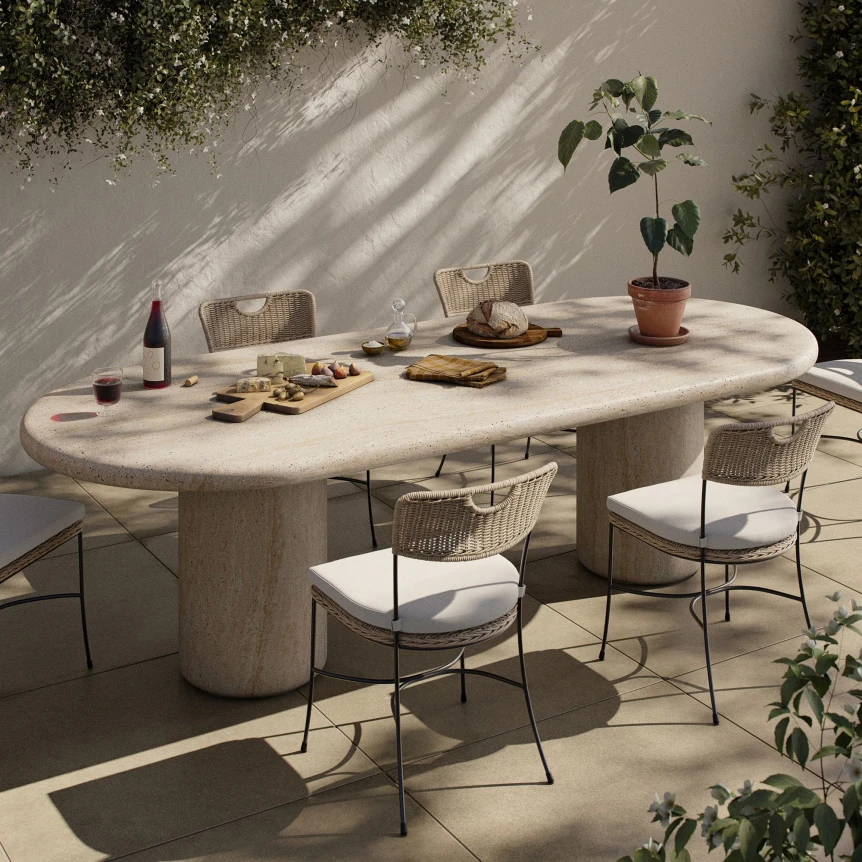
Concrete and stone table tops and occasional pieces have become increasingly popular in modern outdoor design. They are genuinely beautiful, extremely durable, and add a sense of permanence and materiality that lighter furniture cannot match. The obvious tradeoff is weight: a concrete dining table is a permanent fixture rather than a rearrangeable one. This is usually fine for a main dining area but worth considering before committing.
For bistro tables specifically, a marble or stone top on a slim metal pedestal base is the most contemporary direction and has become a defining piece in modern patio design. See modern patio design ideas for how this slots into the broader bistro shift trend.
Seating by Zone: Dining, Lounge, Recovery
Most patios benefit from three distinct seating configurations, not two. The dining setup for meals, the lounge configuration for evening relaxation, and the recovery chair for solo rest. They serve different purposes, require different furniture, and trying to combine them into a single arrangement usually results in none of them working particularly well.
The dining or bistro setup
The shift in outdoor dining has been from large rectangular tables for six to smaller round tables for two or four. The bistro setup, a 32 to 42 inch round table with two cafe style chairs, has become the default for households that eat outside primarily as couples or small families. A larger four or six seat round table earns its place when entertaining is a real weekly habit rather than an occasional event.
Outdoor dining chairs need to be comfortable for the duration of a meal rather than the duration of a photo. Chairs that look beautiful but become uncomfortable after forty five minutes are a source of low level frustration for every outdoor meal. Test the comfort of dining chairs before purchasing, and prioritize seat depth and back support alongside aesthetics. Cushioned dining chairs are far more comfortable than uncushioned ones for any meal longer than thirty minutes.
The lounge configuration
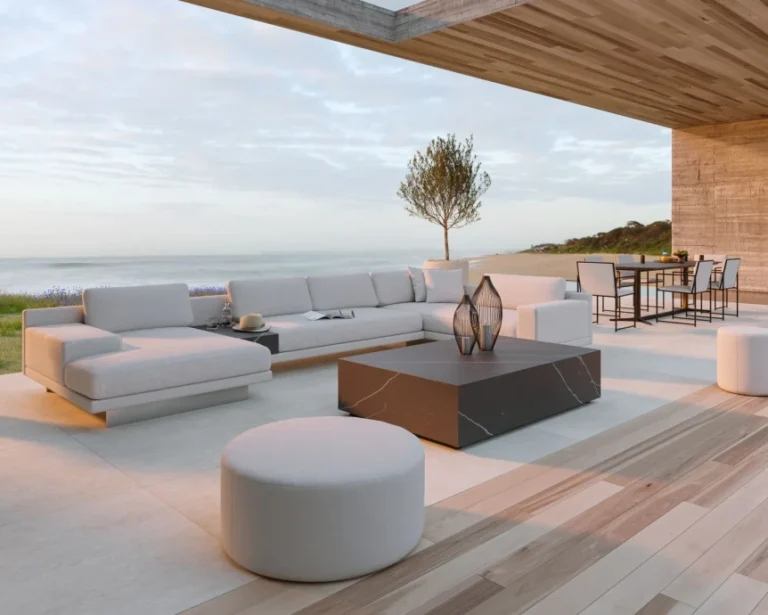
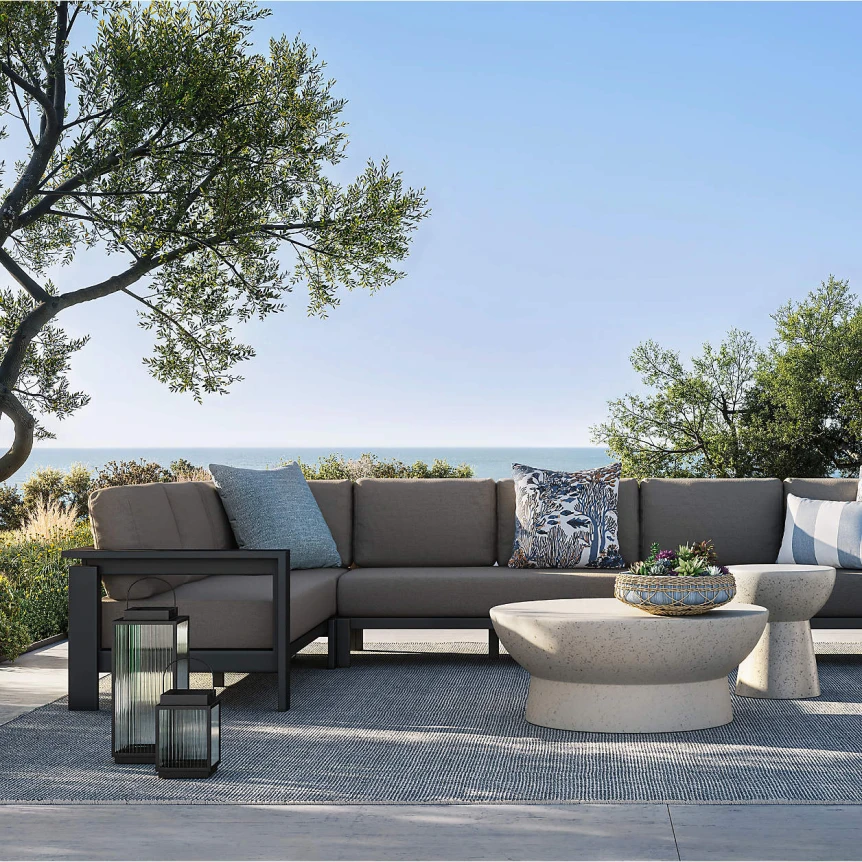
Deep lounge seating, with generous seat depths, high backs, and thick cushions, is designed for sitting back, putting your feet up, and staying for a while. A two or three seat sofa, a pair of lounge chairs, and a low coffee table make a lounge configuration that works for everything from a morning coffee to an evening gathering. Choose a configuration that suits the scale of the space: an oversized modular sectional can overwhelm a modestly sized patio the same way it would overwhelm a small living room.
The seat depth and the back angle are the two specs that matter most. A seat depth of at least 22 inches and a back angle slightly more reclined than dining seating produce a lounge chair you can actually sit in for an hour rather than ten minutes.
The recovery corner chair
The single most used piece of outdoor furniture in most homes ends up being not the dining table or the sofa but the lounge chair tucked into a corner for solo rest. A high back, deep seat lounge chair with a side table beside it for a book and a drink. The contemporary versions worth knowing include sculptural rope chairs (Tribu, Paola Lenti), deep modern Adirondack chairs in teak (Westport, Gloster), and freestanding hammock chairs on a wooden frame. The chair is the entire experience of the zone, and spending more here than seems reasonable is consistently worth it.
For the full breakdown of the recovery zone, including placement, lighting, and surrounding planting, see outdoor recovery zones and wellness corners.
Comfort and Cushions
The cushions on outdoor furniture have more effect on how much time you actually spend outside than almost any other single factor. Thin, poor quality cushions that compress within a season, absorb water, or develop mildew quickly make sitting outside a less pleasant experience and reduce how much the space gets used.
Outdoor cushion fabric quality matters enormously. Solution dyed acrylic fabrics are the most weather resistant option: the color runs through the fiber rather than sitting on the surface, which means they resist fading significantly better than most alternatives. They are also water repellent, easy to clean, and mildew resistant. The feel has improved considerably and the best versions are tactile rather than plasticky. Three brands are worth knowing editorially: Sunbrella is the most widely available and the broadest range. Outdura is a strong alternative at a slightly lower price point. Bella Dura makes a particularly soft hand for fabrics that read closer to indoor linen.
Cushion thickness and density determines both comfort and longevity. A cushion that is too thin loses what little padding it has within a season. A well made outdoor cushion with a high density foam core retains its shape and comfort for years. When buying outdoor furniture that includes cushions, pay attention to the cushion specifications as much as the frame material. A 4 inch thick cushion with high density foam will outlast and out comfort a 2 inch cushion of any kind.
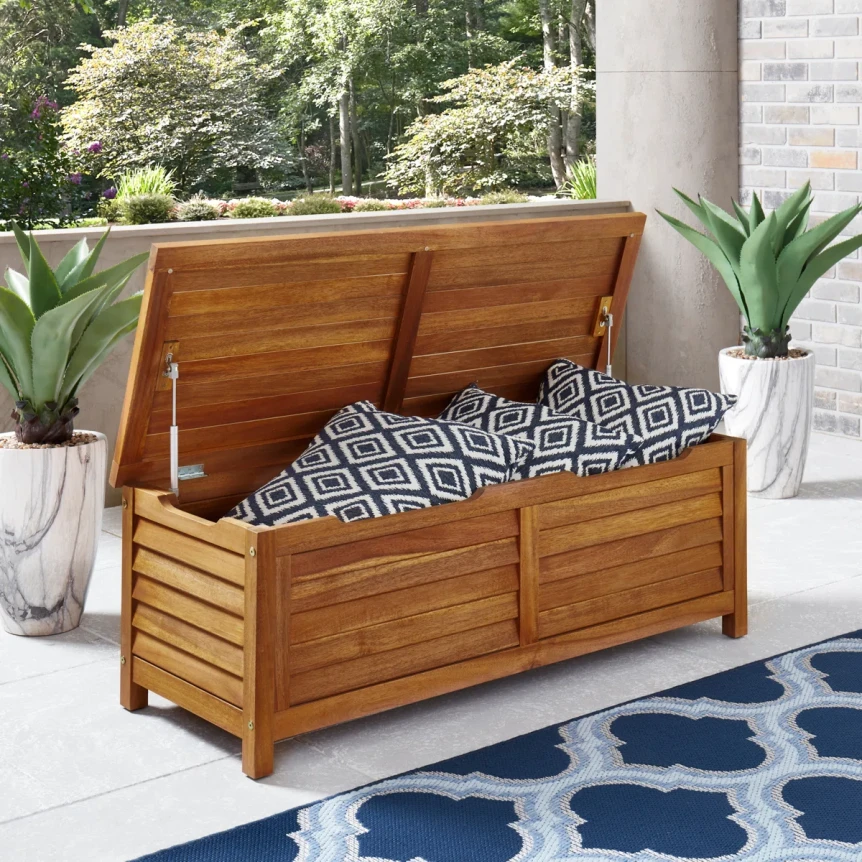
For households in regions with hard winters or long rainy seasons, storing cushions during extended unused periods extends their lifespan significantly. A good outdoor storage box, which can double as additional seating or a side table, is one of the most practical additions to any patio.
The All Weather Investment Shift
The biggest shift in the outdoor furniture category over the last few years has been the move toward pieces designed and built to live outside permanently rather than being stored each winter. Frames engineered for continuous outdoor exposure. Cushions in solution dyed acrylics that survive years of UV without fading. Hardware specified for freeze thaw cycles. The old habit of covering everything in fall and reassembling each spring has given way to leaving the patio set up year round and just brushing off snow when it falls.
This shift changes the investment math. When the furniture lives outside permanently, you invest more in fewer, better pieces because you are not buying a set you will replace every three years. A 1,500 dollar lounge chair you keep for ten years costs less per year than a 600 dollar chair you replace every two years. The first piece looks better, sits better, and ages into character. The second piece looks tired by month eighteen. After the math became clear in our own purchases, I stopped buying outdoor furniture as a seasonal expense and started buying it the way I buy interior furniture: once, with care, expecting to keep it for the long term.
The investment level pieces share specific features: frames engineered for outdoor permanence (teak, marine grade aluminum, stainless steel), cushions in solution dyed acrylic with a high density foam core, hardware in stainless or marine grade alloys, and a finish that ages rather than degrades. If a piece does not meet these specs, it is being sold as outdoor furniture but engineered as seasonal furniture, and the per year cost will reflect that.
Scale, Proportion, and Layout
The scale of outdoor furniture relative to the space is something that surprises many people. Pieces that seem large in a showroom or on a website can look undersized on an open patio. The sky above and the garden around create a sense of scale that interior rooms do not have, and furniture needs to be chosen with that context in mind.
A dining table for a patio should generally be at least as large as what you would choose for an interior dining room of the same purpose, and often larger. A sofa configuration outdoors tends to need more depth and visual presence to hold its own than the equivalent indoor arrangement.
Layout outdoors follows the same principles as interior furniture arrangement: create clear zones, allow generous circulation paths, and leave space for the design to breathe rather than filling every available area with furniture. A patio with one well proportioned seating arrangement and good clear space around it feels more sophisticated and more inviting than one packed with multiple smaller pieces arranged without a clear logic. The principle applies even more strongly in small patios, where the temptation to fit too much in is strongest. See small patio ideas for how this scales down.
Brand Level References Worth Knowing
The outdoor furniture market has consolidated into roughly three tiers worth knowing editorially. Each tier has makers worth considering and traps worth avoiding.
- Premium tier (3,000 to 15,000+ per piece). Janus et Cie, Brown Jordan, Tuuci, Paola Lenti, Tribu, Sutherland Furniture, Gloster’s premium line. Pieces designed to last fifteen plus years with the right care. Materials, joinery, and finishes are notably better than the tiers below.
- Mid tier (800 to 3,000 per piece). Gloster’s standard line, RH Outdoor, Mamagreen, Skagerak, Crate & Barrel’s premium outdoor collections. Real teak or quality aluminum frames, solution dyed cushions, designed for permanent outdoor use. The sweet spot for most households building a patio they will use seriously.
- Entry tier (under 800 per piece). The territory is varied. Quality teak in this range often comes from younger plantation wood. Quality cushions are rare. Frames may use lighter gauge tubing. Some pieces from established mid tier brands appear in this range when discounted, which is worth watching for. New pieces from unknown makers in this tier rarely deliver durability that matches the per year cost of buying once higher up.
The honest filter across all tiers is the cushion fabric and the frame joinery. If those two specs match what you would expect at a higher tier, the rest of the piece is usually fine. If they match a lower tier, the piece will perform like a lower tier piece regardless of what the price tag says. Outdoor plants and landscaping ideas for patios picks up the same thread room by room.
Common Mistakes in Outdoor Furniture
- Buying a dining table sized for entertaining rather than daily use. A six or eight seat dining table dominates the patio every day for the two evenings a year a full group sits at it. A bistro setup for two with the option to scale up usually serves households better.
- Skipping the recovery corner chair. A patio with dining and lounge but no dedicated solo rest zone misses the piece that ends up being most used. The lounge chair tucked into a corner is the unsung hero of outdoor furniture.
- Choosing aesthetic over comfort on dining chairs. Dining chairs that are uncomfortable after forty five minutes become a constant low level frustration. Test the chairs before buying, including with the cushions if they are sold with them.
- Cheaper synthetic rattan with hidden steel frames. The visible weave can look acceptable for years while the hidden steel frame rusts. Specify the frame material when buying any synthetic rattan or wicker piece.
- Cushions with non solution dyed fabric. Standard outdoor fabrics fade, stain, and mildew within a few seasons. Solution dyed acrylic (Sunbrella, Outdura, Bella Dura) is the only fabric category worth buying for cushions that will live outside.
- Underestimating the scale required outdoors. Pieces that look generous in a showroom can read undersized on an open patio. Measure the patio and visualize the furniture proportional to the open sky above, not just the floor area.
- Buying a set instead of building a configuration. Matching outdoor furniture sets in a single material rarely produce as good a result as a curated mix of pieces that share a palette and a quality level. Set buying is convenient and almost always less interesting visually.
- Treating outdoor furniture as a three year expense. Investing in pieces designed to live outside permanently and last ten plus years costs less per year than replacing cheaper sets every two or three seasons.
Where to Read Next
Once your furniture is sorted, these related guides cover the rest of the outdoor space:
- Modern Patio Design Ideas That Actually Work
- Outdoor Recovery Zones and Wellness Corners
- Fire Pit Area Design
- Indoor Outdoor Flow Design
- How to Choose Outdoor Rugs and Textiles
- Outdoor Lighting Ideas for Patios and Gardens
- Patio Design Ideas for Every Outdoor Space
- Outdoor Kitchen and Dining Area Ideas
- Small Patio Ideas That Make the Most of Your Space
For the full outdoor design framework, return to the complete guide to outdoor and patio design.
Frequently Asked Questions
How much should I spend on outdoor furniture?
For a patio you will use seriously, the mid tier range of 800 to 3,000 dollars per piece delivers furniture designed to last ten plus years with the right care. The cost per year math at this tier almost always beats buying cheaper sets repeatedly. Premium tier above 3,000 dollars per piece is worth it for households that prioritize the materials and finishes and intend to keep the furniture for fifteen plus years. Below 800 dollars per piece, the quality drops off quickly and the per year cost of replacement usually ends up higher.
Teak or aluminum for outdoor furniture?
Both work, and the right choice depends on the rest of the patio. Teak is warmer, heavier, ages beautifully, and reads more residential. Aluminum is lighter, easier to move, available in more colors, and reads more contemporary. For lounge and dining pieces in a permanent location, teak is hard to beat. For frequently moved pieces or contemporary architectural patios, aluminum is often the better fit. Many of the best patios combine both, with teak for the main lounge and aluminum for supporting pieces.
Do I really need to store cushions in winter?
It depends on the cushion. Solution dyed acrylic cushions (Sunbrella, Outdura, Bella Dura) are designed to live outside permanently and only need to be stored if you want to maximize their lifespan in particularly harsh climates. Lower quality cushions absolutely need to be stored to survive even a year. The shift over the last decade has been toward permanent outdoor cushions that stay assembled year round, with the storage habit reserved for the highest quality pieces in the harshest climates.
What is the most underused piece of outdoor furniture?
The recovery corner chair. The single deep seat lounge chair tucked into a corner with a side table for a book and a drink ends up being the most used piece of furniture in most patios. Households that design around dining and entertaining tend to miss this piece and then add it later. The chair, with one large plant beside it and softer lighting overhead, becomes the place you actually use five evenings a week.
Can I mix different outdoor furniture materials?
Yes, and the most interesting outdoor furniture configurations almost always do. A teak dining table with powder coated aluminum chairs, a concrete coffee table with a synthetic rattan sofa, or a stainless steel bistro setup beside a teak lounge chair all work. The key is sharing a palette across the mixed materials and choosing pieces of consistent quality. A premium teak piece next to a budget aluminum piece reads as a mismatch. A premium teak piece next to a premium aluminum piece reads as a curated configuration.