Buyer's Guides

By Tereza Hower | Published March 16, 2026 | Updated March 27, 2026
The bathroom is one of the smallest rooms in most homes and one of the most personal. It is where the day begins and often where it ends, a space used in moments of quiet and routine that most people navigate on autopilot. Yet a well-designed bathroom does far more than function adequately. It makes those everyday routines feel better, easier, and more enjoyable in ways that are hard to articulate but immediately felt.
Modern bathroom design has moved well beyond the utilitarian. Spa-like calm, intelligent storage, considered materials, and thoughtful lighting have all become achievable at a wide range of budgets. Whether you are planning a full renovation or a focused refresh, this guide covers every element of a well-designed modern bathroom and gives you a clear framework for making decisions that work together rather than against each other.
Modern bathroom design draws from the same principles as modern design in other rooms: clean lines, purposeful choices, quality materials, and a preference for simplicity over ornament. In the bathroom, these ideas translate into spaces that feel open and uncluttered, where every element earns its place and nothing is there purely for decoration without also being functional.
What distinguishes a modern bathroom from a merely contemporary one is a sense of intention. The materials are chosen for how they age as well as how they look when new. The layout is planned around how the room is actually used rather than where the plumbing happens to be. The lighting serves multiple purposes and creates a range of atmospheres rather than simply illuminating the space.
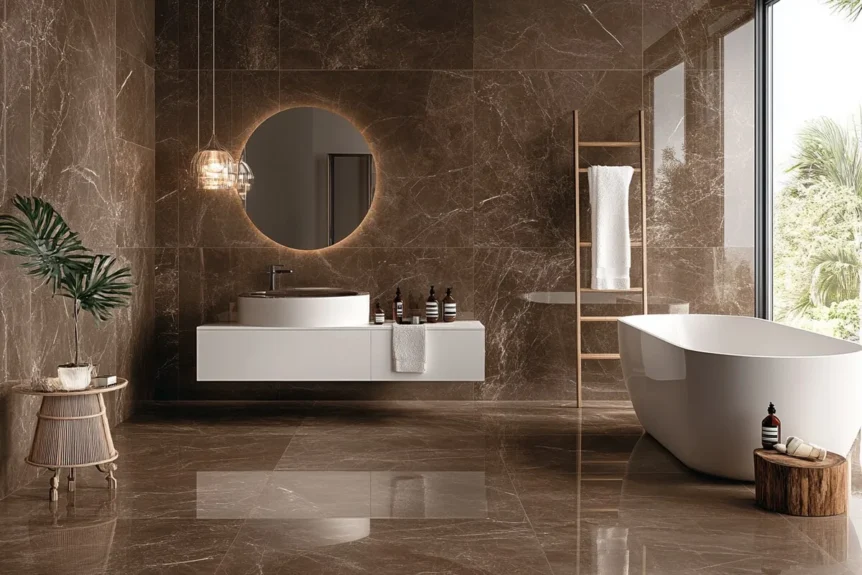
Modern bathrooms can range from warm and organic, with natural stone, timber accents, and earthy palettes, to sharp and architectural, with large format tiles, frameless glass, and monochrome schemes. What they share is restraint: a willingness to edit rather than accumulate, and a commitment to quality in the elements that matter most.[PLACE_IMAGE_HERE]
Cohesion over variety. The most successful modern bathrooms work with a limited palette of materials and finishes. Two or three well-chosen materials, a consistent finish on all hardware, and a tonal color approach produce a room that feels considered and complete. Introducing too many different tiles, too many competing finishes, or too many accent materials quickly makes a bathroom feel visually busy and unresolved.
Function drives form. In a room as practical as the bathroom, function should lead every decision. Storage that works, lighting that serves its purpose, a vanity that is the right height, surfaces that are easy to clean: getting these things right is more important than any purely aesthetic decision. The good news is that functional solutions in modern design tend to be beautiful too.
Quality in the elements you touch. Taps, handles, towel rails, and light switches are touched every day, multiple times. Investing in well-made versions of these elements, in a consistent finish such as brushed brass, matte black, or polished chrome, elevates the experience of the room far more than the cost of the upgrade might suggest. Cheap hardware is immediately obvious and cheapens everything around it.
Light matters more than most people realize. Bathrooms often have limited natural light, and the relationship between artificial lighting and the surfaces in the room has a dramatic effect on how the space feels. A bathroom with good layered lighting feels warm and inviting. The same bathroom with a single overhead light feels institutional regardless of how beautiful the tiles are.
Negative space is a design element. Leaving some surfaces clear, choosing not to fill every shelf, and allowing space around key elements like a freestanding bath or a statement vanity gives those elements room to be appreciated. A bathroom that is densely packed with products, accessories, and decorative objects quickly stops feeling like a considered design and starts feeling like a very small storage room.
Good bathroom design starts long before any tile is chosen or any fitting is purchased. It starts with an honest assessment of how the bathroom is used, who uses it, and what the current version fails to deliver.
The layout is the most consequential decision in any bathroom renovation and the most expensive to change once made. Moving plumbing is costly and disruptive, so if you are working with an existing bathroom, it is worth understanding which elements of the layout can be improved without significant plumbing work and which cannot. Replacing like for like, updating the vanity, bath, and toilet in their existing positions, is always the most budget-efficient approach. Moving the toilet or shower requires more significant work but can sometimes transform a room that is awkward in its current configuration.
Before committing to any layout, think through the daily routines that happen in the room. Where do people stand when brushing their teeth? How much counter space is actually used? Is there a clear and logical flow between the shower, vanity, and door? Is there enough space to open drawers and cabinets without the door being in the way? These questions reveal the practical requirements that a good layout needs to satisfy.
Storage is one of the most common sources of dissatisfaction in bathrooms, and it is worth thinking about carefully at the planning stage rather than trying to solve it with accessories after the fact. Consider where products are kept currently, whether they are accessible, and whether the storage fits the actual number of people using the room. A bathroom used by two people has different storage needs than one used by a family of four.
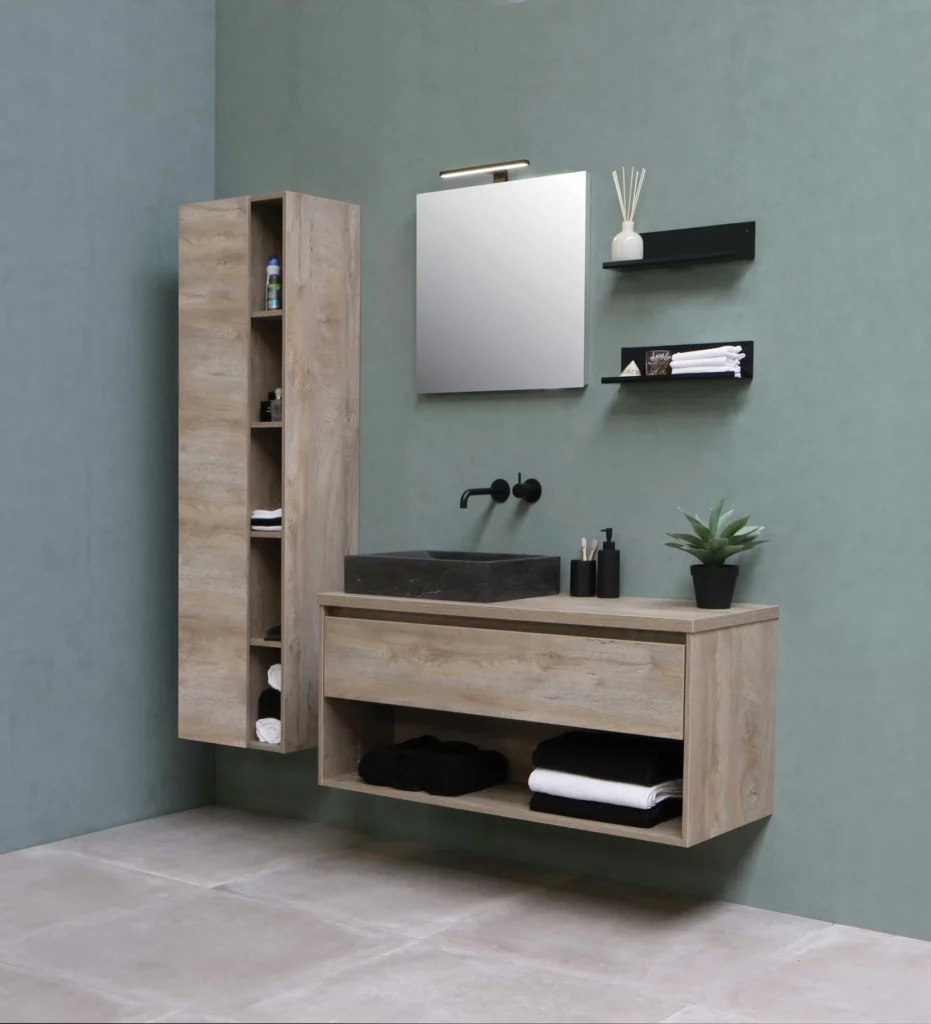
The vanity is typically the most prominent piece in a bathroom and one of the most important functional elements. It is the first thing most people look at when they enter the room, and it sets the tone for everything else. Getting it right in terms of size, style, storage, and material is one of the most impactful decisions in the whole project.
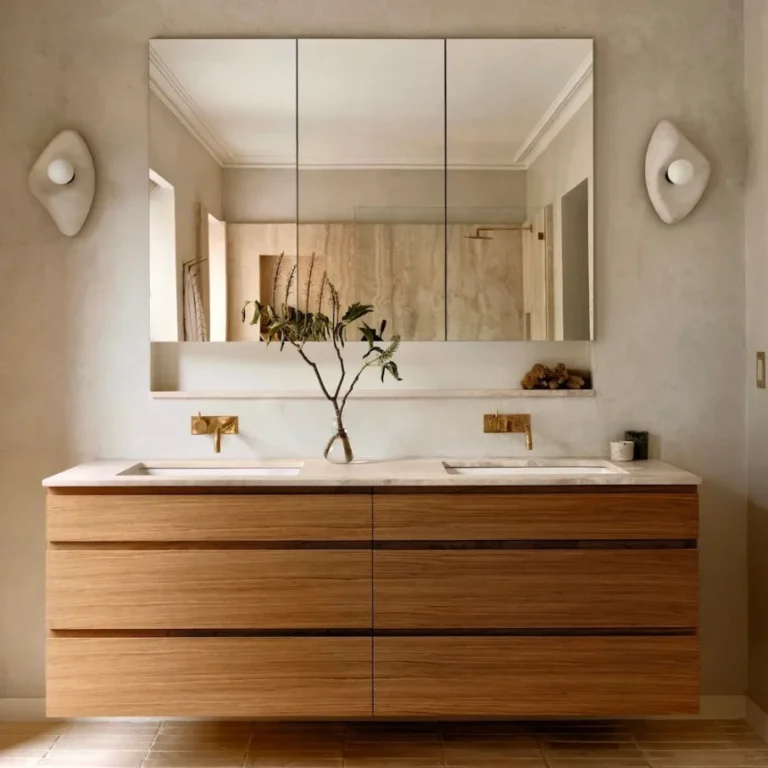
Modern bathroom vanities fall broadly into two categories: wall-mounted floating units and floor-standing freestanding pieces. Floating vanities are a defining feature of modern bathroom design. By clearing the floor beneath them, they make the room feel larger and more open, they are easier to clean around, and they give the room a lightness that floor-based units struggle to match. They also allow you to set the height precisely for the people using the room, which is a genuine ergonomic advantage.
Freestanding vanities have their own appeal, particularly in larger bathrooms where they can anchor the space without it feeling too sparse. Units with legs or a visible base can have a furniture-like quality that suits warmer, more relaxed bathroom styles.
The sink type is closely related to the vanity choice. Undermount sinks, set beneath a solid countertop in stone, composite, or a solid surface material, give a clean, uninterrupted counter surface that is easy to wipe down and looks very refined. Vessel sinks, which sit above the counter, make more of a visual statement and suit bathrooms where the vanity is intended to be a feature. Integrated sinks, where the basin is formed from the same material as the counter, offer the cleanest look of all and are increasingly common in well-designed modern bathrooms.
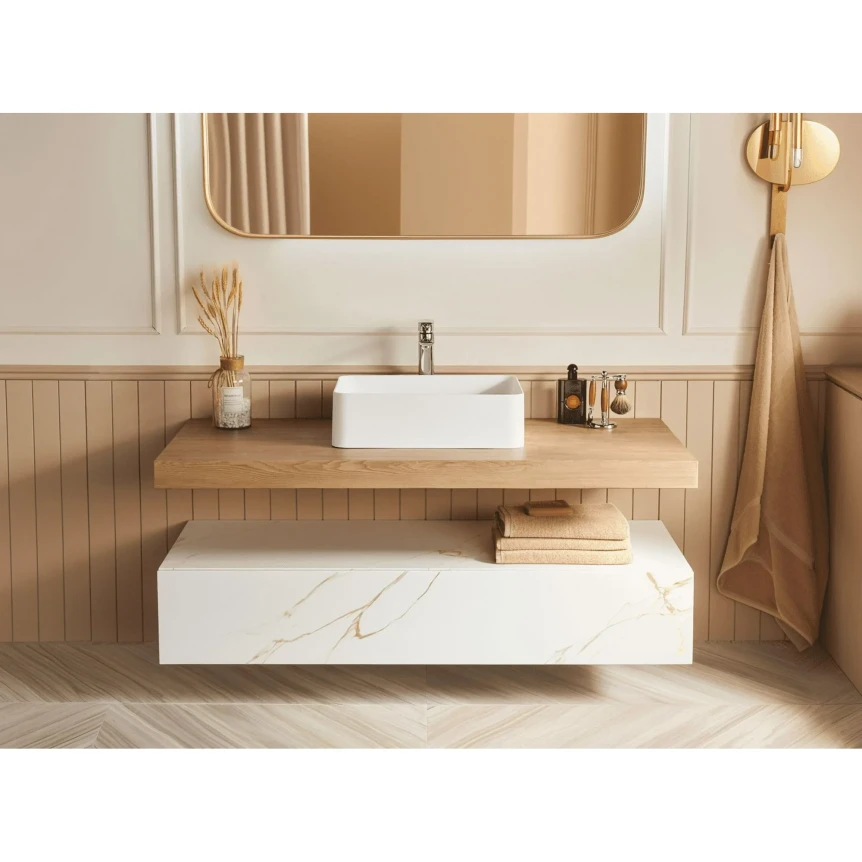
Hardware finish on the taps should match or closely complement the other hardware in the room: towel rails, toilet roll holder, any visible shower fittings. Mixing too many different metal finishes is one of the most common ways a bathroom renovation falls short of its potential despite good decisions in other areas.
Read our full guide: Best Modern Bathroom Vanities and Sinks for 2026
Tiles are the material that defines the character of a bathroom more than any other. They cover the largest surface area, they establish the room’s color and texture, and they are the most permanent decision in the design. Getting tiles right is worth investing time and thought into before committing.
The most significant shift in bathroom tile design over recent years has been the move toward larger formats. Large format tiles, 60 by 60 centimeters and above, create a sense of scale and calm that smaller tiles struggle to match. They have fewer grout lines, which makes the room feel cleaner and more expansive, and they work especially well in smaller bathrooms where a busy tile pattern would emphasize the room’s boundaries rather than push them back.
Texture is another important consideration. Matte tiles have replaced gloss as the dominant choice in modern bathroom design, particularly on floors where a matte or slightly textured finish provides better grip when wet. On walls, matte tiles photograph beautifully and feel more sophisticated than high-gloss alternatives, though a gloss tile used as a deliberate accent can add light and depth in a dark bathroom.
Natural stone, including marble, travertine, and limestone, remains the most luxurious option in bathroom surfaces. It brings a depth and variation that no manufactured tile fully replicates, and it ages beautifully when properly maintained. The trade-offs are cost and the need for sealing and careful maintenance, particularly with marble, which is susceptible to staining and etching from acidic products.
Porcelain tiles that mimic the look of natural stone have improved dramatically in quality and are a practical and beautiful alternative at a lower price point and with significantly less maintenance. The best versions are difficult to distinguish from the real thing, particularly in a finished room where lighting and the presence of other materials draw the eye.
Flooring in a bathroom needs to balance aesthetics with practicality. Slip resistance, ease of cleaning, and durability are all relevant alongside visual considerations. Heated floors, while a project-level investment, transform the daily experience of a bathroom in a way that is hard to overstate once you have lived with it.
Read our full guide: Best Modern Bathroom Tiles and Flooring
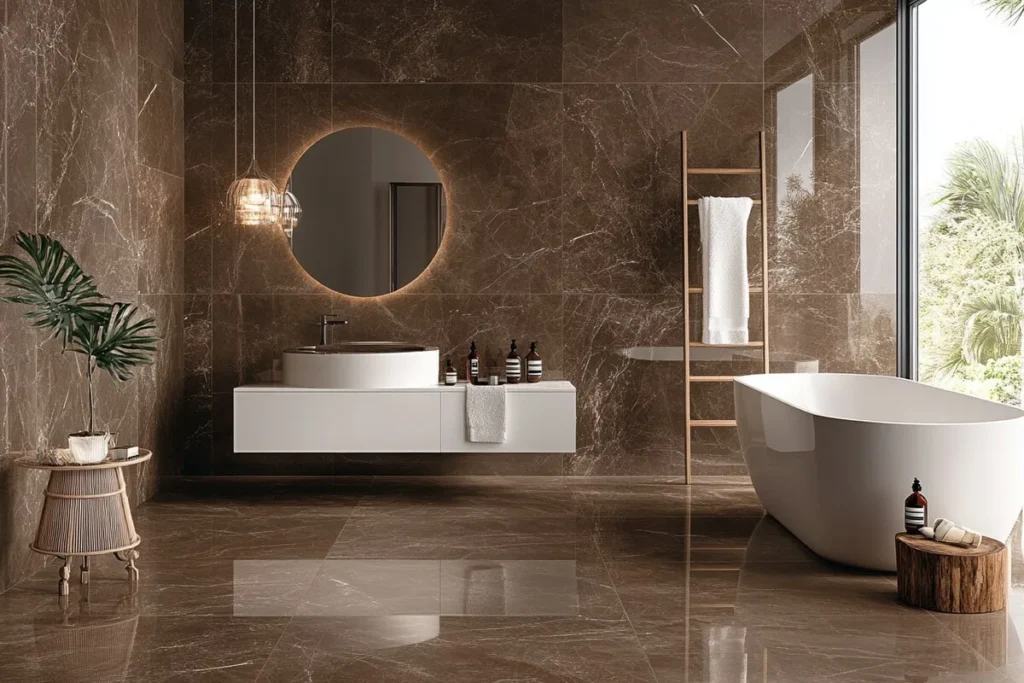
Bathroom color choices feel particularly high stakes because the room is typically small, the surfaces are largely fixed once tiled, and the materials are expensive to change. Understanding what works well and why gives you more confidence to make decisions that suit the room rather than defaulting to the safest possible choice.
White and off-white bathrooms remain the most popular choice for good reason. They reflect light, feel clean, work with almost any hardware finish, and have a timeless quality that makes them easier to update through accessories over time. The risk with all-white bathrooms is that they can feel clinical or flat without enough textural variation to compensate. In a white bathroom, the texture of the tiles, the warmth of the hardware finish, the quality of the towels, and the introduction of natural materials like timber or stone become the things that give the room its character.
Soft and earthy neutrals have become increasingly prominent in modern bathroom design. Warm whites, sandy taupes, greige, and pale terracotta create a bathroom that feels naturally warm without relying on strong color. These tones work especially well with matte brass or warm chrome hardware and with natural stone or stone-effect tiles.
Bolder bathroom colors, particularly deep greens, slate blues, rich charcoals, and terracotta, have moved firmly into the mainstream and produce bathrooms with a sense of calm drama that lighter rooms cannot match. Used on walls, these colors create a cocoon-like quality that many people find deeply appealing in a bathroom. The key is to balance them with sufficient light, both natural and artificial, to prevent the room from feeling oppressive.
Read our full guide: Bathroom Color Schemes That Work
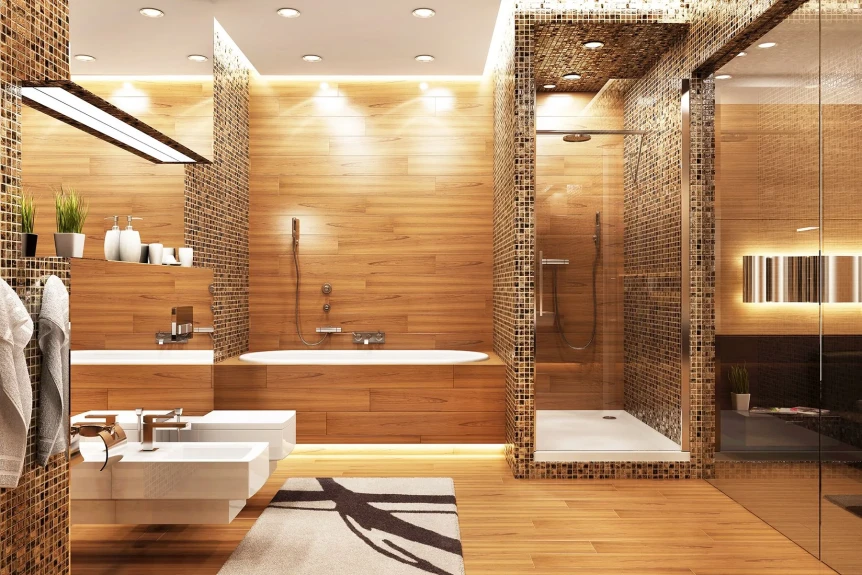
Bathroom lighting is one of the most technically constrained areas of home design because of safety regulations around electricity and water. But within those constraints, there is more flexibility than most people use, and the difference between well-planned and poorly-planned bathroom lighting is enormous.
As in the bedroom, layered lighting is the goal. The bathroom has even more distinct activities than the bedroom, and each benefits from a different quality of light. Getting ready in the morning requires bright, clear, shadow-free light, particularly around the mirror and vanity. A relaxing bath in the evening calls for something warm, low, and indirect. Navigating the room at night for a glass of water benefits from a very low level of light that does not shock the eyes awake.
Vanity lighting is the most functionally important light in the bathroom. The classic mistake is to place a single light directly above the mirror, which casts downward shadows on the face and is genuinely unhelpful for applying makeup, shaving, or anything else that requires seeing your face clearly. Lights positioned at either side of the mirror, at roughly face height, eliminate these shadows by providing even, frontal illumination. A horizontal bar above the mirror is the next best option and more practical in many bathrooms.
Recessed downlights provide ambient illumination and are the most common choice in modern bathrooms. They should be on a dimmer and, where possible, supplemented by lower, warmer light sources, wall-mounted lights, under-vanity lighting, or a backlit mirror, that create atmosphere in the evenings without the brightness required for morning routines.
Read our full guide: Modern Bathroom Lighting: Complete Guide
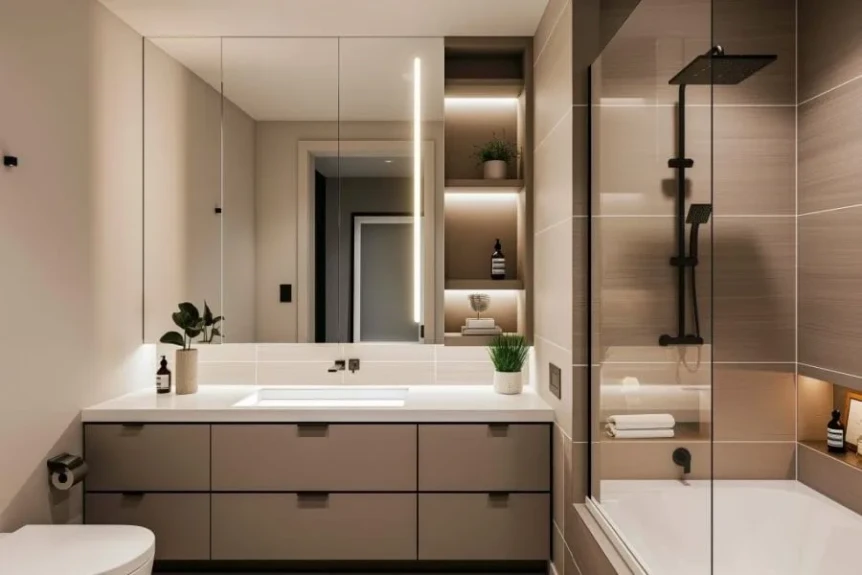
Bathroom storage is where the gap between a well-designed room and a frustrating one most often appears. A bathroom with beautiful tiles and a stunning vanity that has nowhere to put anything will fill up with products on every surface, undermining the very aesthetic it set out to achieve.
Vanity storage, in the form of drawers or cupboards beneath the sink, is the most important storage element in most bathrooms. Deep drawers are generally more useful than shelves behind cabinet doors because they give you full visibility and access to everything in them without moving other items. A combination of a wide shallow drawer for daily-use items and a deeper drawer for products used less frequently covers most needs efficiently.
Recessed shelving, built into the wall between studs, is one of the most elegant storage solutions in modern bathroom design. A niche in the shower for products or a recessed shelf beside the mirror for everyday items sits flush with the wall surface and contributes to the clean, uninterrupted look that defines good modern bathroom design. This kind of solution needs to be planned at the structural stage of a renovation but is well worth considering.
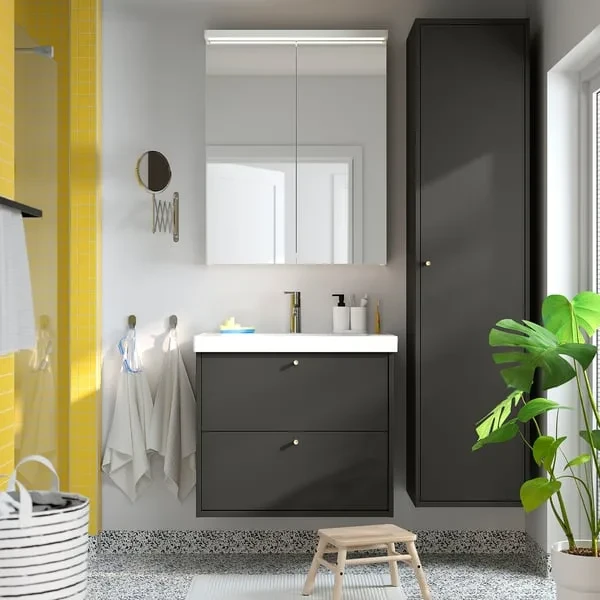
Mirror cabinets, which combine a mirrored front with a storage cabinet behind, are one of the most efficient uses of wall space in a bathroom. Modern versions are much slimmer and better designed than older iterations and can be virtually invisible when closed. They are particularly valuable in smaller bathrooms where wall space is limited.
Read our full guide: Bathroom Storage Solutions
Small bathrooms present a particular set of design challenges, but they are also some of the most satisfying rooms to get right. The constraints force a precision and intentionality that larger rooms do not require, and a well-designed small bathroom can feel genuinely luxurious despite its dimensions.
Layout is where small bathroom design either succeeds or fails. In a very small bathroom, every centimeter matters, and the difference between a layout that works and one that does not can be a matter of a few inches. Wall-hung toilets, compact vanities, and shower enclosures designed for tight spaces have all improved dramatically in quality and design in recent years, making it easier than ever to create a functional and beautiful small bathroom without compromise.
The visual strategies for making small bathrooms feel larger are well established: large format tiles with minimal grout lines, a consistent color palette that runs across floor and walls, frameless shower enclosures, wall-mounted fixtures that clear the floor, and generous mirrors that reflect light and add apparent depth. Used together, these create a room that feels significantly larger than its actual dimensions.
Read our full guide: Small Bathroom Design Ideas
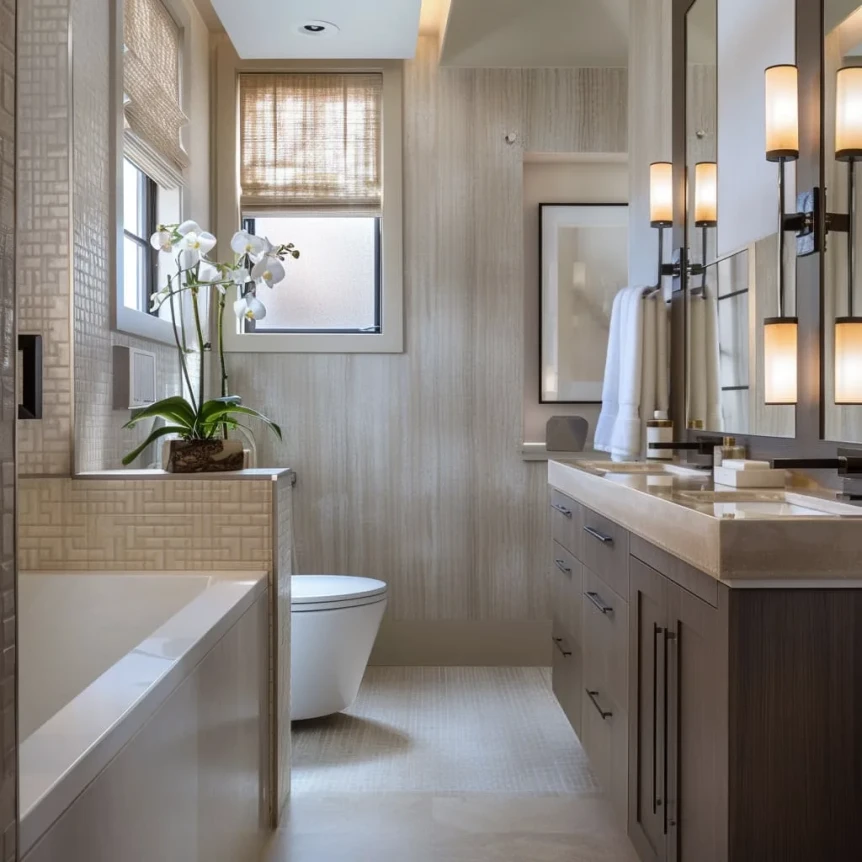
Accessories are where a bathroom transitions from a well-executed technical space to a room with genuine personality and warmth. They are also where the most common decorating mistakes happen: too many objects, too many different styles, too much pattern competing for attention in a small space.
The bathroom accessories that make the most impact are the ones used every day: towels, soap dispensers, toothbrush holders, and the hardware everything hangs from. High-quality towels in a consistent color, a soap dispenser that complements the tap finish, and a well-positioned towel rail that actually has enough room to hang towels flat rather than bunched together: these practical details do more for the daily experience of a bathroom than any piece of purely decorative styling.
Hardware finish is one of the most unifying decisions in bathroom accessory selection. Choosing one finish, whether matte black, brushed brass, polished chrome, or brushed nickel, and applying it consistently to everything from towel rails to toilet roll holders creates an immediate sense of cohesion. Mixing hardware finishes is sometimes done well, but it requires confidence and a clear design rationale.
Plants are one of the most effective and affordable ways to add life and warmth to a bathroom. Ferns, pothos, snake plants, and other humidity-loving species thrive in bathroom conditions and bring a softness that no object on a shelf can replicate. A single well-chosen plant in a good pot makes a bathroom feel genuinely cared for.
Restraint is the watchword for bathroom styling. A few well-chosen pieces displayed with space around them will always look more considered than a shelf crowded with objects. In a small bathroom especially, every surface object should be genuinely useful, genuinely beautiful, or both.
Read our full guide: Modern Bathroom Accessories and Decor
A detailed guide to choosing the right vanity and sink for your bathroom, covering floating versus freestanding options, countertop and basin types, storage configurations, and what to look for at different price points.
Everything you need to know about lighting a modern bathroom well, from vanity and task lighting to ambient and accent layers, with practical advice on fixture placement and the regulations that apply.
How to choose a color palette for your bathroom with confidence, covering the neutrals that never fail, the bold tones worth considering, and how to use color to make a small bathroom feel larger.
A comprehensive look at bathroom tile and flooring options, including large format tiles, natural stone, textured surfaces, and the practical considerations that make a difference to long-term satisfaction.
Design strategies tailored specifically to smaller bathrooms, covering layout, fixture selection, visual tricks for adding apparent space, and the storage solutions that work best when every centimeter counts.
How to choose and style bathroom accessories in a way that enhances the room rather than cluttering it, with guidance on hardware finishes, textiles, plants, and the small details that make a big difference.
Practical storage strategies for any bathroom size, from vanity drawers and recessed niches to mirror cabinets and the organizing habits that keep a well-designed bathroom looking its best.
A well-designed bathroom is the result of good decisions made in the right order. Layout and plumbing first, then the surfaces and materials that define the character of the room, then the fixtures and fittings that are used every day, and finally the accessories and styling that make it personal. Each layer builds on the one before it, and skipping ahead or trying to solve structural problems with decoration is rarely satisfying.
The guides linked throughout this page go deeper on every topic covered here. Whether you are choosing between tile formats, working out how to fit more storage into a small bathroom, or trying to understand what kind of vanity would work best in your space, you will find specific and practical guidance in each one.
Take your time with the decisions that are hardest to reverse, the layout, the tiles, the plumbing, and move more quickly on the ones that can be changed: accessories, textiles, plants, and styling. A bathroom designed with patience and care is one you will enjoy every single day, which given how many times a day you use it, is one of the best investments you can make in your home.