Buyer's Guides

By Tereza Hower | Published March 17, 2026 | Updated March 27, 2026
Bathroom lighting is one of the most technically constrained areas of home design, and one of the most commonly underplanned. Most bathrooms are lit by a single ceiling fixture, which casts flat, unflattering light and offers no flexibility for the very different tasks and moods the bathroom needs to support. A little planning changes everything.
This guide covers how to layer bathroom lighting effectively, where vanity and task lighting should go, how safety zones work, and how to create a bathroom that feels as good in the evening as it is practical in the morning.
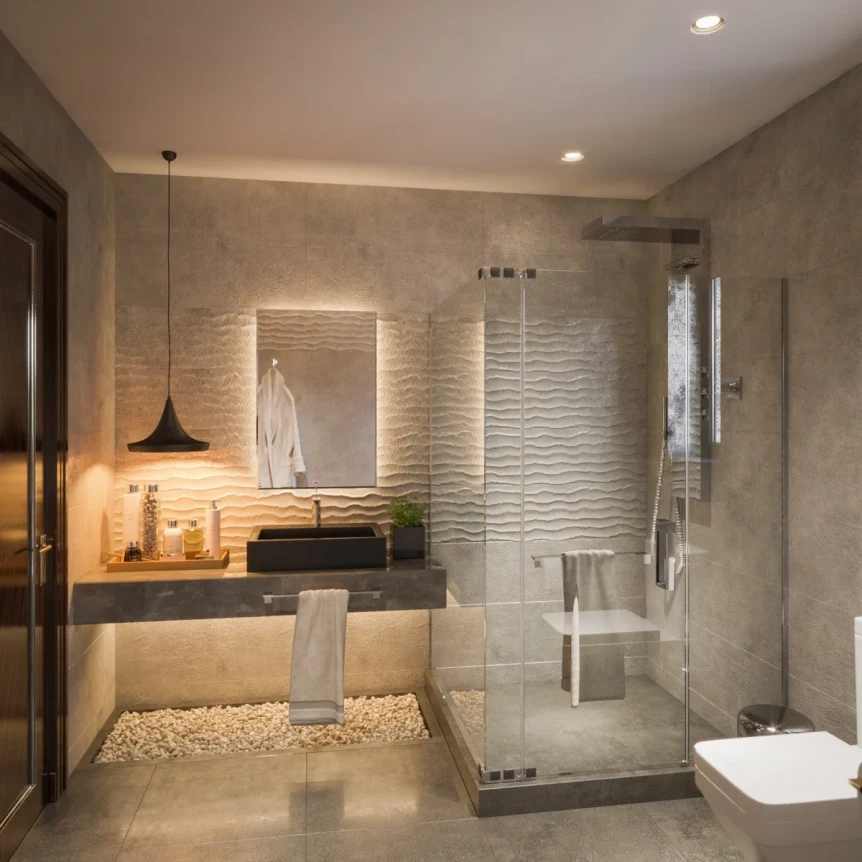
Before getting into aesthetics, it is worth understanding the electrical safety zones that apply in bathrooms, as these directly affect where certain types of fixtures can be installed. These regulations exist because of the obvious risk of mixing electricity and water, and working within them from the start of the planning process saves significant inconvenience later.
Zone 0 is inside the bath or shower itself: only specially rated low-voltage fittings designed for direct water contact are permitted here. Zone 1 is directly above the bath or shower area up to a height of 2.25 meters: fittings must have a minimum IP65 water resistance rating. Zone 2 extends 60 centimeters beyond the edge of the bath or shower and 60 centimeters above Zone 1: fittings here need at least an IP44 rating. Outside these zones, standard domestic fittings can be used as long as they are not within reach of someone standing in the bath or shower.
In practice, most ceiling downlights specified for bathrooms carry sufficient IP ratings to be used throughout the room, and your electrician will guide you on what is appropriate. The key is to know the zones exist before you start choosing fixtures, so the design of the lighting plan accounts for them from the beginning.
Vanity lighting, the light that illuminates your face at the mirror, is the most functionally important light in the bathroom. It is where most people get it wrong, and the consequences, poor makeup application, bad shaving results, difficulty with contact lenses, are felt every single morning.
The classic mistake is placing a single light directly above the mirror. This arrangement casts downward shadows under the eyes, nose, and chin that make faces harder to see and less flattering to look at. It is the lighting equivalent of holding a torch under your chin.
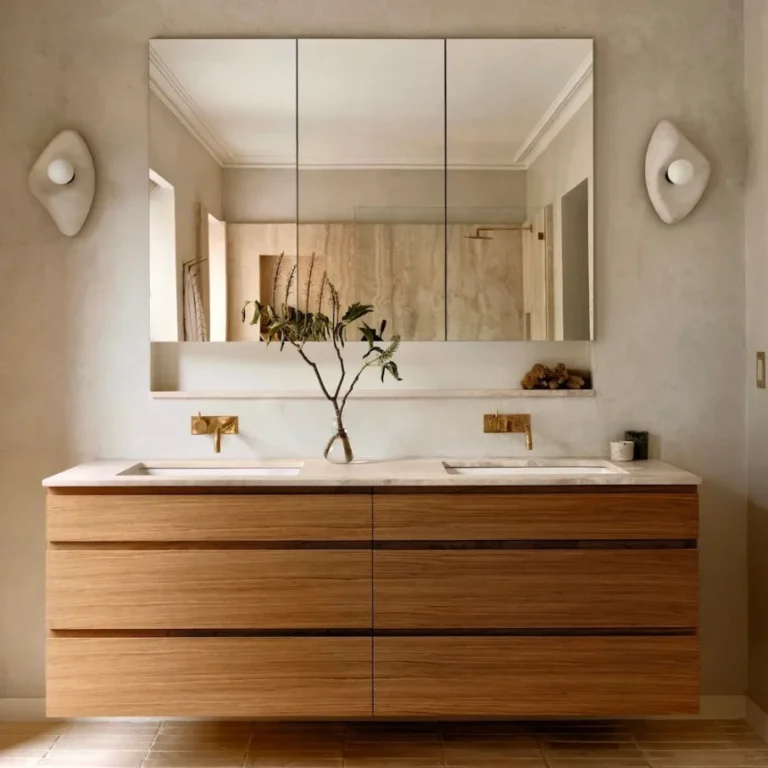
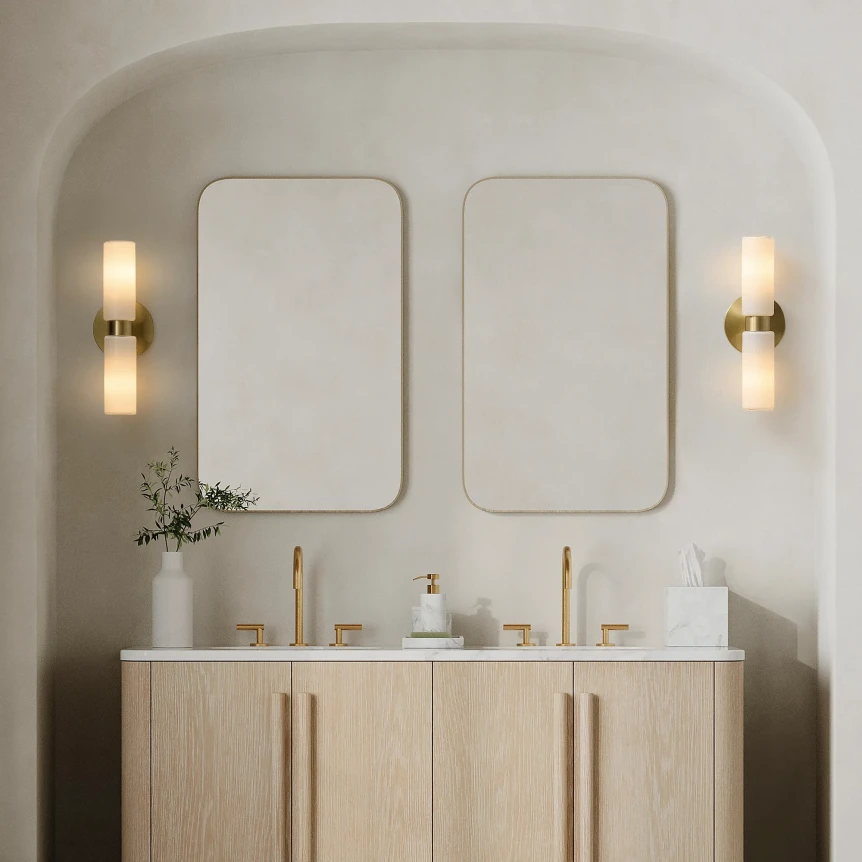
The correct approach is to place lights at face height on either side of the mirror. This provides even, frontal illumination that eliminates shadows entirely and is the same principle used in professional dressing rooms and theatrical makeup studios. Wall-mounted sconces or a pair of vertical fixtures flanking the mirror achieve this result most effectively.
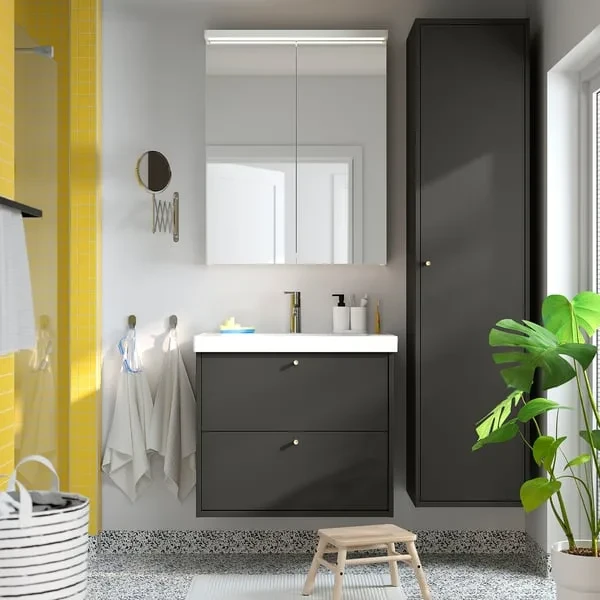
Where side lighting is not possible because of the bathroom layout, a horizontal bar of light positioned directly above the mirror is the next best option. It is less effective than side lighting but significantly better than a single overhead source. Choose a fixture that spreads light evenly across its length rather than concentrating it at points.
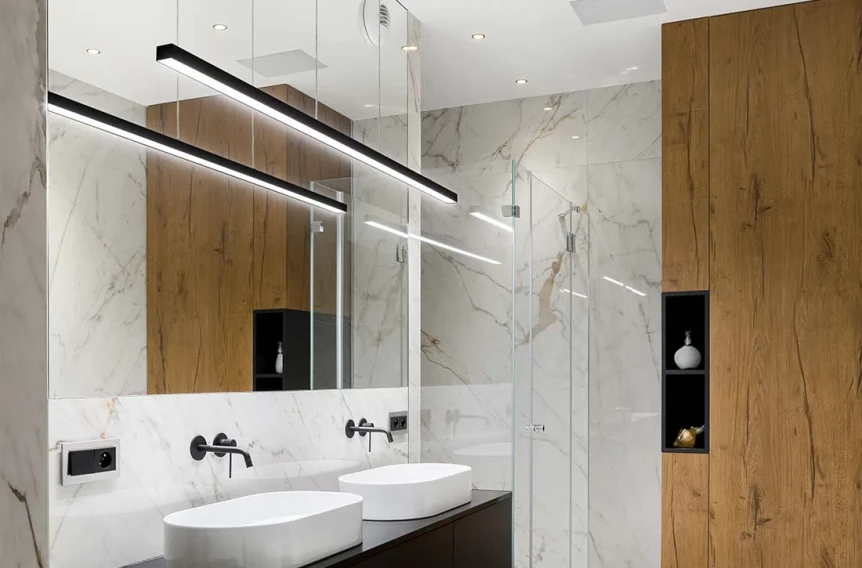
Ambient lighting provides the general illumination that allows the bathroom to function. In modern bathrooms, recessed ceiling downlights are the most common approach, and they work well when planned carefully.
Position downlights to illuminate the room evenly without creating bright spots over the shower or dark corners by the vanity. A common mistake is to cluster downlights in the centre of the ceiling, which lights the middle of the room well but leaves the edges dim. Spacing them toward the perimeter and over key functional areas, the vanity, the shower entry, and the area in front of the toilet, produces much more useful results.
All ambient lighting in the bathroom should be on a dimmer. The ability to reduce the overhead lights to a low, warm level in the evenings transforms the room from a functional space to a genuinely relaxing one. Combined with the warm light of a backlit mirror or a low wall sconce, a dimmed bathroom in the evening has a quality that is hard to beat for unwinding before bed.
Color temperature matters in bathroom lighting. Bulbs in the 2700K to 3000K range produce a warm white light that is flattering and easy on the eye. Cooler temperatures above 4000K produce a bluer, more clinical light that is less appropriate for bathroom environments unless the room is very dark and needs the brightness boost.
Backlit and illuminated mirrors have become one of the most popular lighting choices in modern bathrooms, and it is easy to understand why. They combine the functional benefits of good face-level light with an atmospheric quality that standard overhead fixtures cannot replicate, and they are available at price points to suit almost any budget.
A backlit mirror, which has light integrated around or behind the mirror glass, casts a soft glow that adds depth and warmth to the bathroom without glare. An illuminated mirror, which has LED strips integrated into the front face of the mirror frame, provides more direct task lighting and is more effective for grooming and makeup.
Many current illuminated mirrors include dimmable controls, color temperature adjustment, and even anti-fog heating elements that keep the mirror clear after a shower. These practical features, combined with the visual impact of a well-chosen mirror, make illuminated mirrors one of the best value investments in bathroom lighting.
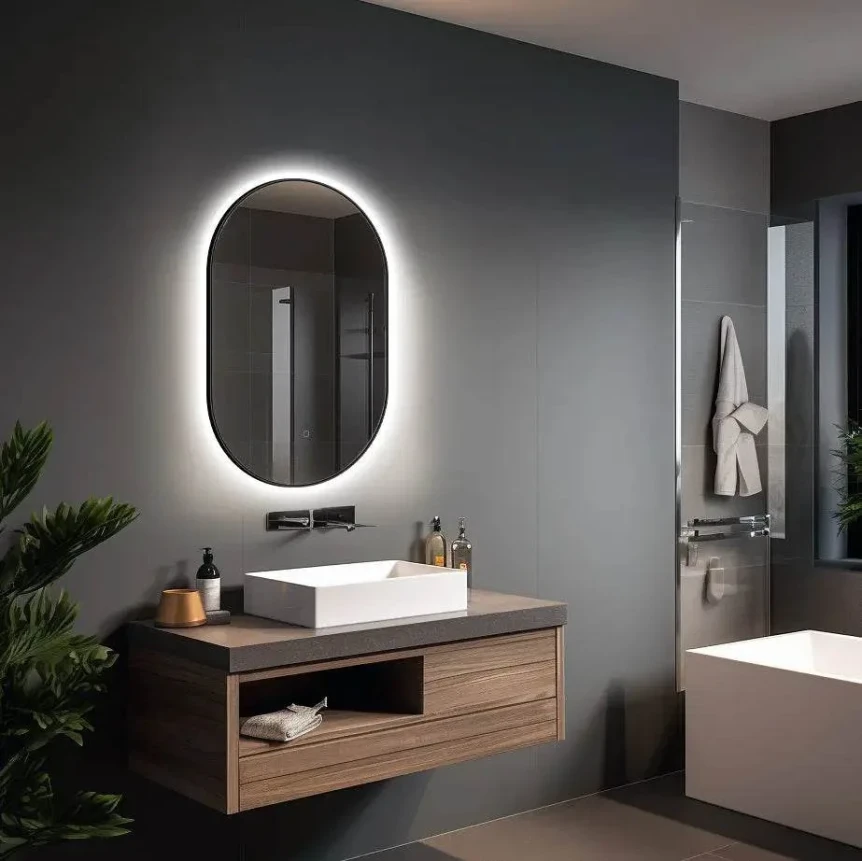
Accent lighting in a bathroom adds the depth and dimension that ambient and task lighting alone cannot provide. It is the layer that shifts the room from functional to genuinely atmospheric.
Under-vanity lighting, a strip of LED light beneath the base of a floating vanity that illuminates the floor below it, creates a soft halo effect that makes the vanity appear to float and adds a level of subtle sophistication to the room. It is most effective when the bathroom floor is a reflective material that picks up and bounces the light.
Niche lighting, LEDs installed in a recessed shower niche or a display shelf, draws attention to the detail of the niche and creates a warm point of visual interest. It is a small addition with a disproportionate impact on the finished look of the shower area.
A single decorative pendant or a pair of wall sconces flanking the mirror are increasingly common in larger bathrooms and bring a residential warmth that purely recessed lighting rarely achieves. These fixtures are as much about atmosphere as they are about illumination, and choosing them thoughtfully adds genuine personality to the room.
Plan the lighting at the same time as the layout and plumbing, not afterward. Wiring for wall sconces beside the mirror, for under-vanity LEDs, and for dimmer switches all need to be roughed in during the construction phase. Trying to add these afterward is significantly more expensive and disruptive.
Specify all switches and dimmers at the same time as the fixtures and make sure they match the hardware finish you have chosen for the rest of the bathroom. A beautifully designed bathroom with mismatched switch plates is a detail that catches the eye for the wrong reasons.
Consider installing a separate circuit for the vanity lighting and ambient lighting so they can be controlled independently. This is what makes the morning-versus-evening flexibility actually usable: one switch for the bright, functional light and one for the warm, atmospheric layer.
With lighting planned, these related guides will help you complete the picture:
For the complete bathroom design guide, visit The Complete Guide to Modern Bathroom Design.