Modern Bathroom Accessories & Decor: How to Style Your Space

By Tereza Hower | Published March 17, 2026 | Updated March 27, 2026
Accessories are where a bathroom crosses from a well-executed technical project to a room with genuine warmth and personality. They are also where the most common decorating mistakes happen: too many objects in a small space, too many competing styles, or a collection of mismatched pieces that accumulated over time without any guiding intention.
This guide covers the accessories and decor choices that make the biggest difference in a modern bathroom, and the principles that ensure they work together rather than against each other.
Hardware Finish: The Most Unifying Decision
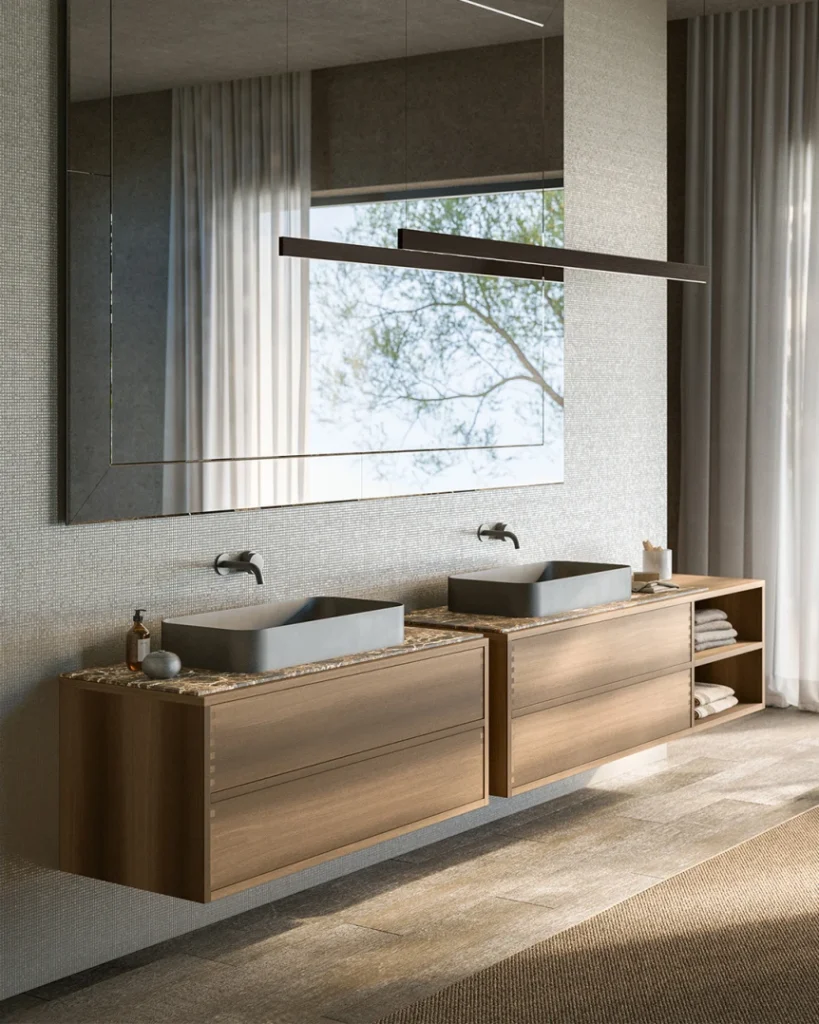
Hardware, the metal finish on your towel rails, toilet roll holder, robe hooks, tap, shower fittings, and light switches, has a disproportionate effect on the overall quality feel of a bathroom. These are the elements touched every day, multiple times, and their quality and consistency is noticed whether or not you consciously register it.
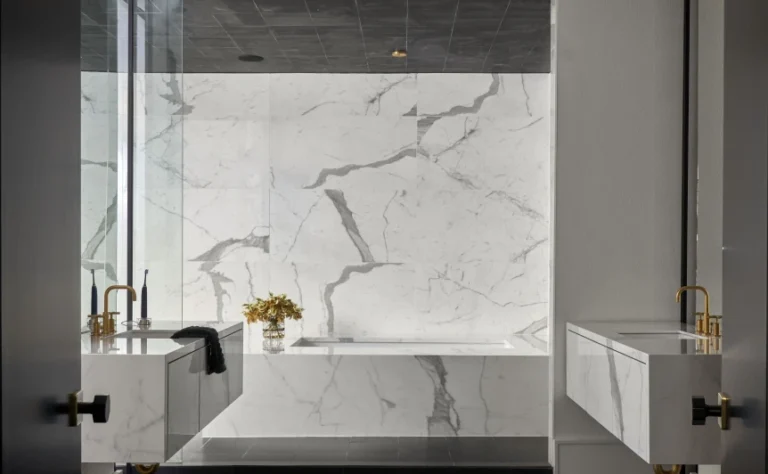
The single most important hardware rule is consistency. Choose one finish and apply it to everything. A bathroom where every metal element is in the same finish, whether matte black, brushed brass, polished chrome, or brushed nickel, has an immediate sense of cohesion and intention that a bathroom with mixed finishes does not. The difference is clearly felt even by people who cannot articulate why one bathroom feels more considered than another.
Matte black hardware works well in bathrooms with strong graphic contrasts, monochrome palettes, and tile choices that have a sharp, architectural quality. It is bold and contemporary but can date if overused or applied in a bathroom where it does not suit the overall aesthetic.
Brushed brass and unlacquered brass have become the most popular premium hardware finish in recent years, and they deserve their popularity. Brass hardware brings a warmth and richness that suits a wide range of bathroom styles, from organic and natural to quiet luxury. Unlacquered brass develops a patina over time that many people find more beautiful than the polished original: it is a material that improves with age rather than requiring maintenance to look new.
Brushed nickel and polished chrome remain the most versatile and timeless choices, working comfortably across both warm and cool bathroom palettes. For those who find the current popularity of black and brass too trend-led, chrome is the safest long-term investment.
Towels: More Than a Practical Necessity
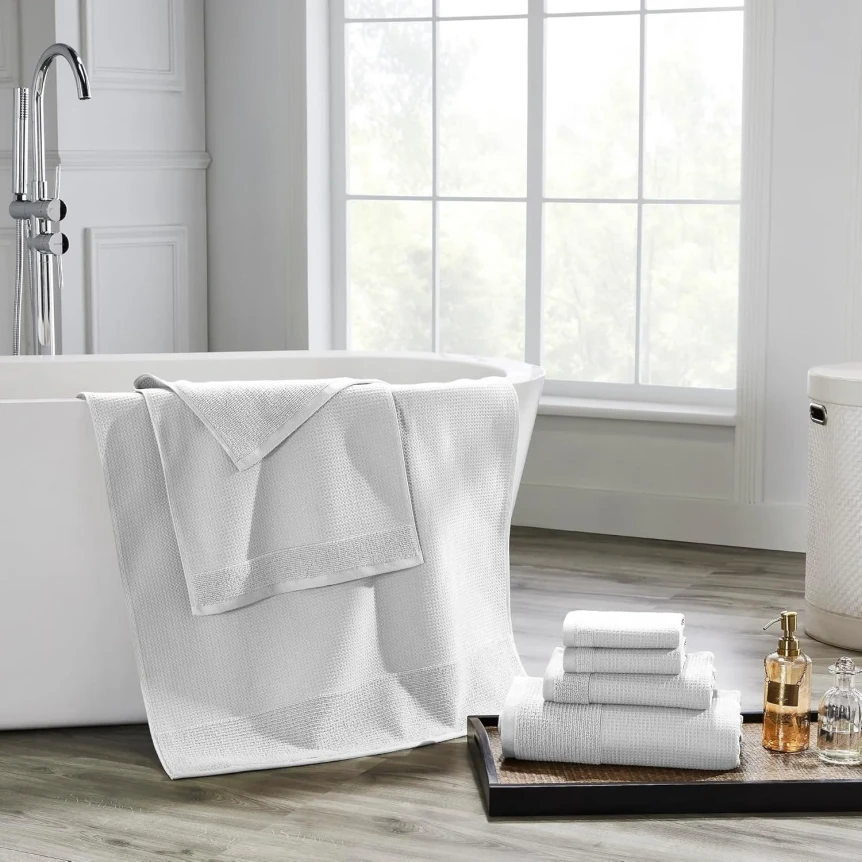
Towels are one of the most visible elements of a styled bathroom and one of the easiest and least expensive to get right. A matching set of good-quality towels in a consistent color, folded or hung neatly, contributes more to the finished look of a bathroom than most people expect.
In terms of color, towels that complement the palette of the room rather than contrasting with it tend to look more considered. A bathroom in warm stone tones with off-white or warm sand towels feels cohesive. The same bathroom with bright white towels has a slightly clinical contrast. Deep-toned bathrooms often look beautiful with white towels: the contrast is intentional and works as a design decision rather than an accident.
Material matters for both aesthetics and practicality. Waffle-weave cotton and linen-cotton blends have a relaxed, organic quality that suits modern and natural bathroom aesthetics. Turkish cotton and Egyptian cotton have more of a classic hotel feel. Both have their place depending on the direction of the room.
Avoid having too many towels on display in a small bathroom. Two bath towels and two hand towels, neatly hung or folded, look clean and considered. A towel rail stacked with multiple towels in various states of fold looks cluttered regardless of the quality of the individual towels.
Mirrors: Functional and Design-Defining
The mirror is one of the most significant single items in a bathroom. It is used every day, it affects the quality of light in the room, and it has a strong visual presence that influences the overall character of the space.
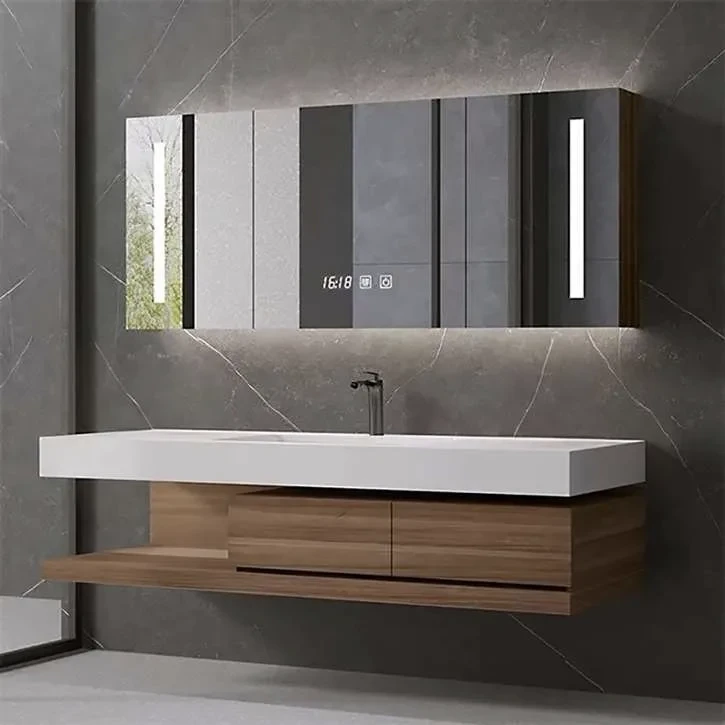
In modern bathrooms, the choice is typically between a simple framed mirror, a frameless mirror, and an illuminated or backlit mirror. Illuminated mirrors, which have integrated LED lighting in the frame or behind the glass, combine function and aesthetics very effectively: they provide face-level light that improves on overhead-only illumination and add a visual warmth to the bathroom that standard mirrors cannot.
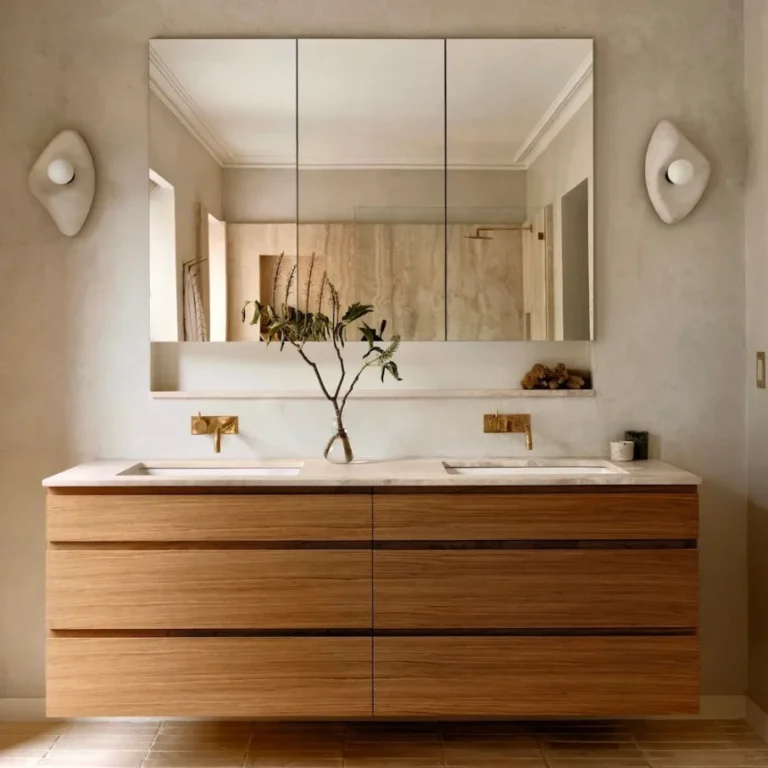
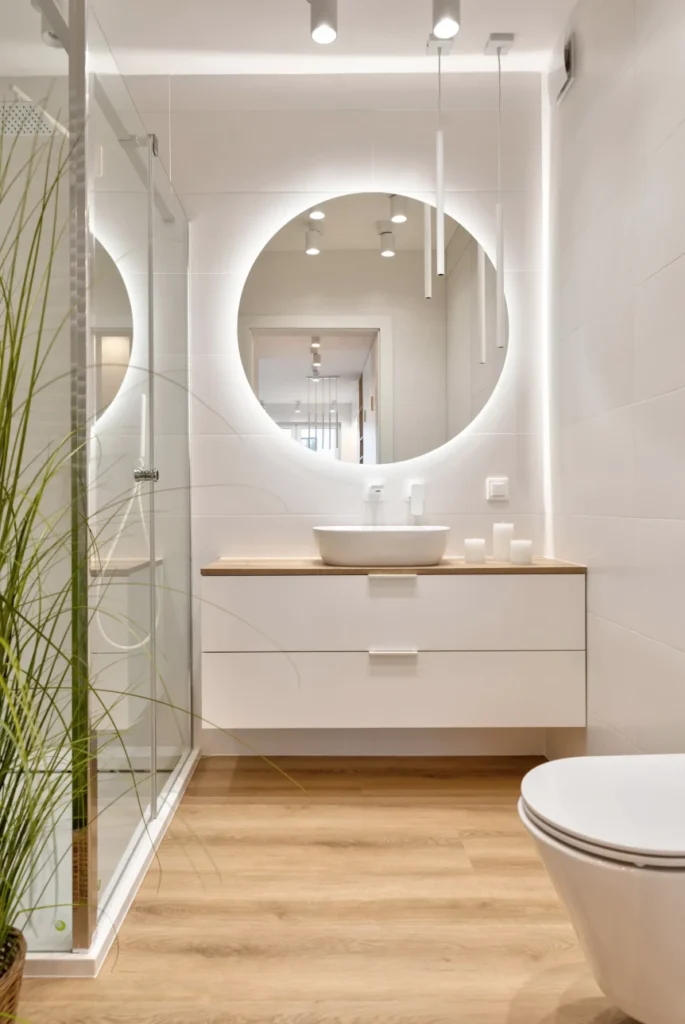
Size is as important in a bathroom mirror as in any other context. A mirror that is too small for the vanity beneath it feels out of proportion and does not provide the full-face view needed for practical use. As a starting point, the mirror should be at least as wide as the vanity cabinet and ideally wider. In a bathroom with strong horizontal lines, a wider mirror reinforces that geometry. In a taller, narrower space, a portrait-format mirror or a tall rectangular shape works better.
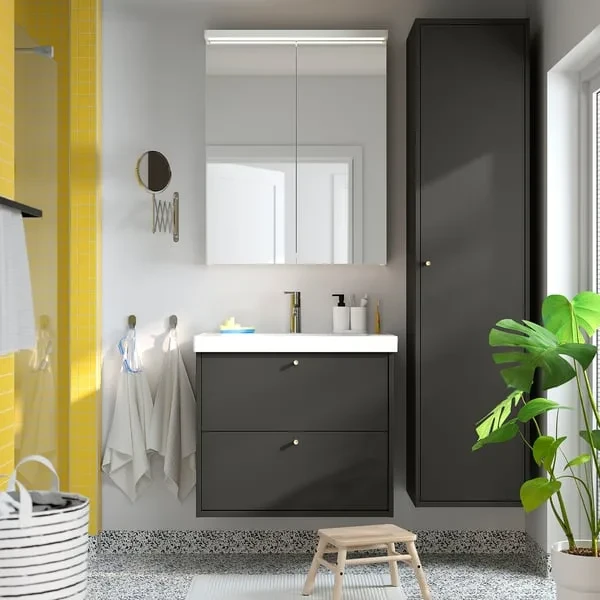
A mirror cabinet, which combines the mirror with storage behind it, is the most practical choice in many bathrooms and the most space-efficient. Modern mirror cabinets are slimmer and better designed than older versions and can be almost invisible when closed, contributing to the clean, uncluttered look rather than reading as a functional afterthought.
Plants: The Easiest Way to Add Life
A plant in a bathroom does something that no object on a shelf can replicate. It adds life, movement, and organic softness to a space that is otherwise composed entirely of hard surfaces and manufactured materials. Even a single well-chosen plant in a good pot transforms the feeling of a bathroom.
Many plants thrive in bathroom conditions. The combination of warmth and humidity that a bathroom provides is actively beneficial for ferns, pothos, peace lilies, orchids, and a number of other species. Snake plants and ZZ plants are virtually indestructible and tolerate the low light levels common in smaller bathrooms. A eucalyptus bunch hung near the shower, where the steam releases its oils, has both a beautiful visual quality and a genuinely calming scent.
Keep the pot simple and in line with the overall palette of the room. A terracotta pot in a warm-toned bathroom, a matte white or cement pot in a cooler scheme, and you are done. The plant is the feature: the pot is just its setting.
Styling Surfaces: Less Is Always More
The most common bathroom styling mistake is too many objects on too many surfaces. A bathroom counter with a soap dispenser, a toothbrush holder, a candle, two diffusers, a small plant, a collection of skincare products, and several decorative objects is not styled: it is cluttered. The individual items may all be beautiful, but together they undermine the calm and order that good bathroom design is working to create.
A well-styled bathroom counter might have a soap dispenser that complements the tap finish, one item of personal use that you genuinely reach for every day, and perhaps a small plant or candle. That is enough. Everything else belongs in a drawer or a cabinet.
The same principle applies to shelves. A recessed niche or a floating shelf styled with three or four well-chosen objects, a small plant, a candle, a single stone or ceramic piece, looks intentional and beautiful. The same shelf with eight objects, regardless of their individual quality, starts to look more like a collection and less like a design decision.
With accessories in place, these related guides cover the remaining elements of your bathroom:
- Modern Bathroom Lighting: Complete Guide
- Bathroom Storage Solutions
- Bathroom Color Schemes That Work
- Best Modern Bathroom Vanities and Sinks for 2026
- Best Modern Bathroom Tiles and Flooring
For the full bathroom design roadmap, read The Complete Guide to Modern Bathroom Design.bathroom accessories