Boho Living Room Ideas and Inspiration for Every Style and Budget

By Tereza Hower | Published April 3, 2026 | Updated October 12, 2026
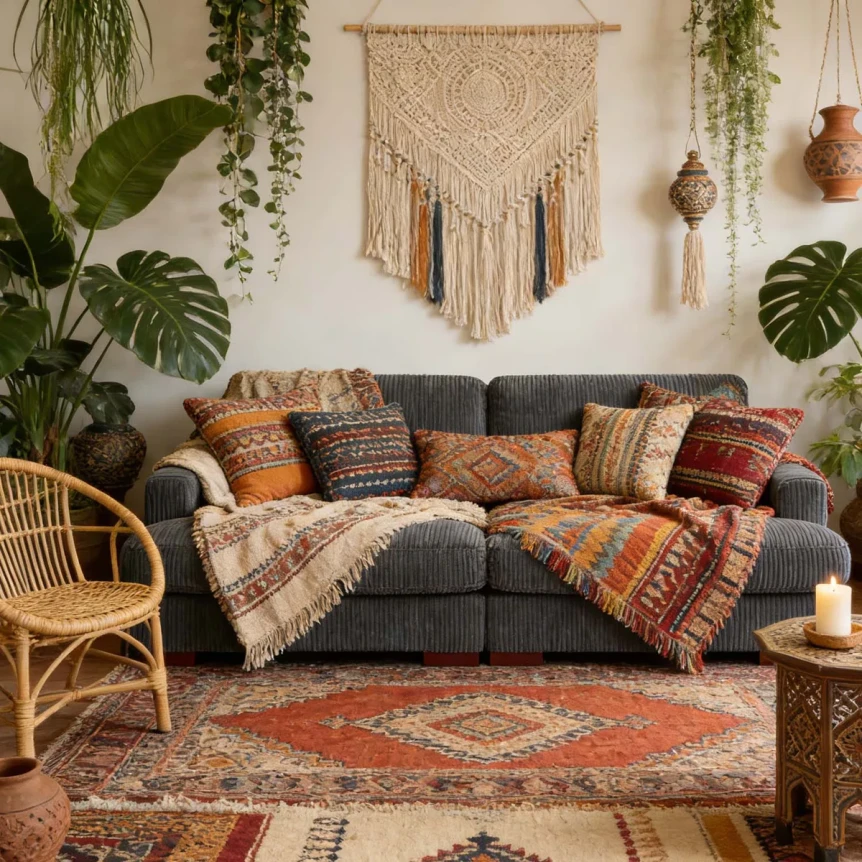
The bohemian living rooms that hold up are the ones that look collected over a decade and were, in fact, edited hard. A low sofa under a vintage textile, one rattan chair that does not match it, two rugs overlapping at an angle, a brass lamp, a big plant, and very little else on the walls reads as a life; the same room with three more chairs and a shelf of small objects reads as a flea market. Most boho living room ideas fail on that line, and the ones that work know where it is.
The living room is where the style gets to do its best work, because it is the room people gather in and the room that can carry the most texture without tipping into noise. This guide covers the palette, the seating and layout, the rugs and textiles, the lighting, and the styling details, then the adjustments for small rooms and rentals. The complete guide to bohemian interior design covers the principles the room is built on.
Key Takeaways
- Start from a warm neutral base and let the rug and textiles carry the color; the walls and sofa should almost never be the boldest thing in the room.
- One accent chair that does not match the sofa does more than three that do.
- Layer two rugs, not four: a large flat neutral base with a smaller patterned kilim or Beni Ourain on top, edges deliberately unaligned.
- Light the room from three or four low sources at 2700 Kelvin and never from the ceiling alone.
- Edit as often as you add; a bohemian room without breathing room is clutter with a rattan chair in it.
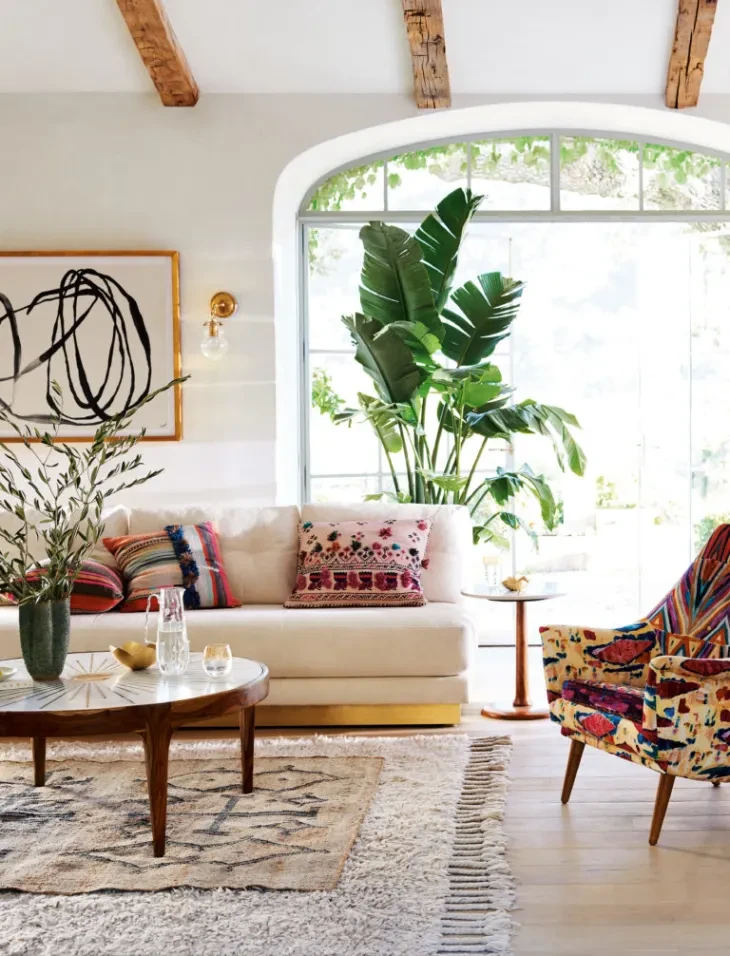
What Makes a Living Room Feel Bohemian?
A bohemian living room is a layered, informal room built from natural materials, mixed patterns, warm low light, and objects that look gathered over time rather than bought in one order. No single piece defines it; the feeling does. The best ones are warm, inviting, and slightly unexpected, and they look like they belong to someone with stories to tell. The decision of which pieces in a bohemian bedroom set are worth buying new depends on the same principles of mixing materials and collected character.
Five qualities do the work: layered textiles, mixed materials (rattan, worn leather, raw wood, brass, unglazed ceramic), lighting from several low sources, real plants at real scale, and evidence of a person. Take any one away and the room slides toward a different style; take away the editing and it slides toward a mess. Boho and bohemian mean the same thing here, and the room described below answers to both.
Which Color Palette Suits a Boho Style Living Room?
Three palettes cover almost every bohemian living room worth copying. All three keep the walls and the largest upholstered piece neutral and let the rug and the textiles carry the color, which is what allows the room to change with a new throw rather than a new sofa.
| Palette | Walls | Rug | Accents | Best for |
|---|---|---|---|---|
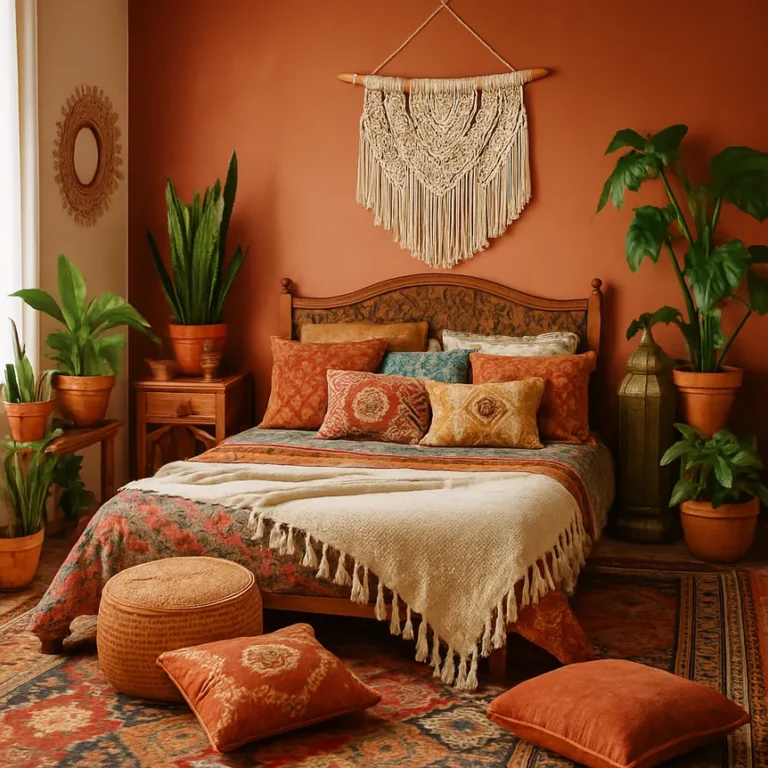
| Warm earth | Creamy white or warm beige | Terracotta or rust, flat weave | Ochre, cinnamon, chocolate brown, brass | Rooms with moderate daylight; the safest start |
| Jewel accent | Warm white | Neutral base with a patterned kilim on top | Deep teal, burgundy, amber glass, one at a time | Evening rooms; anyone who wants drama without repainting |
| Neutral boho | White or cream | Jute or undyed wool | Tan, oat, raw wood, black iron | Small or dark rooms; texture does the work of color |
Warm earth tones
The most common approach and the most forgiving. Creamy white or warm beige walls, a terracotta or rust rug, and accents in ochre, cinnamon, and chocolate brown feel grounding and suit rooms with moderate natural light. Brass and unlacquered bronze are the metals that belong here; chrome fights it.
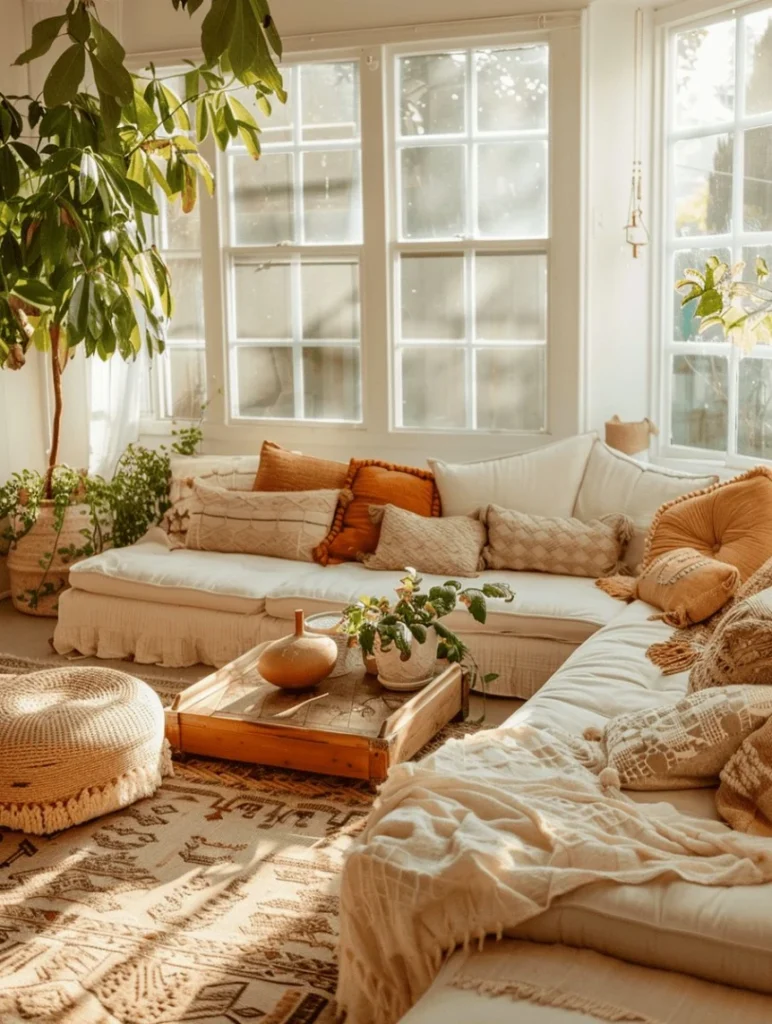
Jewel tone accents
For more drama, layer in jewel tones against the same neutral base. Deep teal pillows, a burgundy throw, or an amber glass vase add rich color without overwhelming the room, and the neutral backdrop is what lets them read as deliberate. One jewel tone at a time is the rule; two compete, and three turn the room into a bazaar.
Neutral boho
The softer take runs on whites, creams, tans, and light wood, and relies on texture rather than color for interest: woven baskets, a chunky knit throw, raw wood, a jute rug. It suits small and dark rooms because nothing in it absorbs light. The boho color palettes for every room guide names the specific paints and combinations for all three directions.
How Should a Bohemian Living Room Be Laid Out?
The main seating piece
Start with a comfortable sofa or sectional as the anchor, and resist making it the statement. A simple low profile sofa in a warm neutral is the right foundation, because what makes it bohemian is how it is dressed: layered throws, pillows in mixed patterns and textures, and a vintage textile draped over the back. A sofa that is itself patterned or brightly colored locks the room into one look for as long as the sofa lasts.
Accent seating
Variety comes from one or two accent chairs that do not match the sofa: a rattan peacock chair, a worn leather armchair, a vintage wooden chair with a bright cushion. The mix of periods and materials is the character of the room. Before buying one, decide where it will sit and who will sit in it. A peacock chair that nobody uses is a large, expensive ornament.
Floor seating
Oversized floor cushions, poufs, and meditation pillows are a bohemian signature. They add seating for guests and set a relaxed, communal tone. Two or three around a low coffee table, or tucked into a reading corner, is the dose; a floor covered in cushions is a yoga studio.
Layout
Bohemian layouts sit looser than traditional ones. Rather than lining furniture along the walls, pull the pieces inward to make an intimate conversation group, with the rug anchoring it and at least the front legs of every piece resting on the rug. A coffee table low enough to reach from a floor cushion, 14 to 16 inches, ties the two heights of seating together.
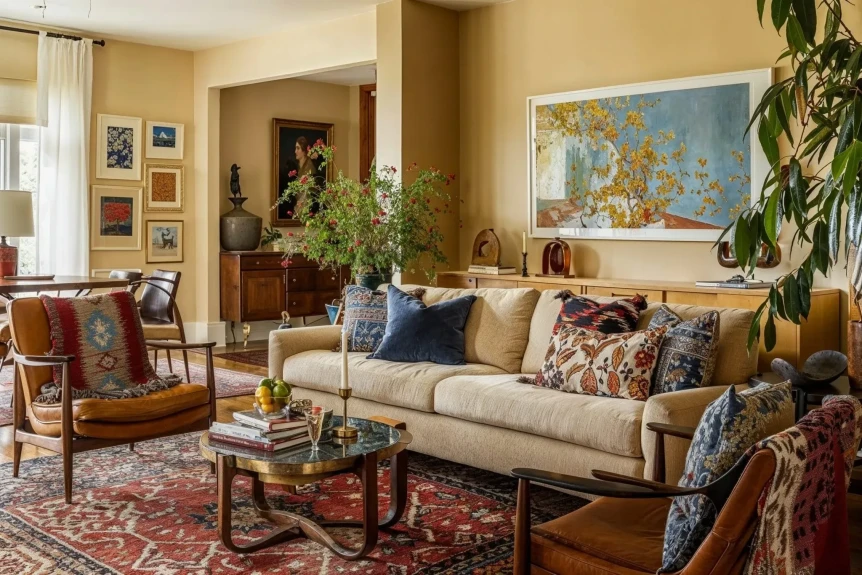
Rugs and Textiles
Layering rugs
Layered rugs are the fastest route to a bohemian room. Start with a large neutral base, jute or a flat weave wool, sized so the seating group sits on it, and lay a smaller patterned rug on top: a vintage kilim, a Moroccan Beni Ourain, a Turkish area rug. Let the edges sit slightly off square; a casual overlap reads more authentic than a centered one.
Two layers is the limit. A third rug stops reading as layering and starts reading as storage, and the trip hazard is real once the edges stack. Where the room is small, one patterned rug on bare floor does the job on its own.
Pillows and throws
Mix pillow sizes, shapes, and textures: embroidered against block printed, velvet against linen, one solid for every two patterns. Three to five pillows on a sofa is enough, with a woven or chunky knit throw over one arm for warmth. Anyone unsure about combining prints should read how to mix patterns in bohemian style, which sets out the scale and color rules that keep the mix from turning chaotic.
Lighting That Sets the Mood
A single overhead fixture is the enemy of a bohemian room. The atmosphere comes from warm light at low height from several sources, so the shadows are soft and the textures show.
Floor and table lamps
A rattan floor lamp, a ceramic table lamp, and a vintage brass lamp all belong, placed at different heights around the room so the light layers. Warm bulbs at 2700 Kelvin give the most flattering glow; anything cooler flattens the textiles the room depends on. Three lamps in a room of average size is the working minimum.
String lights and candles
String lights along a bookshelf or pinned across a wall add a warm glow in the evening, and candles in brass holders, glass jars, or ceramic dishes bring the flicker the style is known for. Keep the string lights warm white rather than multicolored, and keep them off the ceiling.
Statement pendants
A woven pendant, a beaded chandelier, or a Moroccan lantern works as both light and focal point. Hang one low over the coffee table or in a corner reading nook, on a dimmer, so it can drop to a glow once the lamps take over.
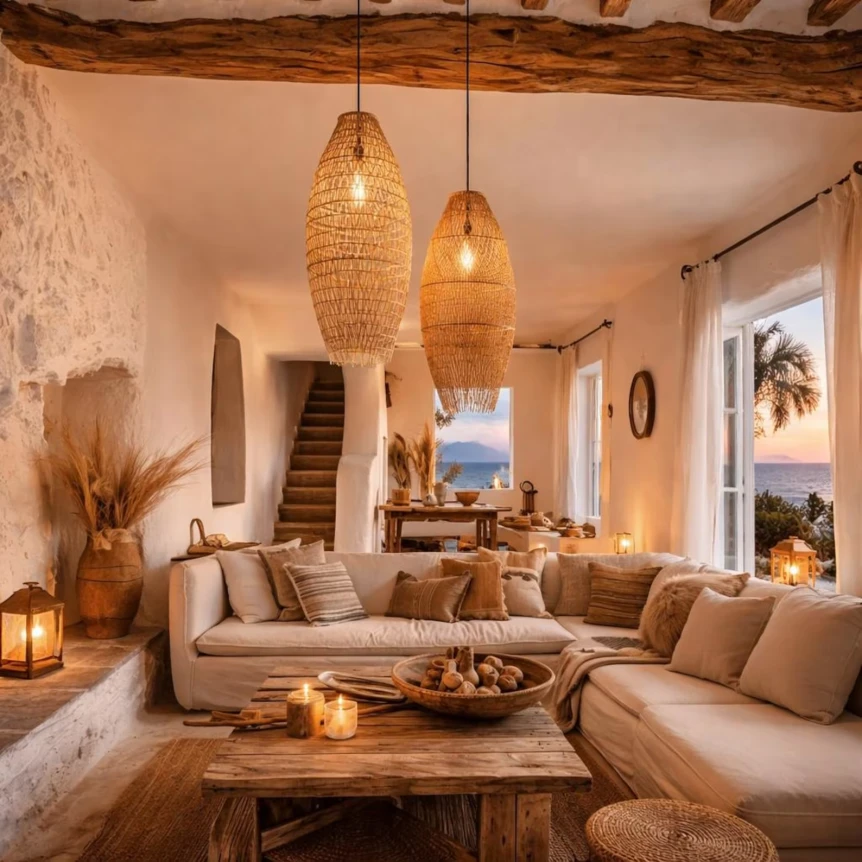
Styling the Details
The coffee table
A bohemian coffee table is a vignette: a short stack of art books, a small plant or a vase of dried stems, a tray to corral the small things, and one or two sculptural pieces such as a brass figure or a handmade bowl. Layered, not crowded, with a third of the surface left clear.
The table itself should be wood, and solid. Veneer is the wrong choice here: a bohemian coffee table takes feet, drinks, and candle wax for years, and solid mango, acacia, or reclaimed teak wears those into character where veneer chips at the edge and is finished.
Shelves and display
Open shelving is where the style earns the word collected. Mix books with plants, a framed photo, candles, a woven basket, a small sculpture, varying heights and grouping in clusters rather than lining things up. Leave at least one shelf section nearly empty; the gap is what makes the rest read as chosen.
Walls
A gallery wall, a large macrame hanging, or a group of woven baskets are the reliable moves, and one large piece beats a scatter of small ones on the wall behind the sofa. The boho wall decor ideas for every room guide covers scale, spacing, and what to hang above what.
Boho Living Room Ideas for Small Spaces
A small living room can be fully bohemian; it simply has to be more selective. A few high impact pieces beat a filled corner, and the editing that every boho room needs becomes non negotiable at this size.
Choose a loveseat or a small scale sofa and pair it with one accent chair rather than several. Use one patterned rug rather than a layered pair, hang plants from the ceiling or a wall bracket to add green without taking floor, and put books and objects on floating shelves rather than a bookcase. A large mirror, ornate or plain, reflects the light and doubles the apparent depth while doing the work of a statement piece.
What Can Renters Change in a Boho Living Room?
Almost everything that matters. Rugs, textiles, lamps, and plants do most of the work in a bohemian room, and all of them move to the next apartment. Peel and stick wallpaper on one wall, removable hooks for a macrame hanging, and a large piece of art leaned against the wall rather than nailed to it cover the rest.
Where the budget is tight as well as the lease, the boho decor on a budget guide sorts the moves that read expensive from the ones that read cheap, and the bohemian bedroom decor ideas post carries the same approach into the room next door.
What Most People Get Wrong
Buying the look in one order. A sofa, rug, pillows, and wall hanging that all arrive from one source in one week match too well, and the room reads as a catalog page. Bohemian depends on pieces from different decades and different places; buy slowly, and buy at least one thing secondhand.
Mistaking more for layered. Layering is two rugs, three textures on the sofa, and one gallery wall. Clutter is four rugs, eight pillows, and every surface covered. The difference is breathing room, and a bohemian room without it is the most common failure of the style.
Many small plants instead of a few big ones. A dozen four inch pots on a windowsill read as a nursery. One fiddle leaf fig or bird of paradise at floor level, one trailing pothos from a shelf, and one plant on the coffee table give the room the green it needs.
Pattern on every surface. If the rug, the sofa, the pillows, and the curtains all carry a print, nothing has anywhere to rest. Keep the two largest surfaces, usually the walls and the sofa, plain, and let the smaller pieces argue.
Lighting from the ceiling. A single bright overhead fixture flattens every texture the room was built on. Three lamps at 2700 Kelvin and the ceiling light off is the setting the style was designed for.
Confusing bohemian with Scandi boho. The pale, minimal, plant heavy version that dominates photo feeds is a different room with different rules, and mixing the two produces neither. The Scandinavian versus Nordic versus Scandi boho comparison draws the line.
Where to Go Next
A bohemian living room is an ongoing edit, not a weekend project. Start with the foundation, a comfortable neutral sofa, a warm rug, and three lamps, then add personality one piece at a time through textiles, art, plants, and objects with a history, and take something away each time something arrives. The complete guide to bohemian interior design covers the history, the principles, and the other rooms of the house.
Frequently Asked Questions
What are the key elements of a bohemian living room?
Layered textiles (two rugs, mixed pillows, a throw), seating in more than one style including floor cushions, warm light from several low sources, a few large plants, and objects collected over time rather than bought together. Natural materials run through all of it: rattan, worn leather, raw or reclaimed wood, brass, jute, and unglazed ceramic.
How do I make a boho living room look layered without looking cluttered?
Fix a focal point, usually the rug or one large piece of furniture, and build around it. Keep the two largest surfaces plain, limit the rugs to two and the pillows to five, leave a third of every surface clear, and remove something each time something new arrives. Bohemian rooms need breathing room more than any other style because everything in them has texture.
Can a small apartment living room be boho style?
Yes. Use a loveseat or small sofa with one accent chair, a single patterned rug rather than a layered pair, plants hung from the ceiling or a bracket instead of standing on the floor, and floating shelves instead of a bookcase. One large mirror reflects light, adds depth, and stands in for a statement piece.
What kind of sofa works best in a bohemian living room?
A low profile sofa in a warm neutral such as oatmeal, tan, or warm gray. The bohemian character comes from how it is dressed, with layered throws, mixed pattern pillows, and a vintage textile over the back, so a plain sofa lets the room change with the textiles. A patterned or brightly colored sofa locks the room into one look. A vintage sofa with good bones and a new cover works well too.
What colors go in a boho living room?
A warm neutral base of creamy white, beige, or tan on the walls and sofa, with color carried by the rug and textiles. The three reliable directions are warm earth tones (terracotta, rust, ochre, chocolate), jewel accents against a neutral base (teal, burgundy, amber, one at a time), and an all neutral room that relies on texture. Brass and bronze suit all three; chrome fights the style.