Best Modern Bathroom Tiles & Flooring

By Tereza Hower | Published March 18, 2026 | Updated March 27, 2026
Tiles are the most permanent decision in a bathroom design project. They cover the largest surface area, they establish the character and color of the room, and they are by far the most disruptive and expensive element to change if you get them wrong. It is worth investing real time and thought into this decision before anything else is purchased or installed.
This guide covers the tile and flooring options that work best in modern bathrooms, the formats and finishes that are dominating current design, and the practical considerations that make the difference between a bathroom you love for twenty years and one that starts to feel wrong after five.
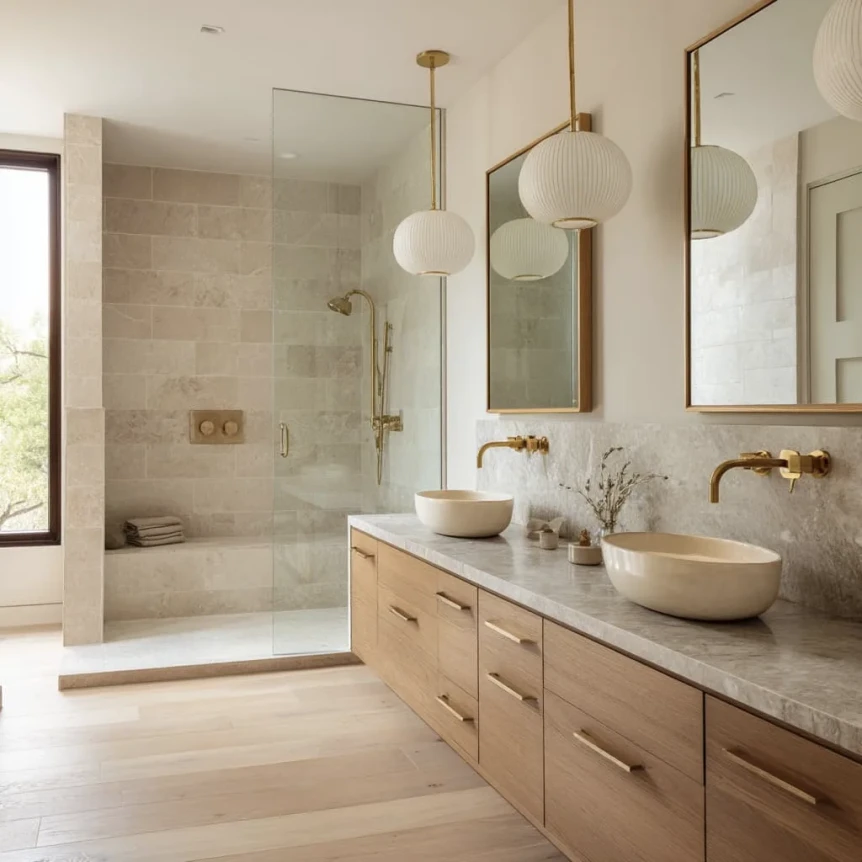
Large Format Tiles: Why They Work So Well
The shift toward larger format tiles in bathroom design is one of the most significant aesthetic developments in the category over the last decade, and it shows no sign of reversing. Large format tiles, typically 60 by 60 centimeters and above, create a sense of scale and calm in a bathroom that smaller formats struggle to achieve.
The reason is partly about grout lines. Every grout line in a bathroom is a visual interruption, a line that the eye registers and follows. Smaller tiles mean more grout lines, which means a busier, more complex surface. Larger tiles mean fewer interruptions and a surface that reads as calmer and more expansive. In a small bathroom, this effect is especially pronounced.
Very large format tiles, sometimes called slabs or panels, at 120 by 60 centimeters or larger, push this effect to its extreme and create genuinely dramatic results. Used on both walls and floors in a continuous stone or concrete effect, they can make a modestly sized bathroom feel like a boutique hotel space. The installation requirements are more demanding, as the tiles are heavy and need a very flat, even substrate, but the result justifies the additional care.
Larger tiles also tend to be easier to keep clean because there is simply less grout to maintain. Grout, particularly light-colored grout in a shower, is the element of a tiled bathroom that shows wear and grime most readily. Reducing its presence as much as possible has both aesthetic and practical benefits.
Matte vs Gloss: The Finish Question
Matte tiles have substantially displaced gloss as the dominant finish in modern bathroom design, and for good reasons. Matte surfaces look more sophisticated in photographs and in person, they show fewer water marks and fingerprints, and they provide better slip resistance on floors, which is a genuine safety consideration.
On walls, a matte tile has a depth and solidity that gloss tiles lack. Gloss tiles reflect light brightly, which can work well in a very dark bathroom that needs all the reflected light it can get, but in most contexts the reflections are distracting and make the room feel less calm rather than more luminous.
A fully matte bathroom can occasionally feel slightly flat, particularly if the palette is also very neutral. Introducing a single gloss tile, perhaps as an accent strip, a contrasting feature wall, or a gloss mosaic in the shower niche, can add a deliberate flash of light and reflection that enlivens the space without disrupting the overall character.
Semi-matte and satin finishes split the difference and can be a good solution in bathrooms where you want something between the two. Many stone-effect porcelain tiles come in these intermediate finishes, which give them a realistic quality that either extreme would not.
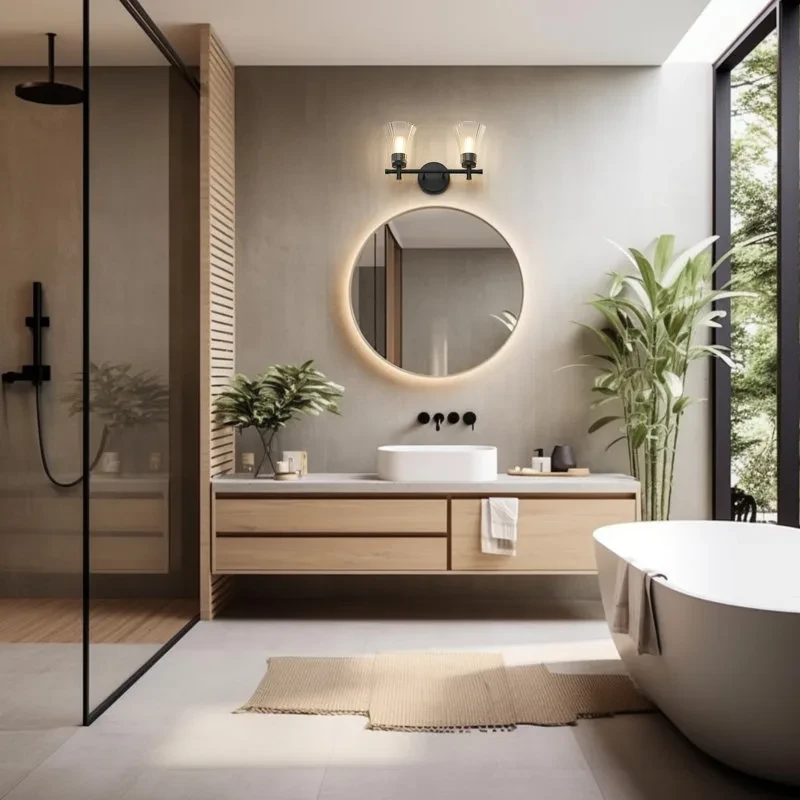
Natural Stone: Marble, Travertine, and Limestone
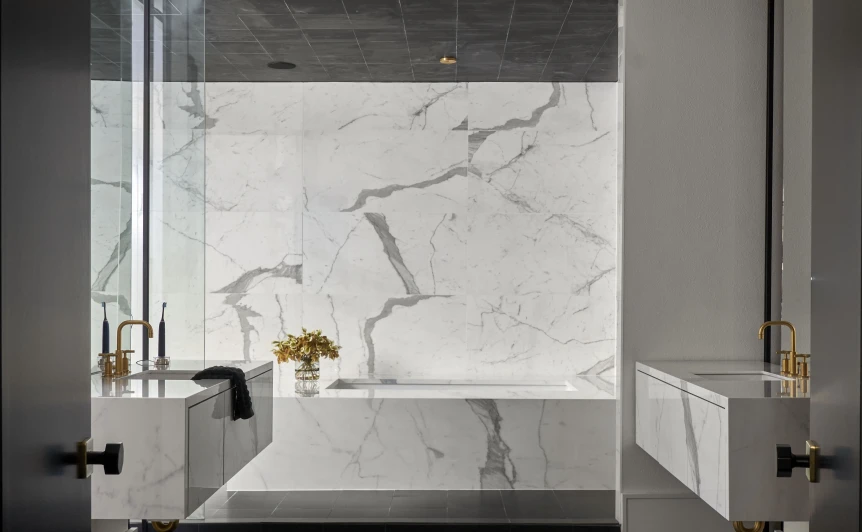
Natural stone is the most luxurious material available in bathroom surfaces and has been for centuries. Marble, travertine, limestone, and slate each have a visual depth and variation that no manufactured tile has yet fully replicated. The movement in a piece of marble, the natural pitting in travertine, the layered quality of slate, these are characteristics that come from geological time and cannot be simulated with a printer, however sophisticated.
Marble is the most popular natural stone in bathrooms and the one that requires the most care. It is a calcium carbonate material, which means it is susceptible to etching from acidic substances including many common toiletries, cleaning products, and even some tap water. It also stains from cosmetics, oils, and coloured liquids if they are left in contact with the surface. Regular sealing and careful product selection are necessary to keep it looking good. For those willing to accept these requirements, marble ages in a way that is simply beautiful: the patina that develops over years of careful use is part of the material’s character.
Travertine is more forgiving than marble and has a warm, honeyed quality that suits bathrooms going for a Mediterranean or organic aesthetic. It requires sealing and benefits from regular maintenance but is generally less demanding than marble. Limestone is similarly warm but tends to be softer and more susceptible to scratching on floor applications.
For those who love the look of natural stone but want lower maintenance, high-quality porcelain tiles in stone effects have become excellent alternatives. The best versions are genuinely difficult to distinguish from real stone in a finished bathroom, and they require no sealing, are fully resistant to acids and staining, and will not etch or absorb moisture.
Textured Tiles: Bringing Character to the Surface
Textured tiles have become an increasingly important part of the modern bathroom palette, offering surface interest that neither plain matte nor standard gloss tiles provide. Bouclé-effect tiles, hand-pressed ceramic tiles with subtle surface variation, ribbed tiles, and tiles with a fabric or woven texture all bring a tactile quality to bathroom walls that makes the room feel more layered and considered.
Textured wall tiles work particularly well in bathrooms that are otherwise quite restrained in color and material. A room with a simple palette of warm white, natural stone flooring, and plain white fittings gains a great deal from a wall of subtly textured tiles that catch the light differently as you move through the space.
On floors, texture is primarily a functional consideration: slip resistance. Tiles with a more textured or matte surface provide better grip when wet than smooth or polished options. Many floor tiles are rated for wet areas and their slip resistance coefficient is specified by the manufacturer: this information is worth checking before buying, particularly for shower floors.
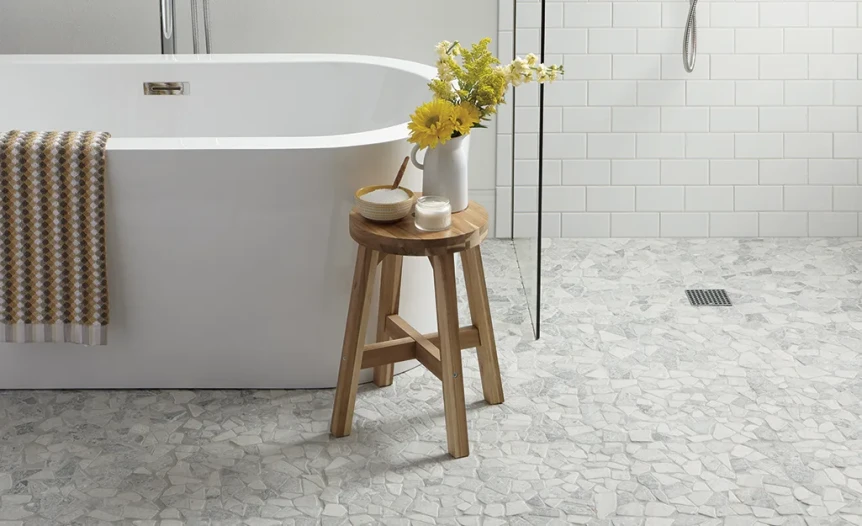
Bathroom Flooring Beyond Tile
While tile is the dominant bathroom flooring material, it is not the only one. Several alternatives are used successfully in modern bathrooms and offer different aesthetic qualities.
Poured resin and microcement floors create a seamless surface with no grout lines at all, which produces an extremely clean, contemporary result. They can be continued from the floor up the walls to create a fully unified surface, an effect that is particularly striking in shower enclosures. Both materials require professional application and regular sealing, but when maintained properly they are exceptionally durable and look beautiful for many years.
Engineered timber flooring designed for wet environments brings a warmth and organic quality to bathrooms that tile cannot match. Not all engineered timber is suitable for full bathroom use, particularly in shower areas, but quality products installed correctly with proper sealing perform well in bathroom environments outside of the shower zone. The warmth underfoot compared to tile or stone is noticeable and appreciated, particularly on cold mornings.
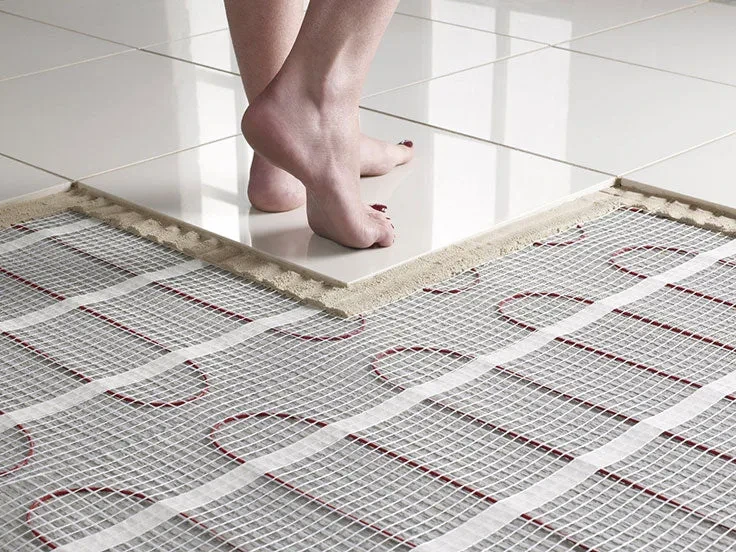
Heated floors deserve a mention in any bathroom flooring discussion. Electric underfloor heating, installed beneath tile or stone, transforms the daily experience of a bathroom in a way that is very difficult to give up once you have lived with it. The cost of installation is modest relative to the overall cost of a bathroom renovation, and the running costs of a well-insulated bathroom floor are lower than many people expect.
Getting the Tile Layout Right
The direction and starting point of the tile layout significantly affects how the finished room looks. Tiles laid horizontally tend to make a room feel wider and lower. Tiles laid vertically make a room feel taller. In most bathrooms, vertical laying or a square format adds height to rooms that are often not particularly tall.
The starting point of the layout should be planned so that cut tiles at the edges of the room are roughly equal in width on opposite sides. A run of tiles that ends with a sliver cut at one side of the room looks unintentional and amateur. Planning the layout so that the cuts are symmetrical or so that they fall in less visible locations, behind the door, for instance, produces a much more satisfying result.
Feature walls in a contrasting tile, whether a different format, color, or material, add visual interest and help to structure the room spatially. The most common location for a feature wall is behind the basin or behind the bath, where it creates a clear focal point. Restraint is the right approach here: one feature wall in a bathroom is interesting, two competing ones tends to feel busy.
With tiles chosen, these guides cover the rest of your bathroom design:
- Bathroom Color Schemes That Work
- Best Modern Bathroom Vanities and Sinks for 2026
- Bathroom Storage Solutions
- Modern Bathroom Lighting: Complete Guide
- Small Bathroom Design Ideas
For the complete bathroom design overview, read The Complete Guide to Modern Bathroom Design.