Bathroom Storage Solutions: How to Keep Your Bathroom Clutter-Free

By Tereza Hower | Published March 16, 2026 | Updated March 28, 2026
There is a direct relationship between storage and atmosphere in a bathroom. A room with enough of the right kind of storage stays calm and easy to use. One that falls short slowly fills with products, accessories, and miscellaneous items that have nowhere to go, and that accumulation works against the clean, restful quality that good bathroom design is built on.
This guide covers the storage solutions that work best in modern bathrooms, from the built-in options that deliver the most impact to the smaller additions that keep surfaces clear and routines smooth.
Plan Storage Before You Design Anything Else
Storage is most effectively solved at the planning stage of a bathroom renovation, not after the fact. The most impactful storage solutions, recessed niches, vanity drawers, mirror cabinets with concealed cabling, and built-in shelving, all need to be considered while the walls are open and the plumbing is being planned. Trying to add them afterward is significantly more expensive and disruptive, and the results are rarely as clean or effective as those built in from the start.
Before making any storage decisions, take stock of what actually needs to live in the bathroom. Count the products used daily, the products used occasionally, the cleaning supplies, the spare stock, and anything else that tends to end up in the space. Group them by frequency of use, since daily-access items need to be in easy reach while seasonal or rarely-used items can go in deeper or less convenient storage. This exercise reveals exactly how much storage you need and what kind, which makes every subsequent decision more precise.
Vanity Storage: The Foundation
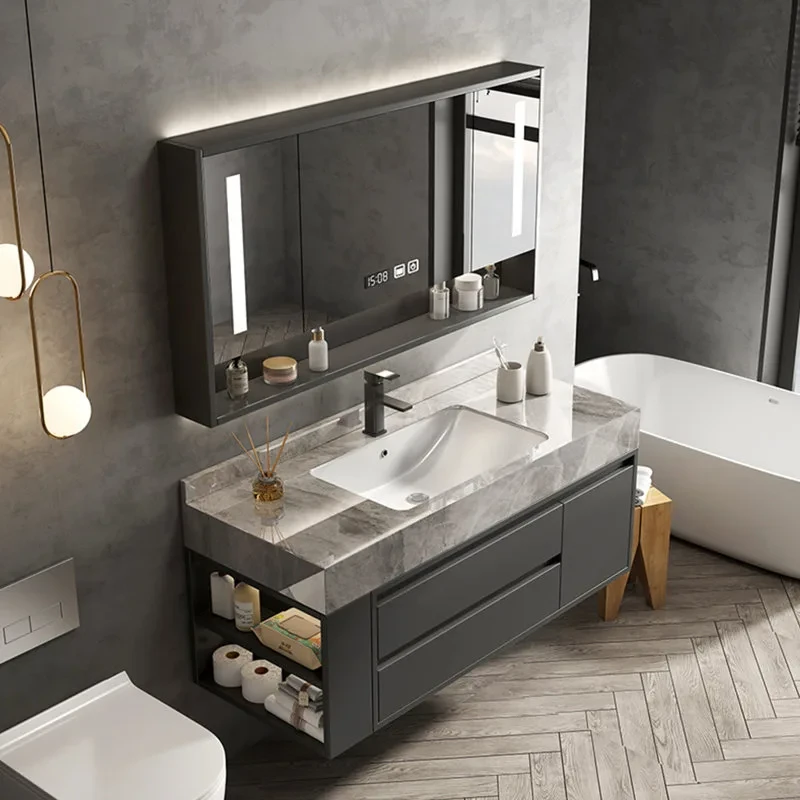
The vanity unit is typically the largest storage opportunity in the bathroom and the one that matters most for daily routines. Getting the internal configuration right is as important as choosing the right external style.
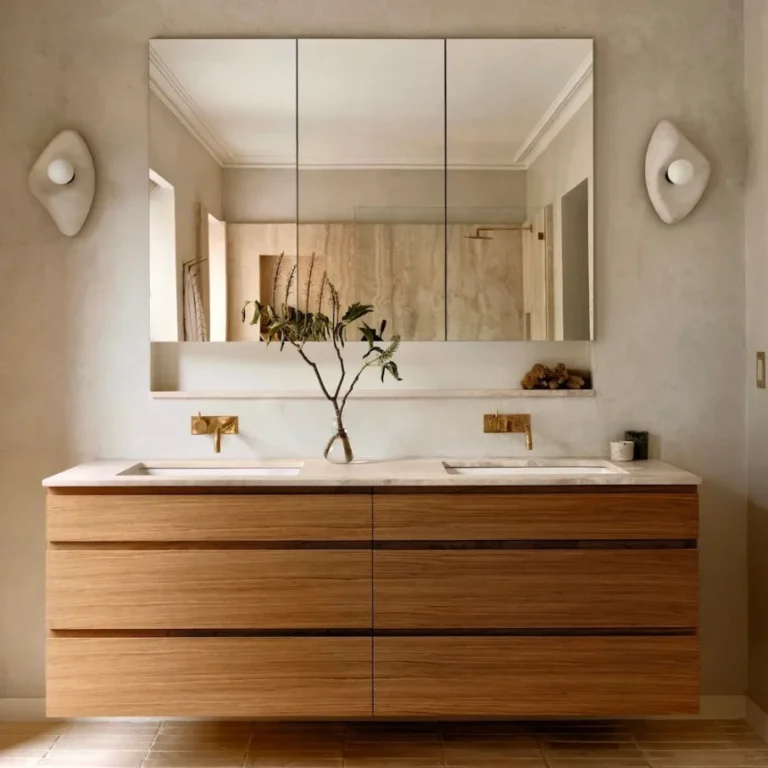
Drawers are generally more useful than shelves behind cabinet doors. With drawers, everything is visible when opened and accessible without moving other items. Shelves behind doors tend to become disorganized quickly because items at the back are difficult to reach and invisible without getting close to the cabinet. A shallow drawer at the top for daily-use items, a deeper drawer beneath for larger products, and a cupboard or deep drawer for cleaning products and spare stock covers most households well.
Drawer dividers and inserts transform drawer storage from a loose collection of products into a genuinely organized system. Adjustable dividers that can be repositioned as your product collection changes are more versatile than fixed compartments. Grouped by type, morning products here, evening products there, a well-divided vanity drawer is a small daily pleasure rather than a rummaging exercise.
If the vanity has a cupboard space rather than drawers, small bins, baskets, or pull-out organizers installed inside the cupboard dramatically improve usability. Without these, things migrate to the back, get forgotten, and the cupboard becomes a holding area for products you no longer use.
Recessed Niches: Built-In Elegance
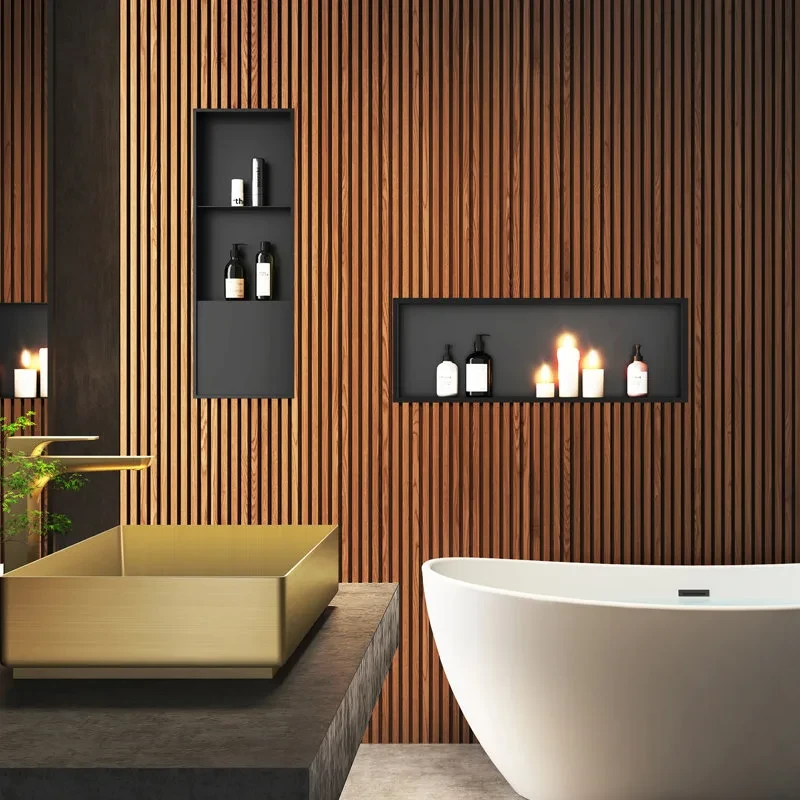
A recessed niche, a shelf built into the wall between the structural studs, is one of the most elegant storage solutions in bathroom design. It sits flush with the wall surface, takes up no floor or projection space, and looks like a deliberate architectural feature rather than an afterthought. Tiled to match the surrounding wall, a good niche is almost invisible when empty and genuinely beautiful when styled with a few well-chosen items.
Shower niches are the most common application. A niche in the shower wall for shampoo, conditioner, and body wash eliminates the need for a shelf, a hanging organizer, or bottles cluttering the floor of the shower. Positioned at a comfortable height, ideally between shoulder and eye level, it keeps products accessible and the shower floor clear.
Niches can also be highly effective beside the basin, as a display shelf in a larger bathroom, or flanking a mirror on either side. The same niche detail repeated in multiple locations ties the room together and gives the storage a designed quality that adds to the overall finish of the space.
The key requirement is planning: niches need to be positioned between structural elements, they need waterproofing in wet areas, and they need to be factored into the tiling plan from the beginning. This is not a difficult addition but it is one that needs to be decided before the walls are closed.
Mirror Cabinets: Double Duty on the Wall
The area above the basin is the most used storage location in most bathrooms: it is where you stand for most of your bathroom routine, and everything you reach for repeatedly throughout the day belongs within arm’s reach of this spot. A mirror cabinet, which provides both a mirror and concealed storage behind it, is the most efficient use of this prime real estate.
Modern mirror cabinets are considerably more refined than the utilitarian versions common in older bathrooms. Slim-depth options sit close to the wall and feel like a considered design element rather than a functional box. Models with integrated lighting, anti-fog heating, and adjustable internal shelving are widely available and worth the investment for daily-use convenience.
For wider vanities or double basin configurations, a mirror cabinet that spans the full width of the vanity provides a generous amount of storage and a mirror that is proportional to the scale of the space. Divided into two doors for a double vanity, it gives each person their own storage zone, which makes shared bathrooms significantly easier to keep organized.
Tall Storage Units: Making Use of Height
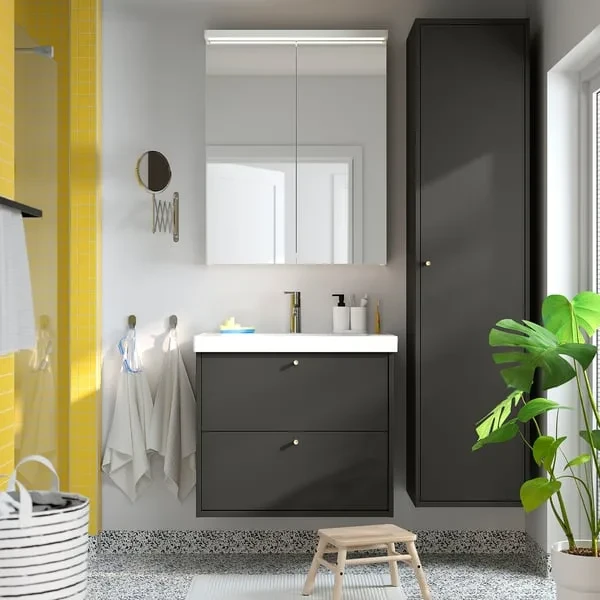
In bathrooms with limited floor area, height is an underused resource. A tall, slim storage column, 25 to 30 centimeters deep and reaching toward the ceiling, provides significant storage capacity for its footprint and looks intentional in a room where horizontal space is at a premium.
Tall units work well beside a vanity, in a corner, or flanking a window where they make use of awkward vertical space. The key is choosing a unit with a depth proportional to the space: a very deep column in a small bathroom projects too far from the wall and narrows the circulation space uncomfortably.
Open shelving on tall units benefits from baskets or boxes at the lower levels where less tidy items are stored, with more curated display items at eye level and above. This creates a visual organization that prevents the unit from looking chaotic while still keeping frequently needed items accessible.
The Habits That Make Storage Work
Good bathroom storage is only effective when it is used consistently. The best designed vanity drawer will not stay organized on its own: the habit of returning products to their designated places is what keeps the system functioning.
The single most effective habit for maintaining bathroom organization is a regular declutter, every few months, of the products that have accumulated. Bathrooms gather products faster than almost any other room: samples, gifts, impulse purchases, and things being kept just in case all contribute to a gradual buildup that makes even well-organized storage feel crowded over time. A periodic clear-out, removing anything that has not been used in the last three months, resets the space and keeps the storage working as intended.
A second useful habit is the principle of like with like: all skincare in one drawer, all hair products in another, all cleaning supplies in a dedicated space. This makes finding things immediate and putting things away automatic, because everything has a clear and logical home.
Finally, surfaces. The single clearest indicator of a well-organized bathroom is the state of the counter. A counter with only the items actively in use, rather than a collection of products that have migrated there and never moved, is both more beautiful and more functional. Everything that does not need to be on the counter, belongs in a drawer or cabinet. Making that the standard, rather than the goal, is what keeps a well-designed bathroom looking its best long after the renovation is done.
These related guides will help you complete your bathroom design:
- Best Modern Bathroom Vanities and Sinks for 2026
- Small Bathroom Design Ideas
- Modern Bathroom Accessories and Decor
- Bathroom Color Schemes That Work
- Best Modern Bathroom Tiles and Flooring
For the complete bathroom design guide, visit The Complete Guide to Modern Bathroom Design.