The Complete Guide to Bohemian Interior Design

By Tereza Hower | Published April 3, 2026 | Updated October 12, 2026
Walk into a bohemian room that works and you can almost trace its history. A kilim picked up at a flea market, a wooden bowl carved by hand, a brass lamp that clearly belonged to someone else first. Bohemian interior design is the rare style that lets a room read like a biography instead of a showroom, and that is exactly why it is so easy to do badly.
Take the synthetic rattan hanging chair, bought because it costs a quarter of the real one. The weave cracks at the joins by about year two, and the color is identical from the day it is unpacked to the day it is given up on. That flatness is what gives it away as fake, even to guests who could not name the difference. A natural rattan piece ages into a warmer pale gold and softens where it is sat in, which is the entire point of buying rattan.
This guide covers what bohemian interior design actually is, where it came from, and how to make it work in a real home. It walks through palettes, pattern mixing, furniture, room by room ideas, the budget side of the style, and the quiet rules that separate a layered boho room from a cluttered one. Use it as a map, not a checklist.
Key Takeaways
- Boho is intentional eclecticism, not random eclecticism; every layered room has a clear focal point, a dominant pattern, and a shared color thread holding everything together.
- Material honesty is what separates magazine grade boho from mall boho: real wool, real rattan, real cotton macrame, hand thrown ceramics with visible craft.
- Vary pattern scale (one large, one medium, one small) and use solid pieces as buffers; “all pattern, no solids” is the most common chaos move.
- Boho is genuinely budget friendly because flea markets and thrift stores are some of the best sources; new everything actually hurts the look.
- Edit ruthlessly. Most boho rooms get better the third time something is removed.
What’s Covered in This Guide
- What Is Bohemian Interior Design?
- Where Did Boho Style Come From?
- What Are the Key Elements of Bohemian Design?
- Which Boho Color Palette Sets the Right Tone?
- How to Mix Patterns Without the Chaos
- How to Choose Bohemian Furniture
- How Does Boho Look Room by Room?
- How to Style Boho Walls and Art
- Why Plants Are Essential in Boho
- How to Get the Boho Look on a Budget
- Boho vs. Other Popular Styles at a Glance
- How to Tell Quality Boho from Cheap Boho
- What Are the Most Common Bohemian Design Mistakes?
- Recommended Resources and Related Guides
- Frequently Asked Questions
What Is Bohemian Interior Design?
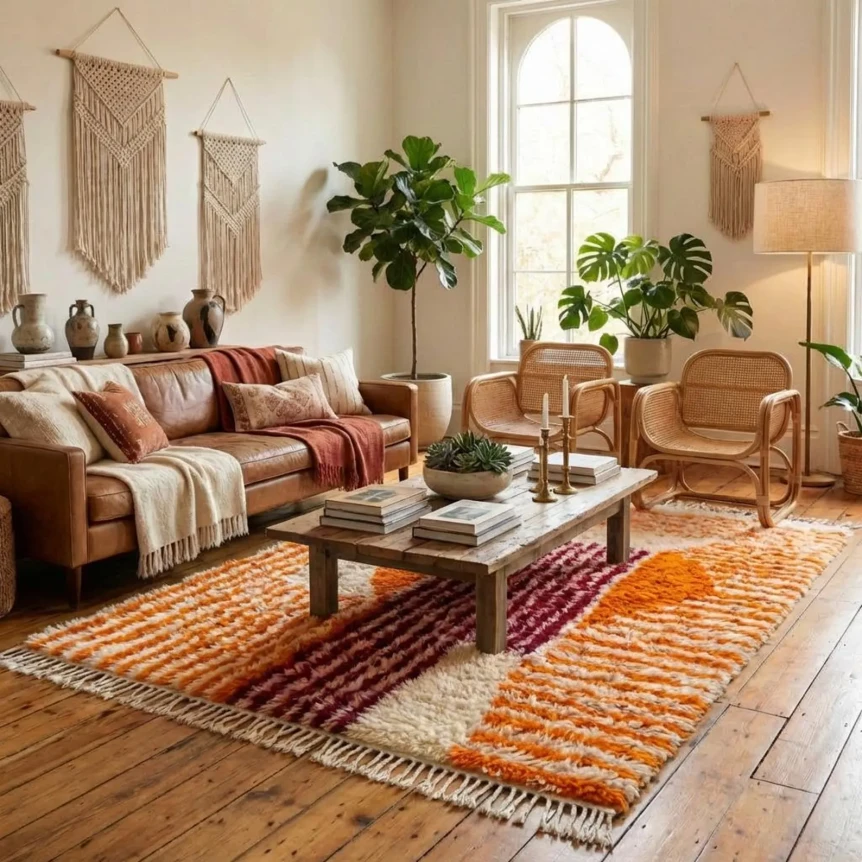
Bohemian interior design is an eclectic decorating style built on layered textiles, global influences, natural materials, and a deliberately collected feel. It mixes eras, cultures, and price points in the same room, and it values character over consistency. The best boho rooms look like they were assembled over years, not afternoons.
At its core, boho style celebrates individuality. A bohemian room might pair a Moroccan rug with a mid century armchair, vintage brass candleholders with a modern plant stand, and handwoven baskets with a contemporary bookshelf. The point is that each object has a story, and the room holds them in conversation.
Unlike minimalist or modern design, bohemian interiors thrive on abundance. More is not too much when every item earns its place visually or emotionally. The good rooms still have breathing space, though, which is what keeps the layering from tipping into clutter.
Where Did Boho Style Come From?
The word “bohemian” originally referred to the Roma people of France, who were believed to have come from the Bohemia region of Central Europe. Over time, the term attached itself to artists, writers, and freethinkers living outside mainstream society. The look of their homes followed: collected, foreign, slightly improvised.
In the 19th century, the bohemian movement gained traction in cities like Paris and London. Artists who rejected bourgeois values decorated their studios with eclectic finds, hand dyed fabrics, and objects collected from their travels. That magpie sensibility is the through line behind every boho room today.
The modern bohemian style had its big revival in the 1960s and 1970s, fueled by counterculture and travel. Earthy tones, macrame, rattan, and tie dye became household staples. Today’s boho takes those influences and refines them, blending vintage nostalgia with a more polished, contemporary sensibility.
From Counterculture to Mainstream
What was once fringe has become one of the most popular aesthetics on social media and in home decor retail. The appeal is easy to understand. Bohemian style is accessible. It does not demand designer furniture or a perfectly coordinated palette, and it forgives the mismatched starter pieces almost every home begins with.
What Are the Key Elements of Bohemian Design?
Bohemian interiors do not follow a rigid formula, but they do share a recognizable set of building blocks. Understanding those elements turns the style from a vibe into a set of decisions you can make on purpose. The goal is intentional eclecticism, not random eclecticism.
Layered Textiles
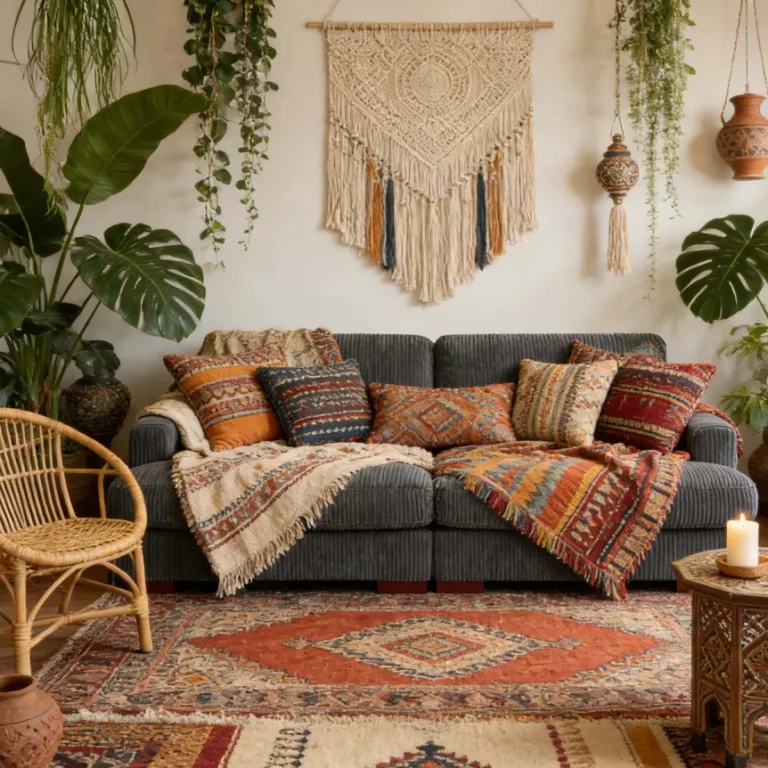
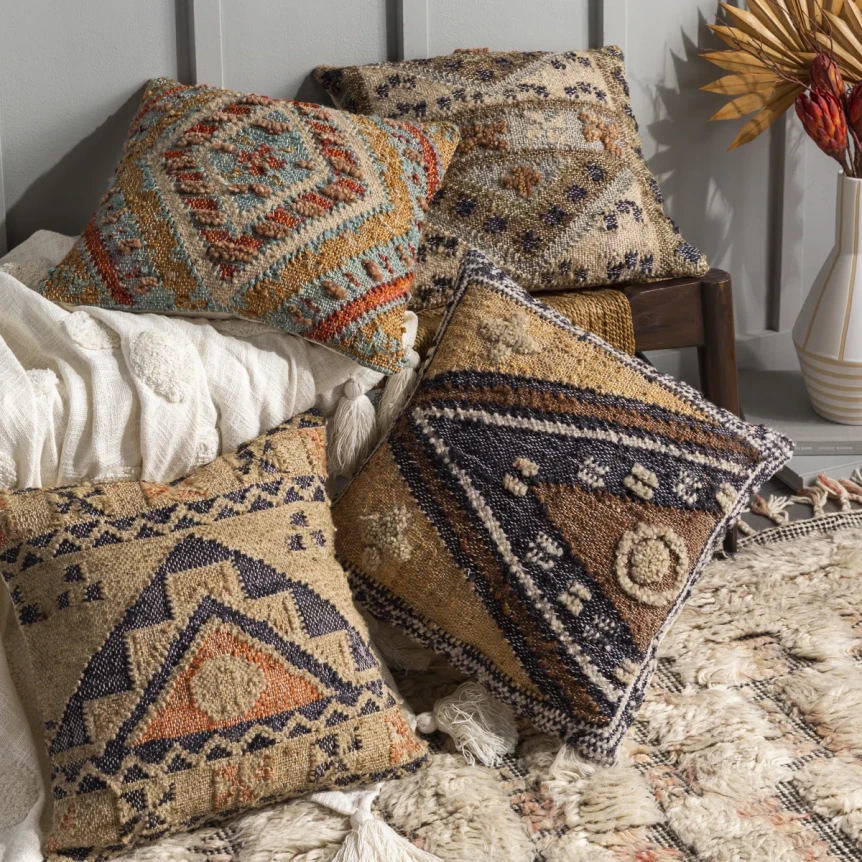
Textiles are the backbone of bohemian design. Think woven throws draped over armchairs, embroidered cushions stacked on a daybed, and a vintage kilim rug anchoring the floor. The more varied the textures, the richer the space feels.
Common boho textiles include linen, cotton, jute, wool, mohair, velvet, and silk. Mixing rough and smooth in the same room is the move: a chunky wool throw on a velvet sofa, a jute rug under a silk lumbar pillow. Tactile contrast is what reads as “lived in” rather than “merchandised.”
Natural Materials
Wood, rattan, bamboo, stone, clay, and leather all play a major role in bohemian interiors. They ground the layered textiles and keep the room from reading as costume. A rattan hanging chair, a reclaimed wood coffee table, or a set of handmade ceramic bowls can shift the whole tone of a space within an afternoon.
Favor materials that age well. Solid mango or acacia wood develops character over years. Real rattan softens and pales beautifully. Leather earns a patina. The boho look is partly about welcoming wear instead of fighting it.
Global and Cultural Influences
Boho design pulls from a wide range of cultural traditions: Moroccan lanterns, Indian block print fabrics, Turkish kilim rugs, Mexican Talavera pottery, Japanese wabi sabi ceramics. The principle is to approach these elements with genuine respect rather than treating them as trend props. Buy from makers when you can, learn what you are buying, and let the object stand on its own merit.
Warm, Earthy Color Schemes
Most bohemian spaces start with a warm, neutral foundation and build color through accessories, textiles, and art. Earth tones like terracotta, ochre, burnt sienna, and olive are staples. Jewel tones like deep teal, burgundy, and amber add richness and depth. For deeper recipes and pairings, see our dedicated guide to boho color palettes for every room.
Vintage and Handmade Pieces
Nothing says bohemian like a one of a kind find. Vintage furniture, antique mirrors, handwoven baskets, and artisan pottery give a room history and personality. These pieces do not need to be expensive. Flea markets, estate sales, and online resale platforms are some of the best sources for boho character at a fair price.
Plants and Greenery
Indoor plants are practically non negotiable in bohemian design. Trailing pothos, fiddle leaf figs, hanging ferns, and clusters of succulents add the kind of living color and softness that no textile can mimic. They also do the visual work of breaking up hard furniture lines.
Which Boho Color Palette Sets the Right Tone?
Color is the emotional foundation of any room, and in bohemian design it does heavy lifting. The right palette can make a space feel warm and grounded or bright and energetic, depending on the direction you commit to. Pick a direction early and let it pull the rest of the choices into focus.
Warm Earth Tones
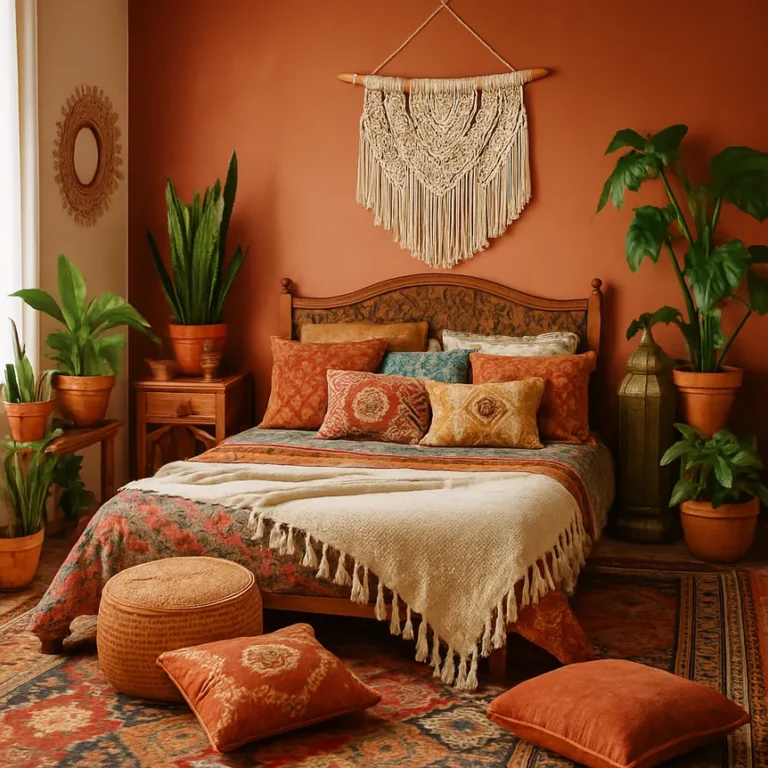
The most classic bohemian palette centers on earth tones: warm beige, terracotta, rust, ochre, and chocolate brown, paired with creamy whites and soft sand. This combination creates an organic, grounded feel that suits living rooms and bedrooms especially well. It also photographs softly, which is one reason it has dominated boho imagery for the last decade.
Jewel Tone Boho
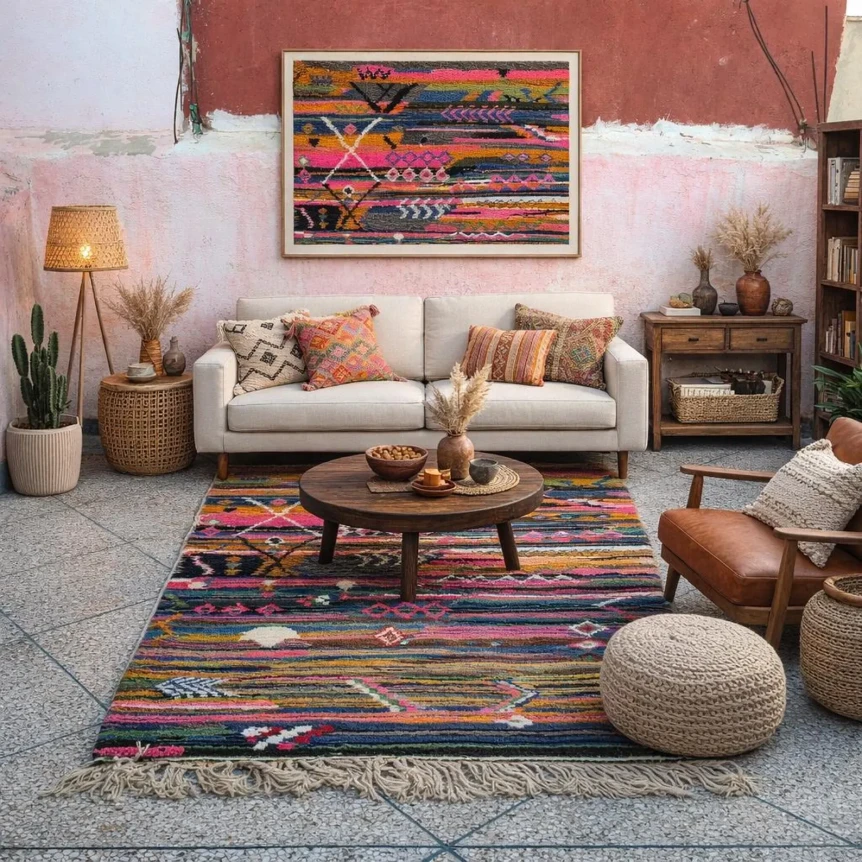
For a bolder take, jewel tones bring rich saturated color. Deep emerald, sapphire blue, burnt orange, and plum work on accent walls, upholstered furniture, or large scale textiles. The trick is to balance these intense colors with neutral grounding elements: an unbleached linen sofa, a sisal rug, a pale wood floor.
Neutral and Natural Boho
A softer, more restrained approach uses whites, creams, warm grays, and light wood tones. This version of boho relies on texture and form for interest rather than color, and it pairs beautifully with Scandinavian and Japandi influences. The full boho palette guide breaks down specific combinations for each room type if you want a deeper recipe than this overview.
How to Mix Patterns Without the Chaos
Pattern mixing is one of the most distinctive features of bohemian design, and one of the most intimidating. Fear of creating a room that looks chaotic keeps many people from committing to the style at all. With a few guiding principles, you can combine patterns confidently and stop second guessing every cushion.
Vary the Scale
The simplest rule for successful pattern mixing is to vary the scale. Pair a large bold print with a medium geometric pattern and a small, delicate motif. A large floral rug can work alongside striped throw pillows and a small geometric print on a lamp shade. Three different scales reads as intentional. Three of the same scale reads as confused.
Anchor With a Dominant Pattern
Every well designed boho room has a visual anchor, usually the largest pattern in the space: a kilim rug, a block printed curtain, a statement upholstered chair. Other patterns in the room should support that anchor rather than compete with it. If your anchor is the rug, let the pillows defer.
Use a Consistent Color Thread
Even when your patterns vary widely in style and scale, a shared color thread ties everything together. If your anchor rug features rust, navy, and cream, pull those same colors into pillows, throws, and curtains, even if the patterns are completely different. The color is what your eye reads first; the patterns are what it reads second.
For a deeper walk through with photographic examples, read our full guide on how to mix patterns in bohemian style.
How to Choose Bohemian Furniture
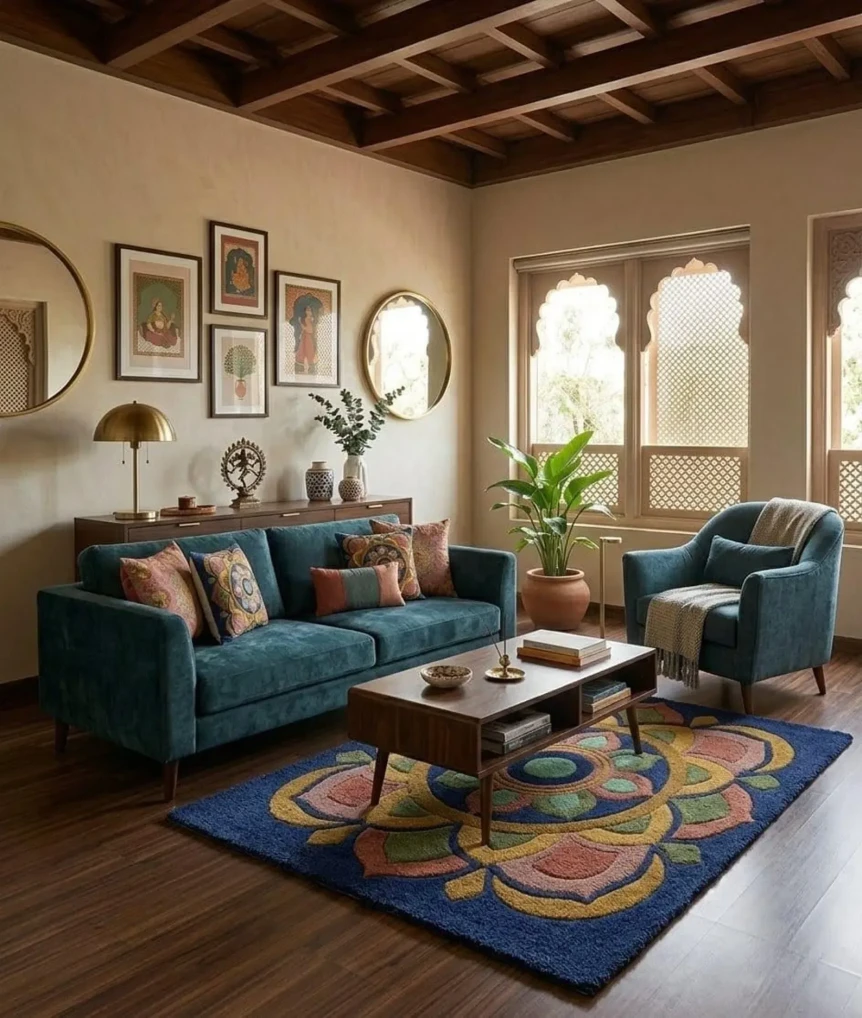
Bohemian furniture does not follow a single era or aesthetic. The brief is to mix pieces that have character and feel collected over time. The best boho rooms combine vintage finds, artisan made pieces, and a few modern basics that act as a neutral backdrop for everything else.
Key Furniture Pieces
A low profile sofa or daybed is a bohemian staple, especially when draped with colorful throws and piled with cushions. Rattan and wicker chairs add warmth and texture. Carved wood side tables, brass tray tables, and live edge coffee tables bring organic shapes into the space and break up the rectangular geometry of most rooms.
Floor seating is another hallmark. Oversized floor cushions, poufs, and meditation pillows are flexible, relaxed options that encourage a casual, communal atmosphere. They also let you reconfigure a room for a dinner, a game night, or a film evening without rearranging real furniture.
Mixing Old and New
One of the strengths of bohemian design is that it does not require an entirely new set of furniture. A modern sofa can sit comfortably alongside a vintage trunk used as a coffee table. A brand new bookshelf can display a collection of antique vases and secondhand books. The contrast is the point. The same approach to blending eras applies when you decide which pieces in a bohemian bedroom set should be collected over time or purchased together.
For specific furniture recommendations and where to source them, explore our bohemian furniture guide.
How Does Boho Look Room by Room?
Boho Living Room
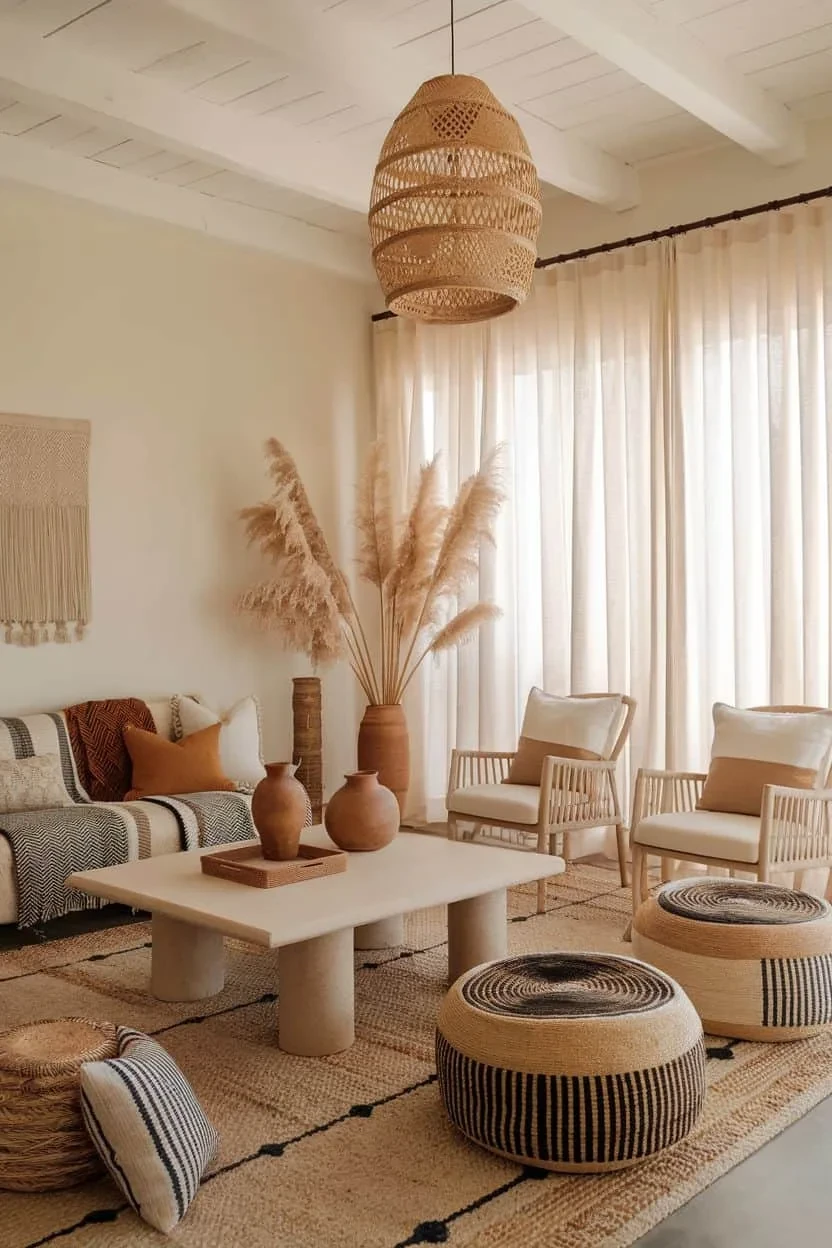
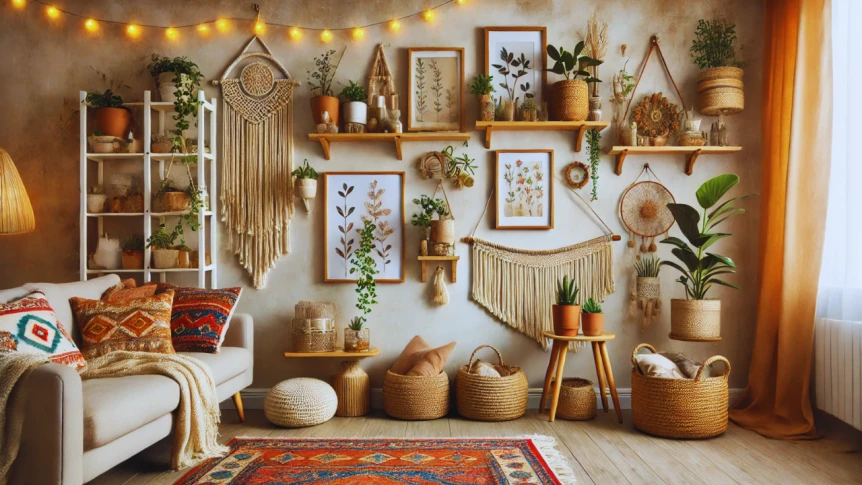
The living room is usually the focal point of a bohemian home. Start with a large area rug to anchor the seating area, then layer in textiles through throw pillows, blankets, and curtains. Mix seating types: a main sofa with accent chairs, floor cushions, and a woven pouf or two. Add warmth with ambient lighting from floor lamps and string lights, and lean on plants to keep the room feeling alive.
For a complete breakdown of layouts, lighting, and styling, read our guide to boho living room ideas and inspiration.
Boho Bedroom
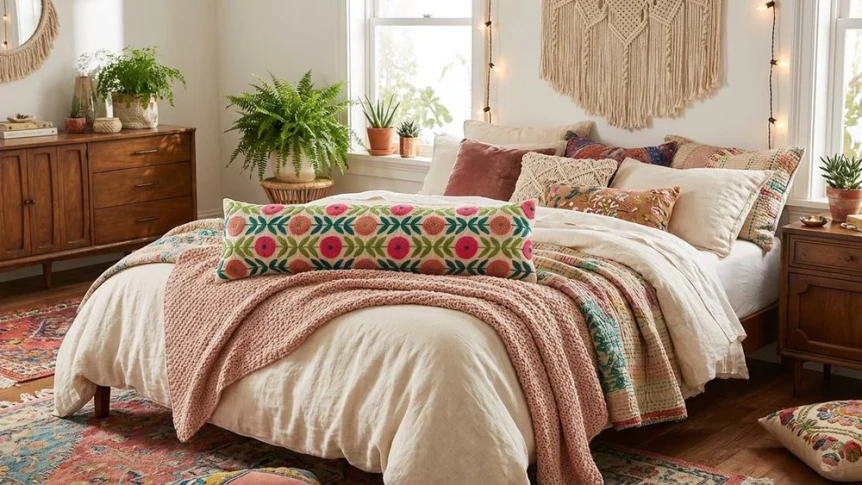
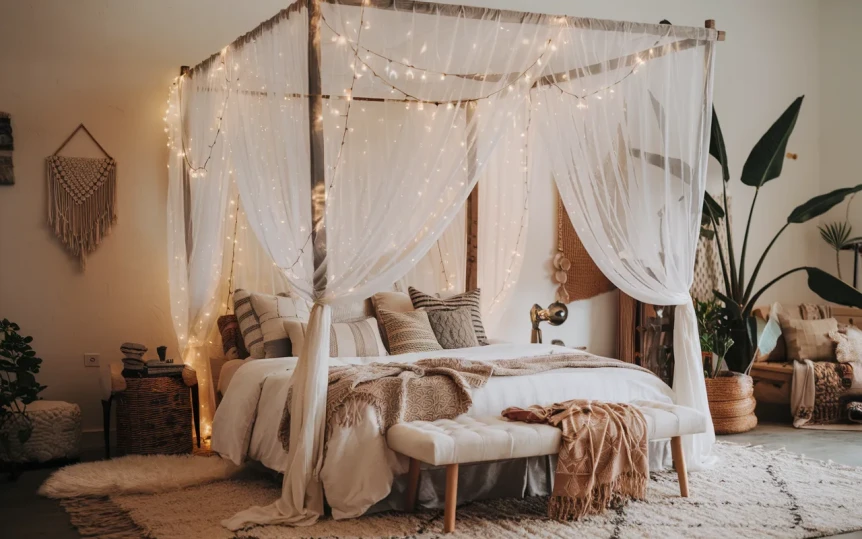
In the bedroom, bohemian design tilts toward sanctuary. A canopy bed or a simple frame draped with flowing fabric sets a relaxed, romantic tone immediately. Layer the bed with linen sheets, a textured quilt, and an assortment of patterned pillows. Hang a macrame piece or a gallery wall of collected art above the headboard, and skip the matched bedside tables. A vintage stool on one side and a small carved table on the other will read as more boho than any matching set.
For more layering ideas and bedding specifics, see our guide to bohemian bedroom decor ideas.
Boho Kitchen and Dining
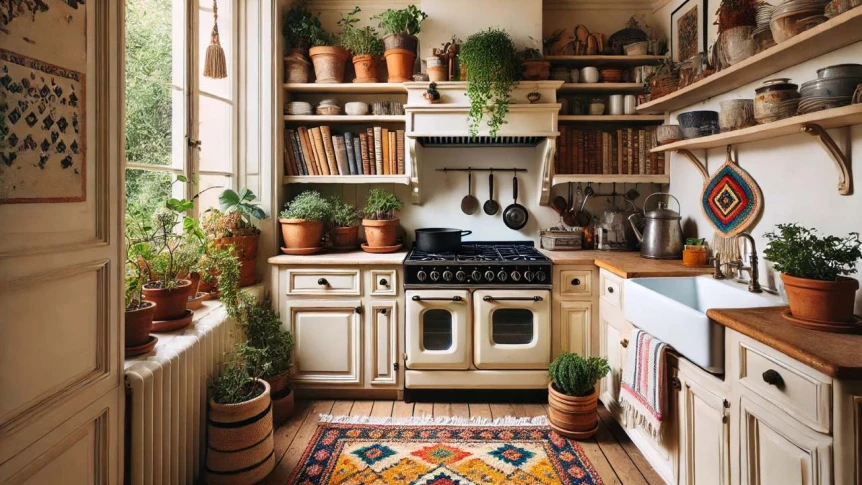
Bohemian kitchens and dining spaces often feature open shelving that displays handmade pottery, mismatched vintage dishes, and small plants. A rustic wooden dining table with non matching chairs is the classic boho move. Woven placemats, colorful napkins, and a centerpiece of dried flowers or a potted herb cluster finish the look without much effort.
Boho Bathroom
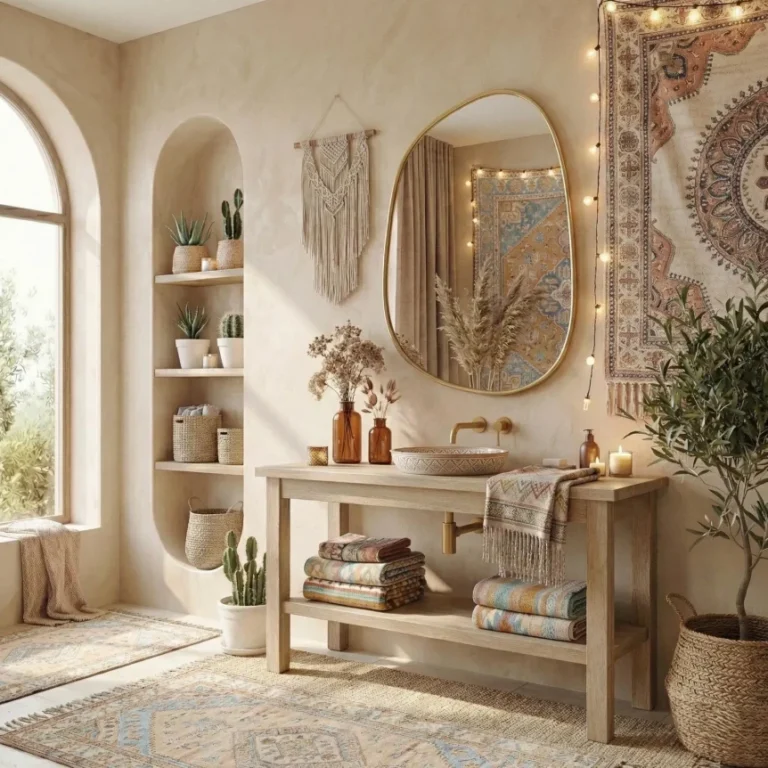
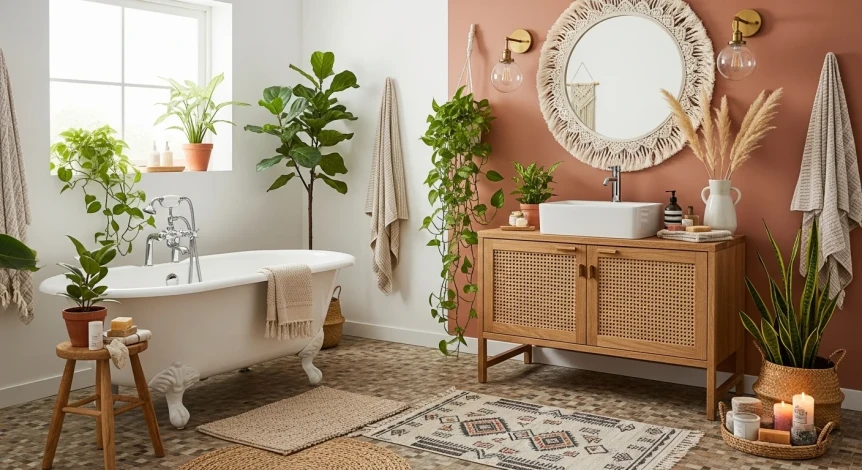
Even small bathrooms can lean boho. A woven basket for storage, a vintage mirror with an ornate frame, Turkish cotton towels instead of plush standard ones, and a few trailing plants on a shelf make a real difference. If structural changes are an option, patterned cement tile or a vintage wooden vanity adds lasting bohemian character that does not need to be restyled later.
How to Style Boho Walls and Art
Walls in a bohemian home are rarely left bare. They work as a canvas for personal expression, whether through collected art, textiles, or handmade pieces. The approach should feel curated but never formal, with a little intentional looseness in the arrangement.
Gallery Walls
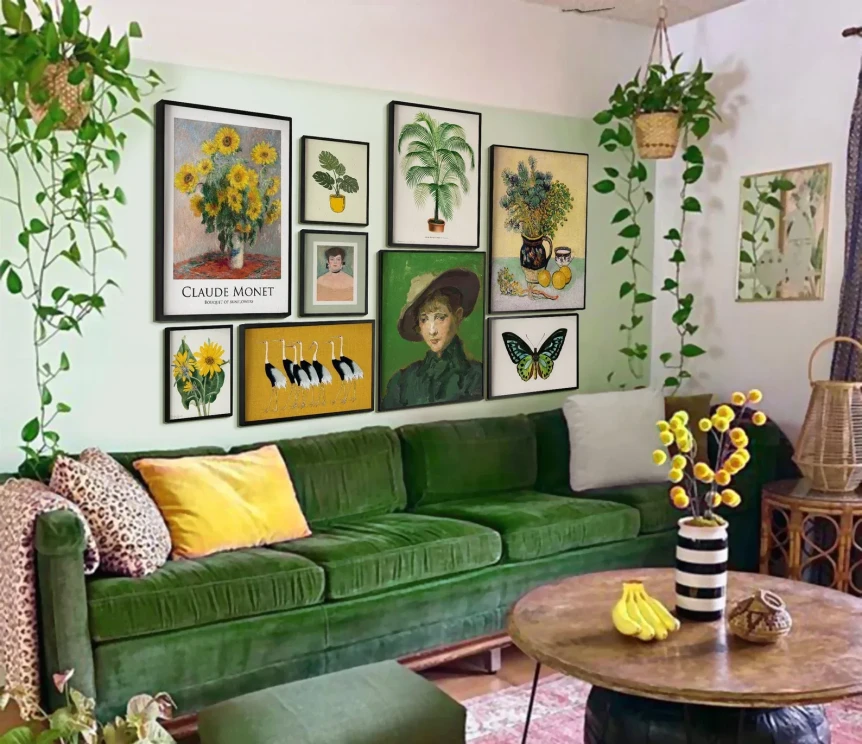
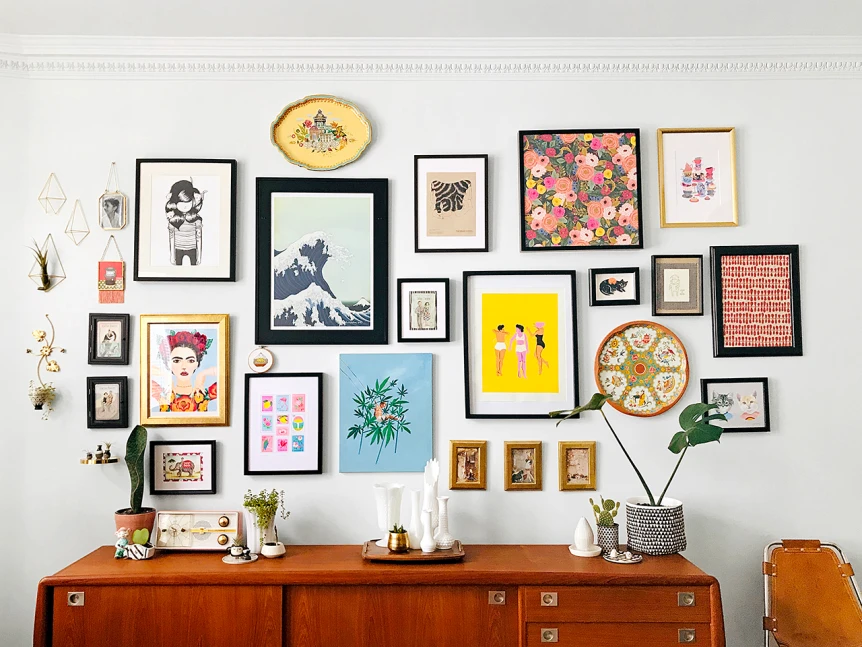
A bohemian gallery wall mixes framed prints, photographs, small paintings, and three dimensional objects like woven baskets or small shelves. Avoid a perfectly symmetrical grid. Arrange pieces in an organic, slightly off balance layout that reads like it grew over time, because the very best ones did.
Textile Wall Hangings
Macrame wall hangings, woven tapestries, and vintage textiles are classic boho wall decor. A large macrame piece above a bed or sofa creates an immediate focal point, while smaller woven pieces can fill gaps on a gallery wall or soften a sharp corner. Stick to natural fibers where you can: cotton, jute, wool. They read warmer than synthetics and they age into the room.
Explore more ideas in our guide to boho wall decor ideas for every room.
Why Plants Are Essential in Boho
Plants deserve their own section because they are that important to bohemian design. They add color, texture, and a sense of vitality that no other decor element can replicate. Beyond aesthetics, they soften acoustics, filter air, and make a room feel cared for.
Best Plants for Boho Interiors
Trailing plants like pothos, string of pearls, and philodendron work beautifully in hanging planters or cascading down bookshelves. Statement plants like fiddle leaf figs, monstera, and bird of paradise add bold, sculptural shapes. Clusters of smaller succulents and prayer plants in varied pots on a windowsill create a lush, garden like feel without much fuss.
Plant Display Ideas
Vary the planters. Terracotta, glazed ceramic, woven baskets, brass cachepots, hand thrown stoneware: the mix is the point. Hang plants from the ceiling with macrame holders or wall mounted brackets, and stagger plant heights using shelves, plant stands, and floor pots so the greenery layers up the room rather than huddling in one corner.
How to Get the Boho Look on a Budget
One of the genuine advantages of bohemian style is that it does not require a large budget. Some of the best boho interiors are built almost entirely from thrifted finds, DIY projects, and nature inspired elements that cost nothing at all. The look actually suffers when everything is brand new.
Thrift and Vintage Shopping
Thrift stores, flea markets, estate sales, and online resale platforms are some of the strongest sources for bohemian decor. Look for vintage rugs, brass candleholders, ceramic vases, wooden frames, and small carved furniture. The imperfections and patina of older items add exactly the kind of character that boho style celebrates.
DIY Boho Projects
Macrame wall hangings, naturally dyed pillow covers, hand painted pots, and woven baskets are all achievable DIY projects that add handmade character to your space. You do not need to be an expert crafter; the slight imperfections of handmade pieces actually enhance the bohemian aesthetic. Start with one project, finish it before starting the next, and let the room evolve at the pace you can sustain.
For detailed budget strategies, check out our guide to boho decor on a budget.
Boho vs. Other Popular Styles at a Glance
Understanding how bohemian design relates to neighboring styles helps you refine your approach, especially if you are drawn to more than one aesthetic. Most of the strongest boho rooms borrow from another style for discipline, and most of the strongest minimalist rooms borrow from boho for warmth. The table below summarizes how each neighboring style differs, and where the hybrid versions land.
| Style | Palette | Density | Materials | Mood | Hybrid with boho |
|---|---|---|---|---|---|
| Bohemian | Earth tones with jewel accents | Medium to high | Mixed wood, rattan, vintage textiles, ceramic | Layered, collected, warm | n/a |
| Minimalism | Cool neutrals, near monochrome | Very low | Painted wood, stone, glass | Restrained, almost monastic | Minimal boho: tighter neutral palette, fewer objects, natural textures intact |
| Scandinavian | Bright whites, pale wood, soft accents | Low to medium | Light oak, ash, wool, cotton | Warm but tidy | Scandi boho: texture without saturation, plenty of breathing space |
| Mid century modern | Warm walnut, mustard, olive | Medium | Walnut, brass, leather, bouclé | Sculptural, retro warm | MCM boho: clean shapes with global accents and vintage layering |
| Coastal | Blues, whites, sandy neutrals | Low to medium | Rattan, jute, linen, weathered wood | Airy, relaxed | Coastal boho: warmer palette with more pattern, fewer nautical motifs |
Boho vs. Minimalism
These two sit at opposite ends of the spectrum. Minimalism values restraint, clean lines, and open space. Boho thrives on layers, color, and visual richness. A growing hybrid called “minimal boho” uses a neutral palette and fewer objects but keeps the organic textures and handmade quality of bohemian design, and it is arguably easier to live with than full saturation boho long term.
Boho vs. Scandinavian
Scandinavian design shares boho’s love of natural materials and cozy textiles, but it leans toward a more pared back, functional aesthetic. Combining the two creates a look that feels warm but not cluttered, with plenty of white space balanced by textured accents and greenery. This is the version of boho that ages well in small apartments.
Boho vs. Mid Century Modern
Mid century modern pieces, with their clean lines and organic shapes, mix surprisingly well with bohemian elements. A mid century sofa in a warm tone can anchor a boho room beautifully, while vintage mid century lighting adds a retro touch that complements eclectic decor without competing with it.
Boho vs. Coastal
Coastal and bohemian styles overlap in their use of natural materials like rattan, jute, and linen. The difference is in palette and mood. Coastal leans toward blues, whites, and sandy neutrals; boho embraces warmer, more saturated tones. Blending the two creates a relaxed, beach adjacent boho look that works well in warm climates and lake houses.
How to Tell Quality Boho from Cheap Boho
The single thing that separates a magazine grade boho room from a mall version is material honesty. Boho leans on visible texture and craft, and visible texture and craft are exactly what cheap manufacturing struggles to fake. Train your eye on a few specifics and the difference becomes obvious from across the room.
Rugs
Flip the rug. A hand knotted wool kilim or Persian has visible knots on the back, with a slightly irregular grid and dye color that bleeds through. A machine made polypropylene rug has a uniform plastic backing, often glued. Wool kilims start around 300 to 600 dollars for small sizes, with handwoven 5x7s typically running 800 to 2,500 dollars depending on origin and age. A polypropylene look alike runs 80 to 200 dollars and will mat down within a year.
Rattan and Wicker
Real rattan is a vine, and its surface has small nodes where leaves once grew. The color is uneven; the grain is visible. Synthetic rattan (“resin wicker”) is plastic over a metal frame, with a perfectly uniform finish and a faintly waxy feel. Real rattan softens in the hand and ages to a paler gold. Synthetic stays exactly the color it was on day one until it cracks, which is exactly how the synthetic hanging chair above fails: the joins give out before the color does, and the color never moves at all.
Macrame and Textiles
Hold a macrame piece in your hand. Genuine cotton macrame has weight, slight irregularities in the knotting, and a soft matte finish. Polyester or acrylic macrame is light, glossy, and feels almost slippery. The same logic applies to throws and pillow covers: natural fibers drape; synthetics stiffen at the edges. A simple price floor: a real handwoven cotton throw in a 50×60 size will not cost under about 70 dollars.
Pottery and Ceramics
Turn a piece over. Hand thrown ceramics show throwing rings inside, an unglazed foot, and a maker’s mark or initials. Slip cast and mass produced pieces have a perfect mold seam and a uniform glazed bottom. Slight asymmetry, a tiny glaze drip, a not quite round rim: these are features in boho, not flaws, and they are also the markers of real craft.
Wood and Carving
Lift a side table or bowl. Solid wood is heavy and warm to the touch; veneered MDF is light and cool. Hand carving has tool marks, subtle asymmetry, and slight depth variation on the surface. Machine carving has perfectly even grooves and identical motifs across a batch. A real mango or acacia side table in a roughly 18 inch size weighs around 15 to 25 pounds; a veneered look alike weighs half that.
What Are the Most Common Bohemian Design Mistakes?
Even the most forgiving design style has its pitfalls. Avoiding these common mistakes will keep your boho space feeling curated rather than chaotic, and they are the issues that come up the most often when readers ask for room critiques.
The classic first boho room is a case of buying too much too fast: two kilim rugs, four embroidered pillows, three macrame pieces and a vintage trunk in a single weekend, and within a month the room reads as a store display rather than a home. The fix is unglamorous. Remove close to half of it, keep one kilim, and let the room sit with the survivors for a full season before adding anything else. Most boho rooms improve the same way.
No Focal Point
A room full of interesting objects without a clear focal point can feel overwhelming. Choose one statement piece per room, whether it is a bold rug, a large piece of art, or a sculptural piece of furniture, and build the rest of the design around it.
Ignoring Negative Space
Bohemian does not mean filling every surface. Leave breathing room. Empty wall space, clear tabletops, and visible floor area give the eye a place to rest and prevent the room from feeling suffocating. The empty patches are what make the layered patches read as intentional.
All Pattern, No Solids
Too many patterns without solid colored pieces to break them up creates visual noise. Use solid textiles and simple forms as buffers between patterned elements: a solid linen sofa under a riot of pillows, a plain cream curtain framing a patterned tile floor.
Skipping the Edit
The best bohemian rooms go through an editing pass. Live with your pieces for a while, then remove anything that does not contribute to the overall feel. Beautiful on its own is not the same as belonging in this particular room. Most boho rooms get better the third time something is removed.
Buying Everything New at Once
A room furnished entirely in one shopping trip almost always reads as catalog rather than collected. The visual cue is uniformity of finish: matching wood tones across furniture, factory fresh edges on every textile, no patina anywhere. Build a boho room slowly and let at least a third of it come from vintage, secondhand, or handmade sources to break the uniformity.
Recommended Resources and Related Guides
Boho Living Room Ideas and Inspiration
A complete guide to designing a bohemian living room, covering layouts, seating combinations, color schemes, and styling strategies for every budget.
Bohemian Bedroom Decor Ideas
Everything you need to create a cozy, layered boho bedroom, from bedding and textiles to lighting and wall decor.
Boho Color Palettes for Every Room
Curated color combinations that capture the bohemian spirit, organized by mood and room type with concrete paint and material pairings.
How to Mix Patterns in Bohemian Style
The rules of pattern mixing that make boho rooms feel intentional, not chaotic, with photographic examples and practical tips.
Boho Wall Decor Ideas for Every Room
From gallery walls to textile hangings, creative ways to fill your walls with bohemian character at every budget level.
Bohemian Furniture Guide: What to Buy and Where
A practical guide to sourcing and selecting furniture that fits the bohemian aesthetic, including vintage shopping tips and key pieces worth investing in.
Boho Decor on a Budget
Proven strategies for achieving a beautiful bohemian look without overspending, from thrift store finds to easy DIY projects.
Frequently Asked Questions
What is bohemian interior design in one sentence?
Bohemian interior design is an eclectic decorating style built on layered textiles, global influences, natural materials, and a deliberately collected feel, where character and individuality matter more than consistency.
Is bohemian style hard to pull off?
It is one of the more forgiving styles because it embraces variety and imperfection. The pitfall is overload rather than mismatch. Anchor the room with one strong focal point, share a color thread across the patterns, and edit ruthlessly once everything is in place.
How is modern boho different from traditional boho?
Modern boho uses fewer objects, a tighter neutral palette, and cleaner furniture lines while keeping the natural materials, handmade textiles, and global influences of the original. It tends to lean Scandinavian or Japandi in restraint and reads as more curated than collected.
What colors are most common in bohemian interiors?
Earth tones like terracotta, ochre, rust, and olive are the bohemian core. Jewel tones such as deep teal, burgundy, plum, and amber are popular for adding richness. Most boho spaces start from a warm neutral base and add color through textiles, art, and accessories rather than wall paint.
How do I do bohemian style on a budget?
Bohemian style is naturally budget friendly. Shop thrift stores, flea markets, estate sales, and online resale platforms for vintage finds. Try DIY projects like macrame wall hangings or naturally dyed pillow covers. Add nature inspired pieces like dried branches or foraged stones, and build the room slowly rather than in one shopping trip.
Bringing It Home
Bohemian interior design is ultimately about creating a home that reflects who you are. There are no wrong answers, only choices that resonate with your taste, your travels, and the way you want a room to feel when you walk in at the end of a long day. Start with the elements that pull at you most, whether that is a single bold rug, a small collection of handmade pottery, or a corner full of trailing plants, and let the rest unfold over years rather than weekends.
If you are still narrowing down the foundation, the color story is the most useful place to start. Spend an evening with the room by room color palette guide and let the palette set the rest of the decisions in motion.