Small Bathroom Design Ideas That Make the Most of Every Inch

By Tereza Hower | Published March 18, 2026 | Updated March 27, 2026
Small bathrooms are one of the most common design briefs and one of the most satisfying to solve well. The constraints force a precision and intentionality that larger rooms do not require, and a compact bathroom that has been designed with care can feel genuinely luxurious despite its dimensions.
The key is understanding that making a small bathroom work well is not primarily about optical illusions or clever tricks. It starts with an honest layout, the right fixtures for the space, and design decisions that serve the room rather than fight against it.
Layout First: Every Centimeter Matters
In a small bathroom, the difference between a layout that works and one that does not can be a matter of a few centimeters. The toilet, basin, and shower or bath need to be positioned so that each is usable without being awkward, and the door needs to open without hitting anything. These requirements are not always easy to satisfy simultaneously in a tight space, which is why layout deserves careful attention before any other decision is made.
If you have any flexibility in the layout, consider whether a different arrangement of the main fixtures would improve the flow and usability of the room. Moving plumbing is a significant cost, but in a small bathroom, a better layout can be transformative in a way that no amount of new tiles or accessories can match.
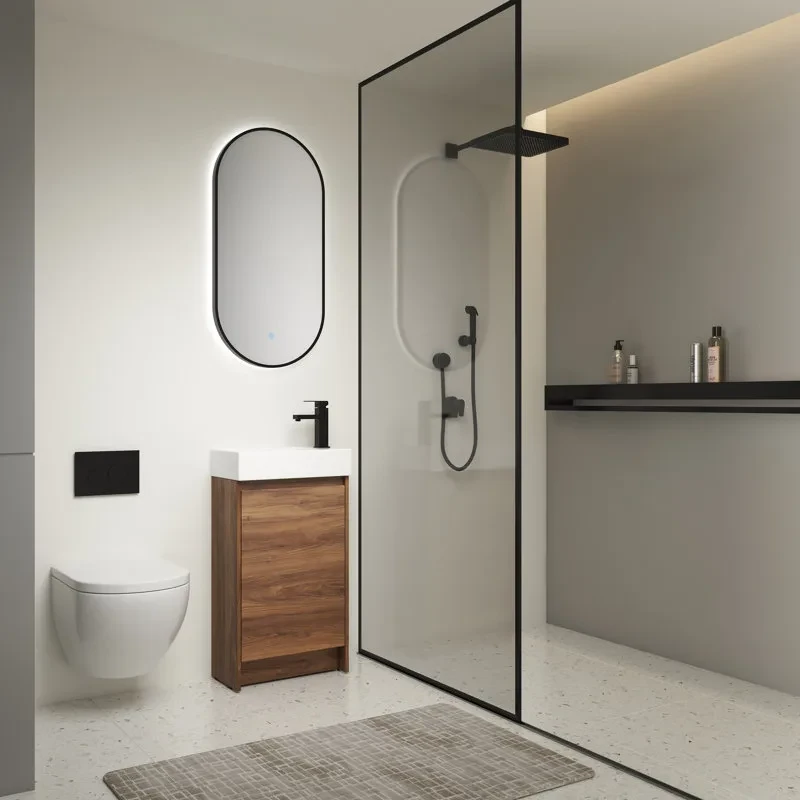
Wall-hung toilets, where the cistern is concealed within the wall, free up significant floor area compared to a close-coupled or back-to-wall toilet. The visible pan appears smaller and lighter, the floor is easier to clean, and the wall above the concealed cistern becomes usable storage space. In a small bathroom, this is one of the most effective single changes available.
If a full bath is not essential, replacing a bath with a walk-in shower is the most space-efficient swap in a small bathroom renovation. A well-designed shower enclosure can feel considerably more generous than a bath in the same footprint and allows significantly more usable floor area for circulation and storage. If you do want to retain a bath, a shorter or smaller bath footprint, combined with a freestanding or wall-hung basin in a small format, keeps the room as functional as possible.
Fixtures Designed for Small Spaces
The market for compact bathroom fixtures has expanded considerably, and the quality of smaller-format pieces has improved to match. There is no longer any need to compromise on style when choosing fixtures specifically designed for tight spaces.
Compact basins in 40 to 50 centimeter widths work well in small bathrooms and leave more wall space for storage. Cloakroom-style basins, which are very shallow front-to-back as well as narrow, are designed specifically for the smallest spaces and look intentional rather than compromised when chosen to suit the room.
Corner basins and corner shower enclosures make use of space that would otherwise be wasted and can significantly improve the layout of a bathroom where the walls are close together. They are not always the most glamorous solution, but in a genuinely tight space they are often the most practical.
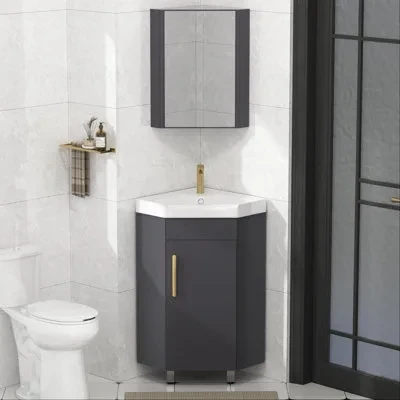
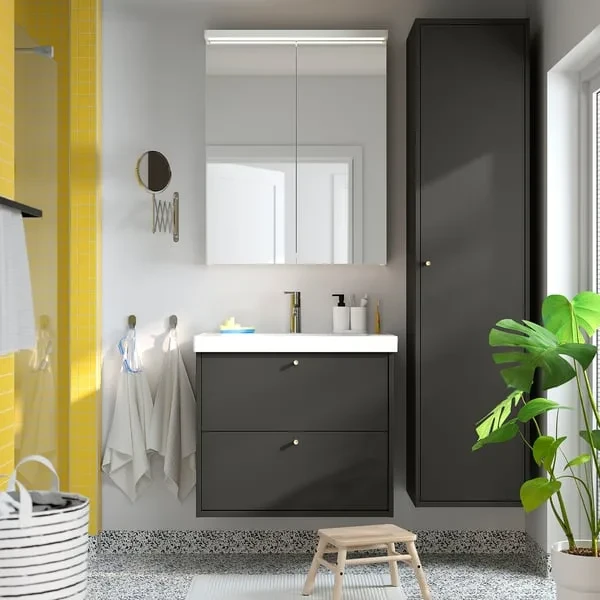
Slimline furniture, including shallow-depth vanity units, mirrored cabinets, and narrow storage columns, provides meaningful storage without projecting far from the wall. In a small bathroom, even a difference of 10 centimeters in depth between two pieces of storage furniture has a noticeable effect on how the room feels to move around in.
Visual Strategies That Actually Work
Beyond layout and fixture choice, there are several proven visual strategies that make small bathrooms feel significantly more generous. These are not tricks in a superficial sense: they work because of how the eye processes space, scale, and boundary.
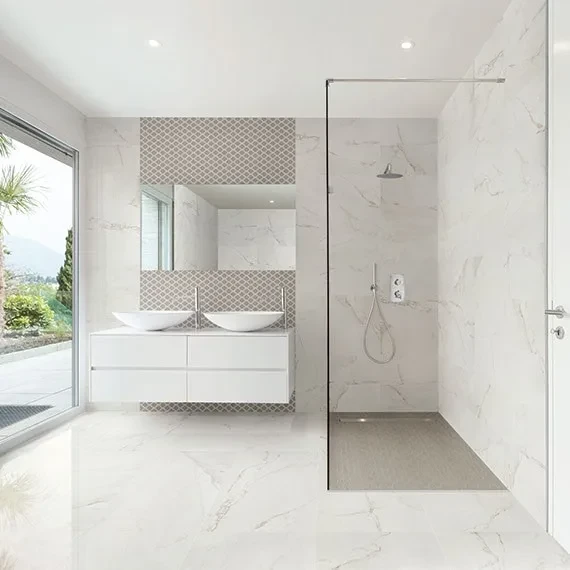
Large format tiles. As discussed in the tiles guide, large format tiles with minimal grout lines make small bathrooms feel considerably larger. Running the same large tile from floor to wall, particularly in a shower enclosure, creates a continuous surface that pushes the visual boundary of the space outward. This is one of the most effective single decisions available in a small bathroom renovation.
Consistent color across floor and walls. A small bathroom where the floor and wall tiles are a similar color and tone reads as more spacious than one where the floor is a strongly different color from the walls. The continuous palette eliminates the visual contrast that emphasizes the room’s boundaries and allows the eye to travel through the space without interruption.
Frameless shower enclosures. A frameless glass shower screen or enclosure is nearly invisible compared to a framed or part-framed enclosure. It allows the full depth of the shower space to be read from outside the enclosure, which makes the overall room feel larger. Even in a small bathroom, a frameless screen gives the shower area a quality that feels genuinely generous.
Floor-to-ceiling mirrors. A large mirror, particularly one that spans a significant width of wall, reflects both the room and its light and adds apparent depth that dramatically changes the perceived size of the space. A mirrored cabinet that extends generously across the wall above the basin is both practical and one of the most effective space-enhancing tools in a small bathroom.
Wall-hung fixtures. Wall-hung basins, toilets, and vanity units all clear the floor, which is read by the eye as more space. The continuous visible floor in a small bathroom is one of the clearest signals that the room has been designed intentionally rather than just furnished.
Color in a Small Bathroom
The conventional advice to paint small rooms white to make them feel larger applies in bathrooms as it does elsewhere, but it is not the only approach and not always the best one. A small bathroom painted or tiled entirely in a deep tone can feel deliberately intimate and cocoon-like rather than cramped, particularly when the floor, walls, and ceiling are all the same color.
The monochromatic approach, where all surfaces are in the same color family from pale to mid-tone, is particularly effective in small bathrooms. It eliminates the visual contrast that emphasizes boundaries and creates a sense of depth within the space that a multi-color approach does not. A small bathroom entirely in warm stone tones, from the floor to the walls to the ceiling, feels unified and purposeful rather than limited.
If you do go with a light palette, be deliberate about the warmth of the tones. A cool white or pale gray in a small bathroom with limited natural light can feel clinical and slightly bleak. A warm white, soft cream, or pale sandy beige in the same space feels significantly more welcoming.
Storage Without Clutter
Storage is a particular challenge in small bathrooms, where there is limited wall space and floor area for additional furniture. The answer is to build as much storage as possible into the architecture of the room rather than adding it afterward.
Recessed niches in the shower wall are one of the most elegant solutions: a niche tiled to match the surrounding wall sits flush with the surface, takes up no additional floor or wall space, and looks like a deliberate design feature rather than an afterthought. A niche above the basin for everyday items, or flanking a mirror, provides accessible storage without visually cluttering the room.
A mirrored cabinet above the basin is the most space-efficient storage decision in most small bathrooms. It provides both mirror and storage in the same footprint, and when closed, contributes to the clean, uncluttered visual that small bathrooms depend on.
Tall, narrow storage columns can make use of vertical space where floor area is limited. A column unit 20 to 25 centimeters deep and reaching toward the ceiling makes good use of height without projecting significantly from the wall, and provides a surprising amount of storage for its footprint.
These related guides will help you complete your small bathroom design:
- Bathroom Storage Solutions
- Bathroom Color Schemes That Work
- Best Modern Bathroom Tiles and Flooring
- Best Modern Bathroom Vanities and Sinks for 2026
- Modern Bathroom Lighting: Complete Guide
For the complete guide to bathroom design, visit The Complete Guide to Modern Bathroom Design.