Japandi Living Room Ideas and Inspiration for a Calm, Modern Space

By Tereza Hower | Published April 5, 2026 | Updated April 6, 2026
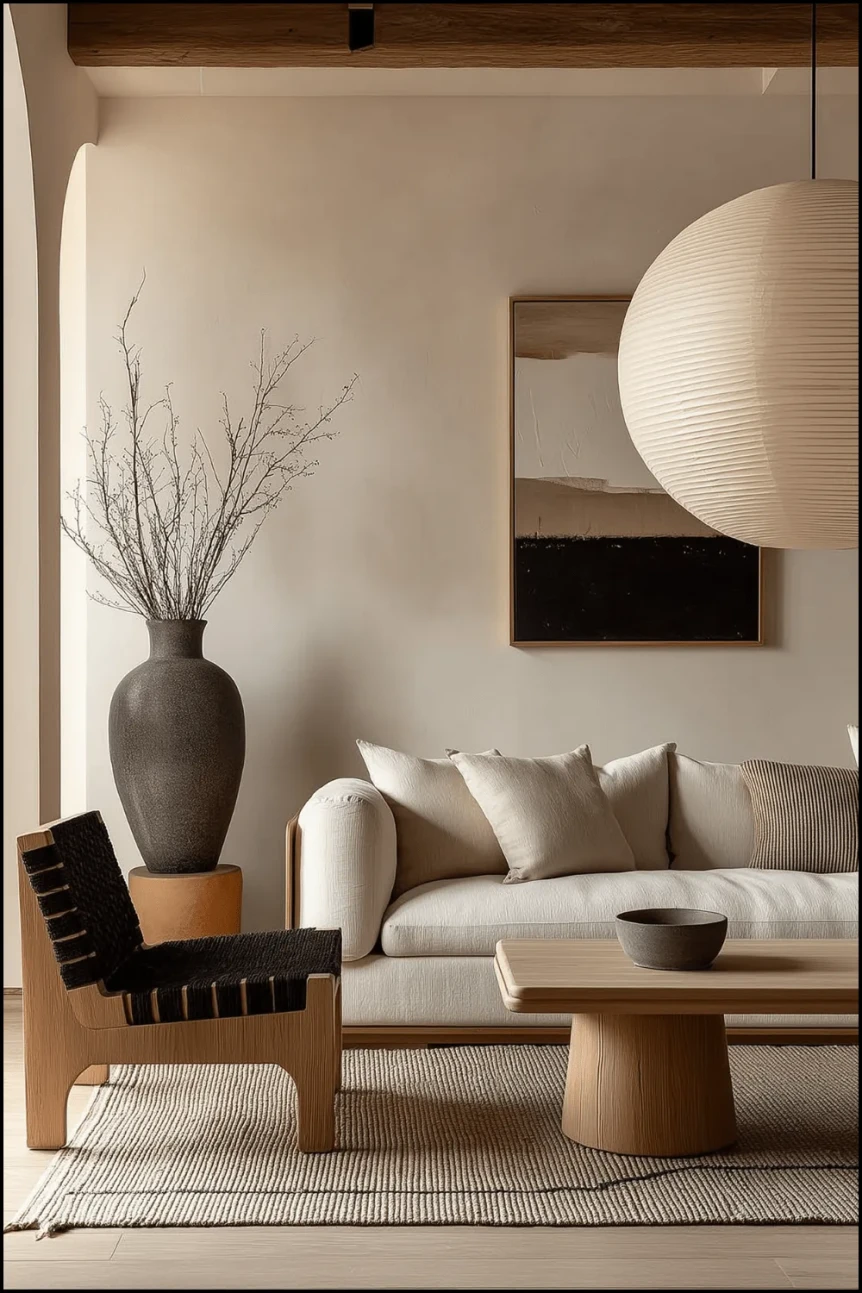
A Japandi living room feels like a deep breath. It’s the kind of space where everything is in its place, nothing competes for attention, and the overall atmosphere is one of quiet comfort. Achieving that effect takes more thought than it might appear, because the simplicity of Japandi is deliberate rather than accidental.
This guide covers how to design a Japandi living room from the ground up, including furniture selection, color choices, layout principles, and the styling details that bring the whole look together.
What Defines a Japandi Living Room
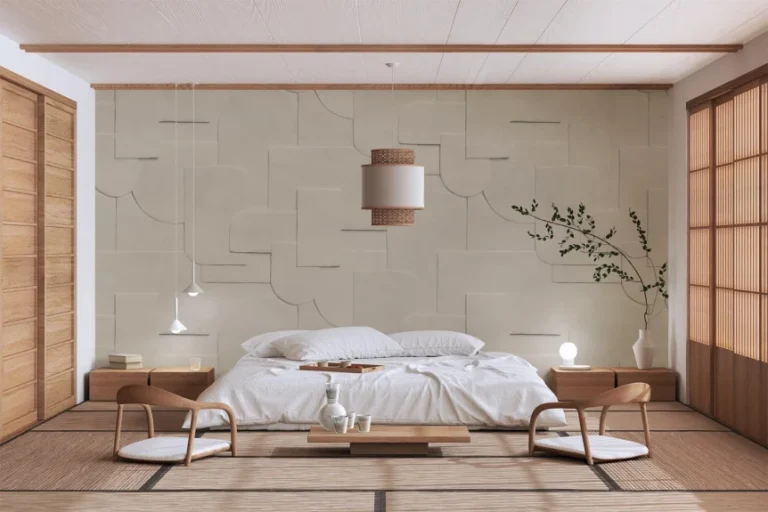
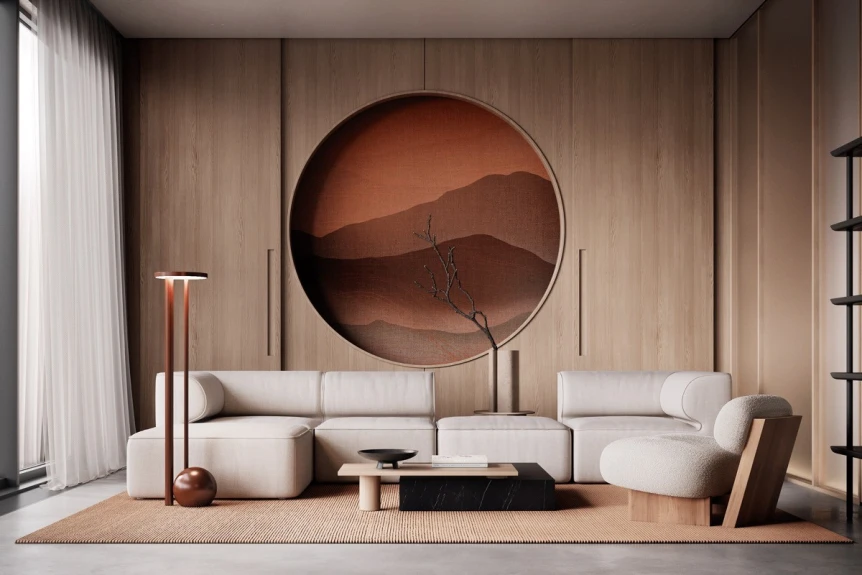
A Japandi living room balances two seemingly competing goals: openness and warmth. The Japanese influence pushes toward open space, clean lines, and visual quiet. The Scandinavian influence insists that the room also feel cozy, comfortable, and livable. The best Japandi living rooms achieve both.
You’ll notice a few consistent qualities: low profile furniture, natural materials throughout, a muted color palette with warm undertones, and a sense of deliberate editing where every piece serves a purpose. If you’re new to the style, our complete guide to Japandi interior design provides the foundational principles.
Choosing a Color Palette
The Warm Neutral Base
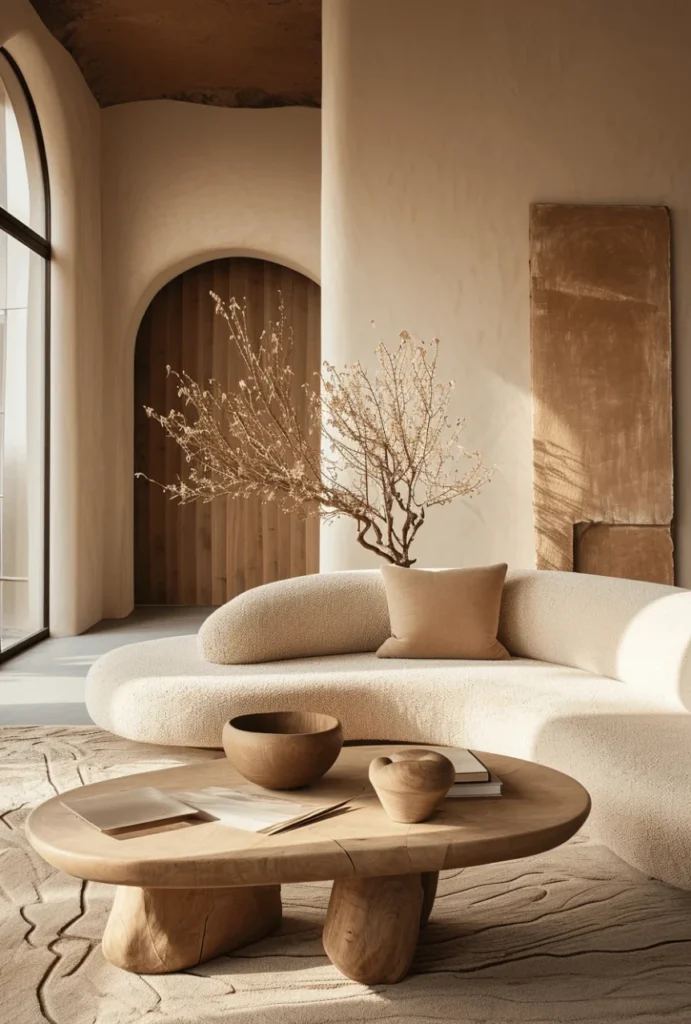
Start with walls in warm white, soft cream, or light greige. These tones create a calm backdrop that feels warm rather than clinical. Avoid pure, cool whites, which lean more toward stark minimalism and can make a room feel uninviting.
Adding Depth With Darker Tones
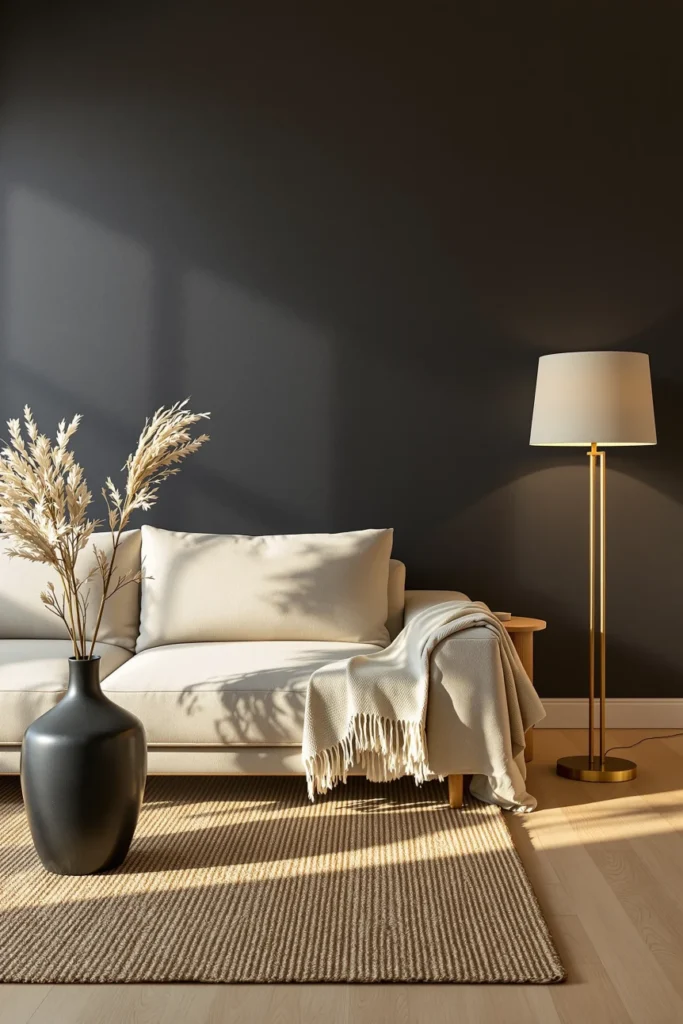
Where pure Scandinavian design stays light, Japandi welcomes darker accents. A charcoal sofa, a dark walnut coffee table, or a black accent shelf grounds the room and adds the visual weight that the Japanese side of the equation calls for. These darker elements prevent the space from feeling too airy or insubstantial.
Natural Accent Colors
Muted sage green, soft clay, warm taupe, and dusty terracotta work as accent colors. Introduce them sparingly through cushions, ceramics, or a single piece of art. The goal is to add gentle warmth and interest without disrupting the calm foundation. For specific combinations, explore our guide to Japandi color palettes.
Furniture Selection
The Sofa
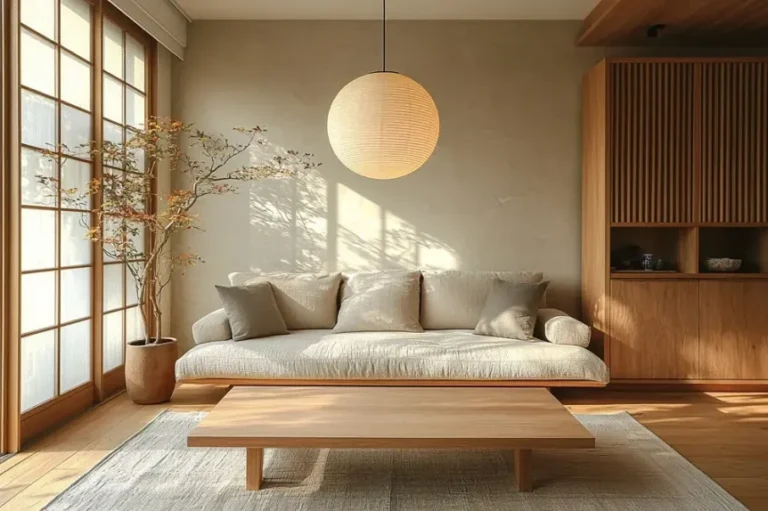
Choose a sofa with clean, straight lines and a low profile. A linen or cotton upholstery in warm gray, soft beige, or charcoal is the most versatile option. Avoid overstuffed or deeply tufted styles, which feel too heavy for the Japandi aesthetic. Slim, tapered legs in natural wood lift the sofa visually and make the room feel more open.
The Coffee Table
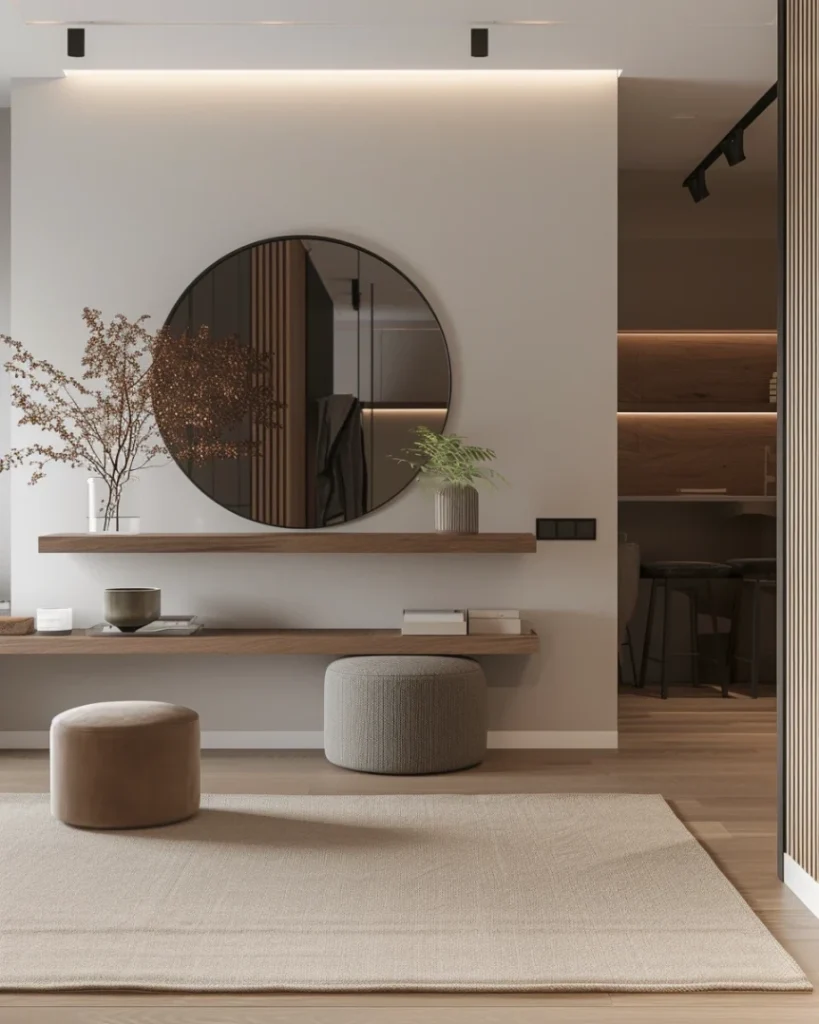
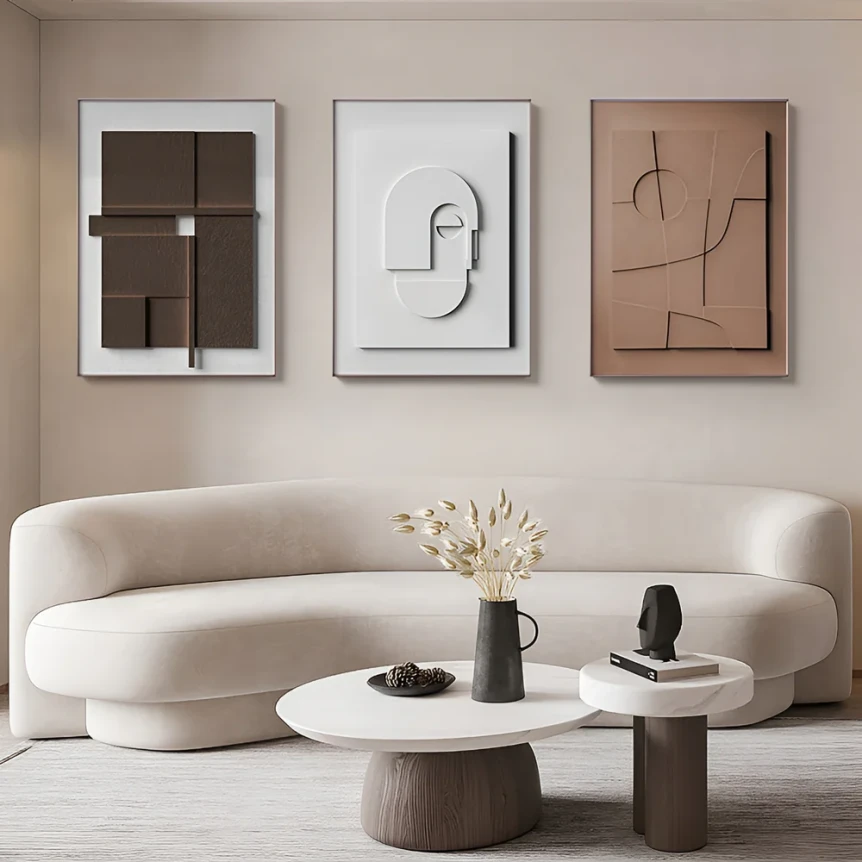
A simple coffee table in natural wood is the classic Japandi choice. Look for pieces with clean lines and a visible wood grain. Round and organic shapes work particularly well, softening the geometry of the sofa and adding visual contrast. A low table closer to the ground reinforces the Japanese design influence.
Seating
Add one or two accent chairs in natural materials. A wooden armchair with a linen cushion, a rattan lounge chair, or a simple upholstered chair with slim legs all suit the style. Avoid overly decorative or ornate pieces. The focus is on form, material, and comfort.
Storage and Shelving
Open shelving in natural wood offers display and storage space. Keep what’s displayed to a minimum: a few books, one or two ceramics, and a small plant. Closed storage, like a wooden credenza or a built in cabinet, keeps everyday clutter hidden and preserves the visual calm of the room.
For a deeper look at furniture sourcing and selection, see our Japandi furniture guide.
Layout and Space Planning
Embrace Negative Space
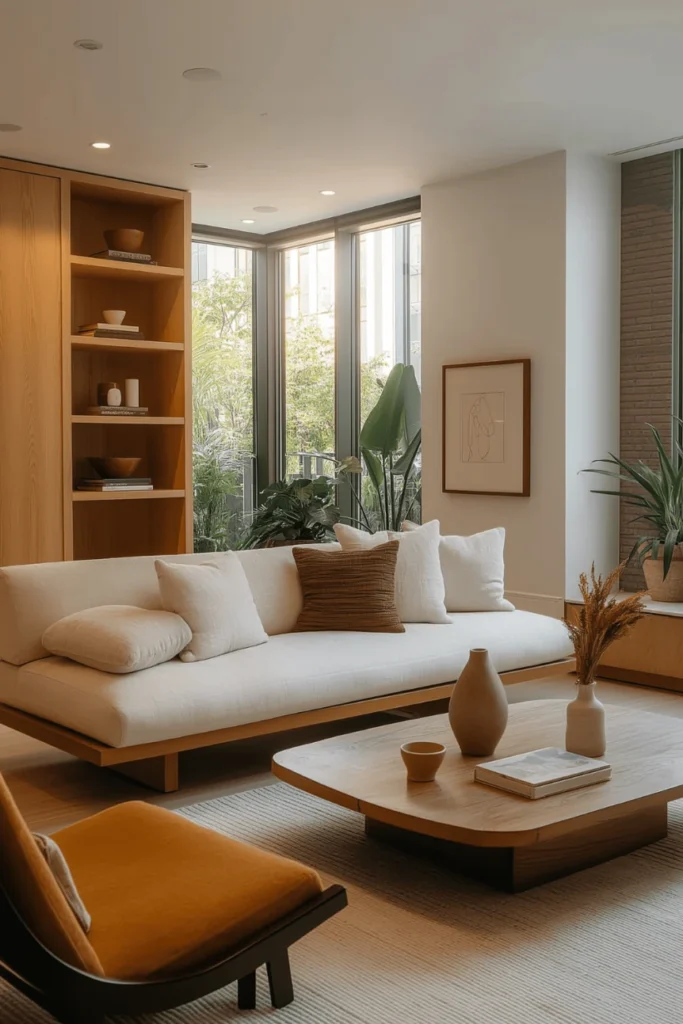
Negative space, the empty areas between and around furniture, is a defining feature of Japandi design. Resist the urge to fill every corner. Leave generous clearance around furniture, and keep floor space visible. This openness is what gives Japandi rooms their calm, meditative quality.
Create a Focal Point
Every Japandi living room benefits from a single focal point. This might be a statement piece of art on the wall, a beautiful piece of furniture, or a view through a window. The rest of the room supports this focal point rather than competing with it.
Grounding With a Rug
A simple area rug in a natural fiber like wool or jute anchors the seating area and adds warmth underfoot. Choose a solid color or a very subtle texture rather than a bold pattern. The rug should define the conversation area without drawing attention away from the furniture and decor.
Lighting
Natural Light First
Japandi rooms prioritize natural light. Keep window treatments minimal. Sheer linen curtains or simple roller blinds in a neutral tone allow maximum light while still providing privacy. If your windows are a strong architectural feature, leaving them bare is even better.
Warm Artificial Lighting
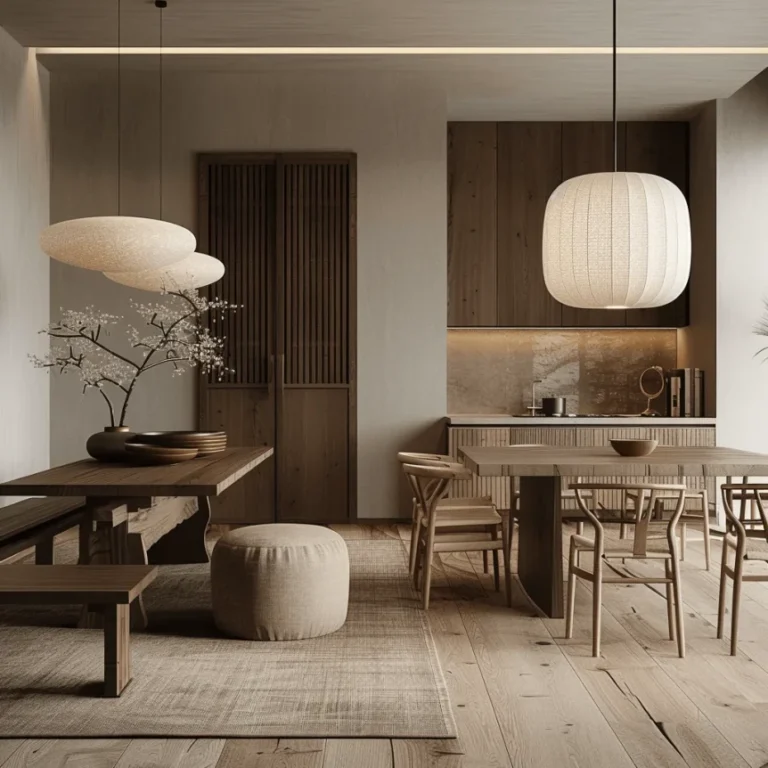
When natural light fades, warm, layered artificial lighting takes over. A paper lantern pendant, a wooden floor lamp, or a simple ceramic table lamp all fit the Japandi aesthetic. Choose bulbs in the 2700K range for the warmest, most flattering light. Avoid harsh overhead fixtures that cast flat, unflattering illumination.
Candlelight
Candles are central to the hygge side of Japandi. A few unscented candles on the coffee table or a shelf add a gentle, flickering warmth that no electric light can replicate. Use simple candleholders in ceramic, wood, or brass.
Styling and Decor
Shelf Styling
Japandi shelf styling is an exercise in restraint. For each shelf, choose two or three objects that vary in height and material. A ceramic vase, a small plant, and a single book is a classic combination. Leave more empty space than filled space. The negative space between objects is as important as the objects themselves.
Plants
One or two statement plants are more effective than a jungle of greenery. A single large plant in a corner, like a fiddle leaf fig or a rubber tree, adds life and height. A small bonsai or succulent on the coffee table adds a gentle touch of nature at a smaller scale.
Art
Choose one piece of art for the main wall. Ink drawings, black and white photography, abstract work in muted tones, or nature inspired prints all fit the Japandi aesthetic. The frame should be simple: thin black, natural wood, or frameless. For more decor strategies, visit our Japandi decor ideas and styling tips guide.
Japandi Living Room in Small Spaces
Japandi is arguably the best style for small living rooms. Its emphasis on fewer pieces, open space, and light, warm colors naturally makes a room feel larger. Choose a compact sofa rather than a full sectional. Use a round coffee table, which takes up less visual space. Mount shelves on the wall to free up floor area. Keep decor to a minimum and let the room breathe.
Understanding how Japandi relates to pure minimalism and Scandinavian design can help you refine your approach in a small space. Our guide on Japandi vs. minimalist vs. Scandinavian design explores those distinctions.
Conclusion
A Japandi living room is proof that simplicity and warmth can coexist. The style encourages you to be thoughtful about every piece you bring into the room, and the result is a space that feels calm, considered, and genuinely comfortable. Start with the basics, a good sofa, a natural wood table, and warm lighting, and let the room develop slowly with intention.
For the full picture of Japandi design principles, from its cultural roots to detailed room strategies, explore our complete guide to Japandi interior design.
Frequently Asked Questions
What furniture works best in a Japandi living room?
Low profile sofas in warm neutral fabrics, natural wood coffee tables with clean lines, and simple accent chairs in wood or linen are the foundation of a Japandi living room. Pieces should have slim legs, minimal ornamentation, and visible natural materials. Quality and craftsmanship matter more than quantity.
How do I make a Japandi living room feel warm?
Use warm toned whites and creams rather than cool whites. Incorporate plenty of natural wood in warm tones. Add soft textiles like linen cushions and wool throws. Use warm lighting in the 2700K range and include candles. A few well chosen plants also bring life and warmth to the space.
Is Japandi good for small living rooms?
Japandi is ideal for small living rooms. Its emphasis on fewer pieces, negative space, and a light warm palette naturally makes small rooms feel larger and more open. Compact furniture, wall mounted shelving, and minimal decor maximize the sense of space.
What colors should I use in a Japandi living room?
Start with warm whites, soft creams, or light greige on the walls. Add depth through charcoal or dark walnut accents. Use muted sage green, soft clay, or warm taupe as gentle accent colors through cushions and ceramics. Avoid bright, saturated colors that would disrupt the calm atmosphere.